
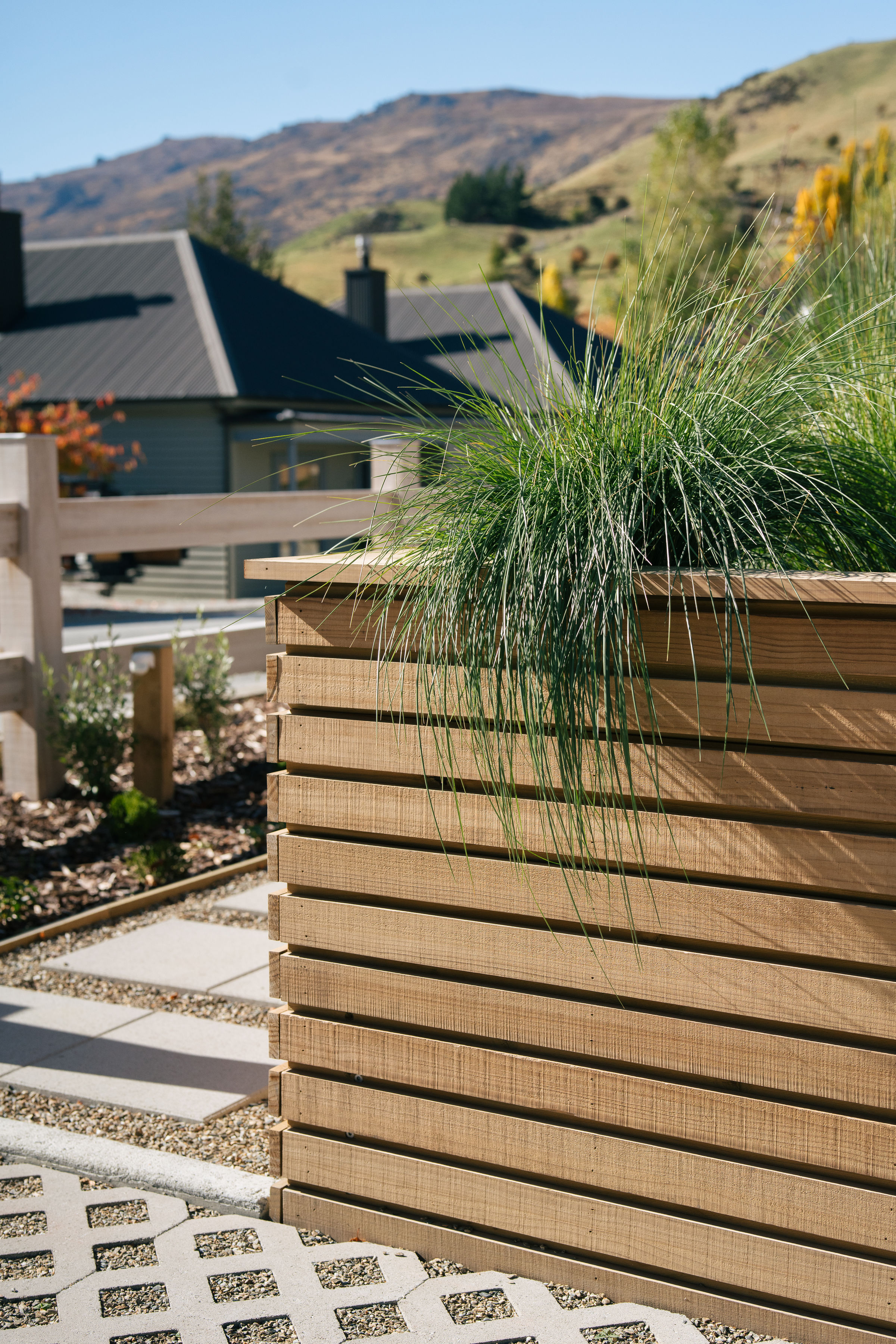
What "Zero Maintenance" Actually Means in Exterior Wood
Zero-maintenance wood siding does not mean zero weathering — it means zero structural degradation and zero required intervention to prevent decay. The distinction matters for specification. Every wood species exposed to ultraviolet radiation will undergo surface lignin breakdown, turning the exposed face silver-gray over 12–24 months. Per the USDA Forest Products Laboratory Wood Handbook, this photodegradation affects only the outermost 0.1–0.5 mm of fiber and does not compromise structural capacity or moisture resistance in naturally durable species.
The species profiled here share three characteristics that eliminate mandatory refinishing:
- Natural decay resistance rated Class 1 (Very Durable) or Class 2 (Durable) per AWPA Use Category UC3B standards
- Dimensional stability below 2% movement across seasonal moisture cycling (EMC 6%–14%)
- Extractive chemistry or modification processes that resist fungal colonization without chemical preservatives
For architects and homeowners who prefer the weathered aesthetic — and want to avoid the $15,000–$40,000 lifetime refinishing cost on a typical 2,000 sq ft facade — these species represent genuine "install and forget" solutions. J. Gibson McIlvain supplies all four categories through their hardwood lumber program with FSC-certified chain of custody and custom milling to any profile.
Ipe: The 75-Year Benchmark for Unfinished Performance
Ipe (Tabebuia spp.) delivers documented 75+ year service life in exterior applications without any finish, achieving 3,680 lbf Janka hardness and Class A fire spread per ASTM E84 testing. Brazilian boardwalks installed in the 1960s remain structurally sound today — surface-weathered to uniform gray but dimensionally stable and free of decay.
Performance Data
- Janka hardness: 3,680 lbf — harder than most stone tile
- Density: 69 lbs/ft³ (1,100 kg/m³)
- Dimensional stability: 0.4% radial, 0.6% tangential shrinkage per 1% MC change
- Natural durability: Class 1 (Very Durable) — 25+ years ground contact, 75+ years above grade
- Fire rating: Class A (Flame Spread Index 0–25) without treatment per ASTM E84
- Typical installed cost: $12–$18/sq ft (material + installation)
Ipe's extraordinary extractive content (lapachol and other quinones) provides built-in resistance to fungi, boring insects, and marine organisms. The Forest Products Laboratory classifies it among the most durable commercial timbers available. When left unfinished, Ipe develops a consistent silver-gray patina within 6–12 months that remains stable for decades.
McIlvain maintains a vast Ipe inventory across all standard and custom siding dimensions through their tropical hardwood program, available in lengths to 20 feet. Pre-drilling is mandatory — Ipe's density prevents standard fastener penetration. For detailed specification guidance on achieving multi-decade performance, see our 30-year hardwood cladding specification guide.
Accoya: Engineered for 50-Year Above-Ground Durability
Accoya acetylated wood carries a manufacturer-backed 50-year above-ground warranty with documented dimensional movement of just 0.7% — roughly 75% less than unmodified softwoods — making it the most dimensionally stable solid wood product commercially available.
The acetylation process, developed from 80+ years of wood science research, permanently modifies the cell wall hydroxyl groups by bonding them with acetyl groups. This reduces the wood's equilibrium moisture content to approximately 3–5% regardless of ambient humidity, per Accoya's published technical data. The result is a radiata pine substrate that performs like a Class 1 durable hardwood.
Performance Data
- Durability class: Class 1 (Very Durable) per EN 350-2
- Dimensional stability: 0.7% volumetric swelling (vs. 3.7% for untreated pine)
- Warranty: 50 years above ground, 25 years in ground
- Paint/coating retention: 2–3x longer between recoats when finished (but finishing is optional)
- Janka hardness: 1,400 lbf (hardened from base pine's ~900 lbf)
- Typical installed cost: $14–$20/sq ft
- Certifications: Cradle to Cradle Gold, FSC-certified source material
When left unfinished, Accoya weathers to a light silver-gray more uniformly than most species due to its exceptional dimensional stability — boards do not cup, twist, or check during the weathering process. This eliminates the aesthetic inconsistency that plagues lower-stability species as they gray. McIlvain supplies Accoya siding in multiple profiles including shiplap, tongue-and-groove, and channel. For complete performance data, see our Accoya performance analysis.
Thermally Modified Wood: Thermory and Abodo Vulcan
Thermal modification achieves Class 1–2 durability in domestic species by heating wood to 190–215°C in oxygen-free kilns, permanently reducing equilibrium moisture content to 4–6% and eliminating the hemicelluloses that fungi require for colonization. Two manufacturers lead the commercial siding market: Thermory (Estonia, producing modified ash, pine, and spruce) and Abodo (New Zealand, producing Vulcan thermally modified radiata pine).
Thermory Benchmark Performance
- Species available: Ash (most common for siding), Scots Pine, Norway Spruce
- Durability: Class 1–2 per EN 350 (ash), Class 2 (pine/spruce)
- EMC reduction: 4–6% (vs. 12–14% untreated)
- Dimensional stability improvement: 40–60% reduction in swelling vs. untreated
- Expected service life: 30+ years unfinished above grade
- Typical installed cost: $8–$14/sq ft
Abodo Vulcan Performance
- Species: Radiata Pine (plantation-grown, FSC-certified)
- Durability: Class 2 (Durable) per EN 350
- Dimensional stability: 50% improvement over untreated radiata pine
- Weight: 25–30% lighter than untreated (easier installation)
- Carbon status: Carbon-negative product (sequesters more than production emits)
- Expected service life: 30+ years unfinished above grade
- Typical installed cost: $9–$15/sq ft
Both products weather to a warm silver-gray. The key difference: Thermory ash offers higher hardness (approximately 1,500 lbf modified) and richer initial color, while Abodo Vulcan provides a lighter-weight substrate better suited to direct-fix applications where reduced load matters. McIlvain carries both lines in their thermally modified wood program, offering architects side-by-side comparison and consistent supply. For deeper analysis of thermal modification science and profiles, see our thermally modified wood overview and tongue-and-groove TM siding guide.
Cypress Heartwood: The Domestic 30-Year Option
Old-growth cypress heartwood (Taxodium distichum) contains cypressene — a natural preservative oil that provides Class 2 durability and documented 30+ year service in the Gulf Coast climate without any applied finish. The Southern Cypress Manufacturers Association documents structures exceeding 100 years with original cypress cladding intact.
Performance Data
- Janka hardness: 510 lbf
- Natural durability: Class 2 (Durable) — heartwood only
- Dimensional stability: Moderate (4.8% tangential, 3.8% radial shrinkage green to oven-dry)
- Decay resistance: Excellent in heartwood; sapwood has no natural resistance
- Fire performance: Class C untreated; can achieve Class B with surface treatment
- Typical installed cost: $6–$10/sq ft
- Domestic sourcing: Southeastern U.S. — no import logistics or CITES considerations
Critical specification note: Only heartwood delivers "zero-maintenance" performance. Mixed-grain cypress containing sapwood will decay within 8–12 years in high-moisture exposures. Specify "all heart" grade and verify with your supplier. The National Hardwood Lumber Association grading rules define heartwood content requirements by grade.
Cypress weathers to a light silver with slightly more texture variation than the tropical or modified species. It performs best in regions with good air circulation and moderate UV exposure. For coastal applications specifically, see our cypress coastal siding guide.
Comparison: 30-Year Unfinished Siding Species
| Species / Product | Durability Class | Janka (lbf) | Dimensional Stability | Expected Life (Unfinished) | Installed Cost ($/sq ft) | Best Application |
|---|---|---|---|---|---|---|
| Ipe | Class 1 | 3,680 | Excellent (0.4% R / 0.6% T) | 75+ years | $12–$18 | High-traffic, coastal, commercial |
| Accoya | Class 1 | 1,400 | Exceptional (0.7% volumetric) | 50+ years | $14–$20 | Dimensional precision, complex profiles |
| Thermory Ash | Class 1–2 | ~1,500 (modified) | Very Good (40–60% improvement) | 30+ years | $8–$14 | Contemporary/modern, residential + commercial |
| Abodo Vulcan | Class 2 | ~700 (modified) | Very Good (50% improvement) | 30+ years | $9–$15 | Lightweight, sustainable spec, large facades |
| Cypress Heartwood | Class 2 | 510 | Moderate (3.8% R / 4.8% T) | 30–50 years | $6–$10 | Traditional, domestic sourcing, budget-conscious |
| Teak | Class 1 | 1,070 | Excellent (natural oil content) | 50+ years | $18–$28 | Luxury residential, privacy walls |
| White Oak | Class 2 | 1,360 | Good (tyloses block moisture) | 25–40 years | $8–$12 | Mid-Atlantic/Northeast, traditional |
Note: Cost ranges reflect 2024–2025 material + standard installation. Complex profiles, remote sites, and rainscreen assemblies add $2–$6/sq ft. Contact McIlvain for current pricing on specific species and profiles.
Installation Details That Determine 30-Year Success
Even the most durable species will fail prematurely without proper ventilation, fastening, and moisture management — the assembly design matters as much as the species selection. The American Wood Council and International Building Code requirements establish minimum performance thresholds, but best practice for unfinished installations exceeds code minimums.
Ventilation and Rainscreen Assembly
All unfinished wood siding should be installed over a ventilated rainscreen cavity — minimum 3/8" depth per IBC Section 1403.2 requirements for drained and ventilated assemblies. This air gap:
- Allows back-face drying (critical when no finish seals the rear surface)
- Prevents capillary moisture transfer from sheathing to siding
- Promotes uniform weathering by equalizing moisture content across the board thickness
- Extends service life by 40–60% compared to direct-applied installations per FPL research
For complete rainscreen detailing, see our rainscreen systems guide and furring strip ventilation guide.
Fastening Requirements by Species
- Ipe: Stainless steel (316 marine grade for coastal). Pre-drill all connections. Hidden clip systems (Ipe Clip, Tiger Claw) work for horizontal applications.
- Accoya: Stainless steel or hot-dipped galvanized. No pre-drilling required. Accepts pneumatic and hand-driven fasteners.
- Thermory/Abodo Vulcan: Stainless steel recommended. Pre-drilling recommended for face-fixed; hidden clips available for most profiles.
- Cypress: Stainless steel or hot-dipped galvanized (minimum 2 oz/sq ft zinc). Cedar-rated fasteners acceptable for heartwood installations.
End-Grain Sealing
Even on unfinished installations, end-grain sealing with a wax-based end sealer reduces checking by 60–80%. This is not a "finish" — it simply slows moisture exchange at the most vulnerable point. The Forest Products Laboratory identifies end-grain uptake rates at 100–200x the rate of side-grain uptake.
Weathering Timeline: What to Expect Year by Year
All unfinished wood follows a predictable weathering sequence: initial color loss (months 1–6), surface fiber loosening (months 6–18), and stabilized silver patina (18–36 months) — after which appearance remains essentially constant for decades.
Year 1: Transition Period
The original color fades. Ipe shifts from olive-brown to tan. Accoya moves from straw to light gray. Thermory ash transitions from chocolate to warm gray. Cypress lightens from honey to pale silver. South-facing elevations change faster than north-facing — expect 3–6 months of non-uniform appearance during transition.
Years 2–5: Stabilization
Color equalizes across all elevations. Surface develops a consistent micro-texture. Any initial checking stabilizes (properly installed boards will not develop new checks after this period). The patina layer acts as a natural UV barrier, slowing further degradation.
Years 5–30+: Steady State
Appearance remains essentially unchanged. Structural testing shows negligible loss of section properties. The silvered surface actually provides mild protection against further UV penetration — the weathering process is self-limiting in durable species.
When Unfinished Wood Is NOT Appropriate
Honest specification requires acknowledging limitations:
- Wildfire-Urban Interface (WUI) zones: Some jurisdictions require ignition-resistant finishes regardless of species fire rating. Check local NFPA 1144 adoption. See our WUI wood siding guide.
- HOA-restricted communities: Many associations require maintained finishes and prohibit silvered wood appearance.
- Horizontal surfaces with standing water: No species tolerates ponding indefinitely. Vertical siding sheds water; horizontal soffits and sills need different strategies.
- Mixed sapwood/heartwood supply: If your supplier cannot guarantee heartwood-only boards in cypress or tropical species, unfinished installation carries higher risk.
"The architects we work with increasingly specify unfinished installations — but the conversation always starts with species selection and assembly design, not just aesthetics. A properly detailed Ipe or Accoya rainscreen will outlast any painted fiber cement system while developing a character that synthetic materials cannot replicate. The key is matching the species to the exposure and building the ventilation cavity correctly from the start."
— Brett Miller, President, J. Gibson McIlvain Company
Cost Analysis: Unfinished vs. Maintained Over 30 Years
Over a 30-year lifecycle, unfinished durable wood siding costs 35–55% less than finished wood requiring recoating every 4–6 years, despite higher initial material cost.
| Scenario (2,000 sq ft facade) | Initial Cost | Maintenance (30 yrs) | Total 30-Year Cost |
|---|---|---|---|
| Ipe, unfinished, rainscreen | $28,000–$36,000 | $0 (end-sealer only at install: $200) | $28,200–$36,200 |
| Accoya, unfinished | $30,000–$40,000 | $0 | $30,000–$40,000 |
| Thermory ash, unfinished | $18,000–$28,000 | $0 | $18,000–$28,000 |
| Cedar, finished (recoat every 4 yrs) | $14,000–$18,000 | $24,000–$42,000 (7 recoats) | $38,000–$60,000 |
| Pine, painted (repaint every 5 yrs) | $10,000–$14,000 | $30,000–$48,000 (6 repaints) | $40,000–$62,000 |
Maintenance cost assumes $3–$6/sq ft for professional cleaning, prep, and recoating. Scaffold access for multi-story buildings can double these figures.
Species Selection by Climate Zone
Marine/Coastal (Salt Spray Exposure)
Best: Ipe, Teak, Accoya. These three resist salt-spray corrosion of extractives and maintain surface integrity in high-humidity coastal environments. Use 316 stainless steel fasteners exclusively.
Hot-Humid (Southeast, Gulf Coast)
Best: Cypress heartwood, Ipe, Thermory ash. High natural tannin and extractive content resists the mold pressure inherent to 80%+ RH climates. Ensure rainscreen cavity has bottom ventilation.
Cold-Dry (Northeast, Mountain)
Best: Accoya, Abodo Vulcan, Thermory. Low EMC prevents freeze-thaw damage. Exceptional dimensional stability prevents joint failure during -20°F to +90°F annual swings. See our northeast species selection guide.
Arid/High-UV (Southwest, Mountain West)
Best: Ipe, Thermory ash. Dense species and modified wood resist UV-accelerated surface erosion. The silvering process actually completes faster in high-UV environments but stabilizes at the same endpoint.
How McIlvain Would Specify This for a Real Project
When a client contacts McIlvain requesting "zero-maintenance siding," the specification process begins with three questions: What is the building's primary exposure (coastal, urban, mountain)? What is the owner's tolerance for the 6–18 month color transition period? And what is the wall assembly — direct-applied, rainscreen, or ventilated cavity?
From there, McIlvain's specification team — drawing on 225+ years of hardwood supply experience — matches species to exposure, confirms profile availability (standard stock vs. custom mill), and provides samples showing both fresh-sawn and weathered appearance. This prevents the most common specification failure: a client who expects permanent brown and receives progressive silver.
McIlvain maintains inventory of all species listed above in standard siding dimensions. Custom profiles require 4–8 week lead time depending on species and volume. All tropical hardwoods ship with FSC chain-of-custody documentation and legal-harvest verification. Contact the team at mcilvain.com/contact-us or call 410-687-0857.
Performance and Procurement Checklist
| Item | Requirement | Verification Method |
|---|---|---|
| Durability class | Class 1 or 2 per EN 350 / AWPA | Species data sheet from supplier |
| Heartwood content | 95%+ heartwood (for untreated species) | Visual inspection, grading certificate |
| Moisture content at delivery | 8–12% for installation | Pin meter, multiple locations per bundle |
| Fastener specification | 316 SS (coastal) or 304 SS (inland) | Manufacturer certification |
| Rainscreen cavity depth | Minimum 3/8" (3/4" recommended) | Furring strip dimensioning |
| End sealer applied | All crosscuts sealed within 24 hours | Site inspection protocol |
| Certification chain of custody | FSC or PEFC (required for tropical) | Invoice documentation, COC number |
| Sample approval (weathered) | Client approves aged sample, not fresh | Documented written approval |
Where Specifications Usually Fail
- Specifying "cypress" without "all-heart" designation. Mixed-grain cypress will decay within a decade. The sapwood has zero natural resistance.
- Omitting the rainscreen cavity. Direct-applied siding cannot dry from the back face, accelerating decay behind the board where it is invisible until failure.
- Using galvanized fasteners in Ipe or tropical species. Tannin acids corrode zinc coatings, causing black staining and eventual fastener failure. Stainless only.
- Not showing clients a weathered sample before installation. Color expectations mismatch is the number-one post-installation complaint — manage it during specification, not after.
- Ignoring board acclimation. Installing at greater than 15% MC guarantees excessive checking and gap formation during the first dry season.
Ordering Information to Resolve Before Pricing
- Exposure: Coastal/marine, urban sheltered, mountain/high-UV, or mixed?
- Profile: Shiplap, tongue-and-groove, channel, board-and-batten, or custom?
- Finish: Confirmed unfinished (client has approved weathered sample)?
- Appearance grade: Clear (FAS equivalent), Select, or character grade acceptable?
- Assembly: Rainscreen depth, clip system vs. face-fixed, concealed or expressed fasteners?
- Volume: Total square footage + 10–15% waste factor (complex geometries may require 20%)?
- Logistics: Delivery access, lift requirements, phased delivery schedule?
- Certification: FSC, PEFC, or SFI documentation required?
Related McIlvain Guidance and Next Steps
- How to Specify Exterior Hardwood Cladding for a 30-Year Lifespan
- Commercial Cladding: Rainscreen Systems Guide
- Accoya Siding Performance Data
- Thermally Modified Wood Overview
- Oil vs. Film Finishes for Exterior Wood (for clients who later decide to maintain color)
- Rainscreen Cladding Species Profiles
- McIlvain Custom Milling Services
- Request a Quote — McIlvain Contact
Frequently Asked Questions
What wood siding lasts 30 years without any maintenance or refinishing?
Four categories of wood siding deliver 30+ year performance without refinishing: Ipe (75+ years, Class 1 durability, 3,680 lbf Janka), Accoya acetylated wood (50-year warranty, 0.7% dimensional movement), thermally modified wood from Thermory or Abodo Vulcan (30+ years, 40–60% stability improvement), and all-heart cypress (30–50 years due to natural cypressene oil content). All weather to silver-gray without structural degradation when installed over a ventilated rainscreen cavity with stainless steel fasteners.
Does unfinished wood siding turn gray, and is that a problem?
Yes, all unfinished wood develops a silver-gray patina within 6–18 months due to UV degradation of surface lignin. This affects only the outermost 0.1–0.5 mm and does not compromise structural integrity in naturally durable species. The weathering process is self-limiting — once the patina forms, it actually protects underlying wood from further UV penetration. Many architects specify unfinished wood specifically for this aesthetic, which synthetic materials cannot replicate.
Is unfinished Ipe siding more cost-effective than painted cedar over 30 years?
Yes. On a 2,000 sq ft facade, unfinished Ipe costs approximately $28,000–$36,000 installed with zero maintenance over 30 years. Finished cedar costs $14,000–$18,000 initially but requires 7 recoating cycles at $3–$6/sq ft each, totaling $38,000–$60,000 over the same period. The Ipe system saves $10,000–$24,000 in lifecycle cost while providing superior durability and fire resistance (Class A vs. Class C).
What is the difference between Thermory and Abodo Vulcan for siding?
Thermory (Estonia) produces thermally modified ash, pine, and spruce — with ash being most popular for siding due to Class 1–2 durability and approximately 1,500 lbf hardness. Abodo Vulcan (New Zealand) modifies radiata pine, achieving Class 2 durability with 25–30% weight reduction and carbon-negative certification. Thermory ash offers greater hardness and deeper initial color; Abodo Vulcan provides lighter weight for large-area installations and stronger sustainability credentials. Both deliver 30+ year unfinished service life. J. Gibson McIlvain carries both product lines.
Can I install wood siding without a rainscreen cavity if I use a durable species?
It is technically possible but not recommended for unfinished installations targeting 30+ year life. Without a rainscreen cavity, the back face of unfinished siding cannot dry, creating conditions for moisture accumulation between siding and sheathing. The Forest Products Laboratory documents 40–60% service life extension with ventilated cavities. A minimum 3/8" gap (3/4" preferred) with top and bottom ventilation openings should be specified for all unfinished durable wood siding regardless of species durability class.
Sources
- USDA Forest Products Laboratory — Wood Handbook: wood weathering science, durability classifications, and moisture dynamics
- ASTM International — E84 Standard Test Method for Surface Burning Characteristics of Building Materials
- American Wood Council — Design specifications and fire-resistance guidelines for wood construction
- International Code Council — International Building Code exterior wall covering and ventilation requirements
- Forest Stewardship Council — Chain of custody certification standards for responsibly sourced wood
- National Fire Protection Association — NFPA 1144 Standard for Reducing Structure Ignition Hazards from Wildland Fire
- National Hardwood Lumber Association — Grading rules and heartwood content standards
- Southern Cypress Manufacturers Association — Species performance data and historical service life documentation
- Thermory — Thermal modification process specifications and product durability data
- Abodo Wood — Vulcan thermally modified product technical specifications
- Accoya — Acetylation technology, 50-year warranty documentation, and dimensional stability data
- American Wood Protection Association — Use Category classifications for above-ground applications


