Why the Northeast Is Uniquely Hard on Wood Siding
The Northeast climate subjects exterior siding to a punishing combination of stresses that most other U.S. regions don't experience simultaneously. According to the USDA Forest Products Laboratory, the critical factors are:
- Freeze-thaw cycling: 80-120 freeze-thaw cycles annually in zones 5-6 (Connecticut through Maine), causing micro-fractures in wood cell walls that accumulate over time
- Humidity swings: Summer relative humidity of 70-85% versus winter interior humidity of 15-25% creates seasonal moisture content swings of 6-10% in unprotected siding
- UV exposure: 4,000-4,500 hours of annual sunlight degrade lignin at the surface, causing graying and fiber erosion at 1/64" per decade
- Nor'easters and wind-driven rain: 40-55 inches of annual precipitation, often driven horizontally at 40+ mph, testing every joint and end-grain seal
These conditions mean that species selection for Northeast siding is fundamentally different from the Southeast (where termite and moisture resistance dominate) or the Pacific Northwest (where rain without freeze-thaw is the primary concern).
Top Species Compared: Performance Data for Northeast Conditions
| Species | Durability (EN 350) | Janka Hardness | Dimensional Stability | Material Cost (per sq. ft.) | Expected Lifespan |
|---|---|---|---|---|---|
| Western Red Cedar | Class 2 — Durable | 350 lbf | Good — low shrinkage coefficient | $4.50-$7.00 | 25-40 years (maintained) |
| Eastern White Cedar | Class 2 — Durable | 320 lbf | Excellent — lowest shrinkage of softwoods | $3.50-$5.50 | 30-50 years (maintained) |
| Cypress (Taxodium distichum) | Class 2 — Durable | 510 lbf | Good — moderate shrinkage | $5.00-$8.00 | 30-50 years |
| Thermally Modified Ash | Class 1 — Very Durable | 1,320 lbf | Excellent — 50-70% less movement | $7.50-$9.00 | 25-30+ years (no finish required) |
| Accoya (Modified Radiata Pine) | Class 1 — Very Durable | ~510 lbf | Exceptional — 75% less swelling | $9.00-$12.00 | 50+ years (above ground) |
Western Red Cedar: The Northeast Standard
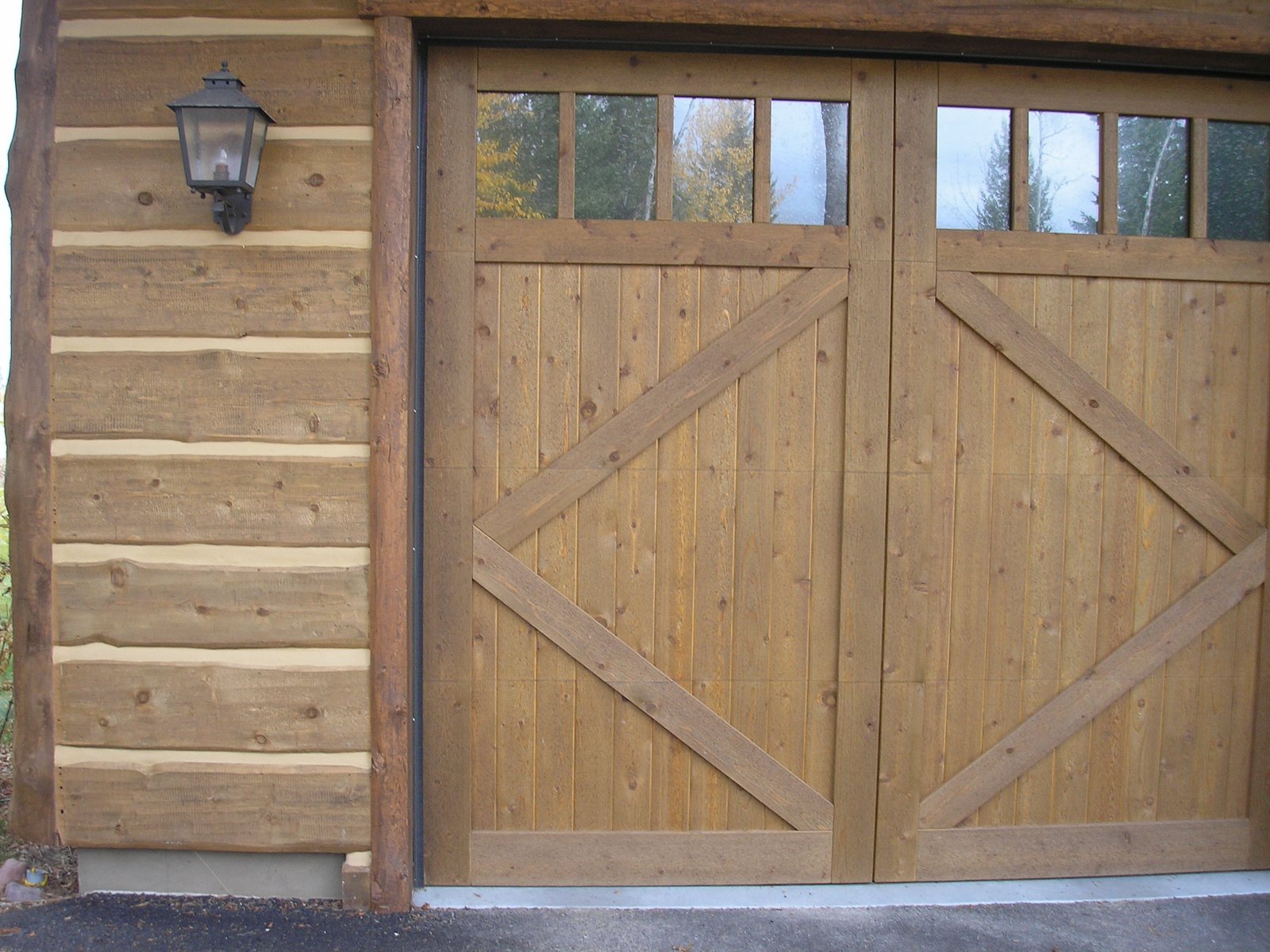
Western red cedar (Thuja plicata) has been the default siding species for Northeast homes for generations. Its natural extractives — primarily thujaplicins and tropolones — provide genuine rot resistance without chemical treatment. The Western Red Cedar Lumber Association rates properly installed clear-grade cedar siding at 25-40 years of service life in northern climates when maintained with a penetrating finish every 3-5 years.
Cedar's practical advantages for Northeast builders:
- Low density (21 lbs/cu. ft.): Easy to handle and install, reducing labor costs by 15-20% vs. hardwood siding
- Low shrinkage coefficient: Tangential shrinkage of 5.0% (green to oven-dry) vs. 7.8% for Douglas fir
- Takes finish well: Open grain structure absorbs stain and paint evenly
- Availability: Stocked by virtually every lumber distributor in the Northeast
The downside: cedar is soft (350 lbf Janka), dents easily from hail and impact, and requires refinishing every 2-3 years in the Northeast to prevent moisture-driven decay. On a typical 2,400 sq. ft. home, that refinishing costs $3,000-$5,000 per cycle — or $30,000-$50,000+ over 30 years when accounting for the inevitable partial-board replacements.
"Cedar is still a beautiful product for siding — we sell thousands of board feet every month. But for Northeast applications where the customer wants a 30-year maintenance-free life, we're increasingly recommending thermally modified ash or Accoya. The upfront premium is 40-60%, but the lifecycle cost inverts after year 8 when you factor in the refinishing cycles cedar requires in a four-season climate."
— Camden Zacker, Sales Director, J. Gibson McIlvain Co.
Eastern White Cedar: The Underrated Local Option
Eastern white cedar (Thuja occidentalis), also called Northern white cedar or arborvitae, is native to the Northeast and often overlooked in favor of its western cousin. However, it offers distinct advantages for regional siding applications.
According to the USDA Wood Handbook, Eastern white cedar has the lowest volumetric shrinkage of any commercially available North American softwood — 7.2% from green to oven-dry, compared to 10.5% for Western red cedar. This translates directly to less gapping, less cupping, and fewer paint failures through Northeast humidity cycles.
Its heartwood contains similar thujaplicin extractives to Western red cedar, providing natural Class 2 durability. Regional availability means lower freight costs — a significant consideration when lumber transport from the Pacific Northwest adds $0.50-$1.00/sq. ft. to Western red cedar delivered to the East Coast.
Thermally Modified Ash: The High-Performance Choice
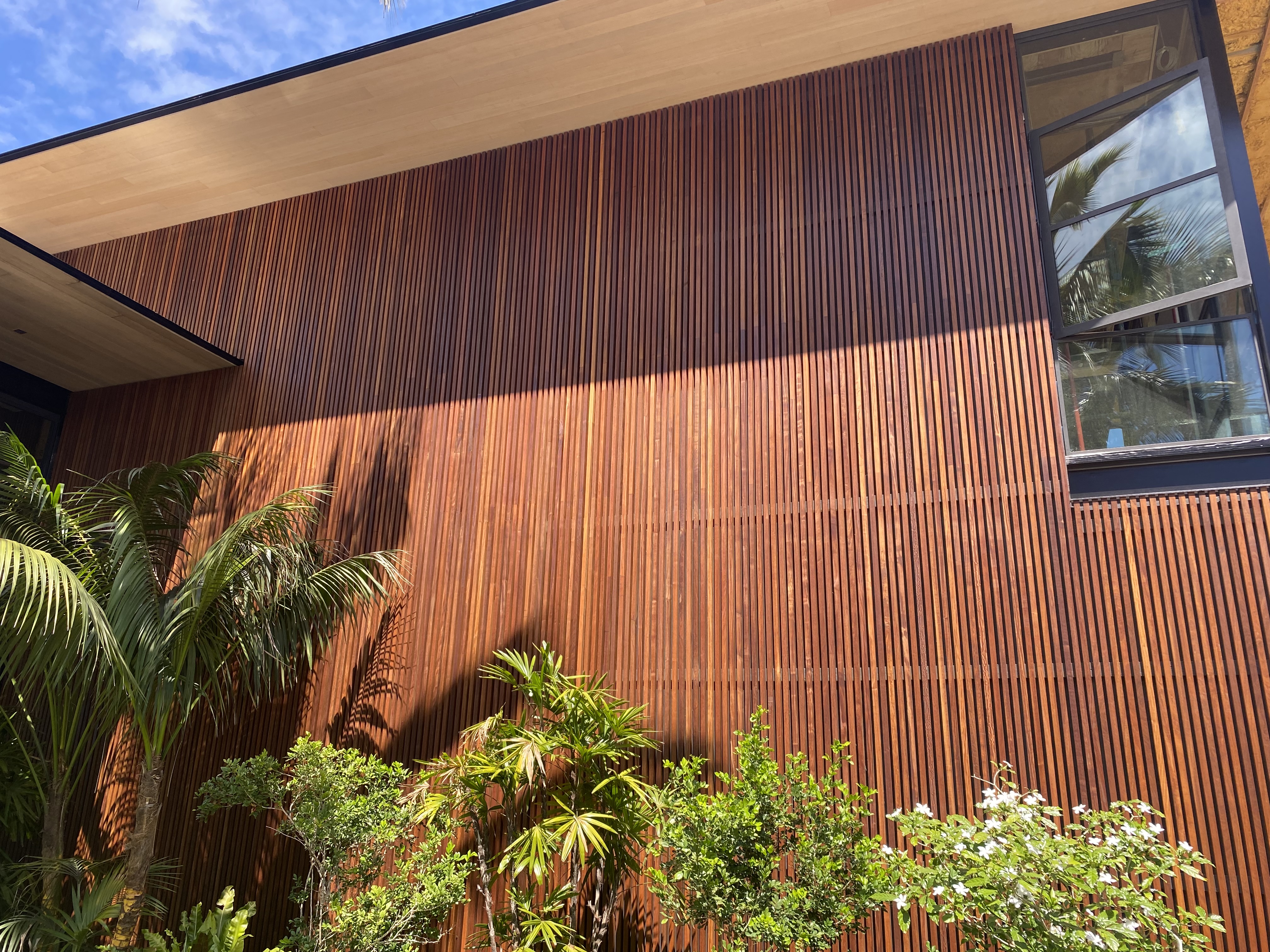
For architects and homeowners seeking maximum durability with minimal maintenance, thermally modified ash has emerged as the premium siding material for Northeast applications. The thermal modification process (heating to 410-430°F in an oxygen-free kiln for 24-48 hours) achieves Class 1 durability — the same rating as tropical Ipe — while reducing moisture absorption by 40-50%.
In the Northeast freeze-thaw environment, this moisture reduction is critical. Wood fails in freezing conditions because water in the cell walls expands 9% when it freezes, rupturing cell structure over repeated cycles. By reducing equilibrium moisture content from 12-15% (typical softwood) to 4-7%, thermally modified ash effectively eliminates the freeze-thaw damage mechanism.
J. Gibson McIlvain stocks Thermory thermally modified ash in multiple cladding profiles — including shiplap, channel, and rainscreen — kiln-dried and ready for direct installation without field finishing.
Accoya: The 50-Year Siding
Accoya is radiata pine modified through acetylation — a chemical process that permanently replaces the hydroxyl groups in wood cell walls with acetyl groups. This is distinct from thermal modification (heat-only) and pressure treatment (chemical infusion). According to Accsys Technologies, Accoya achieves Class 1 durability with 75% less swelling than unmodified pine, backed by a 50-year above-ground warranty.
For Northeast siding, Accoya's standout property is its anti-swelling efficiency (ASE) of 75-80% — meaning it experiences only 20-25% of the dimensional movement of unmodified wood through humidity cycles. This makes it arguably the most dimensionally stable wood product available for exterior cladding, exceeding even thermally modified ash (50-70% ASE).
The tradeoff is cost: Accoya runs $9.00-$12.00/sq. ft. for siding-profile material — roughly double Western red cedar. But on a lifecycle basis, the math often favors Accoya for high-end residential projects where the owner plans to hold the property 20+ years.
25-Year Lifecycle Cost Comparison
| Cost Component | Western Red Cedar | Thermally Modified Ash | Accoya |
|---|---|---|---|
| Material + Install (Year 0) | $18,000-$24,000 | $28,000-$36,000 | $32,000-$42,000 |
| Refinishing (every 3 years × 8 cycles) | $24,000-$40,000 | $0 (optional UV oil) | $0 (optional UV oil) |
| Board replacement (Years 15-25) | $4,000-$8,000 | $0-$2,000 | $0 |
| Total 25-Year Cost | $46,000-$72,000 | $28,000-$38,000 | $32,000-$42,000 |
Profile Options for Modern Architecture
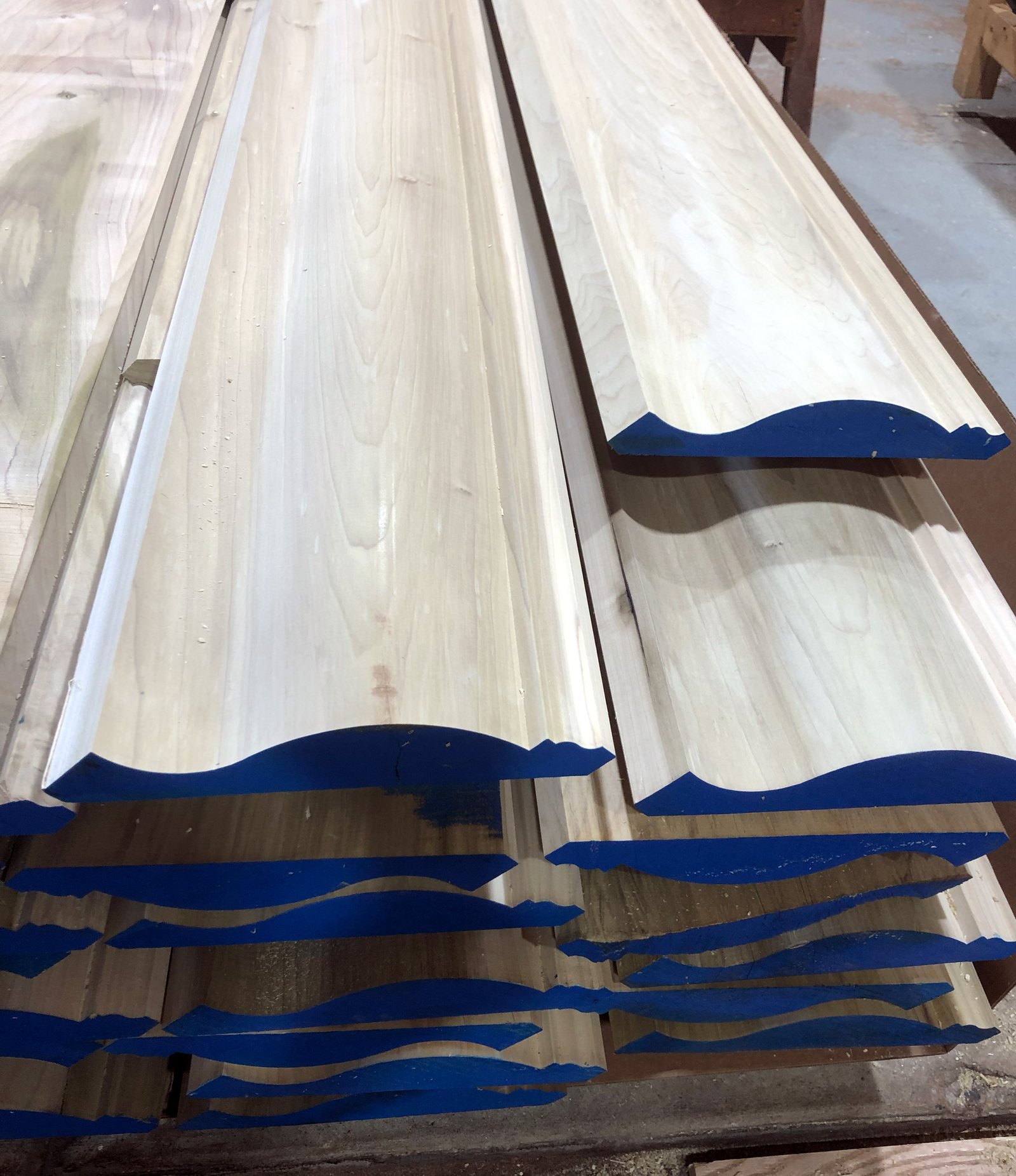
Modern Northeast residential design has moved away from traditional lap siding toward cleaner profiles. The profiles most commonly specified by architects for contemporary homes include:
- Shiplap (5/4×6 or 1×6): Clean shadow line, tight joints — the dominant profile for modern farmhouse and transitional designs
- Channel siding (1×6 or 1×8): Creates a recessed channel between boards, emphasizing horizontal lines
- Nickel-gap (1×6): Consistent 1/16" reveal between boards — gaining popularity for its precise, manufactured look
- Board-and-batten (1×10 + 1×3): Vertical orientation for contemporary farmhouse — works best in cedar or cypress
- Rainscreen profiles: Purpose-milled for ventilated cavity installation — the highest-performance approach for Northeast applications
For any of these profiles, J. Gibson McIlvain offers custom milling in all species listed above, with national job-site delivery. McIlvain's internal fleet serves East Coast and Midwest routes, while third-party carriers support West Coast, Hawaii, and other national deliveries. Standard and custom profiles are available in lengths up to 16 feet for cedar and 10 feet for thermally modified ash.
Installation Best Practices for Northeast Longevity
Regardless of species, Northeast siding installations that last 30+ years share these characteristics:
- Back-priming: All six faces sealed before installation reduces moisture uptake from the wall cavity by 80-90%. Non-negotiable in the Northeast.
- Rainscreen gap: A minimum 3/8" ventilated air space between siding and WRB (weather-resistive barrier) allows drying after wind-driven rain events. Studies by Building Science Corporation show rainscreen cavities extend siding life by 2-3× in cold-wet climates.
- Stainless steel fasteners: ACQ-compatible and corrosion-proof. Standard galvanized fasteners fail in 8-12 years in coastal Northeast environments.
- End-grain sealing: All cut ends sealed with wax or penetrating sealer before installation. End grain absorbs moisture 10-12× faster than face grain.
"The single biggest factor in Northeast siding longevity isn't the species — it's the rainscreen cavity. We've seen cedar last 50 years over a proper rainscreen, and Accoya fail in 10 over a tight wall with no drainage plane. Always specify the ventilated gap, regardless of what species you're hanging on it."
— Brett Miller, President, J. Gibson McIlvain Co.
Frequently Asked Questions
What is the best wood siding for a house in New England?
For New England homes, the top choices are western red cedar (most popular, $4.50-$7.00/sq. ft., 25-40 year lifespan with maintenance), eastern white cedar (lowest shrinkage, local availability, 30-50 years), and thermally modified ash (Class 1 durability, zero maintenance, 25-30+ years). The best choice depends on budget and maintenance tolerance — cedar costs less upfront but requires refinishing every 2-3 years, while thermally modified ash costs 60-80% more initially but eliminates ongoing maintenance costs entirely.
How long does cedar siding last in the Northeast?
Western red cedar siding lasts 25-40 years in the Northeast when properly maintained with a penetrating stain or paint refreshed every 2-3 years. Without maintenance, cedar will gray and begin to decay at joints and end grain within 8-12 years. Eastern white cedar, being denser and more stable, can last 30-50 years in the same conditions. Both species require back-priming and proper rainscreen installation to achieve maximum lifespan in the Northeast's freeze-thaw climate.
Is thermally modified wood good for siding in cold climates?
Thermally modified wood is excellent for cold-climate siding because its reduced moisture content (4-7% vs. 12-15% for untreated wood) minimizes freeze-thaw damage — the primary failure mechanism in northern climates. Water expands 9% when freezing; with 40-50% less absorbed moisture, thermally modified wood experiences dramatically less frost-induced cell damage. Thermory thermally modified ash achieves Class 1 durability and carries a 25-year rot warranty without any finish or maintenance.
What wood siding requires the least maintenance?
Accoya (acetylated radiata pine) and thermally modified ash both require zero maintenance for durability — their rot resistance is permanent and built into the wood's cell structure. Both will weather to silver-gray without finish. If color retention is desired, a single coat of UV-blocking oil annually is sufficient — compared to the full sand-and-restain cycle every 2-3 years that cedar and cypress require in Northeast conditions. Over 25 years, this eliminates $24,000-$40,000 in maintenance costs on a typical home.
Should I use a rainscreen behind wood siding in the Northeast?
Yes — a rainscreen air gap (minimum 3/8") is considered essential for wood siding longevity in Northeast climates. Research by Building Science Corporation demonstrates that rainscreen cavities extend siding life by 2-3× in cold-wet climates by allowing drainage after wind-driven rain and promoting drying of the wall assembly. Without a rainscreen, trapped moisture combined with 80-120 annual freeze-thaw cycles leads to premature decay regardless of species. Most building codes in the Northeast now require or strongly recommend ventilated cladding systems.
Sources and Standards Referenced
- USDA Forest Products Laboratory — Wood Handbook: species properties, shrinkage data, and durability classifications
- Western Red Cedar Lumber Association — Cedar grading, installation standards, and lifespan data
- Accsys Technologies (Accoya) — Acetylation process specifications and warranty documentation
- Thermory — Thermally modified wood specifications and cladding profiles
- Building Science Corporation — Rainscreen performance research in cold-climate assemblies
- EN 350: Natural Durability of Solid Wood (European Standard)