Why Coastal Environments Destroy Most Wood Siding
Coastal building envelopes face a uniquely aggressive combination of moisture, salt, UV, and biological attack. According to the USDA Forest Products Laboratory, coastal exposures within 1,000 feet of saltwater subject siding to:
- Sustained high humidity: 75-95% relative humidity year-round accelerates fungal colonization — decay fungi require only 20% wood moisture content to establish
- Salt-spray deposition: Airborne salt crystals are hygroscopic — they draw additional moisture into wood surfaces, compounding the humidity problem
- Wind-driven rain: Coastal storms drive water horizontally at 60-100+ mph, penetrating any joint or imperfection in the siding plane
- Elevated termite pressure: Subterranean and drywood termites are most active in warm coastal zones (USDA TIP Zone 4)
- Intense UV: Reflected sunlight from water surfaces amplifies UV degradation on waterside facades by 30-40%
Most softwoods fail rapidly in these conditions. Untreated SPF (spruce-pine-fir) framing-grade lumber shows visible decay within 2-3 years in coastal exposure per USDA field-stake tests. Even naturally durable species like western red cedar experience accelerated weathering in salt-air environments compared to inland installations.
Baldcypress: Natural Chemistry for Coastal Survival
Baldcypress evolved in the swamps and coastal floodplains of the American Southeast — the species literally adapted over millions of years to survive standing in water. This evolutionary pressure produced heartwood with several chemical advantages for coastal siding applications:
- Cypressene oil: A natural terpenoid preservative that inhibits fungal enzymes and repels termites. Unlike cedar's thujaplicins (which leach out over time), cypressene is bound within the resin canals and persists throughout the wood's service life.
- Silica deposits: Old-growth and tidewater cypress contain microscopic silica crystals that dull saw blades but also discourage boring insects and resist surface erosion from wind-driven sand.
- Low permeability: Cypress heartwood has among the lowest moisture vapor transmission rates of North American softwoods — it absorbs water slowly and releases it slowly, reducing the rapid wet-dry cycling that destroys less resistant species.
The Southern Cypress Manufacturers Association (SCMA) documents that properly selected heartwood cypress achieves Class 2 durability (Durable) under EN 350 classification, with field test performance of 25-50+ years in above-ground exterior applications depending on exposure severity and maintenance regime.
"For coastal projects from the Outer Banks to the Florida Keys, baldcypress is our most-recommended domestic siding species. The material literally evolved in saltwater. Cedar works inland, but once you're within sight of the ocean, cypress has a 30-year track record that cedar can't match in those conditions. And it's American-grown — no import logistics, no tropical sourcing concerns."
— Camden Zacker, Sales Director, J. Gibson McIlvain Co.
Coastal Species Comparison: Cypress vs. Alternatives
| Species | Durability | Salt Tolerance | Termite Resistance | Cost (per sq. ft.) | Coastal Lifespan |
|---|---|---|---|---|---|
| Baldcypress (heartwood) | Class 2 | Excellent — evolved in saline/brackish | High — cypressene repels | $5.00-$8.00 | 30-50 years |
| Western Red Cedar | Class 2 | Moderate — salt accelerates extractive leaching | Moderate | $4.50-$7.00 | 20-35 years |
| Ipe | Class 1 | Excellent — tropical hardwood density | Excellent — too dense for borers | $10.00-$14.00 | 40-75 years |
| Accoya | Class 1 | Excellent — approved for marine use | Excellent — acetyl groups repel | $9.00-$12.00 | 50+ years |
| Thermally Modified Ash | Class 1 | Good — reduced moisture absorption | Good | $7.50-$9.00 | 25-30 years |
Cypress occupies a unique position in this landscape: it's the only domestically-grown species with genuine coastal-grade durability at a sub-$8/sq. ft. price point. Ipe and Accoya outperform it, but at 1.5-2× the material cost. Cedar matches its price but underperforms in salt-air conditions where its water-soluble extractives leach faster.
Grading: Why "Cypress" Isn't All the Same
The critical distinction in cypress siding is between heartwood and sapwood. Only heartwood contains the cypressene oils that provide decay and termite resistance. Sapwood cypress has no more natural durability than untreated pine.
- Select Heart (all heartwood): Maximum durability — specify this for coastal applications. Commands a 30-50% premium over mixed grades.
- #1 Grade (mixed heart/sap): Adequate for semi-protected applications but not recommended for direct coastal exposure on primary facades.
- Pecky Cypress: Heartwood with characteristic pocket holes from Stereum taxodii fungus. Purely aesthetic variation — durability is identical to clear heartwood. Popular for accent walls and interior applications.
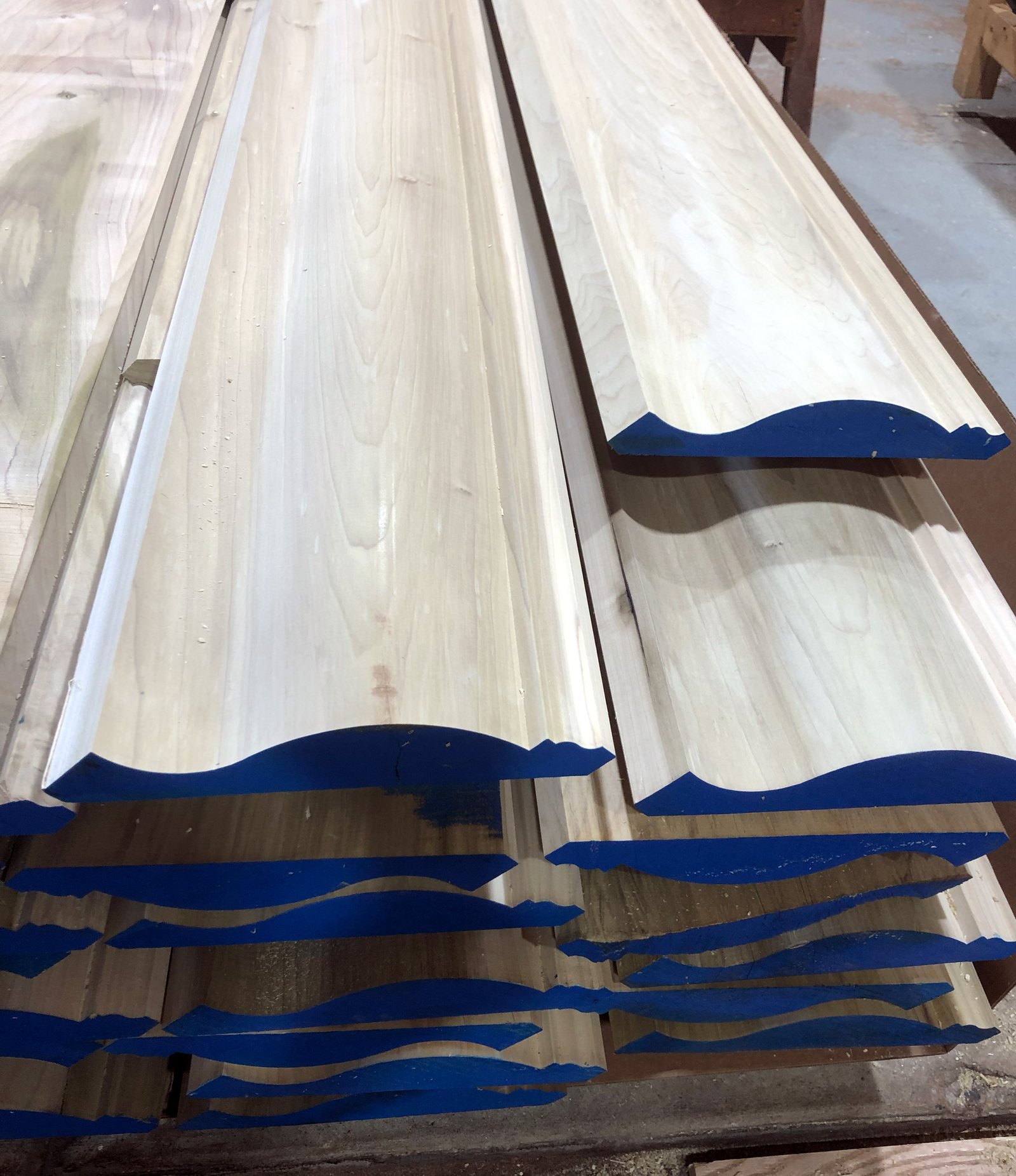
J. Gibson McIlvain stocks Select Heart cypress siding in shiplap, tongue-and-groove, and bevel profiles — kiln-dried to 12% MC and available in lengths up to 16 feet for clean runs without butt joints.
Installation for Maximum Coastal Performance
Cypress siding achieves its full coastal lifespan only with proper installation practices:
- Back-priming all six faces: Critical in coastal humidity. Seal all faces with a quality penetrating primer before installation to equalize moisture absorption between front (exposed) and back (cavity) faces.
- Rainscreen cavity: Minimum 3/4" ventilated gap is essential in coastal zones. Salt-laden air needs a drainage and drying path behind the siding. Direct-attach methods fail significantly faster in coastal exposure.
- 316 stainless steel fasteners: Standard 304 stainless corrodes in coastal salt air. 316 marine-grade stainless is required within 1,000 feet of saltwater. Hot-dipped galvanized is acceptable beyond 1,000 feet.
- End-grain sealing: Every field cut sealed with wax-based end sealer. End grain absorbs moisture 10-12× faster than face grain — in coastal humidity, unsealed end grain is the #1 failure point.
- Elevated clearance: Minimum 8" clearance between bottom of siding and grade. Coastal properties often have sand splash-back and salt accumulation at grade level.
Finish Options for Coastal Cypress
Cypress accepts all common exterior finishes, but coastal conditions demand specific formulations:
- Penetrating oil with UV blockers: Best for natural appearance. Reapply every 2-3 years in direct coastal exposure. No peeling or cracking — just fades when due for renewal.
- Solid-body acrylic stain: 5-7 year recoat cycle in coastal conditions. Flexible formulation accommodates cypress's moderate dimensional movement without cracking.
- Unfinished (natural weathering): Cypress weathers to a distinctive silver-gray. Acceptable for durability — finish is cosmetic, not structural, on heartwood cypress. The cypressene oils provide decay resistance regardless of surface finish.
"The biggest mistake I see on coastal cypress projects is specifying mixed-grade instead of Select Heart. Sapwood cypress in salt air fails in 5-8 years — it looks identical when installed, but it has none of the heartwood chemistry that makes cypress coastal-worthy. Always specify heart grade. The premium is 30-50%, but the lifespan difference is 3-5×."
— Brett Miller, President, J. Gibson McIlvain Co.
Frequently Asked Questions
Is cypress good for coastal siding?
Yes — baldcypress heartwood is one of the top choices for coastal siding. It evolved in brackish swamp environments, producing natural cypressene oils that resist both decay fungi and termites without chemical treatment. The Southern Cypress Manufacturers Association documents 30-50+ year lifespans in above-ground coastal applications when heartwood grade is specified and installed with proper back-priming and rainscreen ventilation.
Is cypress better than cedar for saltwater exposure?
For siding within 1,000 feet of saltwater, cypress outperforms cedar. Cedar's decay-resistant extractives (thujaplicins) are water-soluble and leach faster in the high-humidity, salt-spray conditions of coastal exposure. Cypress's cypressene oil is resin-bound and persists throughout the service life. In direct coastal exposure, cypress typically outlasts cedar by 10-15 years. Both species are priced similarly at $4.50-$8.00/sq. ft.
Does cypress siding need to be sealed or stained?
No — cypress heartwood does not require sealing or staining for durability. Its decay resistance comes from internal cypressene oil, not surface treatment. However, UV exposure will gray the surface within 6-12 months if left unfinished. Apply a penetrating UV oil every 2-3 years to maintain the golden-brown color, or allow it to weather to silver-gray. The finish choice is purely aesthetic — it does not affect structural longevity in heartwood grades.
What grade of cypress should I use for coastal siding?
Always specify Select Heart (100% heartwood) for coastal applications. Only heartwood contains the cypressene oils that provide natural decay and termite resistance. Sapwood cypress has no more durability than untreated pine and will fail in 5-8 years in coastal exposure. The heartwood premium is 30-50% over mixed grades but delivers 3-5× the coastal lifespan. J. Gibson McIlvain stocks Select Heart cypress in shiplap, T&G, and bevel profiles.
How long does cypress siding last near the ocean?
Heartwood baldcypress siding lasts 30-50+ years in coastal applications when properly installed with back-priming, rainscreen ventilation, and 316 stainless steel fasteners. Without proper installation (especially without back-priming and rainscreen gap), coastal lifespan drops to 15-25 years. Mixed-grade (heart and sap) cypress may fail in as little as 5-8 years in direct coastal exposure because sapwood lacks the protective cypressene chemistry.
Sources and Standards Referenced
- USDA Forest Products Laboratory — Wood Handbook: species durability, termite resistance zones, and coastal exposure data
- Southern Cypress Manufacturers Association (SCMA) — Cypress grading standards, installation guidelines, and field performance
- EN 350: Natural Durability of Solid Wood — European durability classification standard
- USDA Forest Service Termite Infestation Probability (TIP) Zone mapping
- ASTM D2017: Standard Test Method for Accelerated Laboratory Test of Natural Decay Resistance of Woods