What Shou Sugi Ban Actually Is
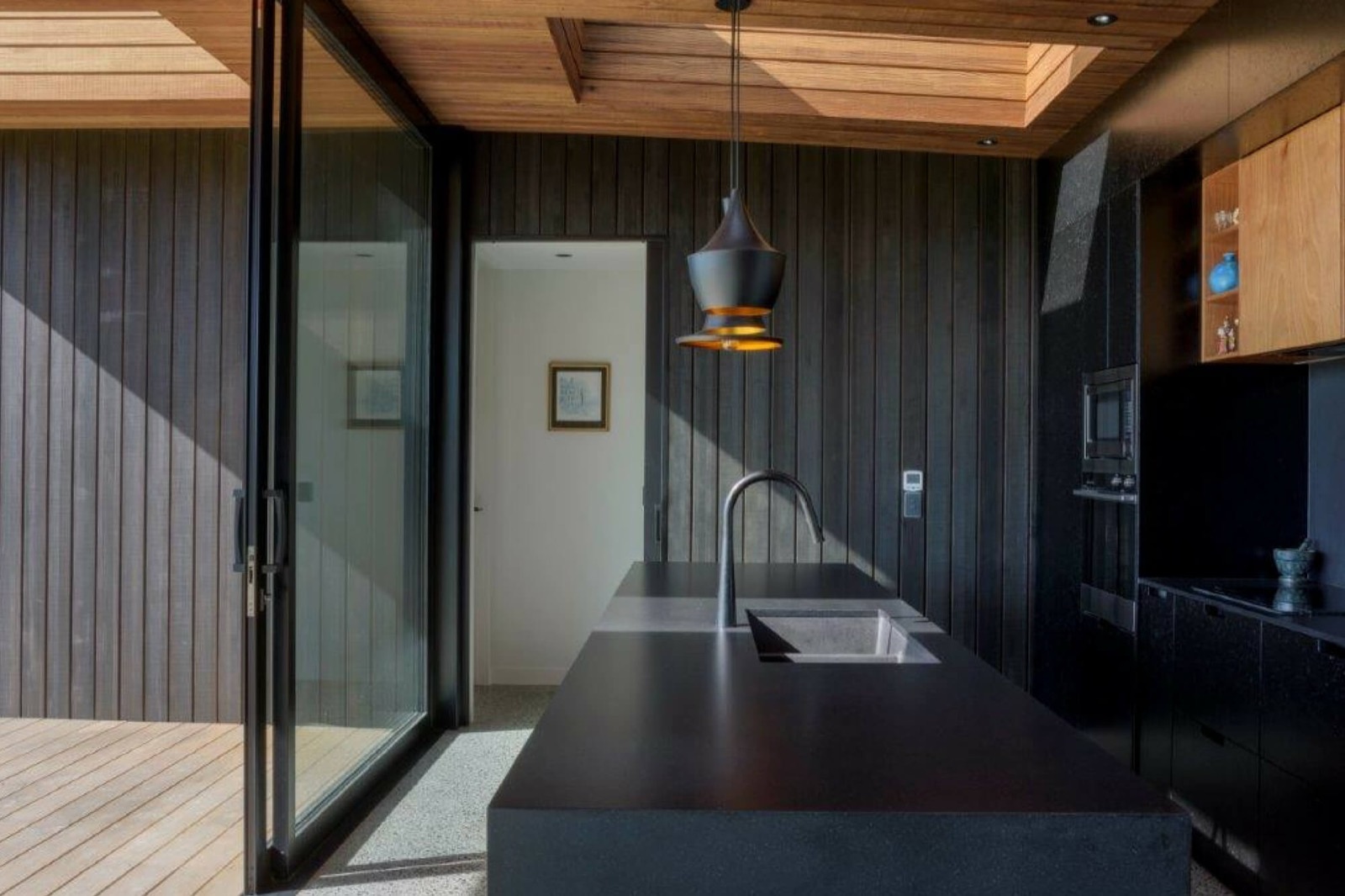
Shou sugi ban is surface charring, and the char is the whole point. Burning the face converts the surface to a layer of carbon, which shrugs off UV, water, and insects, then the board gets brushed to a chosen texture and usually sealed with oil.
The technique came from Japan, where it was used on sugi (Japanese cypress) to weatherproof siding without chemicals. The USDA Forest Products Laboratory notes that a charred surface layer slows moisture uptake and weathering on the face. The look ranges from a heavy alligatored black to a soft brushed gray-brown, depending on how hard the char is worked after burning.
Which Species Char Well
Cypress is the traditional choice, and cedar and Accoya are the two that char cleanly for a modern facade. Each takes the burn a little differently.
| Species | Char character | Notes |
|---|---|---|
| Cypress | Traditional, even char | Closest to Japanese sugi; strong regional option |
| Western Red Cedar | Deep, textured char | Light, stable, widely used cladding wood |
| Accoya | Clean char, holds it | Highly stable, so the char and finish move very little |
Accoya is worth calling out. Because acetylation makes it so dimensionally stable, the charred surface and the oil sit on a board that barely moves, so the finish holds longer. Cypress keeps the traditional feel, and cedar gives a deep textured black on a light, forgiving wood. For cypress in exposed settings, see our cypress coastal siding guide, and for the stable modified options, our thermally modified wood overview.
Char Level and Finish Are the Spec
Two boards of the same species look completely different depending on how hard the char is brushed and what finish goes over it. That is the part a project has to specify.
- Heavy char: the alligatored, crackled black surface, left mostly as-burned. Dramatic, high texture.
- Brushed char: the char is wire-brushed back to reveal grain, softening the black toward gray-brown.
- Finish: a penetrating oil, sometimes with a color, locks the surface and slows char rub-off. Films are not used; they peel and the char needs to breathe.
The oil recoats without stripping, the same way a penetrating oil works on any exterior wood; see our oil vs. film finishes guide. Specify the species, the char level, the finish, and the profile, and the supplier chars, brushes, and oils to that spec before shipping.
The Fire Question, Answered Honestly
Charred siding is often assumed to be fireproof, and that is not how it works. Shou sugi ban gives weather, rot, and insect resistance and a distinctive black surface. It does not, on its own, carry an ASTM E84 class or a WUI code approval.
If a project sits in a wildfire zone and needs a rated cladding, the fire compliance comes from the species and assembly, not from the char. A naturally Class A hardwood or a fire-retardant-treated species is the path there, documented for plan review. Char is an aesthetic and durability finish, and treating it as a fire rating is the one mistake to avoid on this material.
"People love the look, and they should, it is stunning on the right house. The thing we make clear up front is that charring is a finish, not a fire rating. Tell us the species, how heavy you want the char, and whether you want it brushed and oiled, and we source it to that. Accoya holds the char especially well because it does not move. But if the job is in a fire zone, the code compliance is a separate conversation about species and assembly."
Camden Zacker, Sales Director, J. Gibson McIlvain Company
How J. Gibson McIlvain Sources Charred Cladding
J. Gibson McIlvain sources shou sugi ban cladding to a project's spec: the species, the char level, and the finish. Accoya is a favorite substrate because its stability keeps the char and oil looking right for years, and cypress and cedar cover the traditional and the deep-textured looks. The material is milled to the wanted profile, charred, brushed, and oiled, then shipped nationwide.
The team is upfront that char is a finish, so where a project also needs a fire rating, it handles that separately with a naturally Class A hardwood or a documented fire-retardant-treated species. The recommendation pairs the charred cladding with a vented rainscreen and stainless fasteners, and with careful handling so the char is not rubbed off during install.
Charred Cladding Procurement Checklist
| Item | Why it matters |
|---|---|
| Species | Cypress, cedar, or Accoya; each chars differently. |
| Char level | Heavy alligator or brushed; sets the whole look. |
| Finish | Penetrating oil, optional color; no films. |
| Profile | T&G, shiplap, or rainscreen; hidden vs visible fasteners. |
| Fire requirement | Char is not a fire rating; handle code separately. |
| Handling and rainscreen | Protect the char; vented cavity and stainless. |
Where Charred Cladding Orders Usually Fail
- Treating char as a fire rating: it is a finish; fire compliance comes from species and assembly.
- Specifying a film finish: films peel over char; use penetrating oil.
- Leaving char level vague: heavy and brushed char look nothing alike; specify it.
- Rough handling: the char rubs off if boards are dragged; handle with care.
- No rainscreen: charred cladding still needs a vented cavity to dry.
Ordering Information to Resolve Before Pricing
- Species: cypress, cedar, or Accoya.
- Char and finish: char level, brushing, oil color.
- Profile: face width, reveal, fastening method.
- Code: any separate fire requirement for the zone.
- Logistics: square footage, lengths, delivery, lead time.
Related J. Gibson McIlvain Guidance and Next Steps
Frequently Asked Questions
Where can I source shou sugi ban charred wood siding?
Charred siding comes from a specialty supplier that mills the profile, chars the face, brushes it to the wanted texture, and seals it with oil before shipping. You specify the species, the char level, and the finish. J. Gibson McIlvain sources shou sugi ban cladding, including on Accoya, which holds the char especially well, along with cypress and cedar, and ships it nationwide to the project's spec.
What species work best for shou sugi ban?
Cypress is the traditional choice, closest to the Japanese sugi the technique was built on. Cedar chars to a deep, textured black on a light, stable wood, and Accoya chars cleanly and holds the char and oil especially well because acetylation makes it so dimensionally stable. Each takes the burn a little differently, so the species is part of the look, not just the substrate.
Is shou sugi ban siding fireproof?
No. Charring gives weather, rot, and insect resistance and a distinctive black surface, but it does not carry an ASTM E84 class or a WUI code approval on its own. Charred siding is an aesthetic and durability finish. If a project is in a wildfire zone and needs rated cladding, the fire compliance comes from the species and the assembly, using a naturally Class A hardwood or a documented fire-retardant-treated species, handled as a separate requirement.
What finish goes over charred siding?
A penetrating oil, sometimes tinted, seals the charred surface and slows char rub-off, and it recoats without stripping the way a penetrating oil does on any exterior wood. Film finishes like varnish are not used, since they peel and the charred surface performs better breathing. The char level and the oil together set the final look, from a heavy alligatored black to a softer brushed gray-brown.
How is charred cladding installed?
Charred cladding installs over a ventilated rainscreen cavity of at least 3/8 inch with stainless fasteners, the same as other wood cladding, and grooved profiles run groove-down to drain. The extra step is careful handling, since dragging or scuffing boards rubs off the char. J. Gibson McIlvain pairs charred cladding with a vented rainscreen and stainless fasteners, and any separate fire-code requirement is handled through species and assembly rather than the char.
Sources and Standards Referenced
- USDA Forest Products Laboratory - Surface charring and weathering
- Accoya - Acetylation and dimensional stability data
- ASTM E84 - Surface burning characteristics, for fire context
- Building Science Corporation - Rainscreen and cladding detailing
- Forest Stewardship Council - Chain of custody certification