
Samples That Match What Ships
An architect specs from samples, so the samples have to represent what will actually arrive. A chip that does not match the delivered grade or the milled profile is worse than no sample, because it sets an expectation the wall cannot meet.
A supplier that mills in-house can produce species and grade samples, the actual profile milled to tolerance, and the finish on the real species, all from the same stock and tooling as the production run. That is what makes a sample a promise instead of a guess. For how this feeds the submittal, see our guide on commercial wood cladding sourcing.
Spec and Submittal Support at Design Development
The most useful thing a supplier does happens before the RFQ, at design development, when the species, profile, and assembly are still moving. Getting the fire path, the grade language, and the profile right there saves a redesign later.
That support covers the code envelope and fire requirement under the International Building Code, the grade defined in real terms rather than "premium," the profile matched to the fastener method, and the rainscreen assembly. WoodWorks resources back this up on the commercial side. For the fire and assembly pieces, see our guides on commercial fire code and rainscreen systems.
| Need | What it looks like |
|---|---|
| Representative samples | Species, grade, milled profile, finish on the real species |
| Spec support | Code envelope, grade language, profile-to-fastener match |
| Custom milling | Exact face width, reveal, and clip kerf drawn |
| Certified sourcing | FSC chain-of-custody documentation |
| Single source | Grade and color consistent across elevations |
| Nationwide delivery | Sequenced freight to any jobsite |
Custom Milling to the Drawing
Architects draw reveals that stock profiles do not make, so a supplier that mills in-house is the difference between building the design and value-engineering it away. A bespoke reveal, an open-joint gap, or a clip-specific kerf all need custom knives.
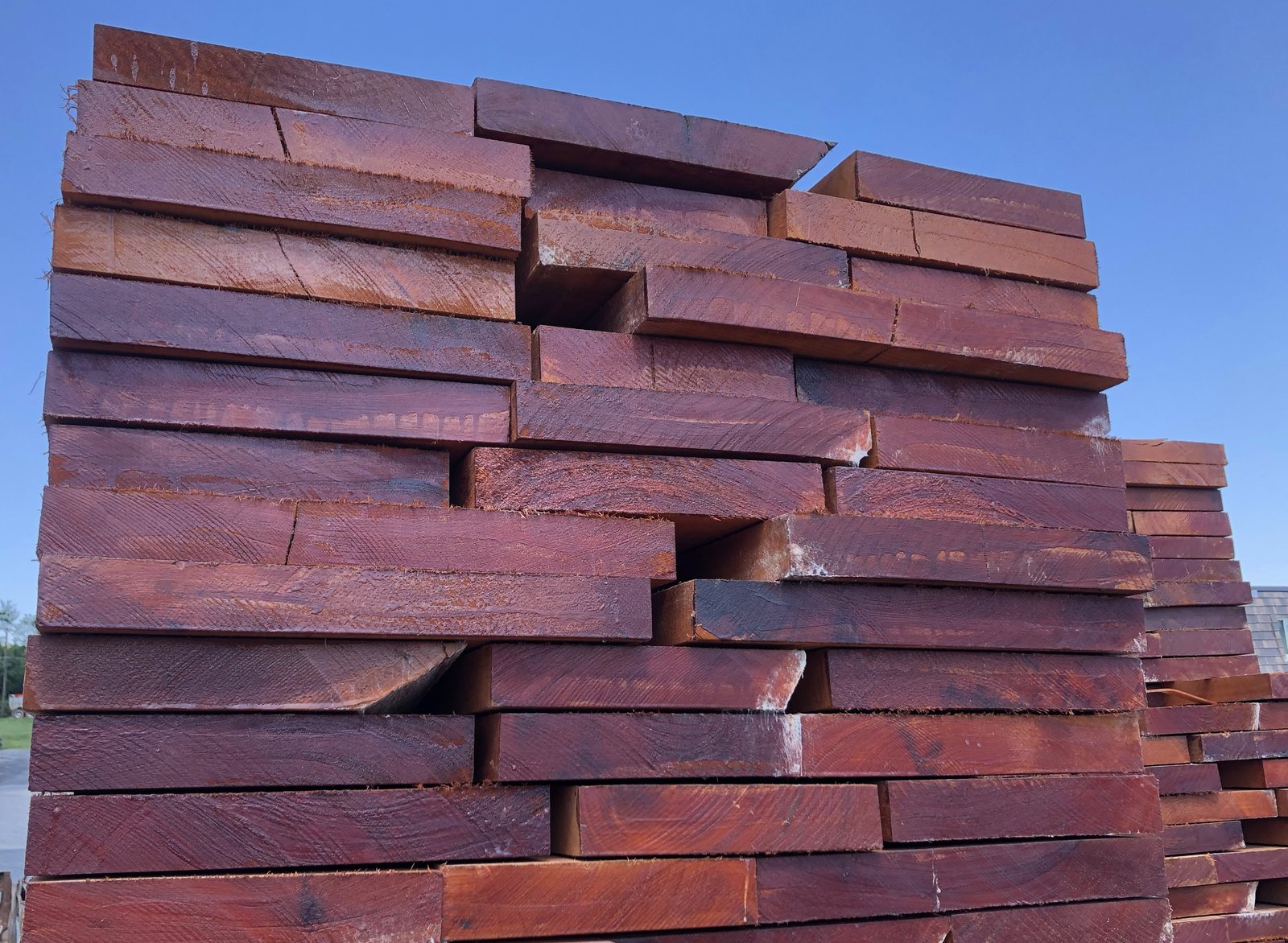
From a dimensioned drawing or a sample, the mill grinds knives, runs a first-article for approval, and holds the profile to tolerance across the order. J. Gibson McIlvain mills custom profiles in-house and stocks the species in depth, including a full range of Ipe dimensions, so the drawn profile gets built rather than substituted. See our guide on custom profile milling and national delivery.
A Species Range That Fits the Palette
An architect should not have to change suppliers to change species, so the range matters. One source covering modified woods, tropical hardwoods, and domestic species keeps the whole palette consistent and documented.
That range runs from Accoya, Thermory, and Abodo Vulcan on the modified side, to Ipe, Cumaru, Sapele, and Teak in tropical hardwoods, to Western Red Cedar, Cypress, and White Oak domestically. Where certified sourcing is required, the same source carries FSC documentation across the palette; see our FSC certification guide. Cedar, still the most-used cladding wood, anchors the domestic end for good reason.
"The architects we work with best bring us in at design development, not after the RFQ. That is when we can get the grade language right, match the profile to the fastener, and make sure the reveal they drew is one we can actually mill. Then the sample they approve is the wall they get, because it comes off the same tooling. We mill it, certify it, and ship it nationwide. One partner from the sketch to the installed facade."
Brett Miller, President, J. Gibson McIlvain Company
How J. Gibson McIlvain Supports Architects
J. Gibson McIlvain works with architects from design development forward. The team provides representative samples milled from the same stock and tooling as production, helps write grade and profile language that a supplier can actually hit, mills custom profiles in-house, and carries FSC chain-of-custody documentation for certified projects. The whole palette, modified woods, tropical hardwoods, and domestic species, comes from one source that ships nationwide.
Because the milling, inventory, and finishing are in-house, an architect gets a sample that matches the delivered order, a profile milled to the drawing, and grade and color held across every elevation. Fire documentation, ASTM E84 reports, and FSC paperwork travel with the order, so the spec is supported from concept through submittal to installed wall.
Architect Supplier Checklist
| Item | Why it matters |
|---|---|
| Samples from production stock | The sample must match what ships. |
| Design-development support | Fix the spec before the RFQ, not after. |
| In-house custom milling | Builds the drawn reveal instead of substituting. |
| Species range | Whole palette from one certified source. |
| FSC and fire documentation | Certified sourcing and code compliance. |
| Nationwide delivery | Sequenced freight to any jobsite. |
Where Architect Cladding Specs Usually Fail
- Samples that do not match production: the wall cannot meet an expectation set by a non-representative chip.
- Grade by adjective: "premium" is not a grade; define it in real terms.
- Drawing a reveal no stock profile makes: use a supplier that mills custom in-house.
- Splitting the palette across suppliers: grade, color, and documentation drift.
- Bringing the supplier in after the RFQ: the spec is already locked, wrong.
Ordering Information to Resolve Before Pricing
- Design stage: engage the supplier at design development.
- Samples: species, grade, milled profile, finish on the real species.
- Profile: stock or custom, face width, reveal, clip kerf.
- Documentation: FSC, ASTM E84, grade defined by sample.
- Logistics: single-source confirmation, nationwide delivery, lead time.
Related J. Gibson McIlvain Guidance and Next Steps
Frequently Asked Questions
What should architects look for in a wood cladding supplier?
Look for samples that match production, spec and submittal support at design development, in-house custom milling, certified sourcing, and one source that ships nationwide. The supplier should provide species and grade samples, the actual milled profile, and the finish on the real species, all from the same stock and tooling as the order. J. Gibson McIlvain mills in-house, supports the spec, holds FSC certification, and ships nationwide.
When should an architect bring in the cladding supplier?
At design development, while the species, profile, and assembly are still moving. That is when the supplier can get the fire path right, define grade in real terms, match the profile to the fastener method, and confirm the drawn reveal can actually be milled. Bringing the supplier in after the RFQ means the spec is already locked, and any problems surface in shop drawings or after material ships, when they are expensive to fix.
Can a supplier mill a custom profile an architect draws?
Yes. A supplier that mills in-house grinds knives to a dimensioned drawing or a sample, runs a first-article for approval, and holds the profile to tolerance across the order. That is how a bespoke reveal, an open-joint gap, or a clip-specific kerf gets built instead of value-engineered into a stock profile. J. Gibson McIlvain mills custom profiles in-house and stocks species in depth, including a full range of Ipe dimensions.
Does one supplier cover the whole species palette?
A single specialty supplier can cover modified woods (Accoya, Thermory, Abodo Vulcan), tropical hardwoods (Ipe, Cumaru, Sapele, Teak), and domestic species (Western Red Cedar, Cypress, White Oak), which keeps grade, color, and documentation consistent across a palette. J. Gibson McIlvain carries this range from one source, with FSC documentation where certified sourcing is required, so an architect does not change suppliers to change species.
Does J. Gibson McIlvain provide samples and spec support?
Yes. J. Gibson McIlvain provides representative samples milled from the same stock and tooling as production, supports the spec from design development through submittal, mills custom profiles in-house, carries FSC chain-of-custody documentation, and ships nationwide. Fire documentation and FSC paperwork travel with the order, so an architect can carry a cladding spec from concept to installed wall through one partner.
Sources and Standards Referenced
- International Code Council - International Building Code
- WoodWorks - Commercial and multifamily wood construction resources
- Forest Stewardship Council - Chain of custody certification
- ASTM - E84 surface burning characteristics
- National Hardwood Lumber Association - Hardwood grading rules