
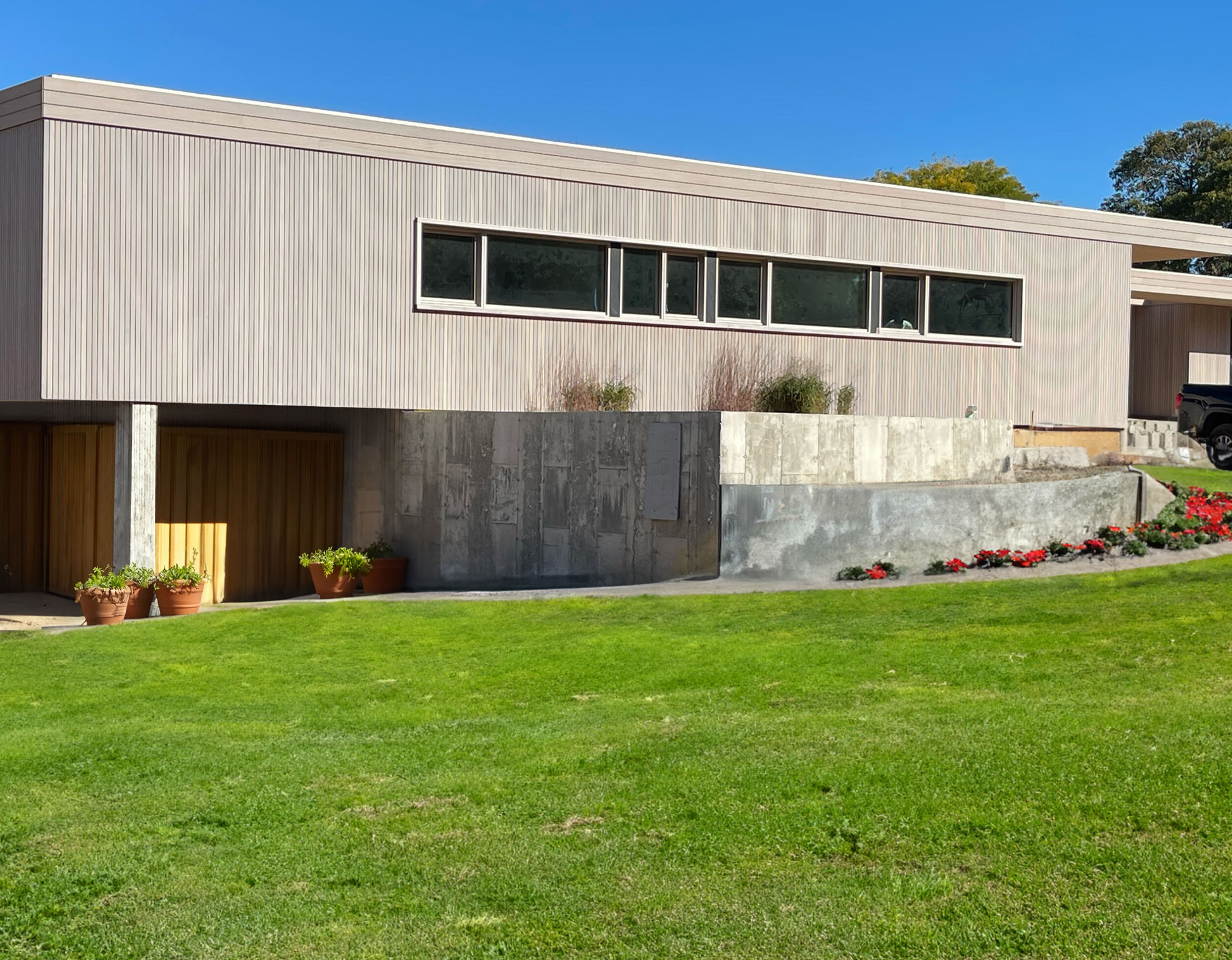
Why Coastal Environments Destroy Ordinary Wood Siding
Within 1,500 feet of a saltwater coastline, the atmosphere carries between 50 and 300 micrograms per square meter per day of chloride deposition, depending on prevailing wind patterns, wave action, and topography. That salt doesn't merely sit on the wood surface — it's hygroscopic, pulling moisture from humid marine air into the wood's cell structure even when rain hasn't fallen in days.
The degradation mechanism works on three fronts simultaneously. First, sodium chloride crystals absorb atmospheric moisture, keeping the wood's surface moisture content elevated above the 20% threshold where fungal decay becomes active. Second, chloride ions accelerate the corrosion of metal fasteners, creating iron staining and structural loosening. Third, salt deposits interfere with finish adhesion, causing coatings to blister and peel far sooner than they would in inland installations.
According to the USDA Forest Products Laboratory, wood species with high natural extractive content — particularly those containing silica, oils, and tannins — resist salt-accelerated decay significantly better than species that rely solely on density for durability. This is why a heavy but extractive-poor species like hard maple fails catastrophically in coastal service while a lighter but extractive-rich species like cypress can last generations.
Wind compounds the problem. Coastal sites routinely experience sustained winds of 90-130 mph during storm events, and even day-to-day conditions often exceed 40 mph. These loads don't just threaten to tear siding from the wall — they create pressure differentials that drive salt-laden moisture through joints, behind flashings, and into wall cavities where it cannot dry.
Understanding Salt Spray Exposure Zones
Not all coastal locations present equal challenges. The building science community generally recognizes three exposure zones based on distance from the mean high-water line and local geography:
Severe Zone (0-300 feet): Direct salt spray contact. Siding surfaces accumulate visible salt deposits between rain events. Only Class 1 durable species or properly treated/modified wood should be specified. Stainless steel fasteners (Type 316) are mandatory per the International Code Council building code requirements for corrosive environments.
Moderate Zone (300-1,000 feet): Airborne chlorides present but less concentrated. Salt accumulation is slower but still exceeds inland baseline by 10-50x. Class 1 or Class 2 durable species appropriate with proper finish systems. Type 316 or Type 304 stainless fasteners recommended.
Transitional Zone (1,000-1,500+ feet): Chloride levels reduced but measurably above inland baseline. Standard durable species perform well with appropriate maintenance intervals. Type 304 stainless or hot-dip galvanized (minimum G185 coating weight) fasteners acceptable.
Geography significantly modifies these distance bands. Properties on the windward side of barrier islands, exposed headlands, or elevated bluffs may need to shift one category more severe. Properties sheltered behind dunes, vegetation buffers, or other buildings may shift one category less severe.
Wind Load Engineering for Coastal Siding
The American Wood Council publishes design values for wood structural members, but siding engineers must also consider the specific requirements of ASCE 7 (Minimum Design Loads and Associated Criteria for Buildings and Other Structures) when calculating component and cladding pressures.
For a typical two-story coastal residence in a 130-mph basic wind speed zone (Risk Category II), the design wind pressure on wall cladding in corner zones can exceed 65 psf. This means a 6-inch-wide siding board spanning 16 inches between fastener points must resist a pullout force of approximately 45 pounds per fastener — a load that demands attention to both fastener selection and substrate quality.
Critical Wind Load Considerations
Negative pressure (suction): Hurricane winds create negative pressures on leeward walls and in corner zones that literally pull siding off the structure. These loads typically govern fastener specification, not the positive pressures from direct wind impact.
Cyclic fatigue: Coastal siding endures thousands of load cycles per year from routine wind gusts. Over 20-30 years, this cyclic loading can fatigue fastener connections even if no single event exceeds design limits. Species with higher specific gravity and better screw-holding capacity (like ipe, jatoba, or white oak) resist this fatigue better than lower-density species.
Profile aerodynamics: Siding profiles with deep shadow lines (like channel rustic or board-and-batten) create higher local wind pressures at profile edges compared to flat profiles (like shiplap or smooth-face lap). The National Fire Protection Association wind-driven rain research demonstrates that profile geometry significantly affects both wind load distribution and water management.
When specifying siding for coastal wind zones, engineers should consider reducing maximum fastener spacing from the standard 24 inches on center to 16 inches or even 12 inches on center in severe exposure zones. The incremental material cost of additional fasteners is negligible compared to the cost of reclading after a storm event.
Species Performance in Coastal Service
Not all naturally durable woods perform equally in salt spray environments. The combination of salt resistance, dimensional stability, decay resistance, and fastener-holding capacity creates a performance hierarchy that doesn't perfectly mirror the standard American Wood Protection Association durability classifications developed for ground-contact applications.
| Species | Salt Spray Resistance | Wind Load Capacity | Dimensional Stability | Natural Durability Class | Projected Coastal Service Life |
|---|---|---|---|---|---|
| Ipe | Excellent | Excellent (SG 0.90+) | Good | Class 1 | 40-75 years |
| Genuine Mahogany | Excellent | Good (SG 0.55) | Excellent | Class 1-2 | 30-50 years |
| Accoya (modified radiata pine) | Excellent | Moderate (SG 0.51) | Excellent | Class 1 | 50+ years (warranty-backed) |
| Teak | Excellent | Good (SG 0.63) | Excellent | Class 1 | 40-60 years |
| Thermory Ash | Very Good | Moderate (SG 0.62) | Very Good | Class 1-2 | 25-40 years |
| Abodo Vulcan (thermally modified pine) | Very Good | Moderate (SG 0.48) | Very Good | Class 2 | 25-35 years |
| Sapele | Very Good | Good (SG 0.62) | Good | Class 2 | 25-40 years |
| White Oak | Very Good | Very Good (SG 0.68) | Good | Class 2 | 25-40 years |
| Jatoba | Good-Very Good | Excellent (SG 0.91) | Good | Class 1-2 | 30-50 years |
| Cypress | Very Good | Moderate (SG 0.46) | Good | Class 2 | 25-40 years |
| Western Red Cedar | Good | Low (SG 0.32) | Very Good | Class 2-3 | 15-25 years |
| Douglas Fir | Fair | Good (SG 0.50) | Moderate | Class 3-4 | 10-20 years (finished) |
Notes: Service life estimates assume proper installation with ventilated rainscreen cavity, stainless steel fasteners, and appropriate finish maintenance. Actual performance varies with specific exposure conditions, maintenance practices, and installation quality. SG = specific gravity (oven-dry basis).
Tropical Hardwoods: The Density Advantage
Ipe, jatoba, and other tropical hardwoods offer the highest combination of density, extractive content, and silica that resists salt-spray degradation. Ipe's specific gravity of 0.90+ means it absorbs moisture slowly, giving salt less opportunity to penetrate the cell structure. Its high silica content (up to 1.4% by weight) creates a natural barrier against both decay organisms and the hygroscopic effects of salt crystal accumulation.
The tradeoff is workability. Ipe requires carbide-tipped tooling, pre-drilling for all fasteners, and careful attention to end-grain sealing. In coastal applications where fastener density increases for wind load resistance, pre-drilling costs rise proportionally. Despite this, the total lifecycle cost of ipe siding in severe coastal exposure often undercuts less durable species that require replacement within 15-20 years.
Genuine Mahogany: Stability as Strategy
Genuine mahogany (Swietenia macrophylla) brings a different advantage to coastal service — exceptional dimensional stability. With a tangential-to-radial shrinkage ratio near 1.0 (one of the lowest of any commercial species), mahogany siding maintains tight joints through seasonal moisture cycling. This matters enormously in coastal environments where humidity fluctuations of 40-95% RH can occur within a single day during weather pattern transitions.
When using a CITES-listed species, always verify legal-harvest documentation and chain-of-custody certification before specifying. Specifiers should source exclusively from FSC-certified suppliers who can provide full traceability documentation — a standard that J. Gibson McIlvain has maintained since obtaining FSC chain-of-custody certification.
Thermally Modified Species: Engineered Durability
Thermal modification fundamentally alters wood's relationship with moisture by permanently breaking down hemicelluloses — the wood polymers most responsible for moisture absorption. The process, which heats wood to 180-230°C in an oxygen-free environment, reduces equilibrium moisture content by 40-60% compared to unmodified stock of the same species.
For coastal siding, this moisture resistance translates directly into salt spray performance. If wood absorbs less moisture, dissolved salts have less pathway into the cellular structure, and the surface dries faster between salt deposition events.
Thermory (thermally modified ash, pine, and spruce) achieves Class 1-2 durability ratings through this process, transforming domestically abundant but otherwise non-durable species into coastal-grade cladding. Thermory's decking and cladding profiles are specifically engineered for dimensional stability in high-moisture environments. Abodo Vulcan (thermally modified radiata pine from New Zealand) uses a proprietary thermal modification process calibrated for cladding applications, achieving Class 2 durability with good dimensional stability and a distinctive dark coloration that weathers to silver-grey. More detail on thermally modified performance data is available from Thermory and Abodo.
See our detailed analysis: Accoya Siding Performance Data.
Accoya: Acetylation for Extreme Exposure
Accoya takes a different chemical approach — acetylation permanently bonds acetyl groups to wood cell walls, reducing the wood's ability to absorb water by approximately 80%. The resulting material behaves more like a dimensionally stable composite than natural wood, with a Class 1 durability rating and a 50-year above-ground warranty backed by the manufacturer.
In salt spray environments, Accoya's extremely low moisture absorption means salt crystals remain on the surface where they're easily washed away by rain or routine maintenance. The wood simply doesn't provide the moisture pathway that allows salt to penetrate and cause internal damage. Accoya's published performance data includes accelerated salt spray testing (ASTM B117 protocol adapted for wood) showing negligible degradation after 3,000+ hours of continuous exposure.
Domestic Durable Species
Cypress and cedar remain popular choices for coastal siding due to their natural durability, workability, and regional availability. Old-growth cypress heartwood contains cypressene oil that resists both decay and insect damage — a critical advantage in warm coastal climates where termites and carpenter ants complement fungal decay as degradation agents.
For detailed cypress coastal performance analysis, see: Cypress Siding for Coastal Homes.
White oak deserves special mention for coastal applications. Its tyloses (cellular growths that block vessel openings) make it one of the few temperate hardwoods that resist liquid penetration. This same property that makes white oak suitable for barrel-making makes it resistant to salt solution wicking — a meaningful advantage over ring-porous species like red oak or ash that readily transport liquids through their vessel structure.
Fastener Selection for Coastal Siding
Fastener failure is the most common mode of coastal siding system failure, not wood degradation. The combination of salt spray and dissimilar metals creates aggressive galvanic corrosion that can reduce a standard hot-dip galvanized nail to a powder stain within 5-7 years in severe coastal exposure.
Fastener Material Hierarchy for Coastal Service
Type 316 Stainless Steel: The minimum standard for severe exposure zones. Contains molybdenum for enhanced chloride resistance. Specify for all applications within 300 feet of saltwater, and for all naturally acidic species (ipe, cypress, cedar, white oak) regardless of distance.
Type 305 Stainless Steel: Higher nickel content than 304, superior formability for ring-shank nails. Good performance in moderate coastal zones but may show surface staining (not structural corrosion) in severe exposure with tannin-rich species.
Type 304 Stainless Steel: Acceptable for moderate and transitional zones with species that don't produce highly acidic extractives. Not recommended for ipe, white oak, or cypress in any coastal zone.
Silicon Bronze: Traditional boatbuilding fastener material with excellent saltwater resistance. Limited availability in modern siding fastener configurations but worth considering for restoration projects and high-end residential work.
Testing per ASTM International standard B117 (Standard Practice for Operating Salt Spray Apparatus) provides accelerated corrosion data that can guide fastener material selection. However, real-world performance often differs from laboratory results due to the interaction of wood extractives, moisture cycling, and galvanic effects between dissimilar metals in the assembly.
The Rainscreen Imperative
In coastal environments, a ventilated rainscreen cavity behind the siding isn't optional — it's the single most important detailing decision for long-term durability. The cavity serves multiple functions simultaneously:
Pressure equalization: A ventilated cavity behind the cladding reduces wind-driven rain penetration by equalizing the pressure across the siding plane. This is particularly critical at horizontal joints and around window/door penetrations where pressure differentials concentrate water infiltration.
Drying capacity: Any moisture that does penetrate the cladding (whether from rain, condensation, or salt-absorbed atmospheric moisture) can dry to the ventilated cavity rather than being trapped against the water-resistive barrier. In coastal environments with sustained humidity above 70%, this drying capacity is essential for keeping the siding's backside below the 20% MC decay threshold.
Salt deposit management: Salt that penetrates joints accumulates on the cavity side of siding rather than against the structural sheathing. The ventilation flow helps dry these deposits and prevents sustained salt-moisture contact with the most critical waterproofing layer.
Minimum cavity depth for coastal applications should be 3/4 inch (19mm), with 1 inch preferred for severe exposure zones. Ventilation openings at top and bottom should provide a minimum net free area of 1 square inch per linear foot of wall, with insect screening that won't obstruct airflow.
For additional guidance on rainscreen assembly specification, see our species profile guide: Wood Rainscreen Cladding Species Profiles.
Finish Systems for Coastal Siding
Salt deposits on wood surfaces create a particularly hostile environment for coating adhesion. Salt crystals beneath a film-forming finish absorb moisture and expand, creating blistering pressure that delaminates even well-applied coatings. This is why conventional paint systems often fail within 3-5 years in severe coastal zones while lasting 8-12 years on the same house's inland-facing walls.
Penetrating Oil Finishes
Penetrating oil finishes avoid the adhesion-failure mechanism entirely by not forming a surface film. They work by saturating the wood's surface cells with hydrophobic compounds, reducing moisture uptake without creating a barrier that salt can undermine. In coastal applications, high-quality penetrating oils with UV absorbers and mildewcides provide 2-3 years of protection between recoats — a shorter interval than inland applications but with easier maintenance (no scraping or sanding required).
Film-Forming Finishes
If a film-forming finish is required (for color or aesthetic consistency), specify only elastomeric acrylic formulations designed for coastal exposure. These products maintain flexibility through temperature and humidity cycling, reducing the likelihood of cracking that admits salt-laden moisture behind the film. Surface preparation must include thorough removal of all salt deposits (freshwater pressure washing, minimum 48-hour drying) before application.
The Weathering Option
For naturally durable species with sufficient extractive content (ipe, teak, genuine mahogany, white oak, cypress), allowing the wood to weather naturally to a silver-grey patina eliminates finish maintenance entirely. This approach works well in coastal environments where finish systems face accelerated degradation, provided the underlying species has Class 1-2 natural durability and the assembly details (rainscreen, flashing, fasteners) are properly executed.
The WoodWorks program provides design support for architects and engineers specifying mass timber and wood building systems, including exterior cladding assemblies for challenging environments.
Code Compliance and Testing Standards
Coastal siding installations must satisfy both prescriptive building code requirements and performance-based engineering when project conditions exceed prescriptive limits. Key standards include:
ASTM D2898: Standard Practice for Accelerated Weathering of Fire-Retardant-Treated Wood for Fire Testing — relevant for coastal projects in wildland-urban interface zones where both fire and salt spray resistance are required.
ASTM D1037: Standard Test Methods for Evaluating Properties of Wood-Base Fiber and Particle Panel Materials — provides fastener-withdrawal test methods used to verify wind-load resistance of siding-to-substrate connections.
ASTM G85: Standard Practice for Modified Salt Spray (Fog) Testing — more representative of real coastal conditions than the standard B117 test because it includes cyclic drying phases that simulate actual marine atmosphere exposure.
The National Hardwood Lumber Association grading rules ensure consistent quality in hardwood siding stock, but coastal projects should specify "Clear" or "Select" grades to minimize the sapwood content and natural defects (particularly knots and splits) that create preferential pathways for salt penetration and moisture accumulation.
Chain-of-custody certification through PEFC or FSC provides additional documentation of material origin and legal harvest — increasingly important for projects pursuing LEED or other green building certifications in coastal communities where environmental sensitivity runs high.
Installation Details That Make or Break Coastal Performance
End-Grain Sealing
End grain absorbs moisture (and dissolved salt) at 10-15 times the rate of face grain. Every cut end, miter joint, and butt joint must receive end-grain sealer before installation. In severe coastal exposure, specify two coats of end-grain sealer with 24-hour drying between coats. This single detail — often skipped by installers under schedule pressure — can be the difference between 30-year performance and premature joint deterioration.
Clearance from Grade
Minimum clearance between the bottom of siding and finished grade should be 8 inches in coastal environments (versus the standard 6 inches specified by most codes). This additional clearance reduces splash-back of salt-laden water from hard surfaces and provides better air circulation for drying. For siding terminating above decks or porches, maintain minimum 2-inch clearance with a properly detailed drip edge.
Joint Design
Butt joints in horizontal siding should be backed with a strip of building paper or membrane and offset from studs to prevent moisture accumulation at structural members. In coastal applications, consider using splined or shiplap joints rather than butt joints to reduce the direct moisture pathways that allow salt-laden water to reach the water-resistive barrier.
Flashing Integration
Head flashings above windows, doors, and horizontal transitions must extend behind the water-resistive barrier and include end dams to prevent lateral water movement. In coastal wind-driven rain conditions, the standard "kick-out" flashing at roof-to-wall intersections should be upsized and sealed at all laps. These intersection details are where most coastal siding assemblies first fail.
For comprehensive specification guidance on achieving multi-decade performance, see: Specifying Exterior Hardwood Cladding for a Thirty-Year Lifespan.
"The biggest mistake we see in coastal siding specifications is treating the species selection as the entire decision. Species matters, but the fastener material, cavity ventilation, end-grain treatment, and maintenance protocol collectively determine whether that species reaches its potential service life or fails in a fraction of the time. We've seen ipe fail in 8 years from stainless-steel-skipped fastener corrosion, and we've seen cypress last 45 years because every detail was right."
— Brett Miller, Product Specialist, J. Gibson McIlvain
Lifecycle Cost Analysis
When evaluating species for coastal siding, the installed cost per square foot tells only a fraction of the economic story. A proper lifecycle cost analysis must include:
Initial material and installation: Higher-density species cost more per board foot and require more labor (pre-drilling, specialized tooling, additional fasteners for wind resistance). Ipe siding typically installs at 2.5-3x the cost of cedar on a per-square-foot basis.
Maintenance frequency and cost: A penetrating oil finish on cedar requires recoating every 2-3 years in coastal exposure. Over 30 years, that's 10-15 maintenance cycles at $2-4/sf per cycle, adding $20-60/sf in maintenance costs. Ipe left to weather naturally: $0 in finish maintenance.
Expected replacement timing: If cedar siding requires full replacement at year 20 while ipe lasts 50+ years without replacement, the cedar option incurs a second full installation cost within the analysis period.
When maintenance and replacement costs are included over a 50-year analysis period, the total cost of ownership for premium species (ipe, teak, genuine mahogany, accoya) often equals or undercuts the repeated maintenance and replacement costs of less durable alternatives. This is particularly true in severe coastal exposure where maintenance intervals shorten and replacement timelines accelerate.
Regional Considerations
Atlantic Coast — Northeast
Freeze-thaw cycling adds a degradation mechanism absent from warm coastal climates. Salt-saturated wood that freezes undergoes internal crystal expansion damage similar to concrete freeze-thaw deterioration. Species with very low equilibrium moisture content (accoya, thermally modified ash/pine) resist this mechanism better than species that rely solely on extractive durability. For regional species guidance, see: Best Wood Siding Species for the Northeast.
Atlantic Coast — Southeast and Gulf Coast
High year-round humidity and warm temperatures create optimal conditions for fungal decay and termite activity. Species selection must address biological durability alongside salt spray resistance. Ipe, teak, and cypress offer strong performance against both mechanisms. Termite resistance is not a standard attribute of thermal modification, so Thermory and Abodo Vulcan products should receive additional consideration for termite pressure in these regions.
Pacific Coast
Lower average humidity and less intense salt spray (Pacific waves tend to produce less aerosol than Atlantic surf) mean that Pacific coastal installations generally face less severe conditions than equivalent Atlantic distances. However, the combination of UV intensity and periodic high-wind events (atmospheric rivers, Pacific storms) creates unique challenges. Douglas fir — abundant regionally — can perform adequately in transitional Pacific coastal zones with diligent finish maintenance.
Sustainability and Certification
Coastal communities are often at the forefront of environmental awareness, making sustainable sourcing a project requirement rather than an optional add-on. Key certifications relevant to coastal wood siding:
FSC (Forest Stewardship Council): Chain-of-custody certification traces material from forest to job site. When using a CITES-listed species, always verify legal-harvest documentation and chain-of-custody certification before specifying. J. Gibson McIlvain maintains FSC chain-of-custody certification across its hardwood inventory.
PEFC (Programme for the Endorsement of Forest Certification): International umbrella organization recognizing national certification systems. Particularly relevant for European-sourced thermally modified products.
Cradle-to-Cradle / EPDs: Environmental Product Declarations provide transparent lifecycle assessment data. Accoya and several Thermory products have published EPDs documenting lower embodied carbon than competing non-wood cladding materials (fiber cement, metal, composite).
How McIlvain Would Specify This for a Real Project
When a coastal project comes through our specification desk, we start with three questions: distance from mean high-water line, primary wall orientation relative to prevailing wind, and client's maintenance commitment level. These three variables determine which species tier is appropriate before we even discuss aesthetics.
For a severe-zone project (under 300 feet from saltwater, windward orientation), our default recommendation narrows to accoya, ipe, or teak — species where we have decades of documented coastal field performance. For moderate-zone projects with committed maintenance, we'll open the conversation to genuine mahogany, thermally modified ash (Thermory) or pine (Abodo Vulcan), sapele, or white oak.
We specify the complete assembly, not just the siding board. That means we're documenting the rainscreen furring material and depth, the specific fastener alloy and pattern, the WRB product, the end-grain sealer brand, and the initial finish system with a maintenance schedule. We've learned from warranty claims that partial specifications lead to substitutions in the field that compromise the system.
For projects requiring both wind-load engineering and aesthetic considerations, we maintain relationships with structural engineers experienced in high-wind coastal construction who can calculate component and cladding pressures for specific building geometries and provide sealed fastener schedules.
Performance and Procurement Checklist
- Confirm exposure zone classification (severe/moderate/transitional) based on actual site distance and orientation
- Specify minimum natural durability class appropriate to exposure zone (Class 1 for severe, Class 1-2 for moderate)
- Select fastener material: Type 316 SS for severe zone, Type 304 SS or silicon bronze for moderate zone
- Specify rainscreen cavity depth: minimum 3/4" for moderate, 1" for severe exposure
- Confirm species availability in required profile, dimension, and grade
- Verify FSC or PEFC chain-of-custody documentation for tropical hardwoods
- Specify end-grain sealer product and application protocol (two coats for severe exposure)
- Document finish system with maintenance interval specific to coastal exposure
- Calculate component and cladding wind pressures per ASCE 7 for the specific site
- Determine fastener pattern (spacing reduction for high-wind zones)
- Confirm lead time — tropical hardwoods and modified species often require 6-10 week procurement
- Request mill certificates for density and moisture content verification on tropical species
Where Specifications Usually Fail
Fastener substitution: The most common coastal siding failure we trace back to specification non-compliance. A framing crew uses the galvanized nails already on their truck instead of the specified stainless. By year 5, every fastener is a rust streak and by year 10 the siding is falling off the wall.
Eliminated rainscreen cavity: Budget pressure during VE (value engineering) rounds often targets the "air gap behind the siding" as unnecessary cost. Removing this detail saves approximately $1.50-2.50/sf initially but virtually guarantees accelerated backside decay and potential sheathing damage within 10-15 years.
Skipped end-grain sealing: Installers under schedule pressure skip the slow step of sealing every cut end. Within 3-5 years, butt joints and trim intersections show dark decay staining while mid-board surfaces remain sound.
Inadequate clearance from grade: Standard 6-inch clearances that work inland allow coastal splash-back to saturate the siding bottom course. We specify 8 inches minimum and strongly recommend 12 inches for the bottom siding course in severe zones.
Wrong species grade: Specifications that call for "mahogany siding" without specifying heartwood content and grade get filled with stock containing significant sapwood. Sapwood of even Class 1 durable species has negligible decay resistance — it's the heartwood extractives that provide durability.
Ordering Information to Resolve Before Pricing
- Profile and dimension: Tongue-and-groove, shiplap, channel rustic, bevel, or board-and-batten? Nominal width and thickness?
- Grade: Clear, Select, or #1 Common? Heartwood content requirement?
- Quantity: Net square footage plus waste factor (typically 10-15% for standard profiles, 15-20% for random lengths)
- Finish: Pre-finished at mill (specify product/color) or field-finished?
- Certification: FSC-certified required? FSC Mix acceptable or FSC Pure only?
- Lead time flexibility: Fixed install date or flexible within a delivery window?
- Delivery logistics: Forklift available on site? Maximum bundle weight/length constraints?
- Fastener package: Include stainless fasteners with material order or supplied separately?
Related McIlvain Guidance and Next Steps
Our technical team provides species consultation, sample packages, and detailed project pricing for coastal siding applications. For projects in the specification phase, we can provide:
- Species samples showing weathered vs. freshly milled appearance
- Technical data sheets with actual test results for salt spray, hardness, and dimensional stability
- CAD-ready profile drawings for specification documents
- Historical project references in similar coastal exposure conditions
- Lead time and pricing estimates for specific species/profile/grade combinations
Contact our specification desk at mcilvain.com/contact-us or call for immediate consultation. Founded in 1798, J. Gibson McIlvain has supplied coastal construction projects along the entire Eastern Seaboard for over two centuries — we understand what salt water does to wood and how to specify against it.
Additional resources: McIlvain Services Overview | Thermally Modified Wood Guide
Frequently Asked Questions
How far from the ocean does salt spray affect wood siding?
Measurable chloride deposition typically extends 1,000-1,500 feet from the mean high-water line, with the most severe conditions occurring within 300 feet. However, local factors significantly modify these distances. Elevated sites, windward exposures, and locations on exposed headlands may experience severe salt spray at greater distances, while properties sheltered behind dunes, vegetation, or other structures may see reduced exposure at closer distances. For specification purposes, we recommend site-specific chloride deposition testing (ASTM G140 candle method) for projects where exposure classification is uncertain.
Can pressure-treated wood be used for coastal siding?
Pressure-treated wood (typically southern yellow pine with copper-based preservatives) provides decay resistance but introduces several problems in coastal siding applications. The treatment chemicals accelerate corrosion of non-stainless fasteners, the species' natural dimensional instability causes excessive warping and cupping in fluctuating coastal humidity, and the appearance generally doesn't meet architectural standards for visible siding. For structural components hidden behind siding (furring strips, blocking), pressure-treated material is appropriate and cost-effective. For the visible siding itself, naturally durable or thermally modified species are strongly preferred.
What maintenance schedule should I follow for wood siding in coastal environments?
Maintenance intervals in coastal environments should be approximately 60-70% of manufacturer recommendations developed for inland applications. For penetrating oil finishes: recoat every 18-24 months in severe zones, every 2-3 years in moderate zones. For film-forming finishes: inspect annually, spot-repair any cracks or blisters immediately, and plan full recoating every 4-6 years in severe zones. For unfinished naturally durable species (ipe, teak, white oak): annual freshwater rinse to remove salt accumulation, inspect fasteners and joints annually, and address any biological growth (mildew, algae) with appropriate cleaners before it establishes.
Is thermally modified wood better than naturally durable tropical hardwood for coastal siding?
Neither category is universally superior — they represent different performance strategies. Tropical hardwoods (ipe, teak, genuine mahogany) offer maximum density and extractive-based durability with proven multi-decade track records in coastal service. Thermally modified species (Thermory ash/pine/spruce, Abodo Vulcan pine) offer reduced moisture absorption and improved stability from domestically or sustainably plantation-grown base species, often at lower cost with better availability. The choice typically depends on budget (tropical hardwoods cost 2-3x more installed), aesthetic preference (tropical hardwoods offer richer color variation), sustainability requirements, and expected service life targets. For severe coastal zones, we generally recommend tropical hardwoods or accoya. For moderate zones, thermally modified options provide excellent value.
Do I need a rainscreen gap behind coastal wood siding?
Yes, unequivocally. While building codes may not explicitly require a ventilated rainscreen cavity for wood siding in all jurisdictions, the building science consensus — supported by decades of field failure analysis — is that a ventilated drainage cavity is essential for durable coastal siding performance. The cavity provides pressure equalization (reducing wind-driven rain penetration), drying capacity (allowing back-side moisture to evaporate), and thermal buffering. Minimum cavity depth should be 3/4 inch for moderate coastal zones and 1 inch for severe zones, with continuous ventilation at top and bottom. Skipping the rainscreen cavity to save $1.50-2.50/sf in initial construction cost typically results in 40-60% reduction in siding service life — a false economy by any lifecycle cost measure.
Sources
- USDA Forest Products Laboratory — Research on wood durability, species properties, and decay mechanisms in exterior exposure
- American Wood Council — Design values and engineering standards for wood structural systems
- ASTM International — Testing standards for salt spray resistance (B117, G85), weathering, and material performance
- International Code Council — Building code requirements for exterior wall coverings and fasteners in corrosive environments
- Forest Stewardship Council — Chain-of-custody certification standards for responsibly sourced wood products
- National Fire Protection Association — Wind-driven rain and fire resistance research relevant to coastal cladding systems
- American Wood Protection Association — Wood durability classifications and preservative treatment standards
- National Hardwood Lumber Association — Grading rules and quality standards for hardwood lumber
- Thermory — Thermal modification process documentation and product performance data
- Abodo Wood — Vulcan thermally modified pine specifications and durability testing
- Accoya — Acetylated wood performance data including salt spray test results
- WoodWorks — Design support for architects specifying wood building systems
- PEFC International — Forest certification and chain-of-custody standards


