What Counts as a Bulk Ipe Order
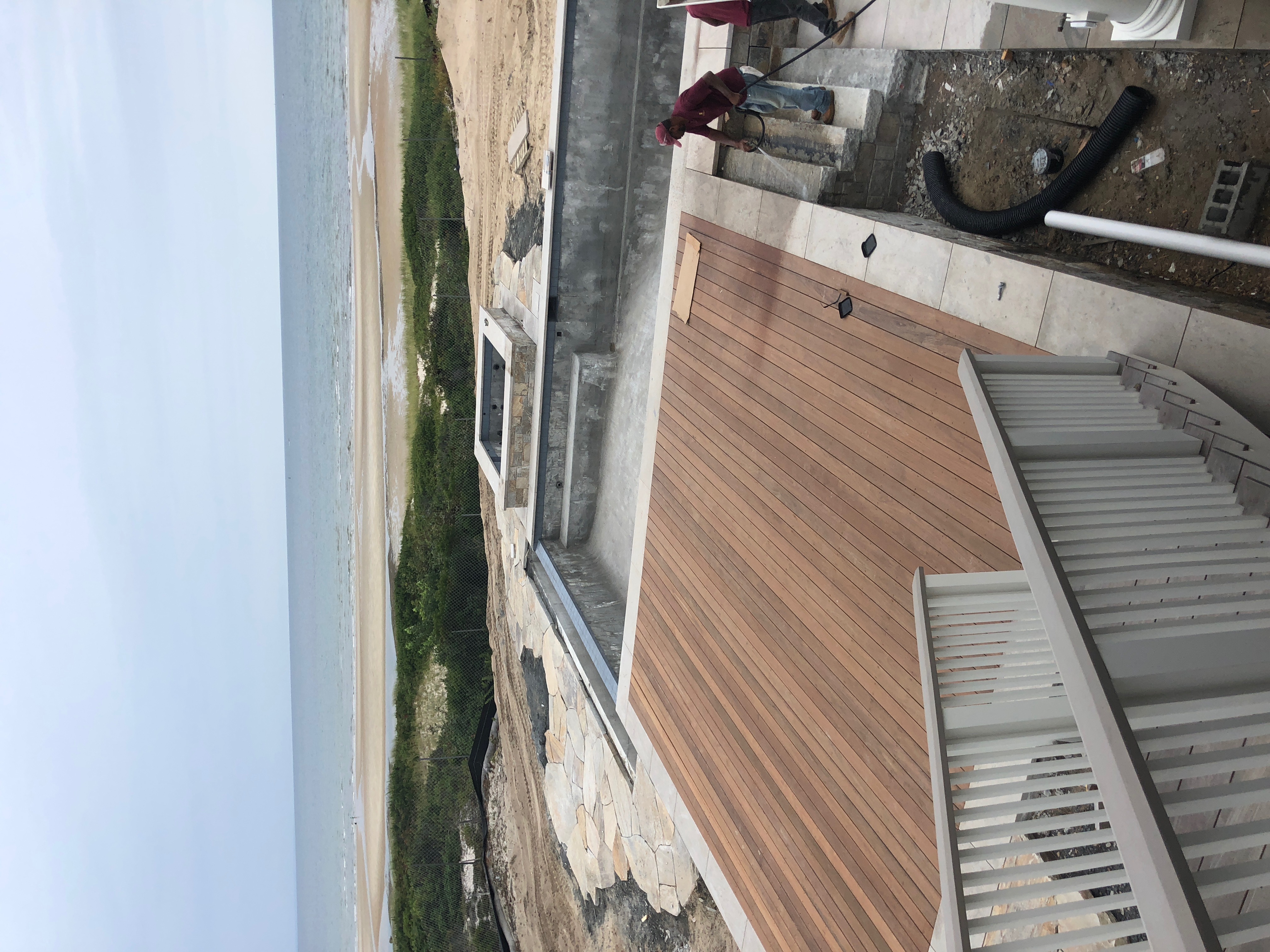
Bulk Ipe begins where a yard's shelf stock ends, which on residential work means any package over roughly 2,000 square feet of deck surface, any job needing matched lengths across multiple elevations, or any order a builder expects to arrive on one truck with one tally. The number itself matters less than the buying behavior behind it. A homeowner replacing a 300 square foot deck buys what is on the rack. A builder framing a 6,000 square foot pool surround, three balconies and a dock walkway is buying a package, and a package has to be assembled deliberately from a deep pile of material that was graded, dried and milled with that job in mind.
That distinction drives everything else in this article. Once you cross into package territory, the question stops being "who has Ipe" and becomes "who can hold, sort, mill and stage this much Ipe in the lengths my drawings call for." Those are different companies. Plenty of suppliers can hand you forty boards. Very few can pull 12,600 lineal feet of 5/4x6 in run lengths from 8 to 20 feet, all from consistent stock, and put it on a flatbed to a jobsite in another time zone.
Large residential also carries a constraint commercial work sometimes escapes. The client sees the deck every day, from four feet away, in raking afternoon light. Color scatter, mixed grain, sapwood streaks and short-length patchwork all read instantly on a residential surface. The bulk buyer is therefore buying uniformity as much as volume.
Where to Buy: The Four Channels and What Each Actually Delivers
There are four realistic places to buy Ipe decking in volume, and only one of them reliably serves large residential packages: the importer-miller who holds the material, grades it and mills it under one roof. Understanding the other three is what keeps a builder from making an expensive routing mistake.
The first channel is the local retail lumberyard or big box. It works for repairs and small decks. It fails on volume because the yard is itself buying from someone upstream, in small lots, with no control over grade consistency between lots. Ask for 6,000 square feet and you get material assembled from several purchases over several months. It will not match.
The second channel is the contractor distributor. Better. Real inventory, real delivery trucks, familiar with builder schedules. The limitation is milling. Most distributors buy dimension already surfaced and profiled, so if your architect drew a custom face width, a specific groove, or a length schedule that does not match what the mill upstream happened to cut, the distributor cannot solve it. They can only sell what came in.
The third channel is the offshore broker selling container-direct. The pitch is volume without a middleman. The reality is that a container is a sealed bet. You do not grade it, you do not sort it, you accept the tally as loaded, and you own the culls. On a residential job with a visible surface, culls are the entire risk. A container arriving with fifteen percent unusable material and no domestic recourse turns a schedule into a crisis, and the paperwork burden for import documentation lands on the buyer.
The fourth channel is the importer-miller. This company buys standing volume at origin, brings it in on its own account, air dries and kiln dries it domestically, grades it against its own standard, and runs its own moulder. J. Gibson McIlvain operates in this fourth category, and it is the structure that matters for the question at hand. When the same company owns the log purchase, the drying schedule, the grading call and the knives, a builder gets one point of accountability instead of four.
Why the Importer-Miller Channel Wins Large Residential Packages
Single-source control is the only mechanism that produces color, grain and length consistency across thousands of square feet, because consistency is a sorting problem and sorting requires depth of pile. This is the part most buyers underestimate. Ipe (Handroanthus spp.) varies naturally from olive-brown to deep chocolate to reddish amber. A supplier holding a modest stack cannot sort for tone. A supplier holding a very large stack can pull a run that reads as one deck.
Depth also solves length. Architects draw continuous boards across a 20 foot span because butt joints are what clients notice. Getting genuinely long Ipe in quantity is a function of inventory, not of asking nicely. J. Gibson McIlvain stocks Ipe decking in all standard and custom dimensions and lengths, and that vast Ipe inventory is what makes a long-length residential package possible in the first place.
Then there is milling. A large residential job frequently needs more than one profile out of the same species and the same color family. Deck boards in 5/4x6. A 1x4 for the fascia. Custom rail cap. Stair treads in a heavier section. A miller can cut all of it from one drying lot so the fascia matches the field. A distributor buying finished goods cannot.
"On a big residential package the builder is not really buying square footage, they are buying a lack of surprises. When we pull an Ipe order here, we are sorting out of a pile that most people never see the bottom of, and that is the only reason we can put 6,000 square feet on a truck that looks like one deck when it lands. I would rather spend two extra days sorting than have a homeowner counting butt joints on their pool surround for the next twenty years."
Norm Moton, Director of Sales, J. Gibson McIlvain
What Separates Premium Ipe From Commodity Ipe
Premium Ipe decking is defined by four things a buyer can actually verify: no sapwood, tight and consistent grain, a controlled kiln schedule that lands the material at 12 to 16 percent in-service moisture content, and eased edges milled cleanly without fuzz or chatter. Everything else is marketing.
Sapwood is the first tell. Ipe heartwood is what carries the durability. The pale sapwood band does not share it and will not weather to the same silver. Premium deck grade excludes it. Commodity material tolerates it on the back face and sometimes on the edge, which shows up as a light stripe two years in.
Grain is the second. Ipe is interlocked, and how it was sawn determines whether the surface stays flat and whether it machines cleanly. Material sawn for yield rather than for quality produces boards that cup and boards that fuzz under a moulder knife.
Moisture is the third and the one that causes the most field failures. Ipe is dense enough that drying it is slow and expensive to do correctly. Material that hits a jobsite well above equilibrium will shrink across the face after installation and open every gap. Material dried too aggressively checks on the ends. The USDA Forest Products Laboratory Wood Handbook covers the mechanics of moisture movement in service in detail, and it is the reason a serious supplier will tell you the moisture content of the actual lot rather than quoting a target.
The fourth is milling quality. Ipe dulls tooling fast. Boards run on tired knives come out with a burnished, wavy face that fights finish and shows every joint. Sharp tooling and slow feed rates cost money and they are visible in the product.
How Ipe Compares to the Alternatives
Ipe leads the tropical decking group on hardness, density and durability class, but three other species are legitimate choices depending on what the job is optimizing for. The numbers below are the ones worth writing into a spec. Janka figures and densities come from the Wood Database species entries and standard published test data.
| Species | Janka Hardness (lbf) | Density (kg/m³) | EN 350 Durability | Notes for Bulk Residential |
|---|---|---|---|---|
| Ipe | ~3,680 | ~1,050 | Class 1 | ASTM E84 Class A. Deepest inventory, longest lengths, most consistent bulk sorting. |
| Cumaru | ~3,540 | ~1,070 | Class 1 to 2 | Close to Ipe on hardness, costs less than Ipe, more color variation and more interlocked grain. |
| Massaranduba | ~3,190 | ~1,150 | Class 1 to 2 | Heaviest of the group. Strong red tone that fades. Higher movement than Ipe. |
| Jatoba | ~2,690 | ~910 | Class 2 to 3 | Better suited to covered or interior applications than open exposure. |
| Red Balau | ~1,700 to 2,000 | ~880 | Class 2 | Softer, easier to work, shorter service life in ground-adjacent exposure. |
| Garapa | ~1,700 | ~830 | Class 2 to 3 | Light golden tone. Lighter to handle. Less dent resistance underfoot. |
| Teak | ~1,070 | ~660 | Class 1 | Durable but soft. Marine and yacht heritage, not a high-traffic residential deck choice. |
Read the table with the job in mind. Ipe wins where the surface takes furniture, dogs, chair legs and a hot southern exposure. Garapa wins where the client wants a pale deck and the traffic is light. Cumaru is the honest value alternative when the budget will not carry Ipe and the client accepts more tonal spread.
Running the Takeoff Before You Ask for a Bulk Quote
A bulk Ipe quote is only as good as the takeoff behind it, and the single most useful conversion is that 5/4x6 decking covers about 2.1 lineal feet per square foot of deck surface. Multiply deck area by 2.1 and you have your lineal footage before waste. That is the number a supplier needs.
Add waste realistically. Straight rectangular fields with clean joist spacing run tight. Picture framing, mitered corners, diagonal layouts and stair work add meaningfully more, and any layout where boards die into a nosing or a border will generate offcuts that cannot be used elsewhere. Builders who run complex residential layouts should carry more waste than a commercial contractor decking a flat plaza.
Next, build a length schedule rather than a lineal footage total. A supplier can fill 12,600 lineal feet a hundred different ways. Telling them you need 400 pieces at 16 feet, 200 at 12 feet and 190 at 20 feet is what lets them pull from the right bundles. Random length material dumped on a job with a strict length schedule creates waste that eats the savings that motivated the bulk buy.
Finally, decide the profile early. Grooved for hidden fasteners, square edge for face screwing, or a custom section. Those are different SKUs cut on different knives, and changing your mind after the order is milled means starting over.
Moisture Content, Acclimation and Delivery Sequencing
Ipe should arrive between 12 and 16 percent moisture content for most of the continental United States, and a bulk delivery must be staged so material is not sitting banded and wrapped in the sun for weeks before it goes down. This is where large orders go wrong even when the wood itself is excellent.
Dense tropical hardwood moves slowly, which is a benefit in service and a hazard during storage. A banded unit absorbs and releases moisture unevenly. The boards on the outside of the bundle respond to the site, the boards in the middle do not, and installing from a mixed bundle means installing boards at different moisture contents into the same field. Gaps then open unevenly.
The fix is sequencing. Break bands on arrival. Sticker the material so air moves through it. Keep it covered but not sealed, off the ground, out of direct sun. Give it days on site, not hours. On a very large package, ask the supplier to split the delivery so phase one material is not weathering while phase two is still being framed.
Regional climate drives the target. A deck in coastal Maine and a deck in Phoenix do not equilibrate to the same number. A supplier who ships nationwide will ask where the material is going before committing to a kiln schedule, and that question is a good sign.
Documentation, Certification and Import Paperwork
Any imported tropical hardwood package carries a documentation chain, and on a large residential job the buyer should confirm that chain exists before the truck is loaded, not after. The paperwork is not a formality when a project is chasing certification or when a client asks where the wood came from.
Chain of custody is the first piece. FSC chain of custody certification tracks certified material from forest to end user through every transfer. A supplier who is certified can supply FSC Ipe as a documented product. A supplier who is not can only tell you a story about the forest.
When using a CITES-listed species, documentation is required for import and for legal transfer, and the permits have to be in order at the point of entry. The CITES framework governs this and the obligation runs with the material. An importer who handles this routinely absorbs the burden. A broker often pushes it back onto the buyer.
Projects pursuing LEED will also want the sourcing documentation that supports the Building Product Disclosure and Optimization credit for Sourcing of Raw Materials. And for domestic hardwood elements that ride along with a decking package, NHLA grading rules are the reference standard that makes a grade call mean the same thing to both parties.
The Install System Decides How the Deck Ages
Species selection is one input among several, and a premium Ipe package installed on a bad substructure will underperform an average board installed correctly. There is no silver bullet species. There is a system, and the system is profile, fastener, framing, ventilation and detailing.
Framing first. Dense hardwood decking wants joists at 16 inches on center. Go wider and the boards deflect underfoot regardless of how hard the species tests. Diagonal layouts tighten that spacing further because the effective span between bearing points grows.
Fasteners next, and the rules are not negotiable. Only tongue and groove profiles work with hidden fastener systems. Shiplap takes visible fasteners, full stop, and any supplier suggesting otherwise on an exterior application is wrong. Clip systems require the clip manufacturer's specific groove profile rather than a generic tongue and groove. Material goes on furring strips or joists so air can move underneath, and where a grooved profile is used on a vertical or soffit application, grooves face down so water drains rather than sits.
Coastal work adds a metallurgy requirement. Use 316 stainless fasteners. The extractives in Ipe and the salt in the air will attack lesser hardware, and rust staining on a chocolate-brown deck is permanent.
Ventilation is the piece most often skipped. Both faces of every board need airflow. A deck built tight to a membrane or over a sealed surface with no air gap will cup, because the two faces reach different moisture contents. Building Science Corporation has published extensively on drying and rain control in assemblies, and the principles transfer directly to horizontal wood surfaces.
Code and accessibility govern the rest. Guard heights, stair geometry and structural attachment fall under the International Residential Code, connection design references the American Wood Council standards, and where a residential project includes accessible routes, gap dimensions between boards need to satisfy Access Board guidance on openings in floor and ground surfaces. Ipe's ASTM E84 Class A rating, meaning a flame-spread index of 25 or less under the ASTM E84 test method, matters in wildland urban interface zones where the local jurisdiction requires it.
How J. Gibson McIlvain Would Specify This
Write the spec around five things: grade, dimension, length schedule, profile and moisture content, and get all five on paper before anyone quotes. Here is what that looks like on a real large residential package.
Grade. Specify clear, all-heart Ipe deck grade, free of sapwood, one face select. Say it explicitly. "Premium" is not a grade and it is not enforceable.
Dimension. For most residential decks, 5/4x6 is the workhorse. Step up to 1x6 or 2x6 for docks, heavy commercial-adjacent traffic or wide joist spacing you cannot change. Stair treads should be a heavier section than the field. Fascia and rail cap should be specified out of the same drying lot so they match.
Length schedule. List quantities by length. Do not accept random lengths on a job with long uninterrupted runs. If the drawings show a 20 foot continuous board, name the count.
Profile. Decide grooved or square edge at spec time and name the clip system if there is one, so the groove matches the clip rather than a generic dimension.
Moisture content. Specify 12 to 16 percent at delivery, adjusted for the destination climate, and ask for the reading on the actual lot.
On the substructure, specify joists at 16 inches on center, 316 stainless fasteners for any coastal or pool exposure, a continuous air gap under the decking, and a gap between boards consistent with the moisture content at installation. Detail the ends. Sealed end grain slows checking on a species this dense.
Where the client wants a modified wood in a companion application such as siding or a screen wall, Thermory and Abodo Vulcan are the products to look at, and Accoya is the choice where dimensional stability outranks hardness. All three carry manufacturer warranties, which solid unmodified wood does not and cannot, since wood is organic and moves. Keep the length limit in mind. Modified products top out around 16 feet because of kiln size, with the metric lengths landing just under 16 feet, so any run longer than that has to be jointed or has to be solid material instead.
If cedar is on the table for a rail, a screen or a soffit, specify the grade properly. CVG (clear vertical grain) and STK (select tight knot) are different products serving different markets, and cedar earns its reputation as the default standard for good reason. It weathers freeze and thaw cycles extremely well and it rarely fails. It simply is not the same tool as Ipe for a high-traffic horizontal surface.
Getting a Bulk Ipe Quote
Bring a takeoff, a length schedule, a delivery window and a destination, and a competent supplier can turn that into a firm package quote quickly. Vague inquiries get vague answers. Specific inquiries get pulled from real bundles.
J. Gibson McIlvain imports, dries, grades and mills Ipe decking in house and ships bulk packages nationwide, including regularly to California, out of a standing inventory that covers every standard and custom dimension. The company has been in the lumber business since 1798 and works with builders, architects and contractors at project volume rather than as a retail counter, which is the right structure for the kind of package this article describes.
Call 800-638-9100 to talk through a takeoff, or start with the product catalog if you are still narrowing the species. Have your square footage, your length schedule, your profile and your delivery address ready. For code and design references while the spec is still moving, the International Residential Code and the USDA Forest Products Laboratory Wood Handbook are the two most useful starting points.
Frequently Asked Questions
How much Ipe do I need for a 4,000 square foot deck?
Start with the conversion: 5/4x6 decking covers about 2.1 lineal feet per square foot of deck surface. A 4,000 square foot deck therefore needs roughly 8,400 lineal feet before waste. Add waste based on layout complexity. A straight rectangular field with clean joist runs is efficient. Picture framing, miters, diagonal layouts and stair work generate offcuts that cannot be reused, so those jobs carry more. Convert that lineal footage into a length schedule rather than a single total, since a supplier needs to know how many 20 foot pieces versus 12 foot pieces you want in order to pull from the correct bundles.
Is buying a container of Ipe direct from overseas cheaper than buying domestically?
The headline number looks better and the delivered result usually is not. Nobody on your side inspects that container before it ships, so whatever the loader chose to call deck grade is what you end up owning, culls included. On a residential deck the surface sits in plain view, which is what makes those culls the whole risk. If fifteen percent of the load cannot go down, there is no domestic recourse and no way to backfill on schedule. The import documentation burden also lands on you rather than on an importer who handles it routinely. Buying from a domestic importer-miller means someone graded the material against a standard before it shipped.
Can I get Ipe in 20 foot lengths for a large residential project?
Yes, from a supplier with real inventory depth. Long-length Ipe is an inventory question, not a special-order question. The material either exists in the stack or it does not, and no amount of lead time creates a 20 foot board that was never cut. J. Gibson McIlvain stocks Ipe decking in all standard and custom dimensions and lengths. When your drawings show continuous runs, name the count and the length in the spec so the supplier pulls from the right bundles rather than filling the order with random lengths.
What moisture content should bulk Ipe arrive at, and how should it be stored on site?
Specify 12 to 16 percent at delivery for most of the continental United States, adjusted for the destination climate, since a deck in coastal Maine and a deck in Phoenix do not equilibrate to the same number. Cut the bands as soon as the unit lands. Wrapped tight, only the outer boards ever feel the local climate, so a bundle installed straight off the truck drops wetter cores and drier faces into the same field and the gaps open unevenly later. Sticker it for airflow, cover it without sealing it, keep it up off the ground and out of direct sun, and count on days rather than hours.
What is the difference between premium Ipe deck grade and standard Ipe?
Four things a buyer can check without taking anyone's word for it. Premium deck grade carries no sapwood at all, because that pale band never had the heartwood's durability and silvers to a different color. Its grain runs tight and even, the result of stock sawn for quality instead of yield, so boards stay flat and cut clean. Its moisture reads 12 to 16 percent off a slow kiln schedule rather than a rushed one that leaves end checks. And its faces come off sharp tooling instead of knives that Ipe has already worn down, which is the difference between a crisp surface and a burnished one.
Does choosing Ipe guarantee a deck that lasts?
No. The board is one variable and the assembly beneath it is the rest, so a modest species framed and detailed properly will outlast top grade Ipe sitting on sloppy work. Joists belong at 16 inches on center for dense hardwood decking, tighter for diagonal layouts. Coastal and pool work needs 316 stainless fasteners because Ipe's extractives and salt air attack lesser hardware and the rust staining is permanent. Air has to reach both faces of every board, because a deck laid tight over a sealed surface dries on top while it stays damp underneath, and that imbalance is what cups a board. Only tongue and groove profiles work with hidden fasteners. Shiplap takes visible fasteners on exterior work.
What are the realistic alternatives if Ipe does not fit the budget?
Cumaru is the honest value alternative at roughly 3,540 lbf Janka and about 1,070 kg/m3, close to Ipe on hardness and costing less, with the tradeoff being more color variation and more interlocked grain. Massaranduba at about 3,190 lbf is heavier still with a strong red tone that fades and more movement than Ipe. Garapa at about 1,700 lbf suits a client who wants a pale deck with light traffic, though it dents more readily underfoot. Match the choice to what the job is optimizing for rather than looking for a single best species.
Does J. Gibson McIlvain ship bulk Ipe outside the Mid-Atlantic?
Yes. J. Gibson McIlvain ships bulk Ipe packages nationwide, including regularly to California. The company works with builders, architects and contractors at project volume rather than operating as a retail counter, which is the structure that suits large residential packages. Call 800-638-9100 with your square footage, length schedule, profile and delivery address to talk through a takeoff.
Sources and Standards Referenced
- Wood Handbook: Wood as an Engineering Material (FPL-GTR-190), USDA Forest Products Laboratory
- Ipe Species Data, The Wood Database
- Cumaru Species Data, The Wood Database
- Chain of Custody Certification, Forest Stewardship Council
- How CITES Works, Convention on International Trade in Endangered Species
- BSD-013: Rain Control in Buildings, Building Science Corporation
- 2021 International Residential Code (IRC), International Code Council
- Codes and Standards, American Wood Council
- ASTM E84 Standard Test Method for Surface Burning Characteristics of Building Materials
- Chapter 3: Floor and Ground Surfaces, U.S. Access Board
- Building Product Disclosure and Optimization: Sourcing of Raw Materials, U.S. Green Building Council
- National Hardwood Lumber Association