What a Top Rail Is Really Carrying
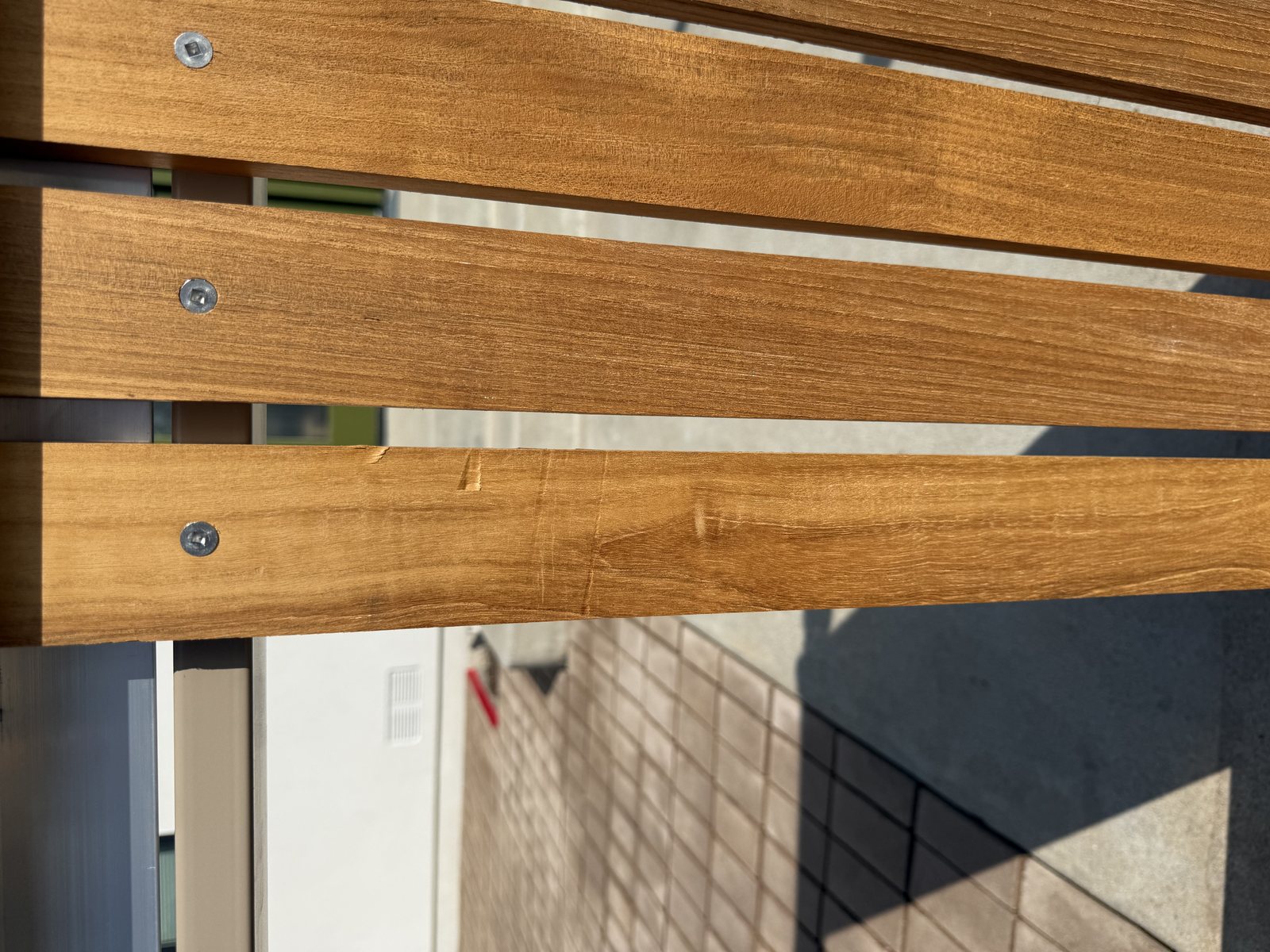
A wood fence run rarely fails from the bottom up, and the top rail is where the trouble starts. The rail is the one member lying flat to the sky. Rain lands on it, lingers in it, and then travels down through every joint cut into it. Posts, pickets and panels are each fed water by the piece above them.
Look at a fence that has gone soft after eight or ten seasons. The pickets are usually still sound in their middles. What has gone is the top edge of the rail, the mortise shoulders, the end grain where one rail butts another over a post, and the flat crown of the post itself where a cap was either skipped or set tight to the wood.
Wood moves moisture through end grain far faster than through a face. The Forest Products Laboratory has documented that difference for decades, and the USDA Forest Products Laboratory remains the plainest reference on how liquid water enters a board and how slowly it leaves. A fence has end grain everywhere, and most of it points up.
So the cap and the rail are not trim. They are the roof of the assembly. A profile decision made on paper at the drawing stage decides whether the rest of the run gets wet once and dries, or gets wet and stays wet.
The Cap Profile Is a Water Detail
A post cap earns its keep through three things, a wash that drains, an overhang that throws water clear, and a kerf on the underside that stops the drip from tracking back. Everything else about the cap is appearance. Those three are performance.
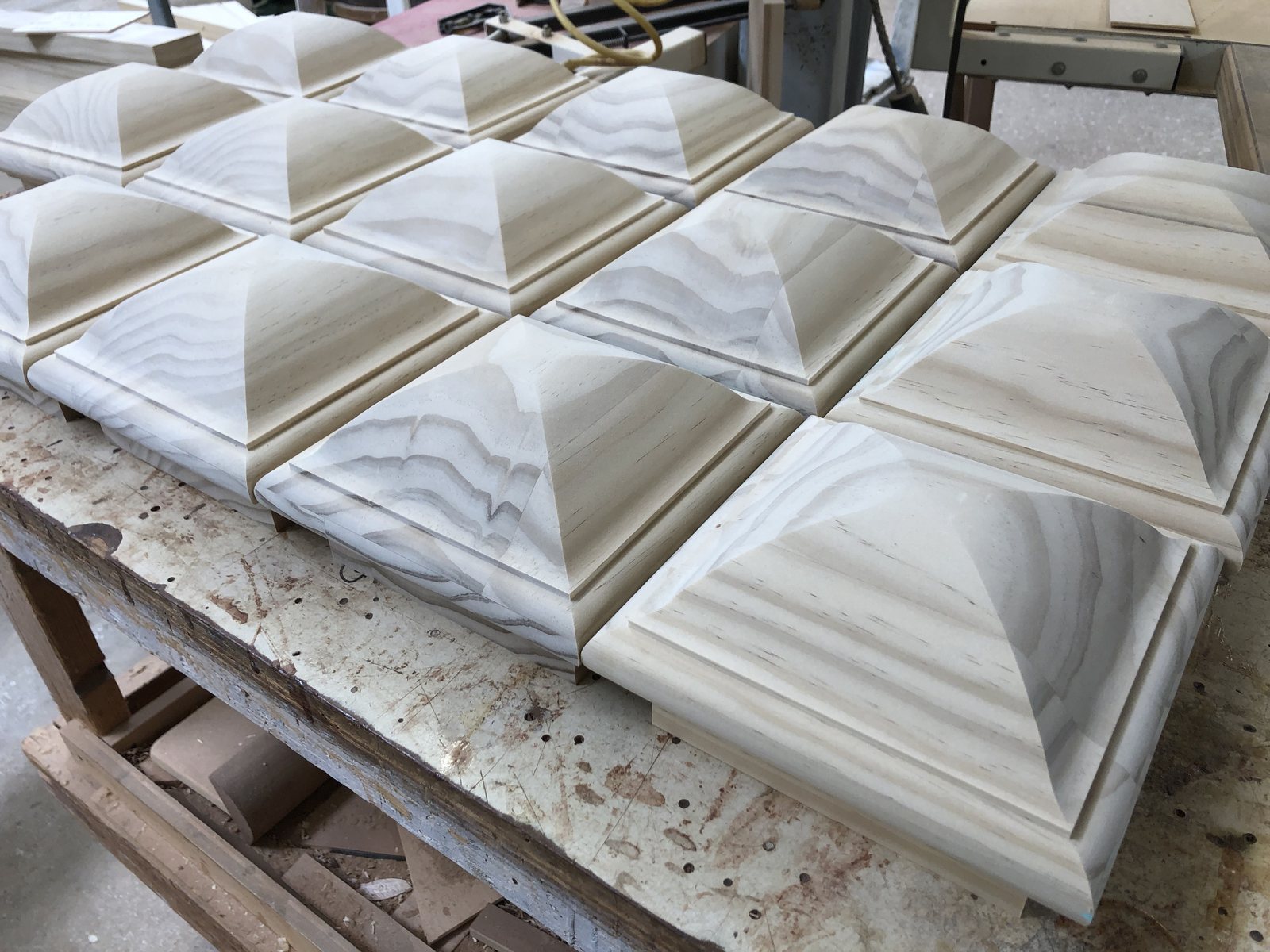
A flat cap set flush to the post face is the detail that fails most. Water runs off the cap, meets the post below it, and follows the grain straight down into the top of the post. An overhang past the post face on all four sides changes that. A shallow drip kerf plowed into the underside of the overhang, back from the edge, breaks surface tension so the water lets go instead of curling under and back.
Slope matters more than people expect. A wash of a few degrees across the cap is enough to keep water moving, and a double wash from a center ridge is better on a wide post. The same thinking applies to the top rail. A rail with a crowned or washed top sheds. A rail with a dead flat top holds a film of water across its whole length every time it rains.
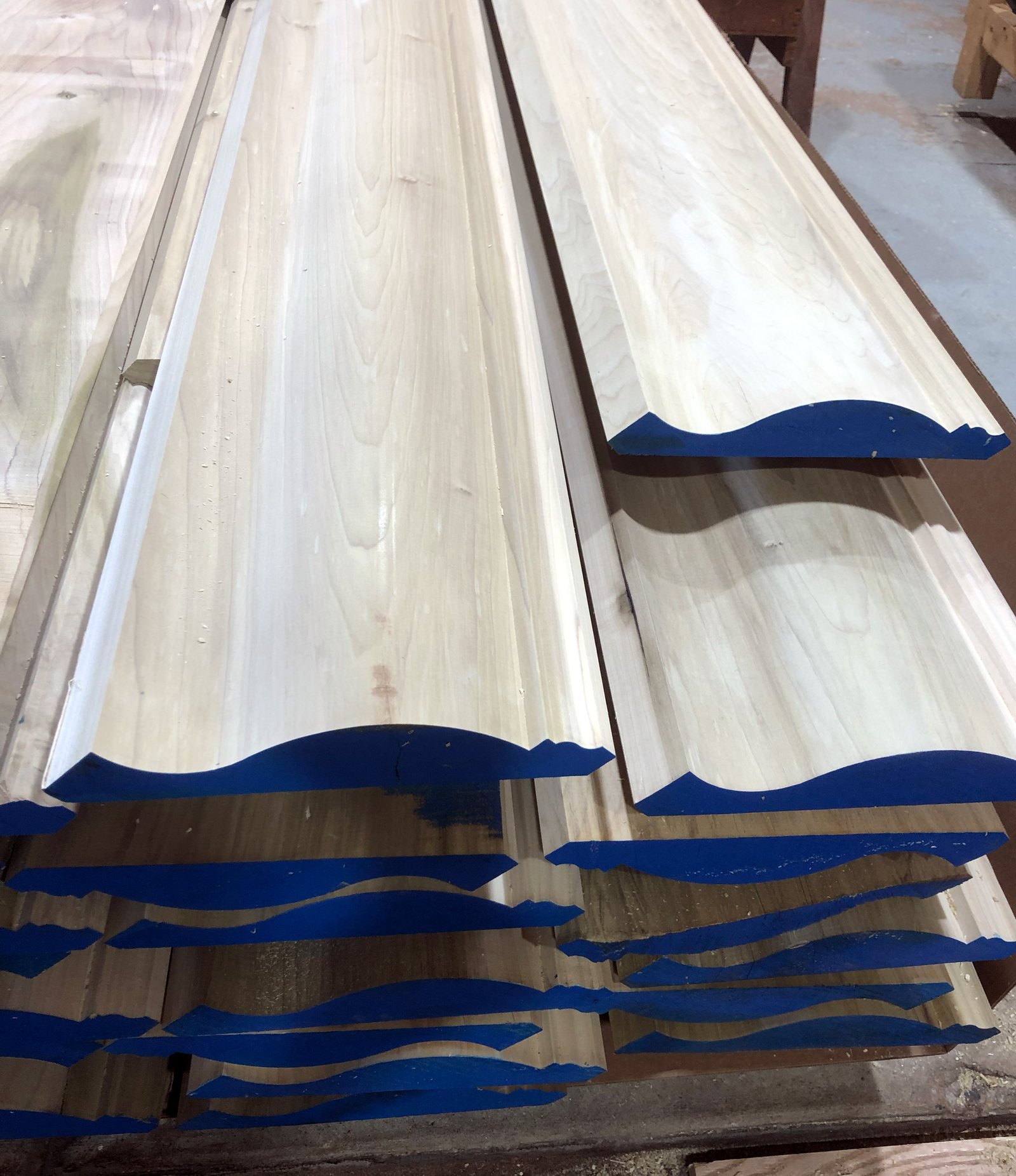
Profiles also have to respect how a coating sits. A sharp arris starves of film thickness no matter how carefully the finish goes on, and that bare edge is where failure begins. An eased edge or a small radius carries paint. J. Gibson McIlvain grinds the knife to hold that radius through the whole run so the coating has something to sit on at the most exposed line on the fence.
Profile standards for moulded stock are published by the Wood Moulding and Millwork Producers Association, which is useful shorthand when a drawing calls out a standard shape. Custom fence work rarely lands on a standard shape, which is the point of grinding a knife.
Species That Hold an Edge Outdoors
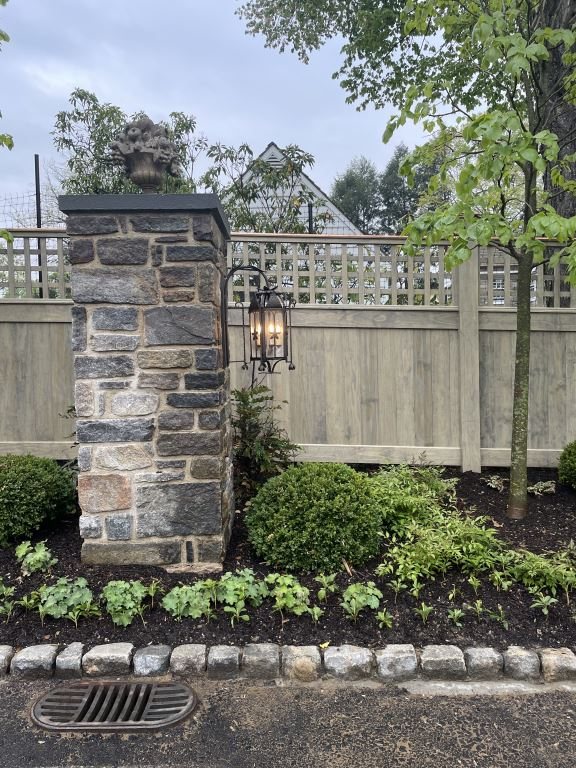
For milled exterior fence components the working palette is Sapele, Iroko, Afrormosia, Teak and Utile, and each one machines cleanly enough to hold a crisp profile after years of weather. They are stable, they take a knife well, and they glue, which matters the moment a cap becomes a built-up assembly.
Sapele sits around 1,410 lbf on the Janka scale and is the first species to reach for on painted exterior work. It holds paint better than Genuine Mahogany, which runs nearer 800 lbf, and it comes in a wider range of sizes and longer lengths, which is exactly what a long fence run needs. One limit worth knowing is that Sapele is not milled 1x8 for exterior use. That width is too wide to stay stable in a one by thickness outdoors.
Iroko and Teak bring their own oil content and weather to a quiet gray if left bare. Utile machines beautifully and is a sensible choice for a profiled rail cap. Afrormosia is dense, stable and holds a fine moulded detail, which makes it a good candidate where a cap profile has real shoulders in it. Species data on each of these is easy to check against published density and movement figures.
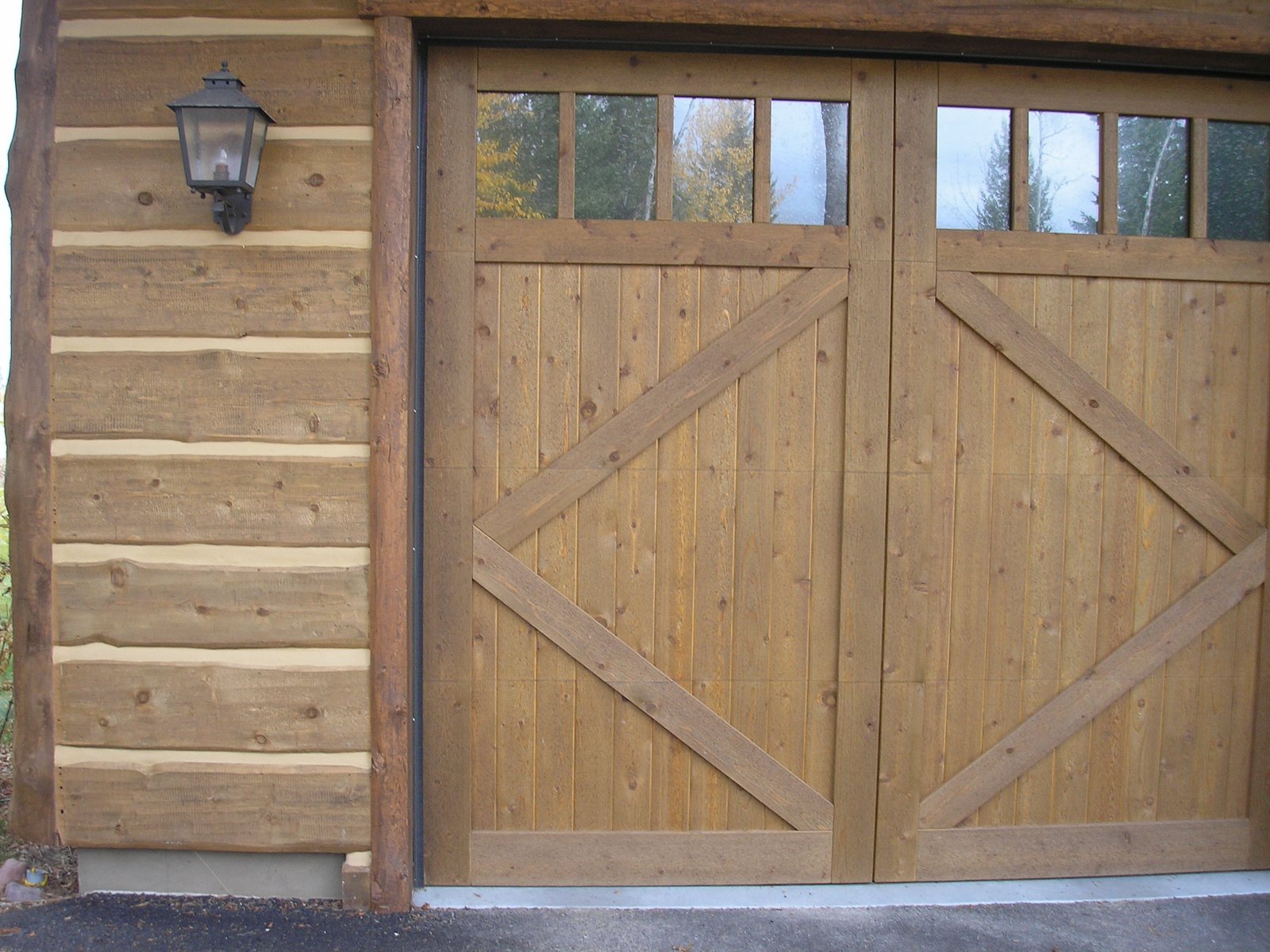
Cedar is a legitimate default and has been the standard American fence species for good reason. The grade distinction is what buyers get wrong. CVG, clear vertical grain, gives a tight even face that holds a moulded profile and a paint film. STK, select tight knot, is sound and handsome and far more common in fencing, but knots telegraph through a coating and a knot that lands on a profiled edge will not hold detail the way clear stock does. Specify the grade, not just the species.
The tropical decking species sit in a different category. Ipe, botanical name Tabebuia spp, along with Cumaru, Garapa, Jatoba and Red Balau, are extremely hard and carry high oil content. That combination makes them difficult to glue, so a millwork shop reaches for Sapele, Iroko, Afrormosia, Teak or Utile when a component has to be moulded or assembled. Those decking species belong on a deck surface and on open rail members, not inside a glued-up cap.
Modified Wood for Caps and Rails, and Its Limits
Modified wood is the one category where a written warranty exists, and the limits that come with it are dimensional, not negotiable. Accoya, Thermory and Abodo Vulcan all have a place in fence work, and each one runs into the same wall.
Accoya sits around 1,600 lbf, and acetylation gives it dramatically reduced shrinkage and swelling. For a wide washed cap that has to stay flat in full sun, that stability is the strongest argument in the catalog. Technical data on the process is published at accoya.com.
Thermally modified stock is the other route. Thermory and Abodo Vulcan are both carried, and thermory.com covers how the heat treatment changes the wood. One hard constraint applies to all of them. Modified woods top out around 16 ft, and most are sold on metric lengths just under 16 ft, because the kilns are only so long. A fence run longer than that gets a joint over a post, planned on the drawing rather than discovered in the field.
Width is the second constraint. Thermally modified Ash is not available wider than 8 inches. A wide cap or a wide top rail in a modified product means Accoya or Abodo Vulcan, and that choice has to be made before the profile is drawn, since a wide profile cannot be rescued by a narrower species.
No warranty exists on solid unmodified wood, and no honest shop offers one. Wood is an organic material responding to its environment. Warranties live on the modified products, where a manufacturing process has changed how the material behaves.
Moisture Content and Grain Orientation Outdoors
Exterior fence components are milled to an in-service moisture content near 12 to 16 percent, not the 6 to 8 percent an interior moulding gets, and mixing the two is how a cap splits in its first summer. The target is the environment the piece will live in, not a single shop number.
J. Gibson McIlvain mills exterior fence and gate components to that 12 to 16 percent range so the stock arrives close to where the weather will hold it. A cap dried to interior numbers and then set outdoors will take on moisture, swell across its width, and press against its own fasteners. That is a common source of the split that runs down the center of a post cap.
Grain orientation does more for a washed cap than any coating. Quartersawn and rift stock moves less across its width than plainsawn, which is why it gets specified where a painted or panelized surface has to stay flat. On a cap, less cross grain movement means the paint film at the edges is not being stretched and compressed every season.
Cupping gets blamed on species far too often. Cupping is driven by installation and back ventilation. A cap or a rail wetted on one face and sealed on the other will cup regardless of what tree it came from. The remedy lives in how the installer fastens and vents the piece, and in making sure all faces, including the hidden one, are coated. Guidance on the physics of wetting and drying in assemblies is well covered at buildingscience.com.
Built-Up Caps and Post Sleeves
A large post cap or a post sleeve is a box, and the joinery chosen for that box sets both how it looks and how long it survives. This is the same decision a box beam presents, and the tradeoffs run the same way.
Butt joints give the most minimal profile, the fastest turnaround and the easiest on site assembly. They also leave visible seams and visible end grain, and they are the weakest of the three. On an interior beam that can be acceptable. On a fence post exposed to weather on four sides, every visible seam is a path for water.
Dado joints are strong and still easy to assemble on site. Seams and end grain still show. For a painted post sleeve where the seams will be filled and coated, a dado is a reasonable middle choice.
Lock miter joints show no visible seams and are the strongest of the three. For a stain grade sleeve or a large cap in Sapele or Utile, that is the one worth paying the extra machine time for. ICD, the architectural millwork division of J. Gibson McIlvain, builds these assemblies with the joint matched to the exposure and the finish, and the division's exterior millwork work covers gates, railings and the components that cap them.
Finials and the Honest Limits of Milled Detail
A great deal of fence finial work is moulded and sawn rather than turned, and knowing which of the two a drawing calls for prevents a long delay at the worst moment in a schedule. The distinction is simple. A profile that can be run on a moulder or cut on a saw is shop work. A round turned ball or urn is lathe work.
Pyramidal caps, chamfered caps, stepped and tiered caps, washed caps with a drip kerf, and the plinth or base block under a finial are all moulded and sawn components. J. Gibson McIlvain mills those from the knife library and the trimming saws, in the species the rest of the fence is using, so the grain and color match across the run.
A lathe turned ball or spire finial is a different operation. Where a drawing calls for turned finials, that element is handled by the buyer's own turning source or fabricator, and the fence components around it come milled to receive it. Saying so up front is better than discovering it after the rails have shipped.
Historic districts complicate this further, since a replacement often has to match an original in both profile and species. The National Park Service keeps useful standards on like for like replacement at Technical Preservation Services. A cap profile taken off a surviving original can be reproduced from a ground knife. A turned original still needs a turner.
Priming Before the Run Leaves the Shop
Priming in the shop, before anything ships, puts a coating on the faces nobody will reach again once the fence is standing. The underside of a cap, the back of a rail, the ends at every joint. Those are the surfaces that decide longevity and the ones a field crew covers worst.
J. Gibson McIlvain primes in three levels, in both oil based and water based systems, and exterior primed trim carries a fungicide additive. For fence and gate components living in constant wet and dry cycling, that additive is doing real work at the joints where water collects.
Open-grained and oily species absorb a great deal of finish. A primer coat evens out the eventual painted surface so the topcoat is not fighting different absorption rates across the same board. Sanding or buffing after priming knocks back grain raising while keeping the moulded detail crisp, which matters on a cap profile where a soft shoulder reads as sloppy from ten feet away.
One thing primed stock does not solve is the field cut. Every rail cut to length on site opens fresh end grain, and that cut end needs to be sealed by whoever is installing it before the piece goes up. A shop coating protects what the shop can reach.
Where Top Rail and Cap Details Fail First
Each common detail has a predictable first failure, and most of them are fixed with a profile change rather than a species change. The table below pairs the detail with what actually goes wrong and the correction that belongs on the drawing.
| Detail as built | Water behavior | First failure | Correction on the drawing |
|---|---|---|---|
| Flat top rail, no wash | Holds a film across the full length after every rain | Coating failure along the top face, then checking | Crown or wash the top face and ease both top edges |
| Cap set flush to post face | Runoff follows the post face straight down | Darkening and softening at the top of the post | Overhang on all four sides with a drip kerf underneath |
| Butt jointed built-up cap | Water wicks into open seams and exposed end grain | Seams open, corners lift | Lock miter the corners, or dado and plan on filled seams |
| Rail jointed mid span | Two end grain faces meet over open air | Swelling, then a gap that traps debris | Land every joint over a post and seal both ends |
| Wide cap in plainsawn stock | Uneven wetting across a wide face | Cupping and a center split | Quartersawn or rift stock, or a modified product |
| Finial seated on bare end grain | Water collects at the seat and sits | Rot at the joint while the finial looks sound | Moulded plinth block with a wash, primed before assembly |
Notice how few of those corrections involve changing wood. Most of them are a knife profile, a joint choice or a layout decision. All three are settled before anything gets milled, which is why the drawing conversation matters more than the material conversation.
Matching a Cap Profile Across Phases
A fence run that gets built in phases, or repaired five years later, only matches if somebody kept the knife and the record. Long runs are almost never one order. A courtyard goes in first, the street elevation follows, then a section gets hit by a truck.
J. Gibson McIlvain holds a moulding profile library of thousands of profiles and grinds new knives every week, so a cap or rail profile that is not already in the library gets ground to match. That includes difficult historical restoration profiles and contemporary ones. The library is also why a later phase can come off the same shape rather than something close enough to notice.
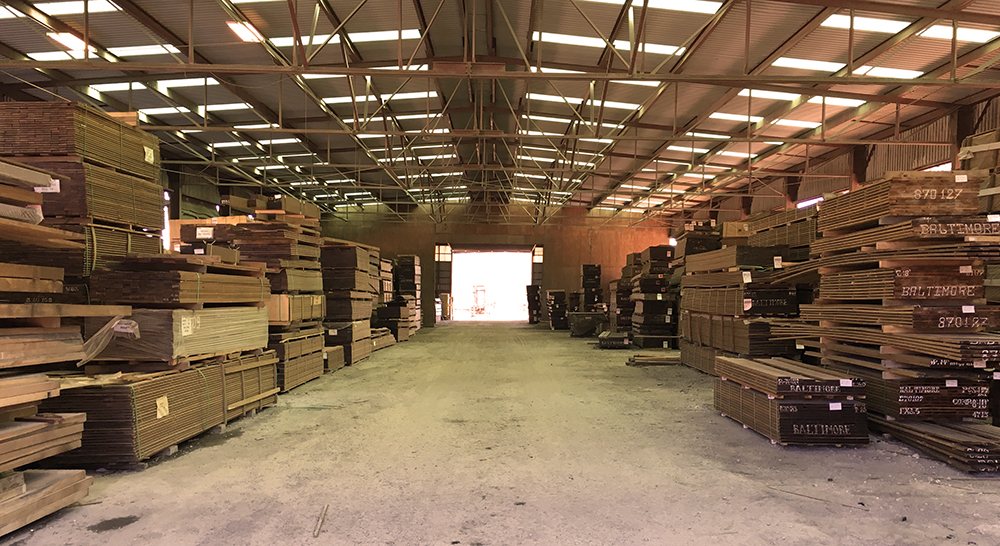
Material consistency is the other half. Over seven million board feet of exotic and domestic lumber is held at the Maryland yard, which is what makes it possible to pull a long fence run from compatible stock and come back for more of the same species and grade later. Long caps and long rails in particular are a length and width question before they are anything else.
J. Gibson McIlvain ships milled and primed fence, gate and cap components nationwide, and the company's millwork service runs the linear trimwork, finished cladding and primed trim side of the work while ICD handles the true custom gates, railings and built-up assemblies planned around a specific property.
"The part of a fence I ask about first is the cap and the top rail, because that is where I can tell whether the run was drawn by someone who has watched one weather. Get the wash, the overhang and the primed back faces right and the rest of the fence is doing easy work."
Norm Moton, Director of Sales, J. Gibson McIlvain
How J. Gibson McIlvain Would Specify This
A fence cap and rail package specified well is four decisions, species and grade, profile with its wash and drip kerf, joinery for anything built up, and the priming level. Settle those and the rest of the drawing follows.
Start with species and grade in one line. Sapele for painted work, with the reminder that it is not milled 1x8 for exterior use. Iroko, Afrormosia, Teak or Utile where the finish is clear or the piece is left to gray. CVG cedar where a moulded profile and a paint film both matter, and STK cedar understood as a different product rather than a cheaper version of the same one. Accoya or Abodo Vulcan where a wide cap has to stay flat, keeping 16 ft in mind as the practical ceiling and remembering that thermally modified Ash stops at 8 inches wide.
Draw the profile with its performance features called out. Wash across the top. Overhang dimension on all four sides. Drip kerf location on the underside. Eased edges rather than sharp arrises. J. Gibson McIlvain grinds the knife to that drawing, which means an unusual cap shape is a knife question, not a reason to compromise the design.
Call the joinery explicitly on built-up caps and post sleeves. Lock miter where no seam should show and strength matters most, dado where seams will be filled and painted, butt joints only where speed and a minimal profile outweigh the rest. Set the moisture target at 12 to 16 percent for everything living outdoors.
Then choose the priming level and the system, oil based or water based, and specify priming on all faces including the hidden ones. Any element that needs turning gets noted as the buyer's own turning scope, and the milled components around it come ready to receive it. Trade standards for wood construction detailing are available through the American Wood Council, and grading rules for hardwood lumber through the National Hardwood Lumber Association.
Send the elevation and the cap detail and get a real answer on profile, species and lengths. Call J. Gibson McIlvain at 800-638-9100, or look at how the custom side approaches a project at icdwoodwork.com.
Frequently Asked Questions
Does a fence post cap really need an overhang, or can it sit flush with the post?
It needs the overhang. A cap flush with the post face hands its runoff straight to the post, and the top of the post is end grain, which absorbs water far faster than a face does. An overhang on all four sides moves the drip line away from the wood below, and a shallow drip kerf cut into the underside keeps that drip from curling back along the overhang. Pair both with a wash across the top so water never stands on the cap.
What species should a painted fence top rail and cap be?
Sapele. It holds paint better than Genuine Mahogany and comes in a wider range of sizes and longer lengths, which matters across a long run. Note that Sapele is not milled 1x8 for exterior use, since that width is too unstable in a one by thickness outdoors. Where the finish is clear or the fence is left to gray, Iroko, Afrormosia, Teak and Utile are the other members of the millwork palette. CVG cedar, clear vertical grain, is the right cedar for a painted moulded profile, while STK, select tight knot, is a sound product with knots that telegraph through a coating.
How long can a top rail or a cap run in a single piece?
In solid unmodified hardwood it depends on the species and the grade, and long lengths are a stock question more than a milling question. In modified products there is a hard ceiling. Accoya, Thermory and Abodo Vulcan top out around 16 ft, and most are sold on metric lengths just under 16 ft, because the kilns are only so long. Plan any joint in the run to land over a post, and seal both end grain faces at that joint.
Can an existing post cap profile be matched for a historic district fence?
A moulded or sawn profile can be matched. J. Gibson McIlvain holds a profile library of thousands of profiles and grinds new knives every week, so a cap profile taken off a surviving original gets ground to match, including difficult historical restoration shapes. Matching the species as well as the shape is usually part of a like for like requirement. A lathe turned ball or urn finial is turning work and would come from the buyer's own turning source.
Should post caps and rails be primed before they ship or painted after installation?
Prime in the shop. The underside of a cap, the back face of a rail and the ends at every joint are the surfaces that decide service life, and they are the hardest to reach once the fence is standing. J. Gibson McIlvain primes in three levels, in oil based or water based systems, with a fungicide additive on exterior primed trim. Field cuts are the exception. Any end cut to length on site opens fresh end grain that the installer needs to seal before the piece goes up.
Is a built-up cap better than a solid one, and which joint should it use?
A built-up cap lets you get a larger profile without relying on a single wide board, which is often the more stable answer. The joint is the real decision. Butt joints are fastest and most minimal but show seams and end grain and are the weakest. Dado joints are strong and easy to assemble on site, with seams still visible. Lock miter joints show no visible seams and are the strongest, which is what exterior exposure and a stain grade finish both argue for.
Why did a wide cap cup even though it was a good species?
Cupping is driven by installation and back ventilation, not by species. A board wetted on one face and sealed or starved of air on the other will cup whatever it was cut from. Two things reduce the risk. Specify quartersawn or rift stock, which moves less across its width than plainsawn, and make sure all faces including the hidden one are coated. For a wide flat cap in full sun, Accoya, with acetylation giving dramatically reduced shrinkage and swelling, is the most stable option available.
Is there a warranty on hardwood fence caps and rails?
Not on solid unmodified wood, and no supplier can honestly offer one. Wood is an organic material that responds to its environment, and no one controls the environment it ends up in. Warranties exist on the modified products, Accoya, Thermory and Abodo Vulcan, where a manufacturing process has changed how the material behaves. Choosing a modified product is the way to get a written warranty on an exterior fence component.
Sources and Standards Referenced
- USDA Forest Products Laboratory
- Building Science Corporation
- The Wood Database, Sapele
- Accoya, acetylated wood technical information
- Thermory, thermally modified wood
- National Park Service Technical Preservation Services
- Wood Moulding and Millwork Producers Association
- American Wood Council, Codes and Standards
- National Hardwood Lumber Association