What the Architect Is Actually Buying
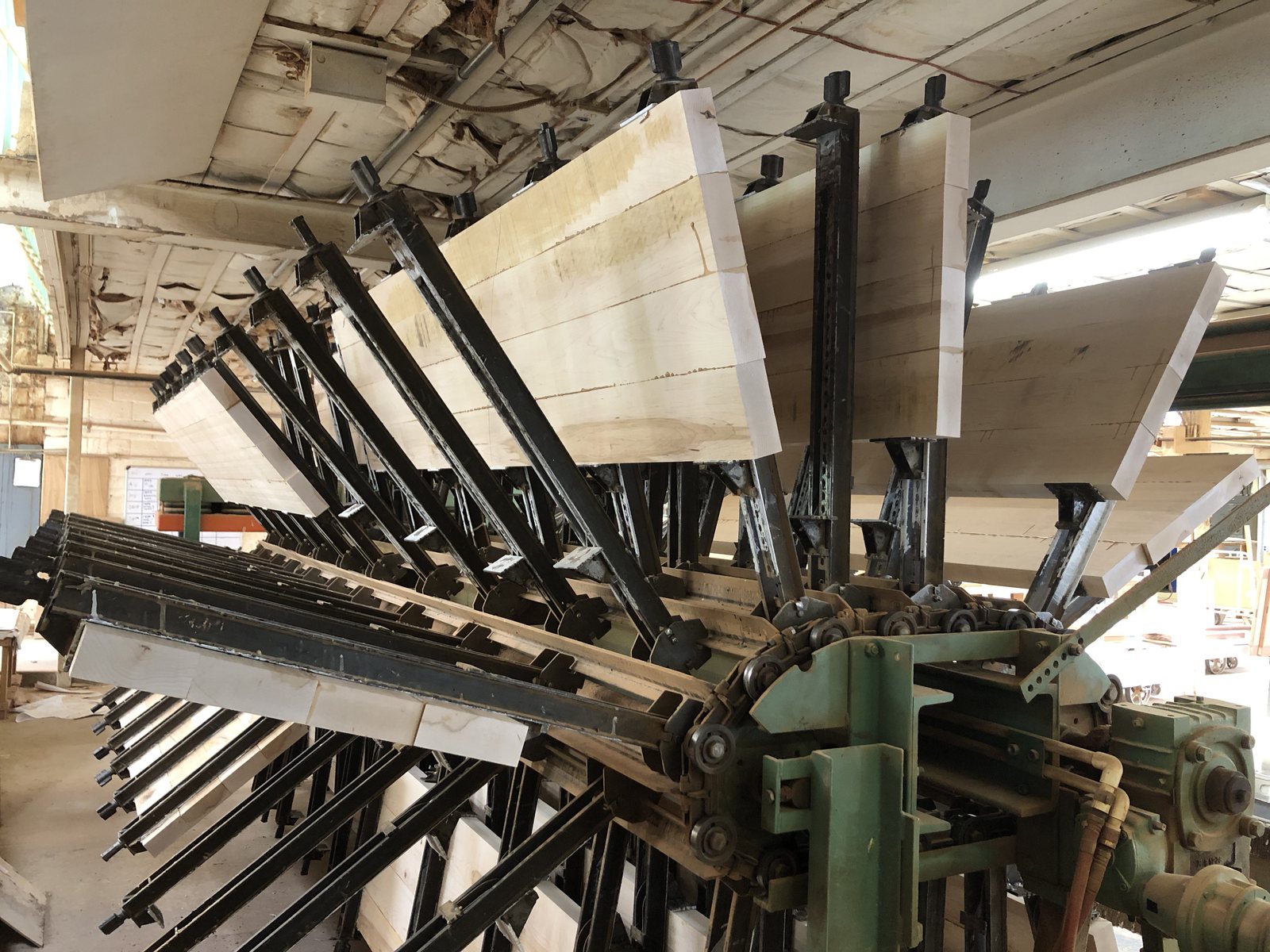
A hardwood grade is a yield promise, and the specifying architect reviewing a millwork package is almost always after an appearance promise instead. The two get confused because they borrow the same vocabulary. A spec section that calls for FAS reads as though it has settled how the finished work will look. It has not. It has settled how much clear material a cutting bill can expect to pull out of the pile, which is a different subject entirely.
This lands hardest on one reader. The architect who writes the millwork section, reviews the submittal and signs the returned markup is the person whose name sits on the finish the owner walks up to and touches. A builder can buy to a grade and be right. A fabricator can buy to a grade and be right. An architect who wants a particular face has to ask for something the grading rules were never written to deliver.
The instrument for that is the control sample. Two boards pulled off the same selection, one signed and dated and retained at the yard, one kept in the project file in your office. Everything below comes back to that pair of boards, because it is the only physical object in the transaction that carries an appearance agreement rather than a yield agreement.
Clear Cuttings, Not Clean Faces
North American hardwood grading measures the size and number of clear cuttings a board will give up, not how the board looks while it is still whole. The rules come from the National Hardwood Lumber Association, and they were written for a sawmill and a buyer who are both thinking in parts.
A grader works out the surface measure of the board, then lays out clear cuttings on the poorer face. Each cutting has to hit a minimum size. The grade falls out of how much of that surface measure the cuttings cover, together with a minimum board width and length the rule sets for the grade. Color never enters the arithmetic. Neither does figure, neither does the match between one board and the next.
So the word clear in clear face cutting means free of the characteristics the rule names, inside a rectangle of a stated size. It does not mean the delivered board shows an uninterrupted face. A buyer who reads it the second way has bought a promise nobody made.
That gap is where most grade arguments start. The lumber is correctly graded, the invoice is correct, the tally is correct, and the material is still wrong for the work. Nothing was mislabeled. The wrong question got asked.
Where a High Grade Still Misses
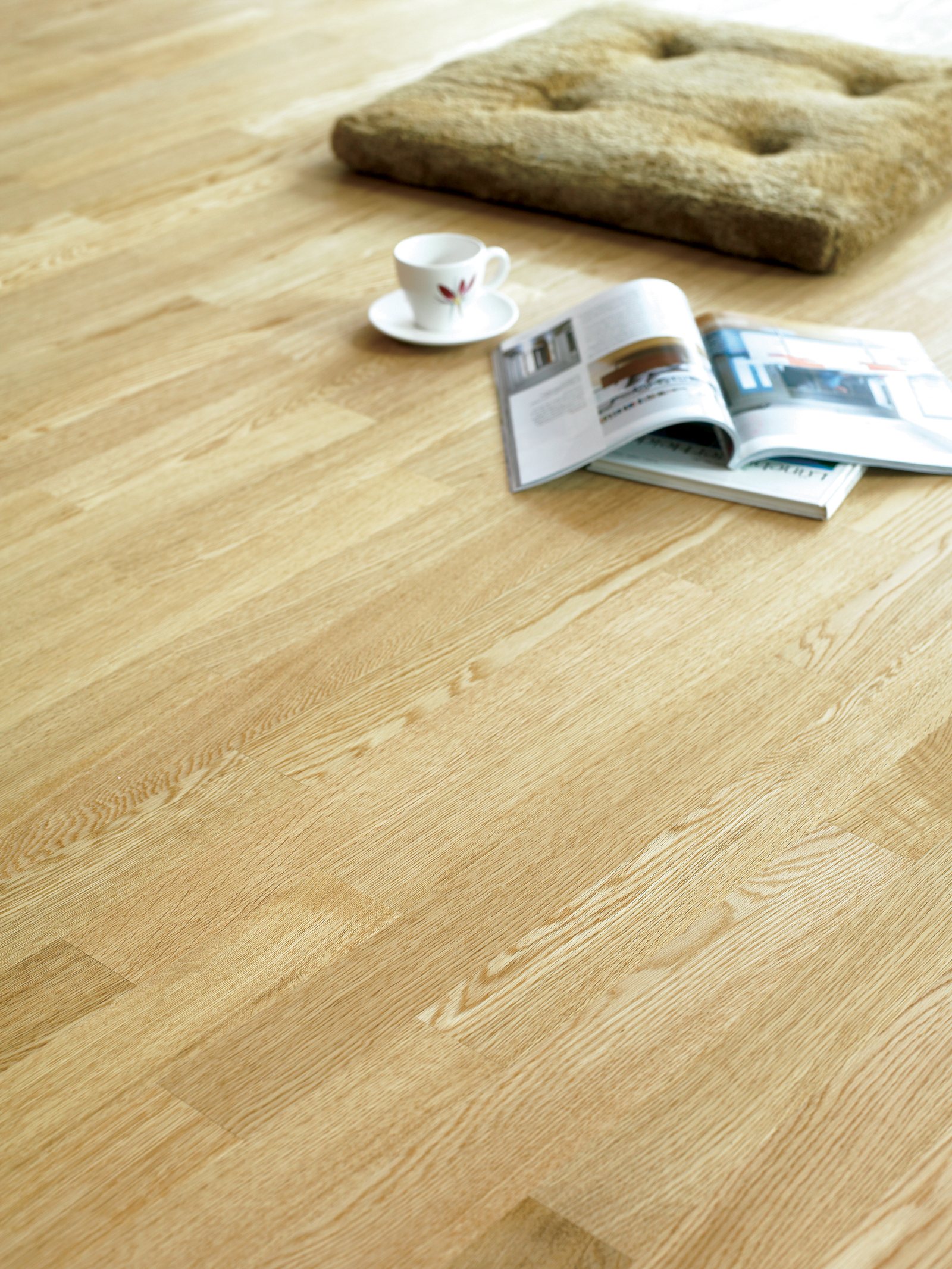
A board can meet the top grade and still be the wrong board for an exposed face. Grade sorts for yield, and yield is indifferent to three things an architect cares about more than anything else.
Color is the first. Black Walnut carries pale sapwood against dark heartwood, and a board showing both can grade at the top of the ladder without trouble, because the rule is counting clear area and sapwood is not a defect under it. Set two such boards side by side in a panel and the owner sees a mistake. The grader saw a good board.
Length of clear run is the second, and it is the one that costs the most. Take a 14 ft board that grades FAS. The yield it owes can arrive as three separate clear cuttings with sound knots between them. For a cabinet shop cutting 30 inch parts, that board is a gift. For a crown run that has to show 14 ft of unbroken clear face, it is useless, and it is still FAS.
Hardness is the third, and it surprises people. Yellow Poplar runs near 540 lbf on the Janka scale and Hard Maple near 1,450 lbf, and both reach the same grade on the same rule. A stair tread or a rail specified by grade alone has been specified by none of the properties that matter to it. Figures for species not listed here are worth checking against a reference such as the Wood Database entry for Red Oak rather than assumed.
Where a Lower Grade Is the Right Call
No. 1 Common is not a damaged grade, it is a short parts grade, and on the right cutting bill it is the technically correct choice. It yields smaller clear cuttings off a smaller board. That is the entire difference.
Run the cutting bill before the grade call, not after. If the longest exposed part on the list is 38 inches and the widest is 4 inches, the length and width minimums carried by the upper grades are being bought and then cut away. Drawer fronts, rail and stile stock, short returns, blocking and plinths all live comfortably below the top of the ladder.
The reverse is just as true and is the error that actually bites. A single 16 ft clear run specified out of a grade built around short cuttings will come back as a splice the architect never approved, or as a delivery short of the parts the shop needs. The grade did its job. The bill asked for something outside it.
"A grade tells me what I can cut out of a board. It does not tell you what you are going to see on a finished face, and most of the calls I take are really about the face. Send me the cutting bill, mark which parts show, and I will pull to that."
Norm Moton, Director of Sales, J. Gibson McIlvain
What Each Grade Settles and What It Leaves Open
Reading the ladder as a quality ranking hides the useful information, which is what each rung declines to say. The left column is a promise about cutting. The right column is everything an appearance requirement still has to cover in its own words.
| Grade | What the grade settles | What it leaves entirely open |
|---|---|---|
| FAS | A minimum board of 6 inches wide by 8 ft long, with 83 and 1/3 percent of the board yielding clear face cuttings | Color, figure, sapwood content, and whether any one stretch of clear face is long enough for the longest part on the bill |
| FAS One Face (F1F) | The better face meets FAS | The back face, plus every appearance question on the face that shows |
| Selects | The better face meets FAS at a smaller minimum board size | Whether the board is long enough and wide enough for the parts, and all color and figure matching |
| No. 1 Common | A minimum board of 3 inches by 4 ft, with 66 and 2/3 percent clear face cuttings | Any expectation of a long continuous clear face, and all color and figure |
| No. 2A Common | 50 percent clear face cuttings | Appearance in full, and most assumptions about part length |
Thickness sits outside this table and is quoted separately, in quarters of an inch of rough thickness. 4/4 is a nominal 1 inch rough board and 8/4 is 2 inches, and the surfaced dimension comes off those rough numbers. A grade and a thickness together still describe no face.
Writing an Appearance Requirement a Mill Can Fill
Appearance has to be specified in its own language, in a separate sentence from the grade, in terms a yard can actually sort to. There are only a handful of requests that work, and they work because a person can stand at a pile and execute them.
Ask for one face clear and sound where only one face shows, which is a common and fillable request. Say whether sapwood is excluded or admitted. Name the sawing pattern where flatness or a straight grain line matters. Give real widths and lengths instead of random width and random length when the parts are fixed. And where a run has to read as one piece of work, call for the stock to come from a single lot rather than accumulated across shipments.
Then set the color and figure range with the control sample rather than with adjectives. A word like uniform means one thing in an office and another at a pile of 3,000 board feet. A signed board means the same thing in both places. J. Gibson McIlvain holds over seven million board feet of domestic and imported lumber at its Maryland yard, which is what makes a sort against a retained sample a real operation rather than a hopeful one.
Here is the limit, and it should go in the submittal rather than be discovered on site. No supplier can guarantee that every board in a mixed order will match a sample in color and figure. Color varies between logs and inside a single log, and a retained sample sets a range, not a target. Warranties exist on modified wood products. Solid unmodified lumber carries none, because it is an organic material that keeps responding to the building it sits in.
When the Requirement Has to Be Bought as a Sort Instead
Some appearance requirements cannot be expressed as a grade at all, and the only way to buy them is to order a sort, which is a different transaction with different economics. A sort is somebody standing at a lift pulling boards against a stated rule. It is not a grade, it does not appear on a grade certificate, and no grading association defines it.
What a sort can be written against is narrow and physical. Heartwood only. Colour held inside the range of a retained sample. Quartersawn faces only. No visible sapwood on the show face. A minimum clear length between defects on the face that will be seen. Each of those is checkable by eye at the lift, which is the test for whether a sort is writable at all. An instruction to pull boards that look good is not a sort.
The cost is yield, and it is paid in board feet rather than in a line on the invoice. Pulling to heartwood only out of a species that runs sapwood on a share of its boards means the lift has to be larger than the order, and the boards that do not make the sort stay behind. That is why a sort has a practical minimum quantity. Below a certain size there is nothing to sort from, and the honest answer is that the order should be filled from a grade and inspected on arrival instead.
J. Gibson McIlvain sorts lots in house against a stated rule and retains the sample the sort was pulled against, so the standard the material was judged by still exists when the delivery is checked. Agree the rule and the retained sample before the order is placed. A sort described after material has shipped is a description of boards that are already on a truck.
Two Grading Systems on One Project
The lumber grade and the woodwork grade are separate systems, and a spec that names only one of them has left half the work undefined. NHLA rules govern the boards. The finished woodwork is governed by the quality standards published by the Architectural Woodwork Institute, which set grades for the fabricated assembly, including face appearance, matching within a panel and joinery tolerance.
Standing and running trim brings in a third reference, since profile dimensions and nomenclature for stock mouldings run through the Wood Moulding and Millwork Producers Association. An architect writing crown, base and casing is specifying a profile and a species and a face, and only one of those three is touched by a lumber grade.
Imported millwork species complicate the first system further. Sapele, Iroko, Afrormosia, Teak and Utile, which is sold as Sipo, do not arrive under NHLA rules at all. They are bought on export grades that are not identical to the domestic ladder, which is another reason the face requirement has to be written in plain description rather than borrowed from a grade name.
Keep the two systems in separate paragraphs of the spec and the submittal review gets simpler. The lumber grade belongs to the purchase. The woodwork grade belongs to the assembly, and J. Gibson McIlvain mills standing and running trim to that drawing at the millwork shop on site at the lumber yard.
Flat Faces Depend on the Cut and the Moisture
Quartersawn and rift stock moves less across its width than plainsawn, and no grade records which one arrived. Sawing pattern is a separate specification line. Leave it out and the yard is free to fill a top grade order entirely in plainsawn, correctly.
This decides more than it looks like it does. A painted panel or a wide painted stile telegraphs seasonal movement through the finish, and quartersawn or rift stock holds that surface flatter over the year. For a stain grade run where a straight grain line reads across several pieces, the cut is doing the appearance work the grade refused to do.
Moisture content belongs in the same paragraph. Interior millwork is milled to an in service moisture content near 6 to 8 percent, and stock that has not been brought to that range will move after installation no matter how clean the face looked at delivery. Air dried material settles at the local equilibrium and is not a substitute where an interior tolerance matters. The physics behind that is laid out by the USDA Forest Products Laboratory and in the moisture literature at Building Science Corporation.
Checking What Arrives Against What Was Approved
The appearance agreement gets tested once, when the material lands, against the retained sample and the tally on the delivery ticket. That is a ten minute task and it is the only moment when a correction is cheap.
The ticket shows species, thickness, grade and board footage. It does not show the face. So the check has two halves. Read the ticket against the purchase, then pull boards against the sample that has been sitting in your file since the submittal, under daylight rather than under temporary lighting, which shifts color enough to start an argument that is not about the wood.
Timing is the other half of the problem. Material that arrives months before the shop needs it sits somewhere, and somewhere is usually a site, which is the worst place a graded lot can live. J. Gibson McIlvain stores finished material for inventory control and releases it against the shop's schedule, so a lot sorted for face stays a lot sorted for face. J. Gibson McIlvain ships nationwide and runs to California regularly, which makes staged release a scheduling question rather than a geography question.
Document the result on the spot. A dated note on the ticket, filed with the sample, is worth more at a closeout meeting than any recollection of what the pile looked like in April.
How J. Gibson McIlvain Would Specify This
Write the grade for yield, write the face as its own requirement, and tie the face to a retained control sample before anything is ordered. That sequence costs a phone call and removes nearly every grade dispute from the back end of a project.
In practice the lumber line reads as a grade, a species, a thickness in quarters, an in service moisture target and a sawing pattern. The appearance line reads as which faces are exposed, whether sapwood is admitted, whether a run has to come from a single lot, and that a signed control sample sets the color and figure range. J. Gibson McIlvain rips stock on straight line and gang rip saws and resaws thicker boards on the band resaw, so widths and thicknesses that do not exist on the ladder can be made rather than hunted for.
The boundary is worth stating plainly in the same spec section. J. Gibson McIlvain supplies and mills, and does not install or field measure, so final part layout belongs to the fabricator who holds the cutting bill and the fit belongs to the installer. Where the work is true custom rather than linear footage, ICD, the company's architectural millwork division, builds to the drawing and plans the assembly around the specific space.
Call 800-638-9100 with the cutting bill and the exposed face list in hand. Mark the long clear runs, name the species, and ask for a sample to sign before the order is cut. For a second species figure during that call, a reference such as the Wood Database entry for Black Walnut settles it faster than a memory does.
Frequently Asked Questions
Does ordering FAS guarantee a clean, uninterrupted face?
No. FAS is a yield grade. It requires a minimum board of 6 inches wide by 8 ft long with 83 and 1/3 percent of the board yielding clear face cuttings, and those cuttings can be distributed along the board with sound characteristics between them. A 12 ft FAS board may hold no single clear stretch long enough for a 12 ft exposed run. If the face matters, specify the face in its own sentence, name which faces are exposed, and set the color and figure range with a signed control sample rather than relying on the grade name.
Is No. 1 Common a defect grade?
No. It is the grade for short parts. It yields smaller clear cuttings off a smaller minimum board, which is exactly what a cutting bill of drawer fronts, rails, stiles, short returns and plinths needs. Buying a higher grade for short parts means buying length and width that gets cut away. The mistake runs the other direction too, since a long continuous clear run ordered out of a short parts grade comes back as a splice or as a shortage.
How do I write an appearance requirement a lumber yard can actually fill?
Use requests that a person standing at a pile can execute. One face clear and sound where only one face shows. Sapwood excluded or admitted, stated plainly. A named sawing pattern where flatness or a straight grain line matters. Real widths and lengths instead of random width and random length when the parts are fixed. Stock from a single lot where a run has to read as one piece of work. Then anchor color and figure to a signed, dated control sample, one retained at the yard and one in the project file.
Can a supplier promise that delivered lumber will match the approved sample?
Within a range, not board for board. Color and figure vary between logs and inside a single log, so a control sample sets the band the material has to fall in rather than a target every board hits. That is a real limit on what any supplier can commit to on solid lumber. Warranties exist on modified wood products. Solid unmodified lumber carries none, because it keeps responding to the environment it sits in.
Why do imported millwork species not come in NHLA grades?
NHLA rules cover North American hardwood lumber. Sapele, Iroko, Afrormosia, Teak and Utile, which is sold as Sipo, are bought on export grades that are not identical to the domestic ladder. The practical effect for a specifier is the same either way. Describe the face you need in plain words instead of borrowing a domestic grade name and assuming it travels.
Should I specify quartersawn or rift for painted millwork?
Where the painted surface is wide and has to stay flat, yes. A quartersawn or rift face holds a painted surface flatter across a wide stile or panel, since the seasonal width change it has to telegraph is the smaller of the two directions. No hardwood grade records the sawing pattern, so it has to be its own line in the specification or the order can be filled entirely in plainsawn and still be correct.
What do the quarter numbers on a lumber quote mean?
Thickness is quoted in quarters of an inch of rough thickness. 4/4 is a nominal 1 inch rough board, 8/4 is 2 inches, and the surfaced dimension comes off those rough numbers rather than off the nominal call. Thickness is independent of grade, so a quote naming a grade and a thickness has still said nothing about the face that will show.
When is the right time to check a delivery against the grade and the sample?
At delivery, before the material is broken into the shop's stock. Read the delivery ticket for species, thickness, grade and board footage against the purchase, then pull boards against the retained sample in daylight, since temporary site lighting shifts color enough to start a dispute that is not about the wood. Write the result and the date on the ticket and file it with the sample.