The Tally Sheet Is the Document That Matters
If you are the construction manager running the exterior scope on one house, the paper that tells you whether the package is working is the tally sheet that rides in with each load. It lists what is on that truck by species, grade, thickness, width and footage, tied to the release it belongs to. You sign it at the curb. Six weeks later, when a run of casing does not match a wall that went up in April, that sheet is the only record of what arrived and when.
A package order for one house is four scopes pretending to be one. Siding. Corner boards, casing and water table. Soffit, frieze and fascia. Then the exterior millwork, meaning the doors, windows, shutters and brackets nobody thinks about until the openings are framed. Bought separately, each scope carries its own grade call, its own drying history and its own promised date.
Bought as one package, they carry one of each. That is the actual argument, and it has nothing to do with a discount. One grading decision governs the elevation. One kiln history applies to every board on it. And the release can be built around the order your trades touch the material rather than around whichever yard shipped first.
One Grading Decision Across the Elevation
A package bought on one tally gets graded once, by one person, against one set of uses, which is what keeps a corner board and the siding it dies into looking like they came from the same place. Hardwood in North America is graded under the National Hardwood Lumber Association rules, which score a board by the yield of clear face cuttings it will give up rather than by how the face looks lying on a cart.
That distinction decides most of your package. A No. 1 Common board is not a damaged board. It yields smaller clear cuttings, which makes it the sensible grade for blocking, short returns and backband, and the wrong grade for a 16 ft fascia run that has to read clean from the street.
So the right package does not apply one grade to everything. It applies one grading decision, which is the call about which parts need long clear runs and which do not, made once with the whole elevation in front of you. Softwood siding runs on a separate system, published by the Western Wood Products Association, and mixing the two vocabularies on one order is how a buyer ends up comparing numbers that do not mean the same thing.
J. Gibson McIlvain runs the trim for a package on its own moulders and grinds knives to the profile on the drawings, which means the casing, the backband and the water table on that elevation come off the same setup rather than from three catalogs with three slightly different reveals.
What One Moisture History Actually Buys

One moisture history means every board on the wall left the kiln at the same target and sat in the same place afterward, which removes the most common reason two pieces of the same species behave differently once they are up. Exterior work is dried near 12 to 16 percent, and where it lands inside that band depends on the region the house sits in. The equilibrium moisture content data behind that number comes out of the USDA Forest Products Laboratory, and it is regional, not national.
Two loads of the same species from two yards can both be correctly dried and still sit 3 points apart. On a painted elevation that difference shows up as a joint that opens on the south wall in August. On one tally it does not happen, because there is one kiln record behind the whole order.
Ask for that record to be noted on the tally sheet rather than quoted on the phone. J. Gibson McIlvain mills the siding and the trim for a package out of stock dried to the same exterior target, and the target travels with the load, which gives your painter and your siding lead the same number to work from.
No supplier can promise what a board reads on the day it is nailed up. Once the bunk is on your site it answers to your site, to how it was stacked, to whether it was stickered and whether anything was over it when it rained. A meter reading at the wall, taken the way ASTM D4442 describes, is a reading of your site and not of the mill.
Where Cladding and Trim Part Company
The single package breaks at the point where cladding and trim want different numbers, and in some climates they want them badly enough that one target is the wrong answer. Siding on a vented rainscreen dries from both faces and settles close to the outdoor equilibrium. Trim laid tight to sheathing dries from one face. A door jamb is partly inside the conditioned envelope and sits somewhere else again.
In a dry inland climate that spread is wide enough to matter. In a humid coastal one the cladding runs wetter than the trim for most of the year. A supplier can hold two targets on one order, but only if somebody says which pieces belong to which, and that is a decision made from the drawings rather than from the species list.
Cupping follows from installation and back ventilation far more than from species. The rain control and drying principles collected by Building Science Corporation are worth reading before anyone blames a board. Where a painted or panelized face has to stay flat, quartersawn and rift stock moves less across its width than plainsawn, and specifying it is cheaper than explaining it later.
Anything on the order bound for the inside of the house is dried to a different target and should not ride the exterior tally at all. Put it on its own sheet. Interior casing stacked in a garage next to the exterior bunks for three weeks is a callback waiting for a heating season.
The Sequence Belongs to the Trades
The component that finishes first at the mill is almost never the one installed first on the house, so the release schedule has to be built backward from the install order. Doors and windows go in at dry-in. Water table and corner boards go up before field siding. Soffit waits on the roof and the fascia. Shutters and brackets land after paint, sometimes months after the siding.
Deliver all of that as one load and you have made the builder store seven weeks of material in a house with no doors on it. Deliver it in four and the tally sheet for each release is short enough that somebody can actually check it against the truck.
J. Gibson McIlvain stores finished millwork so an exterior package can go out in stages against a builder's schedule instead of all at once, which is the part of the arrangement that makes a single-source package worth doing on one house rather than on a subdivision.
"The sequence works when the builder tells us the real dates and calls us when they move. We can hold a package and release it in the order the trades need it. What we cannot do is guess that framing slipped."
Norm Moton, Director of Sales, J. Gibson McIlvain
A staged release only holds to the dates you give. If framing slips three weeks and nobody calls, the material either sits past its slot or arrives on a site with nowhere dry to stack it, and the second one is worse.
What to Tell a Supplier About the Site
Most sequencing failures trace back to four facts about the house that never made it onto the order. None of them is technical. All of them are things the construction manager already knows and assumes somebody asked about.
First, where the house is and what the local equilibrium runs, because that sets the moisture target band. Second, whether the siding is going over vented furring or straight to the weather-resistive barrier, which changes how the cladding behaves against the trim beside it.
Third, the site itself. Truck size that can turn around, whether there is a forklift or whether the load gets hand-stacked, and whether there is anywhere covered to set a bunk. A package that has to sit in the open for ten days is a different package.
Fourth, the install order with real dates and a named person who will be there to sign the tally sheet. Not the office. Somebody on site who can count a bunk and flag a short count before the truck leaves, because a discrepancy found that afternoon is a phone call and a discrepancy found in week six is a reorder. Say also what gets painted, what gets a transparent finish, who is doing it and when, since primed trim and trim going to a stain are not the same order even when they are the same profile.
Reading the Package Component by Component
Every piece in an exterior package answers to two things, when the trades need it and what it has to match, and those two answers belong beside it on the release schedule. The match requirement is the one buyers skip, and it is the one that decides whether a late substitution is survivable.
| Component | When the trades need it | What it has to match | What drives its moisture behavior |
|---|---|---|---|
| Exterior doors and windows | At dry-in, ahead of everything else on the wall | Framed opening dimensions and the casing profile that dies into them | Partly inside the conditioned envelope, so one face is not exterior at all |
| Water table and corner boards | Before any field siding goes up | Siding thickness and the reveal it leaves | Full exposure on two faces, end grain at every joint |
| Field siding | After the barrier and any furring is on | Color, grain and width within a single elevation | A vented rainscreen dries both faces, direct application dries one |
| Soffit and frieze | After the roof edge and fascia are set | Siding species, grade and finish system | Shaded, slow to dry, poorly ventilated in most details |
| Fascia and rake | With the roof edge, before gutters | Long lengths with as few joints as the elevation allows | Full exposure, cut ends sealed or not sealed in the field |
| Shutters, brackets and columns | Last, frequently after paint | Historical profile and species where a district requires like for like | Sheltered but unvented, often the slowest to reach equilibrium |
Put that fourth column in front of the painter before anyone argues about a finish schedule. Soffit and shutters are the two components that fail finish for reasons that have nothing to do with the coating.
Grade Calls That Travel With the Package
Across one exterior package the grade call does more work than the species call, and cedar is the clearest case of it. Clear vertical grain and select tight knot are the same wood. They are not the same product on a wall, they do not take paint the same way, and they do not belong on the same elevation unless somebody decided that on purpose. The grade descriptions published at Real Cedar are the reference to settle it with.
For painted exterior trim, Sapele is the better call than Genuine Mahogany. It holds paint better, and it comes in a wider range of sizes and longer lengths, which matters on a fascia run more than hardness does. Sapele sits near 1,410 lbf on the Janka scale against roughly 800 lbf for Genuine Mahogany, and for any figure not quoted here the data at The Wood Database is the place to check rather than a memory. One limit belongs in the takeoff rather than in a conversation at the curb. Sapele is not milled 1x8 for exterior use, so an 8 inch trim detail needs a different answer.
The rest of the millwork palette runs Iroko, Afrormosia, Teak and Utile, which is sold as Sipo. Those are the species a millwork shop reaches for when a part has to be moulded, glued or joined, because they machine predictably and take adhesive.
If a porch deck is on the same order, that is where the dense tropical decking stock belongs. Ipe, which is Tabebuia spp, along with Cumaru, Garapa, Jatoba and Red Balau, is extremely hard and carries high oil content, which makes it difficult to glue. It is decking. It is not what the trim and the soffit on that same house should be milled from.
J. Gibson McIlvain holds over seven million board feet of domestic and exotic lumber at its Maryland yard, which is what makes it possible to pull a long fascia run and the corner boards that meet it from stock on hand instead of from two mill runs eight weeks apart.
Priming Before the Load Is Stacked
Trim that arrives primed is trim your painter does not have to prime on scaffold in a wind, and on a package order it is the easiest thing to pull forward. Open-grained and oily species absorb a great deal of finish, so a primer coat evens out the eventual painted surface. Sanding or buffing after priming knocks back the grain that raises during the first coat while keeping moulded detail crisp.
J. Gibson McIlvain primes trim in three levels, in both oil-based and water-based systems, and exterior primed trim carries a fungicide additive. Which level you want is a question about what your painter is doing afterward, and it belongs on the order rather than in a conversation after the truck leaves.
Primed is not sealed. Every field cut opens raw end grain, and on a fascia run that is a lot of cuts. Sealing them is the crew's work, and whether it happens is the difference between a painted elevation that holds for a decade and one that does not.
There is no warranty on solid unmodified wood. It is not possible to warranty an organic material that responds to its environment. Warranties exist on modified products and on nothing else, and a supplier telling a builder otherwise about a package of solid siding and trim is describing something that does not exist.
The Doors and Windows Run on Their Own Clock
Exterior millwork is the one part of the package that cannot be pulled forward, which means it sets the order date for everything else. True custom doors, windows and shutters are built to an opening rather than selected from a size chart, and that work starts well before anyone is thinking about siding.
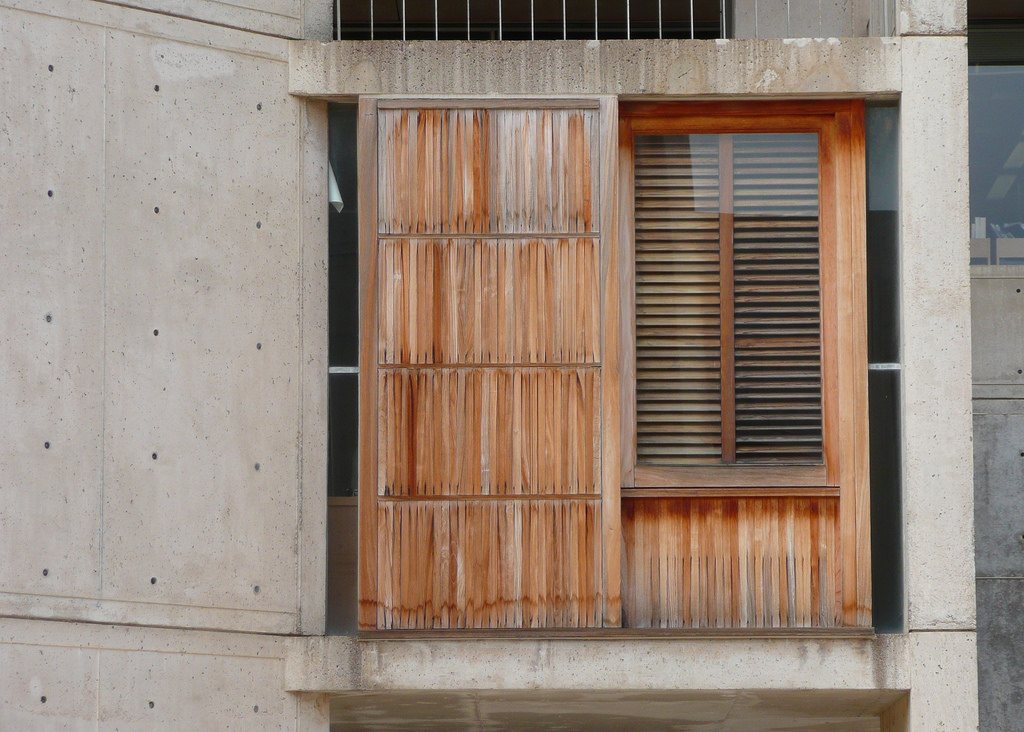
ICD, the architectural millwork division of J. Gibson McIlvain, builds that part of the package, including custom exterior millwork planned around a specific opening. Shutters come in louver and panel styles, and where a historic district requires like-for-like replacement, both the style and the species can be matched to what is being taken off the house.
The opening dimensions on that order are the ones your framer measured and signed off on. They are the riskiest numbers in the package, because every other component on the elevation can absorb a quarter inch and a door cannot.
If the package includes a courtyard or an entry gate, treat it as its own schedule again. Pedestrian, garden and courtyard gates are craftsmanship. Large driveway swing gates need engineering as well, because at that size and weight the question stops being joinery and becomes hardware and posts.
How J. Gibson McIlvain Would Specify This
Write the package as one order with four releases, two moisture targets at most, and a grade call per use rather than per order. Start from the install sequence and work backward, not from the mill schedule forward. The order document and the release schedule should be the same piece of paper.
Name the components by where they land on the wall, give each one a release window and a match requirement, and put the kiln target and the priming level on the line item rather than in a cover note. Name the person on site who signs the tally sheet, and give that person the release schedule, so the count being checked is the count that was ordered.
Order the doors, windows and shutters first and let the rest of the elevation follow them. Keep anything bound for the interior on its own tally. Settle the cedar grade question, and the Sapele question, at takeoff rather than at delivery, because a substitution made at the curb is a substitution nobody graded.
J. Gibson McIlvain ships exterior packages nationwide and will build the release schedule against a builder's dates rather than against its own. To work through an exterior package for one house, see the millwork services page or call 800-638-9100 with the elevations and the framing date.
Frequently Asked Questions
Does buying the whole exterior from one supplier actually save money?
Not in the way most builders expect. The value is that one grading decision governs the whole elevation, one kiln history sits behind every board on it, and the delivery can be sequenced to the install order. Where the money shows up is in what does not happen afterward. Fewer reorders when a corner board does not match the siding, fewer substitutions decided at the curb, and fewer callbacks from two correctly dried loads that were still 3 points apart. Treat a single-source package as a risk decision rather than a discount, and judge the quote on whether it names a release schedule and a moisture target.
Can one moisture target cover siding, trim and soffit on the same house?
In most climates one target inside the 12 to 16 percent exterior band works for all of it. In a dry inland climate, or a humid coastal one, it does not. Cladding on a vented rainscreen dries from both faces and settles near the outdoor equilibrium, while trim laid tight to sheathing dries from one. Two targets on one order is a normal request, but somebody has to say which pieces belong to which, and that call comes off the wall sections rather than off the species list. Anything bound for the inside of the house is a different target again and belongs on a separate tally.
What should actually be on the tally sheet when the truck arrives?
Species, grade, thickness, width and footage for every line, the release number it belongs to, the kiln target the material was dried to, and the priming level where trim was primed. A named person on site should count the bunks against it and flag a short count or a wrong profile before the truck leaves. A discrepancy caught that afternoon is a phone call. The same discrepancy found in week six, after the wall is up, is a reorder with a lead time attached to it.
Should porch decking ride on the same order as the siding and trim?
It can ship on the same order, but it should not be graded or specified with them. The dense tropical decking stock, Ipe which is Tabebuia spp, along with Cumaru, Garapa, Jatoba and Red Balau, is extremely hard and carries high oil content that makes it difficult to glue. It belongs underfoot. For the milled, glued and joined parts of the house, a millwork shop reaches for Sapele, Iroko, Afrormosia, Teak or Utile, which is sold as Sipo, because those machine predictably and take adhesive. Put the deck on its own line with its own grade call.
Is primed exterior trim covered by a warranty?
No. There is no warranty on solid unmodified wood, because it is not possible to warranty an organic material that responds to its environment. Warranties exist on modified products and on nothing else. Priming is surface preparation that evens out the finished painted surface and gives the painter a head start, not a guarantee. Every field cut still opens raw end grain, and sealing those cuts is the crew's work.
CVG or STK cedar for an exterior package?
Decide it by use, not by budget line. Clear vertical grain is the call where a long run has to stay flat, where the finish is paint or a transparent coating that will show every knot, and where the elevation reads from close range. Select tight knot is the right product where the knot pattern is part of the intended look. Both are legitimate. The failure is mixing them on one elevation without anybody deciding to, which is exactly what happens when the siding and the trim come from two orders.
How far ahead of the siding do custom doors and windows need to be ordered?
They set the order date for the whole package. True custom exterior millwork is built to a specific opening rather than pulled from a size chart, and it goes in at dry-in, well before the first course of siding. Order it first and let the rest of the elevation follow it. The framed opening dimensions on that order are the ones your framer measured and signed off on, and they are the least forgiving numbers in the package, since every other component on the wall can absorb a quarter inch and a door cannot.