In-House Custom Milling for Tropical Decking
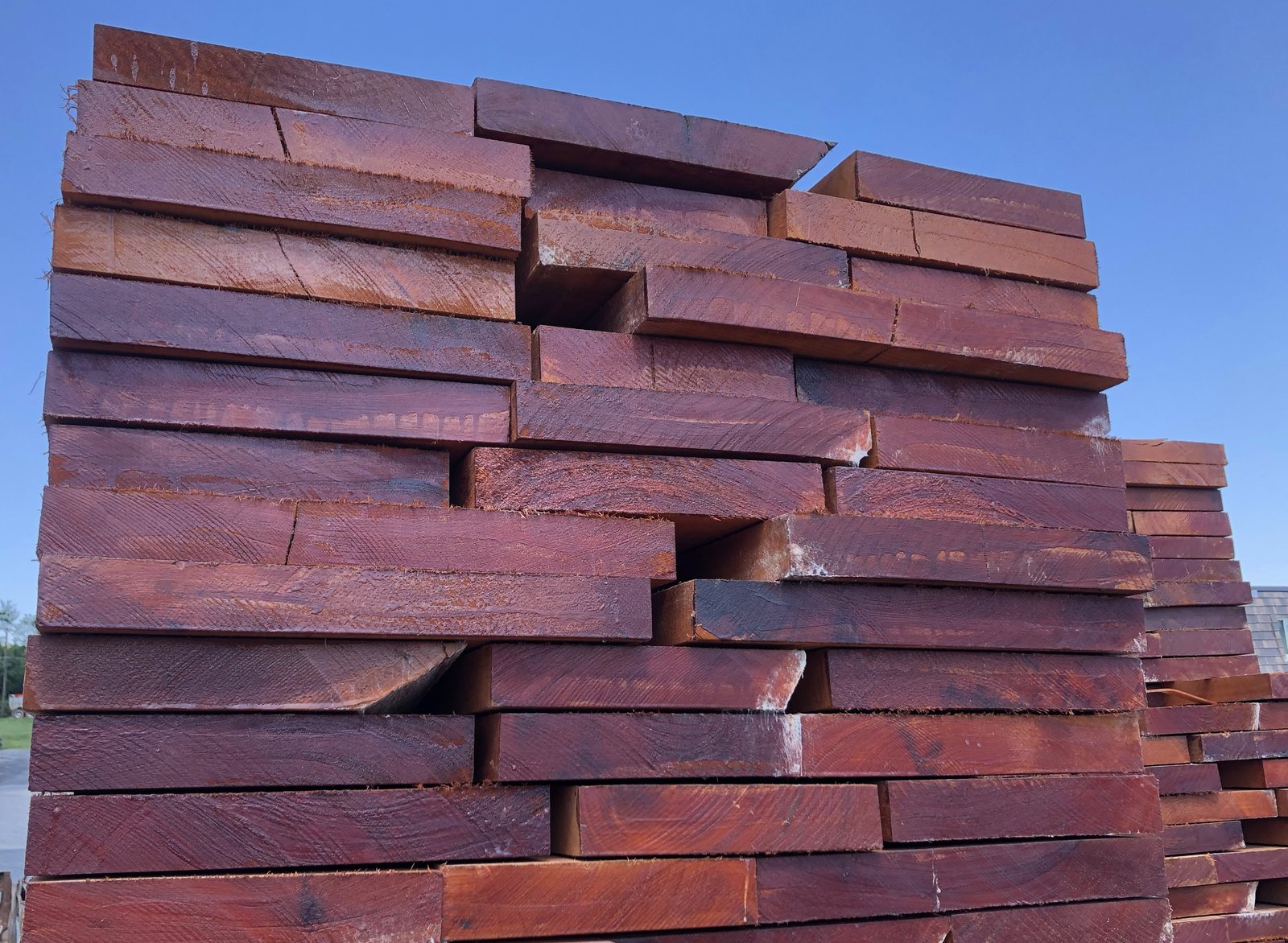
Owning the mill lets a supplier cut tropical decking to custom widths and thicknesses, mill custom profiles, and pre-groove for hidden fasteners, none of which is possible when only reselling standard stock. Standard decking runs 5/4 (about 1 inch actual) by 4 or 6 inches, but a project may need a specific width for a board rhythm, a thicker section for a stair tread, or a profile to match an existing deck. In-house milling turns those into a stock item made to order. The National Hardwood Lumber Association grading rules define the measurement conventions the milled sizes follow. A reseller's yes stops at the edge of the shelf. J. Gibson McIlvain has been in the hardwood trade since 1798 and runs its own mill, so a custom width, a stair tread, and a fastener groove are all cut under one roof to one tolerance.
Custom milling also covers the components that finish a deck: stair treads, fascia, and trim milled from the same stock so color and grain carry through, which our Ipe decking guide covers. The dimension is only half of what the mill controls, though: the finish that protects the board can go on there too.
Prefinished Decking Options and Oil Finish
Prefinishing applies a penetrating oil to the boards in a controlled facility before they ship, giving a uniform finish and removing the weather-dependent field step. Dense tropical hardwoods reject film finishes, so prefinishing uses a penetrating oil that soaks into the fiber; a facility holds the cure conditions near 65 to 75 degrees F and 40 to 55 percent humidity that a jobsite cannot. See our oil versus film finishes guide. The finish is a maintenance coating for color, since the wood is naturally durable, and the boards ship ready to install with touch-up sealer for field cuts. The other edge decision made at the mill is the fastener groove, covered next.
Pre-Grooving for Hidden Fasteners
A key custom-milling service is pre-grooving the board edge for a hidden-fastener clip system, milled to match the specific clip so the deck installs with no face screws. The groove runs roughly 1/4 inch deep at a set height, and it must match the clip, which makes it a milling decision confirmed with the order. Because dense tropical hardwood cannot be grooved accurately in the field, factory pre-grooving is the norm. The American Wood Council publishes the fastener basis these systems follow. A field-cut groove is a guess. A mill-cut groove is a spec. Which species carries that groove, and at what grade, is the next decision.
| Service | What it enables |
|---|---|
| Custom width / thickness | Specific board rhythm; match an existing deck |
| Custom profiles | Non-standard edges, treads, fascia |
| Pre-grooving | Hidden-fastener clip systems |
| Prefinishing | Uniform oil finish, ready to install |
| Matching components | Treads, fascia, trim from the same stock |
Species and Grades for Custom Work
Custom milling and prefinishing apply across the tropical decking range, from Ipe and Cumaru to Garapa and Massaranduba, each kiln-dried and graded before milling. Ipe (Janka about 3,680 lbf, density near 1,050 kg/m3, Class 1 under EN 350) and Cumaru (about 3,540 lbf) are the most common; Garapa and Massaranduba serve lighter and red palettes. All are kiln-dried to roughly 12 to 16 percent moisture content so the milled dimensions stay true. See our Garapa guide and Ipe vs. Cumaru guide. Once the species is set, the whole order reduces to a written specification the mill holds board after board.
Specifications of a Custom-Milled Order
A custom-milled order is defined by the exact dimensions, profile, groove (if any), and finish, all cut and applied in-house to a consistent tolerance. Because the mill holds the profile geometry across the order, every board matches, which is what keeps a custom width or a pre-grooved profile consistent on a large deck. The USDA Forest Products Laboratory documents that kiln-drying to a stable moisture content is what keeps milled dimensions from moving. J. Gibson McIlvain mills to custom dimensions and profiles, pre-grooves to clip systems, and oil-finishes in-house, shipping nationwide. The way a buyer verifies that tolerance before the run is a physical sample.
Samples, Lead Time, and Approving a Custom Order
A custom-milled or prefinished order is confirmed with a physical sample and needs lead time, because the boards are cut and finished to order rather than pulled from a shelf. Approving a sample locks the species, grade, profile, and finish before the run, which protects both sides on a made-to-order product. Because milling, kiln-drying, and finishing take time, the order is planned backward from the install date, especially in the spring and summer building season when demand peaks. The ASTM finish standards and the EN 350 durability ratings referenced on the sample give the buyer a defined specification to approve against.
For a custom width or a pre-grooved profile, the sample also confirms the exact geometry the mill will hold across the order. J. Gibson McIlvain provides samples, grades the run to them, and plans lead time and staged delivery around the project schedule, shipping nationwide.
Matching or Extending an Existing Deck
One of the most common reasons to custom-mill is to match an existing deck, replicating a board width, thickness, or profile that is no longer a stock size so an extension or repair blends in. Older decks and custom original installs often use dimensions that standard stock no longer matches, and a reseller can only offer what is on the shelf. A supplier that mills in-house can reproduce the exact width and profile from the same species, so an addition reads as part of the original rather than a patch. Matching the grain and grade as well as the dimension is what makes an extension disappear into the existing deck. A near match reads as a patch. An exact match disappears.
Custom Profiles: Treads, Fascia, Nosing, and Edges
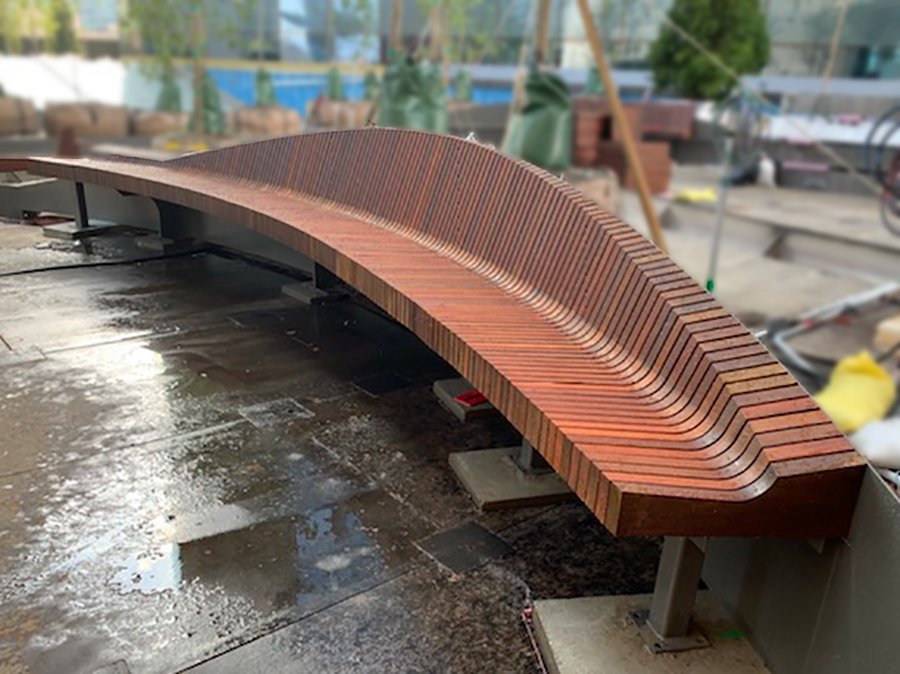
Custom milling covers the shaped components a complete deck needs beyond flat boards: stair treads with a bullnose, fascia to wrap the deck edge, nosings, and eased or radiused edges. Stair treads are often milled thicker and with a rounded nosing for a comfortable, finished step; fascia is milled to wrap the framing and board ends; edges are eased for barefoot comfort or radiused to a design. These are made-to-order profiles cut in-house from the same stock as the decking so color and grain carry through. The National Hardwood Lumber Association grading rules define the material these profiles are cut from.
Grades and Grain Orientation in Custom Orders
A custom order can specify not just the dimension but the grade and the grain orientation, since vertical-grain (quartersawn) boards move less and wear more evenly than flat-grain. For a deck where stability and a uniform look matter, specifying vertical grain reduces cupping and gives a straighter figure, though it yields fewer boards per log and so is a deliberate upgrade. Grade selection sets the allowable color variation and defects. Milling in-house lets a supplier hold both the grade and the grain to the specification across the order. See our quartersawn versus plain-sawn guide.
Tropical Species Reference Data
Custom milling applies across species graded to these figures, documented by the USDA Forest Products Laboratory and the National Hardwood Lumber Association grading rules.
| Species | Density (kg/m3) | Janka (lbf) | EN 350 |
|---|---|---|---|
| Ipe | ~1,050 | ~3,680 | Class 1 |
| Cumaru | ~1,070 | ~3,540 | Class 1 |
| Garapa | ~800 | ~1,700 | Class 1-2 |
| Massaranduba | ~1,150 | ~3,190 | Class 1 |
"The difference between a mill and a reseller is what you can say yes to. A reseller sells you whatever widths are on the shelf. Because we mill, a customer can ask for a five-inch face to get the board rhythm they want, a matching tread, a groove for their clip, and the whole thing oiled before it ships. It comes out consistent because it is all cut in one place to one tolerance."
Norm Moton, Director of Sales, J. Gibson McIlvain Company
How J. Gibson McIlvain Handles Custom Milling and Prefinishing
For J. Gibson McIlvain, a custom order is cut in-house to the specified dimensions and profile from kiln-dried, graded tropical hardwood, pre-grooved to the clip system where hidden fasteners are wanted, and oil-finished before shipping when a prefinished option is chosen. Matching treads, fascia, and trim are milled from the same stock so the whole deck reads as one piece. Because everything is cut in one place to one tolerance, the custom sizes and profiles stay consistent across the order.
The team frames in-house milling as the ability to say yes to a specification rather than substitute a stock size. Custom widths, profiles, pre-grooving, and prefinishing are all made-to-order services a reselling supplier cannot provide.
Custom Order Checklist
| Item | Why it matters |
|---|---|
| Exact dimensions | Custom width and thickness for the design. |
| Profile | Standard, custom edge, or clip-specific groove. |
| Finish | Prefinished oil or unfinished. |
| Matching components | Treads, fascia, trim from the same stock. |
| Moisture content | Kiln-dried so milled sizes stay true. |
Where Custom Orders Go Wrong
- Assuming a reseller can custom-mill: Custom sizes and pre-grooving need an in-house mill.
- Grooving to no clip: A pre-groove must match a specific clip system.
- Film finish on dense hardwood: Prefinishing uses penetrating oil; films peel.
- Unmatched components: Order treads and fascia from the same stock as the decking.
Related J. Gibson McIlvain Guidance and Next Steps
Frequently Asked Questions
Can I get tropical decking milled to custom widths?
Yes, from a supplier that mills in-house. Custom widths, thicknesses, and profiles are made-to-order services a reselling supplier cannot provide, since they require owning the mill. A project might need a specific face width for a board rhythm, a thicker stair tread, or a profile to match an existing deck. J. Gibson McIlvain mills tropical decking to custom dimensions and profiles from kiln-dried, graded stock, and can pre-groove and prefinish it before shipping nationwide.
What does prefinished tropical decking mean?
Prefinished tropical decking has a penetrating oil applied to the boards in a controlled facility before they ship, giving a uniform finish and removing the weather-dependent field finishing step. Dense tropical hardwoods reject film finishes, so prefinishing uses a penetrating oil that soaks in. The boards arrive ready to install with touch-up sealer for field cuts. The oil is a maintenance finish for color; the wood is naturally durable. J. Gibson McIlvain offers prefinished options in-house.
Can a decking supplier pre-groove boards for my clip system?
Yes, if they mill in-house. Pre-grooving mills the board edge to match a specific hidden-fastener clip, so the deck installs with no face screws. The groove runs about 1/4 inch deep and must match the clip, making it a milling decision confirmed at ordering, and dense tropical hardwood cannot be grooved accurately in the field. J. Gibson McIlvain mills pre-grooving to common clip systems in-house alongside custom dimensions and prefinishing.
Can I get matching stair treads and fascia with custom decking?
Yes. A supplier that mills in-house can cut stair treads, fascia, and trim from the same stock as the decking so color and grain carry through the whole project, with treads often milled wider or thicker than the field boards. Ordering these together ensures consistency. J. Gibson McIlvain mills matching treads, fascia, and trim to order alongside custom-dimensioned and prefinished decking, shipping the complete package nationwide.
Which tropical species can be custom-milled and prefinished?
Custom milling and prefinishing apply across the tropical decking range, including Ipe, Cumaru, Garapa, and Massaranduba, each kiln-dried and graded before milling. Ipe and Cumaru are the most common; Garapa and Massaranduba serve lighter and red palettes. All are kiln-dried to roughly 12 to 16 percent moisture content so the milled dimensions stay true. J. Gibson McIlvain mills and prefinishes the full range in-house.
How long does a custom-milled decking order take?
A custom-milled or prefinished decking order needs production lead time because the boards are cut, kiln-dried, and finished to order rather than pulled from stock, so the order is planned backward from the install date. Lead times lengthen during the spring and summer building season when demand peaks. Approving a sample up front and ordering ahead avoids a rush. J. Gibson McIlvain plans lead time and staged delivery around the project schedule and provides samples to approve against.
Should I approve a sample before a custom decking order?
Yes. On a made-to-order product, approving a physical sample locks the species, grade, profile, and finish before the run, which protects both buyer and supplier and, for a custom width or pre-grooved profile, confirms the exact geometry the mill will hold across the order. J. Gibson McIlvain provides samples, grades the run to them, and mills and prefinishes to that approved specification, shipping nationwide.
Sources and Standards Referenced
- National Hardwood Lumber Association - Grading and Measurement Rules
- American Wood Council - Fastener and Span Design
- USDA Forest Products Laboratory - Wood Handbook and Moisture
- EN 350 - Durability of Wood and Wood-Based Products
- Forest Stewardship Council - Chain of Custody Certification
- ASTM International - Finish and Material Standards
- USDA Forest Products Laboratory - Wood Handbook (FPL-GTR-282)
- ASTM E84 - Surface Burning Characteristics
- North American Deck and Railing Association
- PEFC - Programme for the Endorsement of Forest Certification
- International Code Council - Building and Residential Codes