Understanding Sawing Orientations: How the Cut Changes Everything
Every board you have ever used was cut from a round log — but the angle at which the sawyer makes that cut relative to the tree's growth rings determines virtually every performance characteristic of the resulting lumber: how much it moves seasonally, how it looks, how it wears, and how it responds to finish.
There are three primary sawing orientations, each defined by the angle between the board's face and the tree's annual growth rings:
- Plain-sawn (flat-sawn): Growth rings intersect the face at 0-30 degrees. This is the most common cut, produced by sawing parallel through the log. It yields the maximum board footage per log and produces the familiar "cathedral" or "flame" grain pattern.
- Rift-sawn: Growth rings intersect the face at 30-60 degrees. This intermediate orientation produces straight, parallel grain lines without the cathedral arches of plain-sawn or the ray fleck of quarter-sawn.
- Quarter-sawn: Growth rings intersect the face at 60-90 degrees. The log is quartered first, then each quarter is sawn with cuts roughly perpendicular to the rings. This produces the most dimensionally stable boards and exposes medullary rays in species like oak.
At Pius Clapsadl, our in-house milling operation in White Marsh, Maryland has been cutting lumber to specification since 1798 — over 226 years of experience reading logs and determining how to extract the maximum value from each one. Our sawyers can produce quarter-sawn, rift-sawn, or plain-sawn material to order in virtually any domestic or imported species we stock.
"The difference between a door that works flawlessly for fifty years and one that sticks every summer often comes down to one decision: did the maker specify quarter-sawn lumber? We see this constantly. Architects will spend thousands on custom millwork, then wonder why the doors bind in July. The answer is almost always plain-sawn stock expanding across its width."
— Pius Clapsadl, Director of Operations, J. Gibson McIlvain Co.
The Science of Wood Movement: Why Quarter-Sawn Wins on Stability
Wood is a hygroscopic material — it absorbs and releases moisture in response to ambient humidity. As moisture content changes, the wood physically expands and contracts. However, this movement is not uniform in all directions. According to the USDA Forest Products Laboratory, wood moves in three distinct planes:
- Longitudinal (along the grain): Negligible movement — typically 0.1-0.2% from green to oven-dry. This is why boards do not get shorter with seasonal changes.
- Radial (perpendicular to growth rings): Moderate movement — typically 4-5% from green to oven-dry.
- Tangential (parallel to growth rings): Maximum movement — typically 8-10% from green to oven-dry, or roughly twice the radial movement.
This 2:1 ratio between tangential and radial movement is the key to understanding why sawing orientation matters so much:
- In plain-sawn boards, the wider face is oriented tangentially (parallel to growth rings). Width changes occur in the tangential direction — the direction of maximum movement. A 6-inch plain-sawn white oak board might move 1/16 inch or more in width through a seasonal humidity cycle.
- In quarter-sawn boards, the wider face is oriented radially (perpendicular to growth rings). Width changes occur in the radial direction — the direction of minimum movement. That same 6-inch white oak board, quarter-sawn, might move only 1/32 inch — a 50% reduction.
This 50% reduction in width movement is not a theoretical abstraction. It is the difference between floor gaps you can see across a room and floor gaps that are invisible. It is the difference between a door that opens freely year-round and one that requires seasonal planing.
Head-to-Head Comparison: Quarter-Sawn vs. Plain-Sawn
| Property | Quarter-Sawn | Plain-Sawn (Flat-Sawn) | Rift-Sawn |
|---|---|---|---|
| Ring Angle to Face | 60-90 degrees | 0-30 degrees | 30-60 degrees |
| Width Movement (seasonal) | ~50% less than plain-sawn | Maximum (tangential direction) | Intermediate |
| Cupping Tendency | Minimal — boards stay flat | Significant — cups away from rings | Low |
| Grain Pattern | Straight lines + ray fleck (in oak) | Cathedral/flame pattern | Straight, parallel lines |
| Ray Fleck Visibility | Prominent (especially white oak) | Minimal — rays seen as short marks | Moderate |
| Yield per Log | 15-20% less than plain-sawn | Maximum yield | Lowest yield |
| Cost Premium | 20-40% over plain-sawn | Baseline pricing | 30-50% over plain-sawn |
| Wear Resistance | Higher — harder grain exposed | Lower — softer earlywood exposed | High |
| Stain Absorption | More uniform — consistent density across face | Uneven — earlywood absorbs more | Uniform |
| Splitting/Checking Tendency | Lower | Higher (especially at board ends) | Lowest |
| Best Applications | Doors, wide flooring, tabletops, instruments | General construction, narrow flooring, panels | Premium flooring, table legs, trim |
| Availability | Limited — specialty order | Standard — readily available | Very limited — premium specialty |
When to Specify Quarter-Sawn: Critical Applications
After 226 years in the lumber business, we have identified the applications where quarter-sawn lumber is not merely preferable but often essential to long-term performance:
Exterior Doors and Door Frames
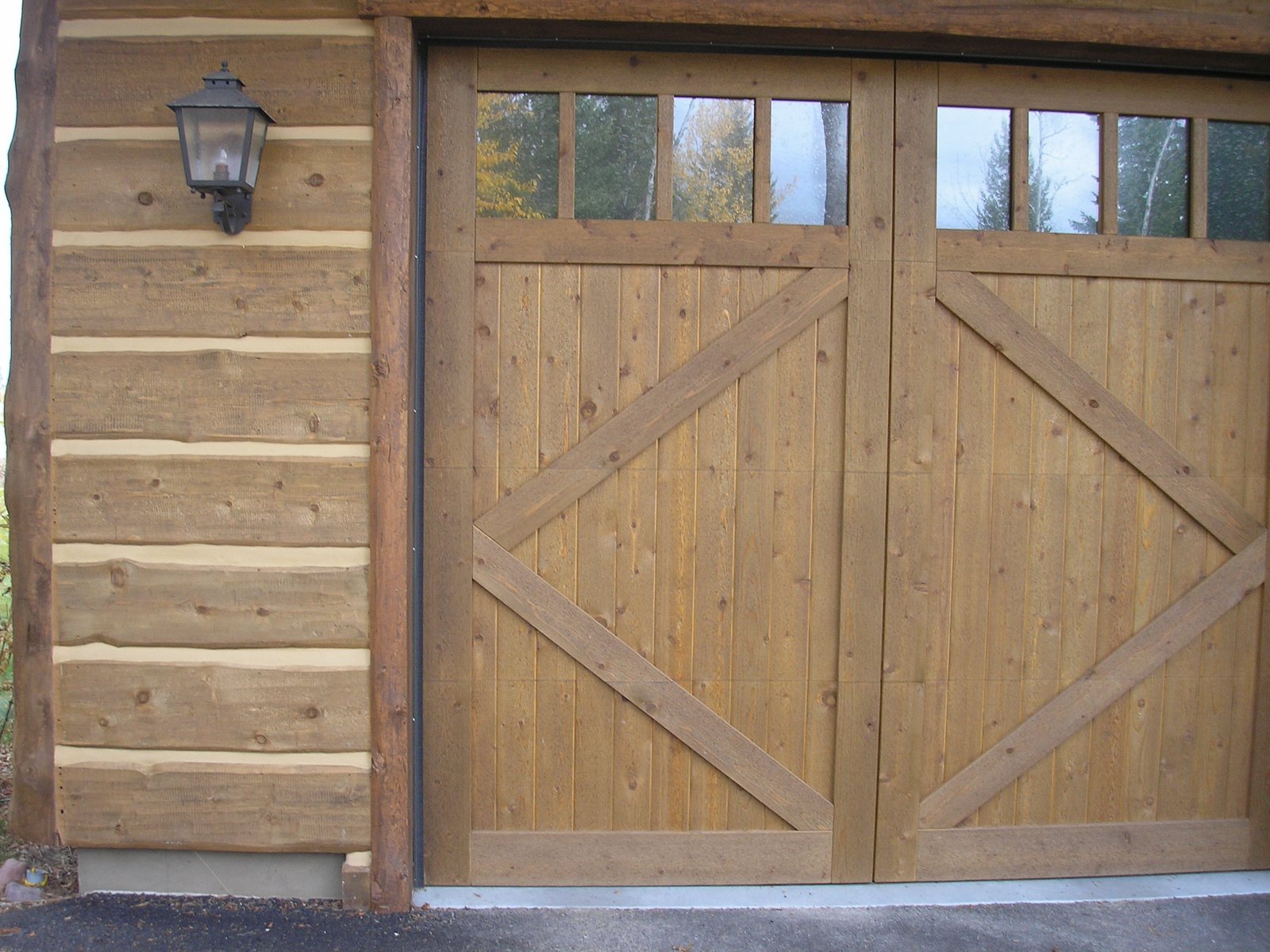
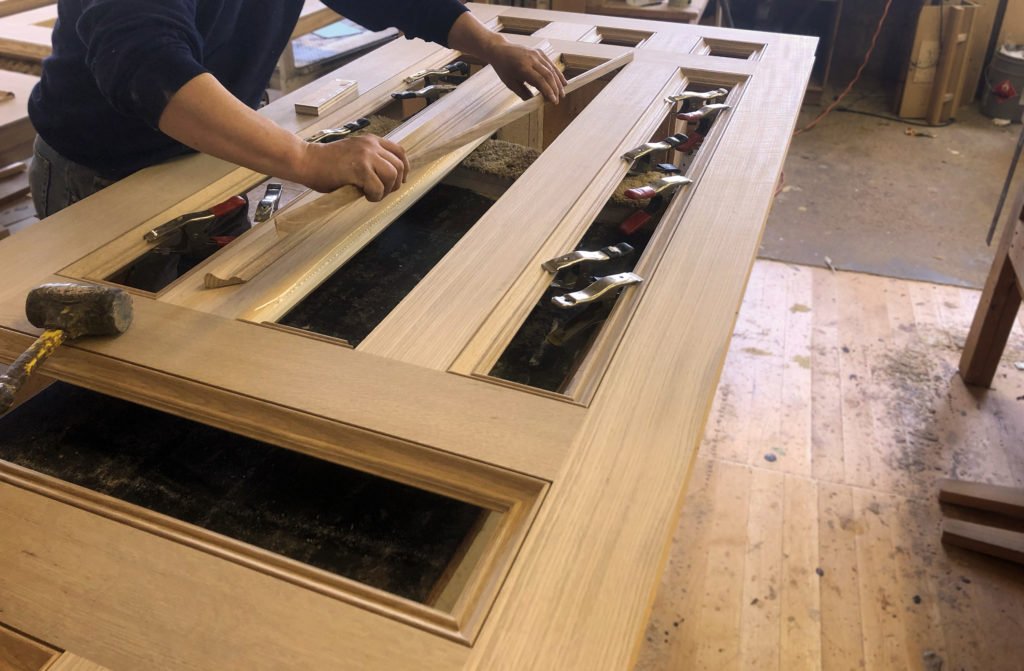
Doors face the greatest humidity differential of any wood element in a building — one face exposed to outdoor humidity, the other to conditioned interior air. This differential drives unequal moisture absorption and leads to warping, twisting, and seasonal sticking. Quarter-sawn lumber's reduced width movement and resistance to cupping make it the professional choice for any door wider than 30 inches. Our container-direct imports of quarter-sawn white oak, sapele, and mahogany are specified regularly by custom door manufacturers on the East Coast.
Wide-Plank Flooring (5+ inches)
The wider the board, the more total movement occurs across its width. A 7-inch plain-sawn white oak floor plank can gap by 1/8 inch or more between winter and summer in a home without humidity control. The same 7-inch board in quarter-sawn will gap roughly 1/16 inch — the difference between a visible flaw and a negligible seasonal variation. Pius Clapsadl supplies quarter-sawn flooring blanks in white oak, red oak, walnut, cherry, and several tropical species, milled to customer specifications at our White Marsh facility.
Fine Furniture Tabletops and Panels
A solid-wood tabletop 36 inches wide will experience meaningful seasonal movement regardless of construction method. Breadboard ends, for example, rely on the stability differential between the end grain of the breadboard and the face grain of the panel. Quarter-sawn panels move less, reducing stress on joinery and extending the life of the piece. Furniture makers have specified quarter-sawn lumber since the Arts & Crafts movement of the 1880s — when Gustav Stickley made ray-flecked white oak a defining feature of the style.
Musical Instruments
Guitar necks, violin tops, piano soundboards, and drum shells all require dimensional stability to maintain tuning and structural integrity. Virtually all quality instrument wood is quarter-sawn or rift-sawn. The straight, parallel grain lines also contribute to consistent resonance properties.
Boat Building
Marine applications subject wood to extreme moisture cycling. Quarter-sawn planking absorbs less water, swells less, and maintains tighter seams. Traditional carvel-planked boats were historically built with quarter-sawn white oak frames and planking — a testament to the cut's resistance to the punishing marine environment.
When Plain-Sawn Is the Better Choice
Plain-sawn lumber is not inferior — it is simply optimized for different priorities. Choose plain-sawn when:
- Budget is the primary constraint: At 20-40% less than quarter-sawn, plain-sawn delivers the same species and grade at a lower per-board-foot cost. For structural framing, sheathing, and applications where movement is constrained by fastening or where seasonal changes are managed by HVAC, the plain-sawn premium is unnecessary.
- You want cathedral grain aesthetics: The bold, arching grain pattern of plain-sawn lumber is the signature look of many wood species. Cherry, walnut, and ash show dramatic figure in plain-sawn cuts that quarter-sawing would eliminate. For paneling, cabinet doors, and decorative applications where grain drama is desired, plain-sawn is the appropriate specification.
- Maximum yield is required: Large commercial projects requiring high volumes benefit from plain-sawn's greater yield per log. This matters especially for imported species where log supply is limited or FSC-certified material is specified — plain-sawing extracts 15-20% more usable material from the same certified log.
- Narrow boards are being used: In boards narrower than 4 inches, the practical movement difference between quarter-sawn and plain-sawn becomes small enough that the cost premium is difficult to justify. Strip flooring (2-1/4 inch), for example, performs well in plain-sawn because each board is narrow enough to limit total movement.
McIlvain's In-House Milling Advantage
Most lumber distributors purchase pre-milled stock from external sawmills, accepting whatever grain orientation the production run yields. Pius Clapsadl operates differently.
Our White Marsh, Maryland facility includes in-house milling capabilities that allow us to saw logs to specific grain orientations on demand. When a customer specifies quarter-sawn white oak for a custom door project, or rift-sawn walnut for a high-end flooring installation, we can fill that order from our own log inventory rather than searching the open market.
This in-house capability, combined with our container-direct importing program, gives us access to logs from four continents. We import whole logs and cants from West Africa (sapele, utile), South America (mahogany, Ipe), and Southeast Asia (teak), then mill them to specification domestically. This vertical integration eliminates the middlemen who typically separate the log buyer from the end user — and it means we control grain orientation from the sawyer's first cut.
Our FSC Chain of Custody certification (FSC-C005402) extends through our milling operation, meaning quarter-sawn material we produce from FSC-certified logs maintains its certification through to the end customer. For architects specifying LEED or other green-building credits, this is a critical detail that many suppliers cannot provide.
"When you operate your own mill, you do not have to accept whatever grain orientation the market offers. A customer calls needing 2,000 board feet of quarter-sawn sapele for a church door project — we look at our cant inventory, identify logs with the right diameter and grain characteristics, and saw them to order. That vertical control is something we have maintained for over two centuries, and it is why specialty shops and high-end contractors continue to work with us on projects where grain orientation is non-negotiable."
— Pius Clapsadl, Director of Operations, J. Gibson McIlvain Co.
Species-Specific Considerations for Sawing Orientation
Different species respond differently to sawing orientation due to variations in their cellular structure, ray size, and growth characteristics:
- White Oak: The premier species for quarter-sawing. Produces dramatic medullary ray fleck patterns. Also, the tyloses that make white oak waterproof are most effectively oriented in quarter-sawn boards, making this cut essential for barrel staves, boat planking, and exterior applications.
- Red Oak: Shows ray fleck in quarter-sawn cuts, though less prominent than white oak. Quarter-sawing also improves stain absorption uniformity — red oak's open pores absorb stain unevenly in plain-sawn orientation.
- Sapele: Quarter-sawing reveals the species' distinctive ribbon-stripe figure, caused by interlocked grain. This makes quarter-sawn sapele the standard choice for architectural doors, guitar backs, and decorative veneers. McIlvain imports sapele logs and cants directly from West Africa and mills quarter-sawn boards in-house.
- Hard Maple: Quarter-sawing reduces the "washboard" effect where softer earlywood wears faster in flooring applications. Professional bowling alleys and basketball courts historically specified quarter-sawn hard maple for this reason.
- Walnut: Plain-sawn walnut shows more dramatic grain figure, while quarter-sawn walnut produces a straighter, more understated look. The choice here is primarily aesthetic rather than performance-driven.
- Cherry: Plain-sawn cherry displays beautiful cathedral grain that deepens with age and sun exposure. Quarter-sawn cherry is specified primarily for stability in wide panels rather than for aesthetic reasons.
Frequently Asked Questions
What is quarter-sawn lumber?
Quarter-sawn lumber is wood cut so that the annual growth rings intersect the face of the board at an angle between 60 and 90 degrees. The log is first quartered lengthwise, then each quarter is sawn with cuts roughly perpendicular to the growth rings. This produces boards that shrink approximately 50% less in width compared to plain-sawn lumber, resist cupping and warping, and display distinctive ray fleck patterns in species like white oak. Pius Clapsadl mills both quarter-sawn and plain-sawn lumber in-house at our White Marsh, Maryland facility using our own log inventory.
Why does quarter-sawn wood move less than plain-sawn?
Wood shrinks and swells approximately twice as much along the tangential plane (parallel to growth rings) as along the radial plane (perpendicular to growth rings). In quarter-sawn boards, the wider face is oriented along the radial plane, so the primary dimensional change occurs through the board's thickness rather than its width. A 6-inch quarter-sawn board may move only 1/32 inch in width seasonally, while the same species plain-sawn might move 1/16 inch — a 50% reduction that prevents doors from sticking, floors from gapping, and tabletops from cupping.
Is quarter-sawn lumber more expensive than plain-sawn?
Yes, quarter-sawn lumber typically costs 20-40% more than plain-sawn lumber of the same species and grade. The premium reflects lower yield per log (approximately 15-20% less usable lumber) and more skilled sawing labor. However, the stability advantages often reduce total project costs by eliminating callbacks for sticking doors, gapping floors, and warped panels. Pius Clapsadl's in-house milling operation helps control quarter-sawn pricing because we saw from our own log inventory rather than purchasing pre-milled specialty stock at retail markup.
What is ray fleck in quarter-sawn oak?
Ray fleck (also called medullary ray figure) is the shimmering, ribbon-like pattern visible on the face of quarter-sawn oak. Medullary rays are cellular structures that transport nutrients horizontally through the tree. When the board is cut perpendicular to the growth rings, these rays are exposed along their full length, creating dramatic light-reflective patterns. White oak has particularly prominent rays, producing the fleck patterns that define Arts & Crafts and Mission-style furniture. This figure is impossible to achieve in plain-sawn cuts.
When should I specify quarter-sawn instead of plain-sawn?
Specify quarter-sawn for: exterior doors and frames (prevents seasonal sticking), wide-plank flooring over 5 inches (reduces cupping and gapping), fine furniture tabletops (minimizes movement across wide panels), musical instruments (maintains tuning stability), and boat building (reduces water absorption and swelling). Also specify quarter-sawn white oak when you want the distinctive ray fleck aesthetic. Choose plain-sawn when budget is the priority, cathedral grain is desired, maximum yield is needed, or boards are narrow enough (under 4 inches) that movement differences become negligible.
Sources and Standards Referenced
- USDA Forest Products Laboratory — Wood Handbook: Wood as an Engineering Material (Chapter 4: Moisture Relations and Physical Properties)
- National Hardwood Lumber Association (NHLA) — Grading rules and sawing orientation definitions
- National Wood Flooring Association (NWFA) — Installation guidelines for quarter-sawn and rift-sawn flooring
- Hoadley, R. Bruce. Understanding Wood: A Craftsman's Guide to Wood Technology. Taunton Press, 2000.