The Per-Foot Price Is the Entry Cost, Not the Total
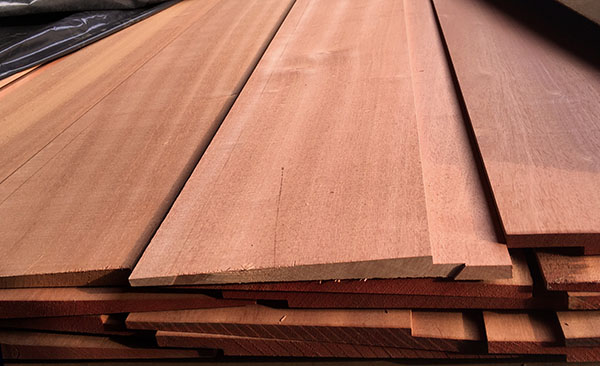
Total cost of ownership adds maintenance and replacement over the deck's life to the upfront material, and on that basis the cheapest board per foot is often the most expensive deck. A deck bought on the lowest per-foot number but replaced twice over 40 years costs far more than a durable deck bought once. Tropical hardwoods like Ipe and Cumaru carry a higher entry cost but a service life, 40 to 75 years for Ipe and 30-plus for Cumaru per the USDA Forest Products Laboratory, that spreads the cost across decades. For the material comparison, see our wood decking versus composite guide.
Maintenance Over the Life of the Deck
Both Ipe and Cumaru need only periodic penetrating oil to hold color, or nothing at all if left to weather, and neither takes a film finish that would peel and require stripping. That keeps lifetime maintenance low and predictable: clean and re-oil on a cycle to keep the brown, or let the deck silver and simply clean it. Neither has a chemical treatment to reapply, unlike pressure-treated softwood. The USDA Forest Products Laboratory documents why penetrating finishes suit dense species; see our oil versus film finishes guide. Low, predictable maintenance is a large part of the lifetime cost advantage.
| Factor | Ipe | Cumaru | PT softwood / composite |
|---|---|---|---|
| Entry cost per foot | Highest of the two | Lower than Ipe | Lower upfront |
| Service life | 40 to 75 years | 30+ years | 15 to 25 yrs / eventual replacement |
| Maintenance | Oil or weather; no treatment | Oil or weather; no treatment | Sealing/treatment or fade |
| Replacement over 40 yrs | None | Possibly one, late | One to two |
Ipe vs. Cumaru on Lifetime Value
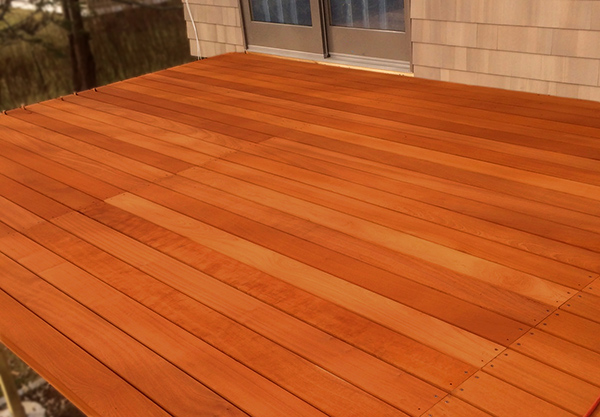
On total cost of ownership, Ipe's higher entry cost is offset by the longest service life and the least reliance on color maintenance, while Cumaru's lower entry cost gives up little because its 30-plus year life still avoids replacement for a generation. For a deck expected to last the life of the home, Ipe's extra decades at the far end may justify the premium; for a deck that will be part of a renovation within 30 years anyway, Cumaru captures the value with no practical downside. Both avoid the replacement cycle that dominates the lifetime cost of shorter-lived decking. The choice is a horizon question, not a durability one.
Why Both Beat the Cheaper Options on Total Cost
Composite and pressure-treated decking win on entry price but lose on total cost, because both are typically replaced within 15 to 25 years while a tropical hardwood deck is not. Composite fades and is eventually replaced; pressure-treated softwood checks and warps and needs frequent sealing. Ipe and Cumaru, rated Class 1 durable under EN 350 and Class A under ASTM E84, avoid the replacement that dominates lifetime cost, and the American Wood Council documents wood's durability and life-cycle profile. Spread across decades, the higher entry cost of tropical hardwood becomes the lower cost per year of service.
Home Value and Repairability Over the Deck's Life
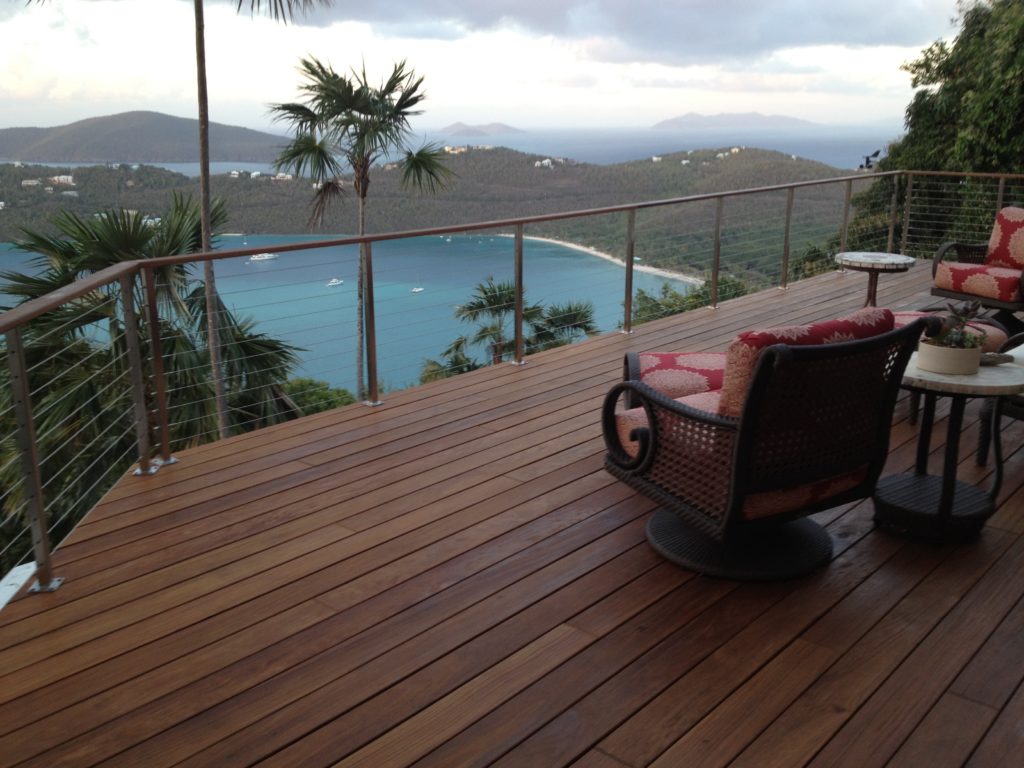
A premium tropical hardwood deck adds to a home's appeal and is repairable board by board, both of which factor into lifetime value beyond the raw cost of materials. A real-wood Ipe or Cumaru deck reads as a quality feature that a faded composite does not, which supports resale appeal. And because these are solid boards, a damaged plank can be replaced individually rather than reworking a section, so repairs over decades are small and local. Keeping a modest quantity of matched attic stock at purchase makes those repairs blend in, since a later reorder can vary in tone as the USDA Forest Products Laboratory notes natural color varies between lots.
Solid hardwood also holds reuse value at true end of life, so little is landfilled. Combined with the long service life, low maintenance, and documented responsible sourcing via FSC chain-of-custody, which the U.S. Green Building Council recognizes toward LEED materials credits, the repairability and residual value round out why a tropical hardwood deck is the lower lifetime cost despite the higher entry price. J. Gibson McIlvain supplies matched material and can hold attic stock for a phased or long-lived deck.
Thinking in Cost Per Year of Service
The number that actually compares decks is cost per year of service, the total lifetime cost spread across the years the deck lasts, and on that measure a durable tropical hardwood deck is low because its cost is amortized over decades. A deck that lasts 40 to 75 years, like Ipe, or 30-plus years, like Cumaru, spreads its upfront and maintenance cost across a long life, so the annual cost of owning it is small. A cheaper deck replaced every 15 to 25 years concentrates its cost into a short life and then repeats it, so its cost per year is higher even though each individual deck cost less. The USDA Forest Products Laboratory documents the service-life durability that makes this amortization possible.
Framing the decision this way reorders the comparison: the per-foot sticker that looks decisive at purchase becomes a small part of a long ownership, while service life and maintenance dominate. Both Ipe and Cumaru win on cost per year against composite and treated wood because they last and need little upkeep. Between the two, Ipe's longer life slightly lowers its cost per year at the far end, while Cumaru's lower entry cost offsets its shorter life, so they land close on this measure, and the choice returns to horizon and preference.
The Hidden Costs of the Cheap Deck
The costs that make a cheap deck expensive are the ones not on the per-foot sticker: replacement, repeated maintenance, and disruption, all of which fall on shorter-lived decking over the life of a home. A composite deck that fades and is replaced, or a pressure-treated deck that checks, warps, and needs frequent sealing, carries labor and disposal costs each cycle that the initial price does not show. The American Wood Council life-cycle documentation reflects how durable materials avoid these repeated costs.
A durable tropical hardwood deck front-loads its cost into a higher entry price and then largely avoids these hidden costs: no replacement for decades, low maintenance with oil or none, and no chemical treatment to renew. Over the life of a home the avoided replacement is usually the largest single factor, which is why the deck that costs more per foot is often the cheaper deck to own. Deciding on the sticker alone hides exactly the costs that matter most.
"The per-foot price is the question everyone asks, but it is the wrong number to decide on. What a deck actually costs is spread over its life. Ipe or Cumaru costs more up front and then you basically own it, oil it if you want the color, or let it gray. A cheaper deck you are tearing out and rebuilding in twenty years. Over the life of the house, the tropical hardwood is the cheaper deck. Ask us for the figures, but decide on the lifetime, not the sticker."
Norm Moton, Director of Sales, J. Gibson McIlvain Company
How J. Gibson McIlvain Frames Lifetime Cost
For J. Gibson McIlvain, the Ipe-versus-Cumaru cost question is framed on lifetime value rather than the per-foot sticker. The team explains that both tropical hardwoods carry a higher entry cost and a far longer service life with low, predictable maintenance, so the cost per year of service is low, and both avoid the replacement cycle that dominates the lifetime cost of composite and treated wood. The choice between Ipe and Cumaru becomes a question of horizon and budget rather than durability.
The team stocks both, kiln-dried and graded, and quotes current figures, but its guidance is to decide on total cost of ownership: the durable deck bought once is usually the cheaper deck over the life of the home.
Total-Cost Checklist
| Item | Why it matters |
|---|---|
| Service life | Spreads the cost across decades. |
| Maintenance plan | Oil or weather; no treatment to renew. |
| Replacement avoided | The biggest lifetime cost of cheap decking. |
| Horizon | Life-of-home favors Ipe; shorter favors Cumaru. |
| Cost per year of service | The number that actually compares decks. |
Where the Cost Decision Goes Wrong
- Deciding on the per-foot sticker: Ignores maintenance and replacement.
- Ignoring replacement: The dominant lifetime cost of cheap decking.
- Assuming composite is cheaper long-term: It is usually replaced.
- Overlooking maintenance simplicity: Oil-or-weather beats treatment cycles.
Ordering Information to Resolve Before Pricing
- Species: Ipe or Cumaru, with a quote for current figures.
- Horizon: life-of-home versus shorter renovation cycle.
- Finish plan: oil to keep color or weather to gray.
- Dimensions: decking plus matching components.
- Logistics: total square footage, delivery, lead time.
Related J. Gibson McIlvain Guidance and Next Steps
Frequently Asked Questions
What is the total cost of ownership of an Ipe or Cumaru deck?
Total cost of ownership adds maintenance and replacement over the deck's life to the upfront material cost. Ipe and Cumaru cost more per foot but last 40 to 75 and 30-plus years respectively with only periodic oil or none at all, and no chemical treatment to renew, so the cost per year of service is low. Against composite or treated wood replaced every 15 to 25 years, either tropical hardwood is cheaper over the life of the home. J. Gibson McIlvain stocks both and quotes current figures.
Is Ipe cheaper than Cumaru over the life of a deck?
Not cheaper, but its higher entry cost buys the longest service life, 40 to 75 years, and the least reliance on color maintenance, so on a life-of-home horizon the premium can be justified. Cumaru's lower entry cost gives up little because its 30-plus year life still avoids replacement for a generation. Both avoid the replacement cycle that dominates lifetime cost. The choice is a horizon question. J. Gibson McIlvain frames it on total cost, not the per-foot sticker.
Does Ipe or Cumaru cost less than composite over time?
Over time, yes, typically. Composite and pressure-treated decking win on entry price but are usually replaced within 15 to 25 years, while Ipe and Cumaru, rated Class 1 durable, avoid that replacement. Spread across decades, the higher entry cost of tropical hardwood becomes a lower cost per year of service. Composite fades and is replaced; treated wood needs sealing. J. Gibson McIlvain frames the decision on lifetime cost and supplies long-lived tropical hardwood.
How much maintenance do Ipe and Cumaru decks need?
Both need only periodic penetrating oil to hold their color, or nothing at all if left to weather to a silver-gray, and neither takes a film finish that would peel and require stripping. There is no chemical treatment to reapply. That keeps lifetime maintenance low and predictable: clean and re-oil on a cycle, or clean and let it gray. This low maintenance is a large part of the lifetime cost advantage. J. Gibson McIlvain supplies both and advises on the finish plan.
Should I decide between Ipe and Cumaru on price per foot?
No. The per-foot price is the entry cost, not the total cost, and deciding on it ignores maintenance and replacement, which dominate a deck's lifetime cost. The number that actually compares decks is cost per year of service, where both Ipe and Cumaru are low because they last decades with little upkeep. Decide on horizon and total cost. J. Gibson McIlvain quotes current per-foot figures but frames the decision on lifetime value.
Does an Ipe or Cumaru deck add home value?
A premium tropical hardwood deck reads as a quality feature that supports a home's appeal in a way a faded composite deck does not, so it factors into lifetime value beyond materials. Its long service life means a buyer inherits a deck with decades of life left, and solid boards are repairable individually. These qualities support resale appeal. J. Gibson McIlvain supplies matched Ipe and Cumaru and can hold attic stock so future repairs blend into the deck.
Can you repair one board on an Ipe or Cumaru deck?
Yes. Because Ipe and Cumaru are solid hardwood boards, a damaged plank can be replaced individually rather than reworking a whole section, so repairs over the deck's decades of life are small and local. Keeping a modest quantity of matched attic stock at purchase makes the repair blend in, since a later reorder can vary in tone between lots. J. Gibson McIlvain supplies matched material and can hold attic stock for repairs on a long-lived deck.