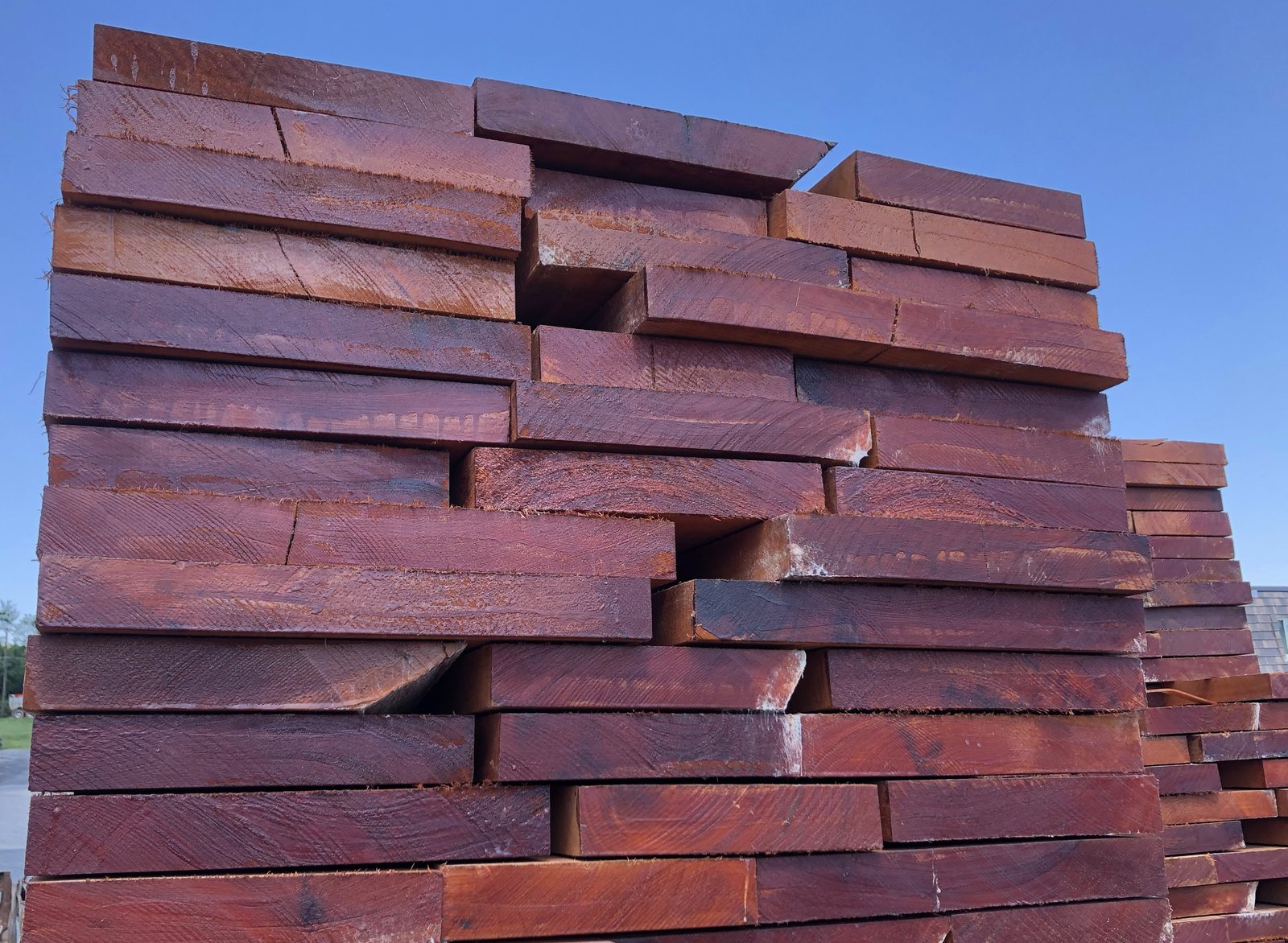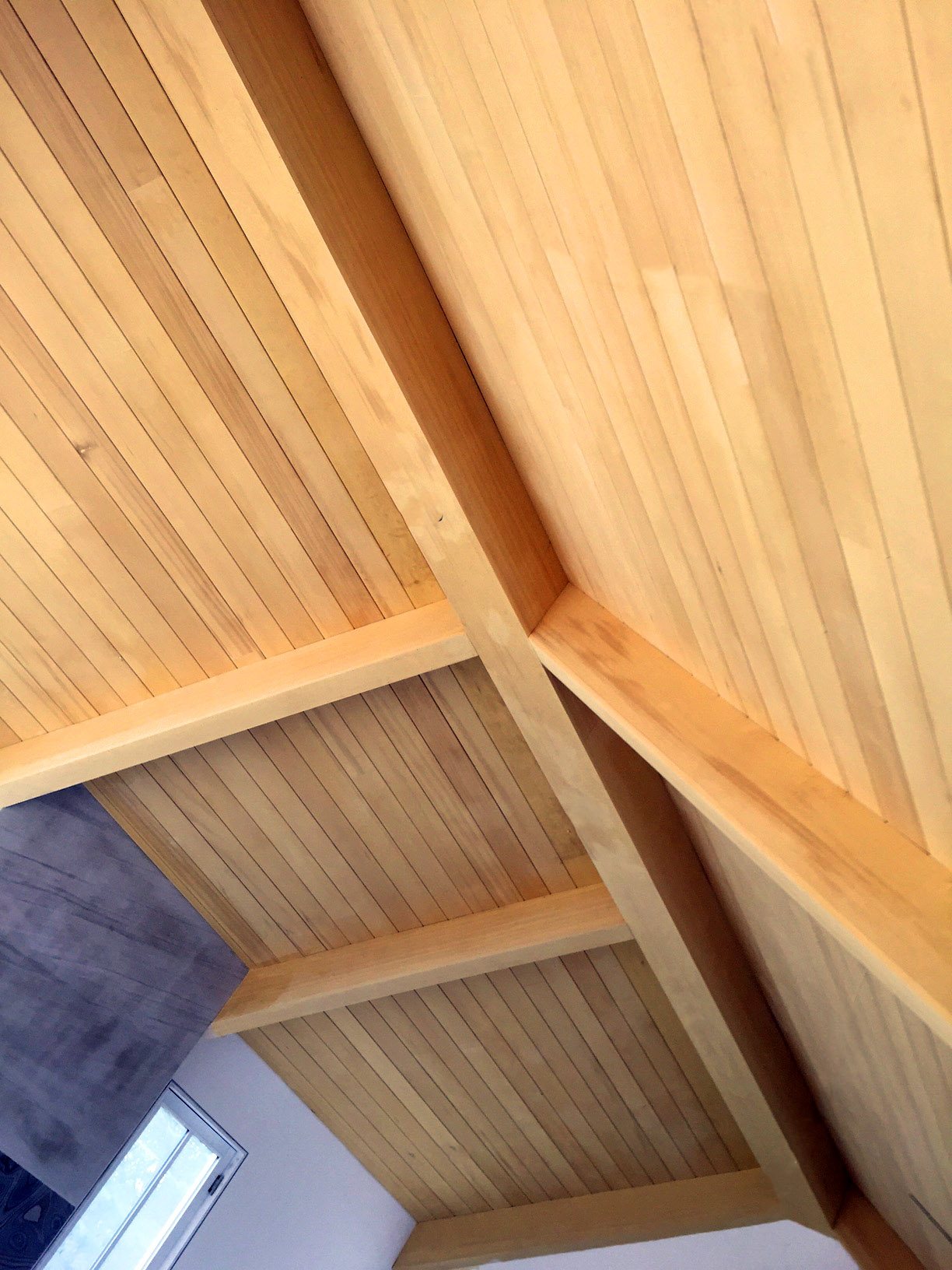
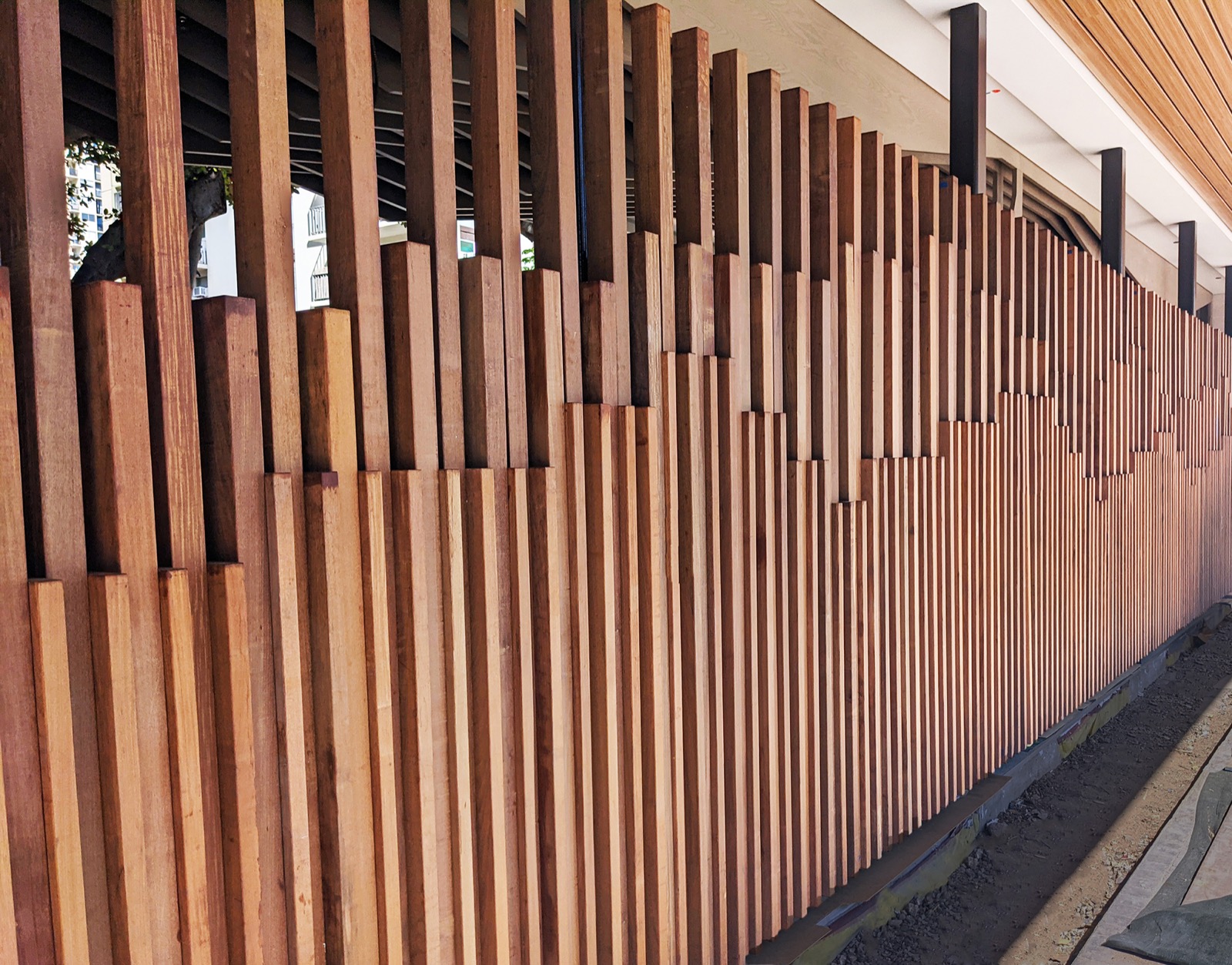
What Factory-Finished, Ready-to-Install Decking Means
Factory-finished decking is milled to its final profile and coated in a controlled facility before it ships, so it arrives ready to fasten down rather than needing to be finished on site. A prefinishing line holds temperature around 65 to 75 degrees F and relative humidity near 40 to 55 percent, so the oil cures at its designed rate, which a jobsite cannot guarantee. The USDA Forest Products Laboratory documents that coating performance depends heavily on the conditions during application and cure, which is exactly what a controlled facility fixes.
Ready to install means the deck goes down in one pass: no waiting for a dry-weather window to oil the boards, no finishing trade on the critical path. For open decking the boards are coated and dry on arrival; the crew simply fastens them and seals any cut ends. See our complete Ipe decking guide for the species background. That settles the logistics; the finish chemistry is the next question, because on dense tropical stock the answer is always an oil.
Penetrating Oil vs. Film Finish on Tropical Decking
Dense tropical hardwoods are factory-finished with a penetrating oil because their tight, oily fiber rejects film finishes like varnish, which peel on species this dense. A penetrating oil soaks into the wood, so there is nothing to peel; when it weathers it is cleaned and recoated without stripping. Films depend on surface adhesion that fails on Ipe and similar species. A film on stock this dense is a peel date waiting to happen. The oil also carries UV inhibitors to slow the natural graying, letting an owner hold the brown color. For the finish comparison, see our oil versus film finishes guide.
Because the oil is a maintenance finish rather than a warranty coating, factory finishing is about consistency and schedule, not a sealed-for-life promise. Solid tropical hardwood is naturally durable and does not need a finish to last; the factory oil is about color and a uniform starting condition. Once the oil itself is settled, the question becomes coverage: every face of the board, not just the one that gets walked on.
All Faces Coated, End Grain Sealed
The value of factory finishing is that every face is coated in the facility, including the back and both ends, which a field crew almost never does. End grain absorbs liquid water roughly 10 to 12 times faster than face grain, so sealed ends matter. The only field step is re-sealing the end grain of any board cut to length on site, which is why touch-up sealer ships with the order. See our end-grain sealing guide. A raw cut end is an open drain into the board. J. Gibson McIlvain keeps that whole chain under one roof, kiln-drying, milling, and oil-finishing the decking in its own controlled facility, and the touch-up sealer that ships with each order is sized to the cut list rather than sent as a token bottle.
| Factor | Factory-finished | Field-finished |
|---|---|---|
| Faces coated | All faces, controlled | Top face, weather permitting |
| Cure conditions | 65-75 F, 40-55% RH | Whatever the day allows |
| Schedule | Install in one pass | Install, then finish, then wait |
| Consistency | Uniform film across the order | Varies by applicator and weather |
| Field step | Seal cut ends only | Finish the whole deck |
Which Species Come Factory-Finished
The tropical hardwoods commonly supplied factory-finished are Ipe, Cumaru, Garapa, and Massaranduba, each oil-finished to suit its density and color. Ipe (density near 1,050 kg/m3, Class 1 durability under EN 350) and Cumaru take a rich oil finish; lighter Garapa (Janka about 1,700 lbf) finishes to a golden tone; Massaranduba holds a deep red under oil. All reach Class A flame spread under ASTM E84 by virtue of density. For the value comparison, see our Ipe vs. Cumaru guide and Garapa guide. The species sets the tone; the order specification is where that choice gets executed board by board.
Specifications of a Factory-Finished Order
A factory-finished order is defined by species, profile, finish, and the touch-up protocol, all confirmed before milling. Boards are kiln-dried to roughly 12 to 16 percent moisture content for stability, milled 5/4 (about 1 inch actual) by 4 or 6 inches for decking, and finished with a penetrating oil on all faces. Pre-grooved profiles for hidden fasteners are milled to match a specific clip system. The American Wood Council publishes the fastener and span basis for dense hardwood decking. J. Gibson McIlvain kiln-dries, mills, and oil-finishes in-house, and includes touch-up sealer sized to the expected number of field cuts.
Maintaining and Recoating a Factory-Finished Deck
A factory-finished deck is maintained by cleaning and re-oiling on a periodic cycle, with no stripping, because the penetrating oil wears gradually rather than peeling like a film. As the oil weathers, the surface is cleaned and a fresh coat of the same penetrating oil is applied; there is no film to sand or strip off. The recoat interval depends on sun exposure and climate, typically every few years on a horizontal deck that takes full UV. Owners who prefer the silver-gray patina can simply stop oiling and let the deck weather, since the wood stays structurally sound either way. The USDA Forest Products Laboratory documents that penetrating finishes are the maintainable class for dense, oily species.
Because the factory finish and any future recoat use the same penetrating oil, matching the product keeps the color consistent over the deck's life. J. Gibson McIlvain can supply the compatible oil with the order and advise on the recoat cadence for the climate, shipping both nationwide. That covers the deck over its long life; the more immediate payoff is what prefinishing does to the build week itself.
Installation Schedule Without Field Finishing
The largest practical benefit of factory finishing is scheduling: it removes the finishing trade and its weather dependency from the jobsite, so the deck installs in one pass instead of being hung, then finished across one or more dry-weather windows. A field-finished deck cannot be oiled until the boards are down, and each coat needs acceptable temperature and humidity, so a wet spell can stall the finish for days. A factory-finished deck arrives coated and cured, so the crew fastens it and the deck is done. On a commercial or multi-unit schedule, taking the finishing step off the critical path is often the deciding reason to prefinish. A deck that arrives finished cannot be rained out. The one jobsite responsibility left is protecting the boards until they go down.
Handling and Storing Prefinished Boards on Site
Because the boards arrive finished, the jobsite job is to protect them until they are installed: store flat on level supports, off the ground, and covered from rain and direct sun. Prefinished tropical decking is kiln-dried to roughly 12 to 16 percent moisture content, and keeping it dry preserves that condition so it does not move after install. The finished faces are protected from abrasion during handling, and staged delivery timed to the install reduces how long the boards sit on site. The USDA Forest Products Laboratory documents that wood moves with moisture change, so on-site protection maintains the factory drying.
Factory-Finish Color Options and Weathering
A factory penetrating-oil finish can hold a species' natural tone, from Ipe's deep brown to Garapa's light gold, and it ages by gradually fading toward gray under UV unless recoated. The oil carries UV inhibitors that slow the graying, so a prefinished deck starts at a uniform color and holds it longer than bare wood, but it is still a maintenance finish that is cleaned and recoated periodically to keep the tone. Owners who prefer the silver-gray patina let the oil weather away. Because the factory finish and any recoat use the same penetrating oil, matching the product keeps the color consistent over the deck's life. See our oil versus film finishes guide.
Species and Finish Reference Data
The species set the finish tone and the density that governs durability, documented by the USDA Forest Products Laboratory and rated Class 1 under EN 350.
| Species | Density (kg/m3) | Janka (lbf) | Finish tone |
|---|---|---|---|
| Ipe | ~1,050 | ~3,680 | Deep brown under oil |
| Cumaru | ~1,070 | ~3,540 | Warm red-brown |
| Garapa | ~800 | ~1,700 | Light golden |
| Massaranduba | ~1,150 | ~3,190 | Deep red |
"Factory finishing a deck is really about two things: the boards are sealed on every face in a controlled room, and the crew never has to chase a dry day to oil the deck. It shows up done. They fasten it, seal the cut ends with the kit we send, and walk away. On a dense hardwood you are always using a penetrating oil anyway, because film finishes peel on Ipe, so we might as well put that oil on in the shop where it cures right."
Camden Zacker, Sales Director, J. Gibson McIlvain Company
How J. Gibson McIlvain Supplies Factory-Finished Decking
For J. Gibson McIlvain, a factory-finished decking order is milled, kiln-dried, and oil-finished on all faces in-house, then shipped ready to install with touch-up sealer for field cuts. The team confirms the species, profile, and finish before milling, pre-grooves for the chosen clip system where hidden fasteners are wanted, and sizes the touch-up sealer to the cut list. Because the finishing happens in a controlled facility, the oil cures at its designed rate and the color is uniform across the order.
The team frames factory finishing as a schedule and consistency decision on a finish the deck needs anyway. Since dense tropical hardwood only takes penetrating oil, applying it in the shop removes the weather-dependent field step without changing what the finished deck is.
Ordering Checklist
| Item | Why it matters |
|---|---|
| Species and color | Ipe, Cumaru, Garapa, or Massaranduba; finish suits each. |
| Finish type | Penetrating oil (films peel on dense hardwood). |
| All-face coating | Back and ends sealed, not just the top. |
| Pre-grooving | Milled to the specific clip system if hidden fasteners. |
| Touch-up sealer | Sized to the number of field cuts. |
Where Factory-Finished Orders Go Wrong
- Expecting a film finish: Dense hardwood only holds penetrating oil; films peel.
- Skipping end-grain touch-up: Every field cut reopens raw end grain; re-seal it.
- Treating oil as a warranty: It is a maintenance finish for color, not a sealed-for-life claim.
- Grooving to no clip: Pre-grooving must match the chosen hidden-fastener system.
Related J. Gibson McIlvain Guidance and Next Steps
Frequently Asked Questions
Where can I buy factory-finished tropical hardwood decking ready to install?
Factory-finished tropical decking comes from specialty suppliers who mill, kiln-dry, and oil-finish the boards in a controlled facility, then ship them ready to lay with touch-up sealer for field cuts. J. Gibson McIlvain supplies factory-finished Ipe, Cumaru, Garapa, and Massaranduba, oil-finished on all faces and pre-grooved in-house for hidden fasteners, shipped nationwide. The only field step is sealing the end grain of any board cut on site.
Why is tropical decking factory-finished with oil instead of paint or varnish?
Dense tropical hardwoods reject film finishes like paint and varnish because their tight, oily fiber prevents the film from bonding, so films peel. A penetrating oil soaks into the wood instead, with nothing to peel, and it recoats without stripping. Factory application means the oil cures in a controlled 65 to 75 degree, 40 to 55 percent humidity environment rather than on a jobsite. The oil is a maintenance finish for color, since the wood is naturally durable.
Do factory-finished decking boards need any finishing on site?
No finishing of the faces is needed; the boards arrive oil-coated on all faces and ready to install. The only field step is sealing the raw end grain exposed when a board is cut to length, using the touch-up sealer that ships with the order, ideally within 24 hours of cutting. End grain absorbs water 10 to 12 times faster than the face, so this step matters. J. Gibson McIlvain includes touch-up sealer sized to the cut list.
Does factory finishing make the deck last longer?
The durability of tropical hardwood decking comes from the wood's density and natural decay resistance, not the finish, so factory finishing does not extend the structural life; Ipe lasts 40 to 75 years finished or not. Factory finishing improves consistency, removes the weather-dependent field finishing step, and gives a uniform starting color. The oil holds the brown tone and is reapplied over time, or the deck can be left to weather gray.
What species are available factory-finished?
Ipe, Cumaru, Garapa, and Massaranduba are commonly supplied factory-finished, each oil-finished to suit its density and color: Ipe and Cumaru in rich brown tones, Garapa in a light golden tone, and Massaranduba in deep red. All are dense, Class 1 durable tropical hardwoods that reach Class A flame spread. J. Gibson McIlvain oil-finishes these in-house and ships them ready to install nationwide with touch-up sealer.
Can factory-finished decking be pre-grooved for hidden fasteners?
Yes. Factory-finished decking can be pre-grooved for a hidden-fastener clip system, with the side groove milled to match the specific clips being used, so the boards arrive finished and ready to clip down for a clean, screw-free surface. Because the groove must match the clip, the system is confirmed at ordering. J. Gibson McIlvain mills pre-grooving in-house and oil-finishes the boards on all faces before shipping.
How do you maintain a factory-finished tropical deck?
Clean the deck and apply a fresh coat of the same penetrating oil on a periodic cycle, with no stripping, because the oil wears gradually rather than peeling like a film. The recoat interval depends on sun and climate, often every few years on a fully exposed horizontal deck. Owners who prefer a silver-gray patina can stop oiling and let it weather, since the wood stays sound. J. Gibson McIlvain can supply the compatible oil and advise on timing.
Does a factory-finished deck ever need to be stripped and refinished?
No. Because the factory finish is a penetrating oil rather than a film, it never needs stripping; it wears away gradually and is renewed by cleaning and re-oiling. Film finishes like varnish would peel and require stripping, which is exactly why dense tropical hardwoods are not finished with films. Matching the same penetrating oil on recoat keeps the color consistent. J. Gibson McIlvain supplies compatible oil with factory-finished decking orders.
Sources and Standards Referenced
- USDA Forest Products Laboratory - Finishes for Exterior Wood
- ASTM E84 - Surface Burning Characteristics of Building Materials
- EN 350 - Durability of Wood and Wood-Based Products
- American Wood Council - Wood Construction Standards
- Forest Stewardship Council - Chain of Custody Certification
- National Hardwood Lumber Association - Grading Rules
- USDA Forest Products Laboratory - Finishes and Maintenance
- North American Deck and Railing Association
- PEFC - Programme for the Endorsement of Forest Certification
- International Code Council - Building and Residential Codes