Board and Batten Defines the Modern Farmhouse Look
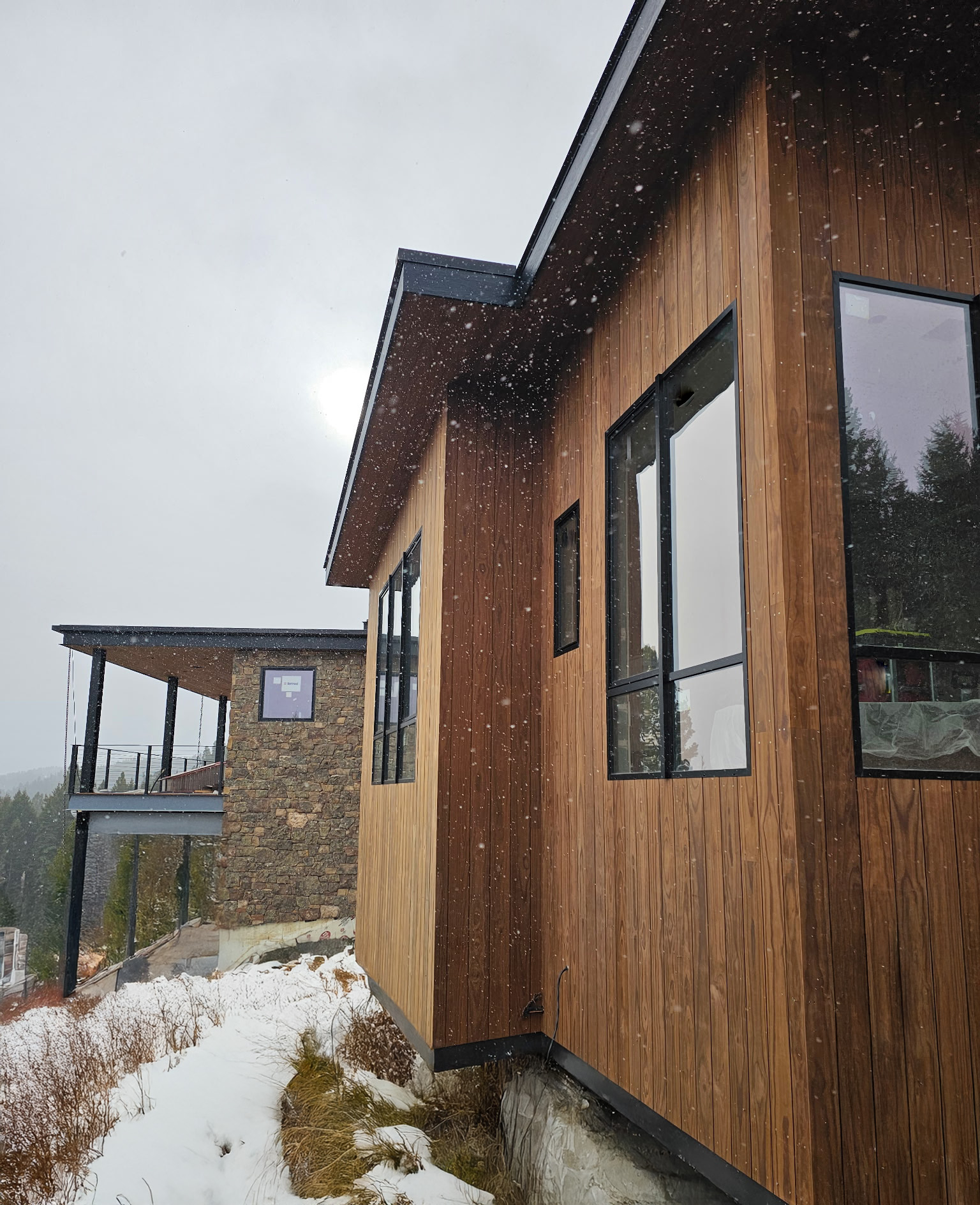
Vertical board and batten is the signature profile, the thing that throws the tall lines and the strong shadow rhythm the style is built on. Wide boards run vertically, narrow battens cover the joints, and how far apart those battens sit decides whether the facade reads bold or restrained.
Here is the catch with running boards vertical. Water drains down the face fine, but it cannot drain behind unless you build the wall for it. Vertical siding has to go over horizontal furring or a counter-batten layout that opens vertical drainage channels behind the boards, or water just sits against the back. The install carries as much weight as the profile. Our guides on vertical wood siding for contemporary design and board-and-batten cedar and cypress sourcing cover the layout and the species.
Shiplap, Nickel-Gap, and Channel for Accent Areas
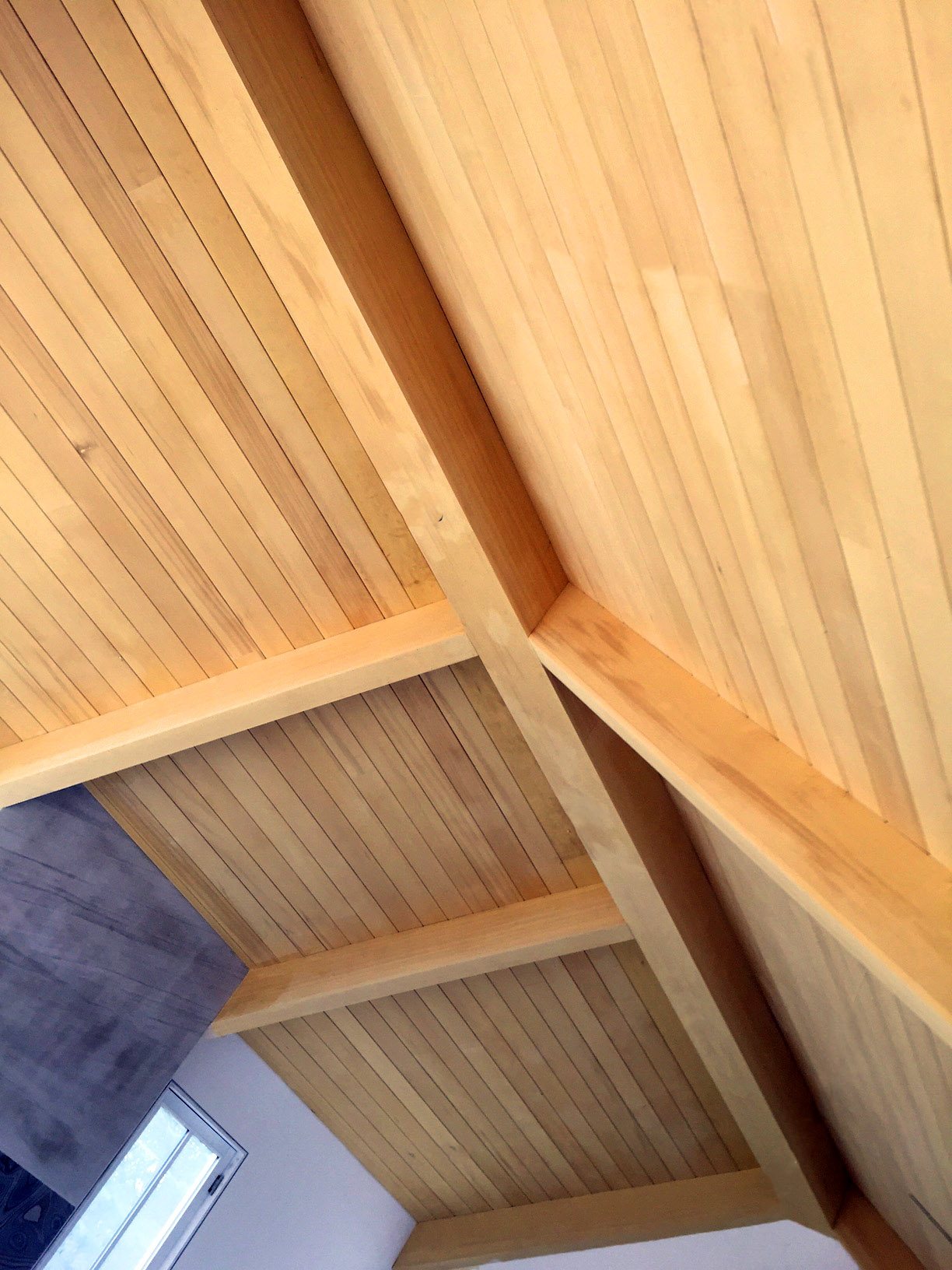
Shiplap and nickel-gap give the clean horizontal reveals that dress porch ceilings, accent walls, and soffits against the vertical field. Each throws a different shadow line.
- Shiplap: a flat overlap with a tight reveal, clean and contemporary. On an exterior wall it is face fastened with visible stainless, never hidden-fastened. It shines on covered porch ceilings and protected accent walls.
- Nickel-gap: a tongue-and-groove profile with a narrow reveal about the thickness of a nickel, fastened hidden through the tongue. That even gap reads crisp and modern.
- Channel and drop channel: a deeper reveal for a stronger shadow, good where the design wants texture. See our drop channel siding guide.
For how these reveals differ and where each earns its spot, see our profile selection guide.
Profile Comparison for Modern Farmhouse Exteriors
| Profile | Orientation | Fastening | Look | Best Use |
|---|---|---|---|---|
| Board and batten | Vertical | Face fastened, battens over joints | Tall vertical rhythm | Primary farmhouse field |
| Nickel-gap (T&G) | Horizontal or vertical | Hidden through tongue | Crisp uniform reveal | Accent walls, clean modern areas |
| Shiplap | Horizontal or vertical | Face fastened, visible | Flat tight reveal | Porch ceilings, protected accents |
| Channel / drop channel | Horizontal or vertical | Face fastened | Deeper shadow line | Textured feature walls |
Species That Suit the Modern Farmhouse Palette
Western Red Cedar is what most modern farmhouse siding is cut from, with modified woods and dense hardwoods stepping in when a project wants longer finish life or richer grain. The species question is really a finish question: how is the facade coated, and how should it age?
- Western Red Cedar: the industry-standard cladding wood, light, stable, and a natural fit for board and batten. Clear vertical grain (CVG) reads clean and contemporary. Select tight knot (STK) brings the rustic, knotty character a lot of farmhouse designs are after. Cedar rides freeze-thaw cycling without complaint.
- Cypress: a strong regional softwood, durable, with a tight, even grain that paints and stains cleanly.
- Modified woods: Accoya, Thermory, and Abodo Vulcan move the least and hold a finish longest, which matters on a painted white or black farmhouse where a cracked film would show. Accoya documents large stability gains, and Thermory and Abodo publish comparable data. They are also the only category that carries a real manufacturer warranty.
- Sapele: a strong pick for painted trim and wide boards where long lengths are needed, since it holds paint well and comes in larger sizes than most alternatives.
A painted farmhouse lives or dies on finish stability. That is why dimensionally stable species and grain orientation matter so much: modified woods and CVG (quartersawn) softwoods move least and stress the paint film least. The USDA Forest Products Laboratory documents how grain orientation drives movement and finish life. J. Gibson McIlvain mills board-and-batten, nickel-gap, shiplap, and channel profiles in-house, so the field and the accents match in species, grade, and color from one source.
"Modern farmhouse almost always starts with board and batten, and the question we get is which species. The honest answer is that the profile gives you the look and the install gives you the performance. Run the vertical boards over counter-battens so the wall drains, pick a stable species for a painted facade, and use stainless fasteners. Do that and the wall looks right for decades. Skip the drainage layout and even the best board cups."
Camden Zacker, Sales Director, J. Gibson McIlvain Company
How J. Gibson McIlvain Would Specify a Modern Farmhouse Facade
A modern farmhouse at J. Gibson McIlvain starts from the profile that carries the look, usually board and batten, then the accent profiles, then the species matched to the finish plan. The team mills board-and-batten stock, nickel-gap, shiplap, and channel in-house, so the field and the accents come from one source with grade and color that hold.
Species follows the finish. A painted white or black farmhouse points to a stable species, modified wood or CVG cedar, so the paint film is stressed as little as possible. A natural or lightly stained facade can run STK cedar or cypress for character. Trim and wide boards point to Sapele for its paint-holding and length. Whatever the species, the recommendation carries the counter-batten drainage layout and stainless fasteners with it.
Performance and Procurement Checklist
| Item | Why it matters |
|---|---|
| Primary profile | Board and batten sets the farmhouse look; confirm board width and batten spacing. |
| Accent profiles | Nickel-gap or shiplap for porch ceilings and accent walls; confirm fastening method. |
| Orientation and drainage | Vertical siding needs counter-battens for a vertical drainage path. |
| Species and finish | Stable species (modified or CVG) for painted facades; STK cedar or cypress for natural looks. |
| Fasteners | Stainless steel to prevent staining; hidden for T&G, visible for shiplap. |
| Furring cavity | Minimum 3/8 inch vented cavity behind all profiles. |
Where Specifications Usually Fail
- Vertical siding with no counter-battens: board and batten over horizontal furring alone has no vertical drainage path; add counter-battens.
- Shiplap drawn with hidden fasteners: exterior shiplap is face fastened only; use nickel-gap T&G for hidden fastening.
- Unstable species under paint: flat-grain softwood under a painted facade moves and cracks the film; choose modified wood or CVG.
- Non-stainless fasteners: carbon-steel fasteners stain wood siding; use stainless or hot-dipped galvanized.
- Grooves facing up: a grooved profile installed groove-up traps water; run grooves down to drain.
Ordering Information to Resolve Before Pricing
- Profiles: board-and-batten board width and batten spacing, plus any accent profile and reveal.
- Orientation: vertical field, horizontal accents, and the drainage layout for each.
- Species and grade: modified wood, CVG or STK cedar, cypress, or Sapele for trim.
- Finish: painted, stained, or natural weathering.
- Logistics: total square footage, lengths, delivery sequence, lead time.
Related J. Gibson McIlvain Guidance and Next Steps
- Vertical Wood Siding for Contemporary Design
- Board-and-Batten Cedar and Cypress Sourcing
- Tongue-and-Groove vs. Shiplap vs. Channel: Profile Selection
- Drop Channel Siding Sourcing
- Furring Strips and Ventilation Behind Wood Siding
- J. Gibson McIlvain Custom Milling Services
- Request a Modern Farmhouse Siding Quote
Frequently Asked Questions
What siding profile gives the modern farmhouse look?
Vertical board-and-batten siding is the signature modern farmhouse profile, throwing the tall vertical lines and shadow rhythm the style is built on. Wide vertical boards get covered at the joints by narrow battens, and the batten spacing sets how bold the facade reads. Shiplap and nickel-gap back it up on porch ceilings and accent walls. Board and batten has to go over counter-battens so the vertical boards have a drainage path behind them.
What is the best wood species for modern farmhouse siding?
Western Red Cedar is the most widely used, because it is light, stable, and made for board and batten. Clear vertical grain (CVG) cedar reads clean and contemporary; select tight knot (STK) cedar reads rustic. For painted white or black farmhouse facades, dimensionally stable species like Accoya, Thermory, and Abodo Vulcan, or CVG cedar, stress the paint film least. Sapele is a strong pick for painted trim and wide boards.
Can shiplap be used for vertical farmhouse siding?
Shiplap can run vertically, but on an exterior wall it has to be face fastened with visible stainless, because shiplap cannot be hidden-fastened. For a clean vertical look with hidden fasteners, a nickel-gap tongue-and-groove profile is the better call, since it fastens through the tongue. Whatever the profile, vertical orientation needs counter-battens behind the boards to open a vertical drainage path.
Does board-and-batten siding need a rainscreen?
Yes. Board-and-batten siding, like all wood cladding, goes over a ventilated cavity. Because the boards run vertically, the wall needs counter-battens or a cross-furring layout to open vertical drainage channels behind the siding, since water cannot drain behind vertical boards installed over horizontal furring alone. A minimum 3/8 inch vented cavity lets the wall drain and dry, which is what keeps the boards flat and the finish sound.
Where can I source board-and-batten siding for a modern farmhouse?
Board-and-batten siding comes from specialty lumber suppliers that mill the profile to the wanted board width and batten spacing. J. Gibson McIlvain mills board-and-batten, nickel-gap, shiplap, and channel profiles in-house in cedar, cypress, modified woods, and Sapele for trim, holds FSC certification, and ships nationwide, so the field and accent profiles match across the facade.
Sources and Standards Referenced
- USDA Forest Products Laboratory - Grain orientation and finish performance
- Accoya - Acetylation and dimensional stability data
- Thermory - Thermally modified wood documentation
- Abodo - Vulcan thermally modified radiata pine specifications
- Western Wood Products Association - Western softwood siding profiles
- Forest Stewardship Council - Chain of custody certification