Why Vertical Siding Is Gaining Specification Share
Vertical siding has moved from accent-wall treatment to primary facade material on contemporary homes. Several functional and aesthetic drivers explain the shift:
- Water shedding: Vertical boards have no horizontal ledges where water can pool. Gravity drains the face immediately — eliminating the main moisture vulnerability of horizontal lap siding.
- Height emphasis: Vertical lines draw the eye upward, making single-story homes appear taller and two-story homes more dramatic. Critical for the "contemporary farmhouse" aesthetic dominating residential design.
- Reduced butt joints: Standard 8-16 foot board lengths often cover the full height of a wall without any butt joints — eliminating the weakest point in any siding system (exposed end grain).
- Mixed-orientation design: Contemporary homes frequently mix horizontal and vertical siding to define volumes — vertical on gable ends, horizontal on lower walls. This creates visual hierarchy.
Vertical Profile Options
| Profile | Appearance | Weather Performance | Best Species | Cost (installed) |
|---|---|---|---|---|
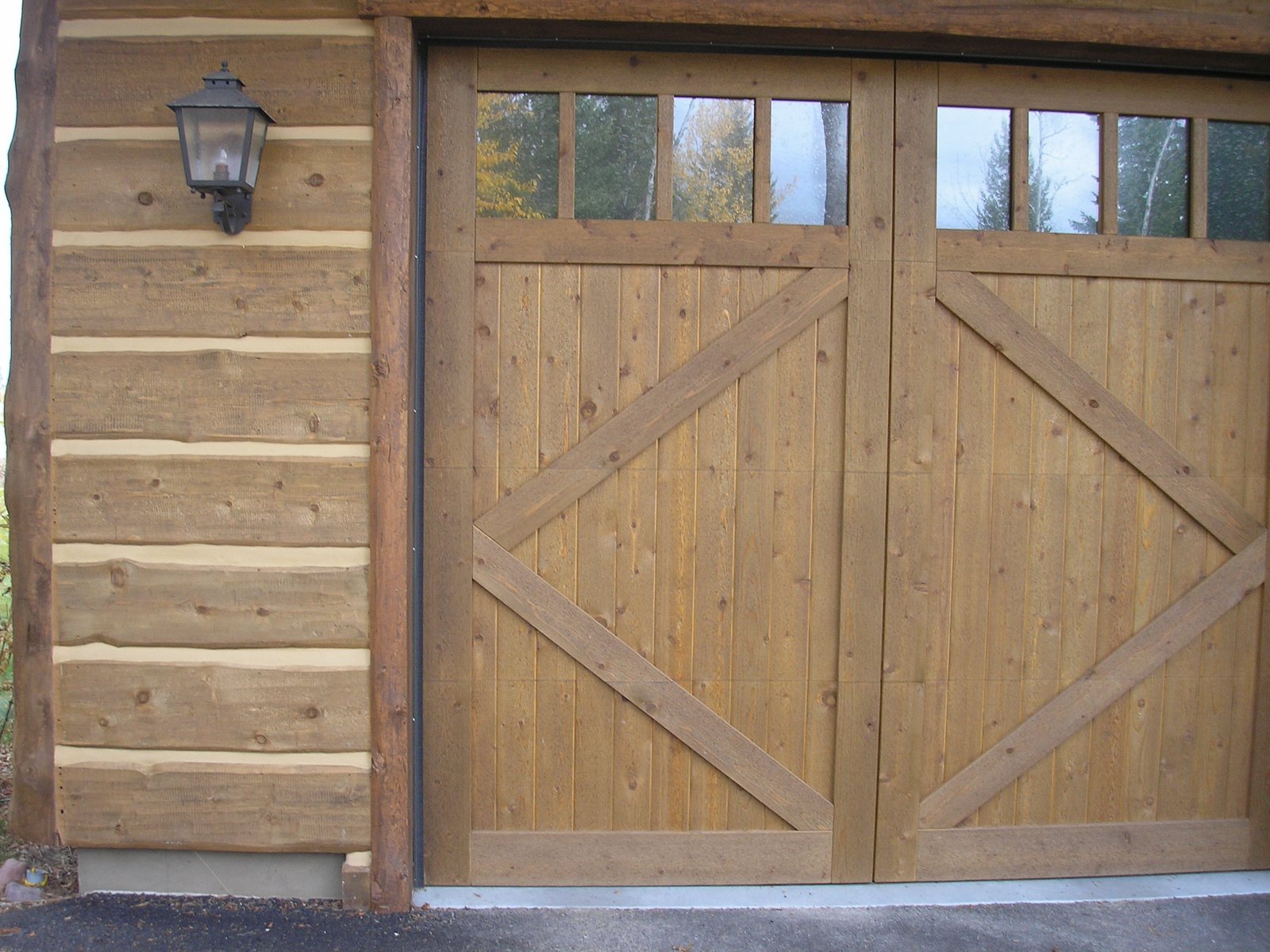
| Board-and-Batten | Wide boards + narrow battens covering joints | Excellent — battens protect joints | Cedar, cypress | $12-$18/sq. ft. |
| Tongue-and-Groove (T&G) | Interlocking boards, flush or V-joint face | Good — sealed joints resist water | TM ash, cedar, sapele | $14-$22/sq. ft. |
| Channel (reverse board-and-batten) | Flush face with recessed channels between boards | Good — channels drain freely | TM ash, Accoya | $14-$20/sq. ft. |
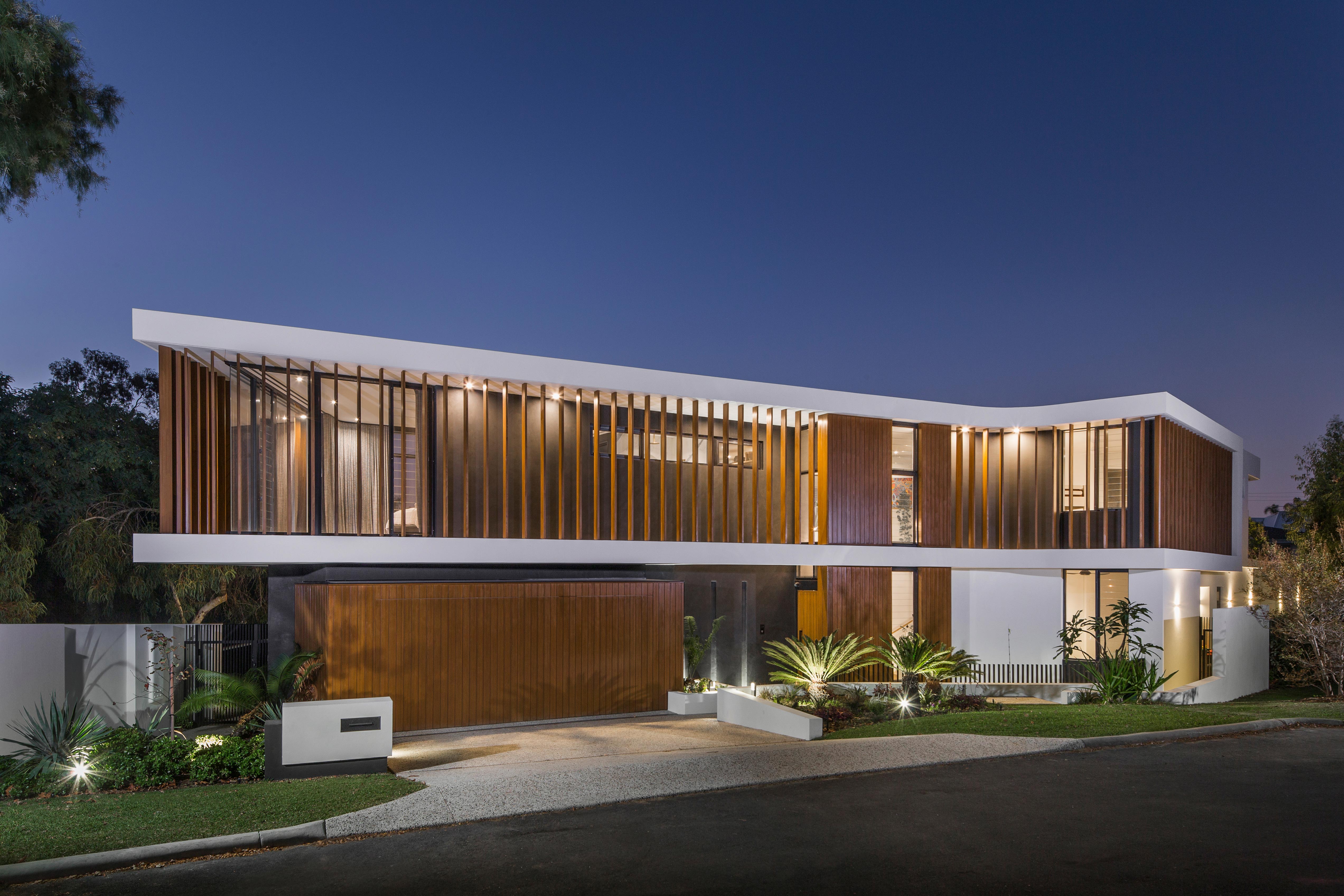
| Open-Joint Vertical | Boards with 1/4-3/8" gaps, dark WRB visible | Best — maximum ventilation/drainage | TM ash, Ipe, Accoya | $16-$24/sq. ft. |
For contemporary farmhouse design, board-and-batten in cedar or cypress remains the most popular choice. For modern/minimalist architecture, open-joint vertical in thermally modified ash creates the cleanest lines with no visible fasteners or battens.
"Vertical siding has gone from 15% of our custom milling orders three years ago to about 40% today. Architects are using it to break up facades, create accent walls, and define entry volumes. The board-and-batten farmhouse look drove the initial surge, but now we're seeing more open-joint and channel vertical — cleaner, more modern."
— Norm Moton, Director of Sales, J. Gibson McIlvain Co.
Installation Differences: Vertical vs. Horizontal
Vertical siding requires different substructure and detailing than horizontal:
- Horizontal blocking/furring: Standard stud framing provides vertical nailing surfaces. Vertical siding needs horizontal furring strips (1×3 or 1×4) at 16-24" o.c. to provide a nailing surface perpendicular to the boards. This automatically creates a rainscreen cavity.
- Bottom flashing: The bottom of vertical boards must be detailed with a drip edge or Z-flashing to prevent water wicking up into end grain. Unlike horizontal siding where each course sheds water off its face.
- Top detail: The top of vertical siding (at soffit or frieze) must be sealed with a metal cap or be tucked behind a horizontal trim board. Exposed top end grain is the #1 failure point on vertical installations.
- Butt joints (if required): Where boards are shorter than wall height, butt joints must occur over a horizontal blocking member and be flashed with Z-metal or backed with building paper. Stagger joints randomly — never align them horizontally across the facade.
J. Gibson McIlvain supplies vertical siding profiles in lengths up to 16 feet (cedar) and 10 feet (thermally modified ash) to minimize or eliminate butt joints on most residential wall heights.
Width Proportions for Vertical Design
Board width strongly influences the architectural character of vertical siding:
- Narrow (3-4" face): Creates a finer-textured, more refined appearance. Numerous shadow lines. Best for smaller buildings or accent areas. More labor-intensive to install.
- Medium (5-6" face): The standard for residential vertical siding. Balanced visual weight. Works on most scales.
- Wide (8-10" face): Bold, contemporary statement. Fewer joints, faster installation. Requires quartersawn or modified wood to prevent cupping on boards over 6". See our guide to preventing warping for wide-board best practices.
How McIlvain Would Specify This for a Real Project
For McIlvain, Vertical Wood Siding Options for Contemporary Home Design: Species and Profiles to Specify is not just a product-selection question. It is a specification question that has to connect profile selection for residential and commercial exterior cladding with the way the material will be milled, shipped, handled, fastened, and maintained. The right answer starts with exterior wood siding profiles, but it only becomes reliable when the species, profile, finish, wall assembly, and field sequencing are written into the same scope.
The practical decision is usually governed by water shedding, reveal depth, shadow line, board width, and milling repeatability. A profile that looks correct in a rendering can fail in service if the board width is too aggressive for the species, if the fastener schedule fights seasonal movement, or if the wall has no drying path behind the siding. That is why McIlvain treats exterior wood as a system: the lumber order, the milling profile, the jobsite details, and the finish schedule all have to support the same performance target.
Species choice should also be tied to the owner’s tolerance for maintenance. Cedar, Cypress, Sapele, Accoya, and thermally modified ash depending on profile tightness and exposure can all be correct in the right setting, but they do not age, move, or accept finishes the same way. A project that wants a natural silver-gray patina needs different expectations than one that needs a dark factory finish for ten years. A coastal project needs a different fastener and wash-down conversation than a protected inland facade. Those distinctions are where a specialty lumber supplier adds value beyond simply quoting a board price.
Performance and Procurement Checklist
| Item | Why it matters |
|---|---|
| Exposure class | Confirm rain, salt, UV, freeze-thaw, and wall orientation before selecting species. |
| Profile and movement | Match board width, reveal, overlap, and fastening method to the species movement profile. |
| Grade and appearance | Specify clear, vertical-grain, mixed-grain, or architectural grade rather than relying on generic “premium” language. |
| Moisture content | Require a target moisture range and acclimation plan before installation. |
| Milling tolerance | Hold profile geometry, reveal width, and end-match details consistent across the order. |
| Submittals | Review samples, finish schedule, fastener type, and rainscreen details before release. |
Where Specifications Usually Fail
The most common failure is selecting a profile by name without matching the actual milled geometry to the climate and design intent. In practice, that means the drawings may show wood siding, the finish schedule may name a color, and the wall section may show a rainscreen, but nobody has confirmed whether the actual boards can be sourced, milled, and installed in a way that satisfies all three. When that gap is discovered after framing or after the material arrives, the project loses the ability to make a clean specification decision.
The second failure point is ventilation, end-grain sealing, stainless fasteners, and moisture-content control. Exterior wood is forgiving when water can drain and the boards can dry; it is unforgiving when water is trapped at laps, end cuts, trim returns, or fastener penetrations. Every outside corner, window head, sill, soffit return, and transition between profiles should be reviewed as part of the siding package. If the detail cannot be drawn clearly, it usually cannot be installed consistently by a crew under schedule pressure.
The third failure point is substituting material late. A lower-cost species or a similar-looking profile may appear harmless on a spreadsheet, but the substitution can change shrinkage, finish behavior, fastener holding, and service life. McIlvain’s strongest recommendation is to approve physical samples, profile mockups, and finish samples before release, not after the first bundle is opened on site.
Ordering Information to Resolve Before Pricing
- Exposure: inland, coastal, shaded, south-facing, high-rise, WUI, or heavy rain-screen exposure.
- Profile: exact face width, reveal, overlap, tongue depth, kerf, drip edge, and whether the profile is intended for horizontal or vertical use.
- Finish: unfinished weathering, penetrating oil, factory prefinish, paint, or field-applied coating.
- Appearance: clear, near-clear, select knotty, vertical grain, mixed grain, color-matched bundles, or architect-reviewed samples.
- Assembly: furring thickness, WRB, clip system, screw type, corner trim, opening details, and ventilation path.
- Logistics: lead time, jobsite delivery sequence, board lengths, waste factor, attic/garage storage conditions, and replacement stock.
Related McIlvain Guidance and Next Steps
For a project that is close to specification, the next step is to compare the design intent against available species, profile tooling, finish schedule, and delivery timing. McIlvain can help translate a rendering or architectural detail into a practical lumber order, including sample selection and milling recommendations.
Frequently Asked Questions
What wood is best for vertical siding?
Western red cedar is the most popular choice for vertical siding — lightweight (21 lbs/cu. ft.), easy to handle on ladders, naturally durable, and available in long lengths. For higher performance, thermally modified ash offers Class 1 durability with superior dimensional stability. For traditional farmhouse board-and-batten, cedar or cypress are ideal. For modern open-joint vertical, thermally modified ash or Accoya provide the stability needed for precision gap consistency.
Is vertical siding better than horizontal?
Vertical siding sheds water more efficiently (no horizontal ledges), eliminates butt joints on most wall heights, and creates a distinctive contemporary aesthetic. However, it requires horizontal furring strips for attachment (adding cost), exposes vulnerable end grain at the bottom of every board, and can't be repaired board-by-board as easily as horizontal. Neither is universally better — choose based on design intent and water management strategy.
Do I need furring strips for vertical siding?
Yes — vertical siding requires horizontal furring strips (1x3 or 1x4) at 16-24 inch centers to provide a perpendicular nailing surface. Standard stud framing only provides vertical members. The furring automatically creates a rainscreen ventilation cavity, which is a structural benefit. Install furring horizontally over the WRB with stainless steel fasteners into studs.
How wide should vertical siding boards be?
Standard residential vertical siding uses 5-6 inch face-width boards. Wider boards (8-10 inch) create a bolder modern statement but require quartersawn or modified-wood species to prevent cupping. Narrower boards (3-4 inch) create finer texture but increase labor. For board-and-batten, typical proportions are 8-10 inch boards with 2-3 inch battens.
Sources and Standards Referenced
- American Institute of Architects — Home Design Trends Survey 2025-2026
- USDA Forest Products Laboratory — Wood Handbook: species properties for siding applications
- IRC R703: Weather-Resistant Exterior Wall Envelope — vertical siding requirements
- Western Red Cedar Lumber Association — Vertical siding installation standards