Understanding the Board-and-Batten Assembly
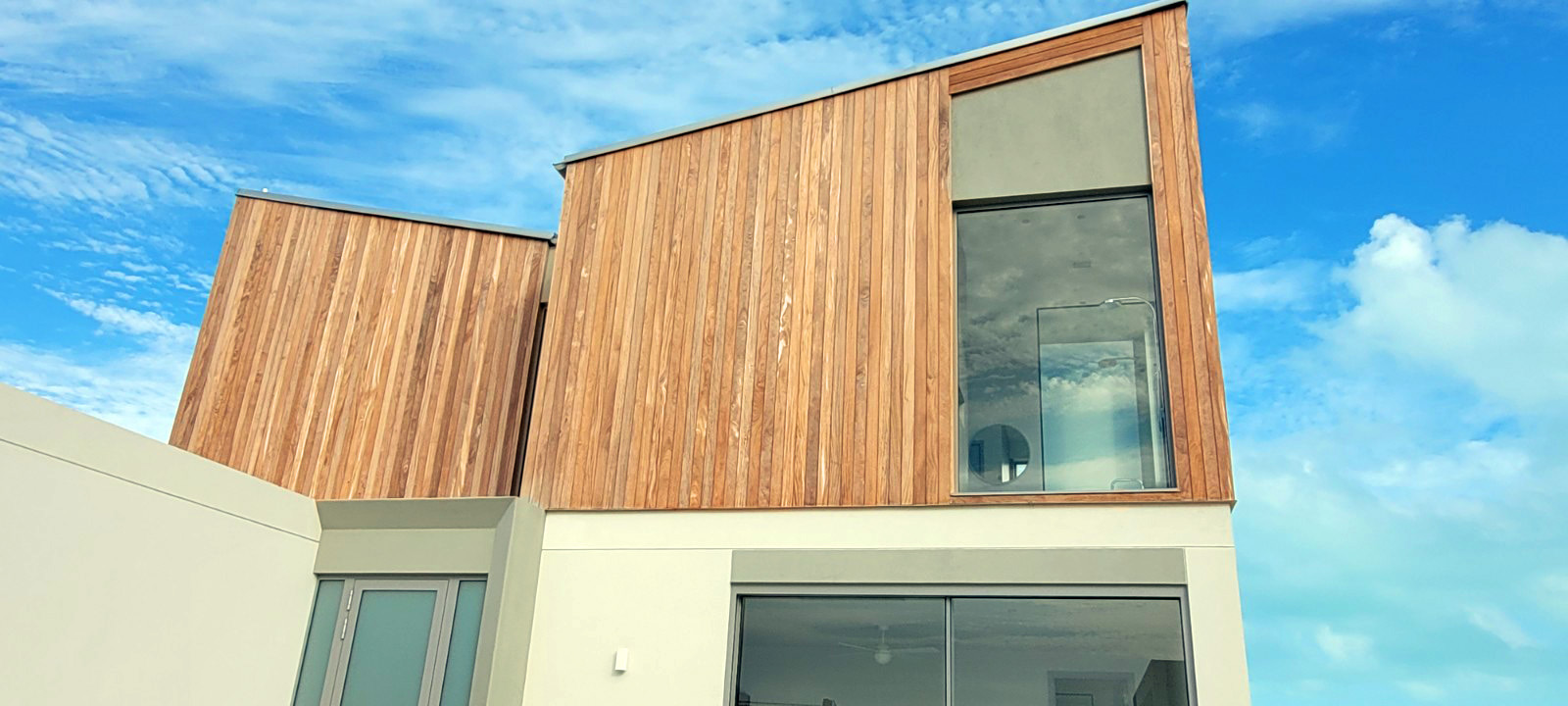
Board-and-batten is a vertical siding pattern: wide boards are installed with a small gap between them, and narrow strips called battens cover those gaps. The pattern reads as bold vertical lines and has been used on American barns and farmhouses for two centuries. Its success depends entirely on accommodating wood movement, because wide vertical boards expand and contract significantly across their width with seasonal humidity.
According to the USDA Forest Products Laboratory Wood Handbook, a nominal 1x12 board (11-1/4 inches actual width) of cedar can move roughly 1/4 inch across its width between the dry and humid seasons. The entire detailing logic of board-and-batten, the central fastening line and the expansion gap, exists to let that movement happen without splitting.
Dimensions and Spacing
Board Widths
Wide boards create the characteristic look. The most common nominal widths are 1x10 (9-1/4 inches actual) and 1x12 (11-1/4 inches actual). Boards are nominal 1-inch thickness, which dresses to 3/4 inch. Some renovations use 1x8 (7-1/4 inches) for a tighter rhythm. Wider boards move more and demand stricter fastening discipline.
Batten Dimensions and Spacing
Battens typically range from 1x2 (1-1/2 inches actual) to 1x4 (3-1/2 inches actual). The batten must overlap each adjacent board edge by at least 1/2 inch so that seasonal movement never exposes the joint. Batten spacing equals the board width plus the gap; with 1x12 boards this puts battens roughly 12 inches on center, the traditional spacing, though designers specify anywhere from 8 to 16 inches on center depending on the desired proportion.
Expansion Gaps
Leave a 1/8 to 3/16 inch gap between board edges at installation. This space, hidden beneath the batten, gives the boards room to swell without buckling. Per the Western Red Cedar Lumber Association installation guidelines, boards should be installed at a moisture content close to their in-service equilibrium (typically 12 to 14 percent for most of the country) to minimize the magnitude of post-installation movement.
Fastening Wide Boards Correctly
This is where most board-and-batten installations succeed or fail. The cardinal rule: each wide board is fastened with a single vertical line of nails near its center, never along both edges. A board nailed at both edges is locked in place and will split as it tries to shrink across its width. A center-nailed board can expand and contract symmetrically around the fixed centerline.
The batten is then nailed through the gap between boards, into the framing or sheathing behind, not through the boards themselves. This lets the boards slide independently beneath the batten as they move. Use hot-dipped galvanized or, preferably, stainless steel ring-shank nails long enough to penetrate solid framing by at least 1-1/2 inches. Stainless is strongly recommended with both cedar and cypress because their natural acidic extractives can corrode and stain around ordinary steel fasteners.
"The single biggest mistake we see on wide board-and-batten is double-edge nailing the field boards. Wood moves across the grain, not along it, and a 12-inch board pinned at both edges has nowhere to go but to crack down the middle. One fastener line at the center, a proper expansion gap, and a batten that floats over the joint, that is the whole secret to a board-and-batten wall that still looks right in twenty years." — Paul Fuge, technical advisor and longtime exterior carpentry consultant
The American Wood Council durability guidance further recommends installing vertical siding over a rainscreen or furring strips to create a ventilated drainage cavity, which is especially important for board-and-batten because the vertical boards channel water downward and need a clear drying path behind them.
Cedar vs Cypress: Density, Decay, and Workability
Both species are naturally durable and well suited to wide boards, but they differ in measurable ways. The ASTM D2017 decay-resistance classification rates both favorably, while density and hardness data from the Wood Handbook quantify the practical differences.
| Property | Western Red Cedar | Baldcypress |
|---|---|---|
| Density (oven-dry) | ~370 kg/m3 | ~510 kg/m3 |
| Janka Hardness | 350 lbf | 510 lbf |
| ASTM Decay Class (heartwood) | Class 2 | Class 1-2 |
| Natural Extractives | Thujaplicins | Cypressene |
| Dimensional Stability (T/R ratio) | 1.1 (excellent) | 1.4 (good) |
| Relative Weight (wide boards) | Lighter | Heavier |
| Typical Regional Use | Nationwide | Southeast / humid climates |
Cedar is the more dimensionally stable and lighter option, with a tangential-to-radial shrinkage ratio of 1.1 that makes it among the most stable softwoods for wide boards, an important advantage when a single board spans 11-1/4 inches. Its lower weight also eases installation on tall renovation walls.
Cypress is denser and harder (510 lbf Janka versus cedar's 350), giving it better resistance to dents and wind-driven debris, and its Class 1-2 heartwood durability holds up well in the humid Southeast where it has been a traditional siding wood for generations. Its slightly higher shrinkage ratio (1.4) means a touch more movement, so expansion gaps and center-nailing discipline matter even more.
Choosing Between Them
For most renovations seeking maximum stability, lightest weight, and broadest availability, cedar is the default. Where impact resistance, a regional Southeast vernacular, or maximum decay durability in a wet climate is the priority, cypress is the stronger choice. For a broader species comparison across exterior applications, see our guide to exterior wood siding species for residential architecture.
Where and How to Source Renovation-Grade Material
Sourcing is where renovation projects most often go wrong. The wide, clear, vertical-grain boards that board-and-batten demands are not a stock item at home centers, which typically carry only narrow, flat-sawn, knotty grades prone to cupping. For a wall you want to last, source from a dedicated lumber dealer who can supply:
- Kiln-dried stock at a stable moisture content (12-14 percent) to limit post-installation movement.
- Wide nominal widths (1x10, 1x12) in clear or near-clear, high-heartwood-content grades, since sapwood lacks the extractives that provide decay resistance.
- Custom batten dimensions milled to match the design.
- FSC chain-of-custody documentation for responsibly sourced material; verify certification through the Forest Stewardship Council. For more on what certification means, see our FSC certification guide.
J. Gibson McIlvain has supplied premium softwood and hardwood siding since 1798 and offers custom milling and finishing services that can produce board-and-batten profiles, custom batten widths, and matched dimensions in both Western Red Cedar and cypress, cut to your renovation's specification. To discuss grades, widths, and lead times for a specific project, contact the McIlvain team with your board count and elevation dimensions.
Frequently Asked Questions
Should I use cedar or cypress for board-and-batten siding?
Both are excellent. Western Red Cedar is lighter (about 370 kg/m3), more dimensionally stable, and widely available with strong decay resistance from thujaplicins, making it the default for most renovations. Baldcypress is denser (about 510 kg/m3) and harder (510 lbf Janka vs 350 for cedar), giving better impact resistance and slightly higher decay durability in southern and humid regions. Choose cedar for the most stable, lightweight wide boards and broadest availability; choose cypress where greater hardness and a regional Southeast aesthetic are priorities.
What is the correct batten spacing for board-and-batten siding?
Battens are centered over the gap between adjacent boards and typically spaced 12 inches on center for a traditional look, though anything from 8 to 16 inches on center is common depending on board width and design intent. Standard wide boards are 1x10 or 1x12 (9-1/4 and 11-1/4 inches actual), with battens of 1x2 to 1x4 (1-1/2 to 3-1/2 inches actual) covering the joints. The batten must overlap each board edge by at least 1/2 inch.
How do you fasten wide board-and-batten boards to allow for movement?
Wide boards must be face-nailed with a single line of fasteners near the center of each board, never along both edges, so the board can expand and contract across its width without splitting. Use a 1/8 to 3/16 inch gap between board edges for expansion. The batten is then nailed through that gap into the framing or sheathing, not through the boards, allowing the boards to move independently underneath. Use hot-dipped galvanized or stainless ring-shank nails long enough to penetrate framing by 1-1/2 inches.
Where can I source quality cedar or cypress board-and-batten siding for a renovation?
Source from a specialty lumber supplier rather than a big-box store, because renovation-grade board-and-batten requires clear or near-clear vertical-grain boards in wide nominal widths (1x10, 1x12) that home centers rarely stock. A dedicated hardwood and softwood dealer can supply kiln-dried, properly graded cedar and cypress, mill custom batten dimensions, and verify FSC chain-of-custody. J. Gibson McIlvain provides milling and finishing services for custom siding profiles cut to project specification.
Sources and Standards Referenced
- USDA Forest Products Laboratory - Wood Handbook: Wood as an Engineering Material (FPL-GTR-282)
- Western Red Cedar Lumber Association - Installation Guidelines
- American Wood Council - Design for Code Acceptance: Durability
- ASTM D2017 - Standard Test Method for Accelerated Laboratory Test of Natural Decay Resistance of Woods
- Forest Stewardship Council - Responsible Forest Management Standards