How the Three Profiles Differ
The practical difference is joint geometry: tongue-and-groove interlocks, shiplap overlaps, and channel siding overlaps while leaving a deliberate reveal. The Western Red Cedar Lumber Association tongue-and-groove installation guidance notes that T&G can be installed horizontally or vertically, with pieces up to 6 inches wide typically blind-nailed and wider pieces face-nailed. That fastening threshold matters because profile selection changes both the face appearance and the way each board is restrained.
- Tongue-and-groove: interlocking tongue and groove, usually a tight V-groove, square edge, or nickel-gap face; best for smooth contemporary cladding and soffits.
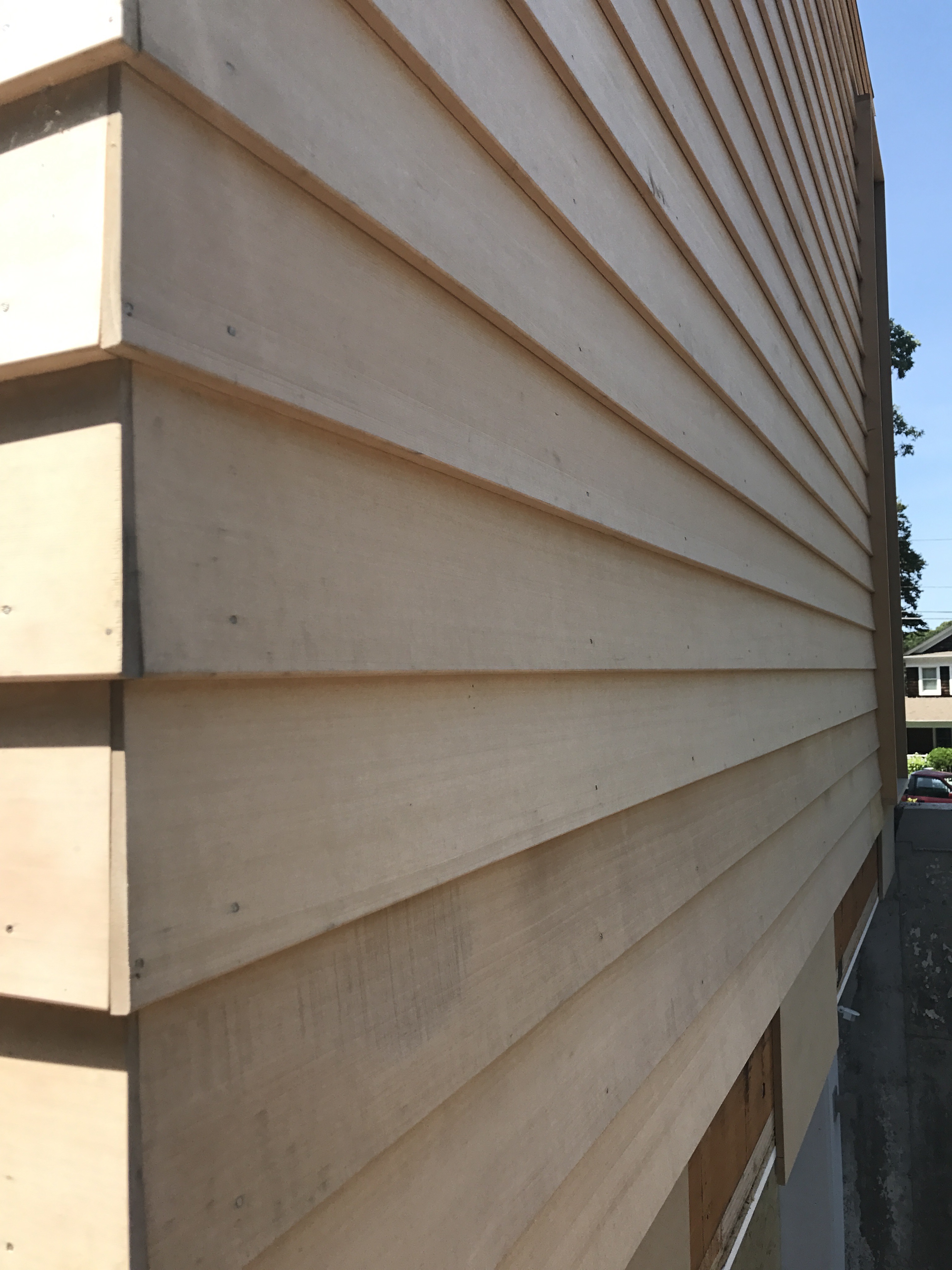
- Shiplap: opposing rabbets overlap without a full interlock; best for durable horizontal siding where slight seasonal movement should remain less visible.
- Channel: a lap or shiplap-family profile with a wider reveal or shadow channel; best when the design wants pronounced texture and a rustic or modern deep-line effect.
For broader terminology, McIlvain's common wood siding profiles guide is the best internal reference before deciding whether this project needs a flush, shadow-line, or historic lap expression.
Choose by Exposure, Not Just Appearance
For high-rain or wind-driven exposure, profile selection should start with water management, because no wood profile is the wall's only weather barrier. The International Residential Code Section R703 requires exterior walls to provide a weather-resistant envelope with flashing and a means of draining water that gets behind the cladding. That is why a profile that looks tight in a mockup still needs a water-resistive barrier, flashing, and usually a ventilated rainscreen cavity behind it.
Use these exposure rules before selecting the milling pattern:
- Most exposed horizontal walls: shiplap or channel is usually easier to detail than tight T&G because the overlap tolerates minor movement and sheds water with simpler sequencing.
- Protected soffits and entries: tongue-and-groove works well because roof cover reduces direct wetting and the tight joint reads clean overhead.
- Vertical feature walls: T&G, channel, and shiplap can all work, but install over horizontal furring or blocking so fasteners penetrate solid backing at least 1-1/4 inches, consistent with common cedar siding guidance.
- Large commercial cladding areas: specify the profile together with the attachment strategy, not separately; McIlvain's wood rainscreen profile guide explains why the cavity and fasteners control performance as much as the face pattern.
Profile Comparison Table
Shiplap is usually the lowest-risk exterior wall profile, tongue-and-groove is the most refined, and channel siding is the strongest design expression. The table below assumes exterior-grade lumber, proper flashing, and a drained assembly rather than direct-to-sheathing installation.
| Profile | Weather Performance | Cost / Milling Impact | Best Use Case | Spec Risk |
|---|---|---|---|---|
| Tongue-and-groove | Tight interlock; strong on protected walls and soffits but less forgiving if water is trapped in a horizontal joint. | More precise milling and fit-up; waste rises if long runs need exact reveal alignment. | Contemporary walls, soffits, porch ceilings, vertical accent cladding, thermally modified siding. | Do not over-tighten joints; allow seasonal movement and avoid caulking joints that need to drain. |
| Shiplap | Overlapping rabbets shed water well in horizontal use when the upper board laps over the lower board. | Moderate milling cost; generally easier replacement of a damaged board than T&G. | Horizontal siding, mixed modern/traditional facades, hardwood and softwood exterior cladding. | Confirm rabbet depth and board width; shallow laps can telegraph movement on wide boards. |
| Channel | Lap profile with a reveal; can handle movement visibly because the shadow line is intentional. | Profile knives and reveal tolerance must be controlled; stain coverage inside the channel matters. | Rustic channel, deep-shadow modern cladding, vertical or horizontal feature walls. | Channels collect more visual dirt if splashback is high; keep clearances and finishing disciplined. |
Installation Details That Decide Performance
The profile only performs as specified when flashing, clearance, fastening, and moisture content are treated as part of the same assembly. WRCLA's general cedar siding guidance calls for flashing above wall penetrations and at material changes, a 1/4-inch gap above flashing ledges, a 2-inch minimum gap above roofs and decks, and trim or skirt boards at least 6 inches above grade in typical details. Those numbers are often more important than whether the face reads as T&G or shiplap.
For exterior wood profile specifications, include:
- Board width and face reveal: 1x6 profiles are easier to keep flat than wider faces; wide boards need more attention to grain orientation, species stability, and fastening.
- Moisture target: confirm delivered and jobsite moisture content with the supplier and installer; the USDA Forest Products Laboratory Wood Handbook chapter on moisture relations explains why wood changes dimension as it exchanges moisture with air.
- Fastener placement: blind nailing may be suitable for narrower T&G, while wider profiles generally need face fastening so boards are restrained without splitting.
- Drainage plane: use furring strips or a rainscreen mat where the wall needs back ventilation; Building Science Corporation's ventilated cladding research describes how a drained and ventilated cavity supports drying.
McIlvain's custom milling services are relevant here because the profile, reveal, board width, surface texture, and end-matching decisions should be resolved before the order is milled rather than improvised at installation.
Species and Milling Considerations
The same profile behaves differently in cedar, Cypress, Sapele, Ipe, Accoya, Thermory, and Abodo Vulcan because density, shrinkage, grain, and modification process all affect joint movement. A tight T&G profile in a modified wood may be appropriate where a flat-sawn natural hardwood would be too movement-sensitive at the same width. For thermally modified siding, include both Thermory technical information and Abodo Vulcan product information in the comparison, since McIlvain carries both product families.
For sourcing, the profile guide should be tied to the species family:
- Cedar and Cypress: forgiving, familiar exterior softwoods for shiplap and channel; specify grade, texture, finish, and drainage details.
- Sapele, Teak, Genuine Mahogany, White Oak, Jatoba, and Ipe: hardwood profiles need careful milling, stainless fasteners, and clear decisions about prefinish vs. natural weathering; McIlvain hardwood lumber inventory is the starting point for species selection.
- Accoya, Thermory, and Abodo Vulcan: modified woods suit tight contemporary profiles because improved dimensional stability helps preserve reveal lines; see McIlvain's thermally modified wood resources and Accoya page when comparing modified options.
- Genuine Mahogany: include a CITES Appendix II, FSC, and legal-harvest documentation note in any specification package; FSC chain-of-custody certification is the documentation framework specifiers often need for certified wood claims.
For related species-level decisions, use McIlvain's thermally modified T&G siding guide, lap siding vs. shiplap weather-resistance guide, and nickel-gap hardwood profile guide.
"When we quote siding profiles, the first question is not only what the architect wants the joint to look like. We need to know orientation, exposure, board width, finish, and how the installer is going to fasten it. A tongue-and-groove profile that is excellent under a soffit may be the wrong answer on a windward wall if the detail traps water or leaves no movement allowance."
— Brett Miller, President, J. Gibson McIlvain Company
When to Use Each Profile
Use T&G for refinement, shiplap for general exterior resilience, and channel when the reveal is part of the architecture. The Real Cedar general installation guide reinforces that flashing, field joints, end treatment, and clearance details are required regardless of profile, so the final choice should follow the building exposure and design intent.
Tongue-and-groove
Tongue-and-groove is best when the design wants a tight, flush, continuous plane. Use it for soffits, covered entries, porch ceilings, vertical contemporary walls, and modified-wood cladding where reveal consistency is a priority. Avoid using it as a cure-all on exposed horizontal walls without a strong drainage detail behind it.
Shiplap
Shiplap is the best default when the project needs exterior durability with a clean but not overly tight joint. It works on traditional and modern elevations, accepts both clear and semi-transparent finishes, and is easier to explain to installers than specialty reveal profiles.
Channel
Channel siding is best when the shadow line is intentional and the designer wants texture to carry across a large elevation. It can be installed horizontally or vertically depending on the pattern, but the spec should call out reveal depth, surface texture, finish penetration into the channel, and mockup approval.
How McIlvain Would Specify This for a Real Project
McIlvain would resolve the species, profile geometry, finish, and installation exposure before pricing the order, because those choices determine yield and milling setup. A useful request is not "quote shiplap siding" but "quote 1x6 Sapele shiplap with a 1/8-inch reveal, prefinished all sides, stainless-fastener layout, installed horizontally over a rainscreen on a coastal residential project." That level of detail lets the supplier evaluate material availability, waste, lead time, and whether the proposed profile is appropriate for the species.
For custom work, McIlvain's Alpha wood cladding and milling capabilities can connect profile selection with finishing and project logistics. For early budgeting or a profile mockup, start with the McIlvain contact page and provide elevations, species preference, total square footage, and desired installation orientation.
Performance and Procurement Checklist
| Item | Why It Matters | Decision to Record |
|---|---|---|
| Profile geometry | Small differences in tongue depth, rabbet depth, and reveal width change water behavior and appearance. | T&G, shiplap, channel, nickel gap, reveal dimension, face width. |
| Orientation | Horizontal and vertical installations need different fastening and backing strategies. | Horizontal, vertical, soffit, mixed orientation, transition details. |
| Moisture content | Wood movement starts when the installed material moves toward local equilibrium moisture content. | Delivered MC, acclimation plan, verification method, jobsite storage. |
| Fasteners | Dense hardwoods and exterior exposures generally require stainless steel fasteners and predrilling. | Fastener grade, head style, face vs. blind fastening, penetration depth. |
| Finish system | Profiles with deep reveals need finish inside the groove or channel, not only on the face. | Natural weathering, oil, film finish, factory-applied finish, back-priming. |
Where Specifications Usually Fail
Profile specifications usually fail when the drawing names a look but not the buildable geometry. Common failures include calling for "T&G" without a face width, using a tight joint on an exposed horizontal wall, omitting the rainscreen cavity, allowing installers to caulk drainage paths, mixing multiple milling runs without mockup approval, and forgetting that a 1/4-inch change in reveal can alter the entire coursing layout around windows.
Fire and code requirements also need to be checked at the assembly level. The American Wood Council Fire Design Specification addresses exterior wall covering terminology, but the project still needs local code review for construction type, height, fire separation distance, WUI conditions, and finish system.
Ordering Information to Resolve Before Pricing
- Exposure: coastal, mountain, shaded, sun-facing, sheltered soffit, or high-splashback wall.
- Profile: T&G, shiplap, channel, reveal depth, face width, nominal thickness, and sample approval.
- Species: Cedar, Cypress, Douglas Fir, Sapele, Teak, Genuine Mahogany, White Oak, Jatoba, Ipe, Accoya, Thermory, or Abodo Vulcan.
- Finish: factory prefinish, all-side oil, site-applied stain, natural weathering, char, or film finish.
- Assembly: rainscreen depth, furring layout, WRB, flashing, corner details, and transition trim.
- Logistics: total square footage, waste allowance, desired lengths, delivery sequence, and mockup deadline.
Related McIlvain Guidance and Next Steps
Frequently Asked Questions
Is tongue-and-groove better than shiplap for exterior siding?
Not automatically. Tongue-and-groove gives the tightest, cleanest face, but shiplap is usually more forgiving for exposed horizontal exterior walls because the overlapping rabbet handles slight movement and drainage more simply. T&G is strongest on protected walls, soffits, and vertical contemporary cladding.
What is channel siding used for?
Channel siding is used when the design wants a pronounced shadow line or rustic-modern texture. It is a lap-family profile with an intentional reveal, so it can make seasonal movement less visually disruptive than a flush joint. The channel must be finished thoroughly and kept away from splashback conditions.
Can shiplap be installed vertically outside?
Yes, but vertical shiplap needs the right backing and drainage detail. Fasten into horizontal blocking or furring strips, maintain a drained cavity behind the siding, and resolve top and bottom flashing so water cannot collect in the laps. A mockup should confirm reveal direction and drainage.
Which wood siding profile is cheapest to mill?
Simple shiplap is often the most economical of these three because the rabbets are straightforward and installation is familiar. Tongue-and-groove and channel profiles can cost more when tighter tolerances, specialty knives, deeper reveals, or exact course alignment are required.
Do T&G, shiplap, and channel siding all need a rainscreen?
They all benefit from a rainscreen, and many assemblies should have one. The IRC requires a means for water that penetrates exterior cladding to drain, and a ventilated cavity improves drying. The need is highest on exposed walls, tight profiles, dense hardwoods, and high-performance envelopes.
Sources
- ASTM D4442 — direct moisture content measurement of wood and wood-based materials.
- Real Cedar Tongue & Groove Installation — profile-specific T&G installation guidance.
- Real Cedar General Siding Installation — flashing, clearance, caulking, corners, and field-joint guidance.
- International Residential Code Section R703 — exterior covering, drainage, WRB, and flashing requirements.
- USDA Forest Products Laboratory Wood Handbook — physical properties and moisture relations of wood.
- Building Science Corporation RR-0907 — ventilated wall cladding and drying behavior.
- Thermory — thermally modified wood product and profile information.
- Abodo Vulcan — thermally modified radiata pine cladding information.
- FSC Chain of Custody — certification framework for responsible wood product claims.
- American Wood Council Fire Design Specification — exterior wall covering and wood fire-design terminology.