Why Ipe Is Specified for Prefinished Cladding
Ipe pairs Class 1 durability with a Class A fire rating, untreated, and it does that on density alone. At roughly 1,050 kg/m3, it forms an insulating char layer that holds its ASTM E84 flame-spread index near 20, the same Class A band as concrete and steel.
That density also drives a Janka hardness around 3,680 lbf and a service life the USDA Forest Products Laboratory ranks among the longest of any commercially available wood. On a high-traffic, high-exposure, or wildfire-zone facade, Ipe erases two questions at once: the fire treatment and the film-finish maintenance. For the species itself, see our Ipe complete guide and the Ipe vs. Cumaru comparison.
Ipe Is Available in a Full Range of Dimensions
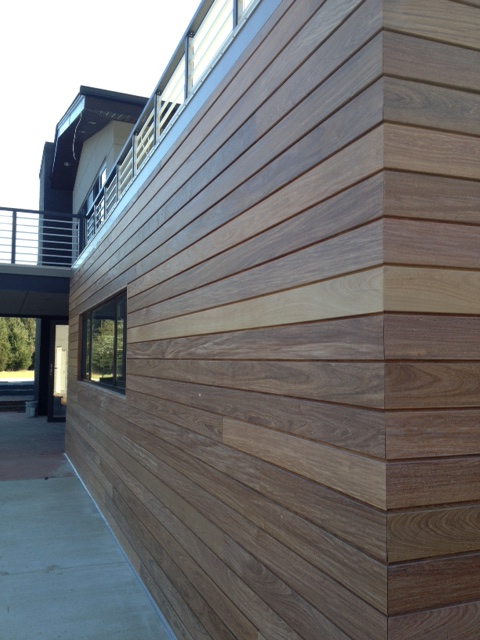
Ipe cladding is not a short size list. It mills across the full range of siding widths, thicknesses, and lengths. That matters when a design calls for tall reveals, wide boards, or long clear runs, the kind of thing that boxes in other species.
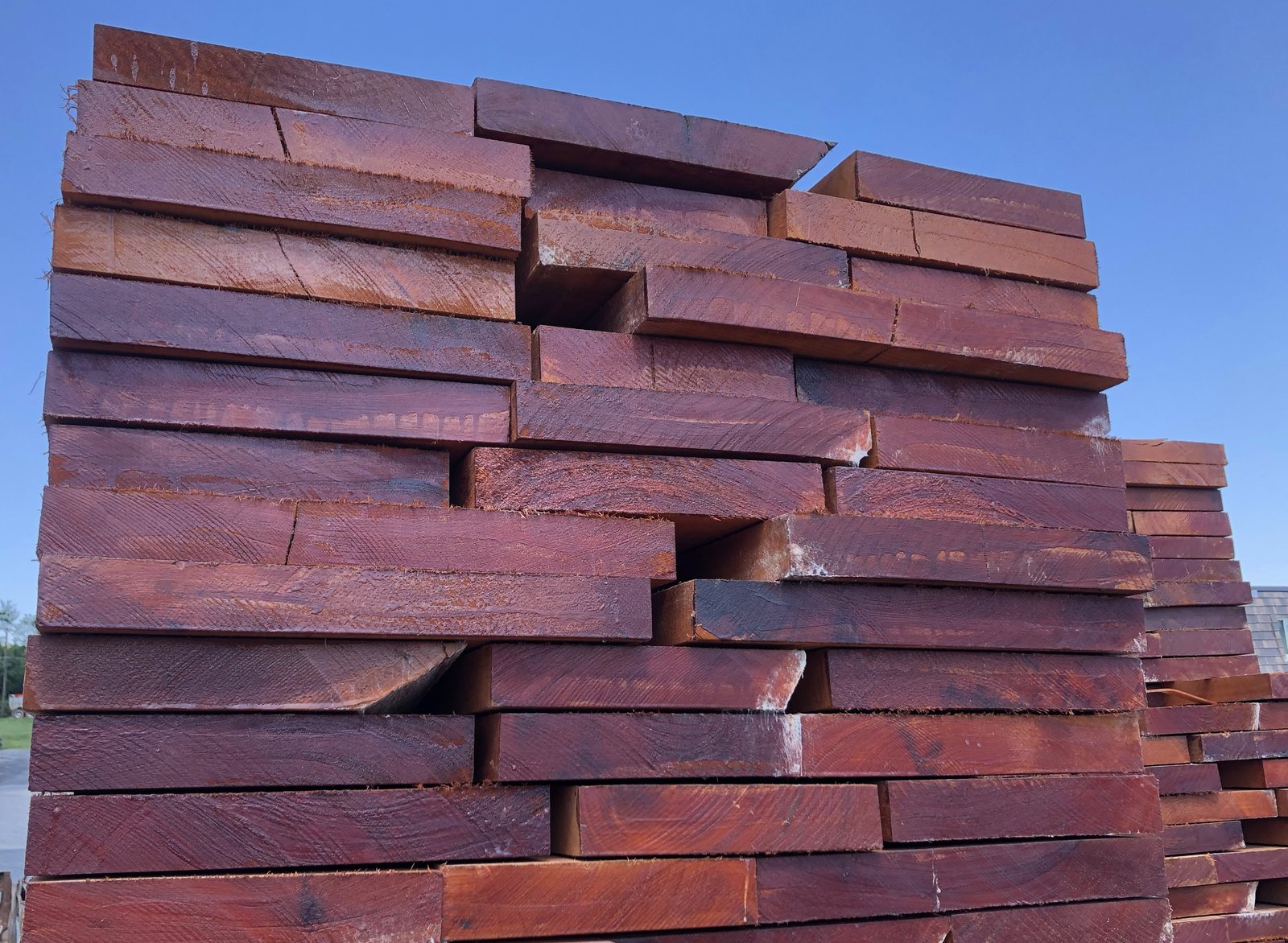
J. Gibson McIlvain carries deep Ipe inventory in standard and custom dimensions, milled to tongue-and-groove, shiplap, nickel-gap, and clip-compatible rainscreen profiles. The milling is in-house, so a project specifies the exact face width and reveal it wants instead of settling for a stock profile. That depth is the reason Ipe comes from a specialty hardwood supplier and not a general yard.
| Property | Ipe | Why it matters |
|---|---|---|
| Density | ~1,050 kg/m3 | Char layer, fire and impact resistance |
| Janka hardness | ~3,680 lbf | Resists debris and wear |
| ASTM E84 | Class A (FSI ~20) | WUI and commercial fire compliance untreated |
| Durability (EN 350) | Class 1 | Decades of exterior service |
| Finish | Penetrating oil, six faces | Recoats without stripping; films peel on Ipe |
| Dimensions | Full range, custom milled | Not constrained to stock sizes |
Why Prefinished Ipe Uses Penetrating Oil
Ipe takes a penetrating oil, not a film, because its dense, oily fiber will not hold a surface film. Films peel on it. An oil soaks in instead, so there is nothing to peel. A factory applies that oil to all six faces in a controlled shop and seals the end grain, which drinks water 10 to 12 times faster than the face.
When the oil weathers, you clean the surface and recoat, no stripping. Left bare, Ipe silvers to a gray patina and loses none of its strength, so the finish is really a look decision. For the finish comparison, see our oil vs. film finishes guide, and for cut ends, end-grain sealing. One caveat worth stating plainly: penetrating oil is maintenance, not a warranty. Solid hardwood is organic and does not carry a product warranty the way a modified, manufactured product does.
Installing Prefinished Ipe Cladding
Prefinished Ipe goes up over a ventilated rainscreen, with pre-drilling and stainless fasteners, and the only field finishing is sealing the cut ends. The board arrives finished. The wall assembly is what lets it dry.
- Rainscreen: install over furring with at least a 3/8 inch vented cavity so the wall drains and dries. See our rainscreen guide.
- Fasteners: Ipe is dense, so pre-drill and use stainless. Tongue-and-groove hides the fasteners, shiplap gets face fastened.
- Cut ends: seal every field cut with the touch-up sealer that ships with the order, within a day.
- Orientation: grooved profiles go groove-down to drain.
"When someone asks where to buy prefinished Ipe, what they actually need is a supplier that carries Ipe in real depth and mills it. We stock the full range of dimensions, mill the profile, and oil all six faces before it ships. The board shows up done, the crew hangs it over furring and seals the cuts, and the wall is finished. No fire treatment to document, no film to peel. That is why architects keep coming back to it."
Norm Moton, Director of Sales, J. Gibson McIlvain Company
How J. Gibson McIlvain Supplies Prefinished Ipe
A prefinished Ipe order at J. Gibson McIlvain starts from deep in-house inventory. The team picks the grade, mills the specified profile and dimension, oils all six faces in a controlled shop, and ships nationwide with touch-up sealer for field cuts. Ipe is stocked across the full range of dimensions and lengths, so the project is not forced into a narrow size offering, and FSC chain-of-custody documentation comes with the order where required.
Ipe earns the spec where fire performance, durability, and low maintenance all have to land at once: high-exposure facades, WUI-zone projects, commercial walls that need Class A without treatment. Where a warm hardwood look matters more than the last bit of density, Cumaru is the Class A alternative. Where the design wants a stable painted or modified look, the team points to Accoya, Thermory, and Abodo Vulcan.
Prefinished Ipe Procurement Checklist
| Item | Why it matters |
|---|---|
| Profile and dimension | Ipe mills to any face width and reveal; specify exactly. |
| Finish | Penetrating oil on all six faces; confirm color and sheen. |
| Fastening | Pre-drill and use stainless; T&G hidden, shiplap visible. |
| Rainscreen cavity | Minimum 3/8 inch vented gap for drainage and drying. |
| Touch-up sealer | For sealing field-cut ends at install. |
| Documentation | ASTM E84 report and FSC paperwork where required. |
Where Ipe Cladding Orders Usually Fail
- Specifying a film finish: films peel on Ipe; use penetrating oil.
- Assuming limited sizes: Ipe runs the full range of dimensions; do not design around a narrow offering.
- No pre-drilling: dense Ipe splits without it; use stainless fasteners.
- Skipping end-grain sealing: cut ends drink water fast; seal every field cut.
- No ventilation cavity: even Ipe cups on a wall that cannot dry; give it a rainscreen.
Ordering Information to Resolve Before Pricing
- Profile and dimension: face width, reveal, thickness, length.
- Finish: penetrating-oil color and sheen, six-side sealing.
- Assembly: rainscreen cavity, fastener method, clip compatibility.
- Documentation: ASTM E84, FSC where required.
- Logistics: square footage, lengths, touch-up quantity, delivery sequence.
Related J. Gibson McIlvain Guidance and Next Steps
Frequently Asked Questions
Where can I buy prefinished Ipe siding?
Prefinished Ipe siding comes from a specialty hardwood supplier that stocks Ipe in depth, mills the profile, and oils all six faces before it ships. J. Gibson McIlvain stocks Ipe across the full range of dimensions and lengths, mills tongue-and-groove, shiplap, and rainscreen profiles in-house, oils all six faces, and ships nationwide with touch-up sealer for field cuts. The only field step is sealing the cut ends.
What sizes does prefinished Ipe siding come in?
Ipe cladding runs the full range of siding widths, thicknesses, and lengths, and it can be custom milled to a specified face width and reveal. J. Gibson McIlvain carries deep Ipe inventory in standard and custom dimensions, so tall reveals, wide boards, and long clear runs are all on the table rather than being limited to a narrow stock offering. Profiles include tongue-and-groove, shiplap, nickel-gap, and clip-compatible rainscreen patterns.
Does Ipe siding need a fire rating or treatment?
Ipe reaches ASTM E84 Class A, with a flame-spread index around 20, without any fire treatment, because its density near 1,050 kg/m3 forms an insulating char layer. That makes it a fit for commercial and WUI-zone facades that require Class A flame spread, with the ASTM E84 documentation supplied for plan review. Unlike lighter species that need exterior-rated fire-retardant treatment, Ipe carries its rating for the life of the installation.
Why is prefinished Ipe finished with oil instead of paint?
Ipe takes penetrating oil because its dense, oily fiber will not let a film like paint or varnish bond, so films peel. An oil soaks into the fiber, so there is nothing to peel, and it recoats without stripping when it weathers. J. Gibson McIlvain applies the oil to all six faces in a controlled shop before shipping. The oil is maintenance, not a warranty, since solid hardwood is an organic material.
How is prefinished Ipe cladding installed?
Prefinished Ipe goes up over a ventilated rainscreen cavity of at least 3/8 inch, with pre-drilling and stainless fasteners because the wood is dense. Tongue-and-groove hides the fasteners, shiplap gets face fastened with visible stainless, and grooved profiles go groove-down to drain. The board arrives finished on all six faces, so the only field finishing step is sealing the end grain of any board cut to length with the touch-up sealer that ships with the order.
Sources and Standards Referenced
- ASTM E84 - Surface Burning Characteristics of Building Materials
- USDA Forest Products Laboratory - Ipe density, hardness, and durability
- Forest Stewardship Council - Chain of custody certification
- American Wood Council - Flame-spread performance of wood products
- National Hardwood Lumber Association - Hardwood grading rules