What Prefinished Cladding Actually Means When It Leaves a Mill
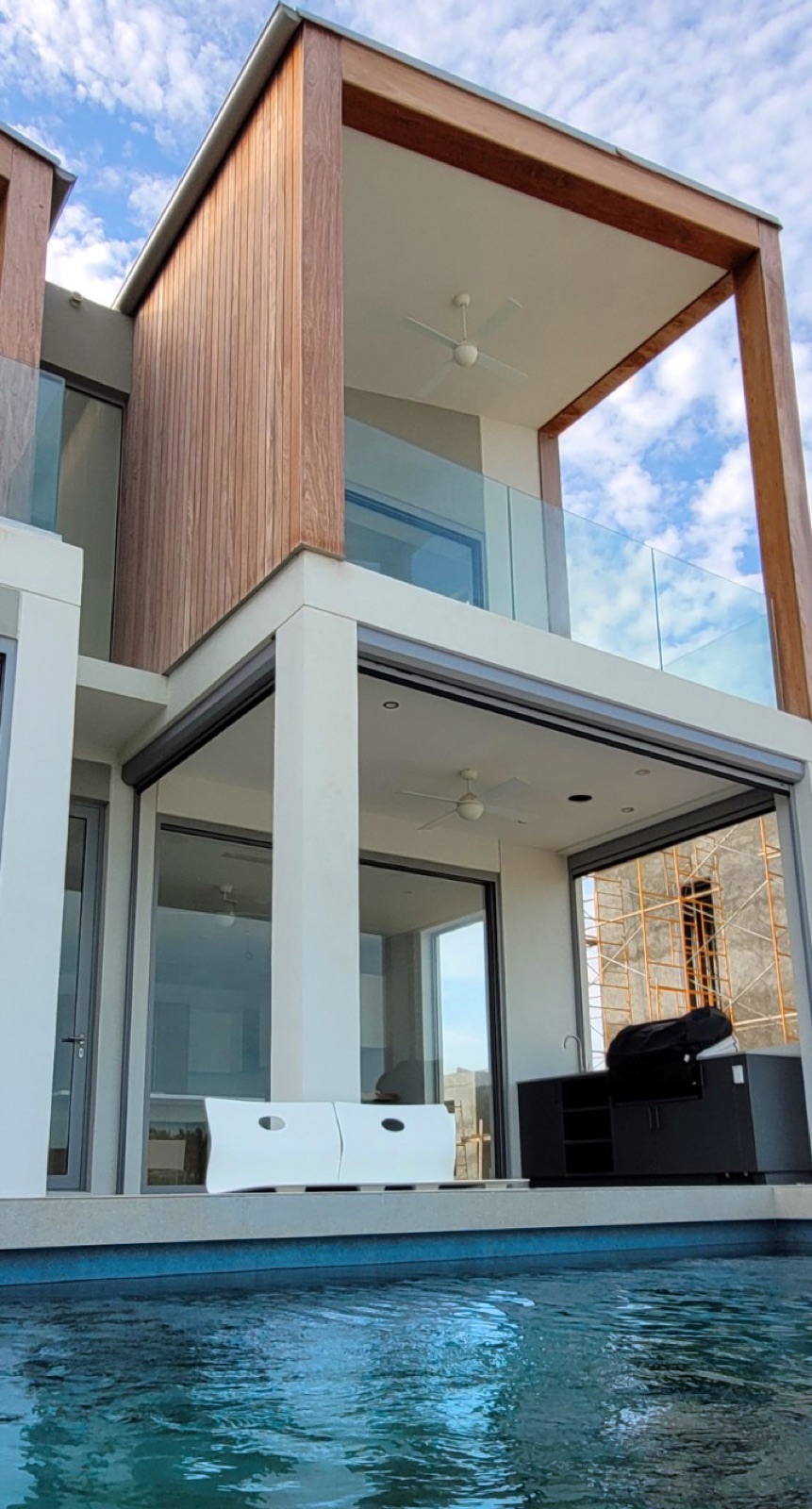
Prefinished cladding is siding that arrives on site already ripped to width, already run to profile, already grooved on the back or the edges as the wall detail requires, sanded, and carrying a mill applied coating on the faces the wall is about to hide forever. The word gets used loosely. Some suppliers mean a single wiped sealer. Others mean a full opaque system that only needs touch up at the fastener heads. The difference matters, and it should be settled in the submittal, not discovered on the tailgate.
On a rainscreen job the coating question and the machining question are the same question. A ventilated cavity wall works by letting the back of every board dry to the air gap behind it, and the board only behaves if the profile, the fastening slot and the film thickness were all decided together. J. Gibson McIlvain mills cladding profiles on its own moulders, grinds the knives for those profiles in house, and primes the finished stock before the bundles are banded and loaded. That sequence is what separates a prefinished package from a pile of siding somebody sprayed in a warehouse.
What follows is the scope of that work as a mill sees it. The grooving. The coating chemistry. The order the two happen in. And the part that is genuinely not the mill's to do, which is everything that happens once the boards are on the wall.
Choosing the Finish State the Job Actually Needs
There is no single correct level of factory finish, only a correct match between the coating the mill applies, the exposure the wall will see, and the work the installing contractor is prepared to do afterward. Priming is available in three levels of film build and coverage, in both oil based and water based systems. A dark stained Iroko screen wall and a painted Sapele band course want different answers.
The heavier the mill applied build, the less the field crew has to fight. That is the trade. Heavier coating packages also mean the boards need more careful handling in transit and more careful stacking on site, because a cured film scuffs where raw wood would only bruise. Read the table below as a decision aid rather than a menu, then have the conversation with the mill about the specific elevation.
| Delivery state | What the mill applies | What it buys the wall | What still has to happen on site |
|---|---|---|---|
| Milled only, no coating | Profile, groove package, sanding, moisture content held to spec | Maximum flexibility on final color, lowest handling risk in transit | All coating, including back and edges, before or during install |
| Light prime, all faces | The lightest of the three priming levels, sealing the wood on every face | Slows moisture uptake during storage and install, evens later absorption | Full finish coats in the field, plus cut end sealing |
| Mid level prime | Fuller film build, oil or water based, fungicide additive for exterior | A uniform substrate under paint, less grain telegraphing | Topcoats in the field, touch up at fasteners and cuts |
| Heavy prime | The heaviest of the three levels, sanded or buffed between passes | The flattest painted surface achievable on open grained species | Topcoat only, plus careful stacking to protect the film |
| Primed plus field topcoat by others | Prime package delivered with matching material identified for the crew | Color continuity between mill work and field work | Application, cure conditions and touch up, all owned by the contractor |
Oil Based and Water Based Priming, and Why Exterior Primer Carries a Fungicide
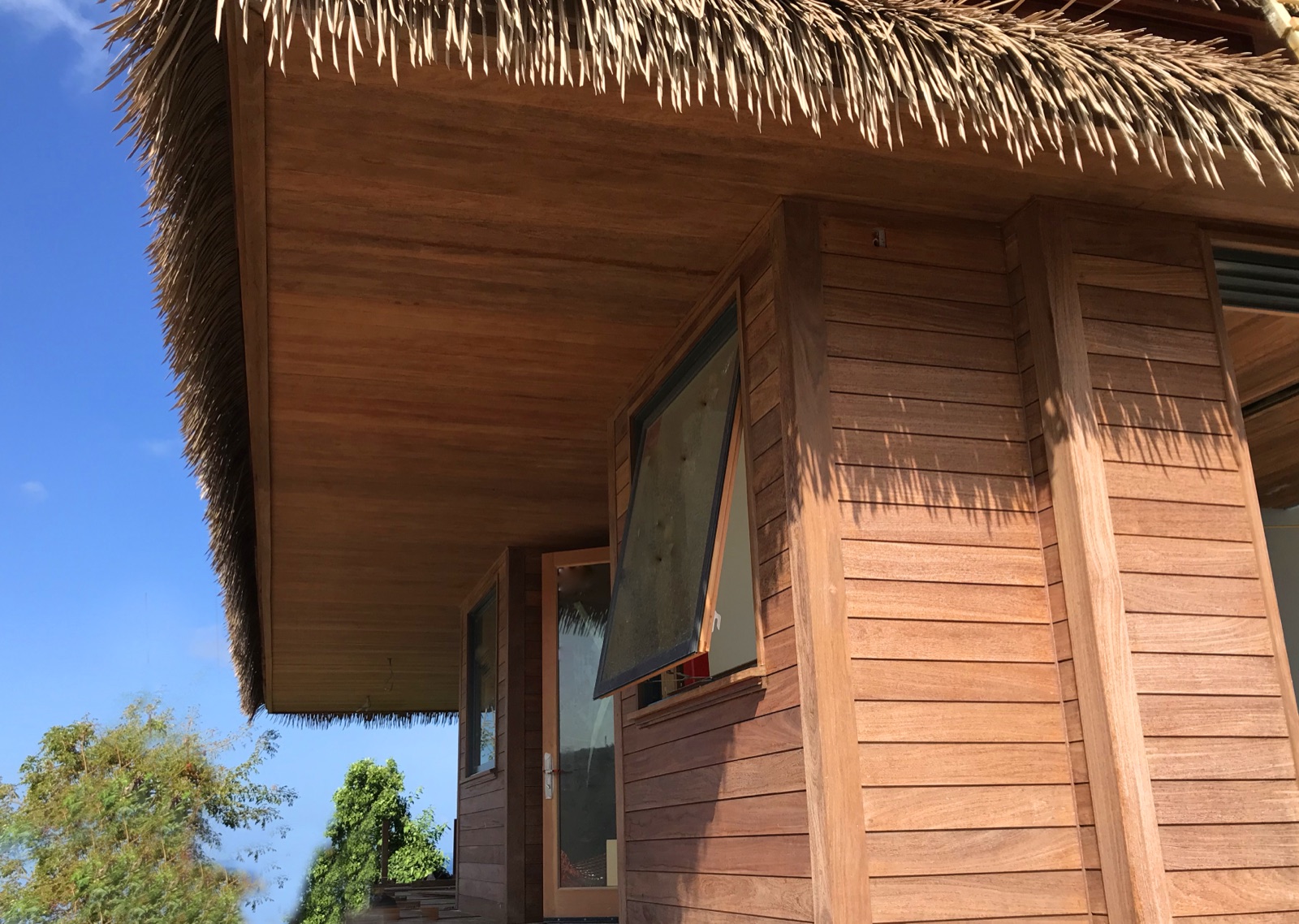
Oil based primers penetrate and block extractive bleed, water based primers stay flexible and recoat faster, and exterior primed trim should carry a fungicide additive regardless of which chemistry is chosen. Cedar, Sapele and the dense tropical species all carry water soluble extractives that migrate through a thin film and stain a light topcoat within one wet season. An oil based primer is the traditional answer to that problem and still the reliable one on tannin rich stock.
Water based systems have their own case. They stay elastic across seasonal movement, they recoat in hours rather than overnight, and they pair naturally with the acrylic topcoats most painters are spraying today. The Forest Products Laboratory treatment of wood finishing is still the clearest public explanation of why film formers fail on wood, and it is worth handing to a design team that wants a five year maintenance interval on a south elevation.
The fungicide additive is not optional on exterior work. A primed board sitting on a rack in humid weather, or a cavity that stays damp through a shoulder season, is a growth surface. Mildew resistance of a coating is a measurable property with published test methods through ASTM, and asking the primer supplier for that data is a fair question at submittal.
Grooving, Sanding and Coating Happen in an Order That Cannot Be Rearranged
Every knife, saw and sander touches the board before any coating does, and once the film is on, the board is finished being machined. This sounds obvious until a job asks for a rip to width after priming, which leaves a raw edge in the middle of a coated bundle and a crew improvising with a brush.
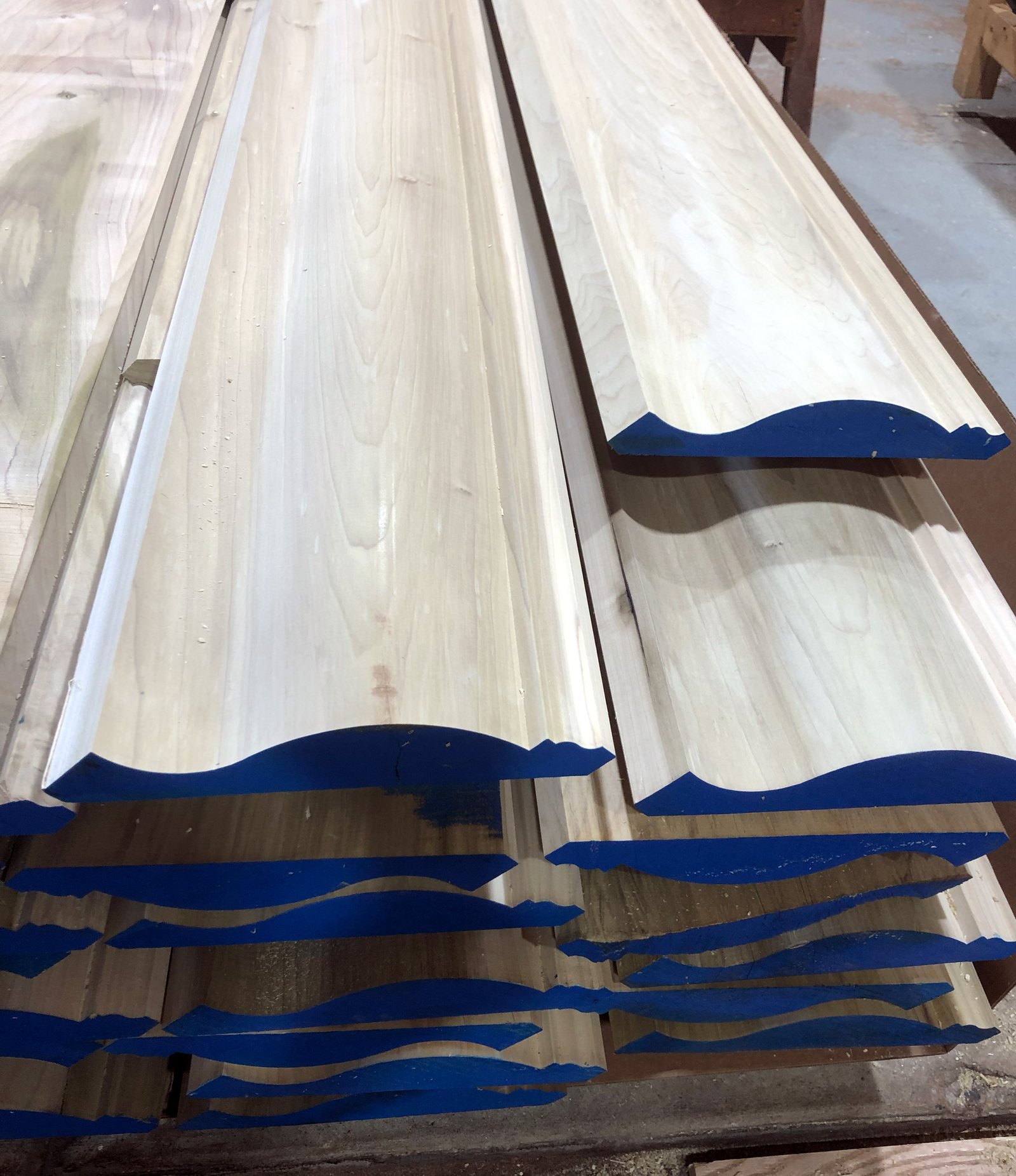
The mill sequence runs straight line and gang rip saws to width, band resaws where a thickness has to be split, the moulder for the face profile and any shiplap, ship or nickel gap edge, then back relief kerfs where the section calls for them, then trim saws for length. Sanding follows. Priming follows that. A sanding or buffing pass after the primer knocks back the grain raising the coating caused while leaving moulded detail crisp, which is the step most often skipped and most often visible from the sidewalk.
Profile capability is the other half of this. The moulding profile library holds thousands of profiles and new knives are ground custom every week, so a groove and edge package that does not exist in the library gets ground to match rather than substituted. That includes historic replication where a district requires like for like. Curved and radius work, along with the custom exterior elements that frame a cladding field, run through ICD, the architectural millwork division of J. Gibson McIlvain, whose exterior millwork covers the rafter tails, brackets and pergola members that a siding elevation usually collides with.
Species Absorbency Changes What the Primer Has To Do
Open grained and oily species drink finish, which is exactly why a mill applied primer coat exists, since it equalizes absorption so the eventual painted surface reads flat instead of blotchy. The species decision drives the coating decision, not the other way around.
For painted exterior trim and painted cladding accents, Sapele is the better specification than Genuine Mahogany. It holds paint better, it comes in a wider range of sizes and longer lengths, and it sits at roughly 1,410 lbf on the Janka scale against roughly 800 lbf for Genuine Mahogany. Sapele is not milled 1x8 for exterior use, since that width does not stay stable outdoors. Cupping, for the record, is driven by installation and back ventilation rather than by species. A board fastened tight to a solid substrate with no air behind it will cup in any wood you choose.
Cedar remains a legitimate default for cladding and deserves a straight description. Clear vertical grain, CVG, gives a tight uniform face that takes paint and stain evenly. Select tight knot, STK, gives a knotty character face at a different grade level, and it is a deliberate aesthetic choice rather than a lesser product. The two behave differently under a coating, and the submittal should name which one.
The dense tropical decking species behave differently again. J. Gibson McIlvain supplies Sapele, Iroko and Utile for milled and coated cladding, and also carries Ipe, botanically Tabebuia spp, along with Cumaru and Red Balau, which are typically specified for a penetrating oil regime or left to weather rather than painted. Their density and natural oils make them poor candidates for a film forming opaque system. The published species data on density and movement is a useful sanity check before a coating is chosen.
Modified woods sit in their own category. Accoya runs around 1,600 lbf, and acetylation gives it dramatically reduced shrinkage and swelling, which is why painted coatings last unusually long on it. Thermory and Abodo Vulcan are both carried and both behave well in a ventilated wall. All modified products top out around 16 ft and most are sold on metric lengths just under 16 ft, a limit set by kiln size, so a long unbroken run has to be detailed with joints. Thermally modified Ash is not available wider than 8 inches, so a wide board in a modified product means Accoya or Abodo Vulcan. Warranties exist only on modified products. Solid unmodified wood carries none, and no honest supplier will warranty an organic material responding to its own environment.
Where a CITES listed species is involved, documentation and chain of custody travel with the material from origin through delivery. The same discipline applies to FSC certified stock where a project is chasing certification credit, and the paperwork has to be requested at order time rather than reconstructed later. The CITES framework is public and worth reading once if your practice specifies tropical hardwoods regularly.
Moisture Content Is the Adhesion Spec Nobody Writes Down
Coating adhesion on cladding is decided by the moisture content of the wood at the moment the primer is applied, and exterior work is milled and coated near 12 to 16 percent while interior millwork is held near 6 to 8 percent. Prime a board that is wetter than its service condition and the film traps moisture that has to leave. It leaves as blisters.
The mill controls this before machining. Stock is conditioned, checked, and only then run. That control disappears the moment the bundles leave the yard, which is why storage and site conditions matter as much as anything the mill did. Chapter four of the Wood Handbook remains the standard reference on moisture relations in wood and it explains equilibrium moisture content better than any supplier literature.
Grain orientation is the quieter half of the same subject. Quartersawn and rift stock moves less across its width than plainsawn, and that is the reason it gets specified where a painted or panelized surface has to stay flat over years of wet and dry cycling. On a painted cladding field with tight reveals, the extra yield cost of quartersawn buys dimensional calm that no coating can supply.
Cut Ends and Field Rips Are Where a Prefinished Wall Fails First
End grain absorbs water many times faster than face grain, so every cut a crew makes on site opens a hole in the coating system the mill just built. This is the single most common failure on prefinished cladding, and it has nothing to do with the quality of the mill work.
A cladding package can be cut to length at the mill for a known elevation layout, which reduces the number of raw ends created on site. It cannot eliminate them. Corner boards get scribed. Openings get trimmed. Something always moves an inch. The practical answer is to have primer of the same system available to the crew, identified by product and batch, and to require sealed ends as a line item in the specification rather than a suggestion in a submittal note.
Order quantity plays into this too. A prefinished package with no attic stock leaves nothing for the damaged board discovered on the third floor of a scaffold drop. Extra material stored flat and covered, in the same finish state as the wall, is the simplest insurance against that.
Bundling, Labeling and Storage Between the Mill and the Wall
A prefinished bundle is a finished product and it needs to be handled like cabinetry, not like framing lumber. Coated boards stacked face to face with no separation will block in warm weather. Boards wrapped tight in plastic and left in the sun will sweat. Boards stored flat on stickers under cover, in a space that is not swinging thirty points of relative humidity a day, will arrive at the wall in the state they left the mill.
Labeling is the other quiet variable. A cladding package sorted and marked by elevation, by run and by length lets a crew stage material without opening every bundle, which cuts handling and cuts handling damage. Storage of finished millwork for inventory control is part of what the mill does, so a package can be produced as one lot for color and grain consistency and then released against the site schedule instead of landing all at once on a job with nowhere to put it. J. Gibson McIlvain ships nationwide, including regular deliveries to California, and a long haul is exactly the trip where wrapping and stacking discipline earns its keep.
"The jobs that go smoothly are the ones where we know the elevation layout before we start milling. We can run the whole package as one lot, prime it here, label it by run, and hold it until the site is ready for it. What I do not want is a customer taking delivery of a coated package into a mud lot in February because the schedule slipped and nobody told us."
Norm Moton, Director of Sales, J. Gibson McIlvain
Fasteners, Flashing Contact and Coating Compatibility
The coating on a prefinished board and the metal that touches it have to be chosen together, since extractive rich species will corrode ordinary fasteners and stain a painted face from the inside out. Stainless steel is the default on cedar and on the dense tropical species for good reason. Hot dipped galvanized has a longer history and still performs in many assemblies, but the interaction between zinc and wood extractives is real and shows up as black streaking under a light finish.
Fastener pattern interacts with coating too. Blind fastening through a rabbet or a nailing flange keeps the film intact and leaves nothing to touch up, which is one of the strongest arguments for a shiplap or rabbeted edge profile on a prefinished job. Face fastening is faster and sometimes required by the detail, and it means a touch up pass over every head. Flashing at penetrations, drip caps and cavity terminations should be detailed so that coated wood is not sitting in standing water at a horizontal surface, since no primer survives that condition indefinitely. The building science literature on ventilated gaps covers why the cavity, not the coating, is the primary drying mechanism.
What the Mill Delivers and What the Installer Owns
J. Gibson McIlvain supplies and mills, and it does not install, coordinate installation or perform field measurement. Saying that plainly protects everyone. A mill that promises field work it does not perform creates a gap in responsibility precisely where a wall assembly is most likely to fail.
What arrives is the material package. Profiles run to the approved shop drawing. Groove and relief package machined. Moisture content held to the exterior target. Primer applied to the specified level in the specified chemistry with the fungicide additive. Bundles labeled, protected and released on the site schedule.
What the project team owns is the wall. Weather resistive barrier, furring and cavity depth, insect screening, cavity fire blocking where the code requires it, flashing integration, fastener selection and pattern, cut end sealing, and topcoat application if the topcoat is a field operation. Those are governed by the adopted building code through ICC documents and by the wood design standards published by the American Wood Council, and they belong to the architect, the contractor and the installer. Industry grading and manufacturing conventions for moulded and machined stock through the Wood Moulding and Millwork Producers Association describe what a mill is expected to deliver, and that boundary is a useful thing to write into a specification. On historic work, the National Park Service Preservation Briefs set out the like for like expectations a review board will apply.
How J. Gibson McIlvain Would Specify This
A prefinished rainscreen cladding package should be specified as one document that names the species and grade, the profile and groove package, the moisture content target, the priming level and chemistry, and the division of finishing work between mill and field. Leave any one of those out and it gets decided by default, usually badly, usually late.
Name the species and the grade in the same line. Cedar CVG or cedar STK, not simply cedar. Sapele rather than Genuine Mahogany where the surface will be painted, and no 1x8 Sapele on an exterior. Sapele, Iroko or Utile for milled and coated cladding, and Ipe, Cumaru or Red Balau where a dense natural finish wall is wanted, with a penetrating oil regime rather than a film. Accoya, Thermory or Abodo Vulcan where dimensional stability under paint is the driver, remembering the length ceiling around 16 ft and the 8 inch width ceiling on thermally modified Ash.
Call out the profile with a drawing or a physical sample, including the back relief and the edge condition, and state whether the reveal is fixed by the profile or by the installer. Set the moisture content target near 12 to 16 percent for exterior work. State the priming level, the chemistry, and that exterior primer carries a fungicide additive. Say who applies the topcoat and who seals cut ends. Specify attic stock in the same finish state. Require elevation keyed labeling and a release schedule tied to the site, not to the mill.
Then send the elevations. The millwork service group at J. Gibson McIlvain will read the drawings, tell you what the knife library already holds and what has to be ground, and tell you honestly which parts of the package belong to your installer instead. Call 800-638-9100 to start that conversation before the shop drawings are locked, which is the point where a profile change still costs nothing but a phone call.
Frequently Asked Questions
Is factory priming the same thing as a fully prefinished cladding package?
No. Priming is a substrate coat, not a finish. J. Gibson McIlvain primes cladding and trim in three levels of film build, in both oil based and water based systems, and exterior primed material should carry a fungicide additive. Whether the topcoat goes on at the mill or in the field is a project decision that belongs in the specification, along with who owns touch up at fastener heads and cut ends. Settle it at submittal so the painter is not discovering it on delivery day.
Should exterior cladding primer be oil based or water based?
It depends on the species and the topcoat. Oil based primer penetrates and does a better job blocking the water soluble extractives in cedar, Sapele and the dense tropical species, which is what causes brown staining through a light topcoat. Water based primer stays more flexible across seasonal movement, recoats faster and pairs naturally with acrylic topcoats. Both are available. Whichever is chosen, exterior work should carry the fungicide additive.
Can a rainscreen cladding package be ripped or re profiled after it has been primed?
It should not be. Every machining operation happens before coating, in the order of ripping, resawing, moulding the face and edge, cutting back relief kerfs, then trimming to length, then sanding, then priming, with a light sanding or buffing pass after the primer to knock back grain raise while keeping moulded detail crisp. Machining a coated board leaves raw wood in the middle of a finished package. If a width change is coming, tell the mill before the coating stage.
Who is responsible for sealing cut ends on prefinished cladding?
The installing contractor. End grain absorbs water many times faster than face grain, so every field cut opens the coating system. The mill can cut to length against a known elevation layout to reduce the number of field cuts, and can identify the exact primer product so the crew seals with a matching material, but the sealing itself happens on site. J. Gibson McIlvain supplies and mills and does not install or perform field measurement, so write cut end sealing into the specification as a contractor line item.
Does a prefinished solid wood cladding package come with a warranty?
Not on solid unmodified wood. It is not possible to warranty an organic material that responds to its own environment, and any supplier offering one on solid stock is writing a check the wood will not honor. Warranties exist on modified products such as Accoya, Thermory and Abodo Vulcan, under the terms those manufacturers publish. What a mill can commit to is profile accuracy, moisture content at shipping, coating level and coverage, and grade.
How should prefinished cladding be stored between delivery and installation?
Flat, on stickers, under cover, out of direct sun, and off the ground. Coated boards stacked tight face to face can block in warm weather, and material sealed under plastic in the sun will sweat. Bundles labeled by elevation and run let a crew stage what they need without opening the rest. If the site is not ready, the better answer is to leave the package in mill storage and release it against the schedule rather than take early delivery into a lot with no dry staging area.
Can the mill match an existing cladding profile for a second phase or an addition?
Yes. The moulding profile library holds thousands of profiles and new knives are ground custom every week, so a profile that is not already in the library gets ground to match from a drawing or a physical sample. That covers historic replication where a review board requires like for like as well as contemporary reveal details. Send a sample piece if one exists, since a physical section removes all the ambiguity a dimensioned sketch leaves behind.
Sources and Standards Referenced
- Wood Handbook, Chapter 16: Finishing of Wood, USDA Forest Products Laboratory
- Wood Handbook, Chapter 4: Moisture Relations and Physical Properties of Wood, USDA Forest Products Laboratory
- Building Science Insight BSI-038: Mind the Gap, Eh?
- American Wood Council, Codes and Standards
- Wood Moulding and Millwork Producers Association
- National Park Service Preservation Briefs
- Accoya Modified Wood
- CITES, Convention on International Trade in Endangered Species
- Forest Stewardship Council
- J. Gibson McIlvain Millwork Services