What One Modified Package Actually Covers
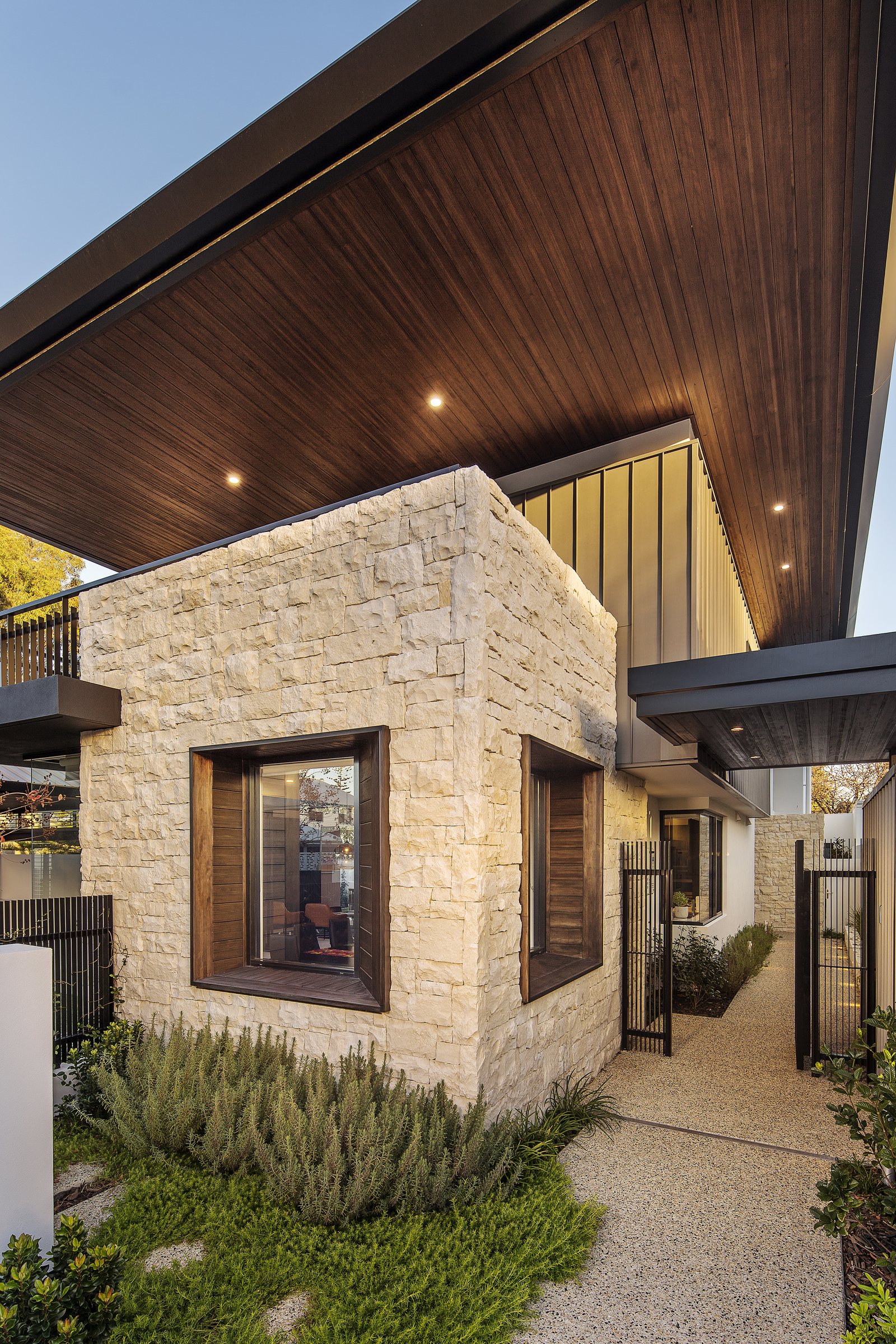
A combined modified exterior package is three separate specifications arriving on one delivery, not a single board run in three widths. The deck, the cladding and the trim fail in three different ways. The board that answers one of those failures is rarely the board that answers the next. A buyer who picks one modified product for the whole envelope usually finds out at the first mitered outside corner, or at the first wet winter on the walking surface.
So the question is not which modified wood is best. It is which element of the envelope each product belongs on, and what all three have to share once they are hanging on the same building. Grade conversation, coating schedule, length planning and delivery sequence are shared. Hardness, width and the way a board handles a fastener are not.
J. Gibson McIlvain stocks Accoya, Thermory and Abodo Vulcan, mills them into linear trimwork, finished cladding and primed trim, and builds the custom components through ICD, its architectural millwork division. That puts one cut list behind three different product decisions, which is the only way the three ever line up on site.
Decking Is Specified for Wear and Traction
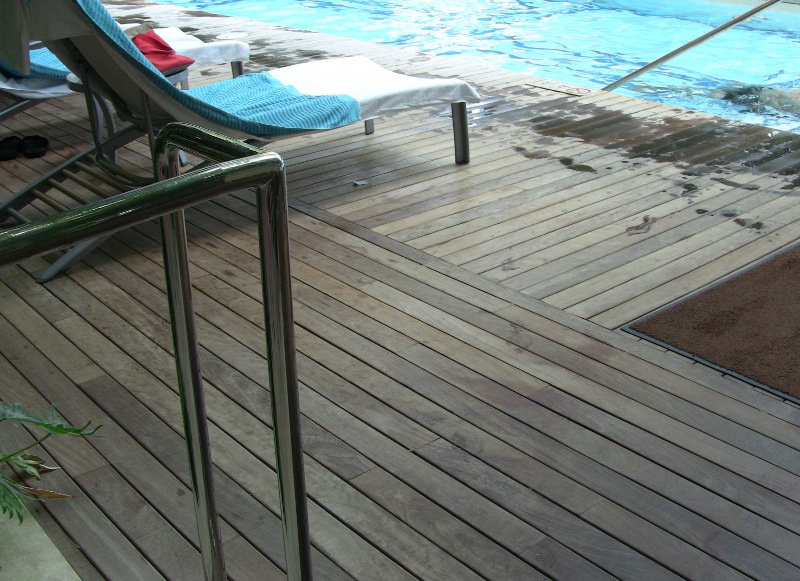
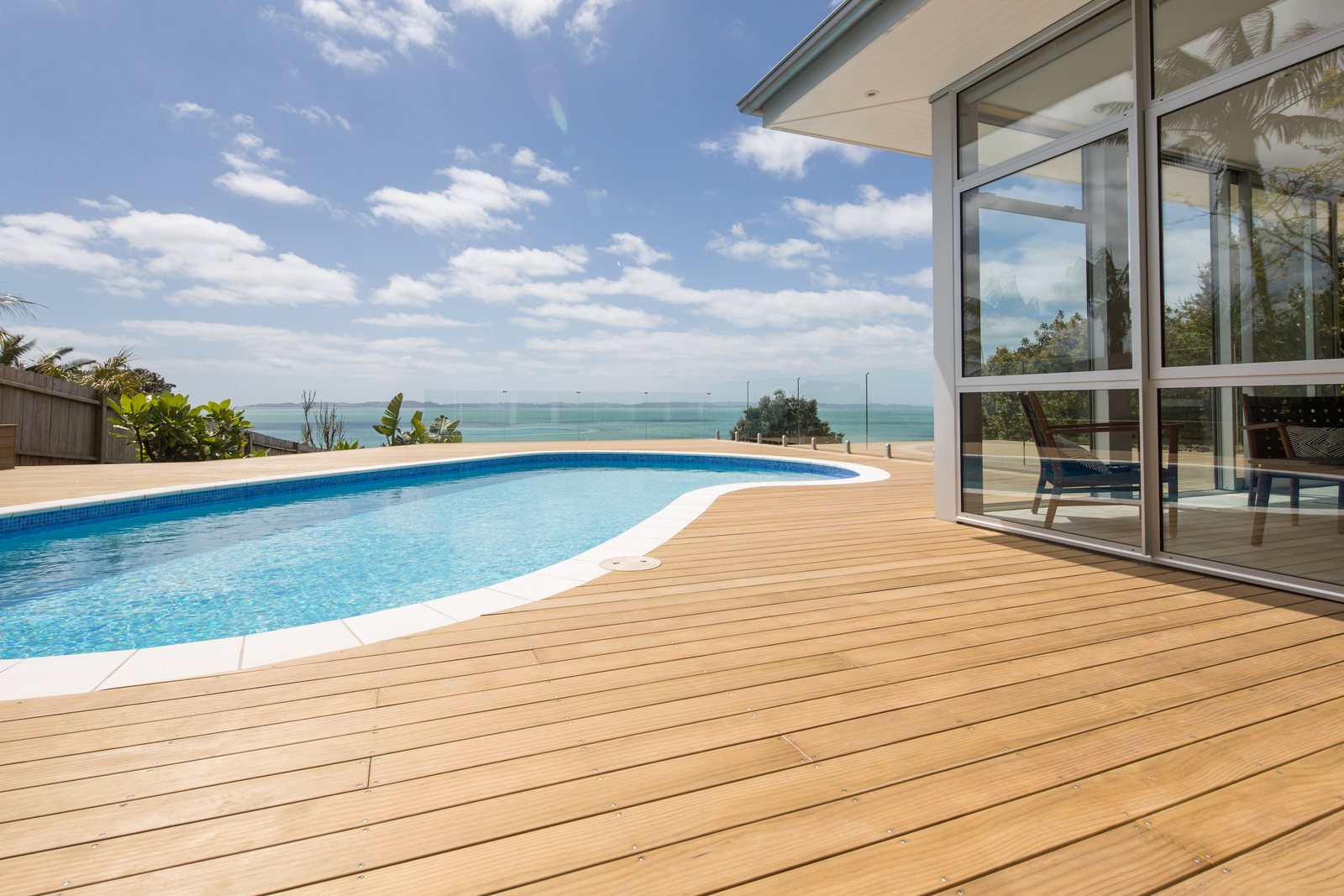
A deck board is the only part of this package a person stands on, so hardness, face texture and fastener behavior decide it before appearance gets a vote. Foot traffic abrades the surface. Water sits on it instead of running off it. Fasteners drive through the face, or clips grip the edge, and both put stress into a board that a cladding board never sees.
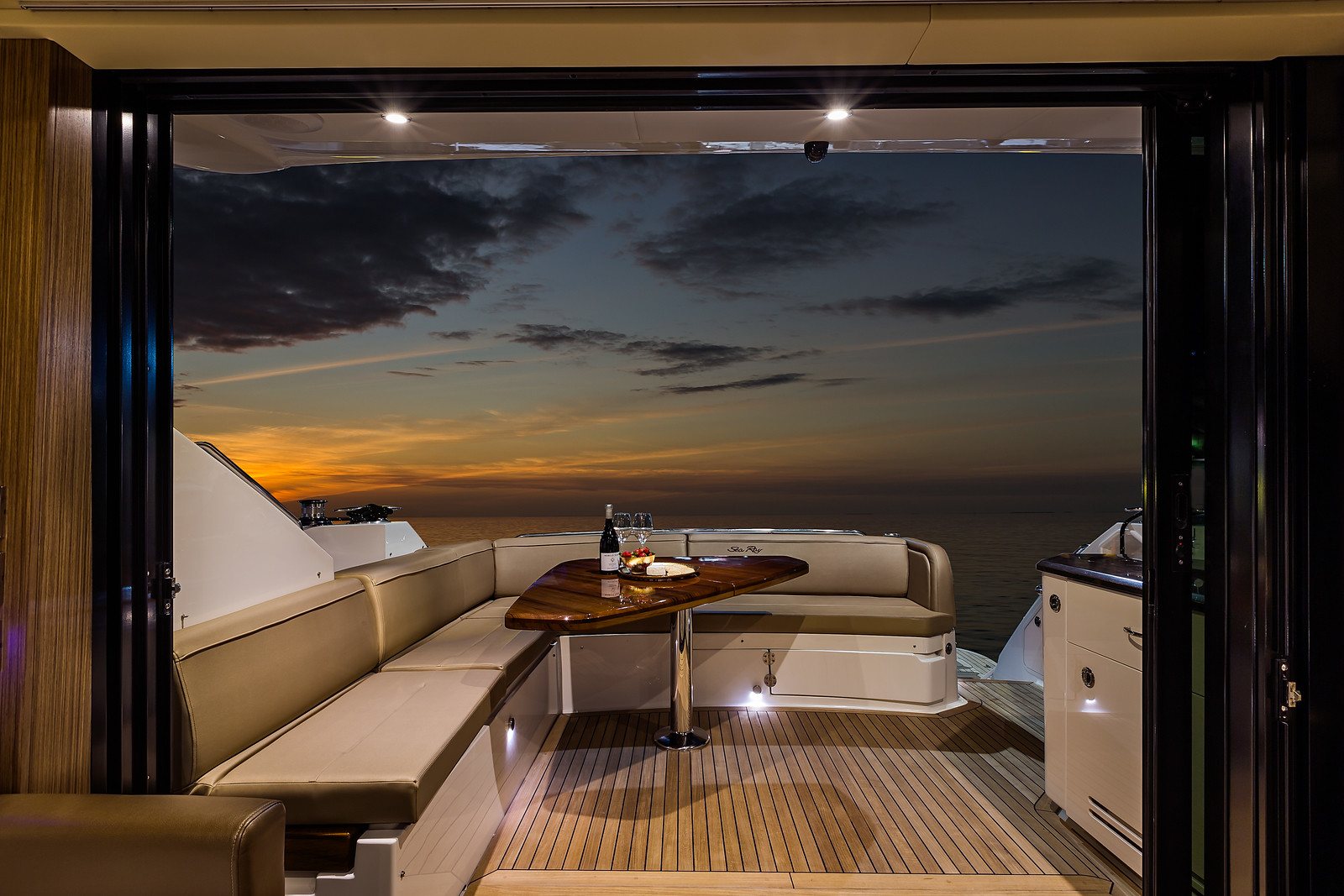
Accoya runs around 1,600 lbf on the Janka scale, the highest number anywhere in this package, and that is the plain reason it holds up as a walking surface. Acetylation also gives it dramatically reduced shrinkage and swelling, which keeps a deck gap looking like a deck gap through a season. Thermal modification makes a different trade. It buys decay resistance and stability, and it costs toughness and bending strength, so a thermally modified board is more brittle than the same species untreated.
On a deck that brittleness shows up at the fastener. Pre-drilling stops edge splitting, and the hidden clip systems each manufacturer publishes are worth reading before the cut list is set rather than after. Traction comes from the face profile, and the brushed, ribbed and smooth options live in the Thermory literature and in the Abodo Vulcan literature, which is also where the published numbers behind those profiles belong.
Thermally modified stock does not carry published structural design values the way framing species do. Nothing in this package is a joist, a beam or a stringer. The substructure gets specified on its own terms by somebody else, and the standing reference for wood as an engineering material still sits with the USDA Forest Service research program.
Tropical decking is the other road, and naming it plainly helps. Ipe, botanically Tabebuia spp, along with Cumaru, Garapa, Jatoba and Red Balau, is extremely hard and carries a high oil content. That oil is exactly why a millwork shop reaches for Sapele, Iroko, Afrormosia, Teak or Utile when a component has to be glued, laminated or machined into a profile. Hard and oily is an asset underfoot and an obstacle in a glue line.
Cladding Is Specified for Appearance and Movement
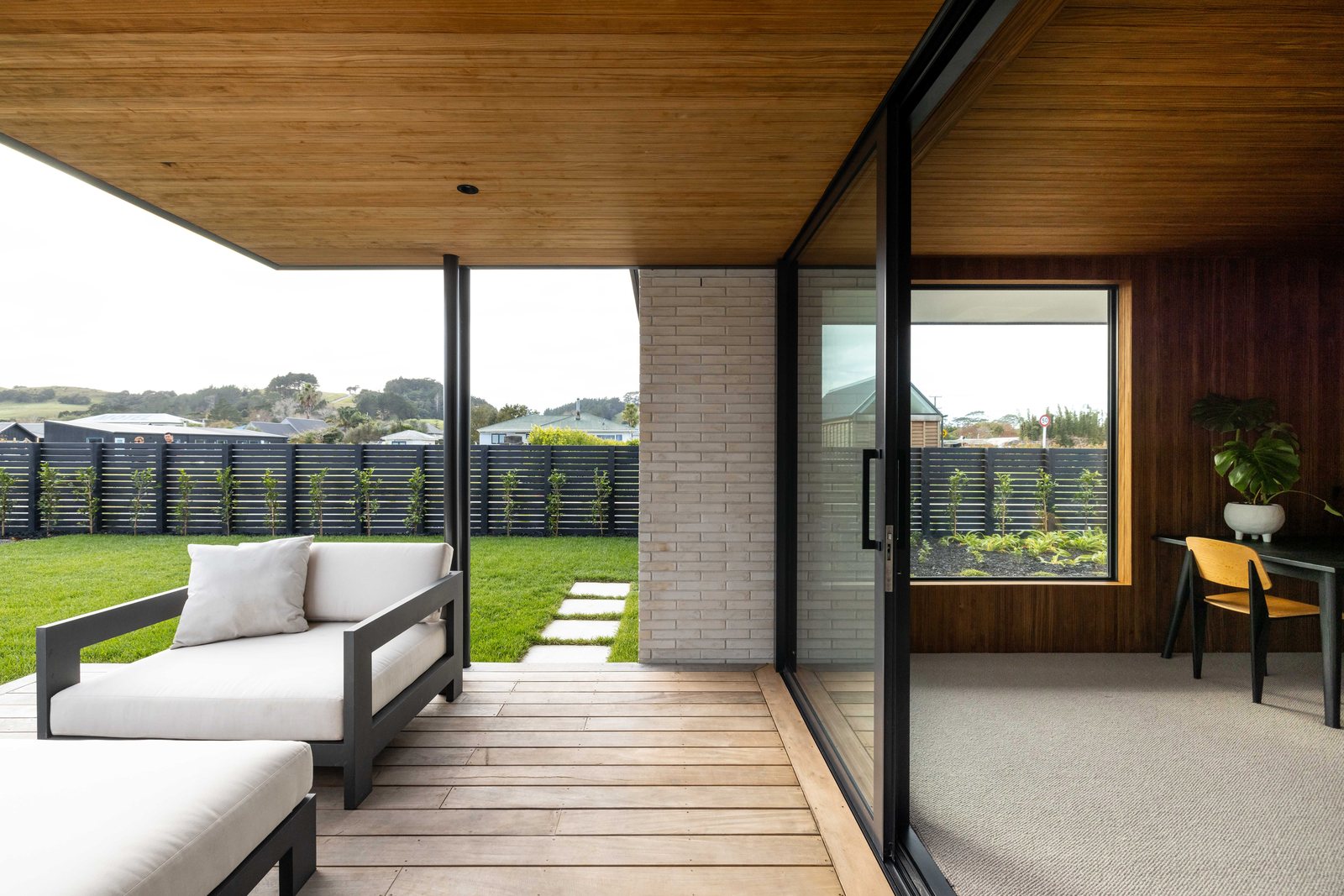
Cladding is the largest continuous surface on the building, so face grade consistency and movement across the width matter far more than hardness. Nobody walks on it. Everybody looks at it. A cupped board, a run where tone drifts from one bundle to the next, a shadow line that wanders by a sixteenth across an elevation, all of that reads from the street.
Width is the first hard limit, and it reorganizes elevations. Thermally modified Ash is not available wider than 8 inches, so a wide cladding board in a modified product means Accoya or Abodo Vulcan. A designer drawing a 1x10 board with a generous exposure has already chosen the product without knowing it. Finding that out at the drawing stage costs nothing. Finding it out at release costs a redraw.
Cupping is driven by installation and back ventilation, not by species. A board that dries on the face and stays damp on the back will cup no matter what was done to it in a kiln. Even furring, a working cavity, a fastening pattern that lets the board move, and a drainage plane behind it are what keep a face flat, and the physics of that cavity is laid out well at Building Science Corporation.
Cedar belongs in this conversation and belongs there without apology. It is the default cladding species for most contractors and it rarely fails them. The decision that actually changes the result is the grade call, CVG against STK, clear vertical grain against select tight knot, and the two behave like different materials on a long wall. The Western Red Cedar grade descriptions are the place to settle that before a modified product is even on the table.
Trim Is Specified for Paint and the Miter
Trim has to hold a painted film and keep a joint closed, which makes dimensional stability and coating adhesion the entire specification. Corner boards, casing, frieze, water table, bed and crown. None of it takes foot traffic. All of it opens up at a joint the moment the stock moves.
Accoya is acetylated rather than heat treated, and the dramatically reduced shrinkage and swelling that comes with acetylation is the exact property a mitered outside corner cares about. That is why the same product that earns its place on a deck also earns it on trim, for a completely different reason. Hardness sold the deck board. Stability sells the casing.
Moisture content at the mill is the other half of it. J. Gibson McIlvain mills exterior work to an in-service moisture content near 12 to 16 percent and interior millwork near 6 to 8 percent, and a trim package that arrives at the wrong one will move while the painter is still on site. Quartersawn and rift stock moves less across its width than plainsawn, which is why it gets specified where a painted or panelized surface has to stay flat.
Where a trim element runs past what a modified product can supply, the unmodified answer for painted exterior work is Sapele rather than Genuine Mahogany. Sapele holds paint better, it comes in a wider range of sizes and longer lengths, and it sits around 1,410 lbf on the Janka scale against roughly 800 lbf for Genuine Mahogany. It is not milled 1x8 for exterior use, since that width will not stay stable outdoors. The species data on Sapele is worth having open when that substitution gets made.
Profile is the last piece. J. Gibson McIlvain holds a profile library of thousands of ground knives and grinds new knives every week, so a trim section can be matched to what is already on the building instead of chosen from a catalog page. A modified package on an addition almost always has to meet an original profile somewhere, and that meeting is where a package either looks deliberate or looks bought.
Color and Texture Across Three Schedules
The three products will not arrive the same color, and planning for that costs less than chasing it. A thermally modified board takes its tone from the schedule it ran in the kiln, and that tone varies between runs and between species. Accoya starts close to its base species and is built to be coated. Three products modified on three schedules are three colors on day one.
Left bare, all of them weather toward grey, and they do not get there together. A deck lies flat and takes the whole sky. A south wall takes sun and little rain. A north wall takes rain and little sun. Trim under an overhang barely weathers at all. Four orientations, four rates, one building.
A coating is the only thing that forces the three into one tone, and the coating schedule for each product is published by the maker rather than invented by the supplier. The Accoya technical literature is where the coating guidance and the performance figures for that product belong, and the same holds for the thermally modified lines. Pull those before the color is approved, not after the deck is down.
Where the Three Meet and Which One Gives
At every junction in this package the trim holds the line and the cladding and decking are cut to it. Trim is the painted element, the mitered element and the one a closed joint is visible on. Give it the controlling dimension and let the other two be scribed.
The deck meets the wall at a band or skirt. The cladding stops short, the trim closes the gap, and the deck boards are gapped and held off the wall so water and air both move. The cladding meets the trim at corner boards and casing, which means trim thickness has to be set against cladding thickness plus the furring behind it, or the casing sits proud of its own siding.
The deck edge is the junction people forget. A fascia board on a deck edge is doing cladding work on a decking plane, and it is the one element where choosing by appearance instead of by exposure gets punished quickly. Flashing, slope and the drainage detail at each of those junctions belong to the installer and the drawing. The shop's job is to deliver stock that lets those details be executed the way they were drawn.
Element by Element Across a Combined Package
Sorting the envelope by element rather than by product is what keeps one combined order from becoming three mismatched ones. The table below runs the common elements of an exterior package against the product each should come from, what it is being specified for, and what it has to share with everything else on the truck.
| Element | Product it should come from | What it is specified for | What it shares with the package |
|---|---|---|---|
| Deck boards | Accoya, or a thermally modified decking profile | Hardness underfoot, face texture, fastener holding | Coating schedule and the delivery sequence |
| Deck fascia and skirt | Same product as the deck boards | Exposure on a vertical face at the wettest plane | Color run with the deck, not with the cladding |
| Cladding field boards | Thermory or Abodo Vulcan | Face grade consistency and flatness across the width | Grade standard and bundle sequencing |
| Wide cladding boards | Accoya or Abodo Vulcan | Width beyond the 8 inch ceiling on modified Ash | Profile and reveal with the narrower field boards |
| Corner boards and casing | Accoya, or Sapele where the run is long | Stability at a miter and adhesion under paint | Thickness set against cladding plus furring |
| Water table and frieze | Accoya, or Sapele for continuous lengths | A closed joint and a painted face that stays flat | Joint locations planned against the length ceiling |
| Soffit and porch ceiling | Thermory or Abodo Vulcan | Appearance from below with almost no weathering | Tone with the cladding, since it is seen beside it |
| Rafter tails and brackets | Built by ICD from the package stock | Shaped profile, exposed end grain, clean fit | The same stock and schedule as the trim run |
| Railing components | Accoya for cap and machined parts | Hand contact, machining and coating | Color with the deck rather than with the wall |
Lengths, Widths and the Cut List
Everything modified in this package tops out around 16 ft, and most of it is sold on metric lengths just under that, because of kiln size. That is a scheduling fact rather than a trivia item. An elevation longer than a single board gets a planned joint, in a location somebody chose, instead of a field butt where the board happened to run out.
On the cladding that means the joint pattern is a design decision made at takeoff. Stagger it, line it up on a vertical batten, or move it behind a downspout, but decide. On the trim it means a continuous water table or frieze longer than the ceiling needs either a planned scarf joint or an unmodified species, and Sapele is the one that shows up in the longer lengths.
On the deck the ceiling interacts with the framing layout. Board length against joist spacing determines where the seams land, and a deck laid out without checking that ends up with a line of butt joints marching down the middle of the walking surface. Width works the same way. The 8 inch ceiling on thermally modified Ash is not a limitation to complain about, it is a number that belongs in the takeoff before the elevations are inked.
Priming the Trim Run Before It Ships
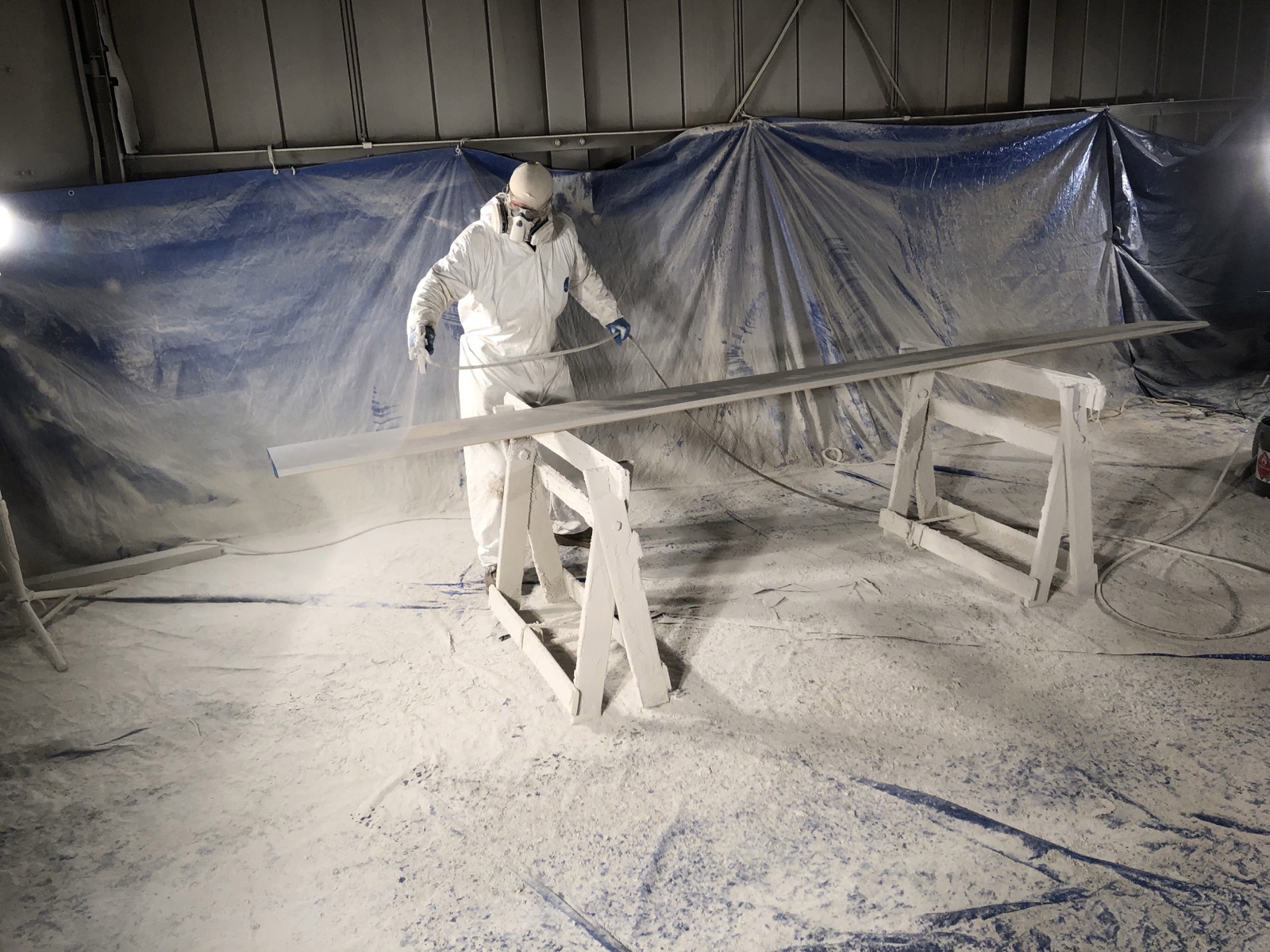
Primed trim leaves the shop with the hardest part of the coating already done under controlled conditions rather than on a windy scaffold. J. Gibson McIlvain primes in three levels, in both oil based and water based systems, and exterior primed trim carries a fungicide additive.
A primer coat evens out the eventual painted surface instead of letting one board in a trim run drink the topcoat harder than its neighbor. Sanding or buffing after priming knocks back the grain raising while keeping moulded detail crisp, which matters most on a profile with a tight quirk or a fine bead that a heavy coat would fill.
Priming all six faces is the part buyers skip and regret. A back face left bare on a trim board takes on moisture the front face cannot, and that imbalance is the start of a cup. Field cuts are the installer's to seal, and a package that arrives primed makes that the only coating task left on site.
What Ordering the Three Together Changes
Ordering cladding, trim and decking as one package collapses three grade conversations, three lead times and three delivery windows into one. It also moves the color comparison into the yard rather than onto the wall, which is the only place it is still cheap to change.
Finished millwork goes into storage for inventory control, so the trim can be held while the deck goes down and released when the siding crew is actually ready for it. A combined order also lets the substitutions get decided once. The moment a wide board forces Accoya or Abodo Vulcan, everything that meets that board has to be reconsidered, and that is a single conversation instead of three phone calls weeks apart. J. Gibson McIlvain ships these packages nationwide, regularly to California.
"When a customer sends me one elevation drawing instead of three separate material lists, I can tell them on that same call which board is going to drive the others. I would rather have that argument at the takeoff than hear from somebody in February because the deck and the trim do not look like they came off the same job."
Norm Moton, Director of Sales, J. Gibson McIlvain
The paperwork follows the same logic. Warranties travel with the modified products and with nothing else, since it is not possible to warranty solid unmodified wood, an organic material responding to its environment, and a combined order keeps those documents attached to the right portion of the package rather than scattered across three invoices.
How J. Gibson McIlvain Would Specify This
Specify by element, settle the width and length limits first, and let one product decision cascade through the rest of the package rather than making three independent calls. Start with the widest board on the drawing and the longest unbroken run, since those two dimensions eliminate more options than anything about appearance does.
Decking goes to Accoya where hardness underfoot governs, with the fascia and skirt cut from the same product so the horizontal and vertical faces of the deck weather together. Cladding goes to Thermory or Abodo Vulcan on the field boards, with the understanding that any board past 8 inches moves to Accoya or Abodo Vulcan. Trim goes to Accoya for stability at the miter, with Sapele taking over on long continuous runs and staying out of 1x8 on exterior work.
J. Gibson McIlvain mills the linear runs, grinds the knife where a profile has to match something already on the building, primes the exterior trim on all six faces, and holds the finished work in storage until the site calls for it. ICD, the architectural millwork division, builds the rafter tails, brackets, gates, pergolas, shutters and railings from the same package stock, so the shaped components arrive on the same schedule as the straight ones. The ICD exterior millwork page shows where those components come from, and the J. Gibson McIlvain millwork service covers the linear side.
Send the elevations and the takeoff before the species are locked. Call 800-638-9100 and ask for the material list to be run as one package, element by element, rather than as three orders that have to be made to agree later.
Frequently Asked Questions
Can one modified product cover decking, cladding and trim on the same house?
One product can appear on all three, but it should not be chosen that way. Accoya is the product most likely to carry across every element, since its hardness around 1,600 lbf on the Janka scale suits a walking surface and the dramatically reduced shrinkage and swelling from acetylation suits a painted miter. Even then, the cladding field is usually better served by Thermory or Abodo Vulcan on appearance and cost of coverage. Specify element by element and let the overlaps happen where they make sense, rather than forcing one product onto three jobs.
Will a thermally modified deck and an Accoya trim run arrive the same color?
No. A thermally modified board takes its tone from the kiln schedule it ran, and that tone varies between runs and between species. Accoya starts near its base species color. If a uniform tone matters, the answer is a coating applied to a schedule published by the manufacturer, decided before the material is approved rather than after the deck is down.
What is the widest cladding board available in a modified product?
Thermally modified Ash is not available wider than 8 inches. Any board wider than that in a modified product has to be Accoya or Abodo Vulcan. That single limit decides the product for a lot of elevations, which is why the widest board on the drawing should be settled before anything else in the package.
How long can the boards in a modified package be?
All modified products top out around 16 ft, and most are sold on metric lengths just under that, because of kiln size. Any elevation or continuous trim run longer than that gets a planned joint. For a long painted exterior trim run where a joint is unacceptable, Sapele is the unmodified substitute, since it comes in a wider range of sizes and longer lengths and holds paint better than Genuine Mahogany.
Can J. Gibson McIlvain match the trim profile already on my building?
Yes. J. Gibson McIlvain holds a profile library of thousands of ground knives and grinds new knives every week, so a section that is not already in the library gets ground to match, including difficult historical restoration profiles. That matters most on an addition, where a modified trim package has to meet original work somewhere along the elevation.
Does ordering the three together change anything besides the invoice?
It changes the sequence. One takeoff settles the width and length limits once, the color comparison happens in the yard instead of on the wall, and the substitutions that follow from a single product decision get resolved in one conversation. Finished millwork also goes into storage for inventory control, so the trim can be released when the siding crew is ready rather than stacked on site for weeks.
What about the deck framing under the modified boards?
That is a separate specification and it is not part of this package. Thermally modified stock does not carry published structural design values the way framing species do, so joists, beams and stringers get specified on their own terms by the project's engineer or framer. The modified material here is the finished surface and the visible envelope.
Is cedar still a reasonable choice for the cladding portion?
Cedar is the default cladding species for most contractors and it rarely fails them. The decision that changes the result is the grade call rather than the species call, CVG against STK, clear vertical grain against select tight knot. Settle that first, because a clear vertical grain cedar wall and a select tight knot cedar wall behave and read very differently across a long elevation.
Sources and Standards Referenced
- Accoya Technical Information and Coating Guidance
- Thermory Thermally Modified Wood Product Literature
- Abodo Vulcan Timber Product Information
- Building Science Corporation, Rainscreen and Cladding Research
- Western Red Cedar Grades and Appearance Specifications
- The Wood Database, Sapele Species Data
- USDA Forest Service Research, Wood as an Engineering Material
- J. Gibson McIlvain Millwork Service
- ICD Exterior Millwork