What Mill Priming Actually Buys You
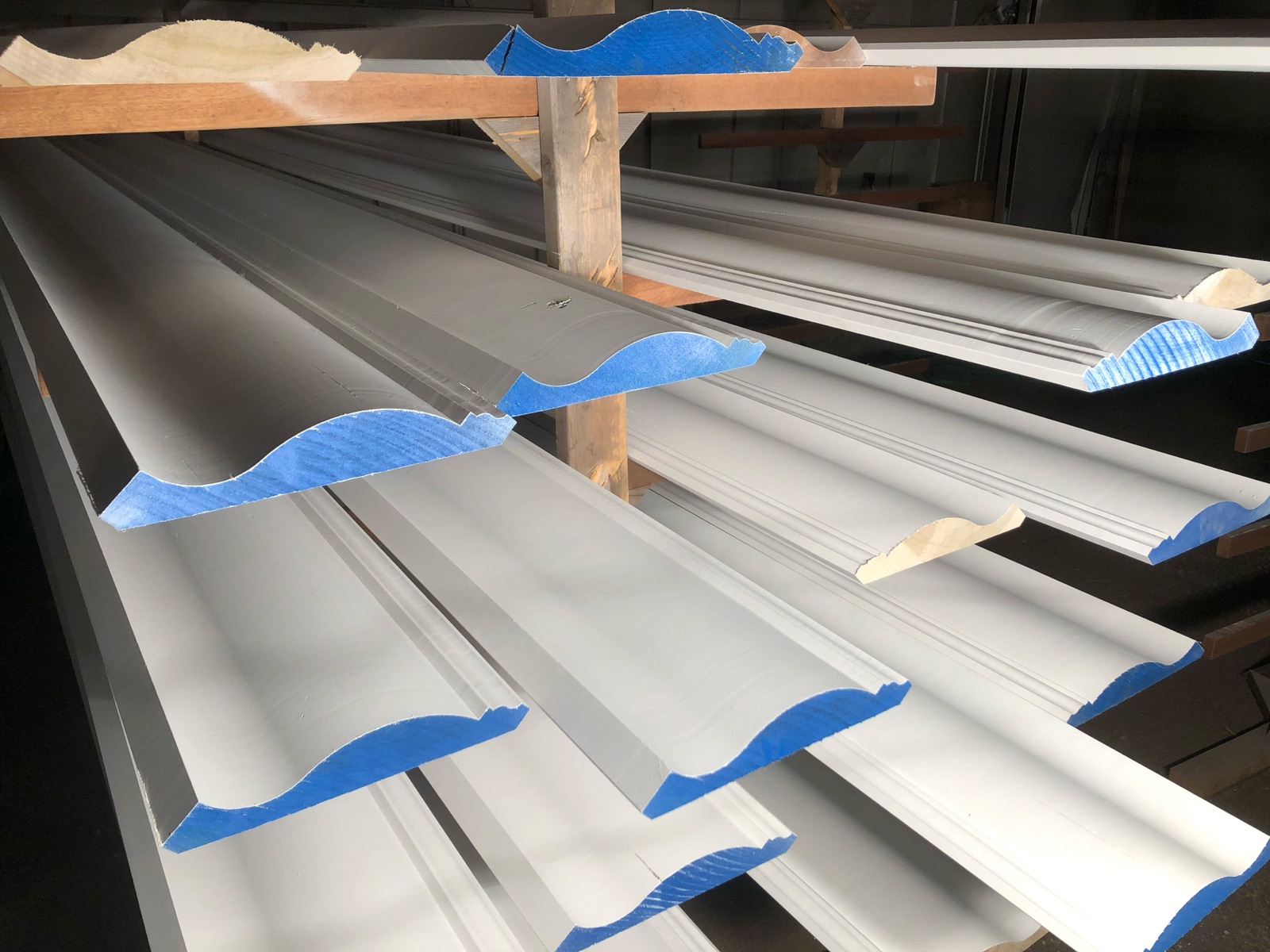
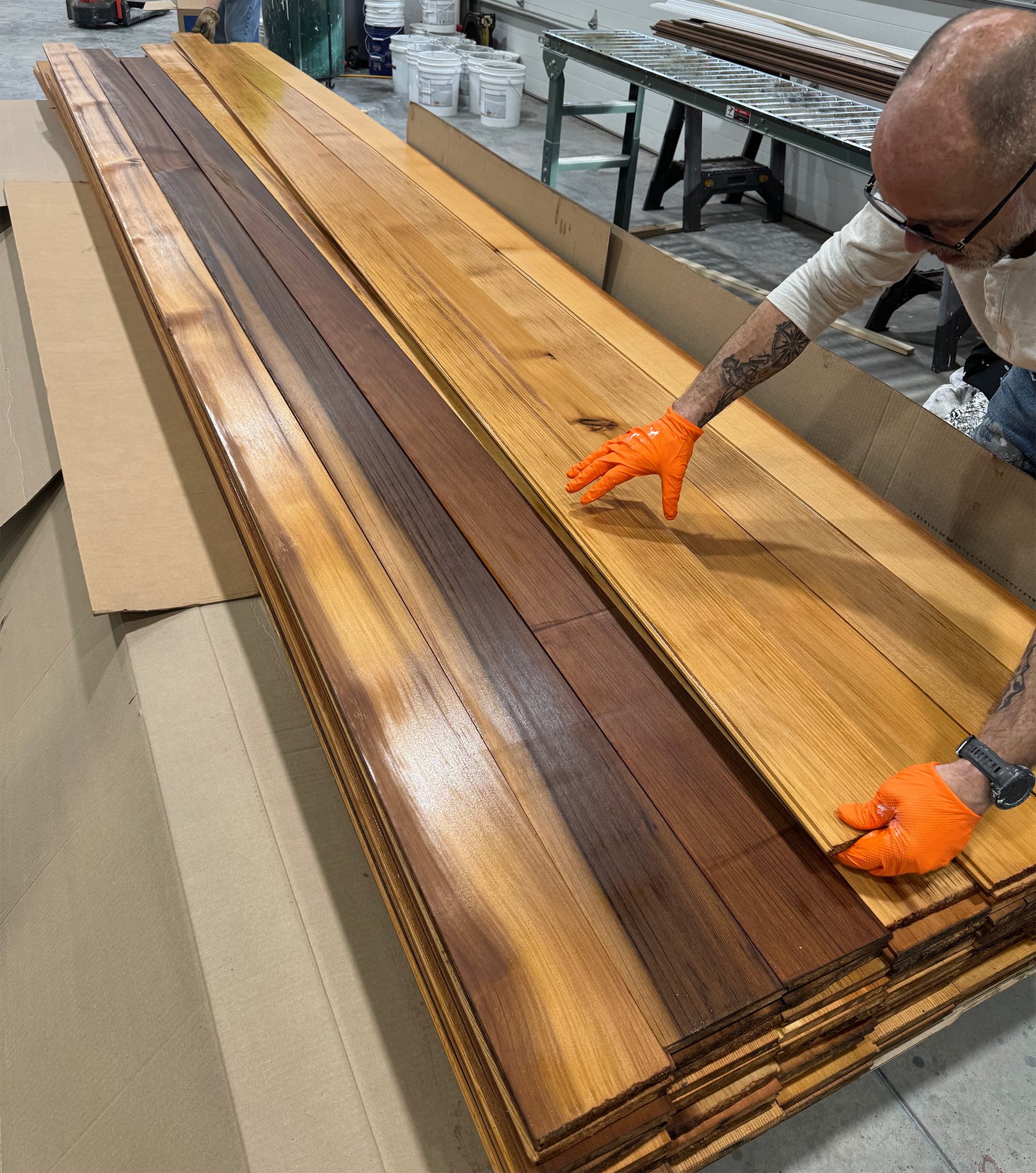
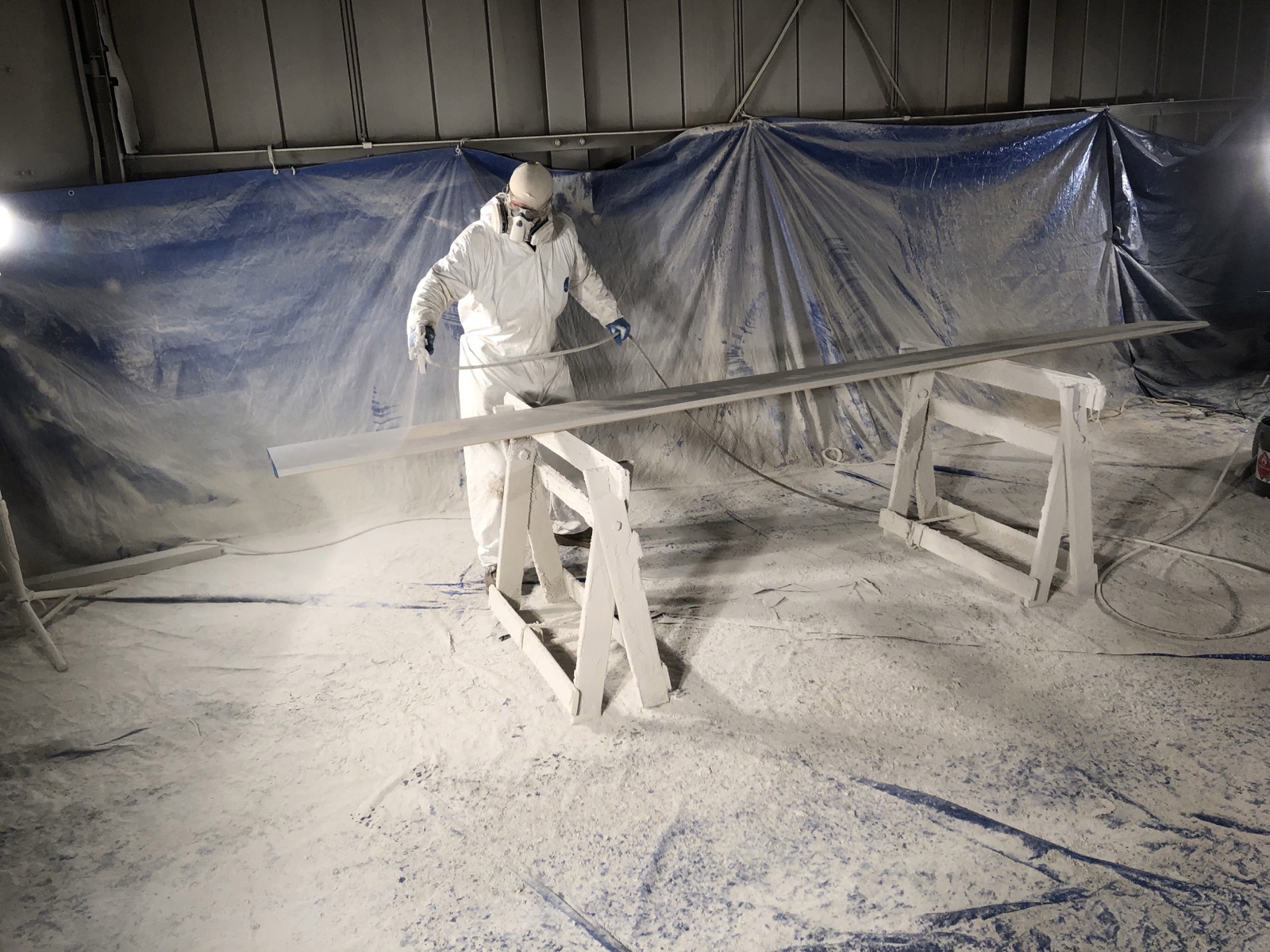
Mill priming is a controlled coating operation run on machined, moisture-conditioned stock inside a building with stable temperature and humidity, and that control is the whole reason it outperforms the same primer brushed on at the site. Field priming happens on a pile of boards on sawhorses, in whatever weather showed up that week, by a crew whose real job that day is hanging siding. Mill priming happens on stock that has already been ripped, moulded and trimmed to the profile and length the job needs, on a schedule that lets each coat cure before the next one goes on. The film is more uniform. The absorption is more even. The board arrives ready for the painter to top coat rather than ready for the painter to fix.
There is a second, less obvious benefit. A primed board is a board whose faces and edges are already sealed against the first rain event and the first humid week on site. Unprimed siding stacked on a jobsite in July is taking on moisture from every exposed face at a different rate, and differential absorption is what starts a board cupping before anyone has driven a fastener. J. Gibson McIlvain primes siding and trim mouldings in three levels of build, in both oil-based and water-based systems, and stores finished millwork for inventory control so the material can be released to the site in the sequence the job actually consumes it.
Three Levels of Priming, and How to Pick One
The right level of priming is decided by what the painter is contracted to do on site, not by how nice the buyer wants the wood to look leaving the shop. Three levels are available. They differ in film build and in how much surface preparation happens between coats, and each one hands the finisher a different starting point.
The lightest level is a seal coat. It stops the wood from drinking the first field coat unevenly and it protects the material through shipping, storage and the exposed weeks between delivery and paint. The painter is still applying a full finish system on top. Specify this when the finish schedule already carries a full primer plus two topcoats and the painter wants to own the whole film.
The middle level carries more build. It is the common choice for exterior siding and exterior trim where the goal is a factory-uniform base under a two-coat field finish, and where the crew is not going to spend time sanding on a lift. The heaviest level adds build and adds surface work between coats. That is the one to ask for on high-visibility interior trim, on painted casing and crown that will sit at eye level under raking light, and on any run where the client is going to inspect the paint from three feet away. Talk the level through with the sales desk against the finish schedule rather than guessing from a spec sheet, because the same species takes a different level depending on whether it lands inside a conditioned house or on a south elevation.
Oil-Based and Water-Based Are Not Interchangeable
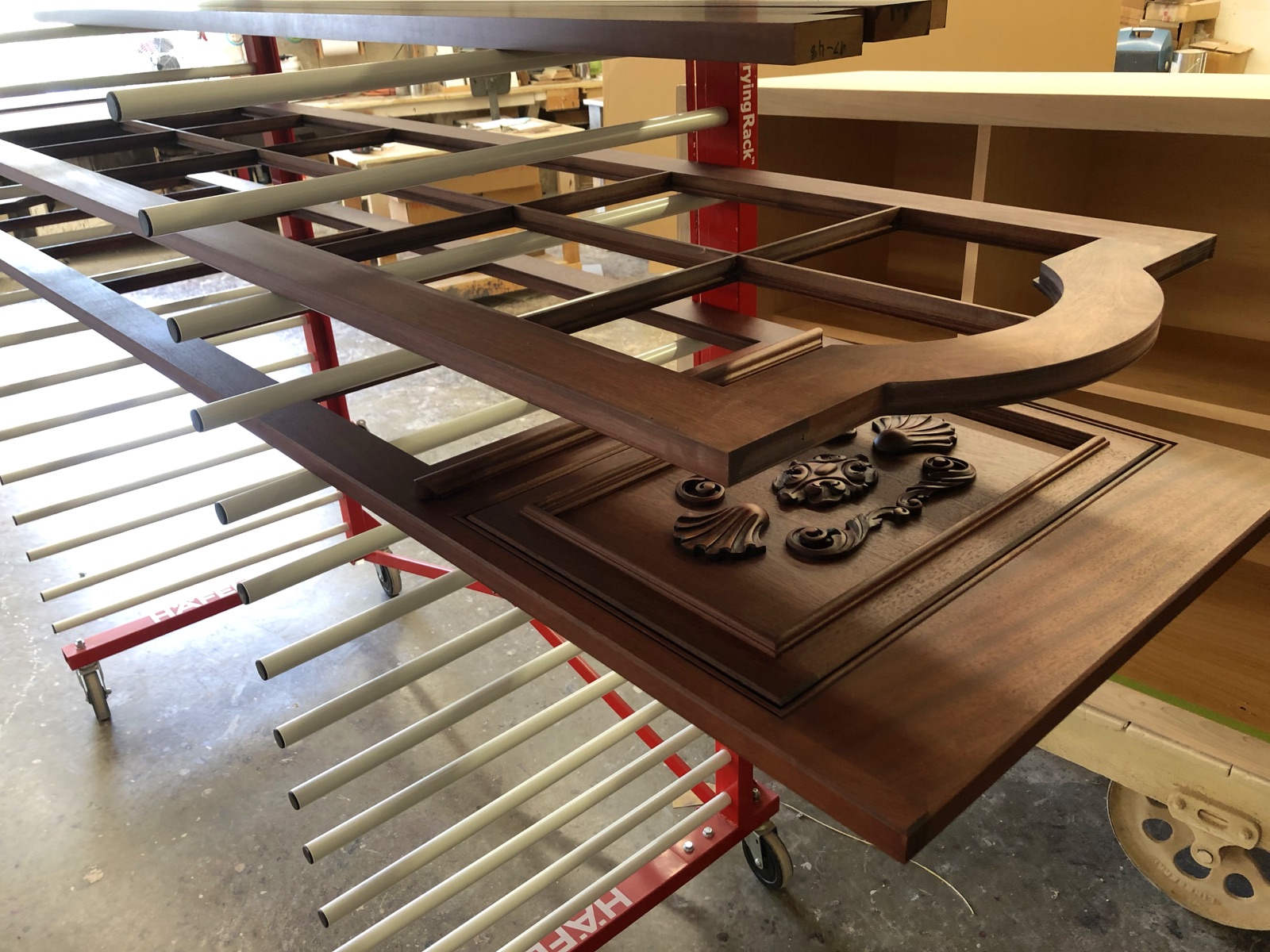
The primer chemistry should be chosen from two things, the extractive content of the species and the topcoat the painter has already been sold on, and getting either one wrong shows up as bleed or as adhesion failure within a season. Both systems are available on the floor. Neither is universally correct.
Oil-based primer wets out an open, thirsty surface well and blocks water-soluble extractives better than most waterborne products. That matters on cedar and on oily tropical hardwoods such as Iroko and Teak, where colored extractives migrate to the surface and stain a light topcoat from underneath. Oil also stays workable longer in cool conditions, which is one reason it has survived so long in exterior trim work.
Water-based primer has its own case. It dries fast, which compresses the shop schedule when a job needs two coats and a sanding pass. It stays flexible as the board moves through seasonal cycles. It is compatible with the acrylic topcoats most exterior painters now specify, and mixing chemistries across a film is where a lot of field adhesion problems begin. The rule that survives every project is simple. Whatever primer goes on at the mill, the topcoat has to be a product the coating manufacturer states is compatible with it, and that statement should be in the submittal, not in someone's memory. Coating performance data and substrate guidance from the USDA Forest Products Laboratory and the moisture and enclosure work published by Building Science Corporation are the right references when the design team wants a defensible answer rather than a preference.
One thing is not optional. Exterior primed trim should carry a fungicide additive in the primer. Paint film on the outside of a building is a food source and a moisture trap for mildew, and a fungicidal primer is the layer that keeps the problem out of the base of the system rather than fighting it from the topcoat down.
Every Species Drinks Differently, and the Primer Spec Has to Follow
Open-grained and oily species absorb a great deal of finish, so the primer coat is doing more than sticking, it is evening out a surface that would otherwise show every pore and every density change through the paint. This is the part of the question that has no single answer, and it is the reason "any species" is a real service rather than a slogan.
Cedar is a legitimate default for painted exterior siding and it always has been. It is dimensionally calm, it takes fasteners without splitting at the edges, and it holds paint well when the primer blocks its extractives. Distinguish the grades before bidding the finish work. Clear vertical grain cedar, CVG, gives a uniform surface with no knots to bleed and very little movement across the width. Select tight knot, STK, is a sound, attractive, entirely legitimate product with knots that need a stain-blocking primer over them or the resin will telegraph through a light topcoat within a year.
For painted exterior trim in a mahogany-type hardwood, specify Sapele rather than Genuine Mahogany. Sapele holds paint better, it comes in a wider range of sizes, and it comes in longer lengths, which matters more than most specifiers expect once you are trying to run a fascia or a frieze without a joint every twelve feet. Sapele runs a Janka hardness around 1,410 lbf against roughly 800 lbf for Genuine Mahogany. One caveat travels with it. Sapele is not milled 1x8 for exterior use, because that width is too wide to stay stable in that thickness outdoors. And when a board does cup on a wall, look at the installation and the back ventilation before blaming the species, because that is nearly always where the cause is.
Sawing pattern belongs in this conversation too. Quartersawn and rift stock moves less across its width than plainsawn, which is exactly why it gets specified where a painted or panelized surface has to stay flat. A quartersawn White Oak panel stile, around 1,360 lbf, will hold a paint film flatter over ten seasons than the same part in plainsawn stock. Hard Maple, around 1,450 lbf, is dense and tight and takes very little primer but shows every sanding scratch through a gloss topcoat. Cherry, around 950 lbf, is soft enough that aggressive sanding after priming will cut through the film on an arris before anyone notices.
| Species or product | Behavior at the primer coat | Primer approach that suits it | Mill step that matters most |
|---|---|---|---|
| Cedar, CVG | Even, moderately absorbent, water-soluble extractives present | Stain-blocking primer, oil-based or a waterborne product rated for extractive block | Full coverage on edges and back face before stacking |
| Cedar, STK | Same as CVG plus resin and color bleed at the knots | Stain-blocking primer, spot treatment over knots before the general coat | Knot sealing verified before the build coat goes on |
| Sapele | Open grain, high absorption, interlocked figure that raises after wetting | Higher build, two coats, oil or waterborne matched to the topcoat | Sanding or buffing between coats to knock back raised grain |
| White Oak, quartersawn | Very open pores, ray fleck, stable across the width | Filling primer at a heavier build to level the pore structure | Extra build on the face, careful profile work so detail stays crisp |
| Accoya | Acetylated, dimensionally very stable, holds coatings unusually well | Waterborne systems perform well, following the modified-wood coating guidance | Coating applied to the same schedule the warranty language assumes |
| Thermally modified Ash (Thermory) and Abodo Vulcan | Darkened through the section, lower equilibrium moisture, reduced movement | Flexible waterborne systems, primer selected for the darker substrate | Length and width limits confirmed before profiles are laid out |
| Poplar, interior trim | Fine, even texture, mild grain raise, very little bleed risk | Waterborne primer at the heaviest build for eye-level trim | Sanding pass that leaves the moulded profile sharp |
Moisture Content Comes Before Primer, Not After
Priming a board that is not at its in-service moisture content traps the problem under the film instead of solving it. Interior millwork is milled to an in-service moisture content near 6 to 8 percent. Exterior work runs near 12 to 16 percent. Those are different targets for a reason, and the same profile ordered for two different locations on the same building is genuinely two different pieces of material.
Get this backwards and the failures are predictable. Interior trim primed wet shrinks after installation and opens every joint the carpenter closed. Exterior siding primed too dry swells against its neighbors and the film cracks along the laps. The mill sequence that avoids both is unglamorous. Condition the stock, machine it, verify moisture, then coat. A primed board is not a sealed board in any absolute sense, it is a board whose exchange rate with the air around it has been slowed down considerably, and slowing exchange on a board that is already at the wrong number just holds it there longer.
Back Priming, End Sealing, and Where the Mill Stops
Coating the face is the easy half, and the half that fails is almost always the back face, the edges and the cut ends. Siding and exterior trim should leave the shop primed on all faces and edges. A board coated only on the show face has one side breathing freely and one side sealed, and that imbalance is a cupping mechanism all by itself, independent of species.
End grain is the other exposure. End grain absorbs liquid water many times faster than face grain, and every field cut opens a fresh one. J. Gibson McIlvain supplies mouldings and siding primed on all faces and edges, and the installer seals every field cut before that piece goes on the wall. That division of labor should be written into the finish schedule so nobody assumes it happened at the mill. J. Gibson McIlvain supplies and mills. It does not install, does not coordinate installation and does not field measure, so the details that belong to the installing contractor need to be named in the specification rather than left to good intentions. Fastening pattern, flashing, rain screen furring and back ventilation all sit on that side of the line, and they matter more to long-term paint life than the primer brand does. The American Wood Council and ASTM International publish the standards those details get written against.
Grain Raise, Sanding After Prime, and Keeping the Profile Crisp
Any water-borne coating raises grain, and the shop step that fixes it is the same step that will destroy a moulded profile if it is done carelessly. Wetting a machined surface stands the severed fibers up. Left alone under a topcoat, that reads as roughness on a flat casing and as fuzz in the quirk of a bead. Sanding or buffing after priming knocks the raised grain back down.
The craft is in doing it without flattening the detail. A wide belt across an ogee will soften the fillet, round the arris and turn a crisp historical profile into an approximation of itself. Hand and profile-following work is what keeps a Greek revival backband looking like a Greek revival backband after two coats. This is where the difference between a coating vendor and a millwork shop shows up, because the shop that ground the knife understands what the profile is supposed to look like at the end. Restoration work makes the stakes obvious, and the guidance published by the National Park Service Technical Preservation Services is explicit about matching profile geometry rather than approximating it.
Priming Modified Wood Is a Different Conversation
Modified woods change the coating math, and they are the only products in this discussion that carry a warranty at all. Acetylated Accoya runs a Janka hardness around 1,600 lbf and its acetylation gives dramatically reduced shrinkage and swelling, which is the property that extends coating life. A film fails when the substrate under it moves. Reduce the movement and the film lasts longer, which is the entire argument for coating a modified substrate. Coating guidance from Accoya and from Thermory should be read before the finish schedule is written, and Abodo Vulcan sits alongside Thermory in the same category and is carried as well.
Two limits govern what can be ordered. Modified woods, Thermory, Abodo Vulcan and Accoya, top out around 16 ft, and most are sold on metric lengths just under 16 ft, because that is the size of the kiln the process runs in. Nobody is producing a 20 ft modified board. And thermally modified Ash is not available wider than 8 inches, so a design that needs a wide board in a modified product is a design for Accoya or Abodo Vulcan.
Be equally plain about the other side. There are no warranties on solid unmodified wood, from any honest supplier. It is not possible to warranty an organic material that responds to its environment. Warranties exist on modified products, where the process itself is what is being stood behind. Cedar, Sapele, White Oak and every other solid unmodified species are sold on grade, on species and on the mill work performed, and priming improves their odds without converting them into a warrantied product.
Profiles, Knives and Primer Belong in One Purchase Order
Splitting the milling and the priming across two vendors introduces a handoff that costs more schedule than either operation costs on its own. The floor holds moulders, custom knife grinders, straight line and gang rip saws, band resaws and trimming saws. The moulding profile library holds thousands of profiles, and new knives are ground custom every week. If a profile is not in the library, it gets ground to match, which covers difficult historical restoration work and contemporary profiles that do not exist in any catalog.
Running the sequence in one building means the material is conditioned, machined, inspected and coated without a truck ride and a second yard in the middle of it. It also means a rejected board gets pulled before it is coated instead of after. Finished millwork can be stored for inventory control and released against the construction schedule, and the company ships nationwide, regularly to California.
"The calls we get are almost never about primer brands. They are about a job where the trim showed up raw, sat outside for three weeks in the rain, and now the painter is arguing with the general contractor about whose problem the cupping is. When we mill it and prime it here, the board leaves sealed on every face and edge and that argument never starts."
Norm Moton, Director of Sales, J. Gibson McIlvain
What the Priming Section of the Spec Should Say
A priming specification that only names a product is incomplete, because the variables that decide the outcome are the substrate condition, the number of coats, the coverage of the non-show faces and the compatibility of the field topcoat. The items worth writing down are short. Species and grade, stated separately, with CVG or STK called out where cedar is used. Sawing pattern where flatness matters, which usually means quartersawn or rift for painted panel components. Target in-service moisture content, near 6 to 8 percent interior and near 12 to 16 percent exterior. Primer chemistry, oil-based or water-based, with the reason recorded. Level of build. Fungicide additive required for all exterior primed trim. All faces and edges coated. Field cuts sealed by the installing contractor before the piece is set. Topcoat product named, with a manufacturer statement of compatibility with the primer.
Two more lines are worth adding. Where a CITES-listed species is involved, documentation and chain of custody travel with the material, so state that the submittal will include it. And where a project carries an FSC requirement, state it at the quoting stage rather than after the order is cut, because certified material has to be sourced as certified material. J. Gibson McIlvain is an FSC-certified importer and miller. Reference material for those two items lives with FSC and CITES. For grading language and for millwork quality standards, the National Hardwood Lumber Association, the Wood Moulding and Millwork Producers Association and the Architectural Woodwork Institute are the documents to cite. Species property data can be checked against the Wood Database.
How J. Gibson McIlvain Would Specify This
Start from the finish schedule and work backward into the lumber order, because the primer decision is downstream of the topcoat and upstream of nothing. For a painted exterior on a residential or light commercial building, the default that survives review is cedar siding in the grade the design calls for, CVG where a clean uniform face is wanted and STK where the knot character is acceptable, primed at the mill on all faces and edges with a stain-blocking system carrying a fungicide additive, at 12 to 16 percent moisture content, delivered in the lengths and profiles the elevation actually needs so the crew is not ripping and re-cutting on site.
For painted exterior trim around that siding, Sapele is the specification, not Genuine Mahogany, for paint holding, size range and length. Keep it out of 1x8 for exterior use. For interior painted casing, crown and panel components, run the heaviest priming level with a proper sanding pass, at 6 to 8 percent moisture content, in quartersawn or rift stock wherever the part has to stay flat under a gloss film. Where the project wants the longest possible coating life and will accept the length limit, move to Accoya or to Abodo Vulcan and read the manufacturer coating guidance before the painter buys anything.
Bring the profile question and the priming question to the same call. J. Gibson McIlvain grinds custom knives every week and primes siding and trim mouldings in three levels of build, in both oil-based and water-based systems, on the same floor, and the architectural millwork division, ICD, takes on the custom work when the job goes past stock profiles into box beams, shutters, gates or cabinetry. Send the elevations, the finish schedule and the profile drawings together. Details on the full millwork operation are at the J. Gibson McIlvain millwork service page, and the sales desk can be reached at 800-638-9100 to walk a specific finish schedule against a specific species list before anything is cut.
Frequently Asked Questions
Should cedar siding be primed with an oil-based or a water-based primer?
Either can work, but the primer has to block cedar's water-soluble extractives, and it has to be compatible with the topcoat the painter is applying. Oil-based products have a long record of blocking extractive bleed, especially over knots in select tight knot cedar. Waterborne primers specifically rated for extractive blocking also perform well and stay more flexible through seasonal movement, which suits acrylic topcoats. The decision that actually protects the job is written compatibility between the primer and the finish coat, confirmed by the coating manufacturer before the order is milled.
Does mill-applied primer need to be sanded before the field topcoat goes on?
It depends on the level of build ordered. Waterborne coatings raise grain on any machined surface, and the heavier priming levels include sanding or buffing between coats to knock that back while keeping the moulded detail crisp. If only a light seal coat was applied, the painter should expect a light scuff before finishing, particularly on open-grained species such as Sapele or White Oak. Whichever way it goes, put the expectation in the finish schedule so the painter's bid reflects it.
Do the back face and the edges really need primer, or is the show face enough?
They need it. A board sealed on one face and open on the other exchanges moisture at two different rates, and that imbalance is a cupping mechanism regardless of species. Siding and exterior trim should leave the shop coated on all faces and edges. The one surface a mill cannot pre-coat is a field cut, so the installing contractor has to seal every cut end before that piece goes up.
Can Accoya, Thermory and Abodo Vulcan be primed at the mill?
Yes, and modified substrates are among the best candidates for a coating because the substrate itself barely moves. Accoya's acetylation gives dramatically reduced shrinkage and swelling, which is what extends the life of the film on top. Follow the manufacturer's coating guidance, since these products have specific recommendations. Remember the size limits when laying out the order, since modified woods top out around 16 ft and most are sold on metric lengths just under 16 ft because of kiln size, and thermally modified Ash is not available wider than 8 inches.
Will priming stop siding boards from cupping?
Priming all faces and edges removes one of the causes, the uneven moisture exchange between a sealed face and a raw back. It does not remove the others. Cupping is driven mostly by installation and by back ventilation, so furring, fastening pattern, flashing and a real drying path behind the cladding matter more to long-term flatness than the primer does. Grain orientation helps too, since quartersawn and rift stock moves less across its width than plainsawn.
Is primed wood covered by a warranty?
Not on solid unmodified wood. It is not possible to warranty an organic material that responds to its environment, and any supplier claiming otherwise is describing something they cannot back. Warranties exist on modified products, where a defined process is what is being stood behind. Solid species are sold on grade, on species and on the milling and coating work performed.
What information does the mill need before it can quote priming?
Species and grade, with CVG or STK stated where cedar is involved. Interior or exterior use, which sets the target moisture content near 6 to 8 percent or near 12 to 16 percent. The profile, either a library number or a drawing or a physical sample for matching. Linear footage and required lengths. Primer chemistry and level of build, or the finish schedule so the level can be recommended. The topcoat product the painter intends to use. Any FSC requirement, stated up front rather than after the material is cut.
Sources and Standards Referenced
- USDA Forest Products Laboratory
- Building Science Corporation
- National Park Service, Technical Preservation Services
- Wood Moulding and Millwork Producers Association
- Architectural Woodwork Institute
- National Hardwood Lumber Association
- American Wood Council, Codes and Standards
- Accoya
- Thermory and Abodo Vulcan
- The Wood Database