Why Color Varies Within One Species
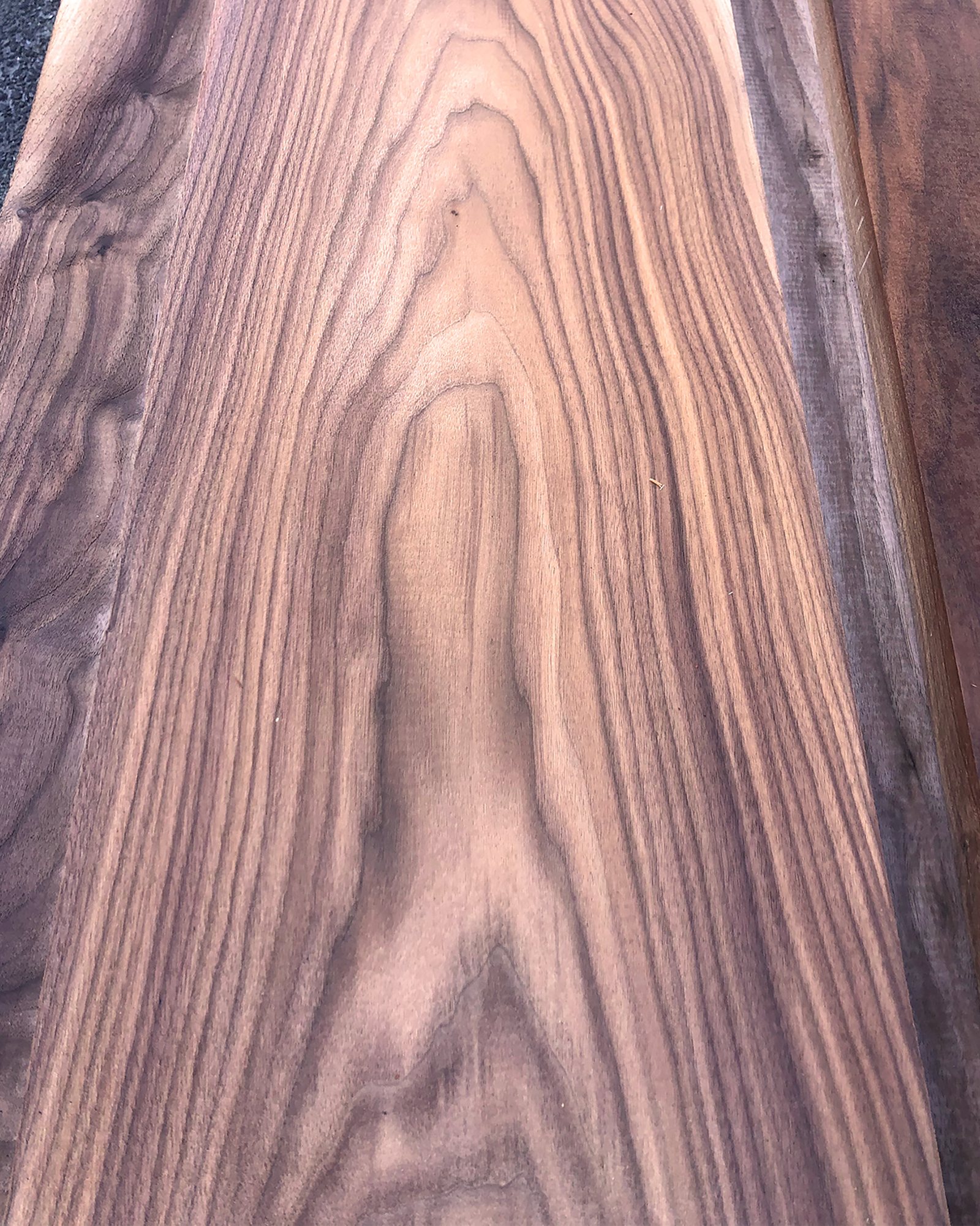
Color variation inside a single hardwood species is a property of the tree, not a failure at the mill. A board carries the record of where it grew, how fast it grew, and which part of the stem it came from. Two logs cut a mile apart on the same ridge can produce lumber a shade and a half apart, and nothing in the sawing or drying will pull them back together.
The biggest single driver is the split between heartwood and sapwood. Sapwood is the living outer shell of the tree and it is almost always lighter. In Black Walnut the contrast is severe, with pale straw sapwood against chocolate heart. In Hard Maple the relationship inverts commercially, since the white sapwood is the premium material and the brown heartwood is sold separately as brown maple.
Growth rate matters next. Slow grown stock from a crowded stand gives tight rings and a more even field of color. Fast grown stock from an open edge gives wide rings, wider earlywood bands, and a board that reads striped rather than uniform. Mineral uptake adds another layer, which is why White Oak from one region can carry olive and gray streaking that the same species from another region does not.
Position in the stem closes it out. Butt logs hold the darkest, densest, most figured material. Upper logs run lighter and straighter. A buyer who orders long clear lengths is pulling disproportionately from butt logs without realizing it, and the color of that pull will not match a short parts order filled from upper log material.
The Grade Rules Do Not Grade Color
North American hardwood grading measures clear cutting yield and says nothing about whether two boards match in color. The National Hardwood Lumber Association rules exist to tell a buyer how much usable clear material a board will surrender, which is a cutting question rather than an appearance question.
FAS is the top grade. It requires a minimum board 6 inches wide by 8 ft long yielding 83 and 1/3 percent clear face cuttings. FAS One Face, written F1F, meets FAS on the better face. Selects meet FAS on the better face at a smaller minimum board size. No. 1 Common requires 66 and 2/3 percent clear face cuttings off a minimum board 3 inches by 4 ft, and No. 2A Common requires 50 percent.
Read those numbers for what they are. A No. 1 Common board is not a defective board. It yields smaller clear cuttings, which makes it the economical grade for short parts and the wrong grade for a long clear run. Grade describes yield, not character, and it certainly does not describe hue.
So a purchase order that says FAS White Oak and nothing else has specified a cutting yield and left color entirely open. The mill is free to ship FAS that runs from blond to brown inside the same pack and still be fully compliant. Color has to be bought as a separate line.
Writing a Color Specification a Mill Can Hit
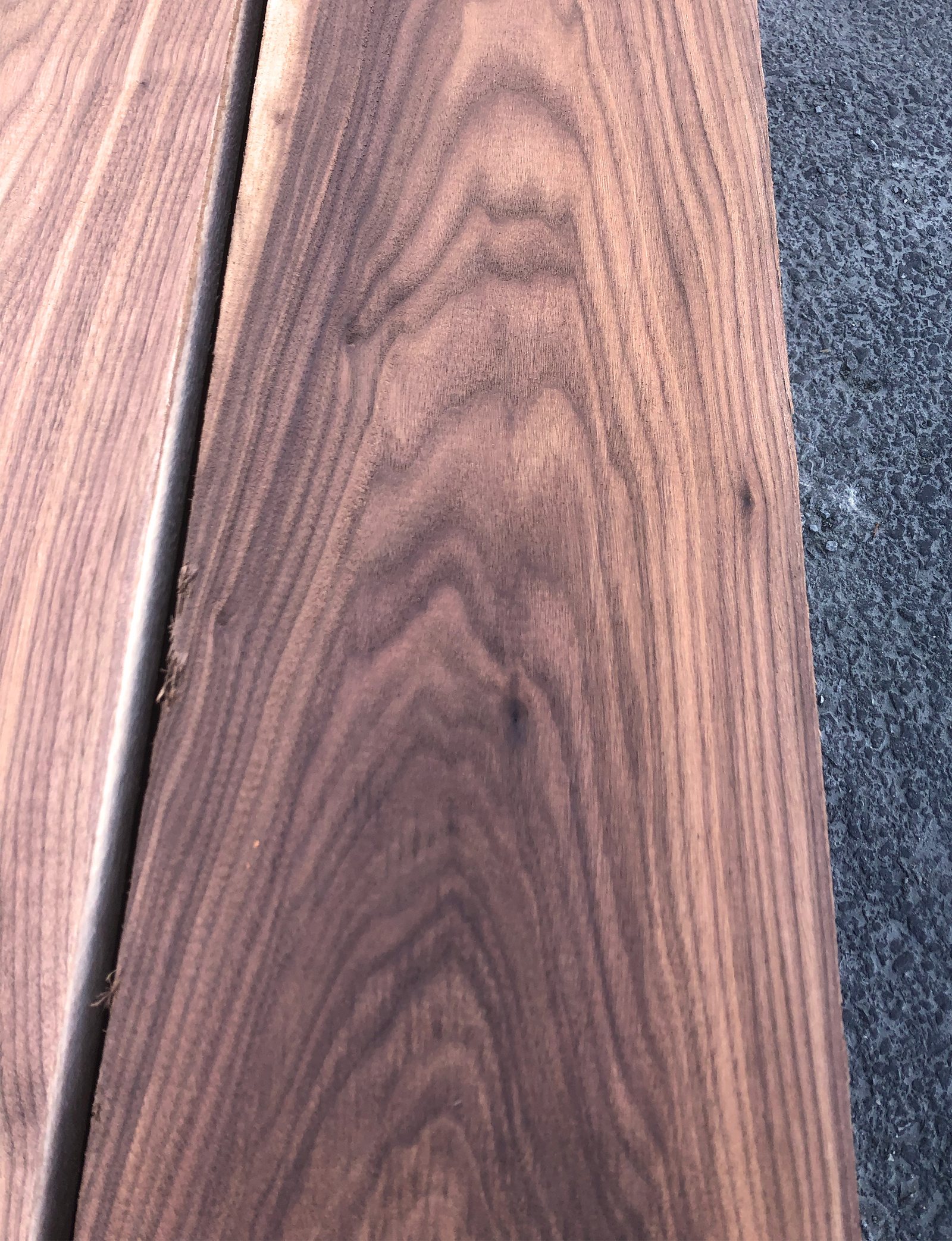
A workable color specification names a range with two limit samples, a sapwood tolerance and a viewing condition, never a single approved board. One approved sample is a trap. It sets an expectation of exact replication across hundreds or thousands of board feet of an organic material, and no yard on earth can fill it.
Send a light limit and a dark limit instead. Anything between the two is accepted, anything outside is rejected, and the argument on the job site ends before it starts. Architects who work in hardwood regularly already write it this way, and the submittal and sample language in the Architectural Woodwork Institute standards gives a format to borrow.
Spell out the sapwood call explicitly. Heart only, sapwood permitted on back faces, or sapwood permitted up to a stated share of the face are three different orders at three different yields. A heart only call on Black Walnut consumes far more of the log than a mixed call and the lead time reflects it.
Name the viewing condition too. Color is a lighting problem as much as a lumber problem. A panel run approved under shop fluorescents will read differently on a south wall under afternoon sun, and a stair skirt at floor level will read differently from the same material at eye height. For moulding and millwork profile tolerances, the Wood Moulding and Millwork Producers Association publishes the pattern conventions most shops work from.
Lot Discipline Decides the Outcome
The most effective color control available on a large order is buying the entire quantity out of one lot at one time. A lot is material that came from the same purchase, the same mill run and the same kiln charge. Inside a lot, color variance is narrow because the inputs were narrow. Across lots, it is a coin flip.
That is why reorders fail. A shop that buys 4,000 board feet of Sapele in September and calls back for 900 more in February is not buying more of the same material. It is buying a second lot, out of different logs, dried on a different charge, and the new material will sit next to the old material on a visible wall where every viewer sees both at once.
Depth of inventory is what makes single lot buying possible at scale. J. Gibson McIlvain holds over seven million board feet of exotic and domestic lumber at its Maryland yard, which means a 12,000 board foot order for one species in one thickness can usually be filled from material already in the same lot rather than assembled from three purchases. J. Gibson McIlvain tags and records the lot and pack numbers on an order so a later addition can be traced back to the original run instead of guessed at.
Recordkeeping is the unglamorous half of color matching, and it depends on the supplier still being there in year three of a phased project. J. Gibson McIlvain has been family run and in business since 1798, now in its seventh generation, which is the practical reason a tally from an earlier phase can still be pulled and read against a new release.
"When somebody calls back in March for two thousand more feet to match a job we shipped in October, I have to tell them the truth, which is that the second lot came out of a different set of logs. If we know up front that the whole job has to read as one surface, we buy it as one lot, tag it, and hold it until the shop is ready for it."
Norm Moton, Director of Sales, J. Gibson McIlvain
Species Where the Color Range Is Widest
Some species arrive nearly uniform and some arrive with a two tone problem built in, and the specification has to account for which one is on the order. For milled, glued and machined millwork the working palette is Sapele, Iroko, Afrormosia, Teak and Utile, which is sold as Sipo. Those five mill cleanly, glue predictably and hold a finish, and their color behavior is well understood.
Sapele runs a reddish brown with a ribbon figure that shows strongly on quartersawn faces and barely at all on plainsawn, at roughly 1,410 lbf on the Janka scale. Utile is the quieter cousin, closer to a flat medium brown with less stripe, which is why it gets specified where a large panelized surface needs to read as one plane. Iroko comes in yellower and ambers down fast. Afrormosia sits between Teak and Sapele in tone and is the usual answer when a Teak match is wanted at a workable supply.
On the domestic side the split is sharper. Cherry at roughly 950 lbf darkens dramatically in the first months of light exposure, so a sample approved off the rack will not be the color of the installed job six months later. Hard Maple at roughly 1,450 lbf is sorted hard for white sapwood. Black Walnut at roughly 1,010 lbf is the classic steaming candidate, because a steam schedule pulls the pale sapwood toward the heart color and widens the usable yield.
Paint grade work changes the question entirely. Yellow Poplar at roughly 540 lbf carries green and purple streaking that nobody will ever see under two coats, which makes it a poor choice for clear finish and a sound one for painted interior trim. For any species figure not listed here, check the published value at the Wood Database rather than trusting a number from memory.
| Species | Color range off the saw | What shifts in service | Where single lot buying matters most |
|---|---|---|---|
| Sapele | Narrow, reddish brown, figure varies by cut | Deepens with light exposure | Long paneled walls and door stacks |
| Utile (Sipo) | Narrow, flat medium brown | Mild darkening | Large single plane panel runs |
| Iroko | Moderate, yellow to golden brown | Ambers quickly, then stabilizes | Mixed interior and protected exterior trim |
| Afrormosia | Moderate, tan to warm brown | Darkens modestly | Teak match work and window units |
| Teak | Moderate, golden to mid brown | Oxidizes toward honey, grays if left bare outdoors | Any run where boards sit edge to edge |
| White Oak | Moderate, blond to light brown with regional streaking | Stable under finish, reacts to iron and tannin | Flooring adjacent trim and casework faces |
| Black Walnut | Wide, pale sapwood against dark heart | Lightens and warms with light exposure | Anything specified heart only |
| Cherry | Moderate at the saw, gum streaks common | Darkens sharply in the first months | Phased work where phases install months apart |
| Hard Maple | Wide, white sapwood against brown heart | Yellows under some clear coatings | White sorted casework and paint grade substrates |
What Drying Does to Color
Kiln schedule changes a board's color before it ever reaches a shop, which makes the kiln charge part of the lot definition. Drying is not a neutral step that simply removes water. Heat, airflow and schedule all leave a mark on the surface a finisher later has to match.
Sticker stain is the most familiar example. Where the drying stickers cross the board, a chemical reaction can leave regular bands that survive surfacing and show up under a clear coat. Enzymatic and oxidative discoloration does the same thing over whole faces, which is why hardwoods that sit too long before going into the kiln arrive gray or blotchy. The drying and discoloration chapters of the USDA Forest Service Wood Handbook lay out the mechanisms in detail.
Target moisture content is the other half. Kiln dried hardwood for interior use lands near 6 to 8 percent moisture content, and exterior work runs near 12 to 16 percent. Air dried stock settles at the local equilibrium instead, which is fine for some exterior applications and not a substitute for kiln dried stock anywhere an interior tolerance matters.
Mixing the two on one visible job causes two problems at once. The air dried material moves differently after installation, and it frequently reads a different shade because it never saw a kiln schedule. J. Gibson McIlvain mills interior stock to a 6 to 8 percent in service moisture content and keeps the kiln charge identified with the pack, so a shop ordering the balance of a run is not quietly handed a different drying history.
Sawing Pattern Reads as Color on the Wall
Two boards out of the same log can look like different species if one is plainsawn and the other quartersawn. Grain orientation changes how light hits the surface, and the eye registers that as a color difference even when a spectrophotometer would not.
Quartersawn White Oak at roughly 1,360 lbf shows ray fleck, the bright flake pattern that runs across the face. The same log sawn through and through shows cathedral grain and no fleck at all. Quartersawn Sapele shows the ribbon stripe that plainsawn Sapele hides. Put the two cuts side by side in one run and the complaint that comes back will be worded as a color mismatch.
There is a stability reason to care as well. Quartersawn and rift stock moves less across its width than plainsawn, which is why it gets specified where a painted or panelized surface has to stay flat. A painted panel field that cups is a sawing specification problem more often than a paint problem.
So the sawing pattern belongs in the written spec next to the species and the grade. One pattern for the whole visible run, or a stated allocation of patterns by location, with plainsawn kept out of sight if the exposed faces are quartersawn.
Finish Sets the Color the Client Signs Off On
Color is approved under finish or it is not really approved at all. Raw lumber and finished lumber are two different colors, and the gap between them is bigger on some species than the difference between two lots.
Absorption drives most of it. Open-grained and oily species absorb a great deal of finish, so the first coat sinks unevenly and a board that looked uniform in the rack comes out blotchy. A primer or sealer coat evens the field before color goes on, and light sanding or buffing after that coat knocks back grain raising while keeping moulded detail crisp.
Stain can be used to pull two lots together, within limits. Pigment stains sit in the pores and exaggerate grain contrast. Dye stains penetrate more evenly and are the better tool for narrowing a color spread. Neither one will rescue a run that mixes heart and sap on exposed faces, because the underlying contrast comes back through.
Mockups have to be made on the actual lot, not on shop scrap. Approve the finish schedule on boards pulled from the delivered packs, including one from the light limit and one from the dark limit, and the whole range gets signed off at once.
For painted exterior trim the species logic shifts. Sapele is the better call over Genuine Mahogany at roughly 800 lbf, because it holds paint better and comes in a wider range of sizes and longer lengths. Sapele is not milled 1x8 for exterior use, since that width is too wide to stay stable in the weather. Cupping out there is driven by installation and back ventilation, not by the species on the label.
Exterior Color Moves and Modified Stock Has Limits
Outdoors, no unmodified wood holds its delivered color, and no supplier can warranty that it will. Ultraviolet light breaks down lignin at the surface and every uncoated species ends up some version of silver gray. The only question is how fast and how evenly.
Warranties exist on modified products and on nothing else. Solid unmodified wood is an organic material responding to its environment, and it is not possible to warranty that response. Any specification that assumes a color warranty on solid stock is built on a promise no mill can keep.
Thermally modified and acetylated products behave differently and both are carried. Thermory and Abodo Vulcan arrive a uniform deep brown straight through the thickness, which solves the heart and sap contrast problem outright, and they still fade in sunlight unless maintained. Both top out around 16 ft, most sold on metric lengths just under 16 ft, because of the size of the modification kilns. Thermally modified Ash is not available wider than 8 inches, so a wide board in a modified product means Accoya or Abodo Vulcan. Accoya runs roughly 1,600 lbf, and the acetylation process gives it dramatically reduced shrinkage and swelling. Published detail sits on the Thermory and Accoya sites.
Where cedar is the species on the drawing, the grade call outranks the species call for color purposes. CVG, clear vertical grain, delivers a tight uniform face with no knots to interrupt it. STK, select tight knot, delivers a knotty character face that is a different design intent and a different market. Cedar performs, weathers and holds finish well in both grades, and the mistake is specifying one and expecting the appearance of the other.
Exterior decking sits apart from all of this. Ipe, botanically Tabebuia spp, along with Cumaru, Garapa, Jatoba and Red Balau, are extremely hard and carry high oil content, which makes them difficult to glue. They weather to gray on roughly the same schedule as everything else. A millwork shop reaches for Sapele, Iroko, Afrormosia, Teak or Utile instead for anything milled, glued or machined, because those species take adhesive and finish without a fight.
Ordering the Full Phase and Releasing It in Stages
On a phased job the material should be bought once and released in stages, never rebought at each phase. Buying in stages is buying lots in stages, and lots are exactly the variable the color specification is trying to eliminate.
The arithmetic has to be done before the first purchase order. Take off the full quantity for every phase, add the installer's waste allowance, add attic stock for the owner, and buy that total as one lot. Overage on a color matched order is not padding. It is the only insurance available, because the replacement board in year two is a different lot by definition.
Then the material needs somewhere to sit. J. Gibson McIlvain stores finished material for inventory control, which lets a general contractor take delivery in phase sized releases rather than finding floor space for a whole building's worth of millwork on day one. J. Gibson McIlvain ships nationwide and regularly runs material to California, so a staged release schedule is not limited to jobs near the yard.
One honest boundary belongs on the schedule. Layout, sequencing on the wall and the final blending of boards within the approved range are the installing contractor's work, not the yard's. Good blending at install is where a correctly bought lot becomes a surface nobody questions, and the best lot in the country will not survive a crew that nails boards up in whatever order they come off the stack.
How J. Gibson McIlvain Would Specify This
A color matched hardwood order should be written as one lot, one kiln charge, one sawing pattern, one moisture target and two limit samples, with the full phased quantity bought up front. That is five lines on a purchase order and it prevents most of the disputes that large visible hardwood installations generate.
Start with species and grade for yield, then add the color language underneath. FAS or F1F where long clear lengths are needed, No. 1 Common where the parts are short, and in both cases a stated sapwood tolerance and a light and dark limit sample. Thickness gets quoted in quarters of rough inches, so 4/4 is nominal 1 inch rough and 8/4 is 2 inches, and the surfaced dimension comes off that rough number.
J. Gibson McIlvain pulls the full quantity from a single lot, identifies the pack and kiln charge on the paperwork, and mills interior stock to a 6 to 8 percent in service moisture content with exterior stock near 12 to 16 percent. For profile work that has to repeat across phases, J. Gibson McIlvain runs mouldings on its own moulders at the yard, and ICD, the company's architectural millwork division, builds the true custom assemblies that get planned around a specific space. Details on both sit at mcilvain.com and icdwoodwork.com.
For historic work, match the color and the species before matching the profile, since a correct profile in the wrong species reads wrong immediately. The National Park Service Standards for the Treatment of Historic Properties is the reference most review boards apply.
To quote and schedule a single lot order, call J. Gibson McIlvain at 800-638-9100 with the species, the grade, the thickness in quarters, the total board footage across all phases and the release dates. Send the two limit samples with the inquiry rather than after the first delivery.
Frequently Asked Questions
Can color matching be specified through the hardwood grade?
No. National Hardwood Lumber Association grades measure the yield of clear face cuttings, not appearance. FAS requires a minimum board 6 inches by 8 ft yielding 83 and 1/3 percent clear face cuttings, No. 1 Common requires 66 and 2/3 percent off a 3 inch by 4 ft minimum, and No. 2A Common requires 50 percent. A supplier can ship fully compliant FAS that runs from blond to brown in the same pack. Color belongs on the purchase order as its own line, with a sapwood tolerance and two limit samples.
How many samples should go out with a color specification?
Two. Send a light limit and a dark limit, and accept everything between them. A single approved board sets an expectation of exact replication across thousands of board feet of an organic material, which no yard can fill. The two sample range also gives the finisher something usable, since the finish schedule can be approved on one board from each end of the range at the same time.
Will a reorder match the original delivery?
Not reliably. A reorder is a new lot by definition, which means different logs, a different mill run and a different kiln charge. The replacement material then sits next to the original on a visible surface where a viewer sees both at once. The fix is to take off the full quantity for every phase before the first purchase order, add the installer's waste allowance and the owner's attic stock, and buy the whole total as one lot.
Does kiln drying change the color of hardwood?
Yes, and the kiln charge should be treated as part of the lot definition. Sticker stain leaves regular bands where the drying stickers crossed the board. Enzymatic and oxidative discoloration can gray or blotch whole faces when lumber sits too long before going into the kiln. Interior stock lands near 6 to 8 percent moisture content and exterior work near 12 to 16 percent. Air dried stock settles at the local equilibrium instead and is not a substitute where an interior tolerance matters.
Which species give the widest color spread on a visible order?
Black Walnut and Hard Maple, both because of heart and sapwood contrast. Walnut runs pale straw sapwood against dark heart, which is why a steam schedule is often used to pull the sapwood toward the heart color. Hard Maple inverts the usual logic, since the white sapwood is the premium material. Of the millwork palette, Sapele and Utile, sold as Sipo, arrive the most uniform, while Cherry needs special attention because it darkens sharply in the first months of light exposure.
Can exterior hardwood be specified to hold its delivered color?
No. Ultraviolet light breaks down lignin at the surface and every uncoated species moves toward silver gray. Warranties exist on modified products and on nothing else, since solid unmodified wood is an organic material responding to its environment. Thermory and Abodo Vulcan arrive a uniform deep brown through the thickness, which removes the heart and sap contrast, and both top out around 16 ft, most sold on metric lengths just under 16 ft because of kiln size. Thermally modified Ash is not available wider than 8 inches, so a wide board in a modified product means Accoya or Abodo Vulcan.
Does the sawing pattern really affect perceived color?
Yes, enough that mixing patterns in one run is a common cause of a mismatch complaint. Quartersawn White Oak shows ray fleck that plainsawn material does not, and quartersawn Sapele shows a ribbon stripe that plainsawn Sapele hides. Quartersawn and rift stock also moves less across its width than plainsawn, which is why it is specified where a painted or panelized surface has to stay flat. Lock one pattern for the exposed run, or allocate patterns by location in writing.
Sources and Standards Referenced
- National Hardwood Lumber Association
- Wood Handbook, Wood as an Engineering Material, USDA Forest Service
- Architectural Woodwork Institute Standards
- Wood Moulding and Millwork Producers Association
- The Wood Database, Sapele
- Thermory, Thermal Modification
- Accoya Products
- National Park Service, Standards for the Treatment of Historic Properties