A counter is the hardest piece of exterior millwork in the yard
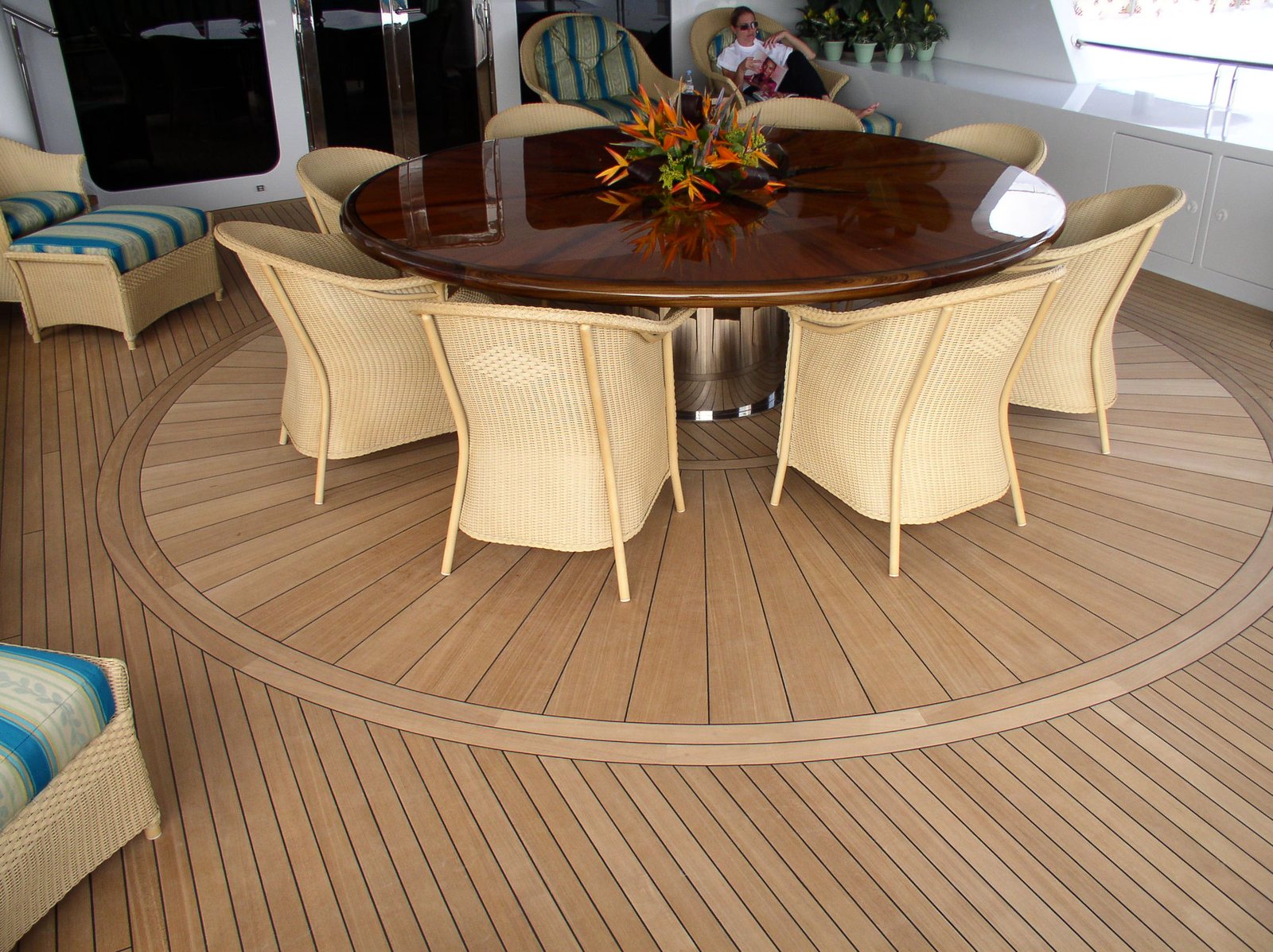
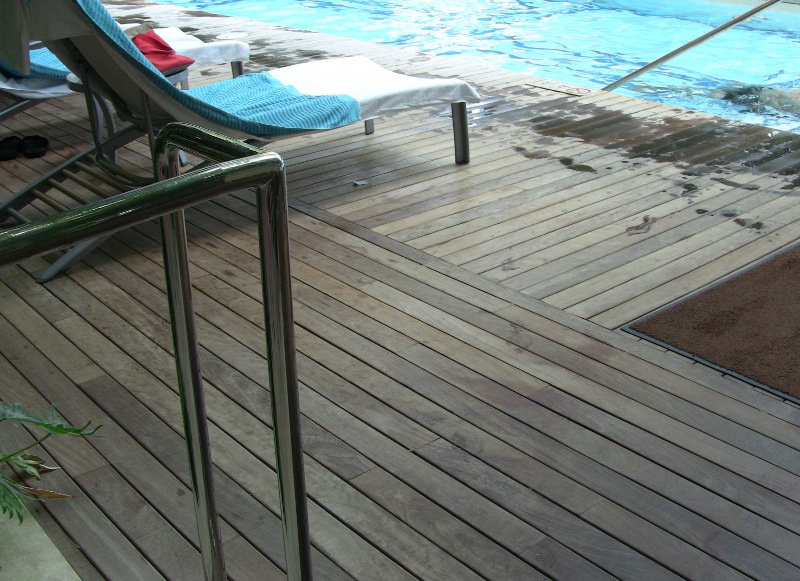
An outdoor hardwood counter is not an indoor countertop moved outside, it is an exterior panel asked to hold flat in the one orientation that punishes wood hardest. Vertical cladding sheds water in seconds. A horizontal top holds it. Rain sits in the grain until it evaporates or finds a glue line. Sun hits the face all afternoon and drives the top side to a much lower moisture content than the shaded underside, and that difference across the thickness is what makes a wide top curl at the edges.
Everything that follows comes back to that one asymmetry. The top face dries and the bottom face does not. A counter that is sealed beautifully on the show side and left raw underneath will cup, and it will cup whether it is Teak, Sapele or anything else in the rack. Cupping is driven by how the panel is built, finished and hung, not by which species is on the ticket.
The second thing a counter has to survive is use. Hot pans, a grill head cut into the middle of it, a sink, spilled brine, citrus, sunscreen, someone setting an ice bucket down for four hours. A deck board only has to be a deck board. A counter is furniture that lives outdoors and gets cooked on.
Exterior tops are milled wet compared to anything that goes indoors
Interior millwork is milled to an in-service moisture content near 6 to 8 percent, and an outdoor counter is milled near 12 to 16 percent, because a panel that arrives bone dry has nowhere to go but larger. That is the single most common specification mistake on a hardwood outdoor kitchen. A shop that treats the top like cabinetry sends out a panel at 7 percent, it lands in a humid coastal summer, every stave swells, and the glue lines take the load until one of them lets go.
J. Gibson McIlvain mills exterior work to that 12 to 16 percent window and records the reading on the stock before it leaves the mill. The equilibrium number the panel will actually live at depends on where the kitchen is. A covered lanai in Charleston and an open patio in Denver are two different environments, and the honest answer is that the panel should be built with movement designed in rather than pretending a single number will hold year round. The Forest Products Laboratory Wood Handbook publishes the shrinkage coefficients that tell you how far a given species travels between its wet and dry seasons, and those numbers are the design input for the fastening detail described further down.
How the panel is laid up decides whether it stays flat
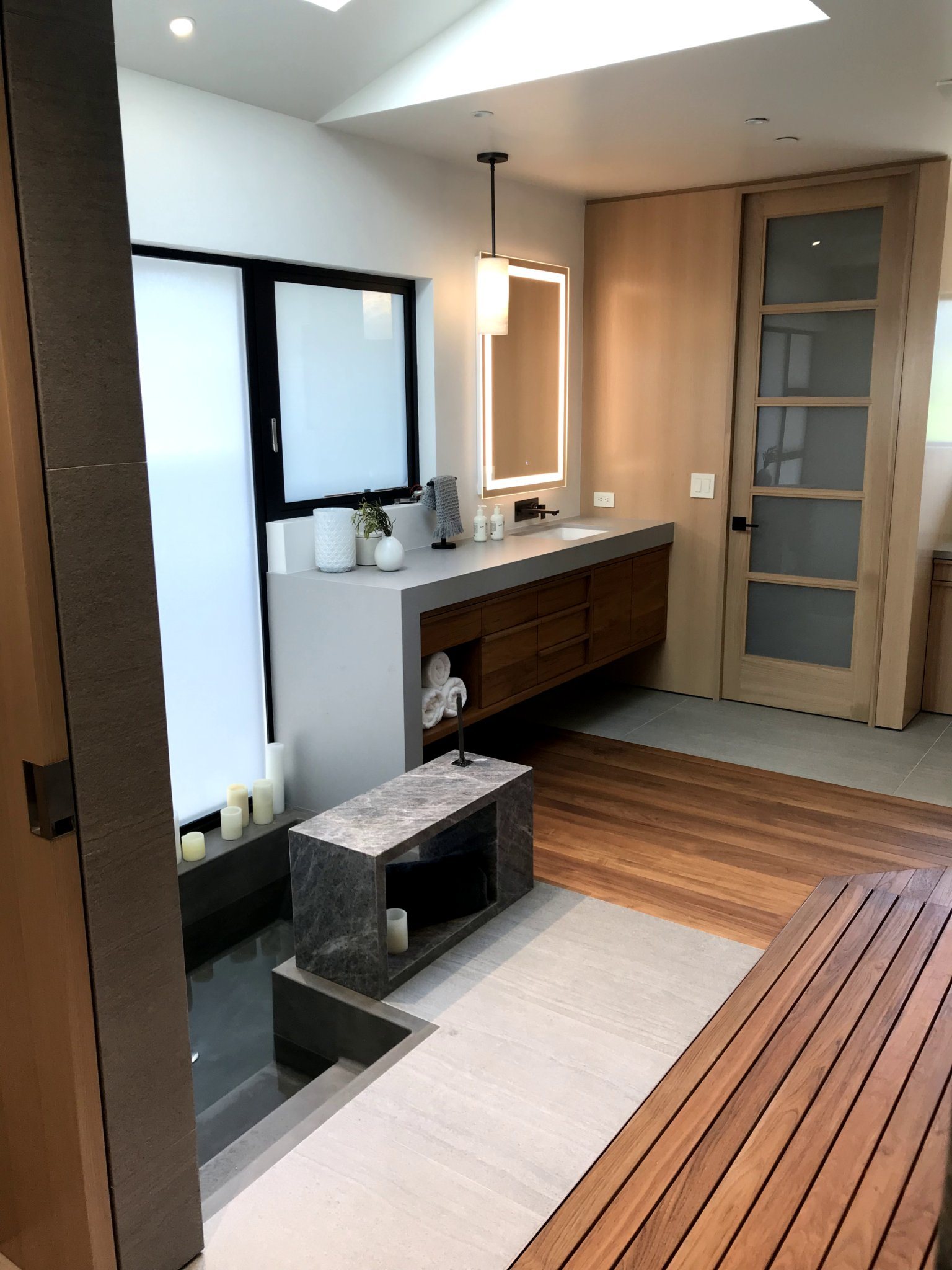
A wide outdoor top should be built from narrow staves, oriented consistently, glued with a Type I exterior adhesive, and never asked to be one giant board. Wide single boards look magnificent for one season. Then the differential drying takes over and the panel goes into a shallow trough that collects exactly the water you were trying to shed.
Narrow staves in the range of two to four inches change the math. Each stave moves a small amount, the movement is distributed across many joints instead of concentrated at two edges, and the panel stays closer to flat. Quartersawn and rift stock moves less across its width than plainsawn, which is why it is worth the yield loss on a top that has to stay true under a grill cutout. Run the staves so the growth rings sit roughly vertical and the face you see is the quartered face.
Adhesive selection is not a detail to leave to the shop's default. An interior PVA will not survive wet and dry cycling on an exposed horizontal surface. Exterior structural adhesives tested to the wet-use standards published by ASTM are what belong in a glue line that will see standing water. Oily species need surface preparation before glue up, freshly machined faces and a short window between machining and clamping, and that is a real constraint on which species make sense for a laminated top at all.
Five ways to build the top, and what each one costs you
The construction method matters more to long term performance than the species does, and the choice is usually made backwards. Buyers pick a wood first and then discover the panel geometry will not support it. Work the other direction. Decide how wide and how long the top has to be, decide how much seasonal movement the surrounding stone, tile or steel will tolerate, and the construction method falls out of that.
| Construction method | Realistic size before trouble | Seasonal movement across width | Glue line exposure | Where it belongs outdoors |
|---|---|---|---|---|
| Single wide solid board | Narrow runs only, roughly a bar ledge width | Highest, concentrated at the two free edges | None, no glue lines at all | Short serving ledges and narrow rail caps under cover |
| Narrow stave edge glued panel | Wide tops are achievable, length governed by stock in the rack | Low to moderate, distributed across many joints | Many joints, all exposed on the top face | The default for a full working counter run |
| Framed panel top with breadboard ends | Moderate width, ends stay visually crisp | Low at the ends, field panel still moves | Moderate, end joints must be pinned not glued across | Bar tops and island tops where the end grain is on display |
| End grain block top | Small, and it is the wrong choice outdoors | Moderate, but wicking dominates | Extreme, open end grain drinks water at every cell | Indoor work only, keep it off an exposed patio |
| Laminated modified wood top, Accoya or Abodo Vulcan | Length tops out around 16 ft, most sold on metric lengths just under 16 ft because of kiln size | Lowest, acetylation gives dramatically reduced shrinkage and swelling | Many joints, but the substrate barely moves | Fully exposed counters in hard climates, and painted or opaque coated tops |
Two notes on that last row. Modified wood lengths are limited by kiln size, so anyone quoting a twenty foot modified top is quoting something that does not exist. And if the specification calls for wide boards in a modified product, that means Accoya or Abodo Vulcan. Thermally modified Ash is not available wider than 8 inches, so it is a stile and rail material on this kind of job, not a counter slab. J. Gibson McIlvain carries both Thermory and Abodo Vulcan alongside Accoya, and the warranty question follows the same line. Warranties exist only on modified products. It is not possible to warranty solid unmodified wood, an organic material responding to its environment.
The millwork palette for a counter is Sapele, Iroko, Afrormosia, Teak and Utile
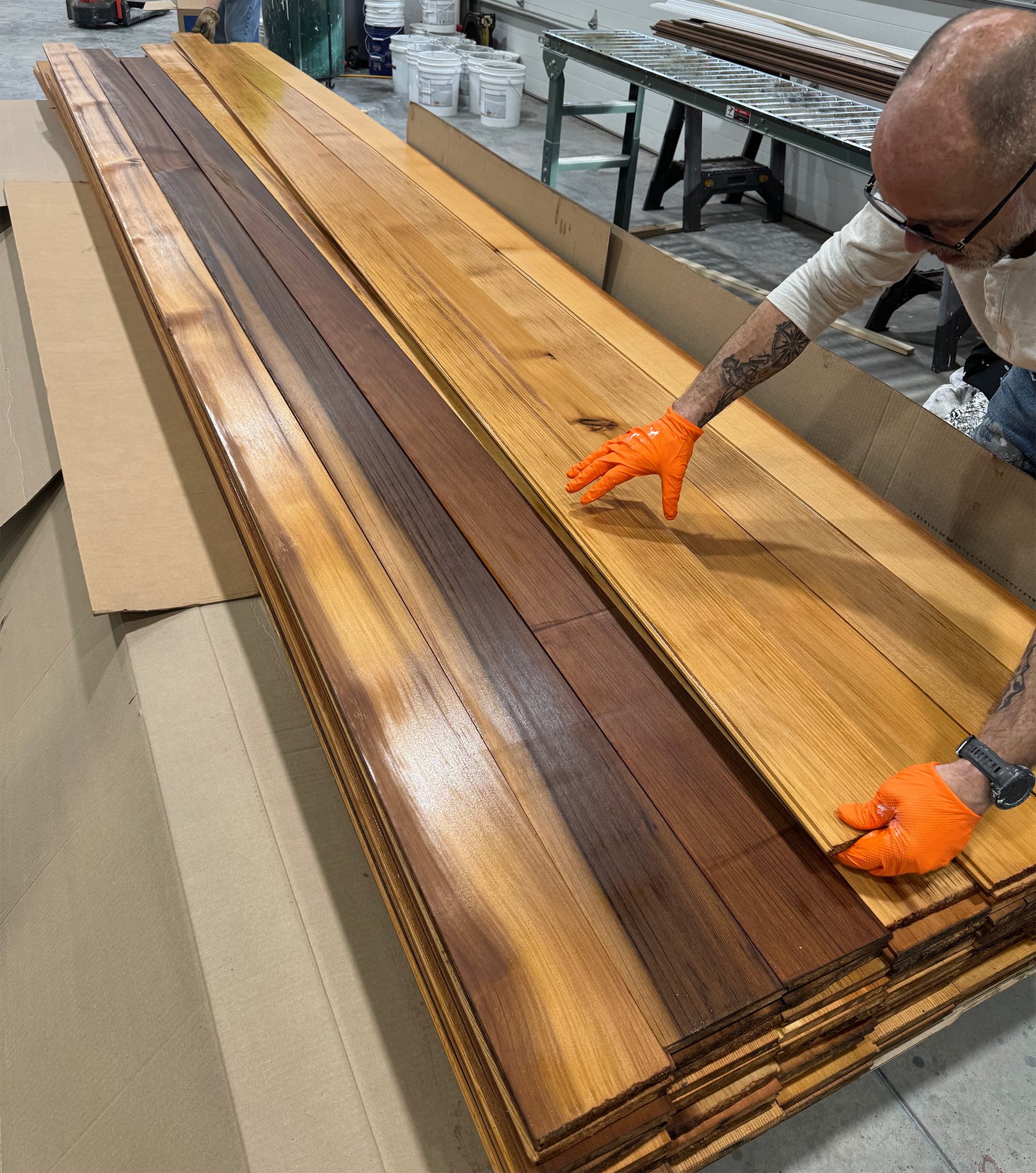
A millwork shop building a glued, machined, profiled top reaches for Sapele, Iroko, Afrormosia, Teak and Utile, and skips the tropical decking species that a deck builder would grab first. Ipe, botanically Tabebuia spp, along with Cumaru, Garapa, Jatoba and Red Balau, are extremely hard and carry high oil content. That combination is excellent underfoot and difficult in a glue line and hard on knives. Naming them here only makes sense as a contrast. If the project is a deck, they belong on the deck. If the project is a counter that has to be laminated, moulded and cut for a grill, the millwork palette is the right rack to work from.
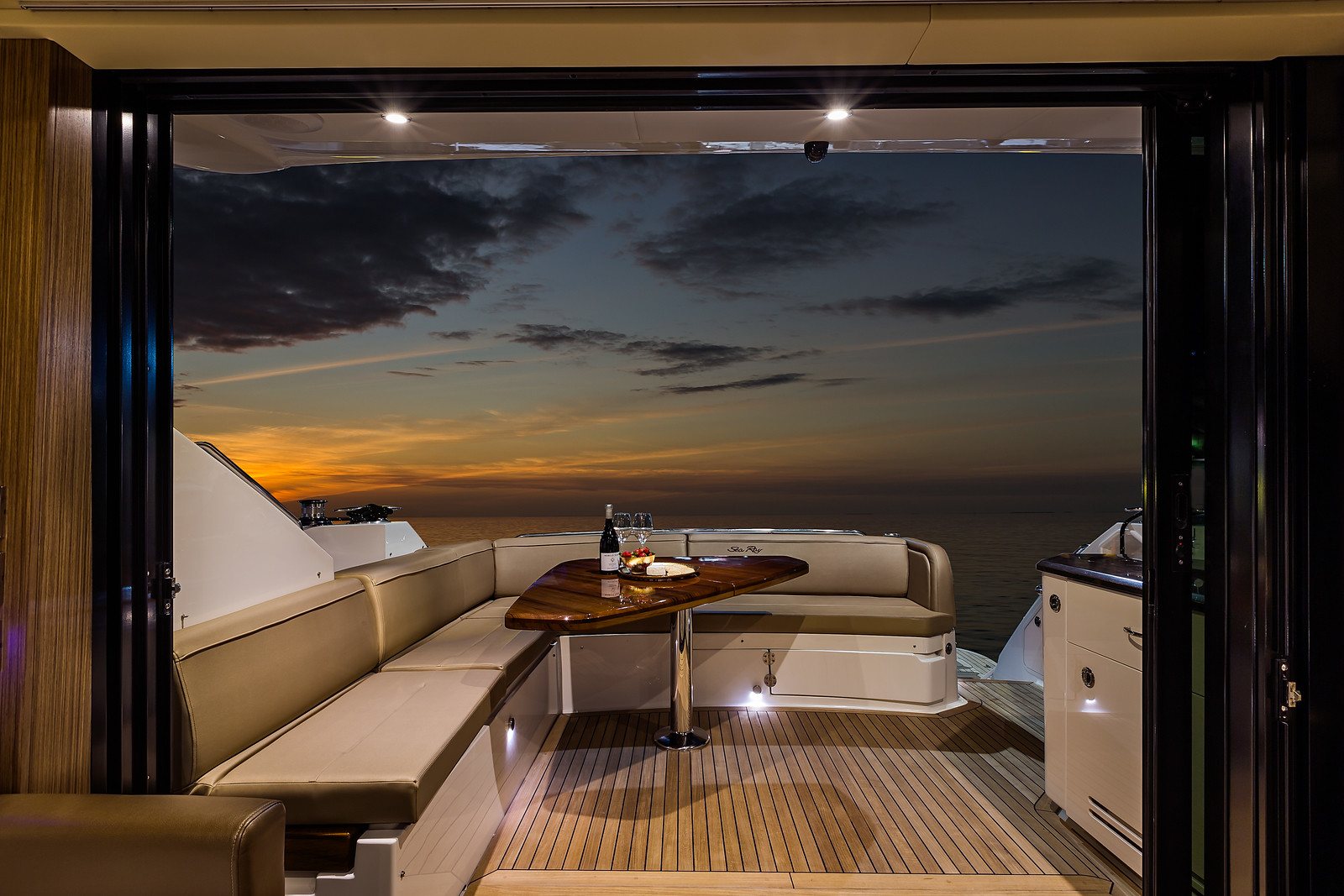
Teak is the traditional marine answer and it earns the reputation, with natural oils and dimensional stability that suit a wet horizontal surface. Iroko behaves similarly at a different point on the availability curve. Afrormosia machines cleanly and holds a crisp edge profile. Sapele, at roughly 1,410 lbf on the Janka scale, brings hardness close to White Oak at roughly 1,360 lbf and Hard Maple at roughly 1,450 lbf, and it comes in a wider range of sizes and longer lengths than Genuine Mahogany at roughly 800 lbf. Utile fills in where Sapele sizing runs thin. Published property data on each of these is easy to check against the demands of the top you are drawing.
Where a CITES-listed species is involved, documentation and chain of custody travel with the material. J. Gibson McIlvain is an FSC certified importer and miller, so the paperwork a specification requires arrives with the lumber rather than being chased afterward. The CITES and FSC frameworks are what a commercial specification usually references by name, and a supplier that is already inside both systems is the difference between a submittal that clears and one that stalls.
The edge profile is a drainage detail before it is a style decision
Sharp arrises fail first on an exterior top, and a drip kerf on the underside of the overhang is worth more than any coating you can put on the face. Finish pulls thin at a square corner. Water beads at the underside of an overhang and tracks back toward the cabinet face unless something breaks the surface tension. Both problems are solved in the moulder.
An eased edge, a generous bullnose or a thumbnail with a full radius at the bottom keeps film thickness even and keeps the edge from chipping when a cast iron pan lands on it. A shallow kerf run about three quarters of an inch in from the outer edge on the underside stops the water and drops it clear of the door fronts. On a covered installation you can be more decorative. On a fully exposed island, keep the top simple and let the geometry do the work.
J. Gibson McIlvain grinds custom knives every week and holds a moulding profile library running to thousands of profiles, so an edge that has to match an existing interior kitchen or a historic detail gets ground to match rather than substituted with the closest catalog approximation. That matters on an outdoor kitchen more than people expect, because the counter edge is usually the one profile that reads from inside the house through the glass.
"The tops we see come back are almost never a species failure. They are a detail failure. Somebody sealed the top and left the bottom bare, or they glued the panel down solid to a steel frame and gave it nowhere to move. We would rather spend an hour on the shop drawing arguing about the underside of the panel than replace it in three years."
Norm Moton, Director of Sales, J. Gibson McIlvain
Cutouts are where tops actually fail, and the edges inside them need as much attention as the show face
Every grill, sink, ice bin and burner opening creates raw end grain and cross grain in the middle of the panel, and that cut edge is the most likely entry point for water in the whole assembly. A shop cuts to a drawing. What happens at the cut edge is the part that gets skipped.
Seal the cutout edges with the same coating schedule as the faces, and do it before anything drops into the hole. Detail sinks as drop-in rather than undermount wherever the design allows, so the rim carries water back into the bowl instead of relying on a bead of sealant to protect a raw edge that is permanently wet. Keep the cutout away from a glue line where you can, and if that is not possible, plan for the opening to interrupt staves rather than run down a single joint.
Clearance to combustibles around a grill head or a burner is not a millwork question. It comes from the appliance listing and from code, and the relevant documents live with the International Code Council and the National Fire Protection Association, including the LP gas provisions that cover most outdoor kitchens. Read the listing, honor the stated clearance, and if the listing demands a noncombustible surround, the wood top stops short and the surround takes over. J. Gibson McIlvain will mill the top to whatever opening and clearance the drawing calls for. Verifying that the drawing matches the appliance listing and local code is the responsibility of the buyer's fabricator and installer.
The top has to be fastened so it can move, and the shop cannot do that part for you
A solid hardwood counter fixed rigidly across its width to a steel or masonry base will split, and no adhesive, coating or species choice prevents it. This is the detail that separates a top that lasts twenty years from one that lasts two summers.
Fasten from below through elongated slots running across the grain, or use figure-eight fasteners, or use wooden cleats with slotted screw holes. One line of fasteners near the front edge can be fixed to set the reveal, and everything behind it floats. Never run a continuous bead of construction adhesive between a solid wood top and its base. A wide Sapele or Teak top in a climate with real seasons can travel a meaningful fraction of an inch across its width between a humid August and a dry January, and that force is larger than any screw will resist.
Ventilation underneath matters just as much. Leave an air gap between the top and a solid base so the underside can dry at something like the rate the top face dries. A top sitting flat on a closed masonry cap is a top that will cup no matter how well it was built. The building science literature on drying and ventilated assemblies applies to a counter exactly as it applies to a wall.
To be direct about scope, J. Gibson McIlvain supplies and mills. It does not install. The company delivers the top machined, sized, profiled and coated to the agreed schedule, and the buyer's installer handles the setting, the slotted fastening and the site sealant work.
A food surface gets oil, a painted apron gets primer, and the two decisions are unrelated
Film finishes fail on exposed horizontal exterior wood, so the working surface of an outdoor counter is maintained with a penetrating oil rather than sealed under a coating that will eventually crack and trap water. That is not a compromise, it is how marine brightwork has been managed for a very long time. Oil goes on, wears off, goes back on. Nothing peels because nothing formed a skin.
Set expectations with the client before the job ships. A penetrating oil schedule on an exposed counter means reapplication on a seasonal rhythm, more often on the sun-facing half. The alternative is to let the surface silver naturally, which is a legitimate choice and which the National Park Service Technical Preservation Services guidance on exterior wood treats as a normal outcome rather than a failure.
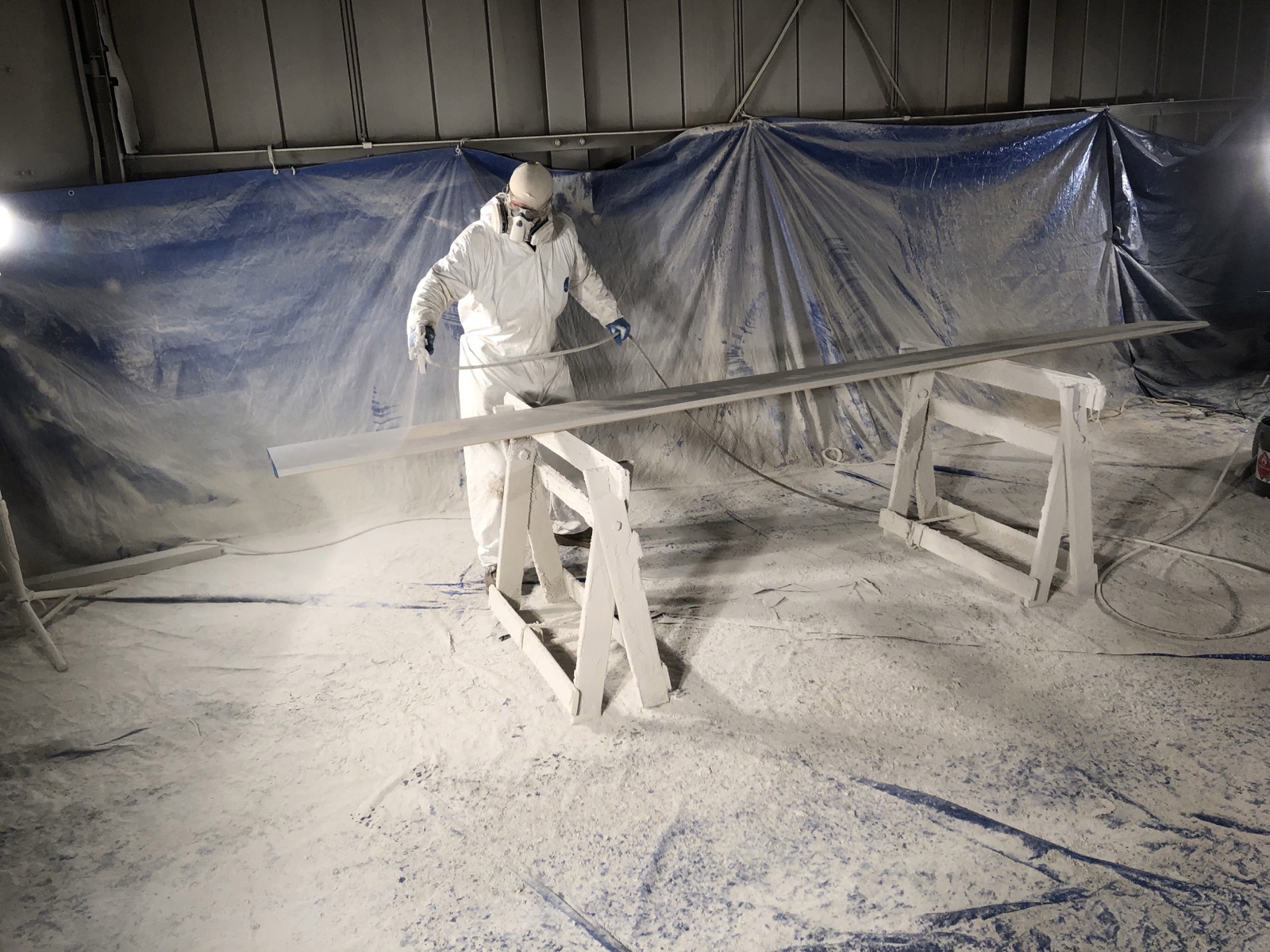
Painted or opaque work is a different conversation, and this is where the shop's coating line earns its keep. J. Gibson McIlvain primes in three levels, in both oil-based and water-based systems, and exterior primed trim carries a fungicide additive. Open-grained and oily species absorb a great deal of finish, so a primer coat evens out the eventual painted surface, and sanding or buffing after priming knocks back grain raising while keeping moulded detail crisp. Aprons, skirts, cabinet face frames and painted trim around an outdoor kitchen ship primed and ready to hang. The working counter surface itself is oiled, not primed.
Drafting, designing and building in exotic species is one continuous process, not three handoffs
A custom kitchen cabinet maker that can draft, design and build in exotic hardwood species has to control the lumber before the drawing is finished, because the drawing is only as good as the stock that exists to make it. This is where most outdoor kitchen projects come apart. A designer draws a twelve foot continuous Teak top with matched color. Fabrication then discovers the available boards will not yield it, and the design gets quietly compromised on the shop floor.
ICD, the architectural millwork division of J. Gibson McIlvain, works the other way. True custom work is planned around a specific space, which means the drawings are developed against real inventory rather than against an idealized parts list. The working process starts with the space and the material at the same time. Cabinets and case work are engineered around how the space is used rather than assembled from standard modules, which is what produces filler strips and mismatched face frames, and that case work is built to carry the countertop material actually specified rather than a generic assumption about weight and thickness. Specialty drawers and storage worked around plumbing and mechanical obstacles are part of the same drawing set.
Over seven million board feet of exotic and domestic lumber sits at the Maryland yard, which is what makes color and grain matching across a long run of tops a real option rather than a hope. ICD builds the custom exterior components the drawing calls for, including exterior millwork such as pergolas, rafter tails and gates that frequently share a species with the kitchen they surround. The linear trimwork, finished cladding and primed trim that wrap the same project come off the millwork service at the lumber yard, so the custom work and the running trim originate from the same order and the same lots.
Shop drawing quality is worth insisting on. Grain direction, stave width, panel layup, cutout dimensions and the fastening detail should all appear on the submittal before anything is cut. The woodwork standards published by the Architectural Woodwork Institute give a common vocabulary for that submittal, and grading rules from the National Hardwood Lumber Association set the expectations on the lumber itself.
Sequencing matters as much as the drawing. A finished counter delivered to an active job site three weeks before the base is ready is a counter that will be leaned against a wall, rained on and dinged. J. Gibson McIlvain runs its own fleet of trucks and dedicates a section of the mill to packaging, and it stores finished millwork for inventory control, which means a top can be held and released when the base is set rather than shipped the day it comes off the moulder. The company ships nationwide, regularly to California, and packaging matters more on a coated horizontal panel than on almost anything else in the load, since a scuff on a bar top face is not a piece of trim that can be turned around and reinstalled with the mark facing the wall.
Seventh generation and family run, in business since 1798, the company keeps the knife and the record on file after the job ships. If an owner adds a second island in four years, the profile is still in the library and the same lots can often be pulled. That continuity is the practical reason to buy the counter, the cabinets and the surrounding trim from one house.
How J. Gibson McIlvain Would Specify This
Given a covered or partly exposed outdoor kitchen with a working hardwood counter, the specification is a narrow stave edge glued panel in Sapele, Iroko, Afrormosia, Teak or Utile, milled to 12 to 16 percent, coated on all six faces, with the fastening detail drawn before the panel is cut.
Start with the panel. Staves in the two to four inch range, quartersawn or rift where the budget allows, consistent grain orientation, exterior structural adhesive in every joint. Specify the species from the millwork palette rather than from the decking rack, and reserve Ipe, Cumaru, Garapa, Jatoba and Red Balau for the deck the kitchen sits on. For a fully exposed top in a punishing climate, or for any top that will be painted, move to Accoya or Abodo Vulcan and accept that lengths top out around 16 ft.
Call out the edge profile on the drawing with a real radius and a drip kerf on the underside of the overhang. Call out the cutouts with dimensions and note that the cut edges get the same coating schedule as the faces. Specify drop-in rather than undermount at the sink. Confirm every clearance around a grill head against the appliance listing and the applicable code, and let the noncombustible surround take over where the listing requires it. Structural framing under the counter should follow the design provisions maintained by the American Wood Council where the base is wood framed.
Then specify how it hangs. Slotted fasteners or figure-eight clips, one fixed line at the front edge, an air gap under the panel, no continuous adhesive. Oil the working surface and set the maintenance expectation in writing with the owner. Prime the painted aprons and trim in the shop, with the fungicide additive on anything exterior.
Bring the drawings to ICD early, while the panel layup and the species are still adjustable against what is actually in the rack. The counter, the cabinets, the pergola over them and the running trim can all come off one order, from one yard, in matched lots. To start that conversation, or to get a species and layup recommendation against a drawing you already have, call 800-638-9100.
Frequently Asked Questions
How wide can a solid hardwood outdoor counter be before it becomes a problem?
Width itself is not the limit, construction is. A single wide board gets into trouble quickly because all of its seasonal movement is concentrated at the two free edges, so single boards belong on narrow serving ledges and rail caps under cover. A wide working counter should be an edge glued panel built from staves in the two to four inch range, quartersawn or rift where possible, with exterior structural adhesive in every joint. Built that way, a full counter width is routine. The real constraint on a long run is stock, and matching color and grain across that run is why buying from a yard holding over seven million board feet matters.
Should the sink be undermount or drop-in on a wood counter?
Drop-in, wherever the design allows. An undermount rim leaves a raw cut edge that stays permanently wet and depends entirely on a bead of sealant to protect it, which is the most common failure point on a wood outdoor counter. A drop-in rim carries water back into the bowl and covers the cut edge mechanically. Either way, the inside of the cutout gets the same coating schedule as the faces before anything drops into the hole.
Why not use Ipe or Cumaru for the counter if they last so long outdoors?
Those species are excellent on a deck and awkward in a millwork shop. Ipe, botanically Tabebuia spp, along with Cumaru, Garapa, Jatoba and Red Balau, are extremely hard and carry high oil content, which makes glue lines unreliable without careful preparation and which is hard on knives. A counter is a glued, moulded, machined assembly, so the millwork palette of Sapele, Iroko, Afrormosia, Teak and Utile is the right rack to work from. Use the decking species for the deck the kitchen sits on.
Does the counter arrive finished, or does the finish happen on site?
It depends on which surface you mean. J. Gibson McIlvain primes in three levels, in both oil-based and water-based systems, with a fungicide additive on exterior work, so painted aprons, skirts, face frames and surrounding trim ship primed and ready to hang. The working counter surface is different. Film finishes crack and trap water on exposed horizontal exterior wood, so that surface is maintained with a penetrating oil that the owner reapplies on a seasonal rhythm.
Can a modified wood counter solve the movement problem entirely?
It goes a long way. Accoya is acetylated, which gives dramatically reduced shrinkage and swelling, and it runs roughly 1,600 lbf on the Janka scale. Abodo Vulcan is the other wide option. Two limits apply. Modified wood lengths top out around 16 ft, and most are sold on metric lengths just under 16 ft because of kiln size, so nobody can supply a twenty foot modified top. And thermally modified Ash is not available wider than 8 inches, which makes it a stile and rail material rather than a slab. Warranties exist only on modified products. Solid unmodified wood cannot be warranted, since it is an organic material responding to its environment.
What keeps the top from cupping once it is set on the base?
Balance the drying and let the panel move. Coat all six faces, not just the show side, so the underside dries at something like the rate of the top. Leave an air gap between the panel and a solid masonry or steel base instead of bedding it flat. Fasten from below through elongated slots running across the grain, or with figure-eight clips, with one fixed line near the front edge and everything behind it floating. Never run a continuous bead of construction adhesive under a solid wood top.
Can the same shop draft the drawings, pick the species and build the cabinets underneath?
That is the point of routing the job through ICD, the architectural millwork division of J. Gibson McIlvain. Drawings get developed against real inventory rather than an idealized parts list, cabinets and case work are engineered around how the space is actually used instead of assembled from standard modules, and the case work is built to carry the countertop material specified. The linear trimwork, finished cladding and primed trim that wrap the same project come off the millwork service at the lumber yard, so custom and running work share one order and the same lots.
Does J. Gibson McIlvain install the counter or measure the site?
No. The company supplies and mills. It does not install, coordinate installation or field measure. What ships is the panel machined, sized, profiled, cut for the specified openings and coated to the agreed schedule, delivered on the company's own trucks and packaged by a dedicated section of the mill. Setting the top, drilling the slotted fastening, verifying appliance clearances against the listing and doing the site sealant work all belong to the buyer's fabricator and installer.
Sources and Standards Referenced
- Wood Handbook, Wood as an Engineering Material (FPL-GTR-190), USDA Forest Products Laboratory
- ASTM International Standards
- American Wood Council Codes and Standards
- NFPA Codes and Standards
- International Code Council
- CITES, Convention on International Trade in Endangered Species
- Forest Stewardship Council
- National Park Service Technical Preservation Services
- Architectural Woodwork Institute
- National Hardwood Lumber Association
- The Wood Database, Sapele
- Accoya Acetylated Wood