Where a Profile Library With Thousands of Options Actually Lives
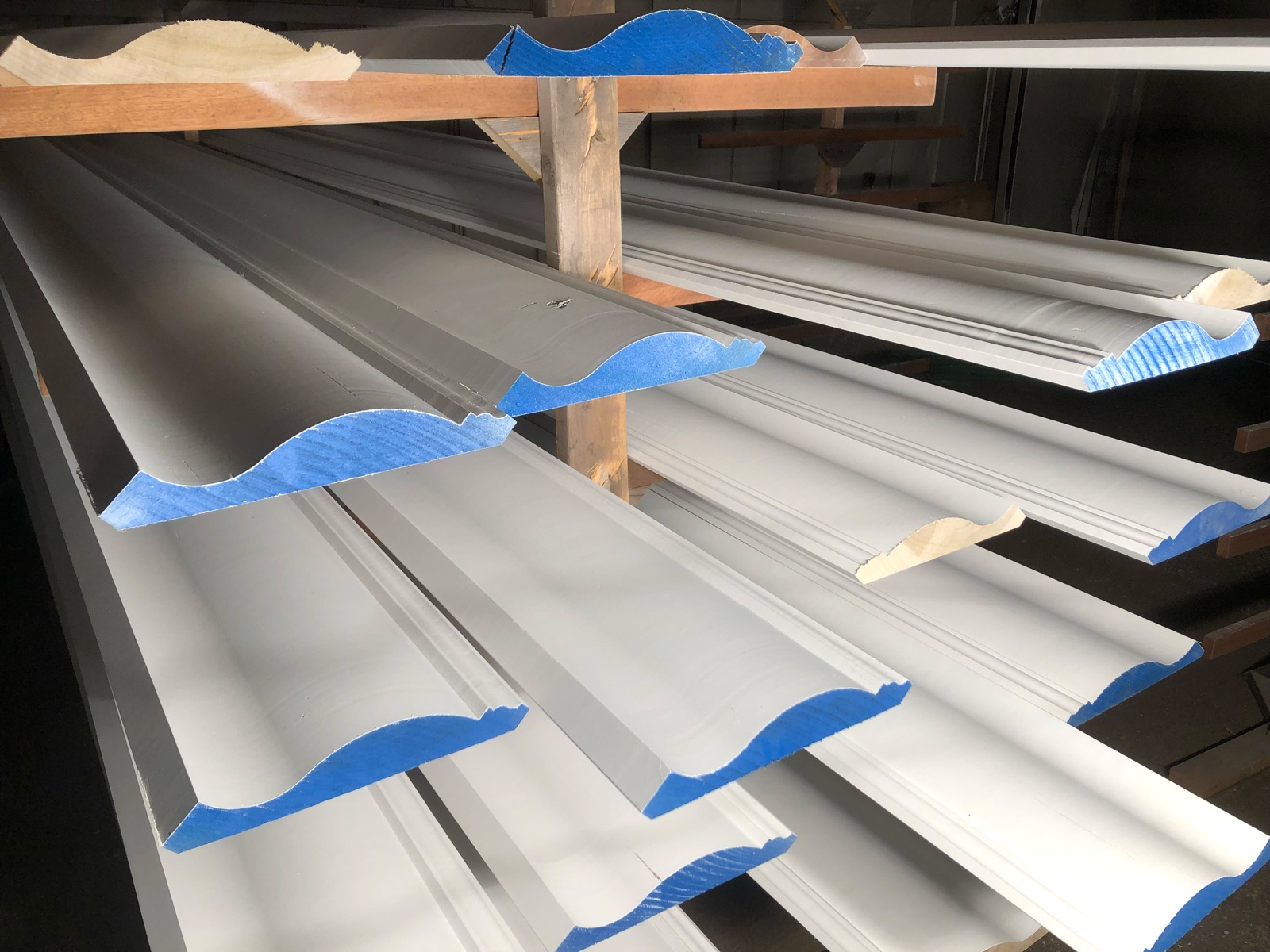
A moulding profile library holding thousands of crown, base and chair rail options is not a printed catalog. It is a racked archive of ground steel knives at a working mill, and the place to find one is a shop that grinds its own. Printed catalogs and PDF profile sheets are downstream of that. The knife is the thing that makes the shape. Everything else is a drawing of what the knife will do. So when an architect or a builder asks where to find a library with thousands of profiles, the honest answer is that you are looking for a millwork operation with moulders, a knife grinding room, and decades of accumulated jobs sitting in the rack behind the grinder.
J. Gibson McIlvain runs moulders, custom knife grinders, straight line and gang rip saws, band resaws and trimming saws on its own floor, and its millwork service maintains a profile library holding thousands of profiles with new knives ground every week. If a profile is not already in the rack, it gets ground to match. That is the second half of the answer, and it is the half that matters most on restoration work, because no library of any size contains every shape a 19th century sash and blind shop ever cut.
What a Profile Library Is Made Of
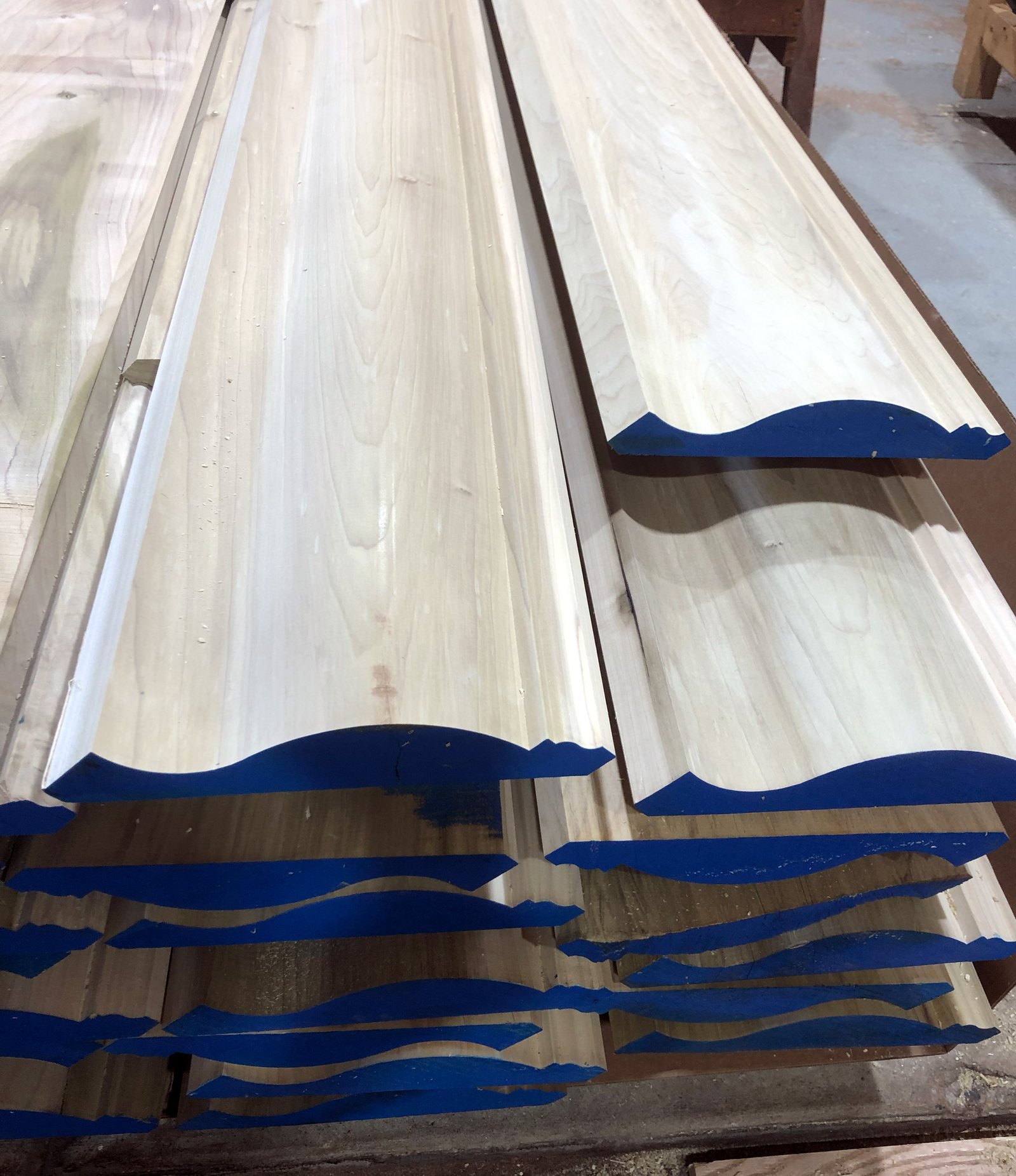
Each entry in a real profile library is a matched set of knives, an index card or database record, and usually a physical sample stick of the finished run. The knives are ground blanks of high speed steel or carbide tipped stock, profiled on their cutting edge to the reverse of the shape you want in the wood. They mount in a head that spins in the moulder. A four head moulder works the two faces and two edges of a blank in one pass, so a crown, a base and a chair rail are all the same operation with different steel in the heads.
The index record is what makes a library searchable. It carries the shop's own profile number, the overall face dimensions, the thickness of the blank the knives were ground for, the species the profile was last run in, and often the job or the house it came off. Thousands of profiles means thousands of those records. Searching the library means matching your drawing or your sample against the dimensions in those records, not scrolling a picture gallery.
The sample stick is the part people forget to ask for. A short length of the actual profile run in the actual species tells you more in ten seconds than a full scale drawing tells you in ten minutes, because it shows how the grain reads across the fillets and how the profile catches light. Ask for one before you approve a long run.
Why Profile Numbers Do Not Transfer Between Shops
The WM series numbers published by the Wood Moulding and Millwork Producers Association describe a set of standard patterns, and everything outside that series is house numbering that means nothing at the next shop. A WM designation for a base cap or a crown is a real common language, and the WMMPA pattern book is the reference point most lumber dealers still use for stock profiles. Outside those patterns, shop number 4172 at one mill and shop number 4172 at another have no relationship at all.
That has a practical consequence for specifiers. Calling out a profile by a number you found on a supplier website, without the dimensions and without a section drawing, invites the wrong shape. Call out the number, the overall height, the overall projection or thickness, and attach a full scale section. If you have a physical piece, send the piece. Dimensions govern. Numbers are shorthand.
Grade language works the same way. The Architectural Woodwork Institute standards define Economy, Custom and Premium grades for architectural woodwork, and naming the grade in a specification sets expectations for joint tolerance, face quality and allowable defects. Naming no grade sets no expectation.
How to Read a Profile Section Before You Order
Five things on a profile section decide whether a run will come out clean, and an experienced buyer checks all five before the knife is ground.
First, overall face width and thickness. These set the blank size, and the blank size sets what the moulder can take and what lumber has to be bought. A profile drawn at seven inches wide cannot be run from four quarter stock that finishes under three quarters of an inch if the shape needs depth at the crest.
Second, the minimum dimension anywhere in the profile. Quirks, beads and fillets that neck down under about a sixteenth of an inch are fragile in the wood and fragile in the steel. They chip in handling and they burn on the moulder. A good grinder will tell you to open that quirk slightly rather than let you find out on site.
Third, the back of the profile. Base and crown are usually relieved on the back, a shallow hollow cut so the member bears on two edges instead of trying to lie flat against a wall that is not flat. That back relief is part of the profile and belongs on the drawing.
Fourth, the spring angle if the piece is a crown. More on that below.
Fifth, the species. A profile with a tight cove and a sharp arris runs beautifully in Hard Maple at roughly 1,450 lbf on the Janka scale and fights you in a soft, stringy stock. Interlocked grain, which is normal in Sapele at roughly 1,410 lbf, wants sharp steel and a slower feed to avoid tearout on the reversing grain. The library record telling you which species a profile was last run in is telling you something useful.
Spring Angle Is the Crown Dimension Everyone Forgets
A crown moulding is defined by its face width and its spring angle together, and specifying one without the other will get you a piece that does not land where the ceiling plan says it lands. Crown sits at an angle in the corner between wall and ceiling. The face width is the measurement across the finished face of the piece. The wall drop and the ceiling projection are derived from that face width and the angle at which the piece springs off the wall.
Run the trigonometry once and it stays with you. A crown at a symmetrical 45 degree spring puts about seventy one hundredths of its face width on the wall and the same amount on the ceiling, so a five and a quarter inch face gives roughly three and three quarter inches of drop and roughly three and three quarter inches of projection. Change to a 38 and 52 spring and the same face width redistributes, giving more to one leg and less to the other. Nothing about the profile shape changed. The reflected ceiling plan changed.
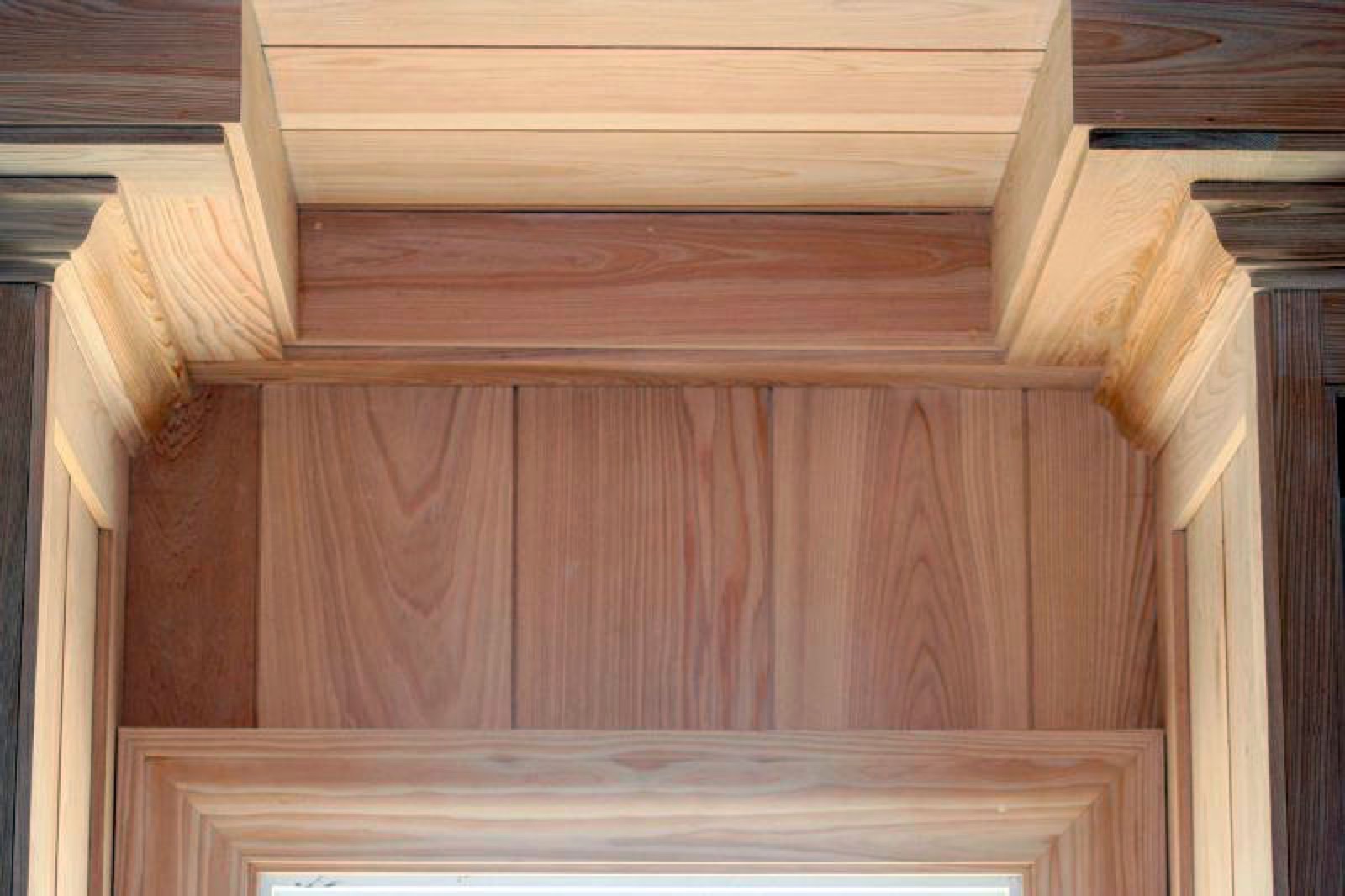
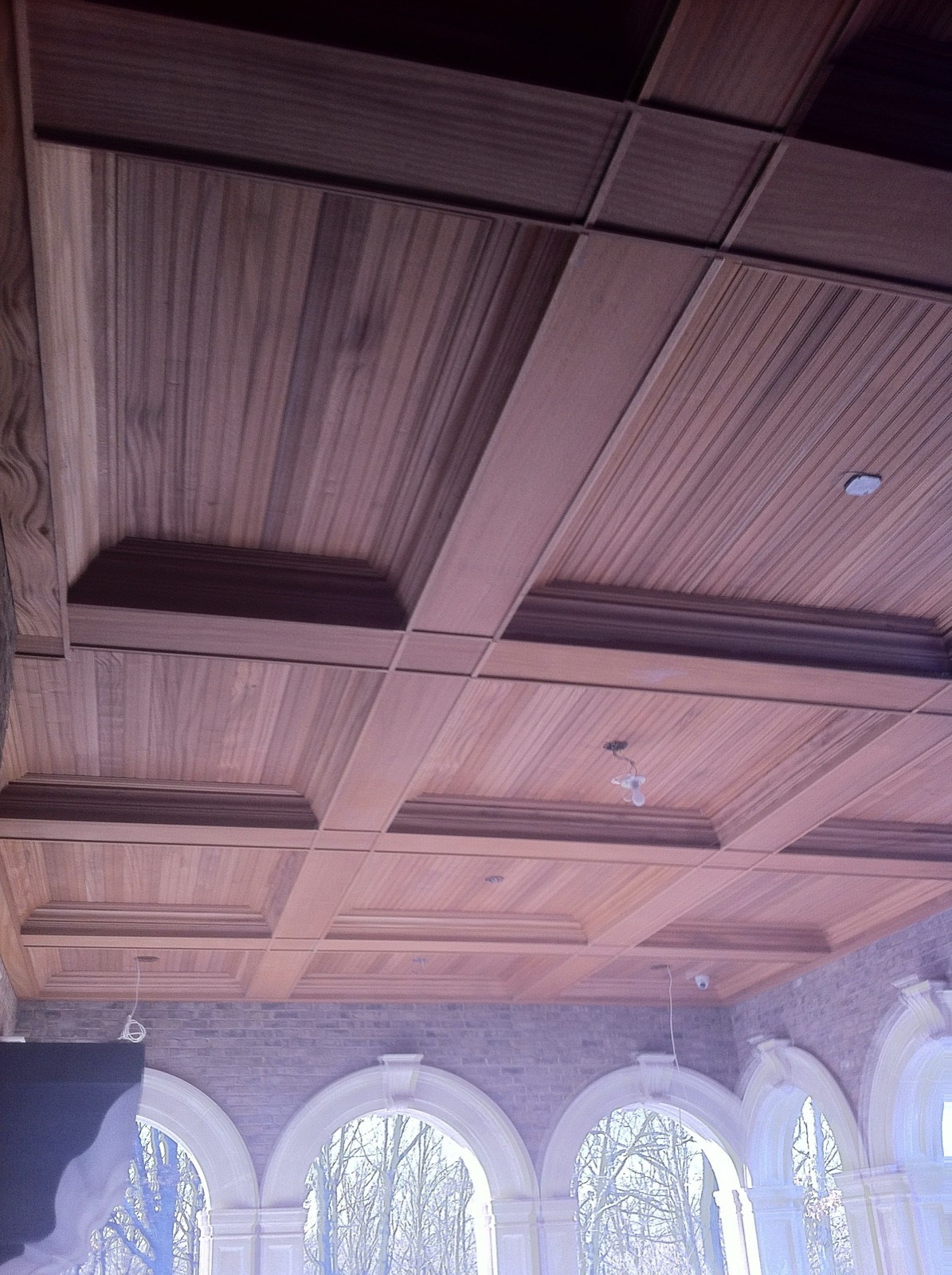
Two more crown realities worth building into a specification. Large crowns are frequently built up from separate members rather than run as one monster piece, because a single blank wide enough for a ten inch face is expensive lumber and hard to keep straight. A built up assembly of a bed member, a cove and a cap can be run from ordinary blank sizes and reads as one heavy cornice on the wall. And crown blanks are often milled with the back already cut at the spring angle, which saves material and gives the installer a bearing surface. Whether you want that is a question to answer at order time, not after delivery.
"The call I want is the one that starts with a photograph of the existing moulding and a tape measure in the shot. From there we can tell you in a day whether the shape is already in our library or whether we need to grind for it, and either way the answer is a real answer instead of a guess. What slows a job down is a profile number with no dimensions attached to it."
Norm Moton, Director of Sales, J. Gibson McIlvain
Base Height, Back Relief and the Joint at the Floor
Base height is a proportional decision driven by ceiling height and by the era the room is imitating, and the profile library is where you go to find a shape that suits the height you picked. Contemporary work runs a lot of five and a half to seven and a quarter inch base. Older houses with tall ceilings carry nine and ten inch base without looking heavy, sometimes assembled as a flat stock member with a separate base cap moulding on top and a shoe at the floor.
The three piece approach is worth understanding when you search a library, because it multiplies your options. A plain square edge board plus a base cap from the library plus a shoe gives you a base profile that does not exist as a single knife set anywhere. It also lets the cap and shoe absorb wall and floor irregularity while the flat member stays flat.
Back relief on base matters more than on any other member. Drywall is not flat, plaster is less flat, and a fully flat backed board telegraphs every hump. Relieved backs let the top and bottom edges bear and hide the rest. Where base meets a wood floor, the shoe or quarter round is what absorbs seasonal floor movement, and the base itself should never be scribed tight to a floor that is going to move. That is installation work, handled by the buyer's own carpenter, but the shop decides whether the parts that make it possible are in the package.
Chair Rail Height, Orientation and the Handrail It Is Not
Chair rail sits between about thirty two and thirty six inches to the top in residential work, and the profile you choose depends entirely on whether it caps a wainscot or floats on an open wall. A chair rail on an open wall is symmetrical enough to read well from above and below. A wainscot cap is a different animal, because it needs a rabbet or a groove on its underside to receive panel or beadboard, and the depth of that rabbet has to match the thickness of the panel material you actually bought.
That is the single most common error in ordering wainscot cap. The rabbet gets specified for a nominal panel thickness and the panel arrives at a real thickness that is a shade different, and now every joint has a shadow line. Send the panel thickness with the order. If the panel is a solid wood raised panel, remember it will shrink across its width in winter, so the cap and the rail below it are what conceal that movement.
Chair rail is decorative trim. It is not a handrail and it is not a wall protection system, and in commercial corridors those are separate items governed by separate rules. Handrail height and graspability requirements from the United States Access Board apply to handrails, not to a moulded chair rail, and a chair rail installed at handrail height in a public corridor does not satisfy anything. Keep the two specifications apart.
| Member | Common finished range | Dimension people forget | Where it fails if wrong |
|---|---|---|---|
| Crown | About 3 to 10 in face width, single or built up | Spring angle, and whether the back is cut to that angle | Wall drop and ceiling projection miss the reflected ceiling plan |
| Base | About 5 to 10 in height, one piece or three piece | Depth of back relief | Board telegraphs wall irregularity and refuses to sit tight |
| Base cap and shoe | Small section members riding on flat stock | Thickness of the flat member the cap sits on | Cap overhangs or steps back at every wall |
| Chair rail on open wall | About 2 to 4 in height, top around 32 to 36 in | Which face is up, since many profiles are not symmetrical | Run arrives readable from the wrong viewing angle |
| Wainscot cap | Similar height with a rabbeted underside | Actual measured panel thickness, not nominal | Shadow gap or crushed fit along the whole wainscot |
Matching a Profile That Is Not in Any Library
Historic restoration almost always ends in a custom ground knife, and the fastest path there is a physical piece of the original in the shop's hands. Send a short offcut if one exists. If nothing can be removed, a full scale rubbing taken with paper and a soft pencil, plus a profile gauge trace and a photograph with a rule in frame, will get a grinder most of the way. A section cut through the member is better than any of those.
Two cautions on matching. The original has shrunk. A base run in 1890 at a nominal dimension is smaller today than it was the day it left the mill, and matching the shrunken piece exactly means your new work will look slightly undersized next to the parts that have not moved. A shop that has done restoration work knows to talk this through rather than trace and grind blind.
The second caution is species. Historic districts that require like for like replacement care about the wood as much as the shape, and the National Park Service technical preservation briefs are the reference reviewers reach for when they evaluate a proposed replacement. J. Gibson McIlvain grinds new knives every week for exactly this kind of work, including difficult historical restoration profiles and contemporary shapes that no pattern book contains.
Species, Grain and Moisture Behind the Profile
The profile is half the specification. The stock it runs in decides whether the run stays straight, holds paint and keeps its arris sharp for thirty years. Paint grade and stain grade are genuinely different purchases. Stain grade demands color and grain continuity across a whole house, which means buying the run together from one lot. Paint grade can carry more color variation but still needs stable, straight stock, because paint hides nothing about movement.
Quartersawn and rift stock move less across the width than plainsawn, and that is the reason to specify them where a painted or panelized surface has to stay flat. On species selection, White Oak sits at roughly 1,360 lbf and Cherry at roughly 950 lbf, and Genuine Mahogany at roughly 800 lbf is soft enough that a fine bead will bruise in handling. For painted exterior trim, Sapele is the better call than Genuine Mahogany. It holds paint better, and it comes in a wider range of sizes and longer lengths. Sapele is not milled 1x8 for exterior use, since that width is too wide to stay stable in service. Cupping in exterior trim is driven by installation detail and back ventilation, not by the species on the packing list.
Cedar remains a sound default for exterior trim and cladding, and the grade language matters. Clear vertical grain, CVG, gives you a quiet, dimensionally calm face for painted or clear finished work. Select tight knot, STK, gives a knotty character face and is a legitimate choice, not a lesser one, as long as the design wants that look. Alongside cedar, J. Gibson McIlvain supplies Sapele, Iroko, Afrormosia, Teak and Utile for exterior trim and cladding, which are the species a millwork shop actually runs, because the dense decking species such as Ipe (Tabebuia spp) and Cumaru are hard on knives and hard to glue at the oil content that makes them last on a deck. Where a species is CITES listed the documentation and chain of custody travel with the material. Chain of custody claims under FSC certification work the same way, following the material rather than the invoice.
Moisture content is the quiet variable. Interior millwork is milled to an in service moisture content near 6 to 8 percent. Exterior work is milled nearer 12 to 16 percent, because it will live in a wetter equilibrium. Running a profile at the wrong moisture is how a crisp arris turns fuzzy and how a base board cups a month after delivery. The Forest Products Laboratory Wood Handbook is the standing reference on equilibrium moisture content and shrinkage coefficients, and Building Science Corporation covers the enclosure side of why exterior trim wets and dries the way it does. Grading language for the underlying lumber comes from the National Hardwood Lumber Association rules, which is what a mill means when it quotes FAS or Select.
On modified wood, Thermory and Abodo Vulcan are both carried, and both, along with Accoya at roughly 1,600 lbf, top out around 16 feet, with most sold on metric lengths just under 16 feet because of kiln size. Thermally modified Ash is not available wider than 8 inches, so a wide board in a modified product means Accoya or Abodo Vulcan. Warranties exist on modified products only. There is no warranty on solid unmodified wood, which is an organic material responding to its environment.
Primed Trim and Finished Cladding Off the Same Line
A moulded profile and a primed profile are two different products, and the priming decision belongs in the same conversation as the knife. J. Gibson McIlvain primes wood in three levels, in both oil based and water based systems. Which level you want depends on how much of the finish work is happening in the field and how long the material will sit before topcoat.
Exterior primed trim should carry a fungicide additive in the primer. Open grained and oily exterior species drink a great deal of finish, so a primer coat is what evens out the eventual painted surface instead of letting the topcoat sink unevenly into the grain. Sanding or buffing after priming knocks back the grain raising that any water based system produces, and doing it in the shop rather than on a ladder is the difference between crisp moulded detail and a softened, muddy profile. Finished cladding follows the same logic, with the added benefit that a factory applied coat reaches the back and the edges, which is exactly where field applied finish never gets.
Storage is the last piece. Finished millwork can be held in inventory rather than pushed onto a site that is not ready for it, which keeps primed material out of the weather and off a wet slab. Delivery goes nationwide, regularly to California.
How J. Gibson McIlvain Would Specify This
Write the specification so a knife could be ground from it without a single clarifying phone call, and the run will come out right the first time. That means each moulding line item carries a full scale section drawing or a physical sample, the overall height and thickness, the spring angle for any crown, the back relief requirement, the species and grade, the sawing pattern where flatness matters, the target moisture content, the lineal footage with waste allowance, the maximum and minimum acceptable lengths, and the priming level if the material is going out primed.
For a painted interior package, the shape comes from the library, the stock is straight grained paint grade milled near 6 to 8 percent, and the primer goes on in the shop. For exterior trim and cladding, the species conversation comes first, the moisture target moves to 12 to 16 percent, the primer carries a fungicide additive, and the crown or band gets its back relieved so it can breathe against the wall. For a restoration, send the piece. The knife gets ground to match, and the library gains an entry.
Where the work goes past linear trim into true custom pieces planned for a specific space, radius trimwork, box beams, custom doors, shutters, gates, pergolas, benches, railings and custom cabinetry come from ICD, the company's architectural millwork division. The ICD trim profiles page is the place to start for shapes that have to be planned around a room rather than pulled off a rack.
J. Gibson McIlvain has been supplying and milling lumber since 1798, and it does not install. The shop mills, primes, packages and ships. The installer takes it from the truck. To search the profile library against a drawing or a sample, or to talk through a crown, base and chair rail package for a specific set of ceiling heights, call 800-638-9100 and ask for the millwork side.
Frequently Asked Questions
How many profiles does a large moulding library actually contain, and how do I search it?
A working mill that has been grinding knives for decades will hold thousands of matched knife sets. J. Gibson McIlvain maintains a library of that size and grinds new knives every week. Searching it is a dimensional exercise rather than a browsing exercise. Send a full scale section drawing, a profile gauge trace, or best of all a short physical offcut, along with the overall height, the overall thickness or projection, and the species you intend to run. The shop matches those numbers against its index records and tells you whether the shape already exists in steel or needs to be ground.
What happens if the crown, base or chair rail profile I need is not in the library?
It gets ground to match. Custom knife grinding is a normal weekly operation, not an exception, and it covers both difficult historical restoration profiles and contemporary shapes that appear in no pattern book. The lead time depends on the grinding queue and on how clean the source information is. A physical sample shortens it. A blurry photograph with no scale lengthens it.
Why does the same profile number mean different things at different suppliers?
Only the WM series patterns published by the Wood Moulding and Millwork Producers Association function as a shared vocabulary. Everything beyond that series is internal house numbering assigned by each shop as it accumulates knives, so an identical number at two mills describes two unrelated shapes. Always pair the number with dimensions and a section drawing.
What is the one dimension most often left off a crown moulding order?
Spring angle. Face width alone does not tell anyone how far the crown drops down the wall or projects onto the ceiling. A symmetrical 45 degree spring splits the face width evenly between wall and ceiling, while a 38 and 52 spring shifts it. If a reflected ceiling plan shows a specific projection, the spring angle has to be on the order along with the face width.
Do I need to tell the shop what wainscot panel material I am using?
Yes, and send the measured thickness rather than the nominal one. The rabbet on the underside of a wainscot cap has to receive the actual panel. A rabbet cut for a nominal thickness that does not match the delivered panel produces a shadow gap or a crushed fit along the entire run, and neither can be fixed on site without recutting.
Should interior and exterior mouldings be milled to different moisture contents?
They should. Interior millwork is milled to an in service moisture content near 6 to 8 percent. Exterior trim and cladding is milled nearer 12 to 16 percent, because it lives in a wetter equilibrium. Running a profile at the wrong moisture is a common cause of fuzzy detail at the arris and of cupping that shows up weeks after delivery.
Can I get the trim primed before it ships?
Yes. Priming is offered in three levels in both oil based and water based systems. Exterior primed trim should carry a fungicide additive. Shop priming reaches the back and the edges, which field finishing never does, and sanding or buffing after priming knocks back grain raising while keeping the moulded detail crisp.
Does the company install the millwork it mills?
No. J. Gibson McIlvain supplies, mills, primes, packages, stores and ships nationwide, regularly to California. Installation, field measurement and installation coordination are handled by the buyer's own carpenter or installer. The shop's job is to deliver parts that are dimensionally correct, at the right moisture content, with the back relief and finish level the installer needs to make a clean job of it. Call 800-638-9100 to talk through a package.
Sources and Standards Referenced
- Wood Handbook: Wood as an Engineering Material, USDA Forest Products Laboratory
- Wood Moulding and Millwork Producers Association
- Architectural Woodwork Institute
- National Park Service Technical Preservation Briefs
- United States Access Board, ADA Accessibility Standards
- National Hardwood Lumber Association
- The Wood Database, Sapele
- Forest Stewardship Council
- Building Science Corporation