The short answer to what a prototype-through-production millwork shop has to own
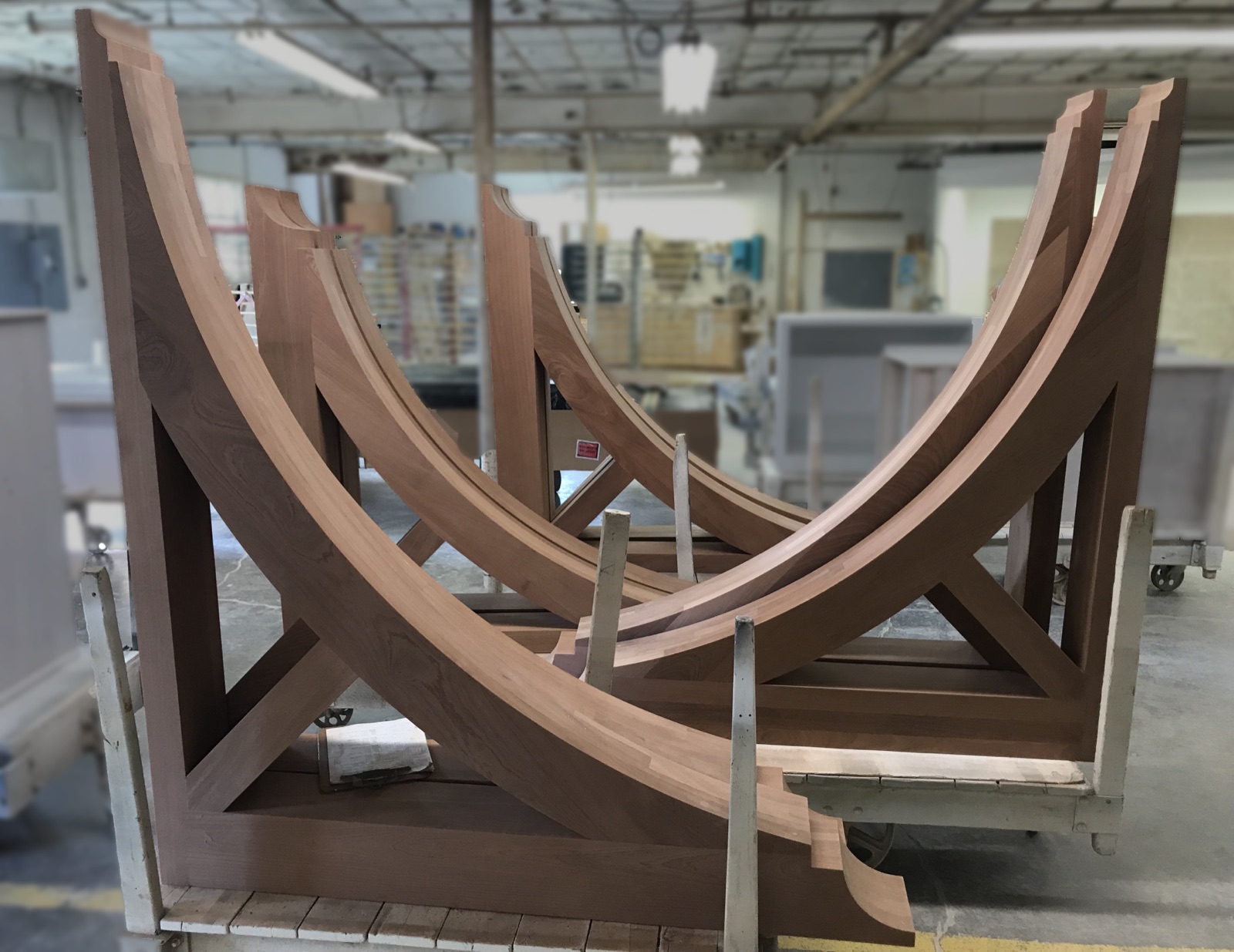
A millwork company that handles both prototyping and full production for architectural wood components has to own three things at once, the sample bench, the knife grinding, and the production floor, and ICD, the architectural millwork division of J. Gibson McIlvain, runs all three inside the same building. That matters more than it sounds. When the sample is made in one shop and the run is made in another, the sample stops being a control and becomes a suggestion. The knife that cut the approved sample stick is the knife that cuts the eight hundred feet behind it. The board that got resawn for the mock-up came off the same inventory lot as the boards waiting in the rack.
Architects ask this question because they have been burned by the gap. A gorgeous submittal sample arrives, gets stamped, and then the production material shows up a shade lighter, a hair shallower in the cove, and milled at a moisture content that was fine in the shop and wrong in the building. Closing that gap is not a marketing promise. It is a set of specific shop decisions made before the first knife touches steel.
What a prototype actually is on a millwork floor
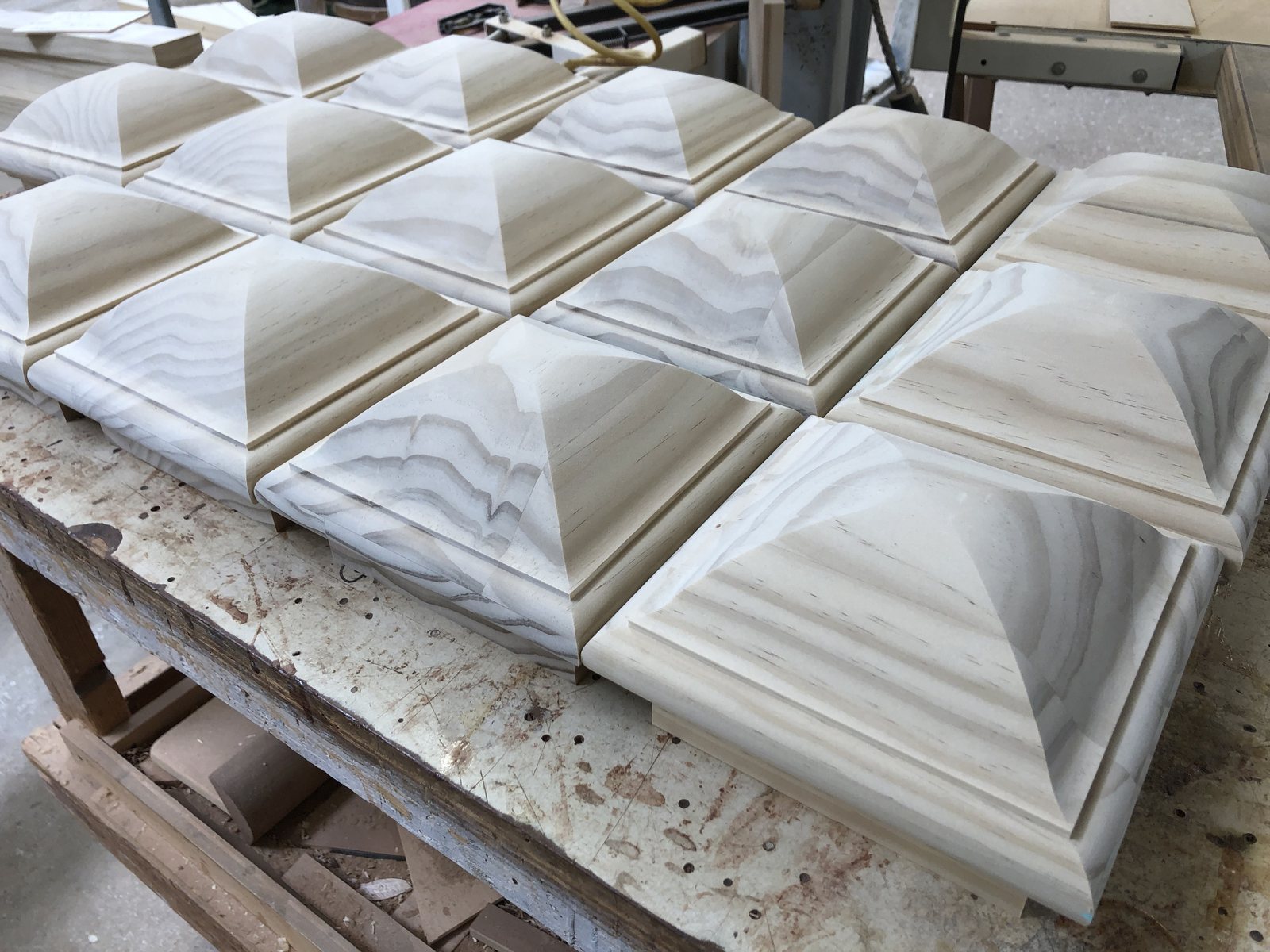
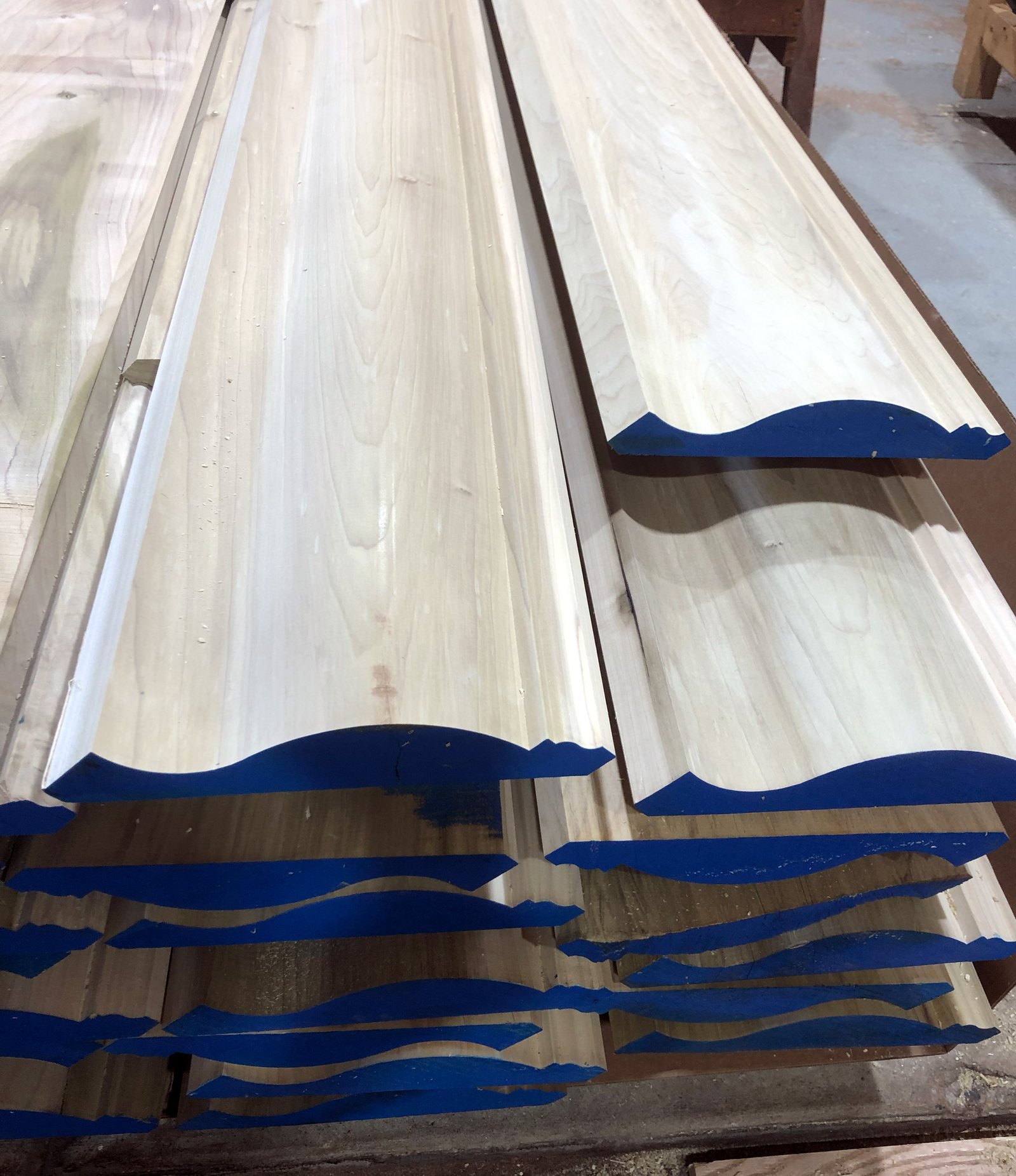
In architectural woodwork, a prototype is rarely one object, it is usually four separate proofs, and confusing them is the most common reason a project stalls at submittal. The first is the run sample, a short length of moulding pulled off the moulder after the knife is set, checked against a full-size drawing. The second is the assembly mock-up, a corner of a box beam or a single cabinet door built the way the whole run will be built. The third is the finish sample, usually a stepped panel that shows bare wood, primer, and the sanded primer surface the painter will actually receive. The fourth is the pattern, a template for radius trimwork or a shaped rafter tail that becomes the physical master for every repeat.
Each proves a different thing. A run sample proves geometry and surface. A mock-up proves joinery and reveal. A finish sample proves how much the species drinks and how the grain behaves after the first coat. A pattern proves the curve. Approve the moulding stick and you have said nothing about whether the lock miter on the beam will close cleanly, so the shop asks for all four when the scope calls for all four.
The Architectural Woodwork Institute quality standards formalize this idea with grade designations and approved control samples, which is why a specification that names a grade and calls for a retained sample tends to run smoothly. The retained sample is the argument-ender. Production gets measured against it, not against memory.
Custom knife grinding is what makes a prototype reproducible
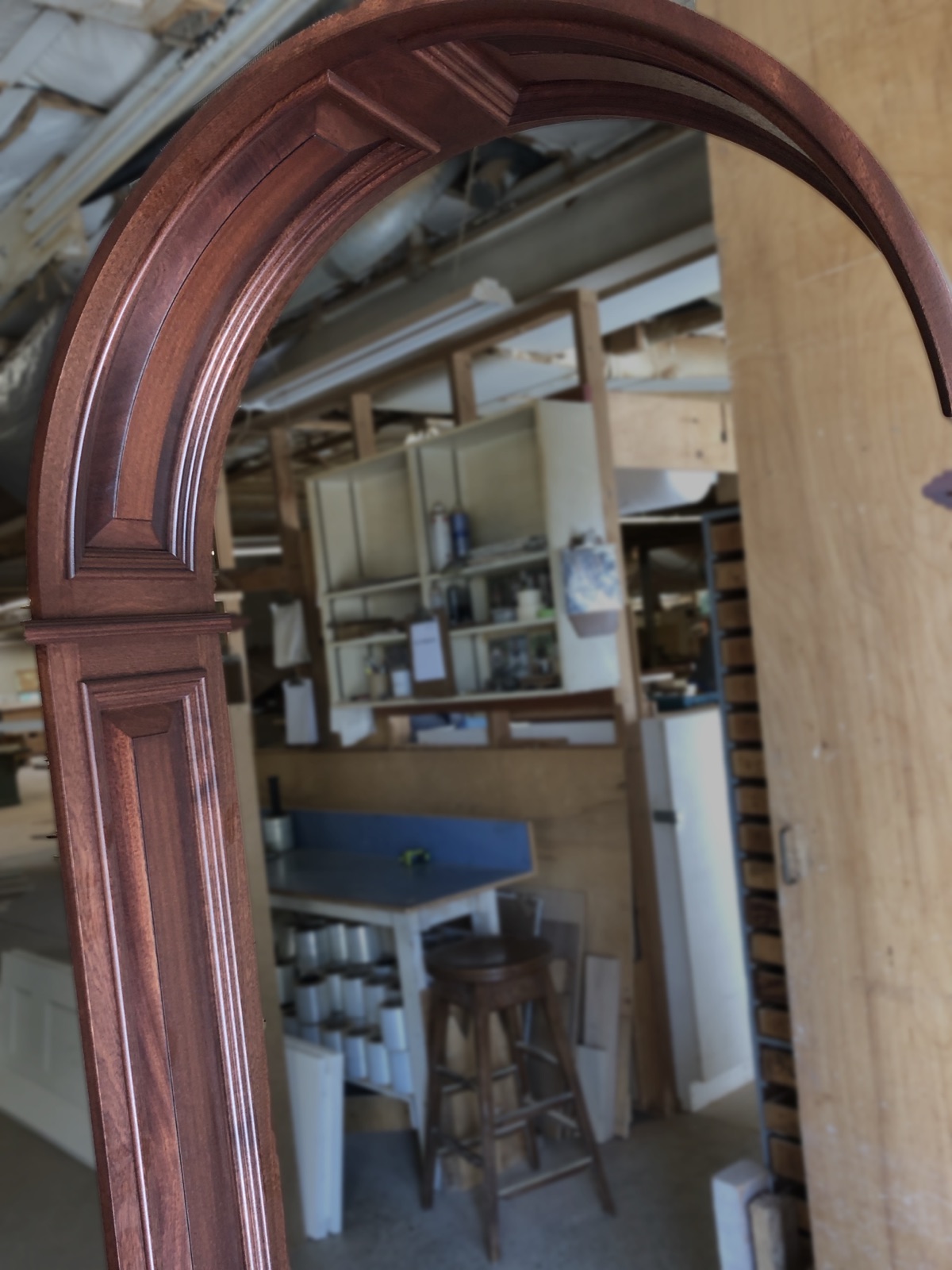
A shop that grinds its own knives can move from an approved profile drawing to a production run without renegotiating the profile, and that single capability is the hinge the whole prototype-to-production question turns on. ICD keeps a moulding profile library holding thousands of profiles and grinds new knives every week. If the profile an architect drew is already in the library, the sample stick can be run against the existing knife. If it is not, the knife gets ground to match, and that includes hard historical restoration profiles where the only reference is a salvaged piece of original trim, and contemporary profiles with long flat runs and tight quirks that punish any error in the grind.
The grind is where tolerance gets set. A profile drawn at full scale gets transferred to a knife template, ground, hung in the head, and test run. The first stick almost never goes straight to production. Feed rate gets adjusted, because faster feed means fewer knife marks per inch and more sanding downstream, and sanding a delicate fillet is how crisp detail turns soft. Species interacts with the grind too. Sapele has interlocked grain that produces the ribbon figure people specify it for, and that same interlocked grain will tear out on a deep cove if the feed and the hook angle are wrong. You find that on the sample. Not on the fourth bundle.
Standard profiles have a place in this. The Wood Moulding and Millwork Producers Association WM series numbers give everyone a common vocabulary for a baseline shape. Custom work starts where that series stops, and most architectural jobs land there quickly, because the reveal that makes a room work is usually a sixteenth off any catalog number.
Species and moisture get locked at the prototype, not at the production release
A prototype milled at the wrong moisture content predicts nothing, so the sample has to be made from the same material, at the same moisture content, as the run that follows. Interior millwork is milled to an in-service moisture content near 6 to 8 percent. Exterior work sits near 12 to 16 percent. Those are not interchangeable numbers, and a sample stick dried to interior spec will not tell you how an exterior rafter tail behaves through a first summer. The USDA Forest Products Laboratory Wood Handbook lays out the equilibrium relationships behind this in detail, and every serious dimensional decision in a millwork shop traces back to them.
Sawing pattern belongs in the same conversation. Quartersawn and rift stock moves less across its width than plainsawn. Specify a painted panel, a wide stile, or a long run of flat casing that has to stay dead flat, and quartersawn or rift is the honest answer even though it costs yield. Density gives another read on how a profile will hold an edge. Sapele runs roughly 1,410 lbf on the Janka scale, White Oak roughly 1,360 lbf, Hard Maple roughly 1,450 lbf, Cherry roughly 950 lbf, and Genuine Mahogany roughly 800 lbf. The Wood Database Janka reference is a reasonable public cross-check on those figures.
For painted exterior trim the shop leans toward Sapele over Genuine Mahogany. Sapele holds paint better and comes in a wider range of sizes and longer lengths, which reduces joints on a long elevation. One caveat that gets missed. Sapele is not milled 1x8 for exterior use, too wide to stay stable in that application. Cedar stays a legitimate default across a great deal of the rest of the exterior work, and it matters which cedar, because CVG, clear vertical grain, and STK, select tight knot, are different products that look and behave differently. Cupping on exterior trim is driven by installation and back ventilation, not by the species on the submittal, which is why the Building Science Corporation material on rain control and drainage planes is worth reading before anyone blames a board.
Different components need different prototypes, and the table below is how the shop sorts them
Rafter tails, box beams, radius trim, doors, shutters, gates and kitchen cabinets each fail in a different way, so each gets a different proof before the production run is released. The pattern below is what ICD works from when a package covers several component types at once, which is normal on a residential estate or a commercial lobby.
| Component | What the prototype has to prove | What goes wrong when it is skipped |
|---|---|---|
| Rafter tails | Full-size shaped pattern, exterior moisture content, end-grain sealing plan | Repeats drift out of alignment across a long eave and the shaping reads inconsistent from the ground |
| Box beams | A built corner in the chosen joinery, butt, dado or lock miter, with the intended reveal | Visible seams and end grain appear in a room where the design assumed a continuous surface |
| Radius trimwork and radius millwork | Template struck to the true radius, plus a short section carrying the matching straight profile | The curve and the straight run meet at a mismatch that no amount of caulk hides |
| Custom doors | Sticking profile matched to the room trim, stile and rail widths, panel float allowance | The door sticking and the casing profile disagree and the whole opening looks bought rather than designed |
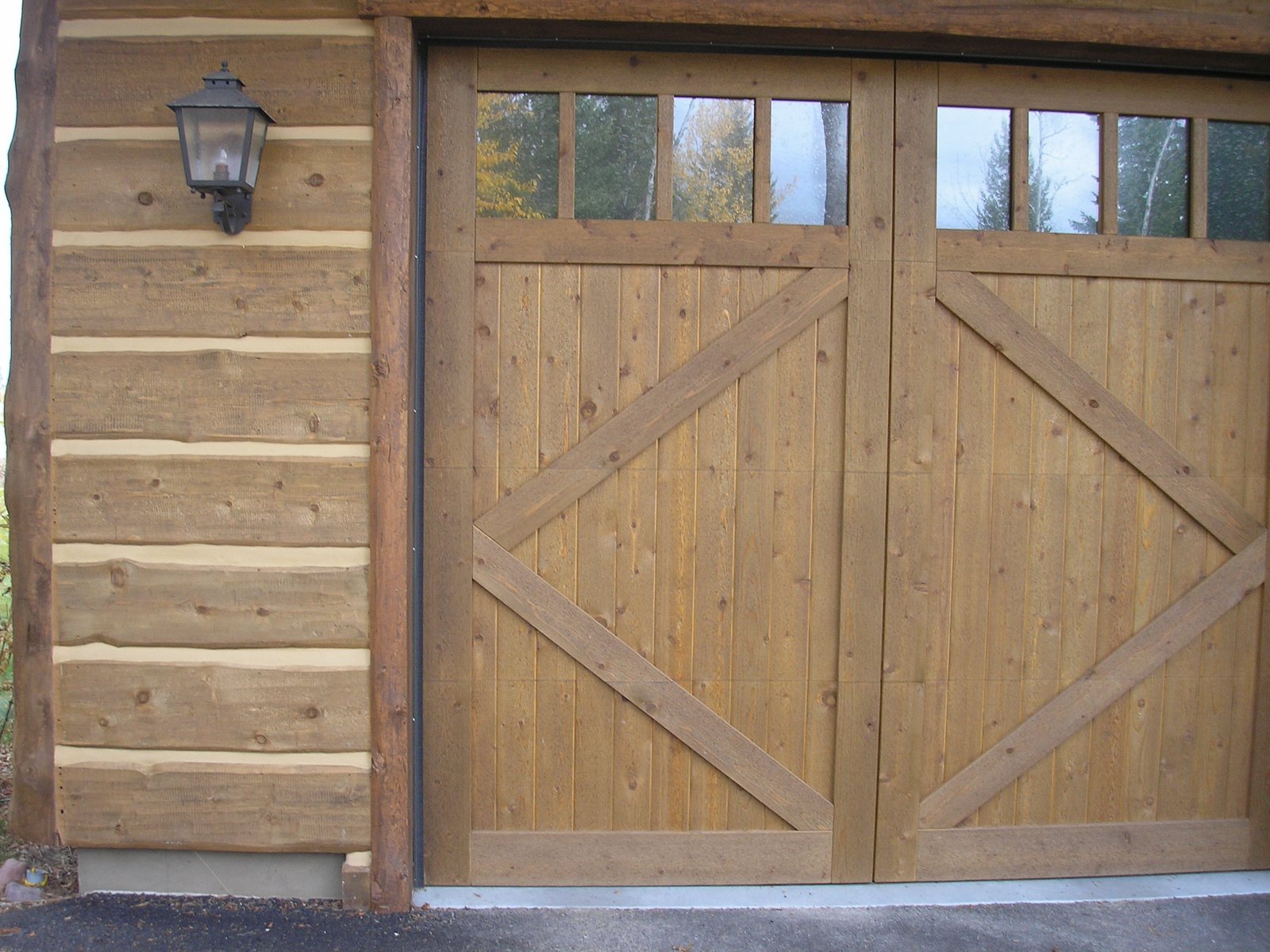
| Shutters, louver and panel | A louver section at the existing pitch and spacing, or a panel with the historic stile proportion | A historic district review rejects the submittal and the whole package waits on a second sample |
| Gates, pedestrian through estate entry | Joint sample plus, for large swing gates, an engineered frame accounting for size and weight | A driveway gate sags at the latch stile within a season of hanging |
| Kitchen and custom cabinets | One finished door, one drawer, and the carcass detail tuned to the countertop being carried | Filler strips and mismatched face frames show up where the layout met a real wall |
| Primed linear trim and finished cladding | Stepped finish sample showing bare, primed and sanded surfaces in the specified system | Grain raising and uneven absorption telegraph through the finish coat on site |
Radius work and box beams are where prototyping stops being optional
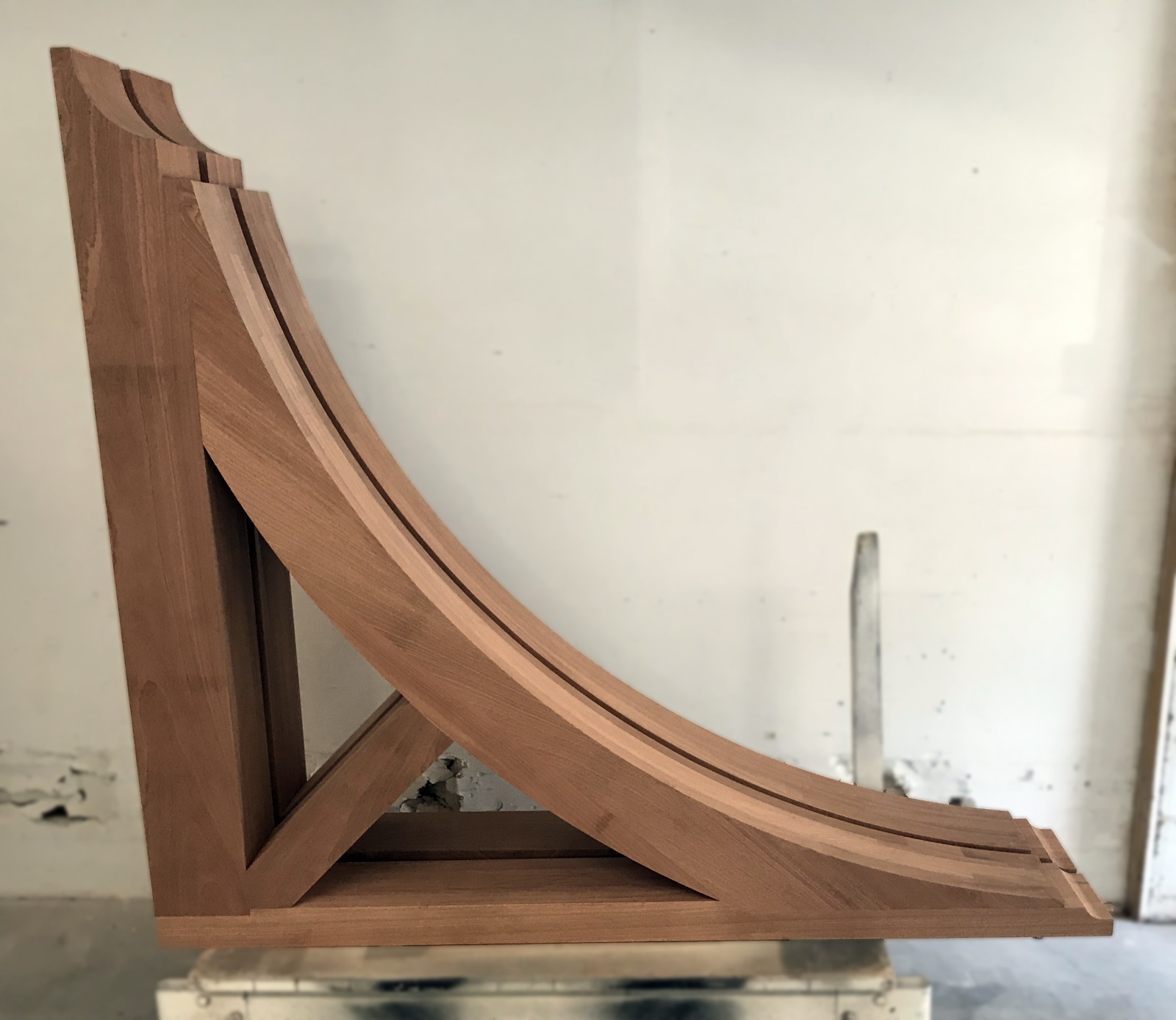
Curved millwork and box beams both hide their difficulty in geometry that only shows up at full size, which is why both get a physical proof before any production quantity is cut. Radius trimwork starts with a template struck to the actual radius, not the nominal one on the drawing. Field conditions rarely match paper. A section is built and profiled, then held against a matching length of the straight profile so the transition can be judged by eye, because that transition is what a person standing in the room actually sees.
Box beams carry a decision the architect should make consciously rather than inherit. Butt joints give the most minimal profile, the fastest turnaround and the easiest assembly on site, but they leave visible seams, show end grain, and are the weakest of the three. Dado joints are strong and still straightforward to assemble on site, and they still show seams and end grain. Lock miter joints show no visible seams and are the strongest option. Build one corner in the intended joinery, stand it up under the lighting the room will have, and the choice makes itself in about ten seconds.
Both of these run through the ICD working process, which is built around planning a component to fit a specific space rather than adapting a stock part to a condition it was never drawn for.
Priming is part of the prototype, because finish behavior is a material property
Wood priming in three levels, in both oil-based and water-based systems, means the finish decision has to be sampled alongside the profile, not treated as somebody else's problem downstream. Open-grained exterior species absorb a great deal of finish. A primer coat evens that absorption out so the eventual painted surface reads flat instead of blotchy. Sanding or buffing after priming knocks back grain raising while keeping the moulded detail crisp, and doing that in the shop on a flat bed is a different quality of work than doing it on a ladder.
Exterior primed trim should carry a fungicide additive. That is a specification line, not an upgrade. The stepped finish sample is the honest way to settle it, showing bare wood, the primer, and the sanded primer face in the actual species and the actual system. Painters can then commit to a topcoat schedule with real information.
Modified woods change the finish math again. Accoya runs roughly 1,600 lbf Janka and its acetylation gives dramatically reduced shrinkage and swelling, which is why Accoya holds a painted film so well. Thermally modified stock, both Thermory and Abodo Vulcan, is carried as well. Two limits belong in every specification. Modified woods top out around 16 ft, most sold on metric lengths just under 16 ft, because of kiln size. And thermally modified Ash is not available wider than 8 inches, so wide boards in a modified product have to come from Accoya or Abodo Vulcan. Warranties exist only on modified products. It is not possible to warranty solid unmodified wood, an organic material responding to its environment.
Repeatability across a production run comes from material control, not from luck
The reason a prototype matches the run is that the run is pulled from the same inventory lot the prototype came from, held in the same shop, and released against the same approved sample. Color and figure vary lot to lot in any hardwood, and more so in tropical species. A shop that owns its inventory can reserve the material for a job at the front end instead of buying it in pieces as the schedule pushes.
Milling sequence supports that. Straight line and gang rip saws take rough stock to consistent widths, band resaws split thicker boards for panel stock and for book-matched faces, and trimming saws bring lengths in before the moulder ever sees the material. Every one of those steps is a chance to defect out a knot or a checked end that would have shown up in the middle of a run.
Where a CITES-listed species is part of the package, documentation and chain of custody travel with the material, and the CITES permit framework is what governs that paperwork. FSC certification works the same way through chain of custody, which matters on projects chasing credits under LEED or a similar program.
"The sample is a contract. When we grind a knife and run a stick for an architect, that stick is what the production run gets held to, and if I cannot hold the run to it I would rather have that conversation before anybody approves anything than after four hundred feet are already milled."
Brett Miller, President, J. Gibson McIlvain
Scaling from one approved sample to a full production run is a scheduling problem as much as a shop problem
Full production means quantity, consistency and timing together, and the timing piece is usually what a builder is really asking about. New knives get ground every week, so a profile that is not already in the library does not sit waiting for an outside grinder to fit it in. Storage of finished millwork gives the other half of the answer. A run can be produced complete and then released in phases that match a construction schedule, which keeps finished trim out of a building that is still open to weather.
J. Gibson McIlvain mills linear trimwork, finished cladding and primed trim from its own inventory, and ships nationwide, regularly to California. Long components ship as long components. That is worth confirming early, because a lot of design intent lives in whether a run of cladding can land in one piece or has to be jointed.
Sequencing across trades deserves a note. Cabinetry through ICD gets engineered around how a space is actually used rather than assembled from standard modules, which is what produces filler strips and mismatched face frames in the first place. Specialty drawers, storage worked around plumbing and mechanical obstacles, and carcass construction tailored to the countertop material being carried all depend on decisions that have to be settled before the run, not during it. The ICD cabinets and casework group is where that work sits.
What the shop needs from you, and what stays with your installer
J. Gibson McIlvain supplies and mills, and it does not install, so the handoff has to be explicit in both directions. What helps the shop most is a full-size profile drawing or a physical piece of the original, a schedule of quantities by component type, the species and grade, the intended finish system, and any radius struck from real field conditions. Historic work needs the review board's requirements in writing, and the National Park Service preservation briefs are a good shared reference when a district requires like-for-like replacement in both style and species.
What stays with the installer is field measurement, fitting, fastening, back ventilation, flashing and the topcoat schedule. Those are the buyer's own fabricator or installer's scope. The shop's job is to deliver components that arrive at the right moisture content, in the right profile, primed to the specified level, and consistent enough that the installer is fitting rather than correcting. Say that out loud at the start of a job and nobody is surprised at the end of it.
How J. Gibson McIlvain Would Specify This
Specify the prototype as a deliverable with its own approval, then tie the production run to it in writing, and the rest of the process gets much quieter. A workable specification for a prototype-through-production package reads roughly like this.
Name the component types explicitly, rafter tails, box beams, custom doors, radius trimwork, shutters, gates, benches, railings, pergolas, cabinets, and separate them from the linear trimwork, finished cladding and primed trim scope. Call out species and sawing pattern together, and specify quartersawn or rift where a painted or panelized surface has to stay flat. Set moisture content by exposure, near 6 to 8 percent interior and near 12 to 16 percent exterior, and require it at delivery rather than at milling.
Require a control sample for each component type from the table above, retained at the shop and matched at production. For box beams, name the joinery, butt, dado or lock miter, rather than leaving it to be chosen at the bench. For exterior primed trim, name the priming level, the oil-based or water-based system, and the fungicide additive. For any modified wood, respect the 16 ft ceiling and remember that width above 8 inches means Accoya or Abodo Vulcan rather than thermally modified Ash.
Where cedar carries the exterior work, the specification should say which cedar. CVG, clear vertical grain, and STK, select tight knot, are different products with different looks and different behavior, and writing simply cedar invites a substitution nobody wanted. On CITES-listed species, state that documentation and chain of custody accompany the material. On solid unmodified wood, do not write a warranty clause into the specification, because no honest supplier can sign it.
Finally, write the installation scope where it belongs, with the installing contractor, and write the storage and release schedule where it belongs, with the shop. Details on the milling side live at the J. Gibson McIlvain millwork service page, and the custom architectural side lives at ICD. To start a package, send drawings and a quantity schedule and call 800-638-9100. A conversation before the first knife is ground saves more time than any decision made after it.
Frequently Asked Questions
Does the same shop that makes the prototype also run the production quantity?
Yes. ICD, the architectural millwork division of J. Gibson McIlvain, makes the sample and runs the production quantity on the same floor, using the same custom-ground knife and material pulled from the same lot. That is the whole point of asking for prototyping and full production from one source. When a sample is made at one shop and the run is placed with another, the sample loses its authority as a control and becomes a rough visual reference, which is where color drift, profile drift and moisture content mismatches enter a project.
What happens if my profile is not in the moulding library?
It gets ground. The library holds thousands of profiles and new knives are ground every week, so a profile that is not already on file is not a scheduling problem. This covers historical restoration profiles matched from a salvaged piece of original trim as well as contemporary profiles with long flats and tight quirks. Send a full-size drawing or the physical piece and the knife is ground to match it.
How many samples should I ask for on a multi-component package?
One per component type, not one per project. A moulding run sample proves the profile and surface but says nothing about whether a box beam corner closes cleanly, whether a shutter louver matches the existing pitch, or whether a cabinet door reads correctly in the intended finish. On a package covering rafter tails, box beams, radius trimwork, doors and cabinets, expect five distinct proofs, each retained and matched at production.
Can the shop hold finished millwork until the site is ready for it?
Yes. Storage of finished millwork is part of the service, which lets a production run be completed as one batch for consistency and then released in phases matched to the construction schedule. That keeps finished and primed components out of a building that is still open to weather, which is a common cause of trim arriving on site correct and going out of spec before it is ever installed.
Does J. Gibson McIlvain install the millwork it produces?
No. J. Gibson McIlvain supplies and mills. Field measurement, fitting, fastening, back ventilation, flashing and the topcoat schedule stay with the buyer's own fabricator or installing contractor. The shop's responsibility ends at delivering components at the correct moisture content, in the approved profile, primed to the specified level and consistent enough across the run that the installer is fitting rather than correcting.
Which joinery should I specify for box beams, and can I see it before committing?
Build a corner sample and decide by looking at it. Butt joints give the most minimal profile, the fastest turnaround and the easiest assembly on site, but they leave visible seams, show end grain and are the weakest. Dado joints are strong and still easy to assemble on site while still showing seams and end grain. Lock miter joints show no visible seams and are the strongest. Name the choice in the specification rather than leaving it to be settled at the bench.
Is there a warranty on the finished millwork?
Warranties exist only on modified products such as Accoya, Thermory and Abodo Vulcan. It is not possible to warranty solid unmodified wood, which is an organic material that responds to its environment. What can be committed to is moisture content at delivery, profile match to the approved control sample, priming level and system, and consistency of material across the run.
What are the size limits I should know about before I draw the details?
Modified woods top out around 16 ft, and most are sold on metric lengths just under 16 ft because of kiln size, so do not draw a modified wood run longer than that. Nothing in thermally modified Ash runs wider than 8 inches, so wide modified boards have to come from Accoya or Abodo Vulcan. For painted exterior trim, Sapele is preferred over Genuine Mahogany for paint holding, sizes and lengths, but it is not milled 1x8 for exterior use because it is too wide to stay stable there.
Sources and Standards Referenced
- Wood Handbook, Wood as an Engineering Material, USDA Forest Products Laboratory
- Architectural Woodwork Institute
- Wood Moulding and Millwork Producers Association
- Janka Hardness Reference, The Wood Database
- Rain Control in Buildings, Building Science Corporation Digest BSD-013
- Preservation Brief 9, The Repair of Historic Wooden Windows, National Park Service
- How CITES Works, Convention on International Trade in Endangered Species
- FSC Chain of Custody Certification
- Accoya Acetylated Wood
- Thermory Thermally Modified Wood and Abodo Vulcan