
What a Control Sample Actually Proves

A control sample proves that one shop, using one set of knives on one piece of stock, produced the part you approved, and it carries no authority over the wood it did not come from. That sounds narrow. It is narrow, and the narrowness is what makes it useful. The control sample becomes the physical standard every later piece gets measured against, so its claims have to stay inside what a single piece of wood can honestly support.
Four things a control sample settles cleanly. It settles profile geometry, meaning the flats, fillets, coves and reveals came off the moulder in the proportions the detail drawing called for. It settles knife accuracy, because the sample is proof the grinder read the drawing correctly. It settles species and grade, since the approver is looking at real fiber rather than a name on a schedule. And it settles the finish sequence, showing how that species takes a primer or a clear coat at the sanding grit the shop intends to use.
Everything else is inference. A reviewer who signs a sample and assumes the whole run will look identical has confused a standard with a guarantee. The correct mental model is a reference point, not a promise. A run is judged against the sample and accepted when it falls inside an agreed band around it, and the size of that band is the conversation most approval meetings skip.
Finish Samples, Profile Samples and Control Samples Answer Three Different Questions
Approving one type of sample does not approve the others, and most disputes on a millwork package trace back to a reviewer who thought a single signed piece covered all three. The words get used loosely on job sites. The shop floor treats them as separate objects with separate purposes.
A finish sample, sometimes a drawdown or a step panel, answers questions about color, sheen and opacity. It is small on purpose. Nobody should be reading grain character or milling quality off a four inch panel.
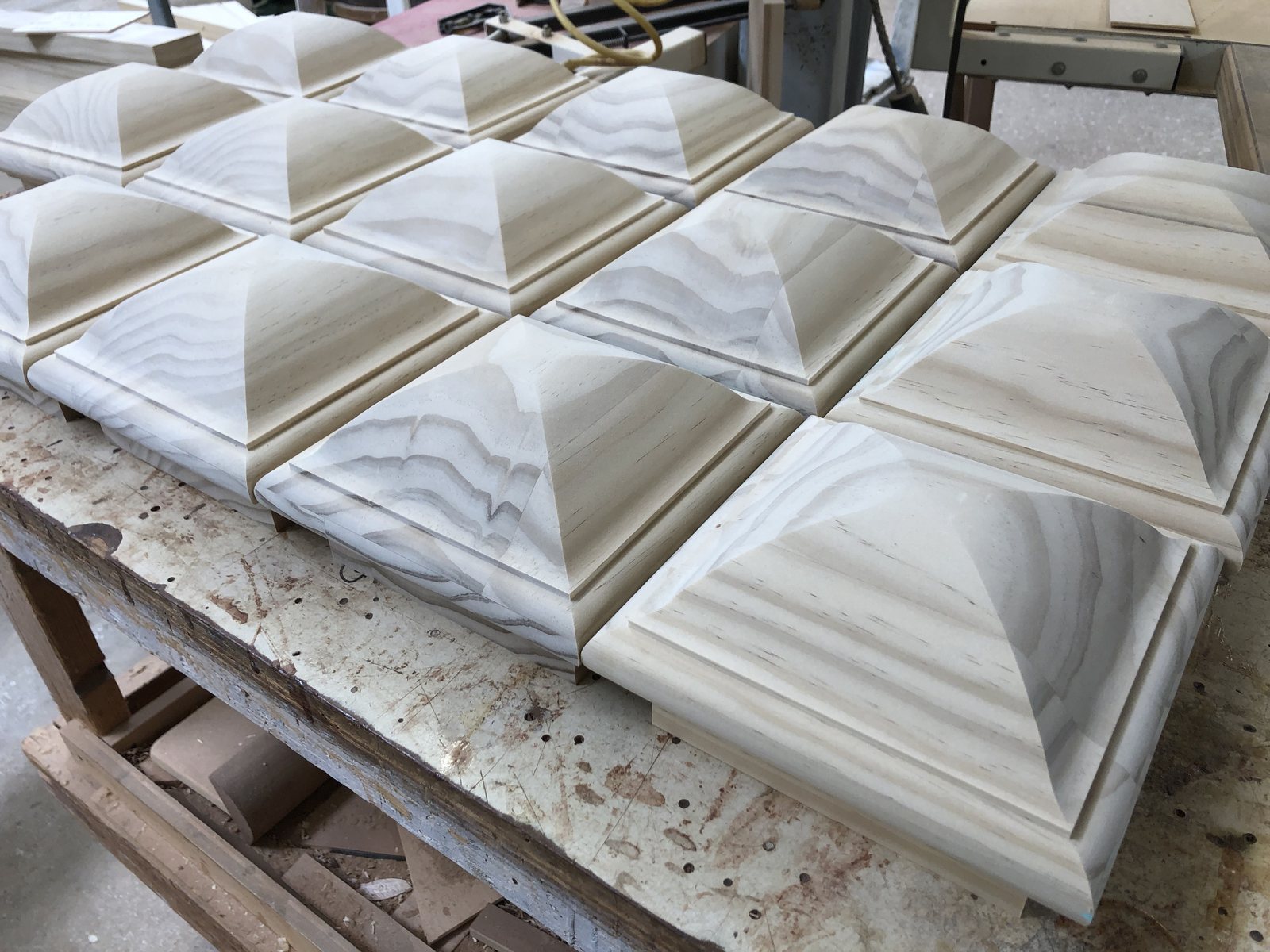
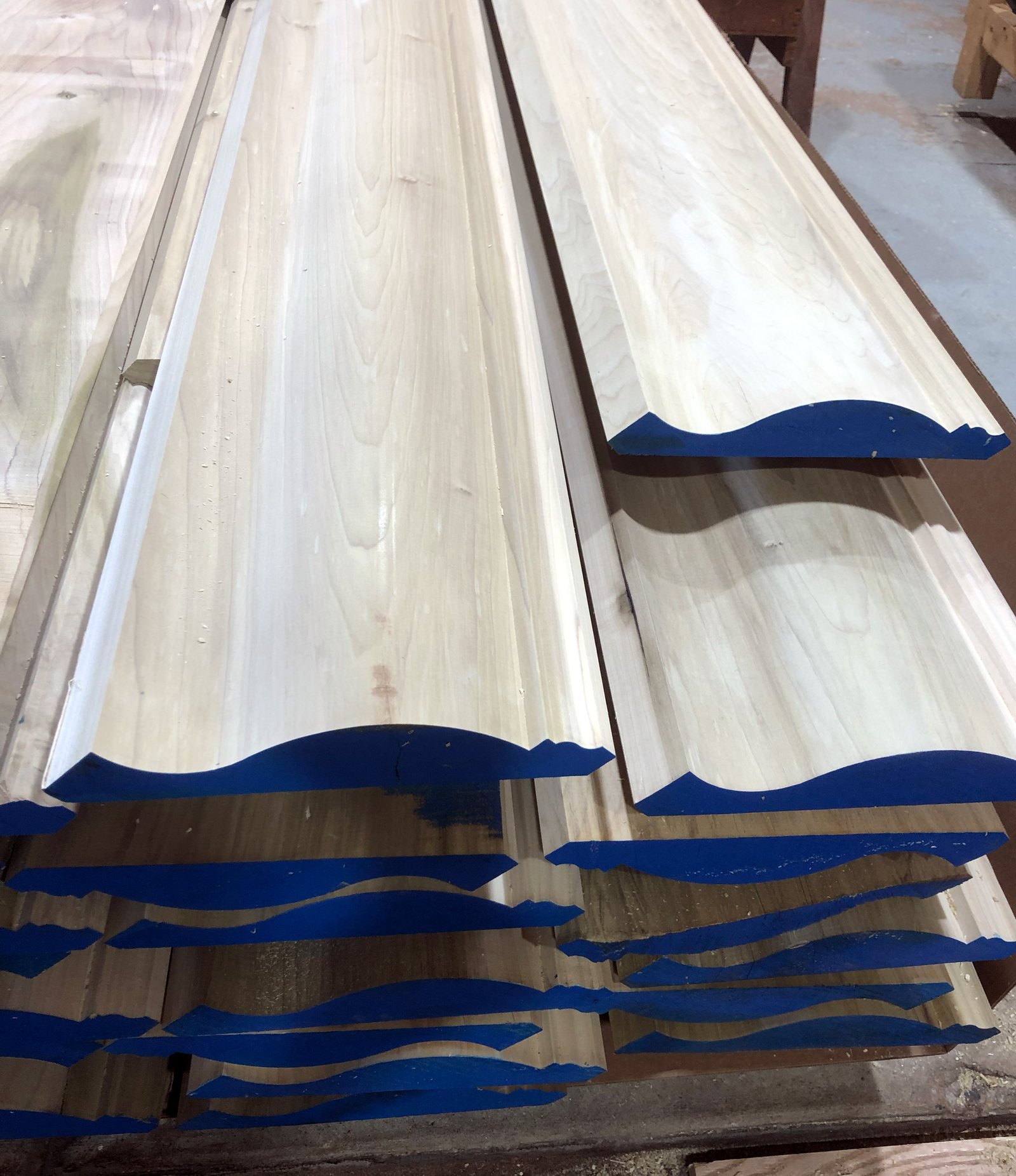
A profile sample, or knife proof, is a short length pulled off the moulder to confirm geometry before the run stock is committed. It is sometimes run in a secondary species since the question is shape, not fiber. Confirming the shape first protects the stock reserved for the run.
A control sample is the production standard. Run species, run grade, run moisture content, run finish. It gets tagged, logged and retained, and it is the piece the shop pulls off the shelf eighteen months later when the second phase of the building needs matching trim. On assemblies, the equivalent is a mockup, a real corner of a box beam or a stile and rail section of a gate, built the way the whole unit will be built.
| Sample type | Settles | Leaves open | Best time to approve |
|---|---|---|---|
| Finish or drawdown panel | Color, sheen, opacity, primer build, how the coating sits on that species | Grain character across the run, milling quality, how the coating reads on a moulded edge | Before the shop commits to a coating system |
| Profile sample or knife proof | Geometry against the detail drawing, knife accuracy, feed quality and tearout behavior | Color, grade, finish adhesion, length availability | After knife grinding, before run stock is dressed |
| Control sample | Species, grade, profile, moisture target and finish sequence together on production material | Board to board color range, seasonal movement in service, field fit | After the first production setup, before the full run |
| Range sample set | The honest spread of color and figure the run will contain | Geometry and finish detail, which the control sample already carried | Alongside the control sample on any clear finished species |
| Assembly mockup | Joinery reads, reveal lines, panel proportions, hardware clearance on gates and doors | Full unit weight behavior, site tolerances, substrate conditions | Before releasing an assembly package to production |
What a Control Sample Cannot Prove

A control sample cannot promise color uniformity across a run, cannot predict a year of seasonal movement, and cannot confirm that the lengths on the schedule exist in the world. These three gaps cause more rejected deliveries than milling errors do.
Start with color. Sapele runs from a light pinkish brown to a deep reddish brown, and quartersawn stock carries a ribbon figure that shifts dramatically with viewing angle and light. Utile is quieter and slightly more open grained. Iroko arrives golden and darkens toward brown with exposure. Afrormosia holds a tight, even texture that reads close to Teak. The published species data gives a range for a reason. A single control sample sits somewhere inside that range and says nothing about the width of it. The fix is simple. Ask for a range set, three pieces bracketing light, middle and dark, approved together with the control sample. Now the acceptance band is documented instead of assumed.
Second, movement. Wood responds to the humidity around it for its entire service life, and no sample can be approved out of that fact. Quartersawn and rift stock moves less across its width than plainsawn, which is why it gets specified for painted panels, wide stiles and anything that has to stay flat under a coating. The dimensional behavior tables in the Forest Products Laboratory Wood Handbook are the reference to argue from when a specifier wants a wide flat panel in plainsawn material.
Third, length. A twenty four inch sample says nothing about whether the profile can be delivered in sixteen foot runs. This matters most on modified woods. Accoya, Thermory and Abodo Vulcan all top out around sixteen feet, and most of that material sells on metric lengths just under sixteen feet, a limit set by kiln size rather than by the tree. Thermally modified Ash is not available wider than eight inches at all, so a wide board in a modified product means Accoya or Abodo Vulcan. Approve a sample in a size that cannot be supplied and the approval is worthless.
There is a fourth gap worth naming. A sample proves nothing about installation. J. Gibson McIlvain supplies and mills architectural components. It does not install them. Backpriming, fastener selection, ventilation behind cladding and the detailing at end grain all belong to the installing contractor, and cupping in service is driven by those choices far more than by species.
Moisture Content Is the Variable That Makes a Sample Lie
A sample milled at the wrong moisture content looks perfect on the approval table and fails in the building. This is the single most common reason a run that matched its control sample still gets rejected on site.
Interior millwork is milled to an in service moisture content near six to eight percent. Exterior work sits near twelve to sixteen percent. Those are not shop preferences. They are the equilibrium ranges the material will find once the building is conditioned, and milling to the wrong one guarantees dimensional change after the parts leave the shop. A door stile milled at fourteen percent and installed in a conditioned interior will shrink, and the panel reveal the architect approved on the mockup will open.
The approval tag should carry the moisture reading, the meter type and the date. A reviewer who signs a sample without that number has approved an appearance and left the physics unaddressed. Enclosure references from Building Science Corporation are useful here when the argument turns to what the interior of a specific building will actually hold once mechanical systems run.
Timing matters too. A sample approved in February in a dry conditioned office and a run produced in August tell different stories if the shop does not control storage. Finished millwork held in conditioned storage for inventory control stays at the moisture content it was milled to, which is the whole reason storage is part of the service rather than a favor.
Approving a Profile Means Approving a Knife
The knife, not the sample stick, is the object that has to survive for the life of the project. A control sample is a picture of a knife at one moment. The knife is what reproduces it.
Custom knife grinders sit on the floor alongside the moulders, and new knives get ground every week. The profile library holds thousands of patterns. When a submitted detail does not match anything in it, a knife gets ground to the drawing, which is the same process used for difficult historical restoration profiles and for contemporary details that have no stock equivalent. The WM series standard profiles cover the common stock shapes, and anything outside that catalog is a grinding job rather than a shelf item.
Restoration work raises the stakes. A historic district may require like for like replacement, which means the replacement profile has to match the original in both shape and species, and the approval record has to demonstrate that. The Secretary of the Interior's Standards for the Treatment of Historic Properties is the framework most review boards apply, and a signed control sample with a retained knife is the cleanest evidence a project team can put in front of one.
Radius work deserves its own approval. A straight sample does not prove a curved part. Radius trimwork and radius millwork change the way a profile presents, since the geometry of the cove and the shadow line shift around the arc, and the layup or bending method affects the visible face. Approve curved elements on a curved sample at the actual radius. ICD, the architectural millwork division of J. Gibson McIlvain, runs radius trimwork and radius millwork alongside straight profiles, and its trim profile work is where those approvals get set.
Assemblies Need Mockups, Not Chips
Any component made of more than one piece of wood has to be approved as an assembly, because the joint is the part that will be argued about later. A finish chip and a profile stick cannot answer a joinery question.
Box beams make the clearest case. There is a real choice to make. Butt joints give the most minimal profile, the fastest turnaround and the easiest on site assembly, but they leave visible seams and visible end grain and they are the weakest of the three. Dado joints are strong and still straightforward to assemble on site, though seams and end grain still read. Lock miter joints show no visible seams and are the strongest of the three. Those differences are invisible on a drawing and obvious on a mockup corner, which is why the corner should be built and looked at before the beam package releases.
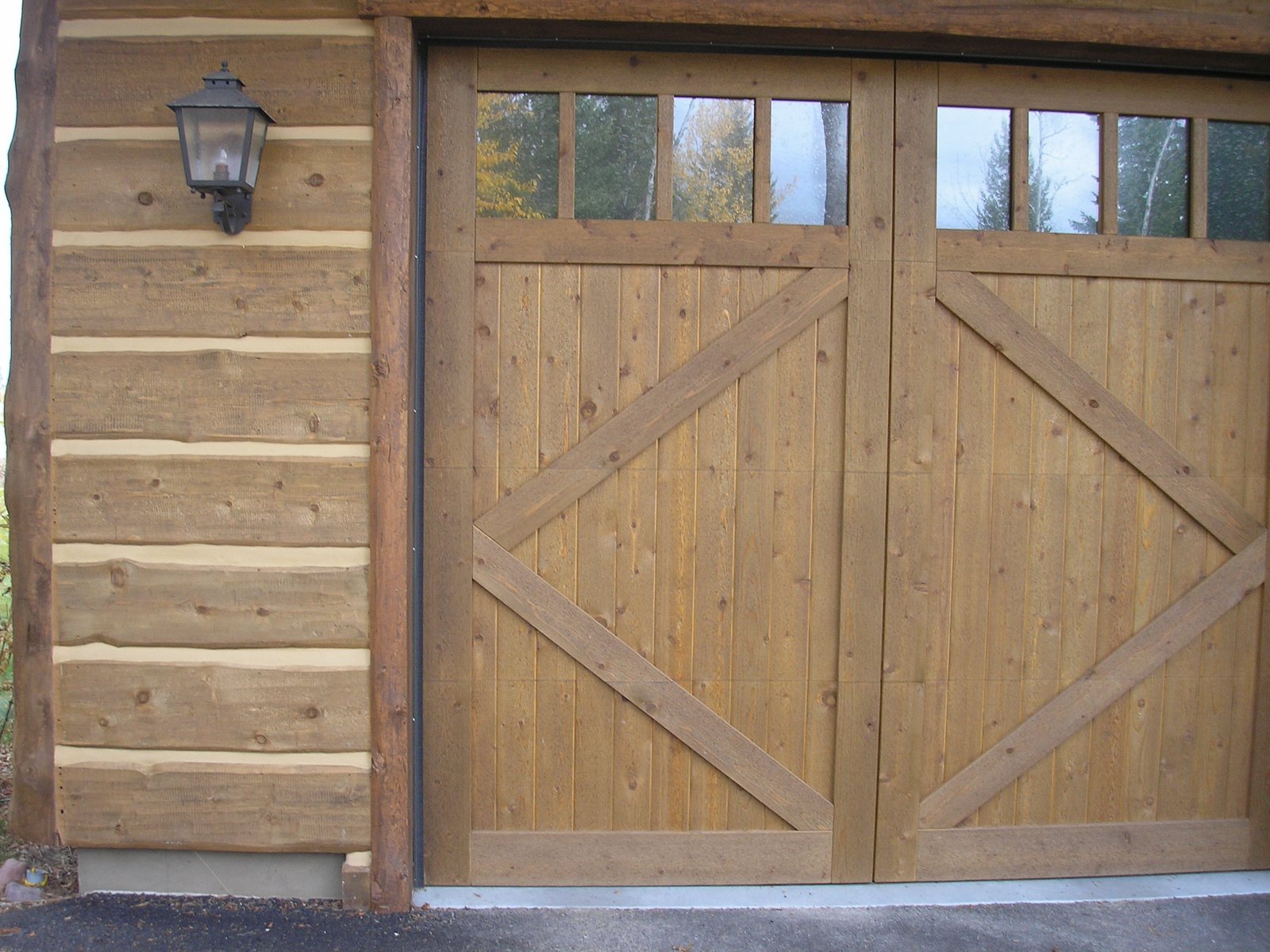
Custom doors, gates and shutters follow the same logic. A pedestrian, garden or courtyard gate can be judged from a stile and rail mockup. Large driveway swing gates are a different problem, since size and weight push them into engineering rather than craftsmanship alone, and no sample substitutes for that engineering. Shutters come in louver and panel styles, including complete historical matching for style and species, so the mockup on a historic replacement should be a full louver section rather than a single blade.
Cabinetry is where sample logic breaks down hardest. A door sample proves a door. It says nothing about whether the run of cabinets was planned around the space. Kitchen cabinetry through ICD, J. Gibson McIlvain's architectural millwork division, is engineered around how the room gets used rather than assembled from standard modules, which is what produces filler strips and mismatched face frames in the first place. Specialty drawers, storage worked around plumbing and mechanical obstructions, and construction tailored to the countertop material being carried all belong to the shop drawing review, not to the door sample. The cabinets and casework approach starts from the room. Reviewers should approve the plan and the door sample as two separate acts.
A Primed Sample Tells You About the Primer, Not About the Paint
Primer is a substrate treatment, and approving a primed sample settles how the wood was prepared rather than how the finished wall will look. Reviewers routinely sign a primed stick and then express surprise at the topcoat.
J. Gibson McIlvain primes wood in three levels, in both oil based and water based systems, as part of its millwork service. Exterior primed trim should carry a fungicide additive. Open-grained and oily species absorb a great deal of finish, so the primer coat is doing real work evening out what the eventual painted surface will look like. Sanding or buffing after priming knocks back the grain raising while keeping the moulded detail crisp, and that step is worth calling out on the approval tag since it changes the final read of a fine profile.
For painted exterior trim, Sapele is the better specification than Genuine Mahogany. It holds paint better and comes in a wider range of sizes and longer lengths. One constraint travels with it. Sapele is not milled in a 1x8 for exterior use, since that width is too wide to stay stable in exterior service, so a detail drawn at eight inches needs to be redrawn or built up. Sapele runs roughly 1,410 lbf on the Janka scale, close to Hard Maple at roughly 1,450 and White Oak at roughly 1,360, while Genuine Mahogany sits near 800. Accoya, at roughly 1,600, brings acetylation that dramatically reduces shrinkage and swelling.
The Approval Tag Should Carry Grade, Certification and Documentation, Not Just a Signature
A control sample without a written grade, a moisture reading and a chain of custody reference is an opinion, not a standard. The paperwork is what makes the sample enforceable months later.
Grade should be stated in the language of the National Hardwood Lumber Association rules where hardwood grading applies, since a shop and an architect using different definitions of clear face will disagree on delivery. Certification claims belong on the tag as well. FSC certified material carries its own documentation, and J. Gibson McIlvain is an FSC certified importer and miller. Where a species carries a CITES listing, documentation and chain of custody travel with the material, and the sample record should reference it so the buyer is not chasing paperwork during closeout.
One boundary belongs on every approval conversation. There are no warranties on solid unmodified wood. It is an organic material responding to its environment, and no shop can warranty that response. Warranties exist only on modified products, where the manufacturer stands behind the process. Accoya, Thermory and Abodo Vulcan all sit in that category, and both Thermory and Abodo Vulcan are carried. A sample of solid Sapele, Iroko, Afrormosia, Teak, Utile, White Oak, Genuine Mahogany or Cedar sets a standard for appearance and workmanship. It does not create a performance guarantee, and any reviewer who believes otherwise should hear that plainly before signing.
Cedar deserves a note here since it appears constantly on exterior packages. It is a legitimate default, and the grade distinction matters on the tag. Clear vertical grain, CVG, and select tight knot, STK, are different products with different appearances, and approving a sample of one while the schedule reads the other is a preventable dispute.
Why Prototyping and Production Under One Roof Changes What the Sample Means
A sample means more when the shop that made it is the shop that will run the job, because the knife, the moulder setup, the grader and the finish line all stay the same. Split the work between a prototyping shop and a production shop and the control sample becomes a target rather than a standard.
Consider what actually transfers between two shops. A drawing transfers. A photograph transfers. A knife profile can be reground from a template with reasonable accuracy. What does not transfer is the feed rate that produced a tearout free surface in ribbon figured Sapele, the grader's read on what clear face means for that project, the sanding grit that made the primer sit right, and the moisture history of the stock. Those are the variables that separate a sample from a run, and they live in a specific building.
Straight line and gang rip saws, band resaws, trimming saws, moulders and knife grinders on one floor mean the prototype and the production parts move through the same sequence. The retained control sample stays in the same building as the knife that made it. When phase two of a project releases, the shop pulls both. That is the practical argument for keeping prototyping and full production for architectural wood components inside one shop, and it is how ICD structures its work from first drawing through delivery, described in its working process.
"The sample is a contract between us and the architect about what good looks like. What I tell people is to sign it knowing exactly what it covers. It covers our workmanship, the profile and the grade. It does not cover what the building is going to do to the wood after it leaves here, and it does not cover the range of color that is natural to the species. Once everybody agrees on that, approvals stop being a fight."
Norm Moton, Director of Sales, J. Gibson McIlvain
Build the Approval Record So It Still Works Two Years From Now
The value of a control sample is measured on the day someone needs to match it, not on the day it is signed. Most samples get approved carefully and stored carelessly.
A record that holds up carries a few items. The sample itself, tagged with project, elevation or room reference, species, grade, profile number, moisture content at milling, finish system and date. A range set where a clear finish is involved. A note on the joinery method for any assembly. A retained knife or a knife identification that ties back to the profile library. And a statement of the acceptance band, meaning what variation from the sample the project team has agreed to accept.
Quality standards from the Architectural Woodwork Institute give a common vocabulary for that band, and citing a grade of work in the specification saves the argument about whether a variation is a defect or an inherent characteristic. Retention matters as much as documentation. Finished millwork held in conditioned storage stays usable as a reference, while a sample left in a job trailer through two summers becomes evidence of nothing.
One more habit worth adopting. Photograph the approved sample under the lighting the finished space will use. Wood color reads differently under warm and cool sources, and a Sapele panel approved under shop fluorescents can surprise everyone under a warm interior scheme.
How J. Gibson McIlvain Would Specify This
Specify the sample program as a sequence of decisions rather than a single approval event, and name what each step covers. The sequence below is what a well run architectural millwork package looks like from the shop side.
Approve the profile first, on a knife proof, before run stock is committed. Approve the finish system second, on a drawdown, against the actual species. Approve the control sample third, on production material at the specified moisture content, and approve a range set beside it on anything receiving a clear coat. Approve assemblies fourth, on a mockup corner or a stile and rail section, with the joinery method stated. For box beams, decide between butt, dado and lock miter joints on the mockup rather than on the drawing.
Write the species palette realistically. For milled, glued and machined architectural components, Sapele, Iroko, Afrormosia, Teak and Utile carry the work. Sapele is the strong default on painted exterior trim, remembering it is not milled in a 1x8 for exterior use. The tropical decking species, Ipe with the botanical name Tabebuia spp, along with Cumaru, Garapa, Jatoba and Red Balau, are extremely hard and carry high oil content, which makes them difficult to glue, so a millwork shop reaches for the first group instead and reserves the decking species for actual decking.
State moisture targets in the specification. Near six to eight percent for interior work, near twelve to sixteen percent for exterior. Call out quartersawn or rift stock anywhere a painted or panelized surface has to stay flat. Put grade in NHLA language. Require the approval tag to carry moisture reading, finish system and certification references, and require the shop to retain both the sample and the knife.
Be explicit about the boundary. J. Gibson McIlvain mills, primes, stores and ships architectural millwork nationwide, including regularly to California, and ICD, its architectural millwork division, produces true custom work planned for a specific space, from rafter tails and pergolas to gates, box beams, custom doors, shutters, benches, railings and exterior millwork. Installation, field measurement and installation coordination belong to the buyer's own contractor. Design the sample program around that split and the approvals will hold.
To set up a sample program on a specific package, call 800-638-9100 or reach the team through mcilvain.com and bring the profile drawings, the species schedule and the finish intent to the first conversation.
Frequently Asked Questions
Does approving a control sample mean the entire run will match it exactly?
No. A control sample sets a reference standard, not a guarantee of identical appearance. Wood carries natural variation in color and figure within a species, and a single piece sits somewhere inside that range without defining its width. The way to handle this is to approve a range set of three pieces bracketing light, middle and dark alongside the control sample, and to write down the acceptance band the project team agrees to. Then a delivered board is judged against a documented spread rather than against one lucky stick.
What information should appear on the approval tag?
Project and elevation or room reference, species, grade in NHLA language where hardwood grading applies, profile number or knife identification, moisture content at milling with the meter type and date, the finish system including primer level and whether the piece was sanded or buffed after priming, and any certification or chain of custody reference. Where a CITES listed species is involved, documentation and chain of custody travel with the material, so the record should point to it. A tag with only a signature and a date is very hard to enforce a year later.
Can a control sample cover a curved or radius component?
Not adequately. A straight sample proves the profile geometry as cut, but a curved part presents that geometry differently, since the cove and the shadow line shift around the arc and the layup or bending method affects the visible face. Radius trimwork and radius millwork should be approved on a curved sample run at the actual project radius. ICD, the architectural millwork division of J. Gibson McIlvain, produces both straight and radius profiles, so the curved sample comes off the same setup that will run the job.
How does a primed sample relate to the final painted appearance?
A primed sample shows the substrate preparation, not the topcoat. It confirms the primer level, whether the system is oil based or water based, whether an exterior fungicide additive was included, and how the moulded detail survived the sanding or buffing step. Open-grained and oily species absorb a great deal of finish, so the primer is doing real work evening out the surface the paint will sit on. Approve the topcoat separately on a drawdown against the same species.
Is Sapele or Genuine Mahogany the better choice for painted exterior trim?
Sapele. It holds paint better and comes in a wider range of sizes and longer lengths, which matters on a package with long uninterrupted runs. One limit applies. Sapele is not milled in a 1x8 for exterior use, since that width is too wide to stay stable outdoors, so a detail drawn at eight inches needs to be redrawn or built up from narrower stock. Cupping in service is driven by installation and back ventilation rather than by species choice.
Does an approved sample come with a warranty on the wood?
No. There are no warranties on solid unmodified wood. It is an organic material that responds to the environment it is placed in, and no shop can warranty that response. Warranties exist only on modified products such as Accoya, Thermory and Abodo Vulcan, where the manufacturer stands behind the modification process. A control sample of solid Sapele, Iroko, Afrormosia, Teak or Utile sets a standard for workmanship, profile and grade, and that is the extent of what it promises.
Should box beam joinery be decided on a drawing or a mockup?
On a mockup. The three options read very differently in person. Butt joints give the most minimal profile, the fastest turnaround and the easiest on site assembly, but they show seams and end grain and are the weakest. Dado joints are strong and still easy to assemble on site, though seams and end grain still show. Lock miter joints show no visible seams and are the strongest. Build a corner, look at it under project lighting, then release the package.
Does J. Gibson McIlvain install the millwork it produces?
No. J. Gibson McIlvain mills, primes, stores and ships architectural millwork nationwide, including regularly to California, and ICD, its architectural millwork division, produces custom components planned for a specific space. Installation, field measurement and installation coordination belong to the buyer's own contractor. That split is worth writing into the sample program, since backpriming, fastener selection, ventilation and end grain detailing all happen in the field and none of them are covered by a shop sample.
Sources and Standards Referenced
- Wood Handbook, Wood as an Engineering Material, USDA Forest Products Laboratory
- Architectural Woodwork Institute
- Wood Moulding and Millwork Producers Association
- National Hardwood Lumber Association
- The Secretary of the Interior's Standards for the Treatment of Historic Properties, National Park Service
- Building Science Corporation
- CITES, Convention on International Trade in Endangered Species of Wild Fauna and Flora
- Forest Stewardship Council
- Sapele species data, The Wood Database
- Accoya acetylated wood