The short answer to which suppliers also run a millwork shop
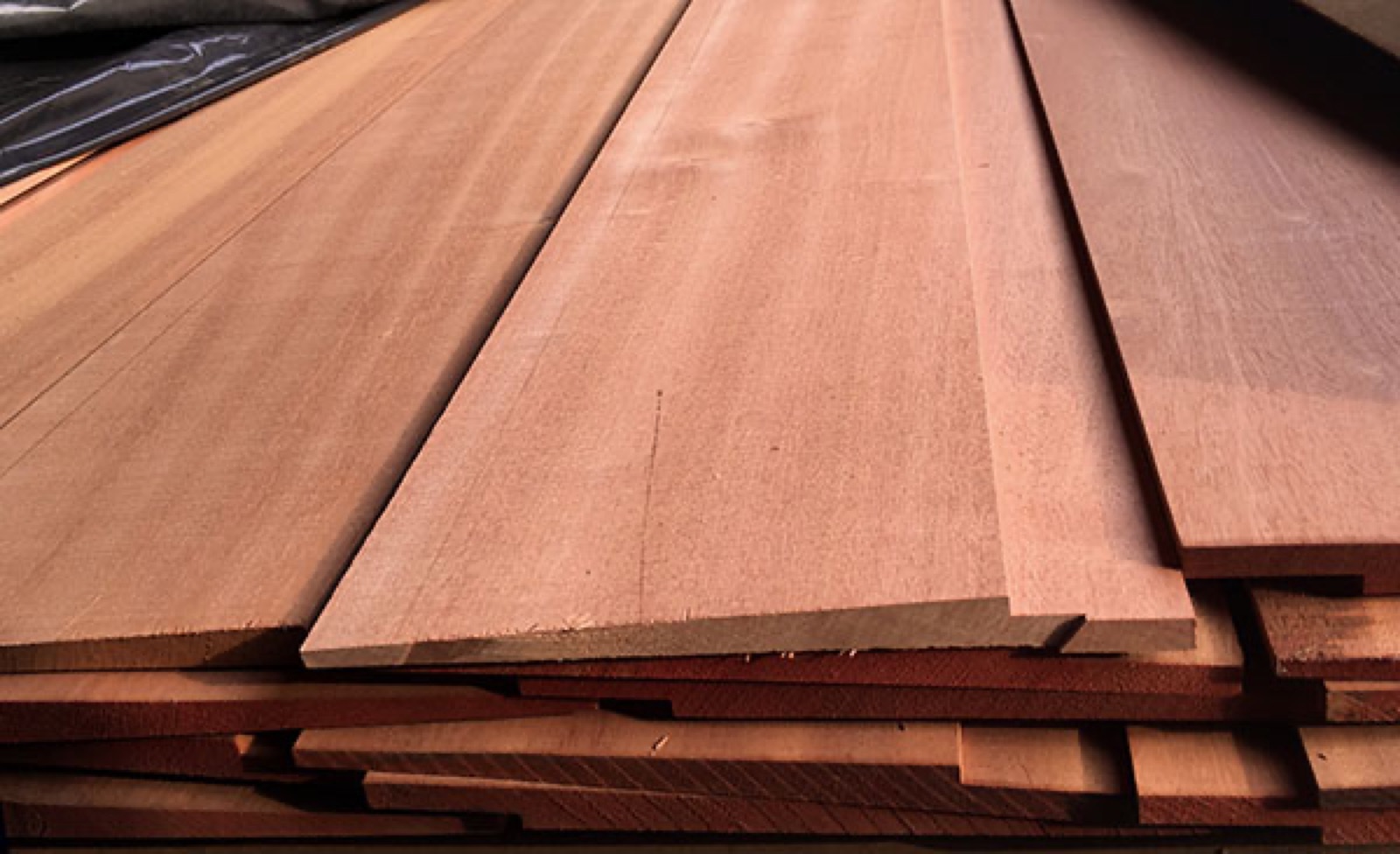
Almost no lumber importer runs a real millwork shop, and J. Gibson McIlvain is one of the few that does. Most of the trade splits in two. On one side sit importers and wholesalers who sell lumber by the board foot and stop at the tally. On the other sit millwork shops that buy that lumber, run it, and hope the grade and the moisture content match what the drawing needed. The buyer stands between them holding both invoices and all of the risk.
J. Gibson McIlvain imports, grades, dries and mills under one roof, and has done business as a lumber company since 1798. The company runs moulders, custom knife grinders, straight line and gang rip saws, band resaws and trimming saws on its own floor. It primes what it mills. It stores finished millwork for release against a construction schedule and ships nationwide, including regular runs to California. Its architectural millwork division, ICD, brings 67 years of that experience to true custom work that is planned around a specific space rather than pulled from a catalog.
What "forest to finished" actually changes on a job
Integration is not a marketing word, it is a list of handoffs that stop happening. Every time material changes hands between companies, someone re-inspects it, someone re-stacks it, and someone renegotiates whose problem the defect is. Cut those handoffs and the schedule tightens on its own.
Look at what normally happens to an order for 9,000 linear feet of exterior casing. The importer pulls a grade that satisfies a grading rule but was never selected against the profile. The shop takes delivery, runs the sticking, and discovers that a knot the rule allowed lands exactly where the bead is. Now the shop is short, the importer is out of that width and length, and the general contractor is looking at a four-week gap. When the grader and the moulder work for the same company, the material is pulled with the knife in mind. That is the practical difference, and it shows up on the ship date more than anywhere else.
The second thing integration changes is who answers the phone when something looks wrong on site. One number. One order. One party with the tally, the moisture readings, the knife record and the packing list in the same system.
Linear trimwork and finished cladding are the volume side of the house
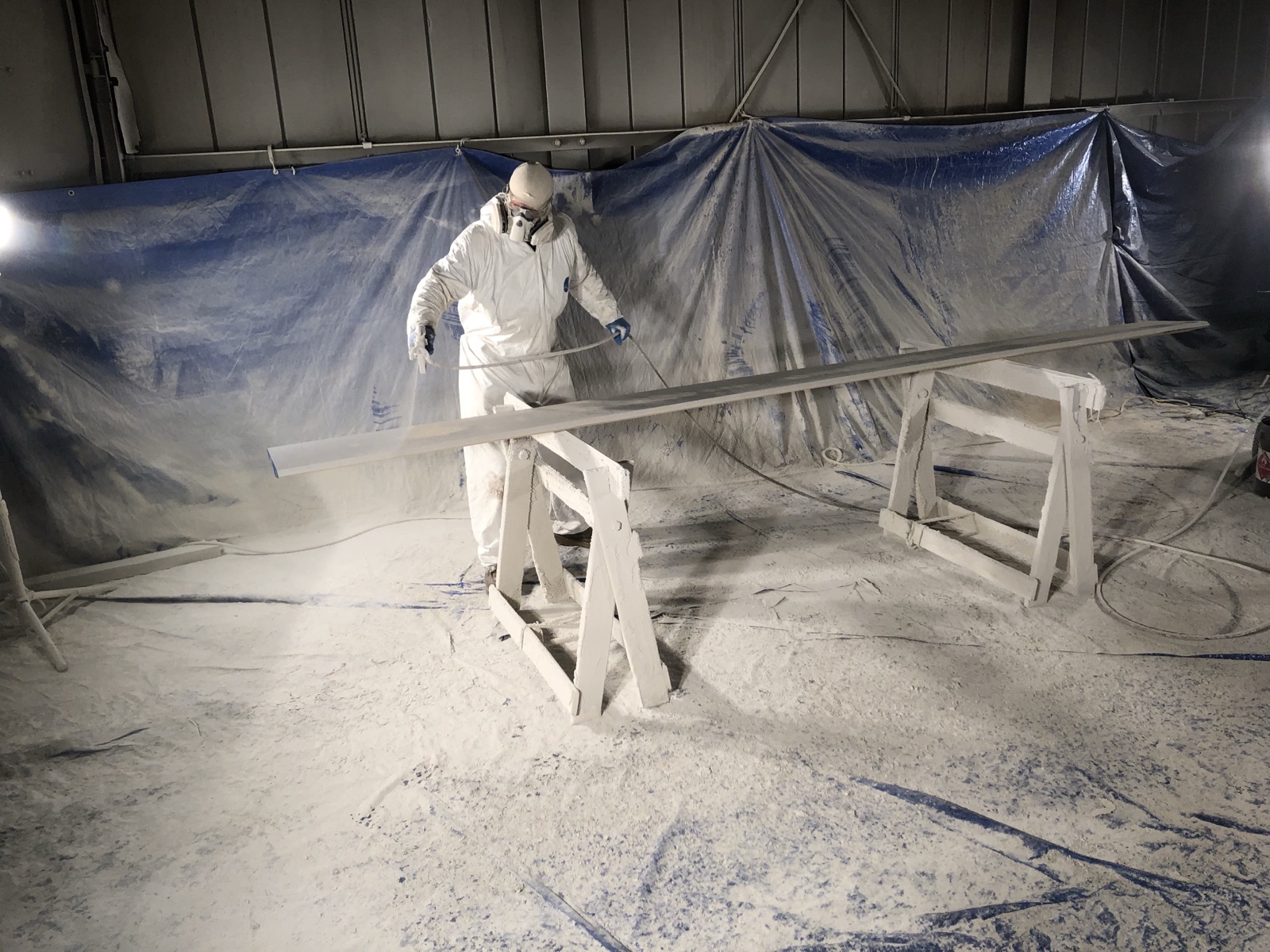
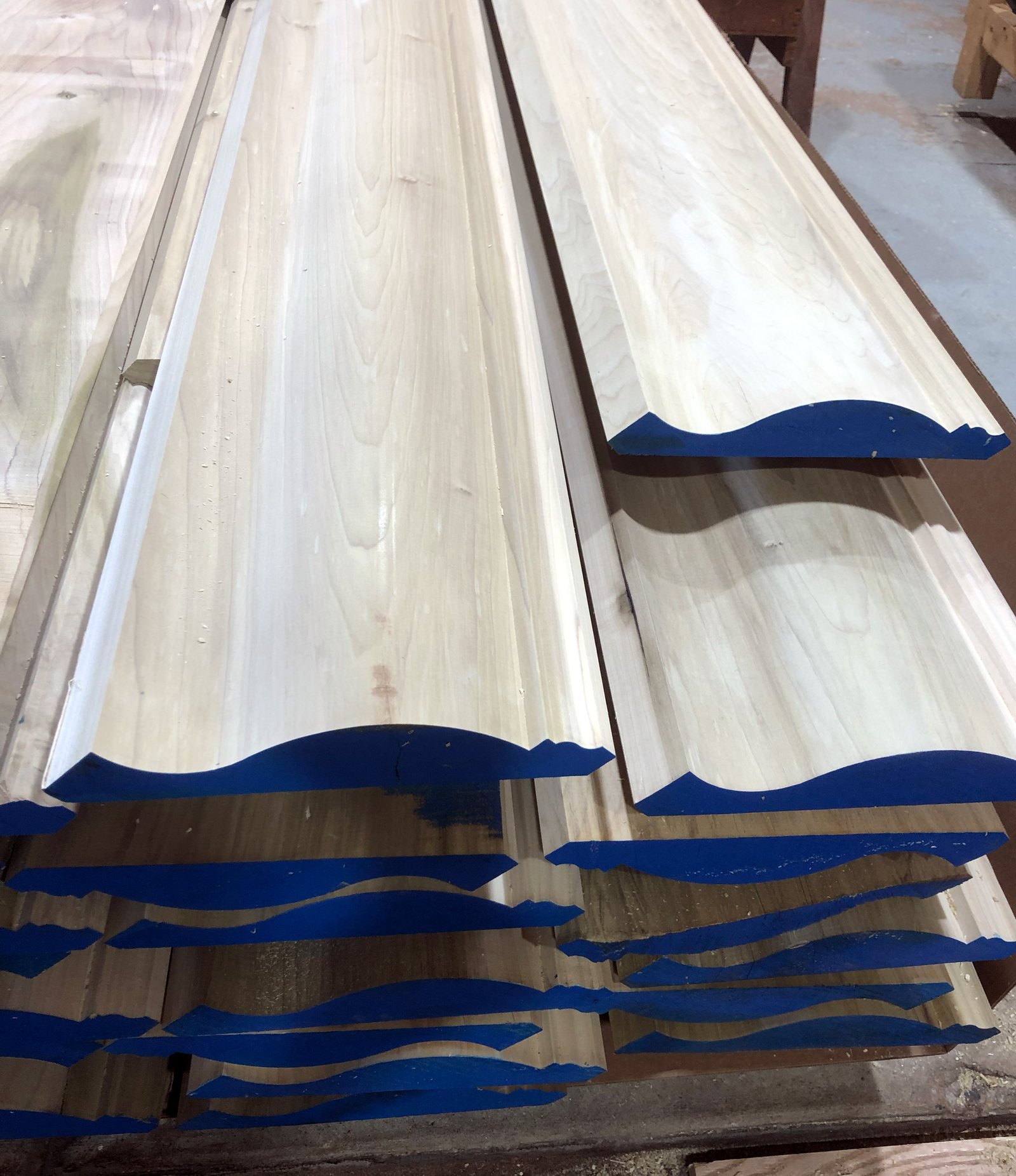
J. Gibson McIlvain mills linear trimwork, finished cladding and primed trim as a supplier service, at production volume, in the species it already holds in its own yard. This is the work that eats schedules on commercial and high-end residential projects. Thousands of feet of casing, base, brickmould, water table, frieze, rake and bed. Siding and soffit in a pattern that has to hold a reveal across a long elevation.
Running that work at the same company that owns the lumber has a specific benefit that shops without a yard cannot match. Length. A moulder run assembled from short random-length stock produces a wall full of joints. When the yard holds long stock in the species and grade being run, the shop can pull for length deliberately and give the installer fewer end joints on a long run. Wider siding and cladding patterns behave the same way, and the pattern itself matters as much as the species. A rainscreen detail with a vented cavity behind it will outlast a face-nailed board of the same wood every time.
Cladding profiles also decide how much back surface gets coated. Shiplap, nickel gap and channel rustic all leave different amounts of the board exposed to moisture from behind. Coating all six faces before the boards go up is the single cheapest insurance on an exterior job, and it is far easier to do in a shop than on a scaffold. See the J. Gibson McIlvain millwork service for how the linear side of this work is organized.
Priming in the shop beats priming on the ground
J. Gibson McIlvain primes trim in three levels, in oil-based and water-based systems, and exterior primed trim should carry a fungicide additive. That last point gets skipped constantly. Primed trim sits on a job site in a stack, sometimes for weeks, sometimes under a tarp that traps more moisture than it sheds. A fungicidal additive in the primer buys that stack a fighting chance.
Open-grained species drink finish. Run an unprimed board straight to a painter and the first coat disappears into the grain, the second coat evens out some of it, and the surface still telegraphs pore structure under a gloss paint. A shop primer coat fills that variation before the finish coat ever arrives, so the painted surface reads flat. Sanding or buffing after the primer knocks back the grain that the water in a waterborne system raised, without rounding over the crisp arris on a moulded profile. A field crew with an orbital sander on a horse will not preserve that detail.
Choose the primer system against the top coat, not against habit. The Forest Products Laboratory Wood Handbook chapter on moisture and dimensional change is still the clearest published explanation of why a coating that seals one face and not the other sets a board up to cup.
Grade selection and yield are decided in the yard, not the shop
A grading rule describes clear cuttings, not finished millwork, and the gap between those two things is where yield disappears. Hardwood grades follow the National Hardwood Lumber Association rules, which measure the clear area obtainable from a board. FAS, Select and No. 1 Common each promise a percentage of usable cutting. None of them promise that the clear area lands where a specific profile needs it.
Sorting for a moulder run is a different exercise than sorting for a tally. A 1x6 flat casing tolerates a small tight knot on the back face and nothing on the show face. A crown with deep coves needs clear stock through the full thickness because the cove exposes wood that a flat profile never reaches. Sapwood placement matters on anything getting a clear finish. Color matching across a package matters on anything panelized.
Millwork specifically follows different conventions, published by groups like the Wood Moulding and Millwork Producers Association and, on the architectural woodwork side, the standards maintained by the Architectural Woodwork Institute. A supplier that also mills reads both the lumber rule and the millwork standard on the same order.
Moisture content is the specification most orders get wrong
Interior millwork is milled to an in-service moisture content near 6 to 8 percent, exterior work near 12 to 16 percent, and mixing those two up ruins good wood. Kiln-dried lumber leaving a shed at 7 percent and installed as exterior trim in a humid coastal climate will swell. Exterior stock at 14 percent installed as interior paneling in a dry heated building will shrink and open every joint.
Wood moves across the grain and barely at all along it, and different species move at different rates. The published shrinkage figures for tangential and radial movement explain why quartersawn and rift stock stay flatter across the width than plainsawn. That is the entire reason quartersawn material gets specified for painted panels and wide stiles.
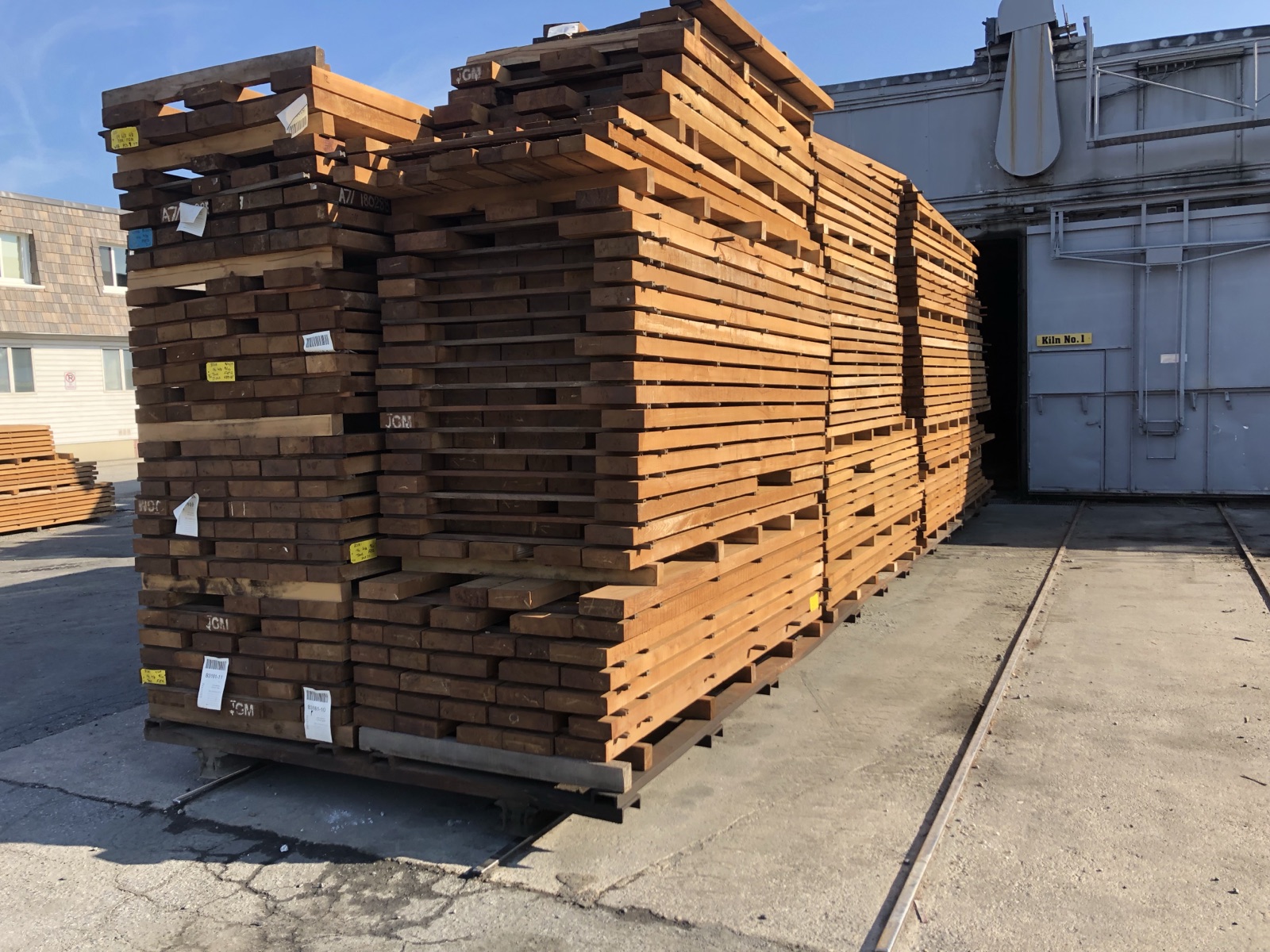
A supplier that dries its own lumber can hold a package at the target and mill it at the target. A shop buying on the open market takes whatever the truck brings and often has no way to recondition it. Ask any supplier for the moisture content at time of milling, not at time of kiln discharge. The two numbers can be far apart if the material sat in a yard through a wet spring.
A profile library plus a knife grinder means no profile is off the table
J. Gibson McIlvain holds thousands of moulding profiles in its library and grinds new knives every week. If the profile exists in the library, the knife is already ground and the run starts sooner. If it does not, it gets ground to match, including historical restoration profiles taken off a salvaged piece and contemporary profiles drawn by an architect who wants something nobody stocks.
Historical matching is its own discipline. A profile from 1890 has a different ratio of ogee to fillet than the modern stock version sold as the same name, and a preservation review board will notice. The Secretary of the Interior's Standards govern what counts as an acceptable replacement in a historic context, and like-for-like in both profile and species is usually the requirement. Grinding a knife off a physical sample is the only honest way to hit that.
Custom knives also solve a quieter problem. Stock profiles come in stock sizes. When a door jamb is 5/4 instead of 4/4, or a wall assembly leaves the casing standing proud, the correct fix is a knife ground to the actual dimension rather than a shim and a caulk line. ICD publishes examples of that range on its trim profiles page.
ICD handles the work that cannot be run by the linear foot
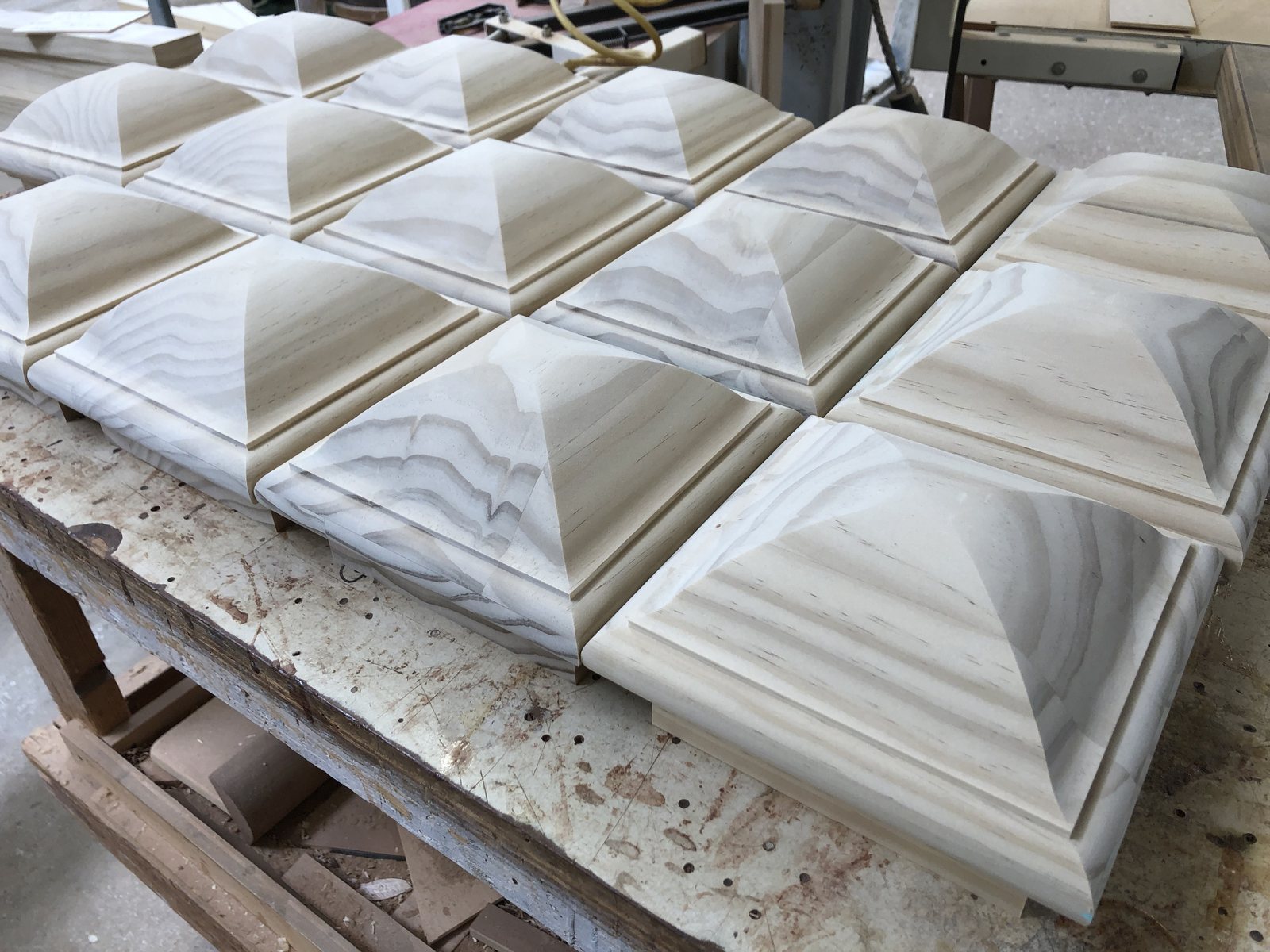
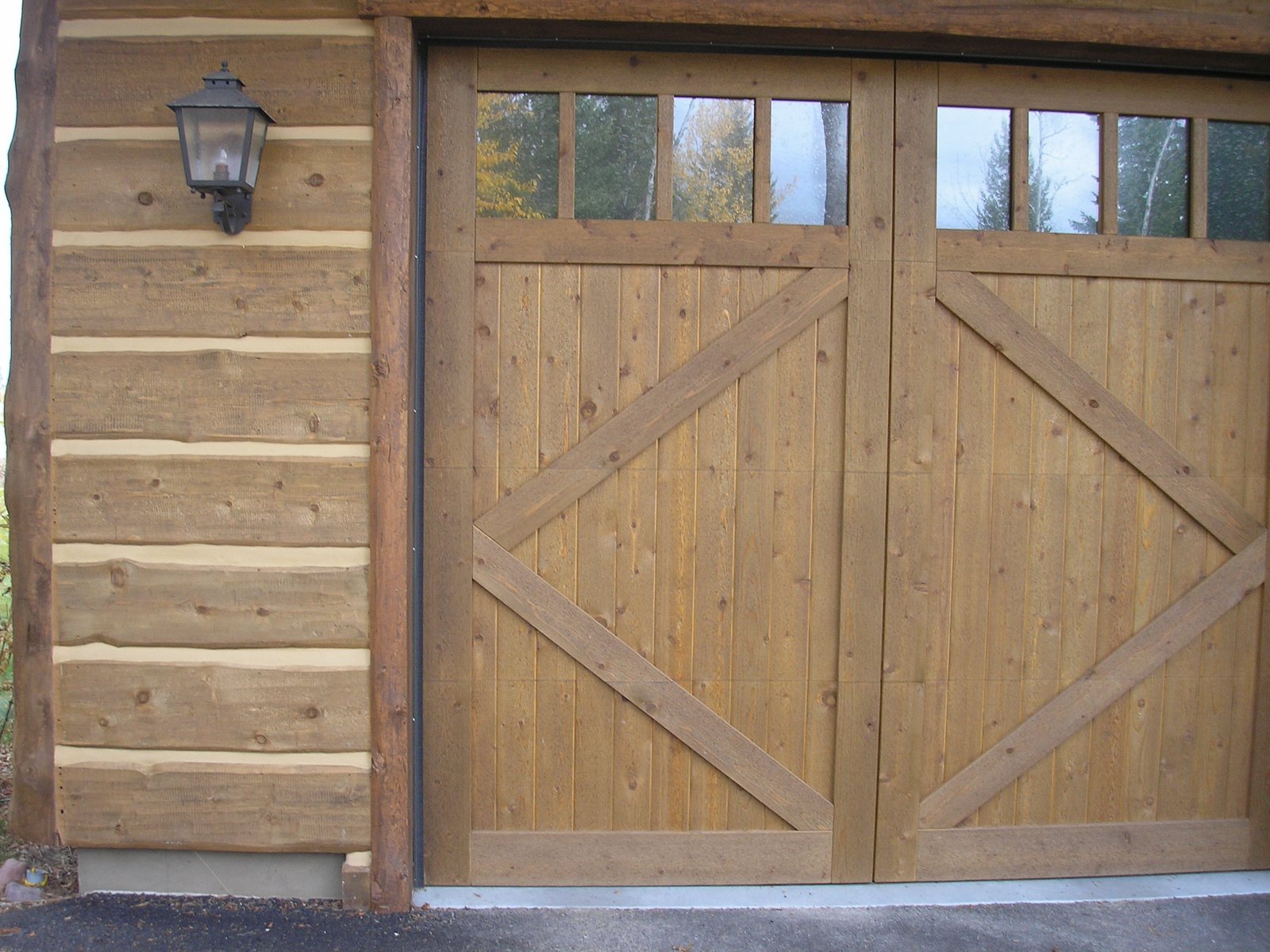
ICD, the architectural millwork division of J. Gibson McIlvain, builds the pieces that are planned to fit one specific space. Rafter tails, gates, box beams, custom doors, custom cabinets, custom kitchen cabinets, radius trimwork, radius millwork, pergolas, shutters, benches and railings. None of that runs off a moulder in a straight line.
Box beams are the clearest example of why joinery is a specification and not a detail. Butt joints give the most minimal profile, the fastest turnaround and the easiest assembly on site, but they leave visible seams and visible end grain, and they are the weakest of the three. Dado joints are strong and still assemble easily on site, and they still show seams and end grain. Lock miter joints show no visible seams and are the strongest of the three. Pick before the shop drawings, not after the beams arrive.
Shutters come in louver and panel styles with complete historical matching for both style and species, which is what a historic district asks for when it requires like-for-like replacement. Gates run from pedestrian, garden and courtyard scale up to estate entry and large driveway swing gates, and the large swing gates need engineering rather than craftsmanship alone, because size and weight change how the frame has to resist sag. Kitchen cabinetry through ICD is engineered around how the room is actually used instead of assembled from standard modules, which is where filler strips and mismatched face frames come from. Specialty drawers, storage worked around plumbing and mechanical obstacles, and carcass construction tailored to the weight of the countertop material all get decided in the drawing stage. Their working process and cabinets and casework pages show how those jobs are sequenced.
| Stage | Lumber yard and millwork shop are separate companies | Single supplier that also runs the shop |
|---|---|---|
| Grade selection | Graded to a lumber rule with no knowledge of the profile | Pulled against the knife and the show face |
| Moisture at milling | Whatever arrived on the truck | Held and milled to the in-service target |
| Length yield | Limited to what the shop happened to buy | Pulled long from yard stock to reduce end joints |
| Tooling | Knife ground only if the shop keeps a grinder | Library profile or a knife ground to match |
| Priming | Often deferred to the site | Shop applied, three levels, oil or water based |
| Color and grain matching | Across two inventories | Across one inventory |
| Storage of finished stock | Site trailer or shop floor | Held for release against the schedule |
| Freight | Two shipments, two damage claims | Consolidated, nationwide |
| Accountability for a defect | Contested between two vendors | One party owns the tally and the run |
"When the yard and the shop answer to the same people, I can pull a package for length and clear face before it ever hits the moulder. A shop buying lumber on the open market cannot do that, and the difference shows up in the joints an installer has to make."
Norm Moton, Director of Sales, J. Gibson McIlvain
Species selection gets easier when the miller owns the inventory
The right species for a millwork job is chosen against the finish, the exposure and the sizes actually available, not against a wish list. Sapele runs roughly 1,410 lbf on the Janka scale, White Oak roughly 1,360, Hard Maple roughly 1,450, Cherry roughly 950 and Genuine Mahogany roughly 800. Hardness is only one input, but it sets expectations for stair parts, railings and benches that take traffic.
For painted exterior trim, specify Sapele over Genuine Mahogany. Sapele holds paint better and comes in a wider range of sizes and longer lengths, which matters on long runs of frieze and rake. Sapele is not milled 1x8 for exterior use, since that width is too wide to stay stable in that thickness. Cupping on exterior boards is driven by installation and back ventilation far more than by species choice, so a supplier who blames the wood without asking how the board was fastened is not looking at the real cause.
Cedar remains a sound default for exterior trim and cladding, and the grade distinction matters more than most specifications acknowledge. CVG, clear vertical grain, is stable and takes a finish evenly. STK, select tight knot, is a legitimate product with a different look and a different finishing plan. Confusing the two on a submittal causes real arguments.
Modified woods have their own limits. Accoya comes in around 1,600 lbf, and acetylation gives it dramatically reduced shrinkage and swelling. Thermory and Abodo Vulcan are both carried and both worth specifying where thermal or modified performance is wanted. All of these products top out around 16 feet, most sold on metric lengths just under 16 feet, because of kiln size. Ash cannot be thermally modified beyond 8 inches of width, leaving Accoya and Abodo Vulcan as the wide modified options. Warranties exist on modified products only. Solid unmodified wood carries no warranty from anyone, and it cannot, since it is an organic material that keeps responding to its environment after it leaves the shop.
Documentation, storage and freight travel with the order
Chain of custody and species documentation are part of the deliverable on a commercial job, not paperwork that shows up later. J. Gibson McIlvain is FSC certified, and chain of custody certification is what allows a project pursuing a certified-wood credit to actually claim it. Where a CITES-listed species is involved, the documentation and chain of custody travel with the material from import through milling, and the CITES framework sets what has to accompany it.
Storage is the underrated half of this. Finished millwork sitting in a jobsite trailer through a summer will move. Holding it in a controlled environment and releasing it against the construction schedule is inventory control, and it keeps trim at its target moisture content until the building is closed in and conditioned. J. Gibson McIlvain stores finished millwork for exactly that reason.
Freight then goes out as one consolidated shipment rather than two. Nationwide, regularly to California. The company supplies and mills, and it does not install, so field measurement and installation stay with the buyer's own contractor. What the shop can do is deliver material that is already at the right moisture content, already primed, already cut to the lengths the elevation needs, so the installer spends time hanging trim instead of fixing it.
How J. Gibson McIlvain Would Specify This
Specify the source and the shop as one line item, then write the four numbers that actually control the outcome. Those four are species and grade, moisture content at time of milling, profile reference, and primer system with fungicide additive on anything exterior.
Start with exposure. Interior work gets milled near 6 to 8 percent, exterior near 12 to 16 percent, and the submittal should say which. Then set grain orientation where flatness matters, which means quartersawn or rift for painted panels, wide stiles and anything panelized. Name the profile by library reference if one exists, or send a physical sample of the historical profile so a knife can be ground to match it. State the primer level and system, and specify a fungicide additive for exterior primed trim.
Sort the job into its two halves before requesting a quote. Linear trimwork, finished cladding and primed trim run as a J. Gibson McIlvain millwork service. Rafter tails, gates, box beams, custom doors, radius trimwork and radius millwork, pergolas, shutters, benches, railings and custom kitchen cabinetry go to ICD, the architectural millwork division, where the piece is drawn to fit a specific opening. Exterior custom work like pergolas and rafter tails is covered on the exterior millwork page, and custom doors on the custom doors and windows page.
Ask for storage and release dates in writing if the building will not be closed in for months. Ask for the chain of custody documentation up front if the project has a certified-wood requirement. And send the shop drawing early, since the joinery decision on a box beam and the width limits on a modified product both change what the drawing can promise. Call 800-638-9100 with the elevation, the exposure and the finish schedule, and the conversation starts with what the yard actually holds rather than what a catalog says it might.
Frequently Asked Questions
How many lumber importers actually run their own millwork shop?
Very few. The normal structure of the trade separates importing and wholesaling from milling, so a buyer usually holds one relationship for lumber and another for the shop that runs it. J. Gibson McIlvain is an exception, with moulders, custom knife grinders, straight line and gang rip saws, band resaws and trimming saws on its own floor, plus an architectural millwork division, ICD, for true custom work. When you evaluate a supplier claiming a forest-to-finished capability, ask what machines are actually in the building and whether the company grinds its own knives.
What does single-source sourcing change in practice, beyond convenience?
Three concrete things. Grade selection happens with the profile in mind rather than against a generic lumber rule, so a knot the rule allowed does not land on the bead of a casing. Length yield improves because the shop can pull long stock out of the yard instead of milling whatever it happened to buy, which means fewer end joints on a long run. And accountability is not contested between two vendors when something arrives wrong, since one party holds the tally, the moisture readings, the knife record and the packing list.
Does J. Gibson McIlvain install the millwork it produces?
No. The company supplies and mills. It does not install, coordinate installers or take field measurements. Installation, field measurement and any on-site fitting stay with the buyer's own carpenter, fabricator or general contractor. What the shop delivers is material already milled to profile, already at the correct in-service moisture content, primed where specified and packaged for release against the construction schedule, so the installer spends the day hanging trim instead of correcting it.
What moisture content should I write into the specification?
Interior millwork should be milled to an in-service moisture content near 6 to 8 percent and exterior work near 12 to 16 percent. State which one applies on the submittal, and ask for the moisture content at the time of milling rather than at kiln discharge. Those two numbers can differ significantly if material sat in a yard through a wet season. Where flatness across the width matters, such as painted panels and wide stiles, also specify quartersawn or rift stock, since it moves less across its width than plainsawn.
Which parts of a project go to J. Gibson McIlvain and which go to ICD?
Linear trimwork, finished cladding and primed trim run as J. Gibson McIlvain millwork services, which is the production volume side of the work. ICD, the company's architectural millwork division, handles items planned to fit a specific space, including rafter tails, gates, box beams, custom doors, custom cabinets, custom kitchen cabinets, radius trimwork, radius millwork, pergolas, shutters, benches and railings. Sorting a job into those two halves before requesting a quote makes the whole conversation faster.
Can a custom profile be matched for a historic restoration?
Yes. The profile library holds thousands of profiles and new knives are ground every week. If a profile is not already in the library, a knife gets ground to match, which is the standard route for historical restoration profiles taken off a salvaged sample as well as contemporary profiles nobody stocks. Historic district review boards typically require like-for-like replacement in both profile and species, and grinding from a physical sample is the reliable way to satisfy that requirement.
Is there a warranty on the millwork?
Warranties exist on modified products such as Accoya, Thermory and Abodo Vulcan, according to those manufacturers' terms. There is no warranty on solid unmodified wood from any supplier, and it is not possible to write one, since wood is an organic material that keeps responding to temperature and humidity after it leaves the shop. What a supplier can control is grade, moisture content at milling, profile accuracy and finish preparation, and those are the items worth writing into the specification.
What length and width limits apply to modified wood products?
Modified products including Thermory, Abodo Vulcan and Accoya top out around 16 feet, and most are sold on metric lengths just under 16 feet, because of kiln size. Thermally modified Ash is not available wider than 8 inches, so a design calling for a wide board in a modified product means Accoya or Abodo Vulcan instead. Plan elevations and joint layouts around those limits at the drawing stage rather than discovering them after the submittal is approved.
Sources and Standards Referenced
- Wood Handbook, Chapter 13: Drying and Control of Moisture Content and Dimensional Changes (USDA Forest Products Laboratory)
- National Hardwood Lumber Association
- Wood Moulding and Millwork Producers Association
- Architectural Woodwork Institute
- The Secretary of the Interior's Standards for the Treatment of Historic Properties (National Park Service)
- Dimensional Shrinkage and Wood Movement (The Wood Database)
- Sapele Species Data (The Wood Database)
- FSC Chain of Custody Certification
- Convention on International Trade in Endangered Species of Wild Fauna and Flora
- Thermory and Abodo Vulcan Thermally Modified Wood