What Silvering Actually Is
Silver is not a color teak turns into, it is what is left behind after sunlight strips the outermost cells of the board. Ultraviolet light breaks down lignin at the surface. Rain washes the degraded material away. What remains is a thin layer of loose cellulose fibers that scatters light instead of reflecting the warm tone underneath, and the eye reads that scattering as grey. Plane 1/16 inch off a silvered teak board in year ten and the wood under it is still brown.
The change arrives in stages. A freshly milled Indian plantation teak elevation starts somewhere in the honey to tobacco range. It warms and deepens over the first few weeks as the surface oxidizes. Then the saturation drains out of it, through a bronze stage and a dull fawn stage, before the grey settles in and stays. Sun and water do the work together, which is why the rate differs so sharply between two faces of the same building.
Teak, Tectona grandis, earns its reputation on this exposure from extractives in the wood rather than from any surface treatment, and the published species data is the place to check hardness and shrinkage figures rather than trusting a number from memory. Accelerated weathering methods run under ASTM consensus standards follow the same mechanism inside a cabinet, which makes them useful for ranking coatings against each other. They do not predict one wall in one city, since the variables that dominate a real elevation are orientation, shade and how long water sits.
How Evenly Indian Plantation Teak Goes Grey
The grey itself comes in remarkably even, and nearly everything that makes a teak wall look blotchy in year two either happened before the boards went up or happens where water lingers. Weathering is a surface reaction. It does not much care whether the lignin it is breaking down came from a rotation age plantation tree or a century old forest tree. Give two boards the same sun and the same rain and they land within a shade of one another.
Indian plantation teak does bring real differences, and they show up in year one rather than year five. A younger tree lays down wider growth rings, so the figure is coarser and varies more from board to board. Extractive content is lower, which makes the starting surface a little lighter and the early honey stage shorter. More of the material comes from nearer the outside of the log, so the lot carries more color spread the day it arrives.
All of that compresses as the wall weathers. Color variation that reads as loud on a freshly sanded sample is mostly gone by the time an elevation is uniformly grey, and a specifier judging the lot off that sample is judging a condition with a few months of life in it. The honest mockup is a board left outdoors, face up, through a season.
"The sample board someone approves and the wall they live with are two different objects. I tell architects to set a piece on the roof for a summer and judge that, because the color you pick on day one is a color that is leaving."
Norm Moton, Director of Sales, J. Gibson McIlvain
Exposure Sets the Pattern, Not the Species
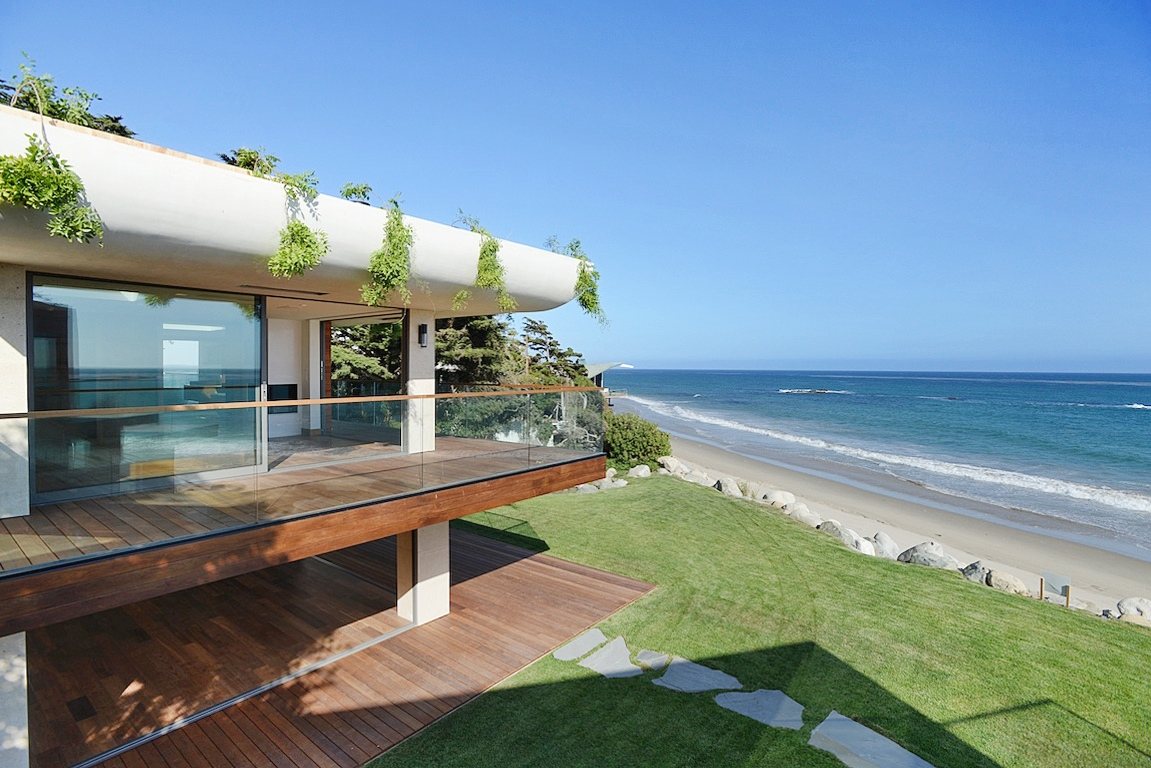
A teak wall silvers at the speed of the light and water that reach it, so the pattern on the finished building traces the geometry of the building. South and west elevations go first. North elevations lag badly, and on a shaded urban site they can read brown for years while the rest of the envelope is grey. That is not a defect in the lumber and no amount of lot matching corrects it.
Overhangs draw the hardest line of all. Courses tucked under a deep soffit stay dry, take far less UV and hold their brown, while the courses below the drip line silver on schedule. The result is a horizontal band that stays as long as the overhang does. Designers who do not want it either pull the cladding out past the soffit or compose with the band on purpose.
Water that sits behaves differently from water that runs. Splash at the base of a wall, a sill that ponds, a ledge that collects leaf litter, all of those grow mildew, and mildew reads as a dirty dark grey rather than the clean silver anyone is after. Rain control detailing behind and below the cladding does more for the look of a teak wall in year five than any coating in the catalog.
Metal is the other repeat offender. Runoff from unsealed copper, or from a fastener not rated for exterior exposure, leaves a streak that stains deeper than the weathered layer and never washes out. Cupping, where it turns up, is driven by installation and by a lack of back ventilation rather than by the species.
The Milled Surface Decides Year One
How a board comes off the moulder controls how its first finish behaves and how uniform the early color looks. A planed teak face carries mill glaze, a burnished and partly closed surface left by knife pressure. Glaze does not take oil or stain evenly. On a wall headed for bare exposure it barely matters, since the first season takes it off. On a wall getting a penetrating finish it matters enormously, and a light scuff sand before the first coat is the difference between even absorption and a patchy opening year.
Open-grained and oily species absorb a great deal of finish, and teak sits at the oily end of the millwork palette. The first coat largely vanishes into the wood. Anyone planning a single coat of anything on teak and expecting uniform sheen is planning for a result the material will not hand over. Teak is not a paint grade species in any event, it is stained, oiled, varnished or left to silver.
Moisture content at delivery sets how much the boards move through the first year. J. Gibson McIlvain mills exterior teak cladding to an in-service moisture content near 12 to 16 percent, which is where exterior work belongs, not the 6 to 8 percent an interior part wants. A board installed much drier than its service condition swells and tightens the joint. A board installed much wetter shrinks and opens it, and an opening joint on a shiplap is exactly where the unweathered line turns up.
What the Reveal Looks Like in Year Five
The reveal is the last part of a teak wall to weather and the first part to expose a prefinishing mistake. Inside an open joint or a shiplap shadow line, UV drops off fast and almost no rain touches the recessed faces. Five years out, the flat of the board is silver while the inside of the reveal still sits brown to bronze. On a well detailed wall that contrast is the whole point, since it keeps the shadow line reading as a crisp dark joint instead of dissolving into a flat grey field.
The trouble case is the strip that was hidden on day one and is not hidden in year five. Boards give up moisture and shrink through their first dry seasons. A tongue that sat 1/4 inch into its groove can pull back and expose wood that saw no light, no water and, on too many jobs, no finish. Against a silvered field that strip reads as a bright blond line along every course, and it does not catch up fast, since the board above still shields it.
Prefinishing every face and both edges before the boards go up is the whole fix, tongue and back included, with the ends sealed. A wall left completely bare gets this for free, because nothing was ever coated. A finished wall only gets it when the finish went all the way around, which has to happen in the shop or at a staging area rather than after a course is fastened.
Joint geometry shows the same effect at smaller scale. A square edged board on an open reveal weathers right out to the arris, which rounds slightly over several years and softens the shadow it casts. A profile carrying a small chamfer or a bead holds that line much longer, since the detail gives the eye a hard edge even after the corner itself has gone soft.
Finish Paths and Their Year Five Outcome
There are only a handful of honest finish strategies for exterior teak, and each one has a known year five appearance and a known labor commitment behind it. That decision belongs to whoever owns the building in year five, not to whoever signs for the lumber. A wall left to silver and a wall kept brown are two different buildings with two different crews behind them.
| Finish path | Color in year five | Evenness | Reveal and lap lines | What the owner signs up for |
|---|---|---|---|---|
| Left bare to weather | Even silver grey on exposed faces, brown held under soffits and inside reveals | Highest of the five once the wall has a full year of exposure | Shadow line stays brown and crisp, no blond strip because nothing was coated | Washing where mildew collects, and nothing more |
| Penetrating oil kept on a recoat schedule | Warm brown, a shade deeper than new | Good while the schedule holds | A brush cannot reach inside a tight reveal, so the shadow line drifts darker and dirtier than the face | Recoating on a set cycle, more frequently on south and west elevations |
| Penetrating oil allowed to lapse | Patchy brown over grey, darkest where the coat ran heavy | Worst of the five | Lap lines read as vertical streaks where old oil drained | A full cleaning and reset coat, or a strip back and a decision to let it silver |
| Pigmented UV filtering stain | Muted warm brown with the grain partly masked | Very good, since pigment does the leveling | Carries into the reveal only if the boards were prefinished all around | Scheduled recoats and color matching at every repair |
| Film forming marine varnish | Bright amber where the film is intact, lifting and clouded at the joints | Excellent for 2 to 3 seasons, then poor | Film fails first at lap lines and exposed end grain | Heavy sanding and recoat cycles, then an eventual full strip |
Two of those rows get picked for the wrong reasons. A film forming varnish on a vertical teak elevation looks superb for two summers and then fails at the laps, where water stands and the film lifts, and stripping a failed film off partly silvered teak is the least pleasant job on the list. A pigmented UV filtering stain is the realistic choice for holding warm color, and it holds that color by hiding some of the grain that made the client want teak.
Extractive Runoff in the First Two Winters
New teak sheds color onto whatever sits below it, and the first two winters are when that happens. Some of the extractive content that makes teak durable is soluble enough to leach out of a fresh surface. Runoff carries it down onto limestone, light stucco, concrete walks, painted trim and glazing. The stain runs tan to brown and it is at its worst in the opening months, which is also when the client is walking the finished job.
It stops on its own. Once the leachable material near the surface is gone, runoff off a silvering wall is clean. Planning for that interval is the real work, which means protecting light colored surfaces under new teak through the first wet season, washing them before the stain sets, and detailing drips so water leaves the cladding rather than tracking back under it.
A light stone sill directly under new teak with no drip and no protection is the most reliable way to turn a beautiful teak elevation into a month three complaint. The wood is doing exactly what teak does. The detail asked for it.
When the Color Has To Be Guaranteed
Nobody can warranty the appearance of solid unmodified teak, and a supplier offering to is selling something that cannot be delivered. Wood is an organic material responding to its environment. It is not possible to warranty solid unmodified wood against what weather does to it. Warranties exist on modified products and on nothing else.
Where a project truly needs a warranted product on the wall, the modified options are where to look. J. Gibson McIlvain carries both Thermory and Abodo Vulcan, and Accoya sits alongside them at roughly 1,600 lbf on the Janka scale, with acetylation giving dramatically reduced shrinkage and swelling. Every one of them weathers toward grey as well, since acetylation and thermal modification change what the wood does with water, not what UV does to lignin at the surface.
Modified stock carries hard limits set by kiln size. Modified woods top out around 16 ft, and most of the material sells on metric lengths just under 16 ft. Thermally modified Ash is not available wider than 8 inches, so a wide board in a modified product means Accoya or Abodo Vulcan rather than modified Ash. Thermory publishes its own profile and length schedules, and they are worth reading before an elevation gets drawn around a length nobody can supply.
Unmodified alternatives that silver the same way deserve naming. Cedar is a legitimate default for a weathered wall, and there the grade call matters more than the species call, which is CVG, clear vertical grain, against STK, select tight knot. In tropical hardwood for milled cladding the palette is Sapele, Iroko, Afrormosia, Teak and Utile, which is sold as Sipo, and Sapele is not milled 1x8 for exterior use. Ipe, which is Tabebuia spp, along with Cumaru, Garapa, Jatoba and Red Balau, silvers too, and all of them are decking stock, extremely hard and high in oil, which makes them difficult to glue and hard on knives, so a millwork shop reaches for the first group when boards have to be milled to a cladding profile. Exterior wood assembly guidance published by WoodWorks is a reasonable cross check on the assembly around whichever species wins.
Sizes, Lengths and Lot Matching
A rotation age plantation log yields narrower and shorter boards than the old growth material in the reference photographs, and the elevation has to be drawn around that fact. Plan on narrower faces and shorter lengths, which means more end joints per course and a staggered joint layout that looks deliberate instead of accidental. A drawing that assumes long clear runs in teak is a drawing that gets rearranged on site by whoever is holding the nailer.
Lot matching is an inventory problem before it is a milling problem. J. Gibson McIlvain holds over seven million board feet of exotic and domestic lumber at its Maryland yard, which is what makes it possible to pull a whole elevation out of one shipment rather than blending two deliveries with different average color. Teak arrives against export grades and the written description on the order rather than against North American hardwood grades, so that description is where a buyer sets expectations for width, length and face.
Grain orientation is worth a line on wide stock. Quartersawn and rift sawn material moves less across its width than plainsawn, which is why it gets specified where a surface has to stay flat. J. Gibson McIlvain grinds new knives in house every week, so a cladding profile with a particular reveal, a specific chamfer, or a lap dimension drawn to match an existing wing of a building gets ground to the drawing instead of substituted with the nearest stock pattern.
Legality rides along with the order. J. Gibson McIlvain is an FSC certified importer and miller, and the plantation teak the company buys is Indian plantation teak, settled on after its own search for the best plantation teak available. Myanmar origin teak is not something anyone can buy new today. The company has not bought it since the European market closed. Burmese teak belongs to older vessels and older buildings where it is already installed, which is also where most of the weathering photographs on the internet come from.
How J. Gibson McIlvain Would Specify This
Specify the material for what the wall will look like in year five, then write the details that protect that year five appearance. On a high end exterior in Indian plantation teak that means naming the species and the plantation origin, milling to an exterior in-service moisture content near 12 to 16 percent, prefinishing all four faces and both edges before the boards leave a staging area, and settling in writing whether this wall silvers or stays brown.
Draw the elevation around plantation board sizes rather than around a photograph of an old growth wall. Call out the staggered end joint layout, a profile with enough edge detail to hold a shadow line after the arris has weathered soft, and temporary protection for light colored stone or stucco under the wall through the first wet season. Park the coating decision with whoever will own the maintenance, since a lapsed oil schedule is the one path on the table that reliably ends in a patchy wall.
J. Gibson McIlvain mills teak cladding to the profile on the drawing and ships nationwide, regularly into California, so an elevation drawn in one state comes out of one lot and arrives together. Field layout and fastening stay with the builder, and the lot and the profile behind that work come off the mill floor. For stock, lengths and a profile review on a teak cladding elevation, see the millwork services page at J. Gibson McIlvain or call 800-638-9100. The weathering behavior behind all of this is documented in the Wood Handbook chapter on finishing and surface degradation.
Frequently Asked Questions
How long does Indian plantation teak cladding take to look fully silver?
It depends almost entirely on exposure rather than on the lot. A south or west elevation in a sunny climate can read as established grey inside the first year, with the color still deepening and evening out through the second. A north elevation, or any wall shaded by a neighboring building or heavy planting, can stay brown to bronze for several years. The practical consequence is that a building with very different exposures on different faces will not match across those faces, and no supplier can make it match. Decide early whether that is acceptable or whether the design should give each elevation its own treatment.
Does plantation teak silver differently from the old Burmese teak people photograph on vintage yachts?
The silver layer itself looks the same, since it is the same lignin degradation at the surface in both cases. What differs is the wood showing through and around it. A plantation tree is younger, so growth rings are spaced wider and the figure is coarser, extractive content is lower, and boards come narrower and shorter out of a rotation length log. On a weathered wall at a normal viewing distance, the ring spacing is what a trained eye notices. Myanmar origin teak is also not a product anyone can legally buy new, so the comparison only matters for matching into existing installed work.
Can the brown color be kept instead of letting the wall silver?
Yes, with a maintenance program attached. A pigmented UV filtering stain is the most reliable way to hold warm color, and it works partly by masking some grain. A penetrating oil holds color while the recoat schedule holds, and it looks worst of all the options once that schedule lapses, because old oil leaves patchy residue over partly weathered wood. A film forming varnish on a vertical exterior looks excellent for a couple of seasons and then fails at lap lines and end grain, and stripping it later is punishing work. Whoever will own the building in year five should make this call.
Why does a bright blond line show up along every course after a few years?
That strip was covered on installation day and is not covered now. Boards shrink as they come down to their in-service moisture content, and a tongue that sat a quarter inch inside its groove can pull back and expose wood that never saw light, water or finish. Against a silvered field it reads as a pale stripe on every lap. Prefinishing all four faces and both edges before the boards go up, tongue and back included, prevents it, and so does leaving the wall completely bare from the start.
Will new teak stain the stone or stucco below the wall?
For the first couple of wet seasons it can. Part of the extractive content that makes teak durable is soluble, and runoff carries a tan to brown tint down onto limestone, light stucco, concrete and painted trim. It stops once the leachable material near the surface is gone. Protect light colored surfaces beneath new teak through the first wet season, wash them before the stain sets, and detail a drip so water leaves the cladding rather than running back underneath it.
Is there a warranty on how a teak wall weathers?
No. It is not possible to warranty solid unmodified wood, an organic material responding to its environment. Warranties exist on modified products and on nothing else. If a project genuinely requires a warranted product on the wall, the modified options are the place to look, and J. Gibson McIlvain carries both Thermory and Abodo Vulcan alongside Accoya. Those products top out around 16 ft, with most material sold on metric lengths just under 16 ft because of kiln size, and thermally modified Ash is not available wider than 8 inches.
What board sizes should a teak cladding elevation be drawn around?
Narrower faces and shorter lengths than old growth photographs suggest, because a rotation age plantation log cannot yield the long wide clear stock the vintage material came from. Draw a staggered end joint layout on purpose rather than discovering it on site, and give the profile enough edge detail, a small chamfer or a bead, to keep a crisp shadow line after the arris has weathered soft. Call 800-638-9100 with the elevation and the profile drawing to confirm what widths and lengths are available in the current stock before the drawing set goes out.