The short answer on custom milled, prefinished gate and fence panels
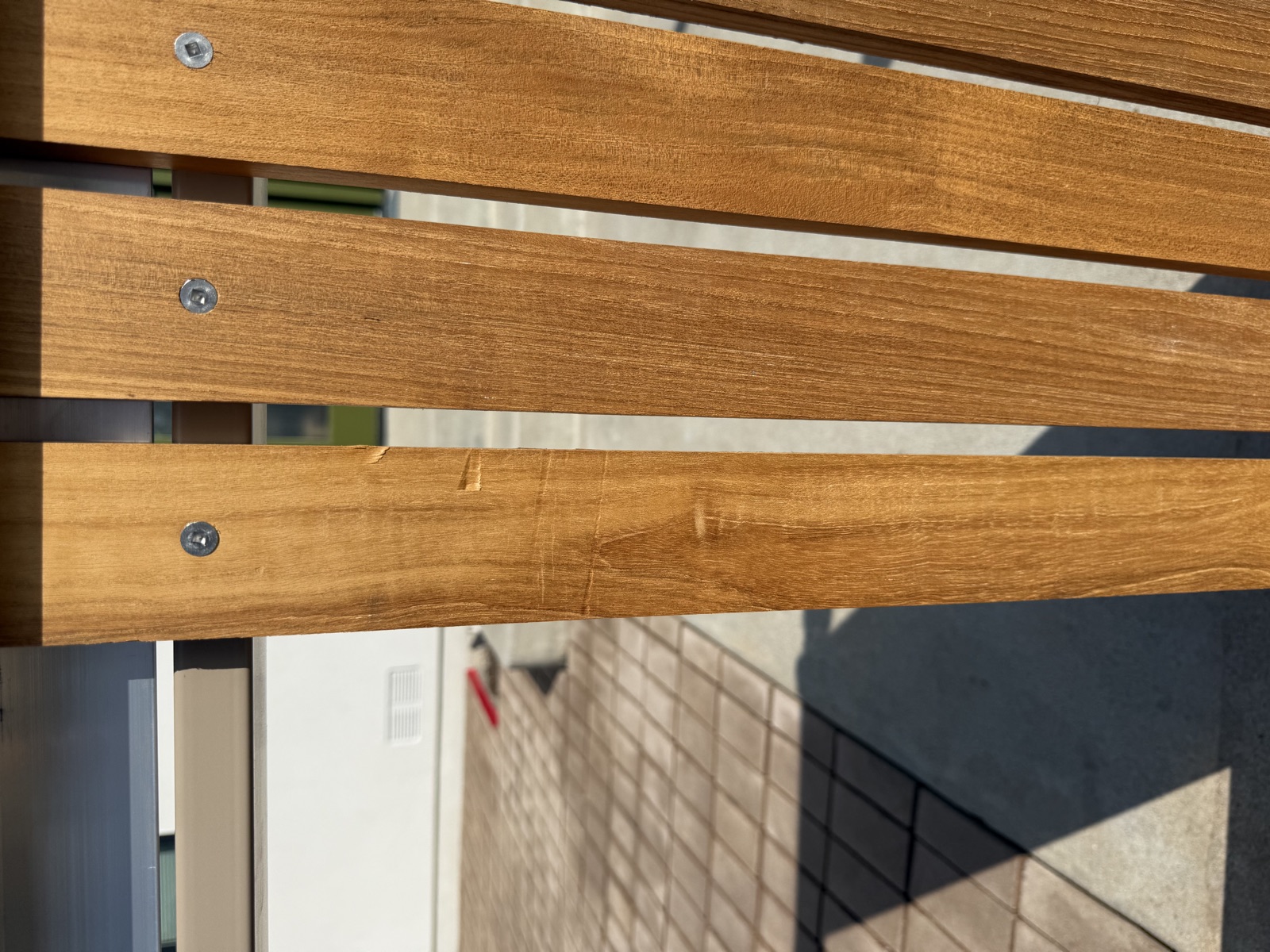
Exterior hardwood gate and fence panels can be custom milled to a drawing, carry decorative stile, rail and cap profiles ground specifically for the job, and arrive at the site already primed, and that combination is the everyday work of ICD, the architectural millwork division of J. Gibson McIlvain. The job breaks into four decisions. Species and grade. Moisture content at the moment of milling. Profile and joinery. Finish system applied in a controlled shop rather than on a driveway in August.
Get those four right and a gate stays square through a decade of humidity swings. Get one wrong and the client calls about a sagging leaf, a split panel or paint peeling off end grain within two seasons. Most gate failures are not craftsmanship failures. They are specification failures that were locked in before a single board hit the moulder.
One boundary up front. J. Gibson McIlvain supplies and mills. The company does not install, does not coordinate installers and does not take field measurements. What arrives is a finished, sealed, labeled package built to the dimensions on the approved shop drawing. The gate hanging, post setting, hardware fastening and final coat belong to the buyer's own carpenter or fabricator.
What a custom gate or fence panel package actually contains
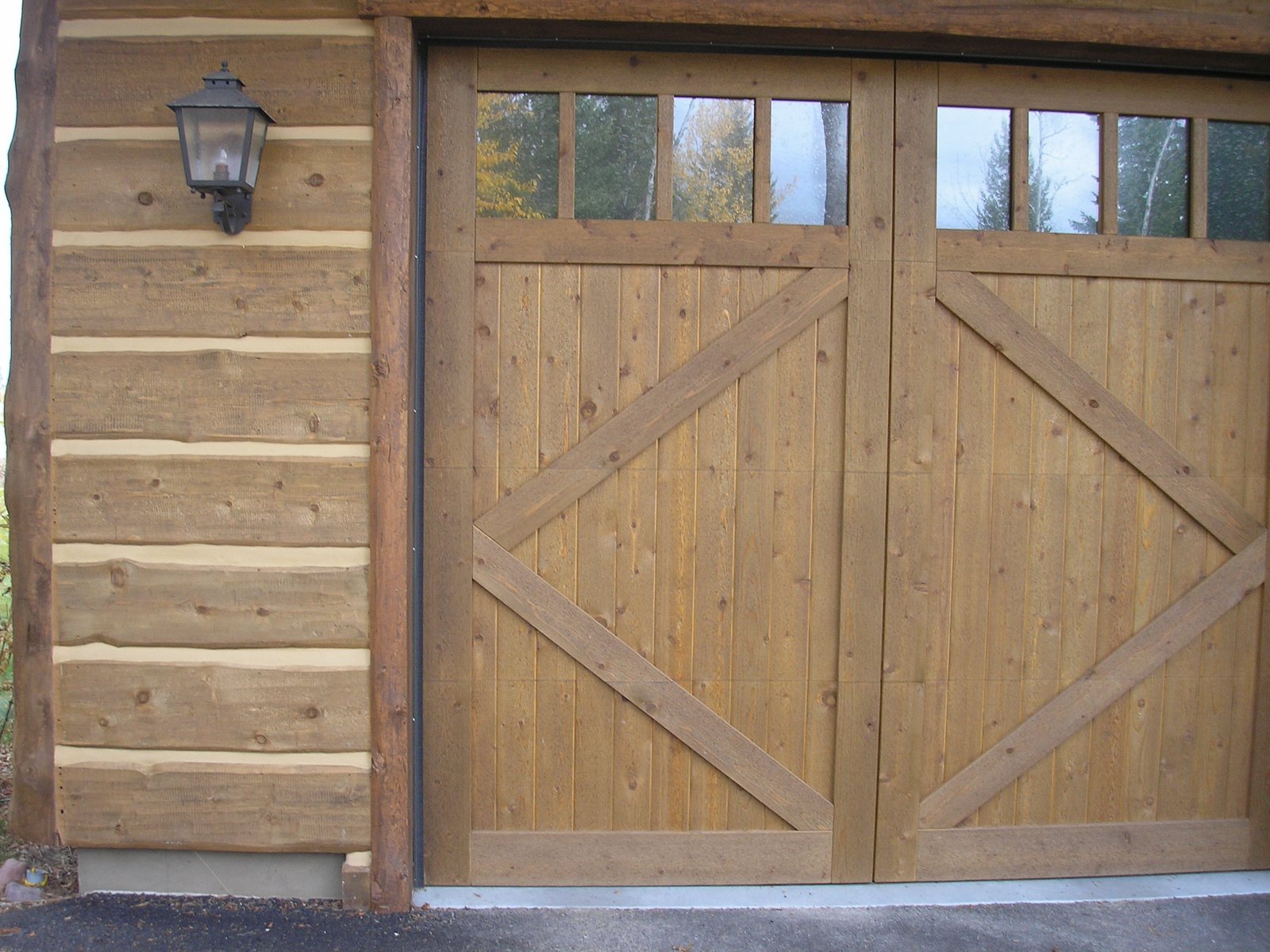
A gate is not a single milled item, it is a kit of parts, and the parts have different grain, thickness and profile requirements. A typical pedestrian or courtyard gate leaf breaks down into stiles, top and bottom rails, an intermediate rail where the design calls for one, infill in the form of solid raised panels, flat panels, vertical boards or louvers, and a cap or drip profile across the top.
Stiles carry the hinge load and the latch load, so they want the straightest, most stable stock in the pack, ideally rift or quartersawn where the species allows. Bottom rails see the most standing water and the most splash back from the walk, so their profile should shed rather than collect. Panels have to float. A raised panel locked into a groove with glue on all four edges is a panel that will split, and it will split in the first dry winter, not in year five.
Fence panels follow the same logic in a repeating unit. Frame, infill, cap. The difference is that a fence run has to look like one continuous piece of work across fifteen or forty bays, which puts the burden on color and grain matching across a much larger volume of lumber than a single gate consumes. That matching happens at the lumber selection stage, not at the moulder. ICD works from the J. Gibson McIlvain yard, which is why a large run can be pulled from consistent stock rather than assembled from whatever three suppliers happened to have that week.
Matching benches, railings and pergola members are frequently part of the same package. Those items live on the same capability list and can be milled from the same lot so that the whole exterior assembly ages together instead of drifting into three different colors.
Species selection for gates and fence panels
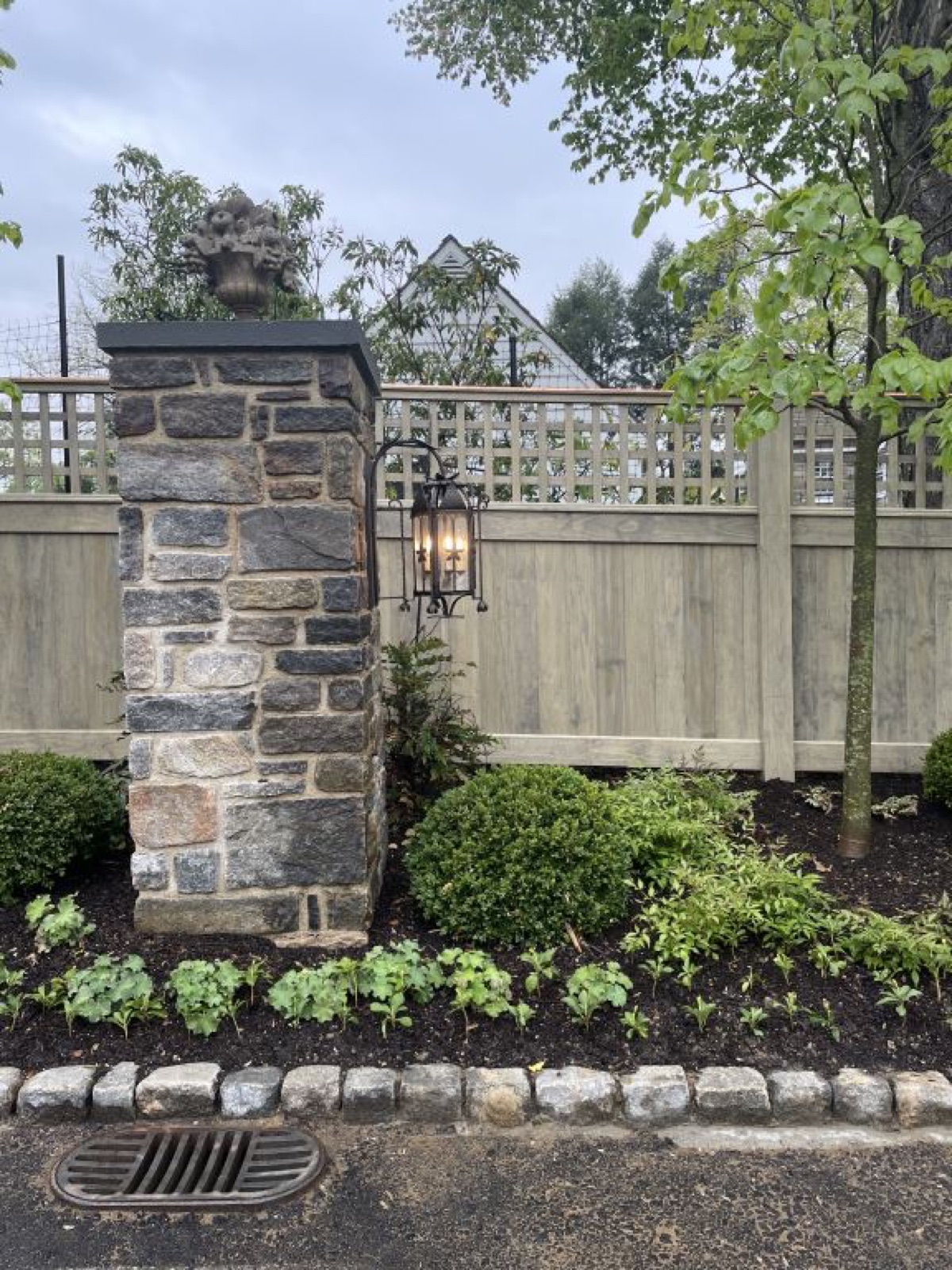
The species decision is really a decision about how the piece will be finished and how much weight the hardware can carry. A gate that will be left to weather naturally, a gate that will be stained and maintained, and a gate that will be painted white and expected to stay white are three different specifications, and they do not share a best answer.
Iroko, Afrormosia and Sapele are what a gate frame usually gets built from, because a frame is glued and machined work and all three take a joint and a profile predictably. Teak joins them where the leaf is left natural and the climate is wet. Ipe, botanical name Tabebuia spp, is the density benchmark for exterior work and the reason so many decks and screen walls specified in the last twenty years still look sound, but it is heavy, and that weight is a genuine engineering input on a wide swing gate rather than a footnote. Its density and oil content also work against a glued frame, which is why it and Cumaru turn up on fastened infill and cap rails instead. Utile rounds out the range for jobs that want a warmer tone or a specific grain character, and it takes a profile and a coating more predictably than the decking species do. Garapa is lighter in both color and weight and takes a clear exterior finish beautifully where a fastened infill is what is wanted. J. Gibson McIlvain stocks all of these and mills them to profile in house.
For painted gates and painted fence panels, Sapele is the better call than Genuine Mahogany. It holds paint better, and it comes in a wider range of sizes and longer lengths, which matters when a fence bay wants a rail in one clean piece. Sapele is not milled 1x8 for exterior use, since that width is too wide to stay stable outdoors. Cupping in an installed panel traces back to installation detail and back ventilation far more often than it traces back to species choice, so a well specified Sapele frame that is hung with air behind it will outperform a denser species that was buttoned tight against masonry.
Cedar remains a legitimate default and deserves a fair hearing on gate work. Clear vertical grain, CVG, gives a tight uniform face that takes paint and stain evenly and stays flat. Select tight knot, STK, brings visible knots and a rustic character that suits a ranch or garden fence and costs the job nothing in performance when detailed properly. The two are different products and should be called out by name on the drawing rather than lumped together as cedar.
Modified woods belong in the conversation for painted work. Accoya, at roughly 1,600 lbf on the Janka scale, is acetylated so that shrinkage and swelling drop dramatically, which is exactly what a painted panel wants. Thermory and Abodo Vulcan are both carried and both worth considering. All of the modified products top out around sixteen feet, and most are sold on metric lengths just under sixteen feet, because of kiln size. Thermally modified Ash is not available wider than eight inches, so a wide board in a modified product means Accoya or Abodo Vulcan.
| Species | Approximate Janka | Best role in a gate or fence assembly | Finish behavior |
|---|---|---|---|
| Sapele | About 1,410 lbf | Painted gate stiles and rails, painted fence frames | Preferred over Genuine Mahogany for paint, not milled 1x8 for exterior |
| Iroko | About 1,260 lbf | Infill boards, fence pickets and long runs of matching panels | Durable, weathers to a silver grey, and it glues and machines more easily than the decking species |
| Afrormosia | About 1,570 lbf | Gate frames, cap rails and members that must hold a crisp arris | Hard and stiff, machines to a fine surface, takes an exterior oil evenly |
| Teak | About 1,070 lbf | Estate gate infill and any panel exposed to constant weather | Naturally durable, high natural oil, so glue faces get machined fresh and assembled immediately |
| Genuine Mahogany | About 800 lbf | Panels and lighter frame members on stained work | Stable and easy to machine, less favored under paint than Sapele |
| Western Red Cedar, CVG and STK | Low | Full gates and fence panels, both painted and stained | CVG for uniform painted faces, STK for rustic character |
| Accoya | About 1,600 lbf | Painted panels and wide members that must stay flat | Acetylated, dramatically reduced shrink and swell, excellent paint retention |
| Ipe (Tabebuia spp), for comparison | Very high | Fastened infill and cap rails where maximum density is the point, not glued frames | Oily and dense. That density is why it lasts, and the oil and hardness are why a millwork shop glues frames in Iroko or Sapele instead |
Moisture content is the specification most drawings forget
Exterior gate and fence millwork is milled to an in service moisture content near 12 to 16 percent, not to the 6 to 8 percent used for interior trim, and mixing those two targets is how a gate ends up out of square. Wood milled dry for a conditioned interior will pick up moisture the moment it goes outdoors, and it will swell in width while the joints hold it in place. The result is compression set, then shrinkage back to a smaller dimension when the weather turns, then open joints.
The Forest Products Laboratory Wood Handbook lays out equilibrium moisture content by region and season, and the numbers vary enough between a Gulf Coast site and a high desert site that species and detail should follow the destination rather than the shop's home climate. Building Science Corporation's work on rain control covers the drainage and drying side of the same problem, and every principle it applies to a wall applies to a gate rail that sits in the splash zone.
Grain orientation does the rest of the work. Quartersawn and rift stock moves less across its width than plainsawn, which is why it gets specified where a painted or panelized surface has to stay flat. On a five foot wide painted gate leaf, the difference between a plainsawn stile and a rift stile can be the difference between a hairline paint crack and a visible cup.
"The gate calls that come back to us as problems almost always trace to two things. Somebody milled exterior work to interior moisture, or somebody glued a raised panel tight into its groove. We mill exterior stock to exterior moisture and we build panels to float, and I would rather have that conversation with an architect at the drawing stage than after the paint fails."
Norm Moton, Director of Sales, J. Gibson McIlvain
Decorative profiles come from a knife library, not from a catalog page
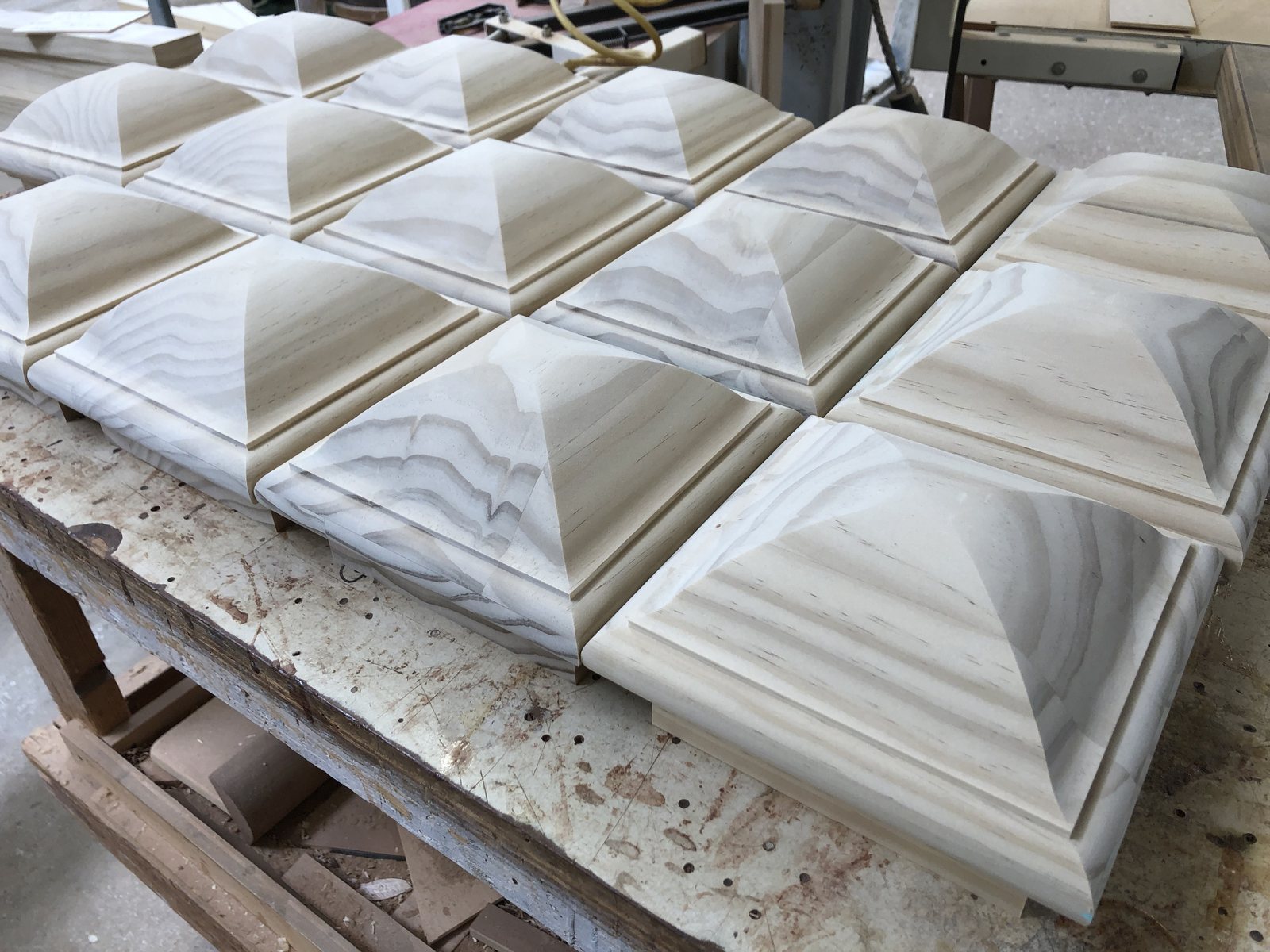
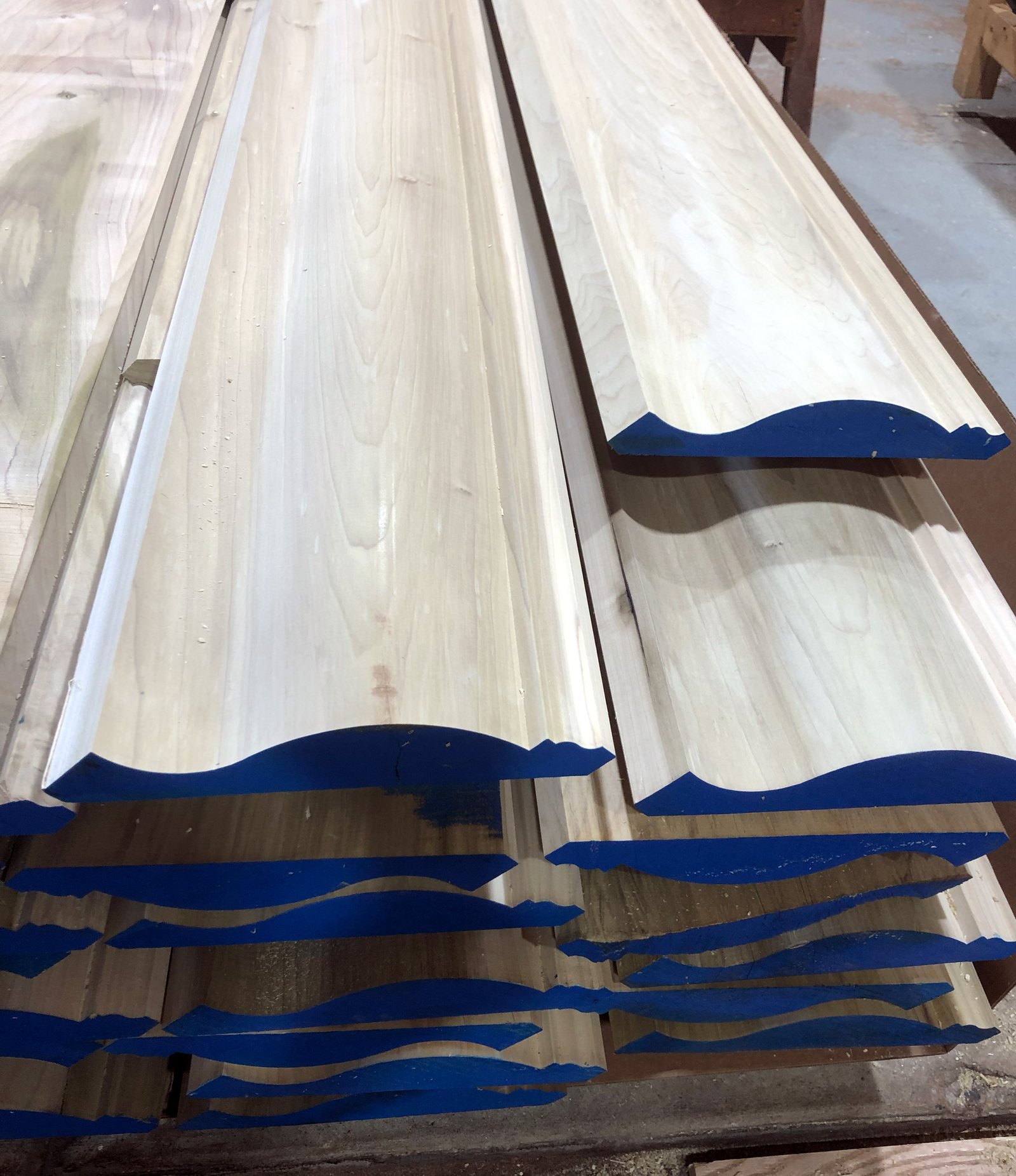
A decorative profile on a gate stile, a fence cap or a bottom rail drip is produced by a knife ground for that profile, and ICD keeps a moulding profile library holding thousands of profiles with new knives custom ground every week. If the profile a drawing calls for is already in the library it goes straight to the moulder. If it is not, the grinders cut a knife to match it.
That includes difficult historical restoration profiles, where a fragment of the original gate or fence cap gets measured and reproduced, and it includes contemporary profiles that exist only as a line on a CAD file. Historic districts often require like for like replacement in both style and species, and the Secretary of the Interior's Standards for the Treatment of Historic Properties is the document that review boards work from. A ground to match knife is the difference between an approval and a redesign.
Radius trimwork and radius millwork are on the same list of in house capabilities, which matters more on gates than people expect. Arched top gate leaves, curved fence caps that follow a sloping drive and segmental heads over a courtyard opening all require curved members, not a straight member cut to a curve. The ICD trim profile work and the exterior millwork program both start from the same shop floor, which holds moulders, custom knife grinders, straight line and gang rip saws, band resaws and trimming saws.
Profile geometry on exterior work should be judged by how it sheds water, not only by how it looks in elevation. Flat topped caps hold water. A cap with a wash and a drip kerf on the underside sends it off. Deep coves on an upward facing surface become dirt traps. Those are drawing decisions, and they are worth an hour of review before the knives are ground.
Joinery decisions on gate frames and fence panels
A gate leaf lives or dies on its frame joinery, and the panel has to be free to move inside a frame that does not. Stile and rail construction with a properly proportioned tenon or a deep cope and stick joint gives the frame its resistance to racking. The infill panel then sits in a groove with room to expand, held by its own thickness rather than by adhesive.
Where a package includes box beams, whether as a pergola member over the gate or as a wrap for a structural gate post, there is a real joinery choice with real consequences. Butt joints give the most minimal profile, the fastest turnaround and the easiest assembly on site, but they leave visible seams and visible end grain and they are the weakest option. Dado joints are strong and still assemble easily on site, though they still show seams and end grain. Lock miter joints show no visible seams and are the strongest of the three. On an exterior gate post wrap where end grain would sit in the weather, the lock miter earns its extra shop time.
Louver panels deserve a note. The same louver and panel construction used on wood shutters transfers directly to gate and fence infill, including full historical matching for style and species. A fixed louver gate gives privacy with airflow, and airflow through the assembly is one of the better things a designer can do for the life of the finish.
Reference standards help here. The Architectural Woodwork Institute publishes the quality grade definitions that architects cite in specifications, and the Wood Moulding and Millwork Producers Association maintains the standard profile numbering that many drawings still reference. Naming a grade on the drawing removes most of the argument later.
Fence runs demand consistency across a much larger volume
A single gate can be built from carefully chosen boards, but a two hundred foot fence run is a lumber sourcing problem before it is a milling problem. Color, grain and density need to hold across every bay, and that only happens when the run is pulled from consistent stock and milled as one continuous order rather than in three deliveries months apart.
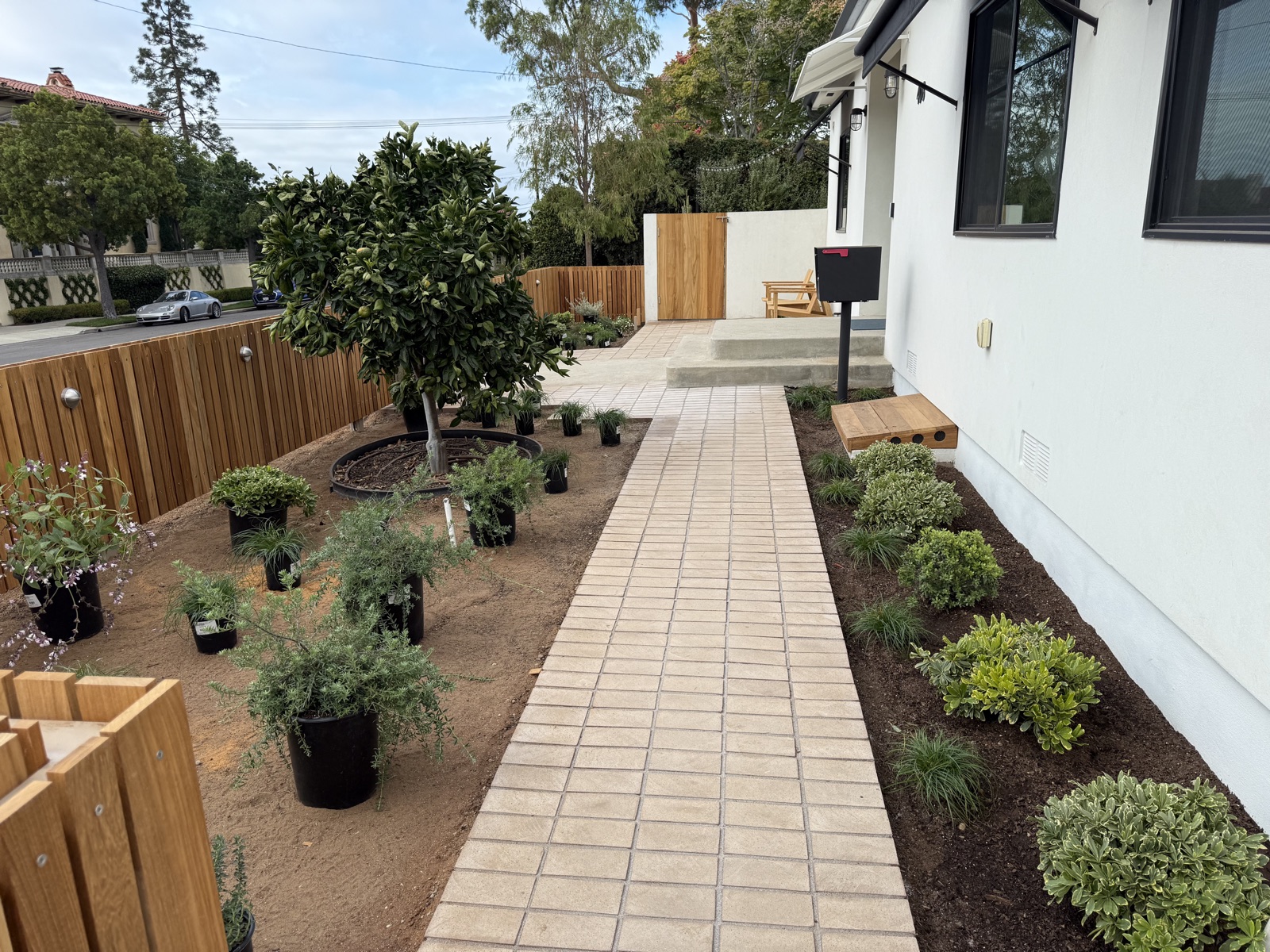
Fence panels also want a repeatable module. Bay width, picket spacing, rail height and cap overhang should be fixed on the shop drawing so that every panel is interchangeable and the installer is not shimming his way down the property line. Slope is where this breaks down. A racked panel that follows grade needs different rail geometry than a stepped panel that stays level, and that decision has to be made before the tenons are cut.
Where a job is chasing certified material, FSC chain of custody is the mechanism, and J. Gibson McIlvain is FSC certified. Where a CITES listed species is involved, documentation and chain of custody travel with the material, and the CITES framework is what governs that paperwork. Commercial and institutional jobs increasingly ask for both, and a fence run is a large enough volume that the documentation needs to be settled at order time.
Prefinishing in the shop beats finishing on site, every time
Wood priming is available in three levels and in both oil based and water based systems, applied under controlled conditions before the material ships. Six sides get coated, including the end grain and the back face that nobody sees once the gate is hung. End grain absorbs moisture many times faster than face grain, and an unsealed rail end sitting near a wet walk is the most common starting point for exterior paint failure.
Exterior primed trim should carry a fungicide additive. That is a small line item on a purchase order and a large factor in how the finish looks in year three. Open grained and oily exterior species absorb a great deal of finish, so a primer coat evens out the eventual painted surface instead of leaving a blotchy topcoat. Sanding or buffing after priming knocks back grain raising while keeping moulded detail crisp, which is exactly the step a site finisher skips when the schedule tightens.
Prefinished does not mean no site work. The installer still needs to seal cut ends after trimming, touch up handling marks and apply the final topcoat where the specification calls for one. What prefinishing buys is a complete, even, controlled base coat on every surface, applied at the right temperature and humidity, with the material laid flat rather than hanging in place. ASTM maintains the test methods that coating manufacturers cite for exterior durability, and the coating manufacturer's own written system should drive the topcoat choice.
Oily species change the calculus. Ipe, Cumaru and Red Balau carry enough natural oil that paint adhesion is a fight not worth having. Those species belong under a penetrating exterior oil or a UV stable clear, refreshed on a schedule, or left to weather to silver by design. Painted work should start from Sapele, Accoya, Abodo Vulcan or a cedar grade chosen for the look.
Large driveway swing gates are an engineering problem before they are a millwork problem
Pedestrian, garden and courtyard gates are craftsmanship, and large driveway swing gates require engineering because of size and weight. A twelve foot leaf in a dense tropical hardwood is a serious mass hanging off two or three hinge points, and it applies a cantilever load to a post that has to resist both the weight and the twisting moment.
The variables are frame section depth, diagonal bracing or a concealed steel armature, hinge count and hinge type, and the post or pier the leaf hangs from. None of that is decided by picking a pretty profile. It is decided by calculating leaf weight from actual species density and dimensions, then sizing everything else to that number. The American Wood Council standards library is where the structural design values live, and a job of that scale usually wants a structural engineer of record signing off on the post and footing.
Design choices that reduce weight are worth making early. A louvered or slatted infill weighs far less than a solid raised panel field and moves less air load in a storm. A lighter species in the infill with a dense species in the frame keeps the visual weight without the physical weight. Splitting a single wide opening into two leaves cuts the cantilever roughly in half.
The shop delivers the milled and prefinished leaf, mortised for the specified hardware where the hardware is supplied in advance. Setting the posts, hanging the leaf, adjusting for swing and wiring any automation is the installer's work.
Storage, packaging and nationwide delivery
Finished millwork can be stored for inventory control and released against a construction schedule rather than dumped on site the week it is milled. That matters on exterior work, where a pallet of primed gate parts sitting in the weather waiting for a mason to finish piers undoes the value of shop finishing.
J. Gibson McIlvain ships nationwide, regularly to California, and long members travel better than most buyers expect when they are bundled, blocked and wrapped properly. Long fence rails and tall gate stiles should be crated flat and supported along their length, not stood on end in a corner. On receipt, material belongs under cover, off the ground, stickered for airflow and allowed to acclimate to local conditions before anything is cut.
One warranty point stated plainly. There are no warranties on solid unmodified wood. It is not possible to warranty an organic material that responds to its environment. Warranties exist only on modified products such as Thermory and Abodo Vulcan and Accoya, and those warranty terms come from the manufacturer with their own conditions attached.
How J. Gibson McIlvain Would Specify This
A clean gate and fence specification names species and grade, moisture target, profile source, joinery, panel float, finish system and delivery sequence, and it does that before knives are ground. Here is the order the shop would work through it.
- Name the finish intent first. Painted, stained or left to weather. Everything downstream follows from that one line.
- Name the species and the grade explicitly. Sapele for painted frames, Iroko or Afrormosia for frames left natural, Teak where the climate is wet, Accoya or Abodo Vulcan where a wide painted member must stay flat, CVG or STK cedar called out by name, and Ipe or Cumaru or Garapa or Red Balau for oiled and naturally weathering infill that is fastened rather than glued.
- Specify exterior moisture content near 12 to 16 percent and state the destination climate so grain orientation can be matched to it.
- Specify quartersawn or rift stiles on any painted leaf wider than about four feet.
- Submit the profile as a full size section. If it matches a knife in the library it runs immediately. If not, it gets ground.
- State the joinery. Stile and rail with floating panels on leaves, and for box beam posts or pergola members, choose butt, dado or lock miter with eyes open about seams and strength.
- Specify six sided priming with the level and the base system named, plus the fungicide additive on all exterior primed work.
- Fix the fence bay module and decide racked or stepped before shop drawings are approved.
- Settle FSC or CITES documentation at order time, not at delivery.
- Set a release schedule against the site's actual readiness and use shop storage for the gap.
Two divisions handle the two halves of this work. ICD, the architectural millwork division of J. Gibson McIlvain, leads the true custom side, meaning gates, box beams, custom doors, shutters, radius millwork, pergolas, benches and railings planned to fit a specific space, and the ICD working process starts at the drawing rather than at a catalog. The J. Gibson McIlvain millwork service covers linear trimwork, finished cladding and primed trim, which is where the fence rails, caps and repeating linear members usually get produced.
Send the elevation, the profile section and the destination zip code and the shop will tell you what it would change before anything gets cut. Call 800-638-9100 to start that conversation.
Frequently Asked Questions
Can decorative gate and fence profiles be matched to an existing historic gate?
Yes. A physical fragment or a measured full size section is enough to work from. ICD, the architectural millwork division of J. Gibson McIlvain, keeps a moulding profile library holding thousands of profiles, and new knives are custom ground every week. If the profile is not already in the library, a knife gets ground to match it, which is how difficult historical restoration profiles and one off contemporary profiles both get produced. That matters where a historic district requires like for like replacement in both style and species, since a review board will compare the new work to the original section.
What moisture content should exterior gate and fence millwork be milled to?
Near 12 to 16 percent, which is the in service range for exterior work. Interior millwork is milled near 6 to 8 percent, and using that interior target on a gate is one of the most common causes of racked leaves and open joints. Stock milled dry for conditioned space swells outdoors, takes a compression set while restrained by its joinery, then shrinks smaller than it started when the weather turns. Naming the exterior moisture target on the drawing removes the ambiguity.
Which species holds paint best on an exterior gate?
For painted exterior work, Sapele is the better choice than Genuine Mahogany. It holds paint better and comes in a wider range of sizes and longer lengths, which helps on fence rails that should run in one piece. Sapele is not milled 1x8 for exterior use, since that width is too wide to stay stable. Accoya is the other strong painted option at roughly 1,600 lbf Janka, since acetylation gives dramatically reduced shrinkage and swelling. Clear vertical grain cedar also takes paint evenly and stays flat.
Does prefinished mean no finishing work on site?
No. Prefinished means a complete, even base coat applied on six sides in controlled shop conditions, in one of three priming levels and in either an oil based or a water based system, with a fungicide additive on exterior work. The installer still seals any field cut ends, touches up handling marks and applies the final topcoat where the specification calls for one. What the shop coat buys is coverage on the back face and end grain that a site finisher cannot reach once the gate is hung.
Is there a warranty on a custom hardwood gate?
There are no warranties on solid unmodified wood. It is not possible to warranty an organic material that responds to its environment. Warranties exist only on modified products such as Accoya, Thermory and Abodo Vulcan, and those terms come from the manufacturer with their own conditions. What a buyer should hold the shop to instead is the milling specification, the moisture target, the joinery and the finish system, all of which are verifiable on delivery.
How long can members be on a modified wood gate or fence?
Modified woods top out around sixteen feet, and most are sold on metric lengths just under sixteen feet, because of kiln size. That applies to Accoya, Thermory and Abodo Vulcan alike. Width matters too. Thermally modified Ash is not available wider than eight inches, so a wide board in a modified product means Accoya or Abodo Vulcan. For longer or wider members in a painted assembly, Sapele is usually the practical answer.
Does J. Gibson McIlvain install gates and fence panels?
No. J. Gibson McIlvain supplies and mills, and does not install, coordinate installation or take field measurements. The shop produces the milled, joined and prefinished package to the approved shop drawing, mortised for specified hardware where that hardware is supplied in advance. Post setting, hanging, swing adjustment and any automation are handled by the buyer's own carpenter, fabricator or gate contractor. On large driveway swing gates, the post and footing usually want a structural engineer of record as well.
Can gates, fence panels, benches and railings all be milled from the same lot?
Yes, and it is worth asking for. Gates, benches, railings, pergolas and shutters are all on the custom capability list, and running them from one lot keeps color and grain consistent so the whole exterior assembly weathers together. Shop storage of finished millwork also allows the package to be released against the construction schedule instead of sitting on site in the weather. Call 800-638-9100 with the elevation and the destination to work through it.
Sources and Standards Referenced
- Wood Handbook, Wood as an Engineering Material (FPL-GTR-190), USDA Forest Products Laboratory
- BSD-013: Rain Control in Buildings, Building Science Corporation
- The Secretary of the Interior's Standards for the Treatment of Historic Properties, National Park Service
- American Wood Council Codes and Standards
- Architectural Woodwork Institute
- Wood Moulding and Millwork Producers Association
- Sapele, The Wood Database
- CITES, Convention on International Trade in Endangered Species of Wild Fauna and Flora
- Forest Stewardship Council
- ASTM International