
The short answer on where this work gets milled

Custom exterior shutters and louvers belong in a hardwood shop that stocks rot resistant species in shutter thicknesses and cuts true mortise and tenon frames, and that is the work ICD, the architectural millwork division of J. Gibson McIlvain, takes on in Sapele, Iroko, Afrormosia, Teak and Utile. A shutter is not trim. It is a small door that hangs off a wall with no jamb around it, swings in weather, and carries its own weight on two or three points of steel. The frame has to be joined well enough to survive that. The species has to hold a glue line outdoors for decades.
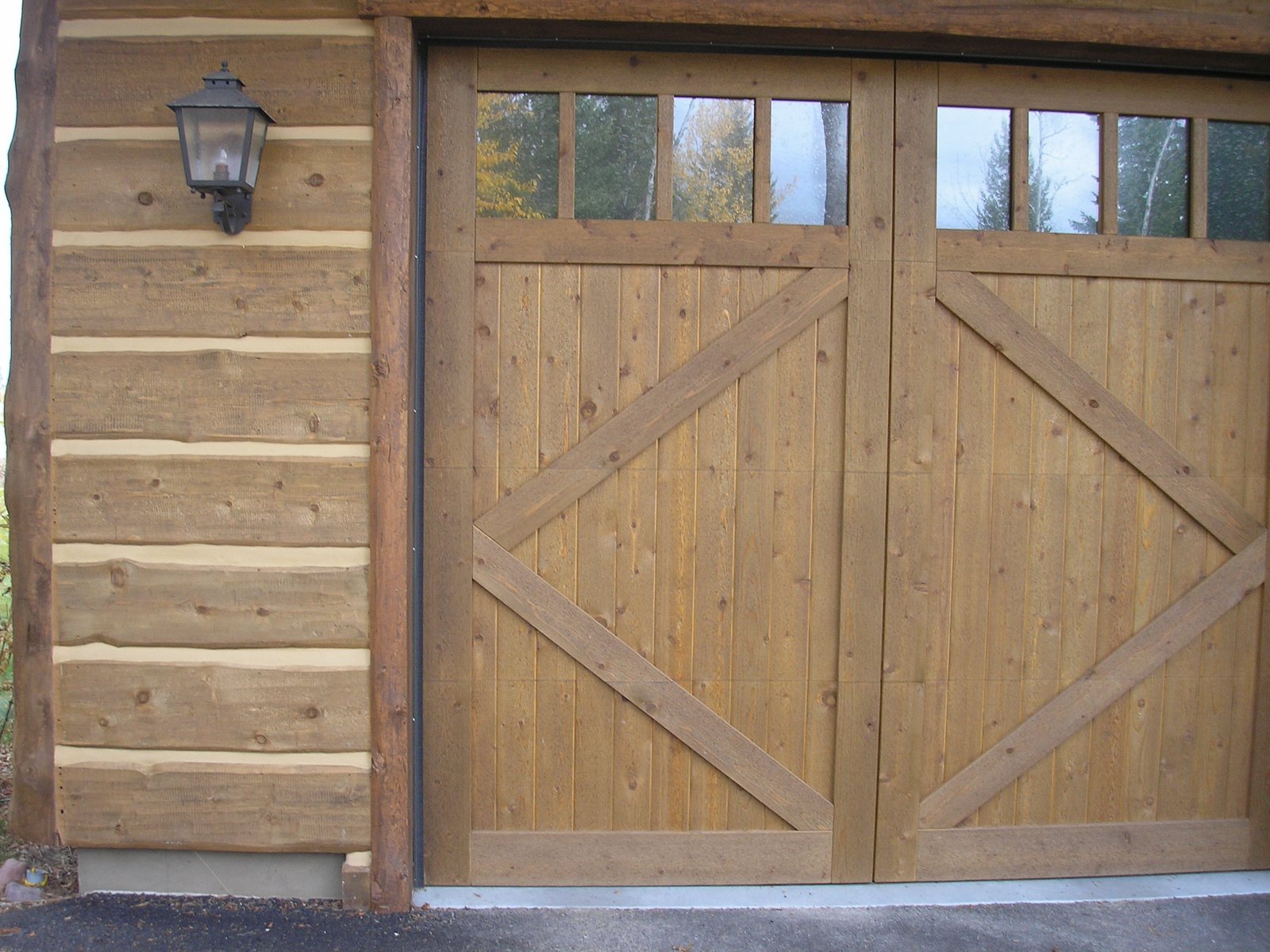
Then there is the part nobody sells you. The shutter can be perfect and still hang wrong, because the geometry that makes it work lives on the masonry, not in the shop. Pintle standoff, hinge throw, the projection of the brick mould, the horn on a stone sill, the reveal at the jamb. Those are field conditions. J. Gibson McIlvain supplies and mills the shutters and machines the stiles for a specific hardware set, and the anchoring into brick, block or stone is handled by the buyer's own installer or mason. Understanding that split before the order goes in is what keeps a good set of shutters from arriving three quarters of an inch short of usable. Call 800-638-9100 to start that conversation with a millwork estimator rather than a catalog page.
The standoff is a wall decision the mill cannot make
Pintle standoff, the distance the hinge pin sits off the face of the masonry, controls everything about how a shutter lands, and it is fixed by the wall and the hardware rather than by the shutter. Run the numbers backward. A closed shutter has to sit flat against the wall and cover the opening. An open shutter has to clear whatever sticks out around that opening and lie reasonably flat against the field of brick. Between those two positions sits the brick mould, the drip cap, the sill horn, a water table, a projecting header course, sometimes a rowlock that stands proud by a quarter inch.
Set the standoff too shallow and the shutter binds on the casing before it closes, or it swings and gouges the brick mould on the way past. Set it too deep and the closed shutter stands off the wall, light rakes behind it, and the shutter dog on the wall below cannot reach the stile to hold it open. On a recessed masonry opening, where the window sits back in a two inch or three inch reveal, the pintle usually has to land on the face brick rather than in the reveal, and the strap has to be long enough to reach across that jog. Measure the projection at every opening on the elevation. Old brick buildings are rarely consistent, and a rebuilt lintel or a replaced sill changes the number at one window and nowhere else. Building Science Corporation's work on solid masonry walls is a useful reminder that these assemblies drain and dry on their face, which is exactly the surface the shutter is about to sit against.
Hardware gets selected before the stiles get machined

The hardware set has to be chosen and in hand before a shutter stile is cut, since pintle offset, strap length and mortise depth all change the frame layout. Shutter hardware comes in families, and each family assumes something different about the wall. A jamb pintle screws to a wood casing and offers almost no adjustment. A plate pintle or lag pintle mounts to the masonry face and comes in published offsets, so the offset becomes a specification instead of a field guess. A mortise pintle sets into a drilled pocket and needs an anchor sized for it. New York style straps, L straps and the older Lull and Porter geometry all throw the shutter a different distance from the wall as it opens.
Give the mill the manufacturer, the model and the offset. From there the shop can machine hinge stile mortises, bore for pins, thicken or reinforce a stile where a lag lands, and keep fastener locations off the tenon shoulders and out of the glue lines. That last point matters more than most specifications admit. Driving a hardware lag straight through a mortise and tenon joint splits the tenon cheek and opens a path for water into the middle of the frame. Layouts get shifted an inch, or the rail gets widened, and the problem disappears at the drawing stage. ICD plans its exterior millwork around a specific opening for exactly this reason.
Anchor selection changes depending on whether the pintle lands in brick or in mortar
A pintle anchored into a brick unit and a pintle anchored into a mortar joint are two different structural problems, and the wrong choice cracks either the brick or the shutter's alignment. Modern hard fired brick and grouted block hold a properly embedded anchor well. Soft historic brick with lime mortar does not, and an expansion anchor set in the middle of a soft brick can spall the face off it in one heating season. Preservation practice for that condition points toward the mortar joint, since mortar is the sacrificial element and a repointed joint restores the wall. The National Park Service Preservation Briefs lay out the reasoning for repointing and reversible attachment on historic masonry, and a preservation review board will usually expect the installer to follow it.
Adhesive anchors with a screen tube handle hollow units and marginal joints better than a wedge anchor, which wants solid material and generates outward pressure by design. Sleeve anchors and lead shields spread load differently again. Embedment depth, edge distance and spacing all belong to the anchor manufacturer's evaluation report and the applicable code path, and testing methods for anchors in concrete and masonry are standardized so those published values mean something. The I-Codes published by the International Code Council and the wood design standards maintained by the American Wood Council govern what the fastener and the wood member each have to do. None of that is millwork. All of it is the installer's responsibility, and the shutter order should not wait on it.
Rot resistance in a shutter is a glue line question before it is a decay question
The species that make good exterior shutters are the ones that resist decay and still machine and glue cleanly, which is why a millwork shop reaches for Sapele, Iroko, Afrormosia, Teak and Utile. A shutter frame is held together by joinery and adhesive at the corners, by louver pins in blind mortises, and sometimes by a glued up panel. Every one of those depends on a bond that lasts outdoors.
The tropical decking species are a different tool. Ipe, botanically Tabebuia spp, along with Cumaru, Garapa, Jatoba and Red Balau, are extremely hard and carry high oil content, which makes them stubborn to glue and hard on knives. They earn their place on a deck. They are not the default for milled, glued and machined shutter components, and a shop that offers them for this work is usually working around what it has rather than what fits. For painted shutters, Sapele is the better call than Genuine Mahogany, since it holds paint better and comes in a wider range of sizes and longer lengths. Note that Sapele is not milled 1x8 for exterior use, too wide to stay stable, so wide components get laid up rather than cut from a single board. Reference data on Sapele and its relatives is easy to check before a specification goes out.
Accoya deserves a mention where the finish is paint and the location is punishing. Acetylation gives dramatically reduced shrinkage and swelling, and the material runs around 1,600 lbf on the Janka scale against roughly 1,410 lbf for Sapele and roughly 800 lbf for Genuine Mahogany. Modified woods, including Thermory and Abodo Vulcan alongside Accoya, top out around 16 feet because of kiln size, and most of that material sells on metric lengths just under 16 feet. Thermally modified Ash is not available wider than 8 inches, so a wide modified component means Accoya or Abodo Vulcan. Warranties exist on modified products only. Solid unmodified wood is an organic material responding to its environment and cannot be warranted, by anyone.
| Species | Where it fits in a shutter | Machining and movement notes | Finish direction |
|---|---|---|---|
| Sapele | Frames, louvers and panels, painted or clear | Roughly 1,410 lbf Janka, glues predictably, quartersawn and rift stock stays flattest | Best paint holding of the group, wide size and length range |
| Utile | Frames and stiles where wider stock is wanted | Works and glues much like Sapele, slightly softer feel under the knife | Paint or clear coating both work |
| Iroko | Exposed elevations and unpainted work | Very durable, some interlocked grain, high extractive content to plan for | Best left clear or oiled, tannin management needed under paint |
| Afrormosia | Louver blades and slender frame members | Dense and stable, holds a crisp arris on thin sections | Clear finishes show the color well, CITES documentation travels with it |
| Teak | Coastal and high exposure shutters | Oil content demands a solvent wipe before glue up, silica dulls tooling | Traditionally left unfinished or oiled, not a paint candidate |
| Accoya | Painted shutters in hard weather | Roughly 1,600 lbf Janka, dramatically reduced shrink and swell, length ceiling near 16 ft | Purpose built for paint, warranted as a modified product |
| Western Red Cedar | Lighter louver and panel shutters, traditional look | Specify CVG for the flattest, most uniform frame stock, STK where knotty character is wanted | Takes stain and solid color coatings well, light enough to ease hinge load |
Tannin rich hardwoods and ferrous hardware attack each other
Iron and steel hardware in contact with wet, tannin bearing hardwood produces black staining and accelerated corrosion, so fastener metallurgy is part of the shutter specification. Sapele, Iroko, Afrormosia, Teak and White Oak all carry extractives that react with ferrous metal in the presence of moisture. The stain bleeds down the stile from every screw head and never washes off. Worse, the same reaction eats the fastener from the head down while it sits inside the wood.
Stainless steel is the practical answer, and 316 rather than 304 within a mile or two of salt air. Hot dip galvanized hardware performs acceptably inland while the coating stays intact, though a drilled or cut galvanized part exposes bare steel at the edge. Mixing metals at the same connection invites galvanic corrosion, so the pintle, the strap, the fastener and any washer should belong to the same family or be deliberately isolated. The Forest Products Laboratory Wood Handbook covers wood and metal interaction in detail and is the reference to hand an installer who wants to use whatever is in the truck.
Operable louvers succeed or fail on blade pitch and pin fit
A louvered shutter is a machined assembly with moving parts, and blade angle, blade spacing and pin clearance decide whether it sheds water and still swings freely in August. Fixed louvers are simpler. The blade sits in a mortise cut at a set angle, glued and permanent, and the whole panel behaves as one piece. Operable louvers ride on pins in blind mortises, connected by a tilt rod, and every one of those pin pockets is a place where water can sit if the geometry is careless.
Blade pitch is the working number. Too flat and rain drives straight through and stands on the blade. Too steep and the shutter looks wrong against a historic elevation and loses whatever ventilation it was meant to give. Blade spacing follows from the pitch, since adjacent blades have to overlap in the closed position with no daylight through the stack. Pin fit needs deliberate clearance, cut for the swollen condition rather than the shop condition, since exterior millwork is milled to an in service moisture content near 12 to 16 percent and still gains moisture in a wet week. Tight pins in dry stock become frozen louvers in July. Interior work runs near 6 to 8 percent, and confusing the two targets is a common way to ruin an exterior assembly before it ships.
Panel shutters have to let the panel move
A raised or flat panel in a shutter frame must float in its groove, unglued and unpinned, or the panel will split the first winter it dries. The frame is dimensionally stable along its length. The panel is not. It expands and contracts across the grain with every seasonal swing, and a panel glued into the groove has nowhere to go except apart.
Groove depth should let the panel grow without bottoming out and shrink without pulling out of the frame. Panels get centered with space balls or an equivalent, and the back of the panel edge gets finished before assembly so a shrinking panel never reveals a raw stripe. Quartersawn and rift stock moves less across its width than plainsawn, which is why it earns its place in a painted panel that has to stay flat. On the frame itself, through tenons or deep haunched tenons with drawbored pins outperform a dowel or a loose tenon on a shutter that gets slammed by wind. Standards published by the Architectural Woodwork Institute give a common vocabulary for grade and joinery expectations when a specification has to be written down.
Prime every face and every machined pocket before hardware ever touches it
Exterior shutters should arrive primed on all six sides, including edges, end grain and hardware mortises, and exterior primer should carry a fungicide additive. The unprimed edge is where shutters die. Water wicks into end grain far faster than into a face, and a hardware mortise is a small cup that holds rain against bare wood under a steel plate.
J. Gibson McIlvain primes millwork in three levels in both oil based and water based systems, and exterior work gets the fungicide additive as a matter of course. Open-grained and oily species absorb a great deal of finish, so the primer coat is doing real work evening out what the eventual painted surface will look like. Sanding or buffing after priming knocks back the grain raising while keeping the moulded detail crisp, which matters on a shutter where a bead or an ovolo runs the full length of every stile. Details on the priming program and the rest of the mill's services sit on the J. Gibson McIlvain millwork service page. Any field cut the installer makes, and any hole drilled for a pintle pin, should get sealed on site before the hardware goes on.
Historic districts want like for like, and the mill has to prove it
Where a historic district or a preservation review requires like for like replacement, the shutter has to match in style, profile and species, which means custom ground knives rather than a catalog profile that is close. ICD does complete historical matching on shutters in both louver and panel styles. The profile library on the floor holds thousands of profiles, new knives are ground every week, and a profile that is not in the library gets ground to match from a physical sample or a measured drawing. Restoration profiles and contemporary profiles both come off the same moulders.
"On shutter work the drawing that saves the job is the one showing the wall, not the shutter. Send us the hardware cut sheet with the pintle offset and a section through the brick mould and sill, and we will machine the stiles so the installer's day is boring. We have shipped shutters to jobs on both coasts, and the ones that go smoothly are always the ones where the standoff was settled before we cut anything."
Norm Moton, Director of Sales, J. Gibson McIlvain
Species matching carries its own paperwork. Where a CITES listed species is involved, documentation and chain of custody travel with the material, and an FSC certified supply chain gives a project the record it needs for both preservation review and green building documentation. FSC and CITES both publish their frameworks openly, and a millwork package that arrives with the paperwork attached saves an argument later.
How J. Gibson McIlvain Would Specify This
Specify the wall condition and the hardware first, then the shutter, and hand the installer a set of parts that need drilling and hanging rather than rework. A workable package looks like this. Elevation by elevation, record the masonry opening dimensions, the projection of every element around the opening, and the reveal depth if the window is recessed. Select the hardware and record the manufacturer, model and published pintle offset. Confirm the swing path clears the brick mould in both directions and that the open shutter can reach its dog or holdback.
On the millwork side, call the species from the list that fits the finish. Sapele or Utile for painted work, Iroko or Afrormosia where the shutter stays clear, Teak on the coast, Accoya where paint has to survive weather that solid wood will not, cedar in CVG or STK where a lighter traditional shutter is right. Call the style, louver or panel, fixed or operable, with blade pitch and spacing noted for operable work. Call priming, three level program, oil based or water based, fungicide additive on all exterior work, six sides. Note any stile reinforcement or machining the hardware requires. Confirm that documentation travels with any CITES listed material.
ICD, the architectural millwork division of J. Gibson McIlvain, mills the shutters to those numbers and can hold finished millwork in storage for inventory control when the site is not ready. The company ships nationwide, regularly to California, and it supplies and mills rather than installs, so the anchoring and hanging stay with the buyer's own installer. See how ICD works a custom project from drawing to delivery, or call 800-638-9100 with a hardware cut sheet and a section through the wall and get the standoff settled before anything gets cut.
Frequently Asked Questions
Which species should I specify for exterior shutters that will be painted?
Sapele is the first call for painted exterior shutters. It holds paint better than Genuine Mahogany and comes in a wider range of sizes and longer lengths, and it glues and machines predictably at roughly 1,410 lbf on the Janka scale. Utile behaves much the same way and is worth looking at when wider frame stock is needed. Where the exposure is severe and the finish has to be paint, Accoya is the modified option, with acetylation giving dramatically reduced shrinkage and swelling and a warranty that solid unmodified wood cannot carry. Note that Sapele is not milled 1x8 for exterior use, so wide components get laid up rather than cut from a single board.
Can J. Gibson McIlvain set the pintles and hang the shutters?
No. J. Gibson McIlvain supplies and mills. It does not install. The shop machines the stiles for a specific hardware set, primes the shutters on all six sides and ships them ready to hang, and the drilling, anchoring and hanging into masonry stays with the buyer's own installer or mason. That division is the reason the pintle offset and the wall section need to be settled before the shutters are cut, since the mill has one chance to put the hinge mortises in the right place.
Should the pintle anchor go into the brick or into the mortar joint?
It depends on the masonry. Modern hard fired brick and grouted block hold a properly embedded anchor and are usually the better target. Soft historic brick with lime mortar can spall when an expansion anchor is set in the face of a unit, and preservation practice for that condition points toward the mortar joint because mortar is the sacrificial element and repointing restores the wall. Adhesive anchors with screen tubes handle hollow units and marginal joints better than wedge anchors. Embedment, edge distance and anchor type are the installer's call under the anchor manufacturer's data and the governing code.
Why not use Ipe or Cumaru for shutters if they are so rot resistant?
Those are decking species. Ipe, botanically Tabebuia spp, along with Cumaru, Garapa, Jatoba and Red Balau, are extremely hard and carry high oil content, which makes them difficult to glue and hard on knives. A shutter is a glued, machined assembly with mortise and tenon corners and blind louver pockets, so bond reliability matters more than raw hardness. A millwork house reaches for Sapele, Iroko, Afrormosia, Teak or Utile instead, all decay resistant and all far more cooperative through a moulder and a glue press.
What information does the mill need before it can quote or cut custom shutters?
Opening dimensions elevation by elevation, the projection of every element around each opening including brick mould, sill horn, drip cap and any water table, the reveal depth if the window is recessed, and the hardware manufacturer, model and published pintle offset. Then the millwork calls, species, louver or panel style, fixed or operable, blade pitch and spacing for operable work, and the priming schedule. Call 800-638-9100 with a hardware cut sheet and a section through the wall.
How does moisture content affect operable louvers?
Exterior millwork is milled to an in service moisture content near 12 to 16 percent, against 6 to 8 percent for interior work, and an exterior shutter still gains moisture during a wet stretch. Louver pins therefore need clearance cut for the swollen condition rather than the shop condition. Pins fitted tight in dry stock bind once the blades take on moisture, and a shutter that will not tilt in July is usually a clearance problem, not a hardware problem.
What hardware metal should be used with Sapele, Iroko or Teak?
Stainless steel, and 316 rather than 304 within a mile or two of salt air. These species carry extractives that react with ferrous metal in the presence of moisture, producing black staining that bleeds down the stile from every fastener and corrosion that works on the fastener at the same time. Hot dip galvanized hardware is acceptable inland while the coating stays intact. Keep the pintle, strap, fastener and washer in the same metal family or isolate them, since mixed metals at one connection invite galvanic corrosion.
Can the shop match a historic shutter profile exactly?
Yes. ICD, the architectural millwork division of J. Gibson McIlvain, does complete historical matching on shutters in both louver and panel styles. The moulding profile library holds thousands of profiles and new knives are ground every week, so a profile that is not already in the library gets ground to match from a physical sample or a measured drawing. That is what a historic district requiring like for like replacement is asking for, in both style and species.
Sources and Standards Referenced
- Wood Handbook, Wood as an Engineering Material, USDA Forest Products Laboratory
- Preservation Briefs, National Park Service Technical Preservation Services
- Thick as a Brick, Building Science Corporation
- Codes and Standards, American Wood Council
- I-Codes, International Code Council
- Sapele, The Wood Database
- Accoya Modified Wood
- Architectural Woodwork Institute
- CITES, Convention on International Trade in Endangered Species
- Forest Stewardship Council