What You Keep by Choosing Cumaru
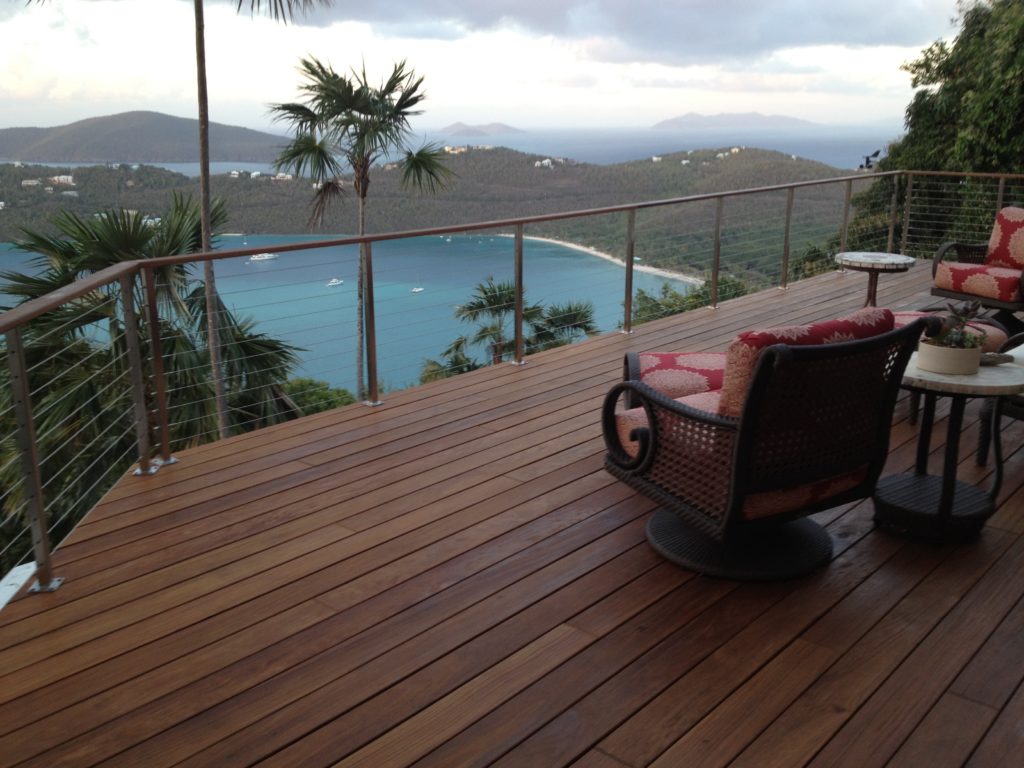
Choosing Cumaru over Ipe keeps the properties that make a tropical hardwood deck last: Class 1 durability, a Class A fire rating, and near-Ipe hardness. Cumaru is rated Class 1 under EN 350, reaches ASTM E84 Class A flame spread without treatment, and carries a Janka hardness near 3,540 lbf, only marginally below Ipe's 3,680, as documented by the USDA Forest Products Laboratory. In service it delivers a 30-plus year deck. So the value case starts from the fact that you keep the durability and fire performance that matter most. See the head-to-head in our Ipe vs. Cumaru guide.
What You Trade
The trade-offs for Cumaru's lower cost are more color variation, a slightly shorter expected service life, and interlocked grain that requires care to work, none of which is a durability compromise.
- Color variation: Cumaru ranges from tan to red-brown with more board-to-board variation than Ipe, which is why color sorting matters.
- Service life: Cumaru's 30-plus years is strong but below Ipe's 40 to 75, a margin at the long end that few decks reach before renovation.
- Workability: the interlocked grain needs pre-drilling and carbide tooling, a jobsite consideration handled by pre-grooving.
Where the Savings Actually Come From
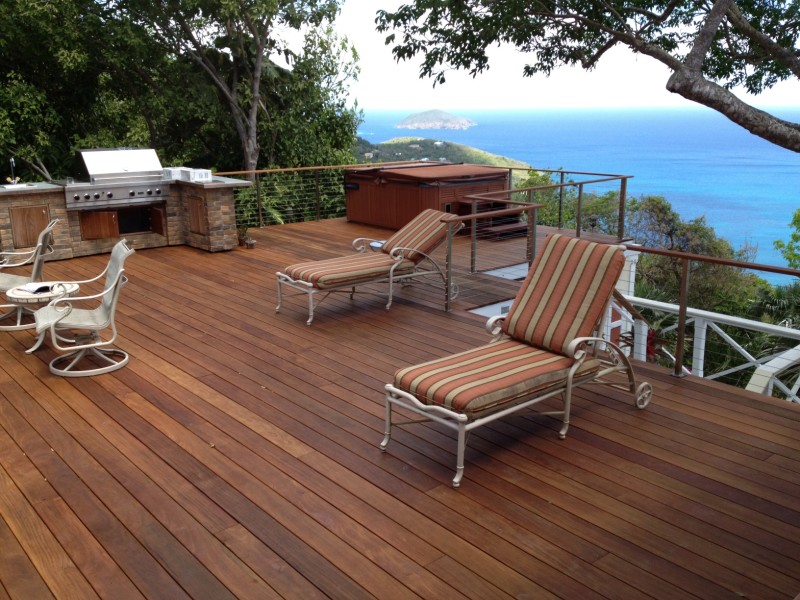
The savings on Cumaru come from Ipe's premium reputation and more uniform color, not from Cumaru being a lesser wood, so the value buyer is essentially declining to pay for the Ipe name and uniformity. Ipe is the most-requested tropical decking by name, which supports its premium, and its color uniformity means less reliance on sorting. Cumaru captures the durability and fire performance for less because it is the alternative rather than the headline species. For a buyer who wants a tropical hardwood deck that lasts and saves money, that is the whole value proposition.
| Aspect | Keep with Cumaru | Trade vs. Ipe |
|---|---|---|
| Durability (EN 350) | Class 1 | None |
| Fire (ASTM E84) | Class A | None |
| Hardness | ~3,540 lbf | Slightly below Ipe's 3,680 |
| Service life | 30+ years | Below Ipe's 40 to 75 |
| Color | Warm tan to red-brown | More variation; needs sorting |
How to Get the Most From Cumaru
Two supplier capabilities turn Cumaru from a bargain into a premium-looking deck: color sorting so the boards read as one material, and pre-grooving so the interlocked grain is not pre-drilled board by board in the field. Unsorted Cumaru can arrive as a patchwork of light and dark boards, so sorting is what makes a Cumaru deck look intentional. Pre-grooved Cumaru installed with hidden clips removes field pre-drilling and gives a clean surface. Both depend on a supplier that sorts and mills. Kiln-drying to a stable moisture content near 12 to 16 percent keeps the deck flat. J. Gibson McIlvain color-sorts and pre-grooves Cumaru in-house.
Installing Cumaru: Fasteners, Spacing, and Grain
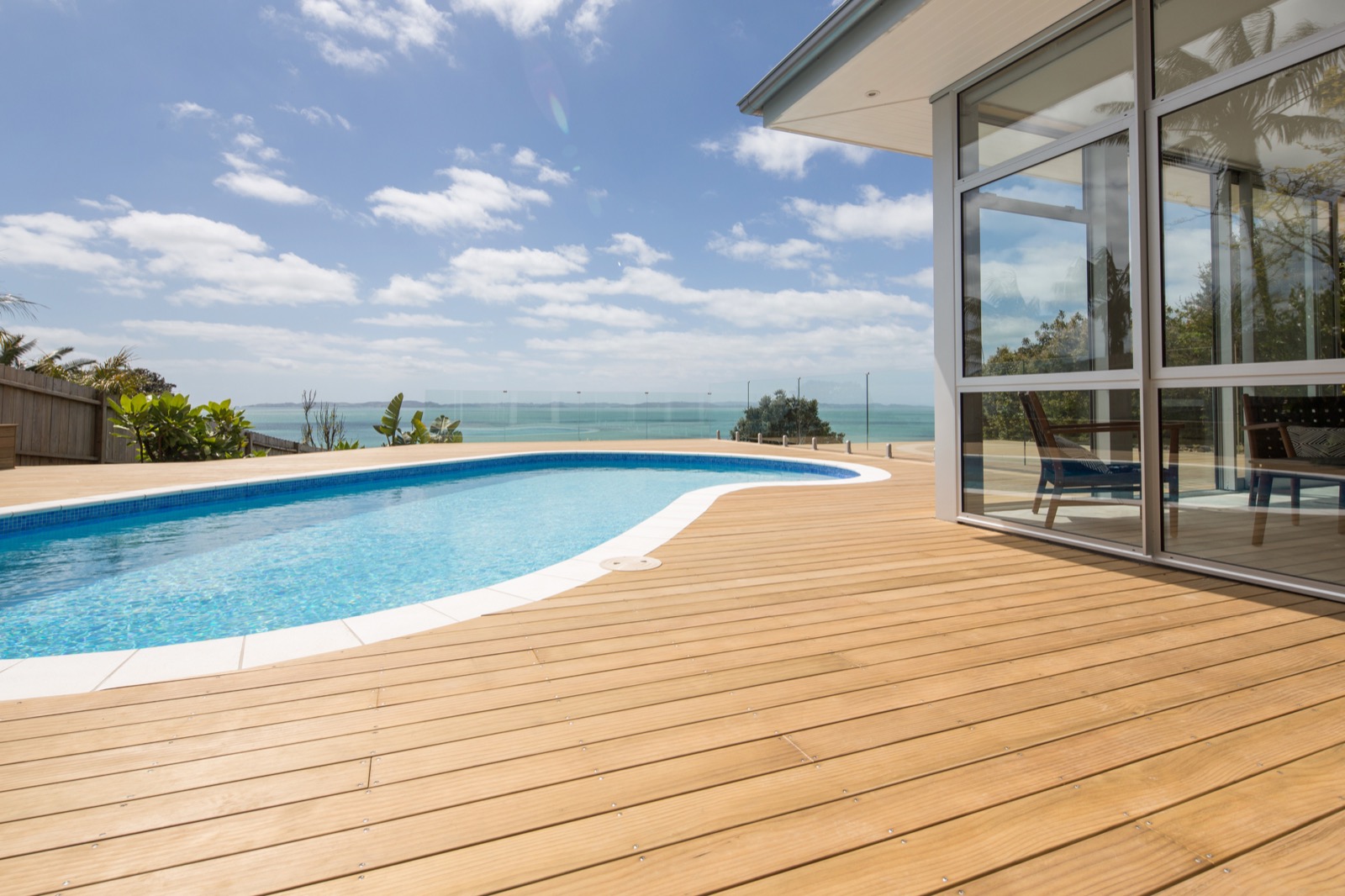
Cumaru installs like other dense tropical hardwoods, pre-drilled or pre-grooved, fastened with stainless steel, over a substructure sized for the load, so the labor is comparable to an Ipe deck. Its interlocked grain and density mean every face fastener is pre-drilled unless the boards are pre-grooved for hidden clips, which is why pre-grooving is the practical path. The American Wood Council publishes the joist-span and fastener basis, with 5/4 decking commonly installed over joists at 16 inches on center, and grooved profiles are oriented groove-down to drain. Stainless steel fasteners, and 316 stainless near salt water, prevent staining and corrosion.
Coverage and estimating follow the same conventions as any decking: a 5/4x6 board covers about 2.1 linear feet per square foot after the gap, per NHLA measurement rules, so a Cumaru order is planned to a cut list the same way an Ipe order is. Because the install requirements match, the value of choosing Cumaru shows up in the material line, not in extra labor. J. Gibson McIlvain pre-grooves and color-sorts Cumaru and advises on the shared install detailing.
The Cumaru Look and How It Weathers
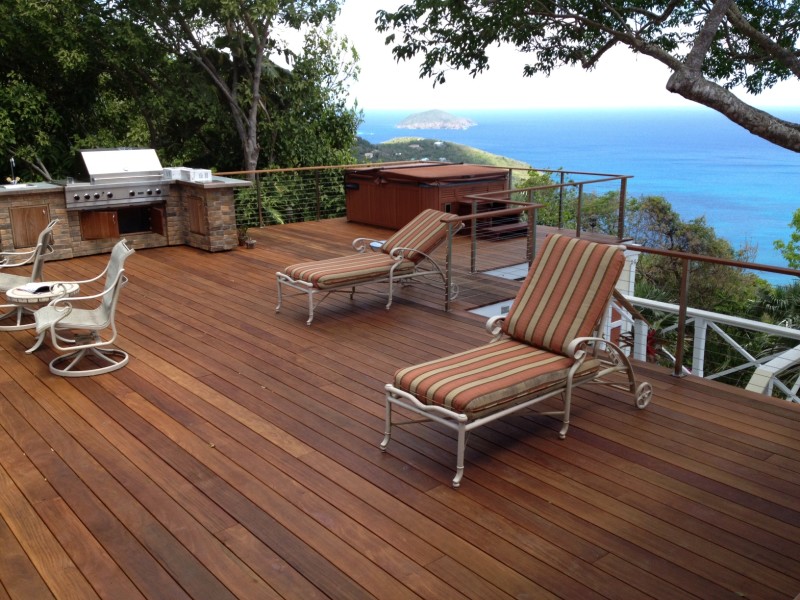
Cumaru's appearance is warmer and more varied than Ipe's, ranging from tan to a richer red-brown with more pronounced grain, which is part of its appeal as well as the reason it needs color sorting. For a buyer who wants a warm, characterful tropical hardwood deck rather than Ipe's more uniform olive-brown, Cumaru's tone is a feature, not a compromise. Left unfinished it weathers toward a silver-gray patina like all tropical hardwoods, and maintained with a penetrating oil it holds its warm color. The USDA Forest Products Laboratory documents that dense species accept penetrating finishes rather than films, which is why Cumaru takes oil and not a surface coating.
Because Cumaru varies more board to board, the weathered result also lands slightly less uniform than Ipe's, which is another reason sorting at the supplier matters for a consistent look. For owners who want the warm tone maintained, a periodic oil cycle keeps it; for those who prefer low maintenance, letting it gray is fully acceptable and the wood stays sound. The look and the weathering are part of what the value buyer gets, not a downgrade from Ipe.
Where Cumaru Fits Best
Cumaru fits projects that want genuine tropical hardwood durability and a warm look while keeping the material budget in check, which covers a large share of residential and light commercial decks. For a homeowner building a substantial deck who wants decades of service without paying the Ipe premium, Cumaru captures the Class 1 durability and Class A fire performance for less. For a contractor pricing a competitive bid, it offers a premium real-wood surface at a more accessible material cost. In both cases the value comes from declining to pay for the Ipe name, not from accepting a weaker deck.
Cumaru is less suited to a project that specifically wants Ipe's uniform color or the recognized Ipe name for its own sake, or to the rare application needing the absolute maximum service life at the far end of Ipe's range. Outside those cases, Cumaru is the practical value choice, and a supplier that color-sorts and pre-grooves it delivers a deck few would identify as the budget option. J. Gibson McIlvain stocks Cumaru graded and sorted for exactly these projects.
"Cumaru is what I recommend when someone wants an Ipe-caliber deck and the budget is real. You are not giving up durability or the fire rating, you are giving up a little color uniformity and paying less for not buying the Ipe name. The two things that make Cumaru look like money instead of a discount are sorting it for color and pre-grooving it. Do that and people cannot tell you saved."
Camden Zacker, Sales Director, J. Gibson McIlvain Company
How J. Gibson McIlvain Delivers Cumaru Value
For J. Gibson McIlvain, delivering Cumaru value means color-sorting the order so it reads as one material, pre-grooving for hidden fasteners, and kiln-drying to a stable moisture content, all from graded inventory. The team positions Cumaru honestly as the value tier: close to Ipe on the performance that matters, below it on cost, with the color variation managed through sorting rather than glossed over.
The result is a tropical hardwood deck that lasts decades and looks intentional, at a lower material cost than Ipe. The value is captured through the supplier's sorting and milling, not by accepting a lesser deck.
Cumaru Value Checklist
| Item | Why it matters |
|---|---|
| Color sorting | Makes the deck read as one material. |
| Pre-grooving | Avoids field pre-drilling of interlocked grain. |
| Kiln-dried target | Stable moisture content keeps the deck flat. |
| Class 1 / Class A | Durability and fire performance kept, not traded. |
| Documentation | FSC and CITES for legal sourcing. |
Where Cumaru Value Is Lost
- Unsorted color: Produces a patchwork that looks like a discount.
- No pre-grooving: Interlocked grain must be pre-drilled board by board.
- Green or air-dried stock: Moves after install; insist on kiln-dried.
- Treating it as a lesser wood: It keeps Class 1 durability and Class A fire.
Ordering Information to Resolve Before Pricing
- Species: Cumaru, with a quote for current figures.
- Color: sorting required for a consistent deck.
- Profile: square-edge or pre-grooved for hidden fasteners.
- Documentation: FSC and CITES where applicable.
- Logistics: total square footage, delivery, lead time.
Related J. Gibson McIlvain Guidance and Next Steps
Frequently Asked Questions
Is Cumaru a good alternative to Ipe?
Yes. Cumaru is the value alternative to Ipe, delivering close performance for less: Class 1 durability, a Class A fire rating, and a Janka hardness near 3,540 lbf, only marginally below Ipe's 3,680. It builds a 30-plus year deck. The trade-offs are more color variation, a slightly shorter service life, and interlocked grain that needs pre-drilling, none of which is a durability compromise. J. Gibson McIlvain stocks Cumaru color-sorted and kiln-dried as an Ipe alternative.
What do you give up choosing Cumaru over Ipe?
Choosing Cumaru trades a little color uniformity, a slightly shorter expected service life (30-plus years versus Ipe's 40 to 75), and easier field handling because of interlocked grain, but not durability or fire performance, which stay Class 1 and Class A. The savings come from declining to pay for Ipe's premium name and uniformity. J. Gibson McIlvain manages the color variation through sorting and the grain through pre-grooving so little is actually given up in the finished deck.
How do I make a Cumaru deck look premium?
Two supplier capabilities make Cumaru look premium: color-sorting so the boards read as one material rather than a patchwork of light and dark, and pre-grooving so the interlocked grain is not pre-drilled board by board in the field. Kiln-drying to a stable moisture content keeps the deck flat. Both sorting and pre-grooving depend on the supplier. J. Gibson McIlvain color-sorts and pre-grooves Cumaru in-house so the finished deck looks intentional.
Does Cumaru last as long as Ipe?
Cumaru delivers a strong 30-plus year service life, below Ipe's 40 to 75 years but far beyond softwoods or composites, and both are Class 1 durable. The difference is at the long end of the range, which few decks reach before renovation, so for most projects the practical lifespan is comparable. Cumaru keeps the durability that matters at a lower cost. J. Gibson McIlvain stocks kiln-dried, graded Cumaru for a long-lived deck.
Why is Cumaru less expensive if it performs like Ipe?
Cumaru is less expensive because Ipe carries a premium reputation as the most-requested tropical decking and runs more uniform in color, not because Cumaru is a lesser wood. Cumaru keeps Class 1 durability, a Class A fire rating, and near-Ipe hardness, so the value buyer is essentially declining to pay for the Ipe name and uniformity. J. Gibson McIlvain stocks both and can quote current figures so the value is clear.
Does Cumaru decking need to be pre-drilled?
Yes. Cumaru's density and interlocked grain mean it splits if fasteners are driven without pilot holes, so every face fastener must be pre-drilled and carbide tooling is used for cutting. The practical alternative is pre-grooved Cumaru installed with a hidden-fastener clip system, which removes field pre-drilling entirely. J. Gibson McIlvain pre-grooves Cumaru in-house so the deck goes down with hidden clips rather than board-by-board pre-drilling.
Is Cumaru harder to install than Ipe?
Not meaningfully. Both are dense tropical hardwoods that must be pre-drilled or pre-grooved and fastened with stainless steel over a properly sized substructure, following the American Wood Council span and fastener basis, so the labor is comparable. Cumaru's interlocked grain needs care, but pre-grooving handles it. Because the install requirements match Ipe, the value of choosing Cumaru shows up in the material cost, not in extra labor. J. Gibson McIlvain pre-grooves Cumaru to simplify the install.
What fasteners does a Cumaru deck use?
A Cumaru deck uses stainless steel fasteners, and 316 stainless near salt water, to prevent the staining and corrosion that carbon steel causes in dense hardwoods, with boards pre-drilled or pre-grooved for hidden clips. Grooved profiles are installed groove-down to drain. This matches Ipe's fastening requirements. J. Gibson McIlvain mills pre-grooving in-house and advises on the stainless hardware suited to the deck's environment.