What the door has to do before anyone talks about style
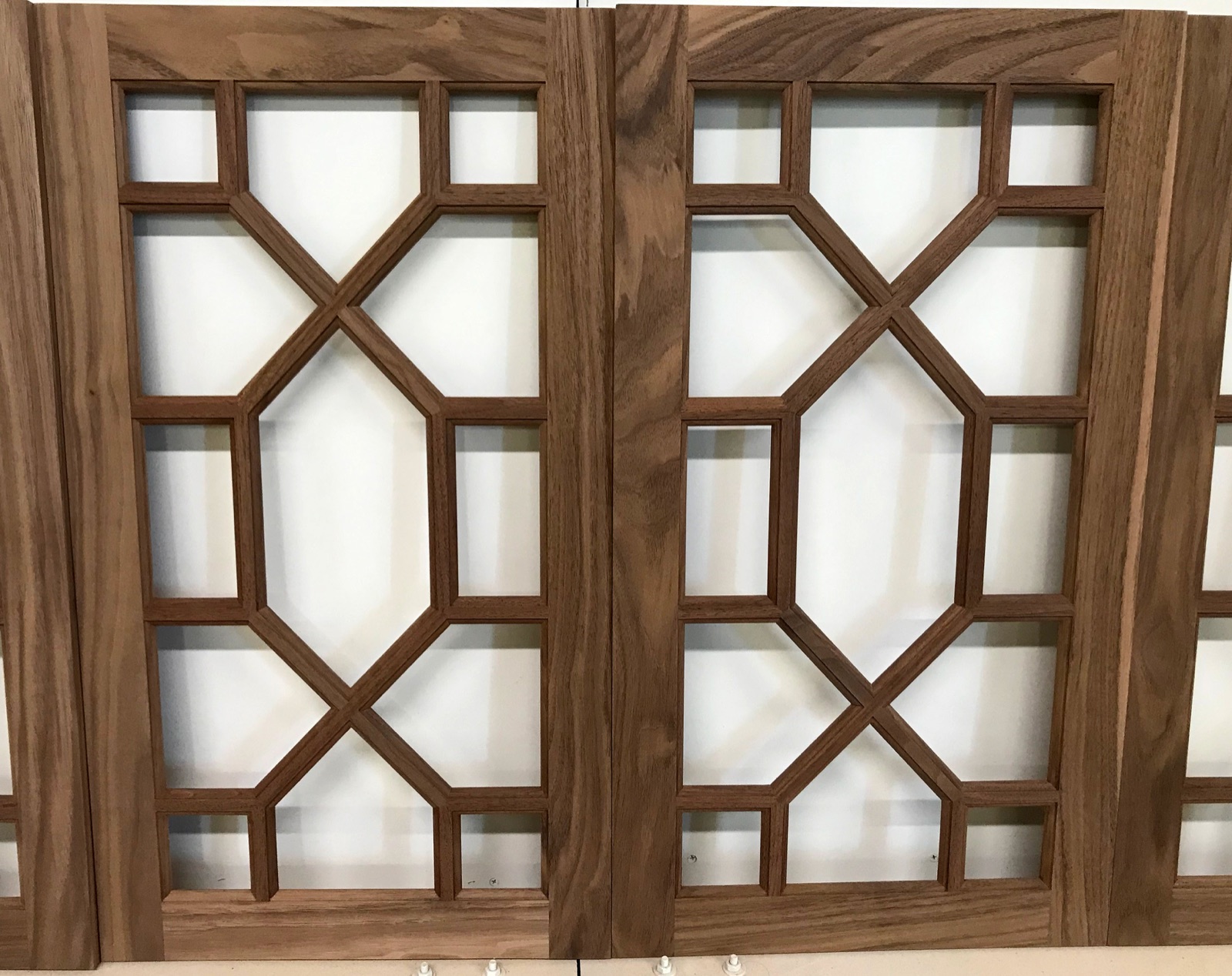
A cabinet door is two structures with opposite assignments, a frame that must stay dead flat forever and a panel that must be free to move with the seasons, and every choice about species, joinery, stock selection and profile follows from keeping those two assignments separated. Get that separation right and a door in Sapele, White Oak, Cherry or Walnut behaves for decades. Get it wrong and the failure shows up in one of three ways. The panel splits, because it was glued or pinned at both edges and had nowhere to go. The joint opens at the shoulder, because the frame moved and the joint had no long-grain glue surface to hold it. Or the door racks out of square in its opening, because the stiles were cut from flatsawn stock with wandering grain and they twisted on the hinge line.
Buyers searching for a custom kitchen cabinet maker that can draft, design and build in exotic hardwood species are usually asking a question about appearance. The species is the visible decision. The doors are what the eye lands on, and a run of Sapele with ribbon figure carrying evenly across twelve door faces is the reason people call. But the work that determines whether those doors still line up in year eight happens well before finish sample stage, in how the lumber was selected, how it was cut, what moisture content it was milled at, and which joint holds the frame together.
ICD, the architectural millwork division of J. Gibson McIlvain, builds cabinets and case work as true custom work planned around a specific room rather than assembled from standard modules. That distinction matters most at the door. Modular programs pick a door style from a catalog and adjust the box to suit. Custom work sizes each door to the opening it serves, which is what lets a run of drawer fronts step in even increments across a bank instead of ending in a filler strip.
The frame stays flat and the panel floats, and nothing should compromise either
The single most common cause of a cracked cabinet door panel is a panel that was not allowed to move. A solid wood panel roughly twelve inches wide can change dimension across its width by a meaningful fraction of an inch between a humid August and a dry January in a heated house. The frame, made from narrow stiles and rails running long grain, barely changes in length at all. Those two behaviors are irreconcilable if the panel is fixed. They coexist perfectly if the panel simply sits in a groove with clearance at both edges and space rubbers or panel balls holding it centered so it cannot rattle.
The groove depth is where the specification lives. A panel groove needs enough depth that when the panel shrinks in winter, it does not withdraw far enough to reveal an unfinished edge line at the sticking. This is why panels should be finished on all six surfaces before assembly, not after. A panel finished only on the show face will telegraph a raw stripe the first dry season, and it will also absorb and release moisture at different rates on its two faces, which is a reliable way to cup a panel that would otherwise have stayed flat. The USDA Forest Products Laboratory Wood Handbook remains the plain-language reference on how much movement to expect from a given species at a given change in equilibrium moisture content, and it is the document a millwork shop reaches for when a designer proposes an unusually wide single panel.
Frame flatness is a stock problem more than a joinery problem. A stile milled from a board with grain running out at an angle to the face will move as it equalizes, and no joint at the corner will stop it. The fix is upstream, in selecting stock whose grain runs parallel to the length and whose growth rings are oriented to keep movement across the face small.
Cope and stick and true mortise and tenon each earn their place, and the door size decides which
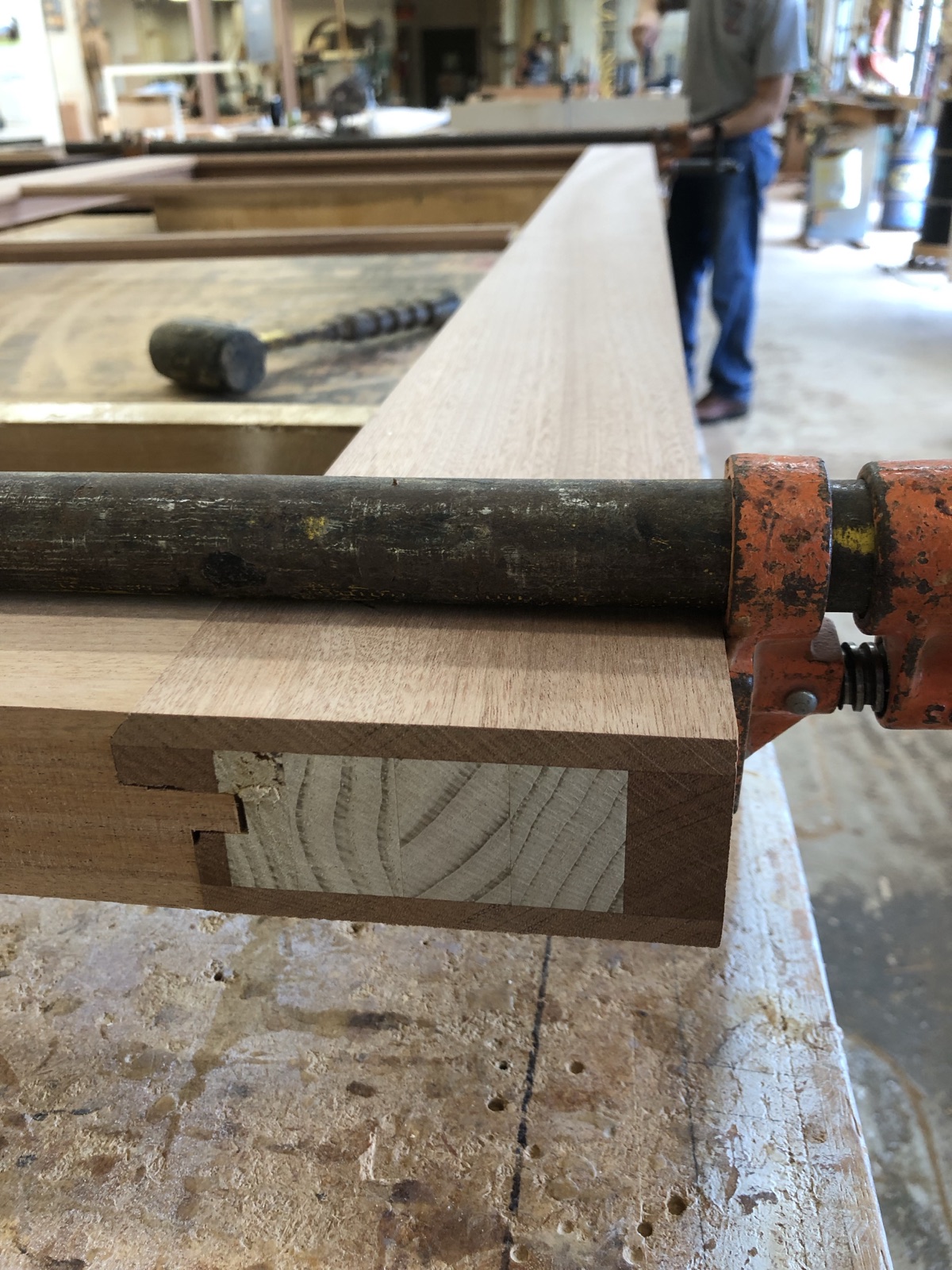
Cope and stick joinery is correct and sufficient for the great majority of cabinet doors, and it stops being sufficient at roughly the point a door exceeds normal upper-cabinet dimensions or carries a heavy glass panel. The reason is glue surface. A standard cope and stick joint produces a stub tenon, usually somewhere near three eighths to a half inch deep, formed by the same cutter that makes the sticking profile. The cope on the rail end mirrors the sticking on the stile, so the two nest together with a decent amount of long grain meeting long grain. On a door of ordinary size, that connection is stronger than the loads acting on it.
Scale the door up and the math shifts. A tall pantry door or a full-height appliance panel works the bottom rail joint hard every time it swings, and a stub tenon is a short lever arm resisting a long one. That is where the shop adds a loose tenon into the cope and stick joint, or moves to a true haunched mortise and tenon with the sticking mitered or coped around it. A haunched tenon reaching an inch and a half or more into the stile changes the failure mode entirely.
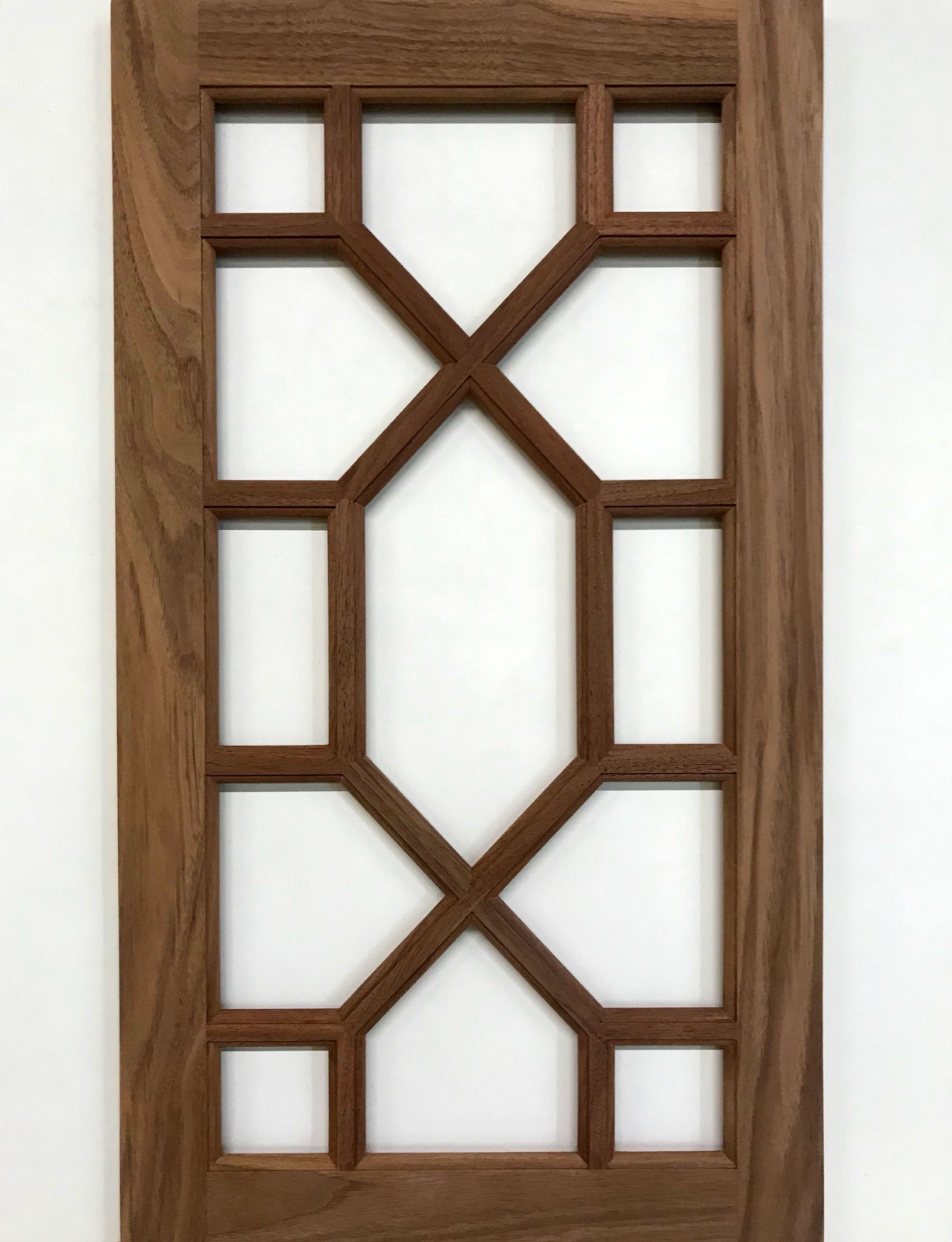
Glass doors deserve their own note. A frame cut for glass has no panel bracing it against racking, and it carries a rigid, heavy, unforgiving material in the opening. Those frames want deeper tenons regardless of overall door size, and they want a removable retainer moulding rather than a fixed rabbet, so glass can be replaced without dismantling the door.
| Joint | Where it belongs | Long-grain glue surface | What the shop needs | Watch for |
|---|---|---|---|---|
| Cope and stick, stub tenon | Standard upper and base cabinet doors, drawer fronts, most face-frame work | Modest, formed by the profile cutter itself | A matched cope and stick cutter set ground to the specified profile | Undersized for tall doors and for glass frames with no panel |
| Cope and stick with loose tenon | Tall doors, wide doors, appliance panels, doors in heavy species | Substantially increased without changing the visible profile | Slot mortiser plus the same profile cutter set | Tenon stock must run the same grain direction as the frame |
| Haunched mortise and tenon | Full-height pantry and closet doors, passage doors matched to the cabinetry | Greatest of the frame options | Mortiser, tenoner, and mitered or coped sticking at the corner | Longer bench time, and the sticking detail has to be resolved at the corner |
| Mitered frame with splines or dowels | Doors where the profile must run continuously around all four corners | Weakest, mostly end grain without reinforcement | Precise trim saw work and accurate spline or dowel indexing | Miters open visibly with seasonal movement unless well reinforced |
Stile and rail stock is selected by cut, not only by species
Rift and quartersawn stock moves less across its width than plainsawn, which is why serious shops specify it for stiles, rails and any painted or panelized surface that has to stay flat. The grain in quartersawn material stands close to perpendicular to the face, so the dominant seasonal movement happens through the thickness where nobody notices it, rather than across the width where it opens joints. On a White Oak door that difference also produces the ray fleck that buyers either want or want avoided, so the cut specification carries an appearance consequence as well as a stability one.
Stile width interacts with this. Narrow stiles in the two and a quarter inch range hide a great deal, since there is simply less width in which movement can accumulate. Once a designer asks for wide stiles or a wide bottom rail, cut selection stops being optional. The same logic runs through the rest of the room. Where cabinetry meets a run of linear trimwork or a box beam over an island, the trim and beam parts should be selected under the same rules so the whole room ages together.
Grading is the language this gets bought in. The National Hardwood Lumber Association rules describe clear cutting yield from a board, not the appearance of an assembled door face, which is a distinction that trips up buyers who assume a top grade guarantees color match. It does not. Color and figure matching across a kitchen is a separate selection process performed over the lumber pile, and it is the reason a cabinet run in a figured species has to be bought as one lot rather than ordered in stages.
Raised, flat and veneered panels are three different engineering answers
A solid raised panel is the traditional answer and the most demanding one, a flat solid panel is calmer, and a veneered panel over a stable core removes the movement problem at the cost of a raised profile. Each has a place, and the right answer depends on panel width, species and how the door will be finished.
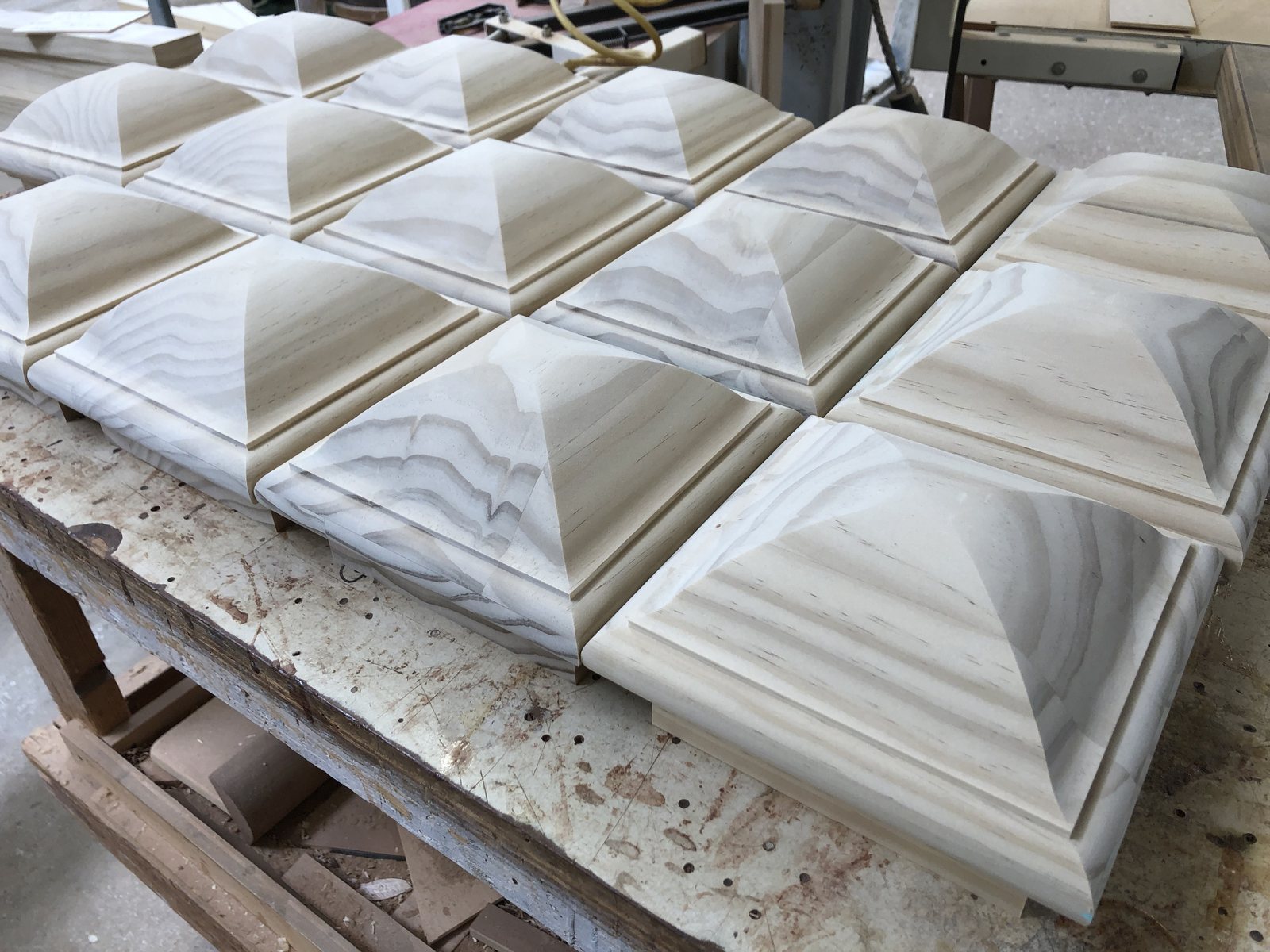
Solid raised panels concentrate everything discussed above. The raise itself is cut on the moulder or shaper with a panel raising cutter that must be geometrically matched to the sticking, so the panel field sits at the correct depth relative to the frame face. Wide panels in an unstable species are where trouble lives. A shop building a thirty inch wide single panel in a species with high tangential movement is writing a future service call, and the honest solution is either a narrower two-panel door or a change of cut.
Flat panels, whether solid or plywood-cored with a matched face veneer, suit contemporary work and shaker-adjacent designs. Veneered flat panels move so little that panel splits effectively stop being a concern, and they allow sequence-matched or book-matched faces across a long run in a figured species, which is difficult and wasteful to achieve in solid stock. The tradeoff is that a veneered panel cannot be raised, and its edges must be captured cleanly in the groove because there is no forgiveness in a thin face veneer at an exposed edge. The Architectural Woodwork Institute quality standards are the industry vocabulary for exactly this, covering matching within a panel face, matching between panels and matching within a room, and specifying to that vocabulary avoids most of the arguments that otherwise happen at delivery.
The sticking profile and the panel raise are a matched pair of knives, not two catalog picks
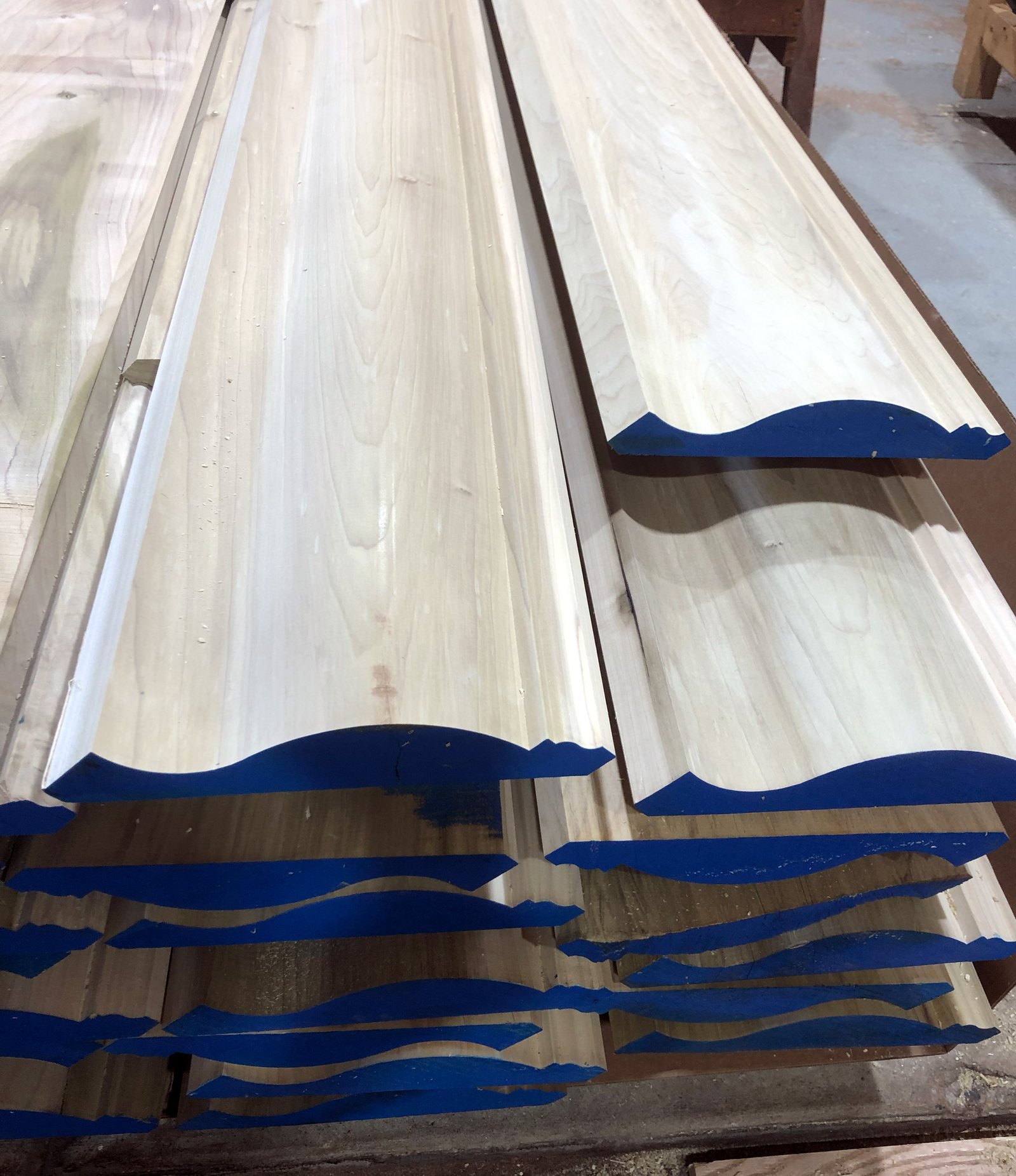
A cabinet door profile is only reproducible if the shop can grind the knives, which is why an in-house knife grinding operation is the difference between matching a historic kitchen and approximating it. J. Gibson McIlvain runs moulders, custom knife grinders, straight line and gang rip saws, band resaws and trimming saws on its own floor, maintains a moulding profile library holding thousands of profiles, and grinds new knives every week. When a profile is not already in the library, it gets ground to match, including difficult historical restoration profiles and clean contemporary ones.
The practical consequence for a cabinet buyer is exact repeatability. A kitchen that is renovated in phases, or a house where a butler pantry is added five years after the main kitchen, only matches if the original profile can be reproduced from the same knife geometry. A catalog cutter number from a tooling supplier does not survive that gap reliably. A ground knife filed against a job does. The same library that supports custom trim profiles supports door sticking, panel raises, glass retainer mouldings and the light rail and crown that finish the run, so a whole room can be built on one geometry rather than four vendors' interpretations of it.
Profile choice also has a finishing consequence. Tight quirks and deep coves hold finish and collect dust, and in a kitchen they collect cooking grease. A profile with slightly opened detail cleans better over a twenty year service life without reading as simplified.
Moisture content at the moulder decides whether the door still fits in February
Interior millwork is milled to an in-service moisture content near 6 to 8 percent, and exterior work near 12 to 16 percent, and a cabinet door built outside that window will move after it is hung no matter how good the joinery is. This is the least glamorous specification in the entire project and the one that causes the most callbacks when it is skipped.
The reason the window matters is that wood equalizes toward the humidity around it, and a heated, air-conditioned kitchen sits in a fairly narrow band. Material milled wetter than the service environment will shrink after installation, which opens joints and shows unfinished panel edges. Material milled drier will swell, which is how inset doors that fit beautifully in October start binding at the top rail in July. Anyone who wants the physics behind this in more detail will find the moisture and material behavior fundamentals well covered by Building Science Corporation.
Species differ in how much they punish an error here. Hard Maple at roughly 1,450 lbf on the Janka scale and White Oak at roughly 1,360 lbf are dense and slow to equalize, so they arrive at trouble later but hold it longer. Cherry at roughly 950 lbf and Genuine Mahogany at roughly 800 lbf are more forgiving in movement terms. Sapele sits at roughly 1,410 lbf and is stable enough for exacting inset work, which is part of why it has become a default for high-end painted and stained cabinetry alike. The Wood Database entry for Sapele documents the interlocked grain that makes it beautiful and makes it demand sharp tooling.
Exotic species change the machining, the glue-up and the paperwork
The word exotic covers several unrelated problems, and the three that actually reach the shop floor are interlocked grain, natural oils that interfere with adhesion, and documentation that has to travel with the material. Treating them separately is what makes an exotic species kitchen predictable.
Interlocked grain, the alternating fiber direction that produces ribbon figure in Sapele and related species, tears out at the moulder if feed rates and knife sharpness are not managed. A shop grinding its own knives has a real advantage here, since it can hone for the specific stock in front of it rather than accepting whatever a stock cutter delivers. Panel raising cuts across grain in two of four passes on every panel, which is where tearout announces itself.
Oily species need a different glue-up discipline. Surfaces should be machined and glued close together in time, and in some species a solvent wipe immediately before assembly improves adhesion. This applies to cabinet frames, and it applies with more force to exterior work where a durable tropical hardwood is in play. J. Gibson McIlvain imports and mills Ipe, botanically Tabebuia spp, along with Cumaru, Garapa, Jatoba and Red Balau, and those species reward careful preparation at every glue line.
Documentation is the third piece. Where a CITES-listed species is involved, permits and chain of custody documentation travel with the material, and a buyer specifying such a species on a commercial project should plan lead time around that reality rather than around mill capacity alone. J. Gibson McIlvain is FSC certified, which gives projects pursuing credits under programs administered by the U.S. Green Building Council a documented path.
One thing that cannot be documented away is warranty. There are no warranties on solid unmodified wood. It is an organic material responding to its environment, and no responsible mill pretends otherwise. Warranties exist only on modified products.
Painted doors and stained doors diverge long before the finish room
A door destined for paint should be built from different stock, and often a different species, than a door destined for a clear finish, and deciding late costs material. Paint hides color but it does not hide movement, and every joint that opens under a painted surface shows as a hairline crack at the shoulder.
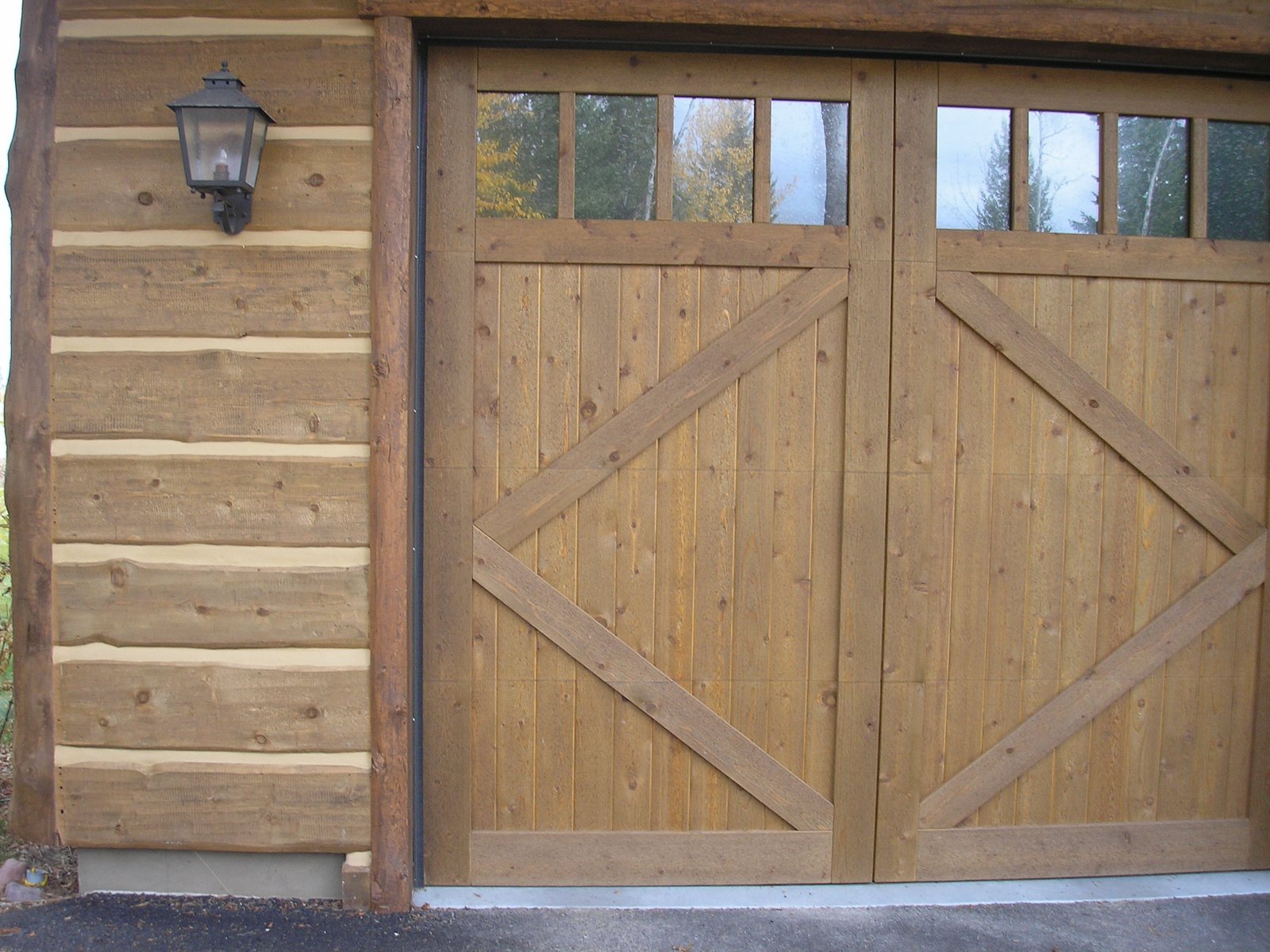
For interior painted cabinetry, tight, straight-grained stock with minimal grain telegraph is what matters, which again favors rift and quartersawn selection. For painted exterior work, whether that is a garden gate, an exterior door or trim running alongside it, Sapele is the better specification than Genuine Mahogany. It holds paint better, and it comes in a wider range of sizes and longer lengths. Sapele is not milled 1x8 for exterior use, since that width is too wide to stay stable in service. Cupping in exterior boards is driven by installation detail and back ventilation rather than by species, and that is the installer's variable to control.
J. Gibson McIlvain also primes wood in three levels, in both oil-based and water-based systems, through its millwork services. Exterior primed trim should carry a fungicide additive. Open-grained and oily exterior species drink an enormous amount of finish, so a primer coat evens out the eventual painted surface, and sanding or buffing after priming knocks back grain raising while keeping moulded detail crisp. Finished millwork can also be stored for inventory control, which matters on a phased project where the cabinetry is ready before the site is.
Inset construction is a tolerance decision, and the reveal has to be specified
Inset doors sit inside the face frame with a visible reveal all around, and that reveal is a number the shop and the buyer agree on before the first door is machined. Full overlay doors forgive a great deal, since the door covers the frame edge and small variations disappear behind it. Inset forgives nothing. A reveal specified too tight will bind in humid weather. Specified too loose it reads as sloppy against high-end work.
Hinge selection follows from that decision. Concealed European hinges with six-way adjustment let an installer tune a door after hanging, which is valuable on inset work. Butt hinges and knife hinges look correct on traditional and period cabinetry but leave far less adjustment, so the door and opening have to be right coming off the bench.
Scope should be equally explicit. J. Gibson McIlvain supplies and mills. It does not install, and it does not perform field measurement or installation coordination. The shop delivers doors, frames, panels, mouldings and case parts machined to the agreed dimensions, and the buyer's own installer or fabricator handles hanging, scribing to walls, adjusting hardware and integrating countertops and appliances. That boundary is worth stating in the contract rather than discovering at delivery. The ICD working process is documented for exactly this reason.
"The doors are what a client touches every day, so I would rather spend an extra week on stock selection than have somebody living with a joint that opens every winter. When we grind a knife for a job, we file it against that job. Five years later the same kitchen can be extended and it matches, because the geometry is ours and it did not come out of somebody's catalog."
Norm Moton, Director of Sales, J. Gibson McIlvain
How J. Gibson McIlvain Would Specify This
The specification that produces a durable custom cabinet door in an exotic species is short, and every line of it is a decision made before machining starts. Name the species and the cut in the same breath, rift or quartersawn for stiles, rails and any wide panel that has to stay flat. Set the target moisture content at 6 to 8 percent for interior work, and confirm it at delivery rather than assuming it. Choose the frame joint by door size, cope and stick with a stub tenon for standard doors, a loose tenon added for tall doors and appliance panels, a haunched mortise and tenon for full-height and passage doors, and deeper tenons on any glass frame.
Then handle the panel. Solid raised where the design calls for it and the width is reasonable, veneered flat where a long run needs sequence matching in a figured species, finished on all six faces before assembly in either case, and floated with clearance at both edges. Specify the sticking profile and the panel raise as a matched knife pair, and record the profile number so a future phase matches. Agree the reveal in writing on inset work. State the finish system, and if the doors are painted, say so early enough that stock selection can follow.
Buy the room as one lot. A kitchen is a continuous visual run, and color and figure matching across it is a selection process over the pile, not a hope. Confirm CITES documentation and chain of custody requirements at order stage on any listed species. And know where the shop's scope stops, since installation, scribing and field adjustment belong to the buyer's installer.
ICD, the architectural millwork division of J. Gibson McIlvain, handles the true custom side of that list, custom cabinets and custom kitchen cabinets planned to fit a specific space, custom doors, radius millwork, box beams, shutters, gates, benches and railings. The J. Gibson McIlvain side supplies linear trimwork, finished cladding and primed trim to finish the same room in the same species. The company mills and ships nationwide, regularly to California, and stores finished millwork when a site is not ready. To start a drawing set or work through a species for a kitchen, call 800-638-9100 or reach the team through mcilvain.com and icdwoodwork.com.
Frequently Asked Questions
When is cope and stick joinery not enough for a cabinet door?
Cope and stick produces a stub tenon roughly three eighths to a half inch deep, formed by the same cutter that cuts the sticking profile. That is stronger than the loads acting on a normal upper or base cabinet door. It becomes marginal on tall pantry doors, full-height appliance panels, unusually wide doors and any frame cut for glass, since a glass frame has no panel bracing it against racking and carries a heavy rigid material. In those cases the frame should get a loose tenon added into the cope and stick joint, or a true haunched mortise and tenon reaching an inch and a half or more into the stile.
Should a solid door panel ever be glued into the frame?
No. A solid panel changes dimension across its width with the seasons while the frame around it barely changes in length, so a panel fixed at both edges has nowhere to go and eventually splits. The panel should sit in its groove with clearance at both edges, held centered by space rubbers or panel balls so it cannot rattle. Finish all six surfaces of the panel before assembly, so that when it shrinks in winter no unfinished stripe appears at the sticking and both faces exchange moisture at the same rate.
What should I send a shop that needs to match an existing cabinet door profile?
Send a physical sample of the door or the moulding rather than a photograph, and if the door itself cannot be removed, send a short offcut, a light rail piece or a scribed profile gauge tracing. J. Gibson McIlvain maintains a moulding profile library holding thousands of profiles and grinds new knives every week, so a profile that is not already in the library gets ground to match, including historical restoration profiles. Also identify the species and, where possible, whether the original stock was plainsawn or quartersawn, since a matched profile in the wrong cut will still look wrong under finish.
Is a veneered flat panel a downgrade from a solid raised panel?
They solve different problems. A solid raised panel is traditional and carries a shaped field, but it concentrates all of the seasonal movement risk, which grows quickly as panel width increases. A veneered panel over a stable core barely moves at all and allows sequence-matched or book-matched faces across a long run in a figured species, which is difficult and wasteful to achieve in solid stock. The tradeoffs are that a veneered panel cannot be raised and its edges must sit cleanly in the groove, since a thin face veneer is unforgiving at an exposed edge.
What moisture content should custom cabinet doors be milled to?
Interior millwork should be milled to an in-service moisture content near 6 to 8 percent, which matches a heated and air-conditioned house. Exterior work is a different target, near 12 to 16 percent. Material milled wetter than its service environment shrinks after installation and opens joints, and material milled drier swells and binds. Confirm the number at delivery rather than assuming it, particularly on inset work where the reveal has very little tolerance to give up.
How tight should the reveal be on inset cabinet doors?
The reveal is a number the shop and the buyer agree on before the first door is machined, not something resolved at hanging. Too tight and the doors bind in humid weather, too loose and the run reads as sloppy against high-end work. Concealed hinges with six-way adjustment give the installer room to tune each door after it is hung, while butt hinges and knife hinges look correct on period cabinetry but leave far less adjustment, so those doors have to come off the bench right.
Does J. Gibson McIlvain install the doors and cabinetry it builds?
No. J. Gibson McIlvain supplies and mills, and it does not install, coordinate installation or perform field measurement. The shop delivers doors, frames, panels, mouldings and case parts machined to the agreed dimensions, along with linear trimwork, finished cladding and primed trim for the same room. Hanging, scribing to walls, hardware adjustment and integration with countertops and appliances belong to the buyer's own installer or fabricator, and that boundary is worth writing into the contract at order stage.
Sources and Standards Referenced
- USDA Forest Products Laboratory, Wood Handbook and wood moisture research
- National Hardwood Lumber Association, hardwood grading rules
- Architectural Woodwork Institute, architectural woodwork quality standards
- The Wood Database, Sapele
- CITES, Convention on International Trade in Endangered Species of Wild Fauna and Flora
- Forest Stewardship Council
- Building Science Corporation, moisture and material behavior resources
- U.S. Green Building Council
- J. Gibson McIlvain millwork services
- ICD cabinets and case work