Two Buying Postures Behind One Spec Line
Accoya sitting on a rack in Maryland and Accoya on a factory order are the same material bought as two entirely different projects. The spec line reads the same. The submittal package looks the same. What differs is how much of the job has to be locked down before anything ships, and that difference trails the work all the way to the punch list.
Lead time is the obvious gap and it is the least interesting one. Anybody can read a calendar. The gap that actually costs money is optionality, meaning how many decisions a buyer still gets to defer, revisit or reverse after the order is placed without reopening a purchase order and waiting on a kiln cycle on another continent.
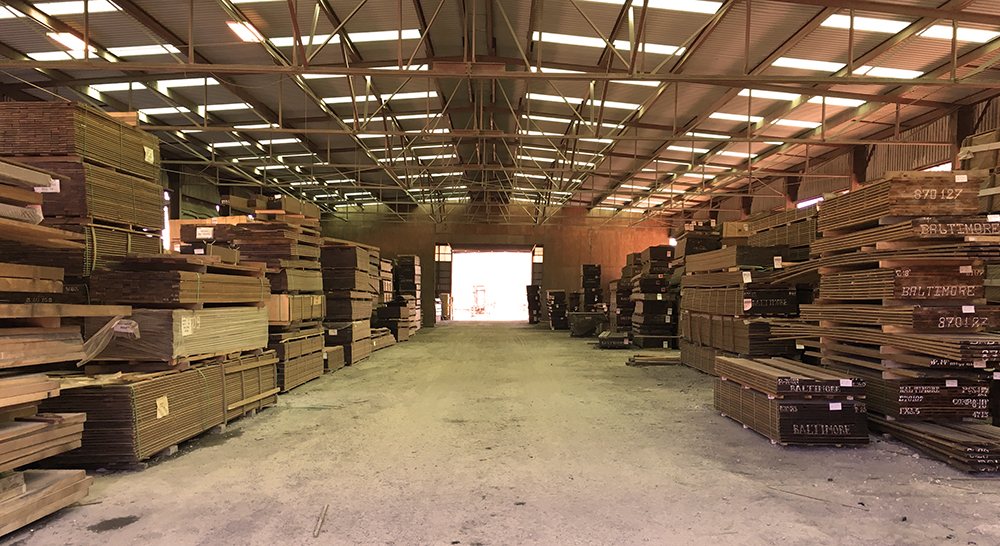
J. Gibson McIlvain stocks Accoya at its Maryland yard and mills it into linear trimwork, finished cladding and primed trim off that inventory. A buyer working from held stock is buying out of a pile that already exists in the country, already inspected, already sorted. A buyer working against a project order is buying a description of a pile that has not been made yet. Everything below follows from that one fact.
The Sample That Settles a Substitution
A physical sample in an architect's hand inside a week is usually what decides whether a substitution gets approved at all. Approval cycles do not run on technical merit alone. They run on whether the reviewing architect can hold the thing, scratch it, paint a corner of it and sign off before the next coordination meeting.
Modified wood proposals die quietly all the time. The data sheet goes over, the architect has never specified the product, and the safe answer is to leave the drawing the way it was written. A sample off a rack that already exists reaches a desk in days. A sample promised out of a future production run reaches a desk after the decision has already defaulted the other way.
When the drawing calls cedar, the honest conversation on that page is a grade conversation before it is a species conversation. CVG, clear vertical grain, and STK, select tight knot, are two very different pieces of material doing two very different things on an elevation, and the Western Red Cedar Lumber Association publishes the grade descriptions that argument should be run against. Cedar is the default cladding species on most of these jobs for good reason. The substitution question is narrower than people make it, and it is easier to answer with two boards on a table than with two PDFs.
J. Gibson McIlvain pulls sample stock out of held inventory and sends it out for review, which means the architect sees the actual lot the job would draw from rather than a representative piece from somewhere else. Accoya publishes its own technical literature for the performance figures that belong in a submittal, and that is where those numbers should be cited from rather than paraphrased by a supplier.
Quantity Gets Fixed When the Job Knows Least
A project order asks a buyer to name a final quantity at the exact moment the job has the least information it will ever have. The takeoff gets built off design development drawings. The window schedule is still moving. The trim profile has one more round of review in it. That quantity then becomes a fixed container everything else has to fit inside.
Two bad outcomes come out of that container. Buy lean and the job comes up short during installation, at which point the shortfall has to be covered from whatever is available rather than from what matches. Buy fat and a stack of modified stock sits in a trailer at the end of the job belonging to nobody, usually in the leftover widths nobody wants.
Held inventory lets the quantity question stay open while the drawings finish resolving. The buyer commits to a first release, then to a second, and the final number is settled by the building instead of by a guess made in February. That is a different risk posture, not just a faster one.
What Has to Be on the Rack for Any of This to Work
Held inventory only delivers on its promise when the thicknesses and widths a job actually consumes are the ones physically on the rack. A yard that stocks one thickness in one width has a marketing claim, not an inventory position. The useful version carries the sizes that feed both the linear work and the built-up work.
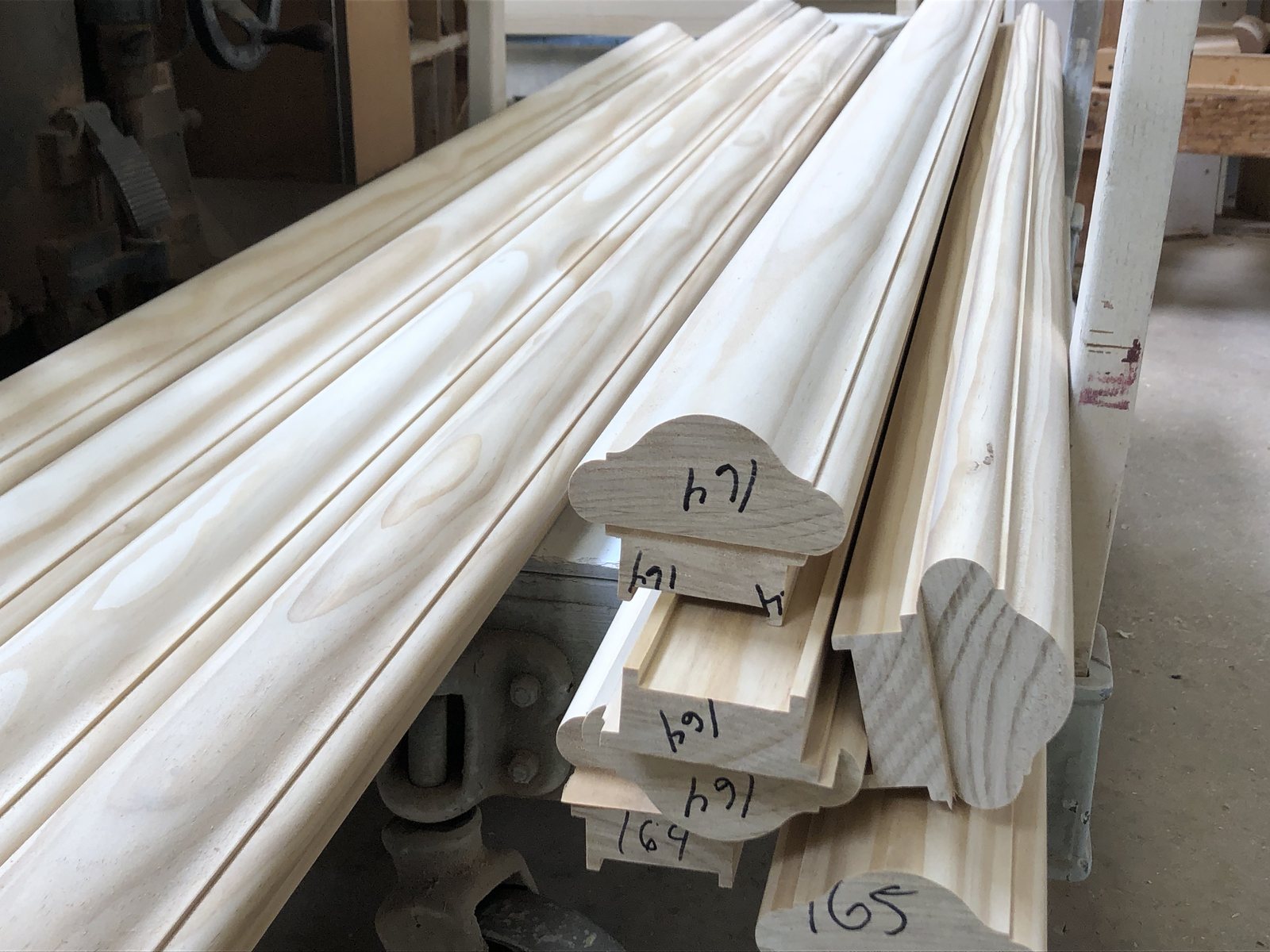
For trim and cladding runs, that means 4/4 and 5/4 in the working widths, because that is what gets ripped and moulded into casing, water table, frieze, corner boards and rake. For anything heavy in appearance, rafter tails, gate stiles, pergola members, posts and sills, it means 6/4 and 8/4 carried deep enough that a single gate does not clear out the rack. Thin stock cannot be laminated into a thick part without showing glue lines across a profile, so the thickness has to be there at the start.
Width is the other half. Accoya comes in genuinely wide boards, which matters for a shiplap elevation, a wide fascia or a sill that would otherwise have to be glued up. Accoya runs around 1,600 lbf on the Janka scale, so it machines like a dense softwood rather than a soft one, and acetylation gives dramatically reduced shrinkage and swelling, which is the property that lets a wide board stay a wide board after it is painted and installed.
"The value of inventory is not that it ships faster. It is that a customer can change their mind in June without starting the whole conversation over."
Norm Moton, Director of Sales, J. Gibson McIlvain
When the Framing Schedule Moves
Partial release against a moving schedule is the single most useful thing held stock buys, and a factory order cannot offer it at all. Containers arrive when they arrive. If the dry-in date slides a month, the material still lands, and now it is the general contractor's problem to store modified wood on an active site.
Site storage is where good material goes bad. Stickered wrong, stacked on wet ground, covered in plastic that traps moisture, left in full sun on one face. None of that is a product failure and all of it arrives as a product complaint. The Building Science Corporation literature on moisture and assembly detailing is the right reference for why a board that sat badly for five weeks behaves differently once it is on the wall.
J. Gibson McIlvain stores finished millwork for inventory control, which lets a buyer take the trim package in stages that follow the trades instead of all at once. The mouldings run when the profile is approved. The material waits where it is conditioned. Releases follow the actual elevation sequence.
Conditioning is part of the point. Exterior work is milled to an in-service moisture content near 12 to 16 percent and interior millwork near 6 to 8 percent, and material held in a controlled environment arrives much closer to those numbers than material that spent five weeks under a tarp.
The Cut List Against the Length the Kiln Allows
The length ceiling on modified wood is a cut list problem long before it is a procurement problem. Modified products top out around 16 ft, and most are sold on metric lengths just under 16 ft, because the modification kilns are only so long. That ceiling applies to Accoya, Thermory and Abodo Vulcan alike.
What that does to a job is specific. A fascia run longer than the stock is not one piece and never was, so the joint layout has to be drawn rather than discovered by a carpenter on a lift. Elevations with long uninterrupted horizontals need their joints placed deliberately, scarfed or landed on a structural member, and that decision belongs in the shop drawing stage.
Held stock changes the arithmetic here in a way that is easy to miss. Long lengths are the first thing consumed out of any lot, by every buyer, on every job. A buyer working from inventory can look at what the longest available lengths actually are this week and cut the layout to them. A buyer working against a project order writes a cut list against the ceiling and finds out later what the run really yielded.
J. Gibson McIlvain mills the linear work in house at the yard, so a cut list built around real available lengths turns into real pieces rather than an optimistic schedule.
Covering a Shortfall Out of the Same Lot
The moment that separates the two buying methods most sharply is the one nobody puts in the schedule, which is the shortfall found during installation. An opening gets added. A piece gets dropped off a scaffold. The takeoff missed a return. Someone cuts a run backwards.
From inventory, that is a phone call and a small order out of the same material, in the same thickness, run through the same profile. From a factory order, it is a change order, a new production slot and a run that will not be the same lot. On painted work the lot difference may hide. On anything stained, clear coated or left to weather, it will not.
The same logic covers field changes that are nobody's fault. A radius detail gets added over a bay. A gate goes from one leaf to two. ICD, the architectural millwork division of J. Gibson McIlvain, builds custom components out of the same modified stock the linear work comes from, including gates, rafter tails, box beams, pergolas and shutters, and its exterior millwork draws on the same inventory the trim package does. One lot, two kinds of work, no sourcing gap between them.
Box beams are a clean example of why the stock has to be on the ground. The joinery call is a real decision with real consequences. Butt joints are the fastest and simplest for the crew setting them but leave visible seams and visible end grain and are the weakest. Dado joints are stronger and still easy to assemble on site, and they still show seams and end grain. Lock miters show no visible seams and are the strongest, and they also consume more material and more machine time, which is a conversation worth having before the order rather than after.
Primed Stock and the Late Addition
A late addition is only painless if the replacement arrives at the same primer state as the run it has to join. Primed exterior trim is a system, not a coat of paint, and mixing a primed run with a raw add-on hands the painter two different substrates to make look like one surface.
J. Gibson McIlvain primes in three levels, in oil-based and water-based systems, with a fungicide additive on exterior work. The same line runs Accoya alongside millwork species like Sapele, Iroko and Utile. Open-grained and oily species absorb a great deal of finish, so a primer coat evens out the eventual painted surface, and sanding or buffing after priming knocks back grain raising while keeping moulded detail crisp.
The ordering consequence is simple. A buyer pulling from held stock can specify the same priming level on the first release and on a correction three months later, and both arrive the same way. That is a finishing problem that never becomes a finishing problem.
Where Thermally Modified Stock Changes the Same Math
Thermory and Abodo Vulcan sit in the same yard and answer the same question, but the stocking math behind them is not identical to Accoya's. Thermory and Abodo both publish their own technical documentation, and performance figures for either belong in a submittal as a citation from the manufacturer rather than as a number a supplier repeats.
Width is the practical constraint to plan around. Thermally modified Ash is not available wider than 8 inches. When a detail calls for a genuinely wide board, the answer is Accoya or Abodo Vulcan, and that substitution has to happen at the drawing stage rather than at the cut list stage.
Handling matters more on thermally modified stock than most buyers expect. Thermal modification trades toughness and bending strength for decay resistance and stability, so the same board is more brittle than its untreated equivalent and does not carry published structural design values the way a framing species does. Material that gets pulled, re-stacked and partially released several times is handled more, not less, and that argues for packaged releases rather than repeated open-rack picking. The Forest Products Laboratory remains the reference for how wood properties shift under treatment.
Warranties ride with modified products and with nothing else, since solid unmodified wood is an organic material responding to its environment and cannot be warrantied, which is one more reason the lot and the release dates are worth recording at the time of purchase rather than reconstructing later.
Where the Difference Shows Up, Point by Point
Every one of these moments happens on a normal job, and each resolves differently depending on whether the material exists yet. The list below is not hypothetical. It is the ordinary sequence of a trim and cladding package on a custom residence or a light commercial exterior.
| Moment in the job | Buying against a project order | Buying from stock already held |
|---|---|---|
| Substitution review | Architect decides from a data sheet, with no board to handle | Sample off the actual lot reaches the desk within the review cycle |
| Bid takeoff | Quantity fixed against drawings that are still moving | Quantity stays open and resolves as the drawings resolve |
| Shop drawing and cut list | Layout written against the nominal length ceiling | Layout cut to the lengths actually on the rack that week |
| Dry-in date slides | Container lands anyway and becomes a site storage problem | Partial release follows the trades, material waits conditioned |
| Opening added mid job | Change order plus a new production slot | Small additional release out of the same thickness and profile |
| Shortfall found at installation | Covered from whatever is available, not from what matches | Covered out of the same lot |
| Damage on the punch list | Replacement piece arrives from a different run | Replacement runs on the same profile from the same stock |
| Finish matching a late piece | Primer state and substrate differ from the main run | Same priming level specified on the first and last release |
How J. Gibson McIlvain Would Specify This
Write the specification so it describes the material and the release mechanics, not just the product name. A spec line that says Accoya and stops leaves every question in this article to be answered by whoever is cheapest on bid day.
Name the modified product and the supply basis. State that the material is to be supplied from inventory held in the United States and released in stages against the construction schedule, with the first release tied to a milestone rather than a date. State the thicknesses and widths required, carried as 4/4 and 5/4 for linear trim and cladding and 6/4 or 8/4 where built-up and heavy components are shown.
Put the length ceiling into the drawings rather than the notes. Show joint locations on long horizontal runs instead of leaving them to the field, and confirm that every piece on the elevation can be produced within the kiln length limit before the package goes out for pricing. Where a wide board is drawn, confirm it against the product rather than the category, since thermally modified Ash will not carry it.
Specify the priming level, the system, oil-based or water-based, and that exterior work carries a fungicide additive, and specify it once for the whole package so a correction piece three months later matches the original run. Call for retained stock or a defined overage where the elevation has returns, radius work or a gate, since those are the details that generate the late changes.
For custom components, keep the linear work and the built-up work on the same lot. ICD builds the gates, rafter tails, box beams, pergolas and shutters out of the same material the trim comes from, and the working process on that custom side starts from the drawing rather than from a catalog page. Documentation conventions from the Architectural Woodwork Institute give the submittal its common vocabulary. Say in it that a modified product is identified by manufacturer and product line rather than by a lumber grade, so nobody on the review side spends a week looking for a grade stamp that was never going to be there.
J. Gibson McIlvain ships nationwide from the Maryland yard, holds over seven million board feet of exotic and domestic lumber on the ground, and mills, primes and releases modified stock against real construction schedules. To check what is on the rack in the thicknesses and widths your elevation needs, or to get a sample moving toward an architect this week, call 800-638-9100 or start with the millwork services page.
Frequently Asked Questions
How fast can an Accoya sample reach an architect when the stock is already in the country?
Days rather than a production cycle. The sample comes off the same lot the job would draw from, so the architect reviews the actual material instead of a representative piece sent from elsewhere. That timing matters more than it sounds, because a substitution that misses the coordination meeting tends to default back to whatever the drawing already said. J. Gibson McIlvain pulls sample stock out of held inventory and sends it out for review, and performance figures for the submittal should be cited from the manufacturer's own published literature.
Which thicknesses and widths actually have to be held for a modified wood trim and cladding package?
4/4 and 5/4 in the working widths cover the linear side, since that is what gets ripped and moulded into casing, water table, frieze, corner boards and rake. Built-up and heavy components such as gate stiles, rafter tails, pergola members, posts and sills need 6/4 and 8/4 carried deep enough that one gate does not empty the rack. Thin stock laminated up into a thick part shows glue lines across a moulded profile, so the thickness has to exist at the start. For wide boards, Accoya and Abodo Vulcan are the products that carry width.
Can a trim package be released in stages if the dry-in date slips?
Yes, and that is the practical advantage held inventory has over a container arriving on its own schedule. The mouldings run once the profile is approved, the material stays where it is conditioned, and releases follow the elevation sequence and the trades. Exterior work is milled to an in-service moisture content near 12 to 16 percent and interior millwork near 6 to 8 percent, and conditioned material arrives far closer to those numbers than stock that sat five weeks under a tarp on an active site.
What happens when the job comes up short during installation?
From held inventory it is a small additional order out of the same material, the same thickness and the same profile. Against a factory order it becomes a change order and a new production slot, and whatever arrives is a different lot. On painted work the lot difference may disappear under the finish. On anything stained, clear coated or left to weather, it will show, which is why coverage out of the same lot is worth more than the lead time saving people usually focus on.
Does buying from stock change the maximum length available?
No. Every modified product tops out around 16 ft, and most are sold on metric lengths just under 16 ft, because the modification kilns are only so long. What stock on the ground changes is the accuracy of the cut list, since a buyer can lay out against the lengths actually on the rack rather than against the nominal ceiling. Long lengths are the first thing consumed out of any lot, so joint locations on long horizontal runs belong in the shop drawings rather than in the field.
Is thermally modified wood interchangeable with Accoya when a size is short?
Not automatically. Thermory and Abodo Vulcan are both carried, and either can answer the same design question, but thermally modified Ash is not available wider than 8 inches, so a wide board detail has to go to Accoya or Abodo Vulcan. Thermal modification also trades toughness and bending strength for decay resistance and stability, so the board is more brittle than its untreated equivalent and carries no published structural design values. Warranties ride with modified products and with nothing else, since solid unmodified wood cannot be warrantied.
Sources and Standards Referenced
- Accoya Modified Wood, Technical Information
- Thermory Thermally Modified Wood
- Abodo Vulcan Timber
- USDA Forest Service, Forest Products Laboratory
- Building Science Corporation
- Architectural Woodwork Institute
- ICD, architectural millwork division of J. Gibson McIlvain
- Western Red Cedar Lumber Association