What "full service" has to mean before the phrase is worth anything
A full service architectural millwork company is one that takes custody of the material at the source, dries it, mills it, primes it, assembles what needs assembling, stores it and ships it, so a single party is answerable for the package from grade through crate. Plenty of firms use the phrase while quietly brokering three of those steps. The test is not marketing language. The test is whether the company can tell you, without making a phone call, what grade the lumber was bought at, what moisture content it left the kiln at, which knife ran the profile and what primer went on the back face.
That matters to a buyer for one narrow reason. Wood is not a manufactured part with a fixed dimension. It responds to whoever is holding it. Every time material changes hands, it also changes environment, and it changes owner of the problem. A package assembled from four vendors has four moisture histories, four grading interpretations and four opinions about whose fault the twisted stile is. The Architectural Woodwork Institute quality standards give you common vocabulary for grade and tolerance, but they do not assign custody. The purchase order does that.
So the useful question is not "who does everything." It is "how many seams does my material cross, and what happens at each one."
Count the handoffs, not the vendors
The number that predicts trouble on a millwork package is the count of custody transfers between the log and the jobsite, and most split packages carry five or six. A distributor buys from an importer. The importer bought from a concession or a mill overseas. The distributor sells rough stock to a local shop. The shop runs the profile and sends it to a paint contractor for priming. The paint contractor sends it back or sends it out. Somewhere in there it sits in an unconditioned warehouse for three weeks.
Each of those transfers is a seam. Seams are not evenly risky. A transfer between two climate-controlled buildings in the same week costs you almost nothing. A transfer that puts kiln dried interior stock on an open trailer in February, or parks primed exterior trim in a warehouse at sixty percent relative humidity through August, costs you real money in cupped, bowed and rejected material.
Seams also break the record. Grade is an interpretation. Two graders reading the same National Hardwood Lumber Association rule can pull different yields out of the same lift. Once the material has passed through a broker, nobody can reconstruct what was actually bought, and the argument about whether the sticker stain was there at purchase becomes unwinnable. The table below maps the stages most people split and what tends to happen when they do.
| Stage | What a single supplier controls | Common failure when the stage is bought separately |
|---|---|---|
| Species and grade selection | Buying decision tied to the actual cut list and yield, with grade read once against a known rule | Grade bought on price, yield short at the moulder, second lot arrives with different color and figure |
| Drying and moisture control | One target moisture content set for the service environment and verified before machining | Interior stock delivered at exterior moisture content, or rewetted in storage, then milled anyway |
| Profile and knife | Profile pulled from a maintained library or ground to a supplied sample, with the record retained | Close-enough catalog profile substituted, add-on runs months later do not match the first run |
| Priming and finish prep | Primer system, film level and fungicide chosen against the species and exposure, applied on all faces | Face-only priming on site, unsealed back and ends, grain raise sanded off the moulded detail |
| Assembly of built-up work | Beams, shutters and gates fabricated from the same lot that produced the trim | Assembler buys stock elsewhere, joinery method chosen for shop convenience rather than the exposure |
| Storage and release | Finished millwork held in controlled inventory and released against the site schedule | Whole package lands at once, stacked in a building that is not yet dried in |
| Freight and documentation | One bill of lading, one packing list, chain of custody paperwork traveling with the material | Certification and species documentation stranded with an upstream vendor when the inspector asks |
Sourcing is a custody question before it is a species question
A company that imports and mills its own material can answer questions about origin, certification and legality directly, while a company that buys finished lumber domestically is repeating what it was told. J. Gibson McIlvain imports and mills its own hardwood and softwood stock, which is why the sourcing conversation and the millwork conversation happen with the same people.
Two paper trails matter on commercial work. The first is Forest Stewardship Council certification, which only functions as an unbroken chain. A certified forest and a certified mill do you no good if an uncertified middleman sits between them and the project, since the claim cannot jump a gap. The second applies where a CITES listed species is involved. Documentation and chain of custody travel with that material, permit to invoice, and reconstructing it after the fact is not realistic. Buyers who split their package sometimes discover this at the wrong moment, when a submittal reviewer asks for paperwork that lives two vendors upstream.
Grade is the other half. Softwood and hardwood grading rules describe defect, not appearance intent. Cedar is a good example and a legitimate default for exterior trim and soffit work. Clear vertical grain cedar, CVG, gives you a tight uniform face suited to painted and stained architectural work. Select tight knot cedar, STK, is a sound grade with a knotty character that some designs want on purpose. Neither is a lesser product. They are different specifications, and the person buying the log should be the person who knows which one the drawing needs.
The substitution call is the real test of a single source package
Every millwork job eventually hits a moment when the specified species will not deliver in the length, width or quantity required, and the value of a one package supplier is that the substitution gets decided by someone who owns the consequences. Split the scope and that call gets made by whoever is most inconvenienced, usually the shop that already has the order.
Painted exterior trim shows the pattern clearly. Genuine Mahogany carries a Janka hardness around 800 lbf and has a long history in exterior work, but Sapele holds paint better and comes in a wider range of sizes and longer lengths, with Janka around 1,410 lbf. Published property data supports the substitution on stability grounds as well. One caveat travels with it. Sapele is not milled 1x8 for exterior use, since that width will not stay stable in service. And when a board does cup, the cause is almost always installation and the absence of back ventilation rather than the species on the invoice.
Modified wood raises the same question from a different direction. Thermory and Abodo Vulcan are both carried, as is Accoya, which acetylation gives dramatically reduced shrinkage and swelling along with Janka around 1,600 lbf. All of them share a hard ceiling. Kiln size caps these products at roughly 16 ft, and most are sold on metric lengths just under 16 ft. Anyone promising longer is not describing a modified product. Width has its own limit. Thermally modified Ash is not available wider than 8 inches, so a wide modified board means Accoya or Abodo Vulcan. Details on the acetylation process are published by the manufacturer.
One more thing belongs in this conversation before a spec is written. Warranties exist on modified products. They do not exist on solid unmodified wood, and no supplier can honestly offer one, since the material is organic and responds to its environment.
One moisture number has to survive the entire chain
Moisture content is the single specification that a split package is least able to protect, and it is the one that determines whether the joints are still tight a year later. Interior millwork is milled to an in-service moisture content near 6 to 8 percent. Exterior work is milled near 12 to 16 percent. Those are not arbitrary numbers. They approximate the equilibrium the wood will reach in service, and the Forest Products Laboratory Wood Handbook documents the relationship between relative humidity, temperature and equilibrium moisture content in detail.
Here is what goes wrong. Wood does not remember the kiln. It responds to wherever it currently is. Stock dried correctly to 7 percent, then held four weeks in an unconditioned warehouse through a humid stretch, arrives at the moulder somewhere north of 11 percent. Mill it anyway and the profile is cut at a dimension the wood will not keep. The panel that fit its groove in the shop shrinks in a heated building in January and opens a line down the middle of the raised panel.
Sawing method modifies how much of that movement shows. Quartersawn and rift stock moves less across its width than plainsawn, which is exactly why it gets specified where a painted surface or a panelized wall has to stay flat. That call has to be made at the log, not at the moulder, which is another argument for keeping sourcing and milling under one roof.
The profile record is an asset, and split packages lose it
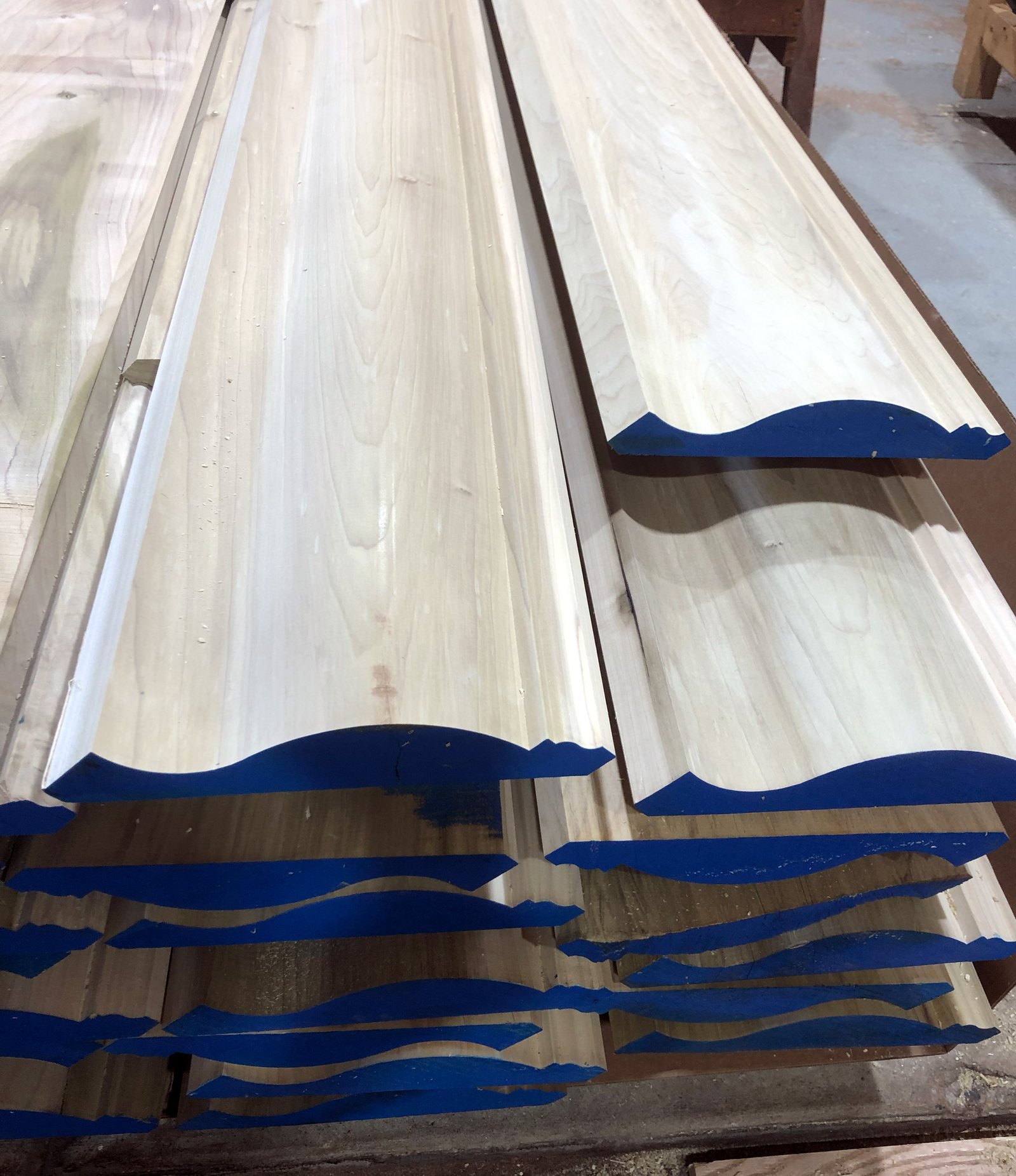
A moulding profile is not a drawing, it is a ground steel knife, and the shop that holds the knife is the only place that can reproduce the run exactly. J. Gibson McIlvain maintains a moulding profile library holding thousands of profiles and grinds new knives every week on its own grinders. If a profile is not in the library it gets ground to match, including difficult historical restoration work and contemporary profiles that no catalog carries.
Think about the second phase of a job. The base and casing run in March. In September the owner adds a room, or the site damages forty feet of crown, or the drawings change. A shop working from a catalog number gives you something close. Close is visible. Two crowns meeting at an inside corner with a sixteenth of difference in the cove radius reads as a mistake to anyone standing in the room.
Standard profile designations published through the Wood Moulding and Millwork Producers Association are useful shorthand for common shapes, and a good starting point for a drawing. They are not a substitute for a retained knife record on custom work. The profile library exists so the second run and the fifth run come off the same geometry as the first.
Reproduction also depends on the rest of the floor. Moulders, custom knife grinders, straight line and gang rip saws, band resaws and trimming saws sit in the same building, so a run that needs to be resawn for stability or ripped for yield does not leave the property to get there.
Finish belongs inside the milling scope, not after it
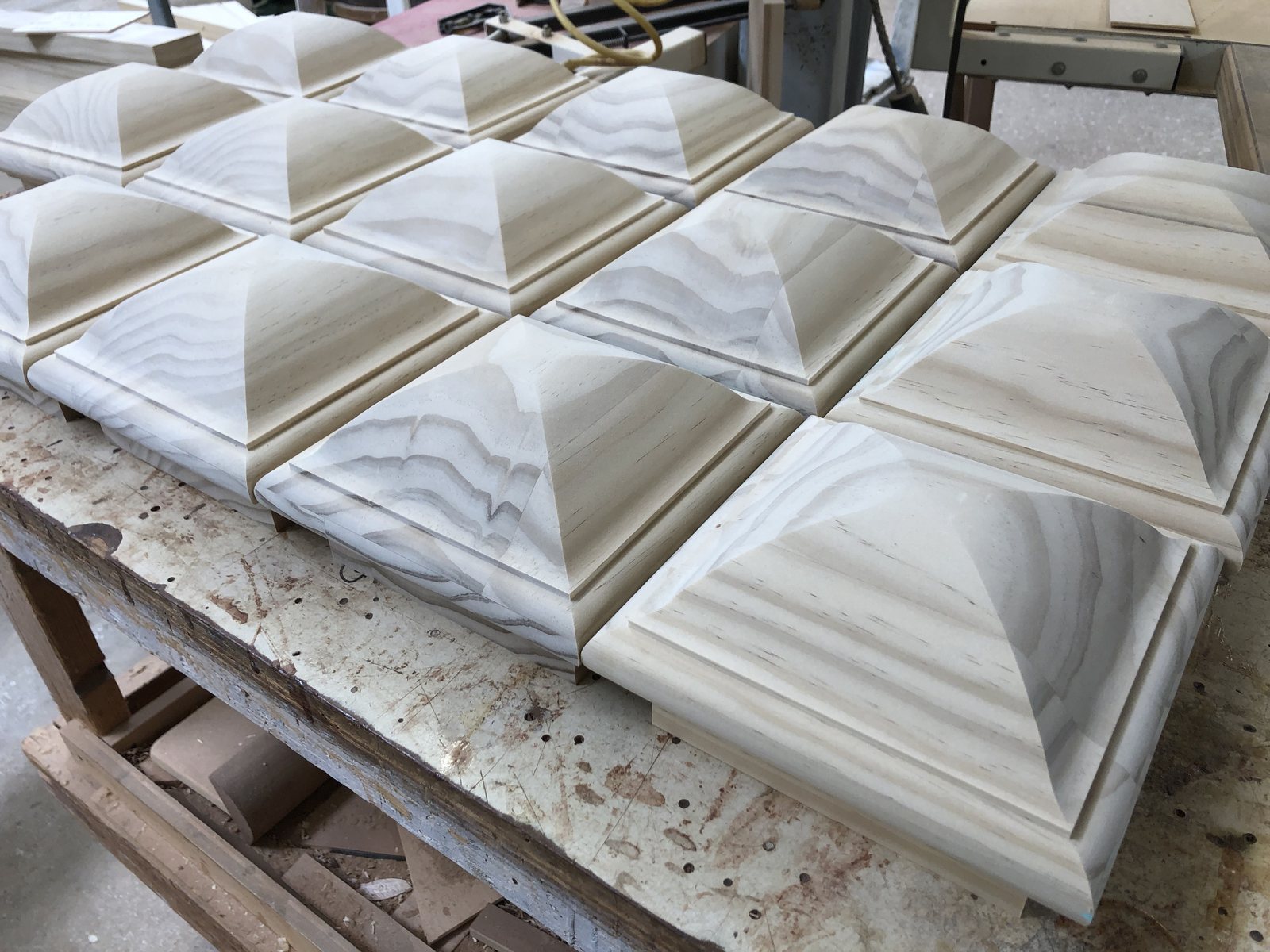
Priming is a milling operation disguised as a painting operation, and moving it out of the shop is the most common way a good millwork package gets ruined. Wood priming is offered in three levels and in both oil-based and water-based systems, which lets the film build match the exposure rather than whatever the site crew has in the truck.
Exterior primed trim should carry a fungicide additive. That is not optional in a wet climate. Open-grained and oily exterior species absorb a great deal of finish, and an unprimed board of that kind pulls topcoat unevenly, leaving a painted surface that telegraphs grain and sheen variation. A primer coat evens that out before color ever goes on.
Then there is the part almost nobody handles correctly on site. Water-based systems raise grain. Left alone, that raised fiber cuts through the topcoat and gives you a rough surface within a season. Sanding or buffing after priming knocks the raised grain back, and doing it in a shop with the right abrasives keeps the moulded detail crisp instead of rounding over the fillets and quirks that made the profile worth paying for.
The other advantage is coverage. Shop priming reaches the back face and the end grain. Field priming reaches the face. Moisture enters trim through the back and the ends more readily than through the face, a point the building enclosure literature at Building Science Corporation makes repeatedly about wood cladding and trim assemblies.
Assemblies expose the seams that trim work hides
Built-up items like box beams, shutters and gates cannot be split across vendors without someone guessing, since the joinery decision, the species decision and the finish decision are the same decision. A box beam is the clearest example. Butt joints give the most minimal profile, the fastest turnaround and the easiest assembly on site, but they leave visible seams and visible end grain, and they are the weakest option. Dado joints are strong and still easy to assemble on site, though seams and end grain still show. Lock miter joints show no visible seams and are the strongest of the three. A stain grade beam in a great room almost always wants the lock miter. A painted beam behind a soffit rarely justifies it.
Shutters carry the same logic into historic work. Louver and panel styles are both produced, including complete historical matching for style and species, which is what a historic district actually requires when it asks for like-for-like replacement. Review boards working from the Secretary of the Interior's Standards are looking at stile width, louver pitch and panel proportion, not at a product category. Matching those means matching the wood and the geometry together.
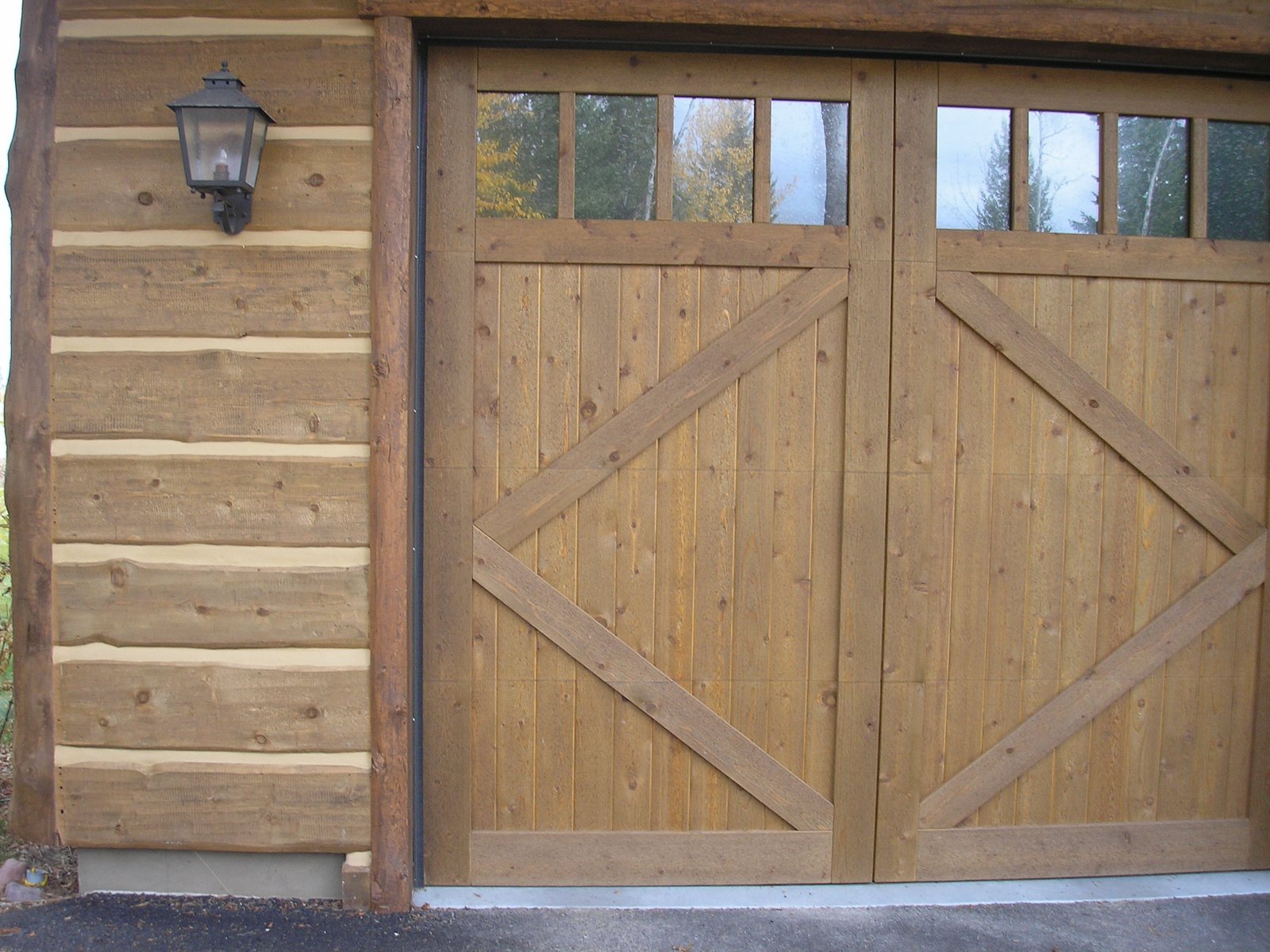
Gates run from pedestrian and garden scale through courtyard and estate entry work. Large driveway swing gates are a different animal. Size and weight put them into territory where engineering matters as much as craftsmanship, and the hardware, hinge points and frame design have to be worked out before anything gets milled. Load path guidance from the American Wood Council is the relevant reference for the framing side of that conversation.
Cabinetry is where module-based buying and package buying diverge most
Kitchen cabinetry through ICD, the architectural millwork division of J. Gibson McIlvain, is engineered around how the room is used rather than assembled from standard modules, which is the difference between a fitted kitchen and a wall of boxes with filler strips. ICD brings 67 years of its own experience to custom millwork work, and it operates inside the same company rather than as an outside partner.
Filler strips and mismatched face frames are symptoms of a procurement method, not of poor workmanship. Standard modules come in fixed increments. Rooms do not. Building to the room removes the fillers, and it also lets the cabinet work around what is actually behind the wall. Plumbing stacks, mechanical chases and structural offsets stop being obstacles that shrink storage and start being constraints the box is drawn around.
Specialty drawers follow the same reasoning. Depth, division and hardware get chosen against what the drawer holds. Construction also has to answer to the countertop. Stone, quartz and thick slab material impose loads and require support and reveal details that a generic base cabinet does not provide.
Draw the scope line at the truck, and put it in writing
The honest boundary of a one package millwork supplier is the delivery, since J. Gibson McIlvain supplies and mills but does not install, coordinate installation or perform field measurement. Saying so plainly is more useful to a buyer than a vague full service claim, because it tells the contractor exactly what still needs a subcontractor and what does not.
What does happen before the truck matters more than most buyers expect. Finished millwork can be stored for inventory control, which means the package does not have to arrive on the day the last piece comes off the moulder. On a job where drywall slips six weeks, that storage is the difference between installing dry trim and installing trim that spent a month absorbing moisture in a building that was not yet dried in. Material ships nationwide, California included, on a schedule the site sets.
"The customers who get the most out of us are the ones who bring us in while the drawings are still moving. We can tell them what actually exists in the length and width they drew, get the knife ground, prime it correctly and then hold it until their site is ready. What we cannot do is fix a sequencing problem after the material is already on the ground."
Norm Moton, Director of Sales, J. Gibson McIlvain
Field measurement stays with the installer, and it should. The person responsible for the fit should be the person who took the dimension. A shop that supplies against verified field dimensions and a clear release schedule gives that installer a much easier job than one that ships a truckload against a set of design drawings.
How J. Gibson McIlvain Would Specify This
Write the package so that one company holds the material from grade through crate, and write the boundary at the truck so the installer knows exactly where the handoff sits. That is the whole method, and it works on a fifteen thousand foot commercial interior the same way it works on a single historic facade.
Start with the service environment, not the species. Interior work gets specified at 6 to 8 percent moisture content, exterior work at 12 to 16 percent, and the spec should say the number rather than the word "kiln dried," which by itself means very little. Name the sawing method where flatness matters, since quartersawn and rift stock earns its cost on painted panelized surfaces and wide door stiles.
Send a physical sample of any profile that has to match existing work. A photograph is not enough geometry to grind a knife from. New knives get ground weekly, so a genuinely custom profile is a normal request rather than an exception, and the record stays available for later phases.
Put priming in the millwork scope. Specify the level, the system and, on exterior work, the fungicide additive, and require all faces and ends. Specify the beam joinery by name. Ask for lock miter where the beam is stain grade and visible, dado where strength matters and seams are acceptable, butt where speed and a minimal profile win.
Decide substitutions early. Sapele for painted exterior trim over Genuine Mahogany, with the understanding that 1x8 exterior is not part of that offering. Modified wood where a warranty is required, with the 16 ft ceiling written into the schedule so nobody draws a 20 ft run. Cedar in CVG or STK depending on whether the face reads clean or knotty.
Then set a release schedule instead of a single delivery date. Storage exists for exactly this reason. To get a package priced and scheduled against real drawings, review the millwork services offered by J. Gibson McIlvain or call 800-638-9100 with the cut list, the profiles and the site schedule in hand.
Frequently Asked Questions
Does a full service millwork company include installation?
Not at J. Gibson McIlvain. The company sources, mills, primes, assembles, stores and ships, and the scope ends at the delivery. Installation, installation coordination and field measurement stay with the buyer's own carpenter or installation subcontractor. That is worth confirming with any supplier using the phrase full service, because the term is applied inconsistently across the industry and a contractor who assumes installation is included will be short a trade at the worst possible moment. The practical upside is that the installer receives material milled to the right moisture content, primed on all faces and released against the site schedule, which makes the install itself faster.
Why does it matter whether one company handles both sourcing and milling?
Two reasons. The first is grade and yield. The person buying the lumber should know the cut list, because grade is a yield decision and buying a lower grade to save on the lift often costs more at the moulder in short parts and rejects. The second is moisture content. Interior millwork is milled near 6 to 8 percent and exterior work near 12 to 16 percent, and stock that sits in an uncontrolled warehouse between the kiln and the moulder will not machine to a dimension it keeps. When sourcing and milling sit under one roof, that number is controlled once rather than assumed twice.
What happens if we need to add matching moulding a year later?
The knife is what makes a rerun possible. J. Gibson McIlvain maintains a moulding profile library holding thousands of profiles and grinds new knives every week, so a profile run for a first phase can be run again on the same geometry. A shop working from a catalog number will give you something close, and close is visible where two pieces meet at an inside corner. If the profile is not already in the library it gets ground from a physical sample, which is also how historical restoration profiles are matched.
Should trim be primed at the mill or on site?
At the mill, for two reasons that site painting cannot address. Shop priming reaches the back face and the end grain, which is where moisture actually enters a trim board, while field priming reaches the face. And water-based primers raise grain, so the board has to be sanded or buffed after priming to knock that fiber back without rounding over the moulded detail. Priming is offered in three levels and in both oil-based and water-based systems, and exterior primed trim should carry a fungicide additive.
Can a millwork package carry a warranty?
Only where modified wood is involved. Accoya, Thermory and Abodo Vulcan are manufactured products with published warranties. Solid unmodified wood cannot be warrantied by anyone, because it is an organic material that responds to its environment, and any supplier offering one on solid stock is describing something they cannot back. What a single-source package does offer instead is accountability, since grade, drying, milling and finishing all sit with one party rather than being disputed across four.
How do modified wood size limits affect a millwork package?
They constrain the drawing before anything else does. Kiln size caps modified products at roughly 16 ft, and most are sold on metric lengths just under 16 ft, so a 20 ft continuous run in a modified product does not exist regardless of who is asked. Width matters too. Thermally modified Ash is not available wider than 8 inches, so a wide modified board means Accoya or Abodo Vulcan. Getting those ceilings into the schedule early avoids a redesign after the material has been specified.
What documentation should travel with an architectural millwork package?
At minimum, the packing list and bill of lading, plus any certification the project requires. FSC certification only works as an unbroken chain of custody, so an uncertified intermediary between the mill and the project breaks the claim. Where a CITES listed species is involved, permits and chain of custody documentation travel with the material and cannot be reconstructed after delivery. This is one of the quieter arguments for a single supplier, since paperwork stranded two vendors upstream is very hard to retrieve when a submittal reviewer asks for it.
Sources and Standards Referenced
- Wood Handbook: Wood as an Engineering Material (FPL-GTR-190), USDA Forest Products Laboratory
- Architectural Woodwork Institute: Quality Standards and Industry Resources
- National Hardwood Lumber Association: Grading Rules and Inspection
- Wood Moulding and Millwork Producers Association
- Forest Stewardship Council: Chain of Custody Certification
- CITES: Convention on International Trade in Endangered Species of Wild Fauna and Flora
- National Park Service Technical Preservation Services: The Secretary of the Interior's Standards
- American Wood Council: Codes and Standards
- Building Science Corporation: Enclosure and Moisture Management Research
- The Wood Database: Sapele