Net Footage Versus Rough Board Feet
A ten thousand lineal foot moulding order is never a ten thousand foot lumber purchase. The number on the millwork schedule is net delivered footage, already profiled and sorted. Rough lumber trades in board feet, measured on the volume of the board before anything is ripped off it. Converting between the two is the first honest calculation on a batch run, and getting it wrong is how a job ends up short at the tail with the original lot long gone.
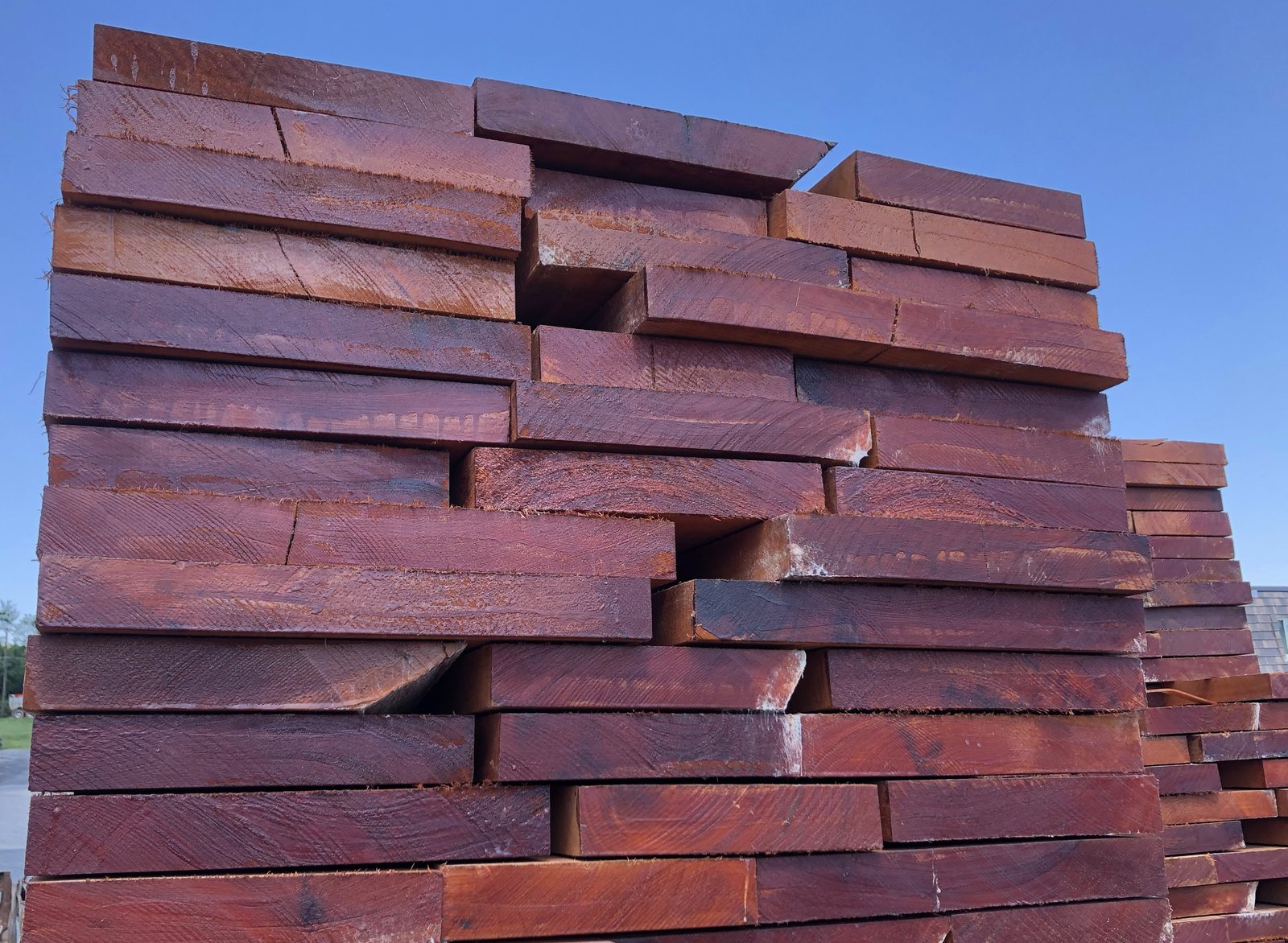
Take a 5/4 by 6 casing in Sapele. The finished piece is a fraction of the rough blank it started as, once you subtract planing allowance on two faces, saw kerf on the rips, and the trim cuts that remove wane, end checks and the tail of a crook. On a well behaved lot of long, clean, kiln dried stock, a shop puts a comfortable majority of purchased board footage into salable profile. On a narrow lot, a figured lot, or a species that arrives with heavy color spread, that fraction drops fast.
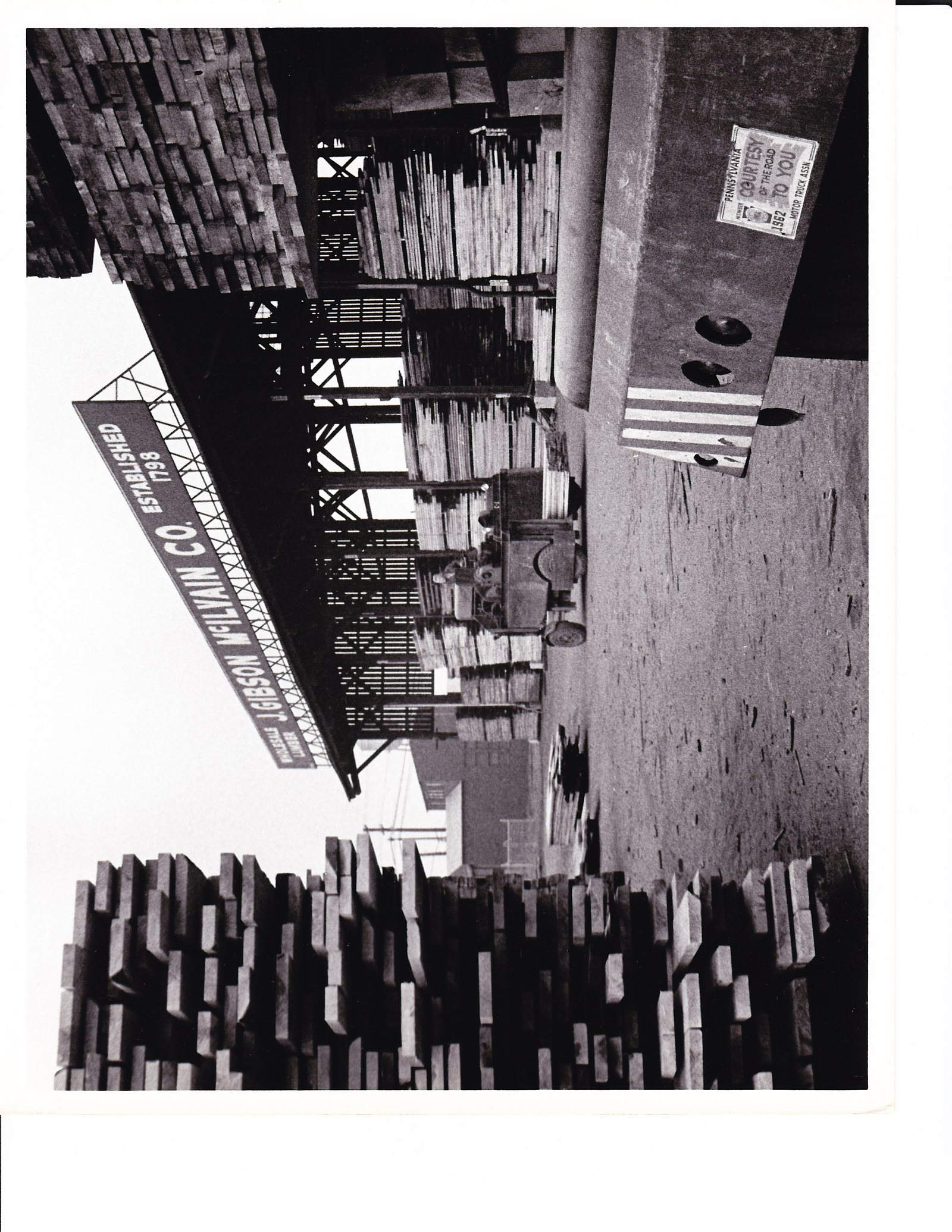
The consequence for the buyer is simple. Asking for ten thousand finished feet is asking a supplier to commit a multiple of that in rough inventory, hold it under one lot, and absorb the difference. J. Gibson McIlvain holds over seven million board feet of exotic and domestic lumber at its Maryland yard, which is what makes a single lot commitment on a run that size a scheduling conversation instead of a sourcing gamble.
Grade Sets the Ceiling on Yield
Grade is a yield instrument, not a quality ranking, and reading it that way is what keeps a large moulding order from going sideways. The National Hardwood Lumber Association rules that govern domestic hardwood grading describe how much clear cutting area a board will give up and how large those cuttings are. FAS delivers long clear cuttings. Select and Number 1 Common deliver shorter ones.
That distinction decides everything downstream. A ten thousand foot order broken into fourteen and sixteen foot pieces needs long clear cuttings and a high grade to feed them. The same ten thousand feet cut into four and six foot door casing legs runs on a lower grade with very little waste, because the defects fall between the cuttings instead of through them.
Imported millwork species do not grade under that book. Sapele, Iroko, Afrormosia, Teak and Utile arrive under export grades that read differently, with their own allowances for pin knots, interlocked grain and color variation. A shop that runs those species constantly knows what a given grade actually produces on the moulder, which is a different kind of knowledge than reading a grade stamp.
So send the cutting bill before the lumber is bought. Piece lengths, quantities and whether short pieces are acceptable all change the grade that should be purchased, and the grade purchased changes realized yield by a wide margin.
Sorting Color Before Anything Reaches the Moulder
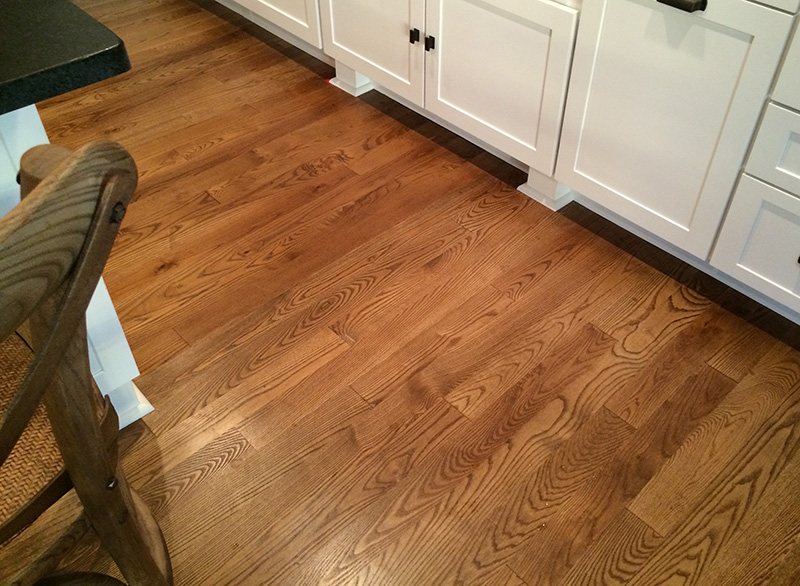
Color rejects on a large run are almost always a sorting failure rather than a milling failure. Wood color varies within a species, within a log, sometimes across a single board. Sapele runs from light golden brown to deep reddish brown. Iroko starts yellow and darkens toward brown with light exposure. Afrormosia holds a fairly tight range and still moves. Teak and Utile both shift over the first months in service.
On a few hundred feet nobody notices. On ten thousand feet installed in continuous runs down a corridor, two adjacent pieces pulled from opposite ends of the color range read as a mistake. The fix happens at the rough sort, before blanks are ripped, when boards can still be grouped into light, medium and dark bands and assigned to specific rooms or elevations.
For a clear finished run, one lot matters more than one species name. Lumber from the same shipment, ideally the same log run, holds a tighter color band than lumber of the same species bought six months apart. ICD, the architectural millwork division of J. Gibson McIlvain, plans custom profile work around the lot that is actually on the ground rather than around a generic species line in a specification.
Painted work changes the calculus without eliminating it. Tone stops mattering. Grain starts mattering, because open pore species telegraph through paint, and pore density matters, because absorbent grain takes primer unevenly. A painted run gets sorted for grain consistency and pore structure instead of for color.
What Counts as a Reject and Who Decides
The most useful document on a ten thousand foot order is a written defect list agreed before the first blank is ripped. Character and defect are not the same thing, and the line between them lives in the specification, not in the wood. Pin knots, mineral streak, interlocked figure and small color variation are natural to the millwork species palette. Whether they ship or get cut out is a decision someone has to make on paper.
Write the list in plain terms. Maximum knot diameter if any are allowed. Whether sapwood is permitted on a clear finished face. Whether glue lines are acceptable on wide members and where they may fall. Whether short lengths ship and down to what dimension. Whether grain continuity between adjacent pieces is required, and on which elevations.
Write the machining tolerances too. Profile deviation allowance, snipe at piece ends, chatter on a face that will take a clear coat, and how straightness gets measured over a stated length. Architectural Woodwork Institute standards give a shared vocabulary for grade of workmanship, and citing a published grade beats trading adjectives in an email.
The reason to fix this early is the batch itself. A reject discovered on piece nine thousand is a reject discovered after the lot is consumed, the knives are off the machine and the color band has shipped. Agreeing the list in advance turns a subjective argument at the end into an objective sort in the middle.
Where Footage Actually Leaves a Run
Loss on a large moulding order is not one number, it accumulates in five distinct places, and each one answers to a different countermeasure. Knowing which stage is eating the footage tells you whether to buy a higher grade, redraw the cutting bill, or loosen a tolerance that was never load bearing.
| Stage | What removes footage here | Effect on a fixed lineal count | What reduces the loss |
|---|---|---|---|
| Rough sort and grading | Wane, end checks, crook, sapwood on clear finished faces, boards outside the color band | Largest single reduction, absorbed before any machine time is spent | Higher grade, single lot purchase, cutting bill supplied before lumber is bought |
| Ripping and blank layup | Saw kerf, edging to clean stock, ripping around defects, laminating up wide blanks | Moderate and fairly predictable, rises sharply on wide or thick profiles | Straight line and gang ripping, nesting the cutting bill so offcuts feed shorter parts |
| Moulder pass | Planing allowance on faces and edges, snipe at piece ends, tearout on interlocked grain | Small on footage, large on rejects when feed speed or knife condition is wrong | Freshly ground knives, slower feed on figured stock, trial pieces approved before the batch runs |
| Post moulding sort | Tone and grain outliers visible only once the profile is cut and the surface reads clearly | Small percentage, but these pieces are fully machined, so the loss is expensive | Banding tone at the rough sort so the profiled sort has little left to catch |
| Finishing and handling | Grain raise, uneven primer absorption, dents and edge damage from stacking and transit | Usually the last loss found, often after material is already on site | Sanding or buffing after priming, dedicated packaging, staged delivery instead of one bulk drop |
Two of those stages belong to the buyer rather than the shop. The cutting bill is a buyer document. So is the defect list. A shop can protect the other three, and a good one will tell you which of your two is costing you footage.
Moisture Content and the Rejects That Arrive Late
The rejects that hurt on a large order are the ones that appear weeks after delivery, and most of those trace back to moisture content. Interior millwork is milled to an in service moisture content near 6 to 8 percent. Exterior work runs closer to 12 to 16 percent, since it lives in a wetter equilibrium and a piece dried to interior conditions swells hard once it goes outside.
Miss the target and the profile does not fail on arrival. It fails in the third week, when a hundred pieces have cupped slightly, miters have opened, and a painted surface has telegraphed grain that was invisible at delivery. The Forest Products Laboratory Wood Handbook documents the shrinkage coefficients behind that movement, species by species and by grain orientation.
Sawing pattern belongs in the same conversation. Quartersawn and rift stock moves less across its width than plainsawn, which is why it gets specified where a painted or panelized surface has to stay flat across a long run. It costs yield to produce, since a log gives up less quartersawn material than plainsawn, and that trade is worth making on a wide painted member.
Site conditions govern what happens after delivery. Material dropped into a building that is not yet conditioned will move no matter how well it was dried, and the building science literature on enclosure drying is blunt about it. A staged delivery matched to the conditioning schedule prevents more rejects than any single milling decision.
Tooling Wear Across Thousands of Identical Pieces
Knife condition degrades across a long run, and the last thousand feet will not match the first thousand unless the shop plans the change. Steel dulls. A dull edge burnishes instead of cutting, and burnished grain takes stain and clear coat differently from freshly cut grain. On a few hundred pieces this never surfaces. On ten thousand feet it does, and it shows up as a tonal shift halfway down a corridor.
Species drives the rate of wear. Iroko carries silica inclusions that are hard on steel. Teak holds abrasive mineral content. Afrormosia and Utile machine cleanly but have interlocked grain that wants to tear the moment an edge goes soft. The shop schedules the knife change against footage and grinds the replacement set from the same template, so the profile does not step when the swap happens.
J. Gibson McIlvain grinds new moulding knives every week and keeps a profile library holding thousands of ground knives, which means a second set for a long run is a grind against an existing template rather than a fresh setup. The Wood Moulding and Millwork Producers Association maintains the standard profile numbering that makes those templates legible to anyone reading the drawing.
Tropical decking species sit outside this palette for a reason worth stating plainly. Ipe, Tabebuia spp, along with Cumaru, Garapa, Jatoba and Red Balau, is extremely hard and carries high oil content, which makes these species difficult to glue and punishing on tooling. A millwork house reaches for Sapele, Iroko, Afrormosia, Teak or Utile instead, because those machine predictably, glue reliably and hold a crisp arris across thousands of pieces.
Priming as a Yield Decision, Not a Finish Decision
Priming a painted run in the shop removes an entire category of site reject before the material ever leaves the building. Open-grained and oily species absorb a great deal of finish, so a primer coat evens out the eventual painted surface, and sanding or buffing after priming knocks back grain raising while keeping moulded detail crisp. Across ten thousand feet, that difference compounds on every piece.
J. Gibson McIlvain primes in three levels, in both oil based and water based systems, and adds a fungicide additive to primer on exterior trim. Priming all faces, including the back and both cut ends, is what stops moisture from entering through an unsealed surface and driving the movement that a painted face eventually telegraphs.
Species selection follows from that. For painted exterior trim, Sapele is the better call than Genuine Mahogany, since it holds paint better and comes in a wider range of sizes and longer lengths. Sapele is not milled 1x8 for exterior use, because that width is too wide to stay stable in that application. Cupping on exterior trim is driven by installation detail and back ventilation, not by the species on the invoice.
Modified woods change the exposure math and bring their own hard limits. Accoya runs roughly 1,600 lbf on the Janka scale, with acetylation giving dramatically reduced shrinkage and swelling. Thermory and Abodo Vulcan are both carried. All of these top out around 16 ft, most sold on metric lengths just under 16 ft, because of kiln size. Thermally modified Ash is not available wider than 8 inches, so a wide board in a modified product means Accoya or Abodo Vulcan.
Packaging, Staged Release and Storage
A finished moulding run is at its most fragile after it is done, and transit damage counts as a reject exactly the same way a knot does. Ten thousand feet of profiled trim represents a great deal of machine time and a carefully sorted color band. Dropping all of it on a site with nowhere conditioned to put it converts good millwork into damaged millwork in a weekend.
J. Gibson McIlvain runs its own fleet of trucks and dedicates a section of the mill to packaging, which is what allows a large run to ship in staged releases keyed to the construction schedule instead of one bulk delivery. The company also stores finished millwork for inventory control, so material produced under one lot and one knife set can sit until the building is ready to receive it.
Storage matters more on a phased job than anything else here. Lumber lots get consumed. A species goes on allocation. A color band that was easy in spring is gone by autumn. Producing the full run at once and releasing it in pieces is the only reliable way to keep the last phase matching the first. Delivery is nationwide, including regular runs to California.
Overage, Attic Stock and the Reorder Nobody Budgets
Every large moulding order needs an overage written into it, and that overage has to come off the same lot and the same knives as the run. Site damage happens. A trade cuts a piece wrong. A change order adds a closet. Without attic stock, a small event turns into a reorder that will not match, and a reorder that will not match becomes a visible seam in a finished building.
A sensible overage on a run this size is a modest percentage of net footage, sized against how many separate rooms the run serves and how visible the material is. Clear finished work needs more, because a replacement piece has to match tone as well as profile. Painted work needs less. Paint forgives a great deal that a clear coat will not.
"The reorder call always comes, and it usually comes about eight months after the original lot has sold through. If we milled the attic stock with the run and it is sitting in our storage, that call takes ten minutes. If we did not, I am hunting a color match in a species that has moved on, and I cannot promise the customer the repair will be invisible."
Norm Moton, Director of Sales, J. Gibson McIlvain
Keep the paperwork with the material. Where a CITES listed species is involved, documentation and chain of custody travel with the material, and that holds for attic stock released two years later just as it holds for the first truck. J. Gibson McIlvain is an FSC certified importer and miller, which is what lets sourcing documentation follow a run through storage and into a reorder.
One thing cannot be written into the order. There are no warranties on solid unmodified wood. Warranties exist only on modified products. It is not possible to warranty an organic material that responds to its environment, and a supplier offering one on solid stock is describing something other than wood.
How J. Gibson McIlvain Would Specify This
A ten thousand foot custom moulding order should be specified as one lot, one knife set, one defect list and one staged delivery schedule, all settled before any lumber is purchased. Everything above collapses into those four decisions, and every expensive surprise on a batch run traces back to one of them being left open.
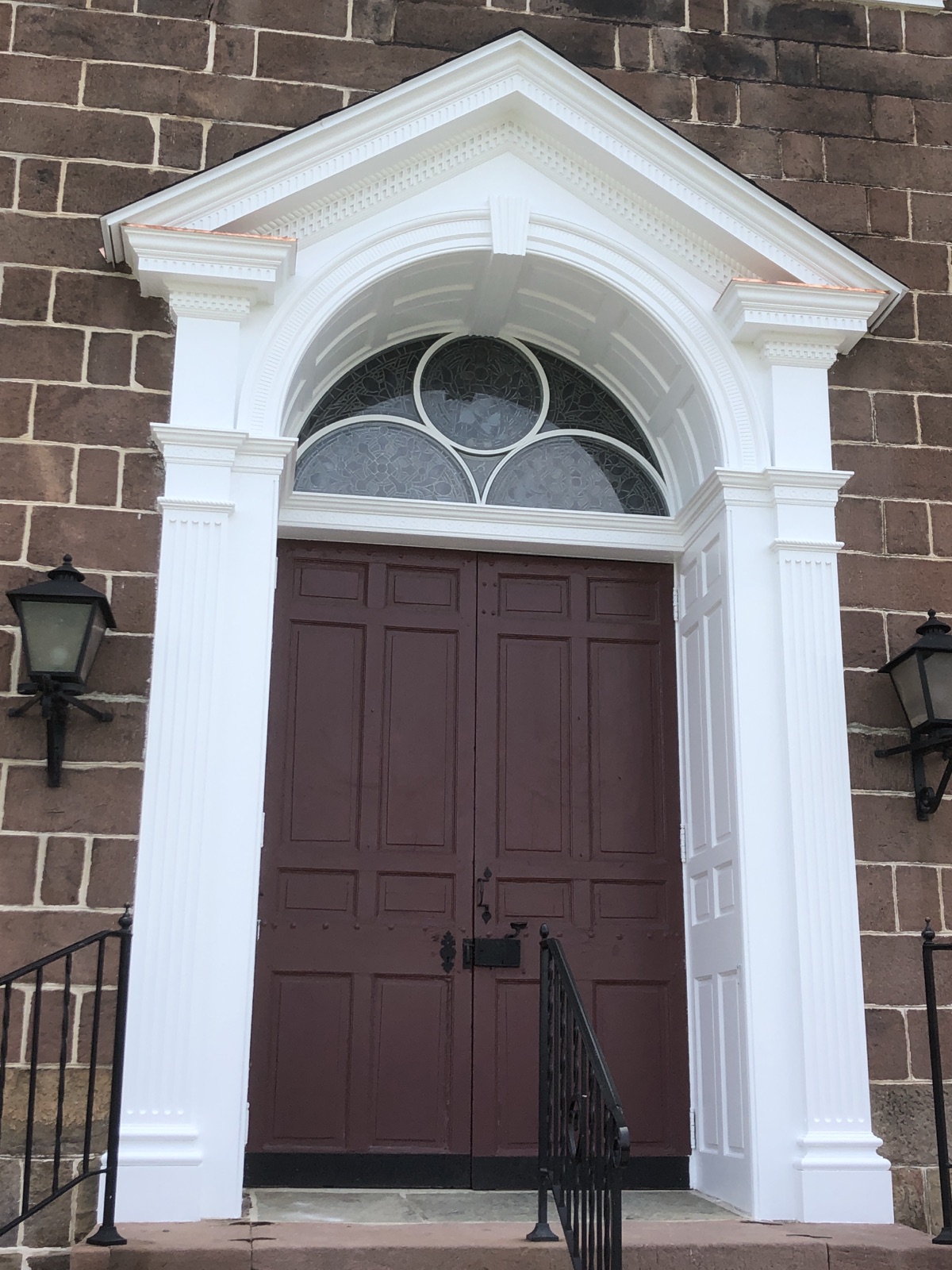
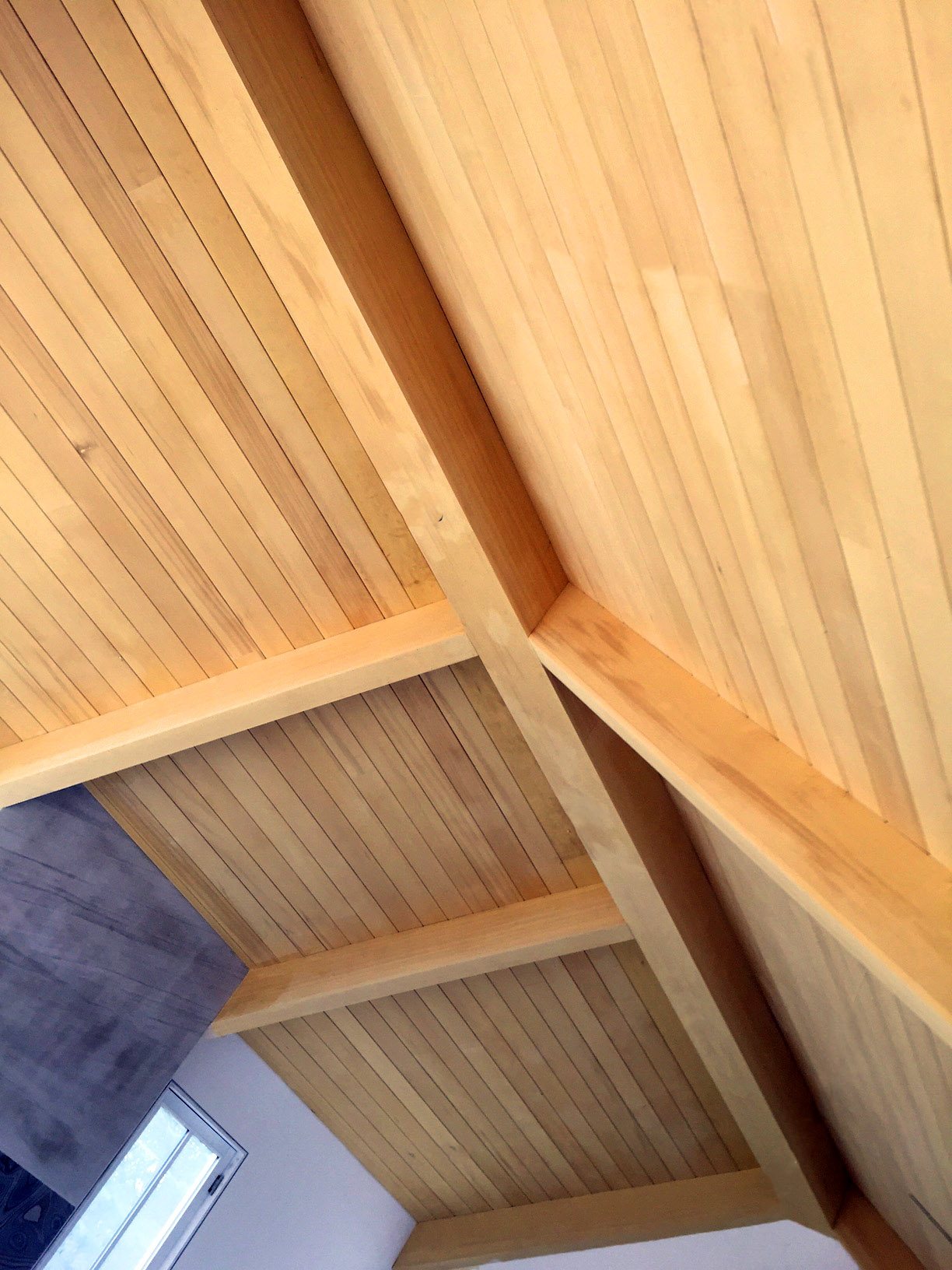
Send the cutting bill first. Piece lengths and quantities determine the grade that should be bought, and the grade determines the yield. Send a physical sample or a full scale section of the profile, not a catalog number by itself. ICD, the architectural millwork division, plans true custom work around the specific space, so radius trimwork, custom doors, box beams and non standard profiles get engineered rather than pulled from a module.
Specify from the millwork palette. Sapele at roughly 1,410 lbf Janka, Iroko, Afrormosia, Teak or Utile. On domestic work, White Oak at roughly 1,360 lbf and Hard Maple at roughly 1,450 lbf both machine well over long runs. Cherry at roughly 950 lbf is softer and marks more readily in handling, which matters on a batch that gets moved several times before it is installed. Check movement figures on the Wood Database entry for Sapele or its Iroko entry before committing a wide member.
State the moisture target in the specification. Interior at 6 to 8 percent, exterior at 12 to 16 percent, with the priming level and system named if the work is painted. State the overage as a percentage, and ask that it be milled with the run and held in storage rather than promised for a later date.
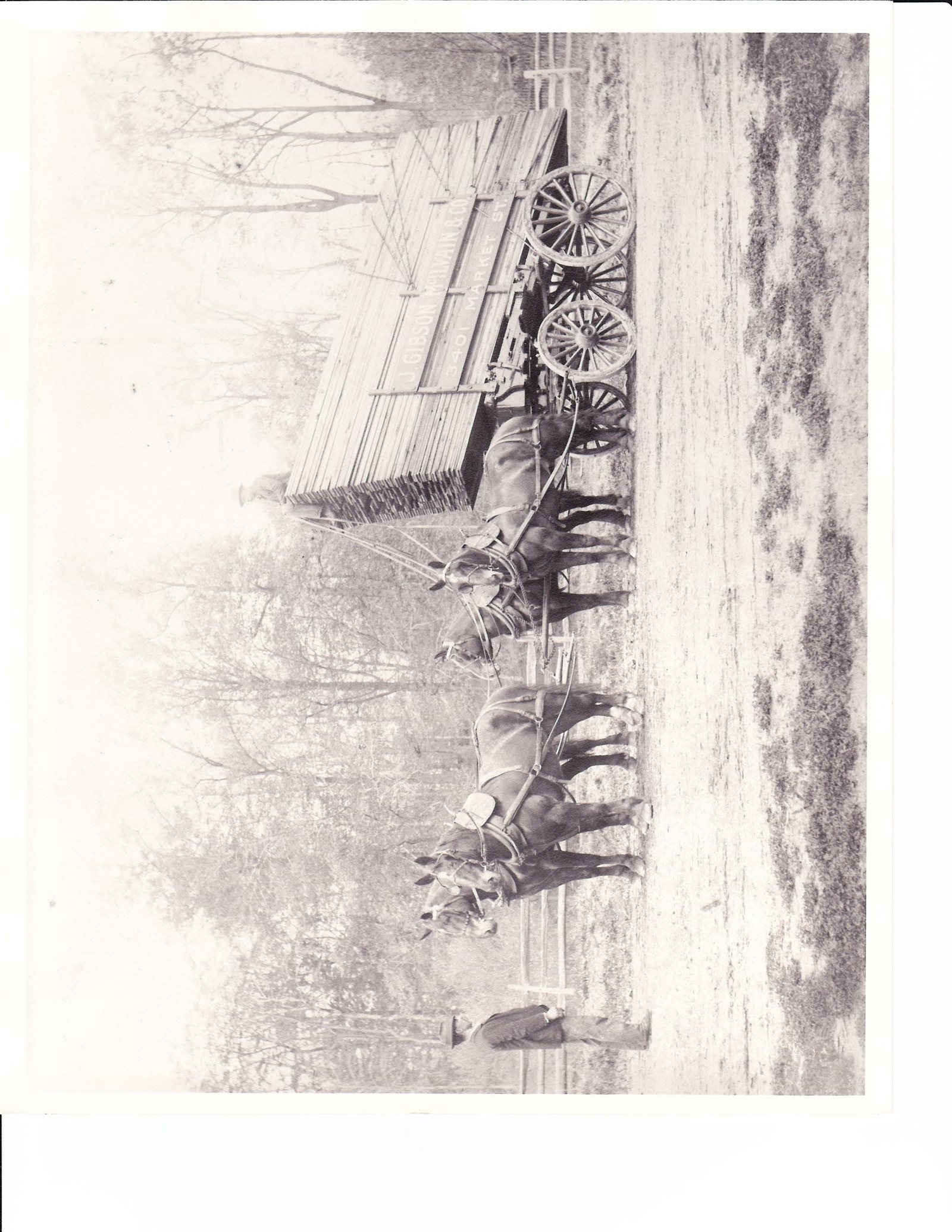
Then keep the supply side simple. J. Gibson McIlvain mills linear trimwork, finished cladding and primed trim through its millwork service, and ICD handles the custom side of the same order, including exterior millwork, gates, shutters, pergolas, benches and railings. One yard, one lot, one set of records. The company is seventh generation and family run, in business since 1798, which is the practical reason a knife and a lot record are still on file when the second phase calls.
J. Gibson McIlvain supplies and mills. It does not install. Field measurement, installation sequencing and site acclimation belong to the buyer's own installer, and the shop's job is to deliver material at the right moisture content, sorted, primed, packaged and staged so the installer has nothing to fight on the wall.
To scope a batch production run of custom moulding, call 800-638-9100 with the cutting bill, the profile and the schedule. The shop will tell you what grade and what lot the run needs before anything is committed.
Frequently Asked Questions
How much rough lumber does a ten thousand lineal foot moulding order actually consume?
Considerably more than ten thousand board feet, and the multiple depends on three things. The profile dimension sets the planing and ripping allowance. The cutting bill sets how much of each board falls into usable clear cuttings. The grade purchased sets how much clear material is present to begin with. A run cut into short door casing legs can be fed from a lower grade with little waste, while a run of long continuous pieces needs high grade stock with long clear cuttings and will consume a much larger volume. The only way to size the purchase honestly is to give the shop the piece lengths and quantities before the lumber is bought.
How is color kept consistent across thousands of identical pieces?
By buying under one lot and sorting tone at the rough stage, before anything is ripped or profiled. Sapele, Iroko, Afrormosia, Teak and Utile all carry a natural color range, and lumber from one shipment holds a tighter band than the same species bought months apart. Boards get grouped into light, medium and dark bands and assigned to specific rooms or elevations, so the variation that does exist falls between spaces rather than between two adjacent pieces on one wall. Catching a tone outlier after the profile is cut means throwing away fully machined material.
What should a defect list include on a batch moulding run?
Maximum knot diameter if any knots are permitted, whether sapwood is allowed on a clear finished face, whether glue lines are acceptable on wide members and where they may fall, the shortest acceptable piece length, and whether grain continuity is required between adjacent pieces. Add the machining tolerances as well, meaning profile deviation allowance, permitted snipe at piece ends, surface quality on faces taking a clear coat, and how straightness is measured over a stated length. Referencing a published Architectural Woodwork Institute grade of workmanship is cleaner than describing the standard in your own words.
Can a whole ten thousand foot run be cut on a single set of knives?
Not reliably, and planning for a knife change is better than pretending otherwise. Steel dulls across a long run, and a dull edge burnishes grain rather than cutting it, which changes how stain and clear coat sit on the surface. Abrasive species accelerate that, since Iroko carries silica inclusions and Teak holds mineral content. J. Gibson McIlvain grinds new moulding knives every week from a library holding thousands of ground knives, so the replacement set comes off the same template as the first and the profile does not step mid run.
How much overage should be ordered for attic stock?
A modest percentage of net footage, scaled to how many rooms the run serves and how visible the material is. Clear finished work needs more overage than painted work, since a replacement piece has to match tone as well as profile, and paint forgives what a clear coat will not. The important part is not the percentage but the timing. Attic stock has to be milled with the original run, off the same lot and the same knives, and held in storage. Ordering it later means a different lot, a different color band and a visible repair.
Does a large solid wood moulding order come with a warranty?
No. There are no warranties on solid unmodified wood. Wood is an organic material that responds to the humidity and temperature it is placed in, and no supplier can guarantee its behavior after it leaves a controlled environment. Warranties exist only on modified products such as Accoya, Thermory and Abodo Vulcan. What a supplier can commit to on a solid wood run is the grade, the moisture content at shipping, the defect list, the profile tolerance and the packaging, which is where the real protection sits.
What are the practical length limits on a large moulding run?
Solid unmodified hardwood lengths depend on the lot and the species, and long lengths are a function of what is actually in inventory, which is why a yard holding over seven million board feet can commit to long pieces that a smaller supplier cannot. Modified woods are capped by kiln size. Accoya, Thermory and Abodo Vulcan all top out around 16 ft, and most are sold on metric lengths just under 16 ft. Thermally modified Ash is not available wider than 8 inches, so a wide modified board means Accoya or Abodo Vulcan.
Does J. Gibson McIlvain install the moulding it produces?
No. J. Gibson McIlvain supplies and mills. Field measurement, installation sequencing and on site acclimation are handled by the buyer's own installer or fabricator. What the shop controls is everything up to the truck, meaning the grade and lot selection, the color sort, the profile, the moisture content at shipping, the priming level, the packaging and the staged delivery schedule. Material that arrives correctly dried, sorted, primed and staged is what lets the installer work without fighting the trim.
Sources and Standards Referenced
- National Hardwood Lumber Association
- Wood Handbook: Wood as an Engineering Material, USDA Forest Products Laboratory
- Architectural Woodwork Institute
- Wood Moulding and Millwork Producers Association
- Building Science Corporation
- CITES, Convention on International Trade in Endangered Species of Wild Fauna and Flora
- Forest Stewardship Council
- The Wood Database: Sapele
- The Wood Database: Iroko
- Accoya Acetylated Wood