The Science of Graying: UV Photodegradation of Lignin
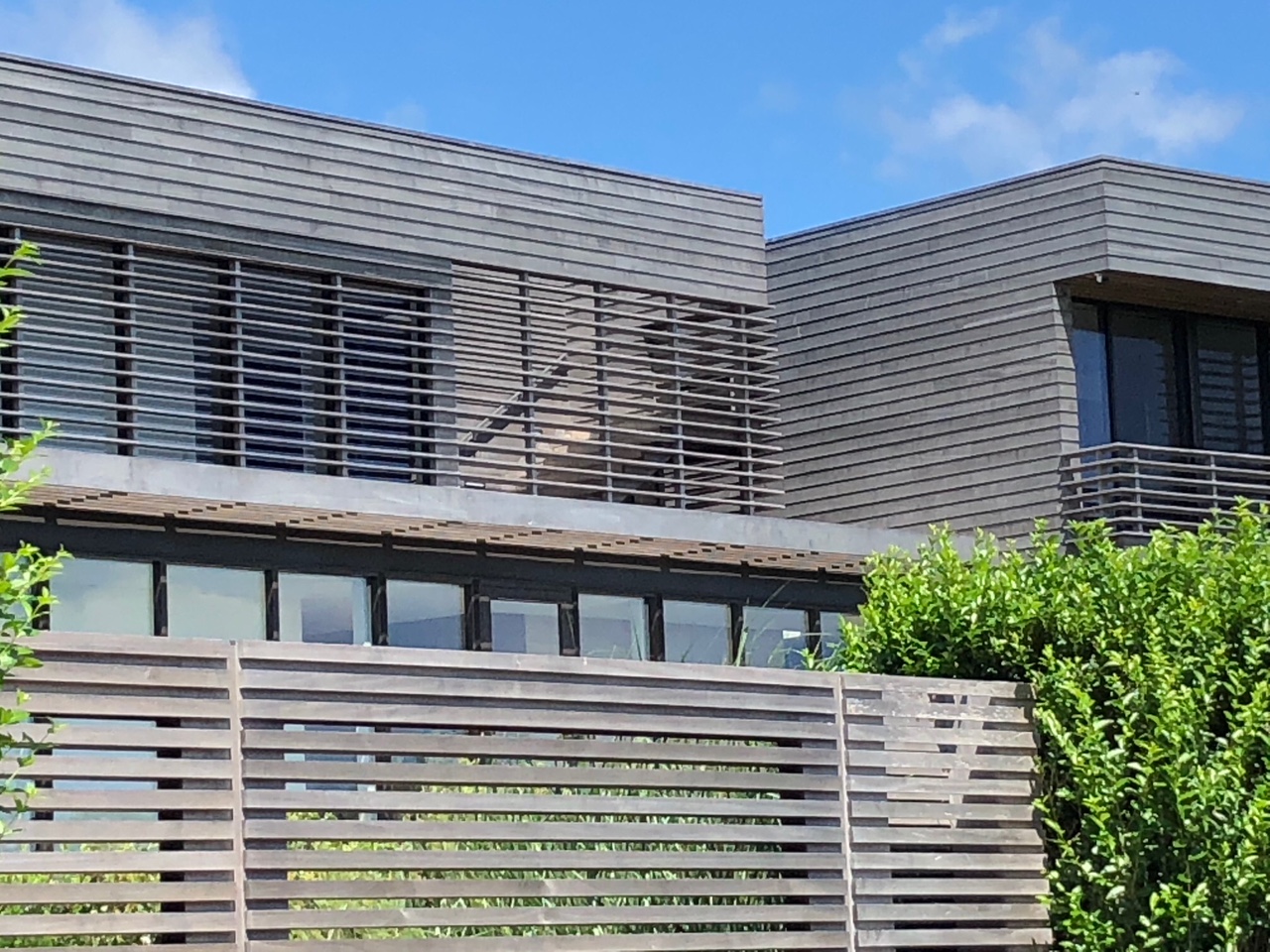
The silver-gray patina is not dirt, mold, or decay. It is the visible result of a well-documented photochemical process. According to the USDA Forest Products Laboratory Wood Handbook, ultraviolet radiation in sunlight degrades lignin, the aromatic polymer that constitutes roughly 18 to 35 percent of wood by mass and binds cellulose fibers together. Lignin is the component responsible for most of wood's natural brown coloration, and it absorbs UV strongly in the 300 to 400 nanometer range.
As UV photons break lignin's chemical bonds, the degraded fragments become water-soluble and are rinsed away by rain. What remains at the surface is a thin layer of bleached, loosely bound cellulose fibers. These fibers scatter incident light and read as silver-gray to the eye. Critically, this process is confined to a shallow depth. The Wood Handbook documents that natural weathering erodes the wood surface at only about 6 millimeters (roughly a quarter inch) per century in durable species, meaning the patina is fundamentally a surface phenomenon that does not threaten structural integrity.
"Weathering is often confused with decay, but they are entirely different processes. Weathering is a surface effect driven by UV light and water that degrades only the top tenth of a millimeter of lignin at a time. A board can be silver-gray on the surface and chemically pristine a millimeter below. Decay, by contrast, is a biological process requiring sustained moisture and fungi. A naturally durable species will gray beautifully and still be structurally sound 40 years later." — Dr. R. Sam Williams, retired research chemist, USDA Forest Products Laboratory
Standardized accelerated weathering testing under ASTM G154 uses fluorescent UV lamps to reproduce this lignin degradation in the laboratory, allowing species and finishes to be ranked for color stability before field installation.
Why Some Woods Gray Evenly and Others Blotch
The difference between a uniform driftwood-gray and an ugly, streaked surface comes down to two factors: extractive content and grain consistency.
Extractives are the natural oils, resins, and phenolic compounds deposited in heartwood. They do more than resist decay; during the months-long weathering transition, when the wood is most vulnerable, high-extractive heartwood resists colonization by the dark-pigmented mildew fungi that cause black streaking. Western Red Cedar's thujaplicins, cypress's cypressene, and the oily resins of teak all suppress surface mildew, allowing the lignin to photodegrade cleanly to gray rather than rotting to black. Low-extractive sapwood and non-durable species offer no such protection and frequently turn patchy gray-black.
Grain consistency matters because UV degradation proceeds faster on the more porous earlywood than on dense latewood. Species with subtle, uniform grain, such as cypress, cedar, and Accoya, gray evenly; species with extreme density contrast between growth rings can develop a slightly ridged, differential weathering pattern.
Species Comparison: Silver-Gray Patina Performance
| Species | Heartwood Extractive Content | ASTM Decay Class | Time to Stable Gray (Full Sun) | Evenness of Patina |
|---|---|---|---|---|
| Teak | Very high (oils, tectoquinones) | Class 1 | 24-36 months | Excellent |
| Western Red Cedar | High (thujaplicins) | Class 2 | 12-24 months | Excellent |
| Baldcypress | Moderate-high (cypressene) | Class 1-2 | 12-24 months | Very good |
| Ipe | Very high (lapachol) | Class 1 | 24-36 months | Excellent |
| Accoya (acetylated pine) | Low natural, acetyl-modified | Class 1 (modified) | 12-18 months | Very good |
| Pine (untreated sapwood) | Very low | Class 4 | 6-12 months | Poor (streaks black) |
The Reliable Performers, Species by Species
Teak
Teak is the benchmark for graceful weathering. Its exceptionally high oil and tectoquinone content makes it nearly impervious to mildew during the transition, so it grays slowly and with remarkable uniformity to a soft silver. The tradeoff is that teak takes the longest to reach a stable color, often 24 to 36 months, because its dense, oily surface resists initial UV penetration. J. Gibson McIlvain stocks genuine teak in cladding and decking dimensions; for projects pursuing the look of weathered teak, see our cladding product line for available profiles and lengths.
Western Red Cedar
Cedar is the most common siding species specified for an intentional gray patina, and it grays faster than the tropicals, typically stabilizing in 12 to 24 months. Per the Western Red Cedar Lumber Association, cedar's low density and natural thujaplicins allow it to weather to an even silver while resisting decay. Specify tight-grain, high-heartwood-content cedar; second-growth cedar with significant sapwood will gray less evenly because sapwood lacks the protective extractives.
Baldcypress
Cypress occupies a durable middle ground, graying in roughly 12 to 24 months with very good uniformity thanks to its cypressene extractives and consistent grain. It is a strong domestic alternative when an even patina is desired without tropical imports.
Ipe
Ipe's extraordinary density and lapachol extractive content make it one of the most decay-resistant woods on earth (Class 1, Janka 3,510 lbf), and it grays to an even, sophisticated silver over 24 to 36 months. Like teak, its density slows the onset but rewards patience with a uniform result.
Accoya
Accoya, produced by acetylating radiata pine, achieves Class 1 durability and dimensional stability through chemical modification rather than natural extractives. It weathers to an even gray in 12 to 18 months and resists the mildew streaking that would otherwise plague a softwood. For a deeper performance comparison, see our analysis of Accoya acetylated wood siding performance and lifespan in harsh exteriors.
Detailing for an Even Patina
Even the best species will gray unevenly if detailing is poor. The most common cause of a patchy appearance is differential UV exposure: a south-facing wall grays quickly while a shaded north elevation stays brown for years and is more prone to mildew. To minimize this, leave the wood unfinished from day one (a partial or failing film finish produces the worst blotching), provide back-ventilation, and ensure good drainage. The American Wood Council durability guidance recommends rainscreen detailing with a minimum 3/8-inch ventilation cavity, which lets all elevations dry uniformly and discourages the moisture-driven mildew that disrupts an even gray.
It is also worth noting that thermal modification produces a similar weathering outcome through a different mechanism. Thermally modified hardwoods gray to silver within 12 to 18 months of sun exposure; for the underlying process see our guide to thermally modified wood.
For responsibly sourced material in any of these species, including FSC chain-of-custody certified options, J. Gibson McIlvain's milling and finishing services can supply custom siding profiles cut to project specification. Our team can advise on species selection and grain orientation to achieve the most uniform patina for your elevation orientation.
Frequently Asked Questions
Which wood species weather to the most even silver-gray patina?
Species with high, uniformly distributed extractive content and tight, consistent grain weather most evenly. Teak, Western Red Cedar, Baldcypress, Ipe, and Accoya (acetylated radiata pine) are the most reliable performers, developing a uniform driftwood-gray surface without the blotchy darkening or black mildew streaking common to low-extractive woods. Teak and Ipe gray slowly and evenly because their dense, oily heartwood resists fungal staining during the transition.
How long does it take for wood siding to turn silver-gray?
Timing depends on UV exposure and species. On fully sun-exposed southern and western elevations, most species begin graying within 6-12 months and reach a stable silver-gray within 18-36 months. Western Red Cedar and cypress typically stabilize in 12-24 months, while dense tropical species like Ipe and teak can take 24-36 months. Shaded northern elevations gray more slowly and unevenly, which is the most common cause of a patchy appearance.
What actually causes wood to turn gray as it weathers?
The silver-gray color is the visible result of UV photodegradation of lignin. Ultraviolet light breaks down lignin, the brown polymer that binds wood cells, and rain washes the degraded byproducts away. This leaves a thin surface layer of bleached, loosely bound cellulose fibers that scatter light and appear silver-gray. The underlying wood is largely unchanged; weathering erodes only about 6 millimeters per century in durable species.
Does a silver-gray patina mean the wood is rotting?
No. Graying is a surface-level photochemical change, not decay. UV weathering degrades only the outermost cells and does not compromise structural integrity in naturally durable species. Rot requires sustained moisture and fungal activity, which durable heartwood species like cedar, cypress, teak, and Ipe resist through natural extractives. The distinction matters: an evenly grayed durable wood can remain sound for decades, while black streaking or soft spots indicate mildew or moisture problems, not normal patina.
Sources and Standards Referenced
- USDA Forest Products Laboratory - Wood Handbook, Chapter 16: Finishing of Wood (FPL-GTR-282)
- ASTM G154 - Standard Practice for Operating Fluorescent Ultraviolet Lamp Apparatus for UV Exposure of Nonmetallic Materials
- Western Red Cedar Lumber Association - Weathering and Finishing
- American Wood Council - Design for Code Acceptance: Durability
- Forest Stewardship Council - Responsible Forest Management Standards