Distributor vs. Reseller for Wholesale Decking
The word "wholesale" is used loosely, but at volume the real distinction is whether a company holds and grades deep inventory itself or simply brokers whatever another yard has in stock. A broker passes along whatever lots they can find, which means a single large order can arrive as a patchwork of grades, colors, and lengths pulled from several sources. A distributor that owns its inventory grades the entire order to one standard from material it controls. On a small residential deck the difference is invisible; on a ten-thousand-board-foot order for a boardwalk, a multifamily rooftop, or a resort, it is the difference between a facade that reads as one deck and one that looks like a quilt of mismatched wood.
This is why the first question to ask a supplier is not price but whether they stock and grade the material themselves. Everything else that defines wholesale quality, consistency, documentation, and logistics, follows from owning the inventory rather than brokering it. The rest of this guide walks those tests in order, starting with the one that is hardest to fake: depth.
Wholesale Inventory Depth for Tropical Decking
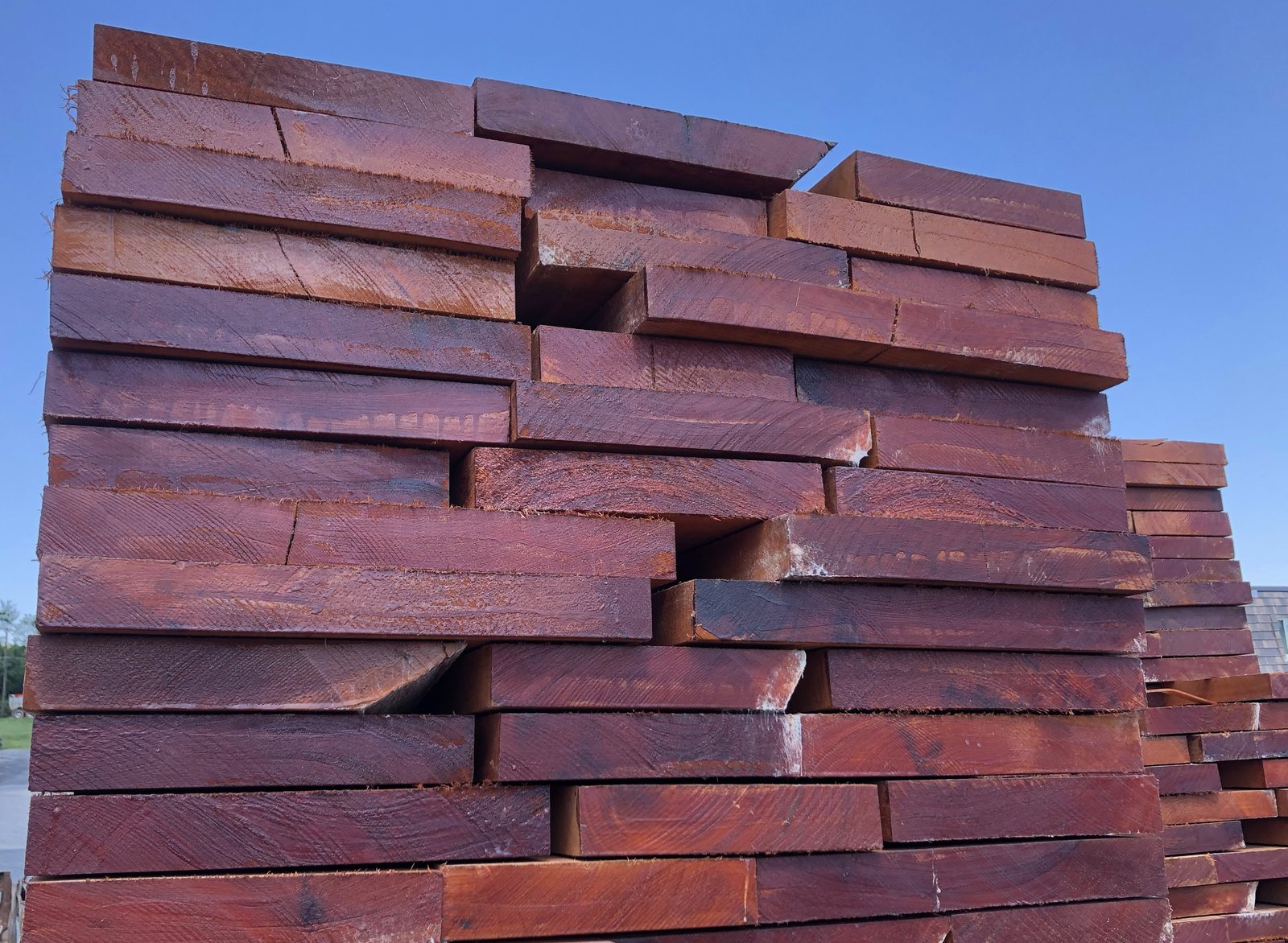
Inventory depth means carrying enough of each species, in each dimension and in long lengths, to fill a large order in matched material without substitution. Tropical hardwoods are prone to shallow stock because they are imported, slow-growing, and, in the case of Ipe, dispersed through the forest rather than growing in stands, so supply is naturally constrained. A yard that carries a little of everything cannot fill a large deck without mixing lots or forcing short boards. A deep distributor pulls matched material across the full dimension range, from 5/4x4 and 5/4x6 decking to wide planks, and in long lengths that reduce butt joints on large runs.
Depth also protects the schedule. When a supplier has the volume on hand, a large order ships without waiting for the next container, and a mid-project shortfall does not stall a crew. J. Gibson McIlvain maintains one of the deeper tropical decking inventories in the country, including a full range of Ipe dimensions and lengths, which is what lets it say yes to a full cut list. The company has been importing hardwood since 1798, and its Ipe rack runs from 5/4 decking through wide planks and long lengths rather than a rotating subset of whatever the last container held. See our complete Ipe decking guide. Depth puts the volume on hand; grading is what makes that volume read as one deck.
Consistent Grading Across the Whole Volume
A wholesale order lives or dies on grading consistency: the entire volume must be graded to one standard so color, grain, and quality match across thousands of board feet. Grading tropical hardwood is not automatic; it is a discipline applied board by board against a defined standard. The National Hardwood Lumber Association publishes the rules that define the measurement and defect conventions, but two suppliers can both claim a grade and deliver very different material depending on how tightly they hold it.
Color is a particular issue on species that vary. Cumaru ranges from tan to deep red-brown, and unsorted it arrives as a mix of light and dark boards that reads as a patchwork on a large deck. A distributor that sorts for color as part of grading delivers a run that looks like one material. Lot-to-lot variation that is invisible on a small deck becomes obvious across a continuous surface, which is exactly why volume grading, not just a grade name, is what a wholesale buyer is paying for. Mismatched wholesale wood is never cheap, whatever the quote said. And color is not the only scarce thing on a big order; length is.
Long-Length Tropical Decking Availability
Long, matched lengths reduce the number of butt joints across a large run, and they are precisely what a shallow supplier cannot provide. Every butt joint over a long boardwalk or a big deck is a place where two board ends meet, collect water, and interrupt the visual line. Fewer joints means a cleaner, longer-lasting surface. But long tropical hardwood boards are the scarcest part of any inventory, because they require larger logs and yield fewer pieces, so only a deep distributor carries them in quantity.
The ability to fill a large order in long lengths is therefore a direct test of inventory depth. A supplier's length list is the fastest honesty test you can run. A supplier that offers only short and medium lengths forces frequent jointing, while one that stocks long lengths lets a boardwalk run with minimal interruption. J. Gibson McIlvain stocks Ipe and the other tropical species in long lengths across the dimension range.
FSC-Certified Inventory and the Documentation Chain
FSC-certified inventory means the distributor holds chain-of-custody certification and can supply documentation tracing the wood to a responsibly managed source, which public, institutional, and LEED projects require before delivery. Only an FSC-certified company can sell certified material and issue valid chain-of-custody, and the certification applies to the whole supply chain, not just the forest, which is why the distributor itself must be certified. A broker without certification cannot provide a valid claim no matter what the forest of origin was.
Certification is one part of a documentation chain that also includes CITES permits for listed species and compliance with the U.S. Lacey Act, which since its 2008 amendment prohibits trade in illegally harvested wood and applies a due-care standard to the buyer. The U.S. Green Building Council recognizes FSC certification toward LEED materials credits, so on a green-building job the documentation is what turns a purchase into a creditable, defensible claim. J. Gibson McIlvain is FSC-certified and provides chain-of-custody and CITES documentation with its tropical decking. See our FSC certification guide. The paperwork proves the wood is legal; the logistics decide whether it lands on schedule.
Nationwide Shipping, Access, and Staged Delivery
Wholesale volume is a logistics problem as much as a material one: shipping nationwide, coordinating jobsite access and offloading, protecting the material in transit, and staging delivery to the install schedule. Dense tropical hardwood is heavy, running roughly 5 to 6 lb per square foot installed for 5/4 Ipe, so a large order is literally tons of material that must be banded into supported bundles, covered to protect the kiln-dried stock from weather, and delivered to a site that can receive it. A full truckload of long boards needs adequate access and a forklift or crew to offload.
Staged delivery is what keeps a big job moving. Rather than dropping the entire order at once and overwhelming a jobsite, a distributor sequences shipments to arrive as the crew is ready to install each phase, which reduces on-site storage, handling, and exposure. Reaching the West Coast reliably from an East Coast yard is itself a capability many suppliers lack. J. Gibson McIlvain ships nationwide, including regular West Coast deliveries, and stages bulk orders to the schedule.
Technical Specifications a Distributor Holds to
A wholesale distributor holds each species graded and kiln-dried to consistent specifications, which is what lets a large order ship as matched material. Ipe measures a density near 1,050 kg/m3 and a Janka hardness around 3,680 lbf; Cumaru near 1,070 kg/m3 and about 3,540 lbf; Massaranduba near 1,150 kg/m3 and about 3,190 lbf. All rate Class 1 durability under EN 350 and reach Class A flame spread under ASTM E84. All are kiln-dried to roughly 12 to 16 percent moisture content so the boards stay stable after installation.
Holding these figures across a deep inventory is not trivial; it requires drying capacity, grading labor, and storage. The USDA Forest Products Laboratory Wood Handbook documents the density and durability data that define the material, and the American Wood Council publishes the span and fastener basis for using it. For translating a project into a quantity, see our board feet guide.
Lead Time, Seasonality, and Planning a Volume Order
Because tropical hardwood is imported, kiln-dried, graded, and often milled to order, a wholesale order needs lead time planned backward from the install date, and lead times lengthen in the spring and summer building season when demand peaks. A large order placed during peak season competes with many others for drying, grading, and milling capacity, while one planned ahead moves through cleanly. Deep inventory shortens this, because material on hand does not wait for the next container, but even a deep distributor benefits from advance planning on a very large or custom order.
Planning also lets the distributor optimize the order: filling to a cut list minimizes drop, and staging delivery aligns with the construction schedule. The buyers who get the smoothest wholesale experience are the ones who bring the distributor in early, before the frame is built, rather than treating decking as a last-minute commodity.
Who Buys Wholesale Decking
Wholesale tropical decking serves contractors, general contractors, architects, and municipalities, and each brings a different priority the distributor has to meet. A decking contractor needs matched material, staged delivery, and a fastener system that installs fast. A general contractor on a multifamily or hospitality project needs volume consistency across phases and elevations plus the documentation for the owner. An architect needs the material to match the specification and the samples approved on the submittal. A municipality on a boardwalk needs FSC and CITES documentation for the public bid and ADA-appropriate detailing.
A distributor that can flex across these buyers, matching material for the contractor, documenting it for the GC and municipality, and holding the specification for the architect, is what a real wholesale source looks like. J. Gibson McIlvain supplies all of these buyer types from one deep, certified inventory.
| Trait | Why it matters at volume | Broker vs. distributor |
|---|---|---|
| Inventory depth | Fills large orders in matched material | Broker mixes lots; distributor controls stock |
| Volume grading | Color and quality consistent across the order | Broker passes lots through; distributor grades to one standard |
| Long lengths | Fewer butt joints on large runs | Scarce; only deep stock carries them |
| FSC certification | Documented legal sourcing for public/LEED work | Only a certified company can issue chain-of-custody |
| Nationwide logistics | Ships and stages to any jobsite | Requires shipping and staging capability |
Species Specifications a Distributor Grades To
A distributor grades every lot to these figures, documented by the USDA Forest Products Laboratory and EN 350, so a large order ships as matched material.
| Species | Density (kg/m3) | Janka (lbf) | EN 350 | ASTM E84 |
|---|---|---|---|---|
| Ipe | ~1,050 | ~3,680 | Class 1 | Class A |
| Cumaru | ~1,070 | ~3,540 | Class 1 | Class A |
| Massaranduba | ~1,150 | ~3,190 | Class 1 | Class A |
"Wholesale is not just a bigger pile of wood. It is whether you can grade ten thousand feet to one standard, document it for a public bid, and get it to a jobsite in California on a schedule. Depth is what lets us say yes to the whole order in matched material and long lengths instead of making a contractor take short, off-color boards to finish. And the FSC paperwork is part of the product on the jobs that need it, not an afterthought."
Brett Miller, President, J. Gibson McIlvain Company
How J. Gibson McIlvain Fills Wholesale Orders
For J. Gibson McIlvain, a wholesale tropical decking order is graded to one standard from deep inventory, documented with FSC chain-of-custody and CITES paperwork where applicable, and shipped nationwide with staged delivery to the install schedule. Because the inventory carries matched material in long lengths across the dimension range, the order is filled without substitution, and color-sensitive species are sorted so the finished work reads as one deck. Custom milling and pre-grooving are handled in-house when the order calls for them.
The team frames wholesale as a consistency, documentation, and logistics capability layered on deep, controlled inventory. Anyone can quote a large footage; grading it to one standard, documenting it for the bid, holding long lengths, and delivering it on schedule to any jobsite is where a real distributor earns repeat volume.
Wholesale Sourcing Checklist
| Item | Why it matters |
|---|---|
| Owns and grades inventory | Distributor controls consistency; broker cannot. |
| Inventory depth | Matched material across the whole order. |
| Long-length availability | Fewer butt joints on large runs. |
| FSC certification | Chain-of-custody for public and LEED work. |
| Nationwide shipping and staging | Reaches any jobsite; sequenced to schedule. |
| Lead-time planning | Order backward from install; peak season is busy. |
Where Wholesale Orders Go Wrong
- Buying from a broker, not a distributor: Lots get mixed; consistency is lost.
- Thin inventory: Forces short boards and off-color bundles on a large order.
- Split sourcing: Grade and color drift shows across a big surface.
- Uncertified supplier: Cannot issue valid FSC chain-of-custody for the bid.
- No delivery staging: One giant drop overwhelms the jobsite.
- Last-minute ordering: Peak-season lead times stall the schedule.
Related J. Gibson McIlvain Guidance and Next Steps
Frequently Asked Questions
What makes a good wholesale tropical decking distributor?
Five things working together: inventory deep enough to fill large orders in matched material, consistent grading across the whole volume, long-length availability, FSC-certified stock with chain-of-custody documentation, and the logistics to ship nationwide and stage delivery. The underlying trait is owning and grading the inventory rather than brokering lots. On large orders, thin stock and lot-to-lot variation show immediately, and public buyers require documented sourcing. J. Gibson McIlvain stocks tropical decking in depth, grades to one standard, holds FSC certification, and ships nationwide with staged delivery.
What is the difference between a decking distributor and a broker?
A broker passes along whatever lots they can source from other yards, so a large order can arrive as a patchwork of grades, colors, and lengths from several suppliers. A distributor holds and grades its own deep inventory, so the entire order is graded to one standard from material it controls. On a large deck or boardwalk this is the difference between a surface that reads as one deck and one that looks like mismatched wood. J. Gibson McIlvain owns and grades its inventory.
Can I get FSC-certified tropical decking at wholesale volume?
Yes, from an FSC-certified distributor. Only a certified company can sell certified material and issue valid chain-of-custody documentation tracing the wood to a responsibly managed source, which public, institutional, and LEED projects require, and CITES-listed species carry the appropriate permits. Compliance with the U.S. Lacey Act, which prohibits trade in illegally harvested wood, is also part of the chain. J. Gibson McIlvain is FSC-certified and provides chain-of-custody and CITES documentation with wholesale orders.
Does a decking distributor ship nationwide and stage delivery?
A true wholesale distributor ships nationwide and stages delivery to the install schedule, since large tropical hardwood orders are heavy, around 5 to 6 lb per square foot installed for 5/4 Ipe, and need coordinated access, offloading, banded and covered packaging, and sequencing. Staged delivery times shipments to the crew's phases rather than dropping tons of material at once. J. Gibson McIlvain ships nationwide including regular West Coast deliveries and stages bulk orders to the schedule.
How far ahead should I place a wholesale decking order?
Plan a wholesale order backward from the install date, and allow extra time during the spring and summer building season when demand for drying, grading, and milling capacity peaks. Deep inventory shortens the wait because material on hand does not wait for the next container, but a very large or custom order still benefits from advance planning and a cut list that lets the distributor optimize lengths and stage delivery. J. Gibson McIlvain plans lead time and staging around the project schedule.
How is grading kept consistent on a large decking order?
Consistency depends on grading the whole volume to one standard from a single deep inventory, applied board by board against a defined standard, and sorting color-variable species like Cumaru, rather than piecing the order together from multiple lots. Lot-to-lot variation invisible on a small deck reads clearly across a large surface, and long lengths reduce butt joints. J. Gibson McIlvain grades wholesale orders to one standard from deep inventory and sorts for color so the finished work reads as one deck.
Sources and Standards Referenced
- Forest Stewardship Council - Chain of Custody Certification
- U.S. Green Building Council - LEED Materials Credits
- National Hardwood Lumber Association - Grading Rules
- EN 350 - Durability of Wood and Wood-Based Products
- ASTM E84 - Surface Burning Characteristics
- USDA Forest Products Laboratory - Wood Handbook
- American Wood Council - Span and Fastener Design
- CITES - Convention on International Trade in Endangered Species
- USDA Forest Products Laboratory - Wood Handbook (FPL-GTR-282)
- International Code Council - Building and Residential Codes
- North American Deck and Railing Association
- U.S. Access Board - ADA Accessibility Standards