
Understanding the Two Oaks: Biology and Structure
The terms "White Oak" and "Red Oak" each refer to groups of species within the genus Quercus, not single species. White Oak (primarily Quercus alba) and Red Oak (primarily Quercus rubra) diverged evolutionarily millions of years ago, and their internal cell structures reflect fundamentally different survival strategies.
The critical distinction lies at the cellular level: tyloses. In White Oak, balloon-like growths called tyloses plug the vessel pores as heartwood forms, creating a waterproof barrier. Red Oak lacks these tyloses — its pores remain open channels from end to end. This single biological difference drives nearly every practical distinction between the species for woodworking applications.
"In 226 years of supplying both species, the most common mistake we see is specifying Red Oak where moisture exposure exists. A single season of weather will destroy Red Oak trim that White Oak would shrug off for decades. Know your application before you choose your species."
— Camden Zacker, CFO, J. Gibson McIlvain Company
You can demonstrate this difference with a simple test: cut a short piece of each species, place one end in water, and blow into the other. Air will pass freely through Red Oak (open pores) but will not pass through White Oak (sealed by tyloses). This is why White Oak has been the exclusive choice for whiskey barrels, wine casks, and boat construction for centuries — it is the only domestic hardwood that is naturally liquid-tight.
Complete Species Comparison
| Property | White Oak (Quercus alba) | Red Oak (Quercus rubra) |
|---|---|---|
| Janka Hardness | 1,360 lbf | 1,290 lbf |
| Density (air-dried) | 47 lbs/ft³ | 44 lbs/ft³ |
| Pore Structure | Closed (tyloses present) — waterproof | Open (no tyloses) — absorbs moisture |
| Rot Resistance | Moderate to good — suitable for exterior | Poor — interior use only |
| Color (heartwood) | Golden-brown to olive, warm undertones | Pinkish-red to salmon, cooler undertones |
| Grain Pattern | Tighter, longer rays, more subtle | Broader, shorter rays, more pronounced |
| Quarter-sawn Figure | Dramatic medullary ray fleck (highly prized) | Less pronounced ray fleck |
| Stainability | Can be blotchy; responds to fuming/reactive stains | Excellent — accepts stain evenly |
| Workability | Good; slightly harder on tooling | Excellent; machines cleanly |
| Cost (FAS grade, per BF) | $6.00-$9.00 | $4.00-$7.00 |
| Availability | Good; tighter supply than Red Oak | Excellent; most abundant US hardwood |
| Sustainability | FSC-certified available; well-managed domestic supply | FSC-certified available; abundant and fast-growing |
| Best Applications | Clear-finished trim, exterior millwork, boat building, whiskey barrels, high-end cabinetry | Painted cabinetry, stained trim, flooring, furniture, budget millwork packages |
Appearance and Grain: What Designers Need to Know
The aesthetic differences between White Oak and Red Oak are significant and often drive the species selection for visible interior applications.
White Oak Appearance
White Oak heartwood presents as a warm golden-brown to olive-brown, with undertones that shift toward amber and honey in natural light. The grain is tighter and more uniform than Red Oak, with longer medullary rays that produce stunning figure when quarter-sawn. Quarter-sawn White Oak reveals the characteristic "ray fleck" — dramatic, reflective patches that have made it the signature wood of Arts and Crafts, Mission, and contemporary design movements.
White Oak's neutral warm tones have driven its dominance in modern interior design since approximately 2015. The species pairs naturally with white, gray, and earth-toned palettes without the pink/red cast that dates many Red Oak interiors from the 1990s-2000s.
Red Oak Appearance
Red Oak heartwood runs from pinkish-tan to reddish-brown, with a distinctive salmon or coral undertone. The grain is open, bold, and pronounced — with shorter, less dramatic medullary rays than White Oak. The open pore texture is visible and tactile, giving Red Oak a more rustic character when clear-finished.
Red Oak's strong grain pattern makes it an excellent substrate for painted cabinetry and trim — the open pores grip primer effectively, and the species machines to crisp profiles. For painted applications, Red Oak's lower cost delivers identical visual results to White Oak once painted.
Rot Resistance and Moisture Performance
This is the decisive factor for any application with potential moisture exposure — and where many specification errors occur.
White Oak carries a moderate to good natural decay resistance rating. The tyloses that seal its pores prevent water from wicking into the wood, giving it documented performance in exterior and marine applications spanning centuries. White Oak was the exclusive timber for European and American shipbuilding from the 1600s through the Age of Sail, and remains the standard for wooden boat frames, keels, and planking today.
Red Oak has poor decay resistance. Its open pores act as capillary channels that draw moisture deep into the wood structure, creating ideal conditions for fungal colonization. Red Oak should never be specified for:
- Exterior trim, siding, or millwork
- Bathroom vanities or any bath-adjacent cabinetry without full sealed finish
- Kitchen applications near sinks without comprehensive sealing
- Any ground-contact or weather-exposed application
- Wine or spirits barrels (liquid will seep through)
At Camden Zacker, we have seen Red Oak exterior trim projects fail within 2-3 years — wood that appeared sound but had rotted from the inside out through its open pore channels. The cost of replacement always exceeds the premium for specifying White Oak correctly from the start.
Staining, Finishing, and Color Matching
Finishing behavior is where these species diverge most in day-to-day shop practice.
Red Oak: The Staining Champion
Red Oak's open pores absorb penetrating stains deeply and evenly, making it the preferred substrate when a specific stain color is required. Whether matching an existing installation, achieving a dark walnut tone, or applying ebony stain, Red Oak delivers consistent results with standard techniques. The open pores also create excellent mechanical adhesion for film-building finishes (lacquer, polyurethane, conversion varnish).
White Oak: Reactive Finishing Excellence
White Oak's closed pores can create challenges with penetrating stains — the tyloses block absorption, sometimes producing blotchy or uneven color. However, White Oak excels with alternative finishing methods that have become dominant in contemporary design:
- Fuming (ammonia exposure): White Oak's high tannin content reacts with ammonia vapor to produce deep brown, gray, and chocolate tones throughout the wood — not just on the surface. This technique, used by Gustav Stickley and revived by modern makers, produces colors impossible to achieve with stain.
- Reactive stains (iron acetate, tannin-based): Chemical reactions with White Oak's natural tannins create authentic aged and weathered appearances.
- Natural oil finishes: White Oak's warm golden tones are enhanced beautifully by hardwax oils (Rubio Monocoat, Osmo) that have become the standard finish for modern White Oak interiors.
- Ceruse/limed finish: White paste forced into White Oak's pores creates the popular whitewashed European aesthetic — this technique does not work on Red Oak because the open pores do not retain the filler properly.
Cost Analysis and Availability
Pricing reflects supply dynamics, demand trends, and the fundamental abundance differences between the species.
| Thickness | White Oak (per BF) | Red Oak (per BF) | Premium |
|---|---|---|---|
| 4/4 (1") | $6.00-$7.50 | $4.00-$5.50 | ~40% |
| 5/4 (1-1/4") | $6.50-$8.00 | $4.50-$6.00 | ~35% |
| 6/4 (1-1/2") | $7.00-$8.50 | $5.00-$6.50 | ~35% |
| 8/4 (2") | $7.50-$9.00 | $5.50-$7.00 | ~30% |
| 12/4 (3") | $8.50-$10.50 | $6.50-$8.00 | ~30% |
| 16/4 (4") | $9.50-$12.00 | $7.00-$9.00 | ~30% |
| Quarter-sawn (4/4) | $9.00-$13.00 | $6.00-$8.50 | ~50% |
Supply dynamics in 2026: White Oak demand has surged since 2018, driven by the bourbon industry's expansion (which consumes approximately 50% of the White Oak harvest for barrel production) and the interior design shift toward White Oak's warm, neutral aesthetic. This increased demand, combined with White Oak's slower growth rate compared to Red Oak, has tightened supply and pushed prices upward.
Red Oak remains the most abundant hardwood in the eastern United States, with ample sustainable supply. Its lower price point makes it the rational choice for large-scale trim packages, painted cabinetry, and projects where the wood will not be visible in its natural state.
Camden Zacker maintains standing inventory of both species at our White Marsh, Maryland warehouse — FAS grade, kiln-dried to 6-8% MC, in all standard thicknesses from 4/4 through 16/4. Our container-direct importing relationships and 226 years of supplier partnerships ensure consistent availability even when the broader market is tight.
Applications: Choosing the Right Species for Your Project
Choose White Oak When:
- Clear natural finish is specified: White Oak's golden-brown tones and subtle grain align with contemporary design trends without the pink/red cast of Red Oak.
- Any moisture exposure exists: Bathroom vanities, kitchen islands, exterior trim, entry doors, window sills, or any application within splash zones.
- Quarter-sawn figure is desired: The dramatic ray fleck pattern is unique to White Oak and cannot be replicated in Red Oak.
- Fumed or reactive finishes are planned: White Oak's high tannin content reacts with ammonia and iron-based stains to produce unique colors.
- Maximum durability is required: Slightly harder (1,360 vs. 1,290 Janka) with superior decay resistance.
- Wine/spirits contact: Wine racks, bar tops, cellar millwork, or any liquid-adjacent application.
Choose Red Oak When:
- The wood will be painted: Red Oak costs less and performs identically under paint. Its open pores grip primer better than White Oak's sealed surface.
- Penetrating stain to a specific color: Red Oak absorbs stain evenly without blotching, making color matching simpler and more predictable.
- Budget is the primary driver: For large trim packages (whole-house baseboards, casings, crown moulding), the 25-40% savings on Red Oak is substantial.
- Matching existing Red Oak installations: Many homes built 1985-2010 feature Red Oak trim and flooring. Matching requires the same species.
- The application is strictly interior and dry: Living rooms, bedrooms, dining rooms, hallways — any space without moisture exposure.
McIlvain's In-House Milling Advantage
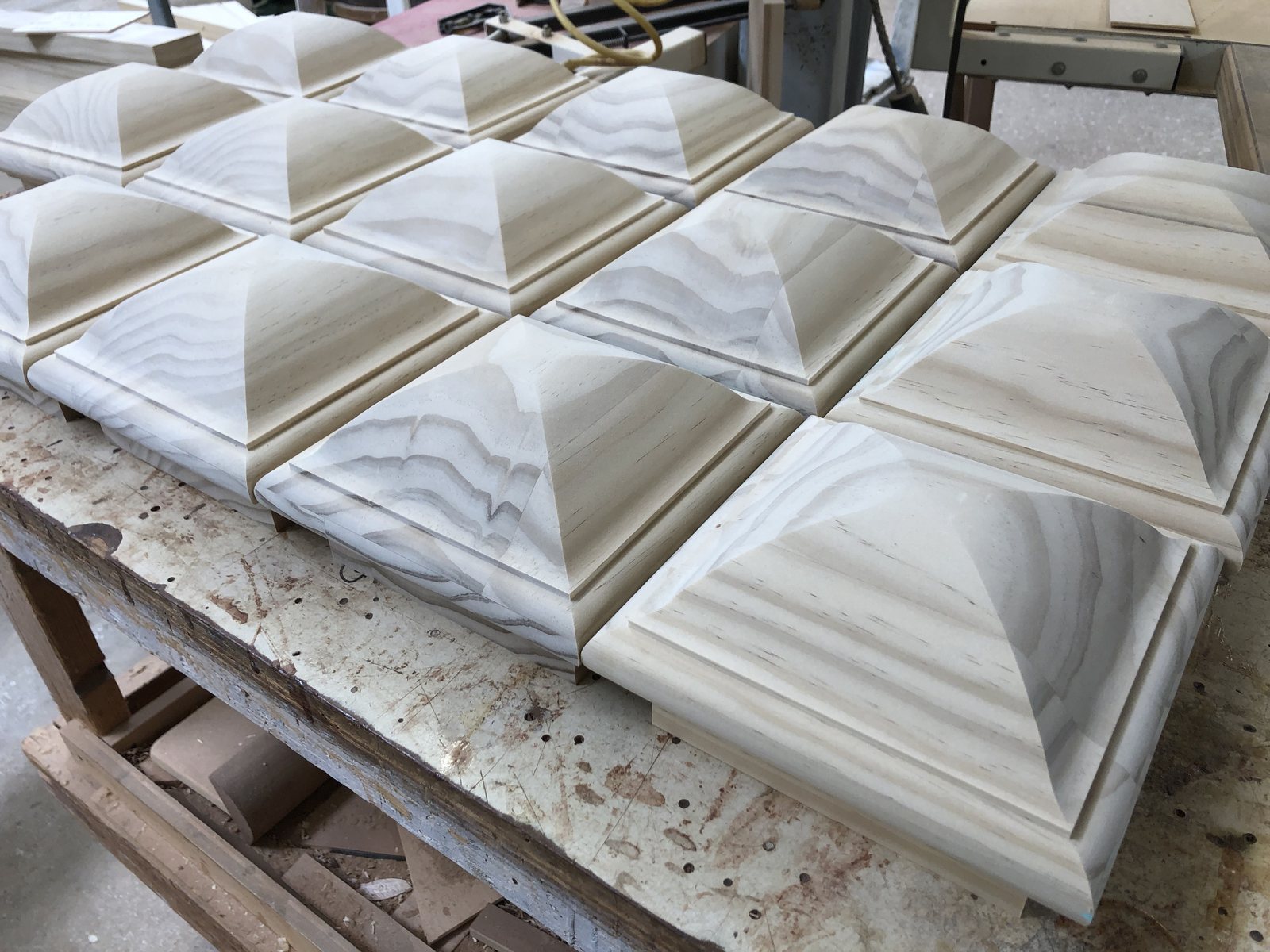
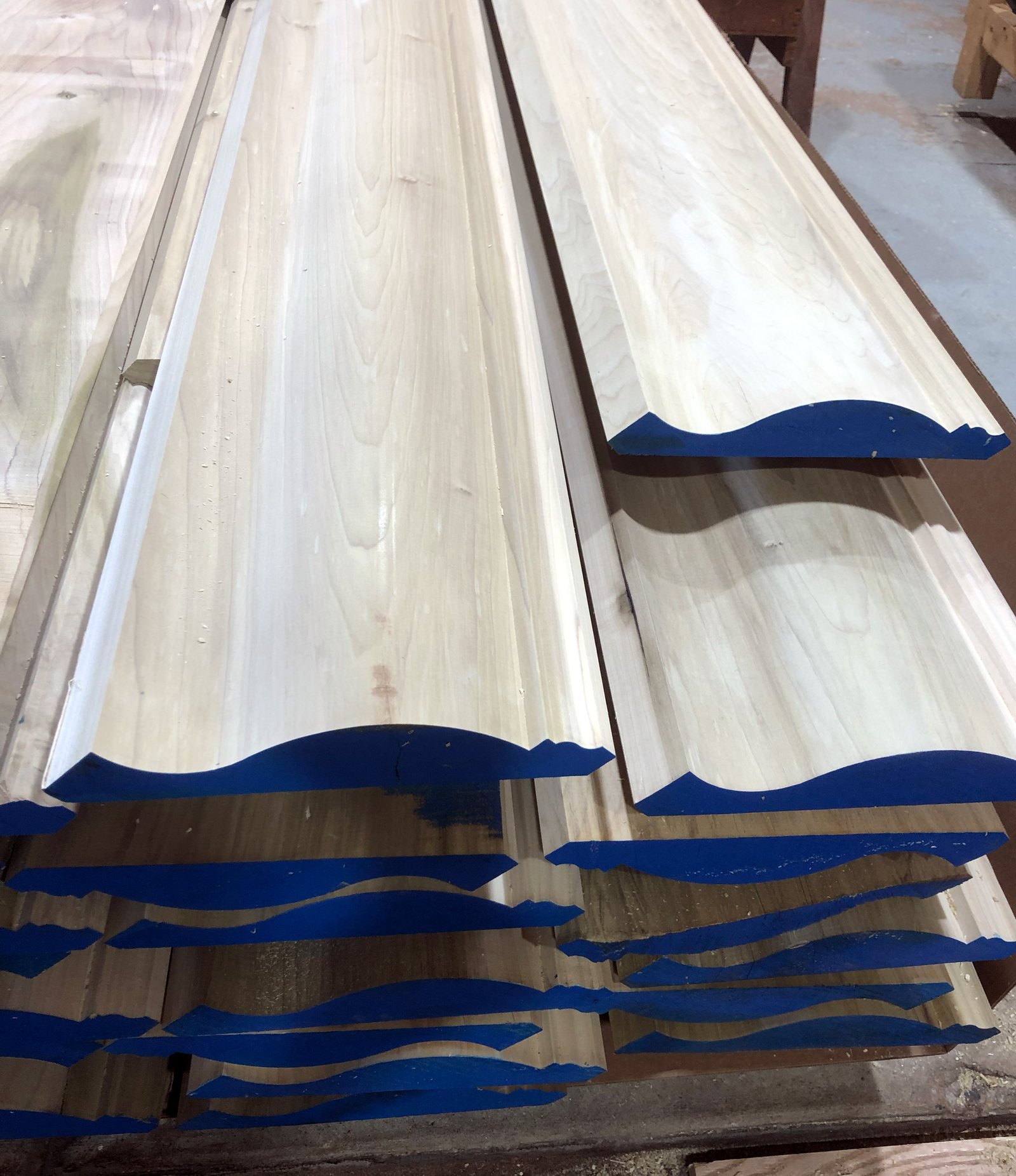
Camden Zacker operates a complete in-house milling facility at our White Marsh, MD location. This means we can supply both White Oak and Red Oak not only as rough lumber but also as:
- S4S (surfaced four sides) to your specified dimensions
- Custom moulding profiles matched to existing trim
- Tongue-and-groove paneling
- Edge-glued panels for cabinetry
- Stair treads, risers, and handrail components
- Custom flooring profiles
Our in-house milling eliminates the lead time and coordination of sending lumber to a separate shop — and ensures the same quality oversight from raw material through finished profile. McIlvain can ship milled-to-order oak components nationally: our internal fleet covers East Coast and Midwest routes, while third-party carriers support West Coast, Hawaii, and other national job sites.
Frequently Asked Questions
What is the main difference between White Oak and Red Oak?
The primary difference is pore structure. White Oak has closed (tyloses-filled) pores that make it waterproof and rot-resistant, while Red Oak has open pores that absorb moisture freely. This is why White Oak is used for whiskey barrels, boat building, and exterior applications, while Red Oak is limited to interior use. Visually, White Oak has warm golden-brown tones with subtle grain, while Red Oak has pinkish-red tones with bolder, more pronounced grain. White Oak is slightly harder (1,360 vs. 1,290 Janka) and costs 25-40% more than Red Oak in comparable grades.
Is White Oak harder than Red Oak?
Yes, White Oak is slightly harder than Red Oak. White Oak has a Janka hardness of 1,360 lbf compared to Red Oak's 1,290 lbf — a difference of about 5.4%. In practical terms, both species perform well for flooring, trim, and cabinetry, and the hardness difference alone is rarely the deciding factor. Both species are significantly harder than popular alternatives like Poplar (540 lbf) or Soft Maple (950 lbf). The more meaningful differences between the species are pore structure, moisture resistance, and color/grain character.
Can Red Oak be used outdoors?
Red Oak is not recommended for outdoor use under any circumstances. Its open pore structure (lacking tyloses) allows water to penetrate deep into the wood through capillary action, leading to rapid rot, fungal colonization, and structural failure — often within 2-3 years of exterior exposure. Even with exterior-grade finishes, water eventually reaches the open pores through end grain, joints, and finish failures. White Oak, with its closed pores and natural tyloses, is the appropriate choice for any moisture-exposed application. Camden Zacker stocks White Oak specifically for exterior trim, boat building, and weather-exposed millwork projects.
Which oak species stains better?
Red Oak accepts penetrating stain more evenly and predictably than White Oak. Its open pore structure allows stain to penetrate uniformly across the board face, making it the easier species for achieving specific stain colors. White Oak's closed pores and tyloses can block stain absorption, sometimes producing uneven or blotchy results with standard penetrating stains. However, White Oak responds exceptionally well to fuming (ammonia exposure), reactive stains (iron acetate), and natural oil finishes that enhance its golden-brown tones. For dark stain applications requiring predictable, uniform color, Red Oak is generally the better choice. For natural, fumed, or oil-finished appearances, White Oak is superior.
What thickness does McIlvain stock White Oak and Red Oak?
Camden Zacker stocks both White Oak and Red Oak in FAS grade from 4/4 (1 inch nominal, approximately 13/16" surfaced) through 16/4 (4 inches nominal) at our White Marsh, Maryland warehouse. Standard thicknesses include 4/4, 5/4, 6/4, 8/4, 10/4, 12/4, and 16/4. All stock is kiln-dried to 6-8% moisture content for interior use. We also offer quarter-sawn White Oak in 4/4 and 8/4 from regular inventory. Our in-house milling operation can surface, profile, and dimension either species to your exact specifications for immediate delivery via our own fleet.
Sources and Standards Referenced
- USDA Forest Products Laboratory — Wood Handbook: Wood as an Engineering Material (FPL-GTR-190)
- National Hardwood Lumber Association (NHLA) — Rules for the Measurement and Inspection of Hardwood and Cypress
- Hoadley, R. Bruce. Understanding Wood: A Craftsman's Guide to Wood Technology. Taunton Press.
- Forest Stewardship Council (FSC) Chain of Custody Standard, FSC-STD-40-004