When a Match Is Off the Table
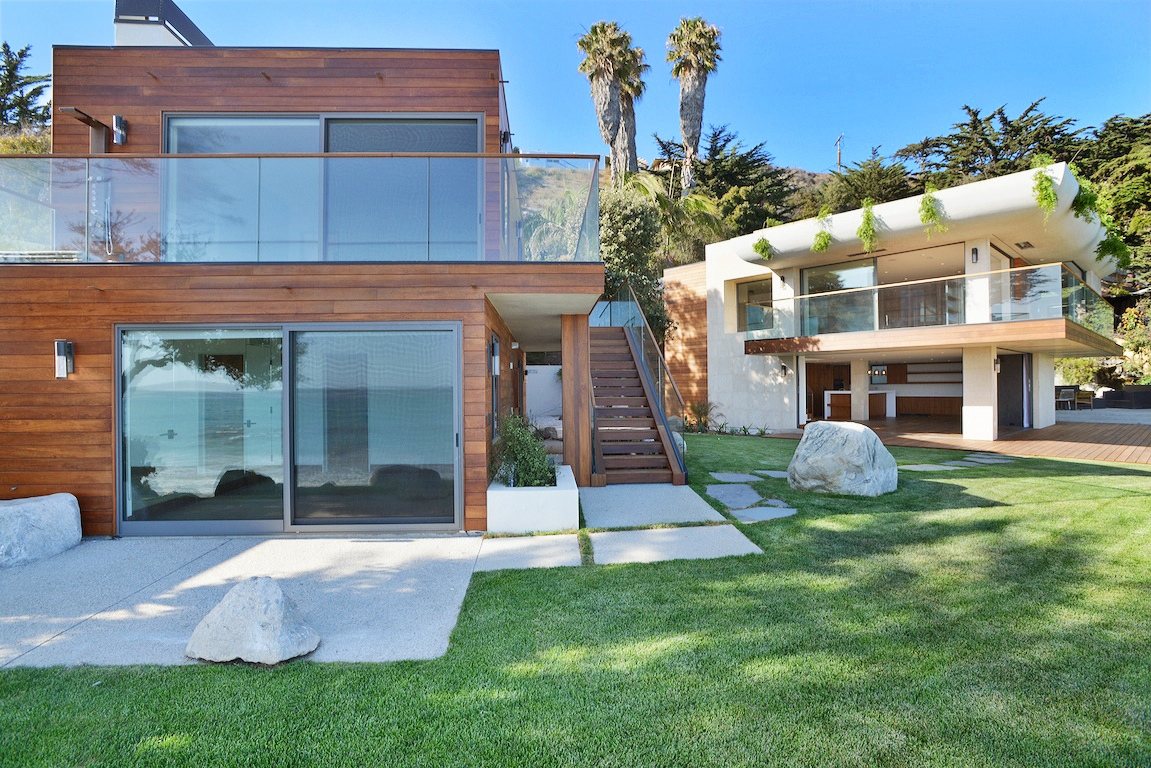
A finish match fails for reasons sitting inside the old woodwork itself, not in the skill of the shop asked to copy it. Thirty years of ultraviolet light. A coating chemistry that left production. A grade of stock that no longer arrives at that width. None of it comes back by spraying harder or adding one more toner pass.
The useful question is not how close a sample can get. It is what the renovation specifies once close is as good as close gets. That decision belongs at the front of the job, before the millwork is ordered, because the answer changes the species, the profile, the finish schedule and where the new work is allowed to stop.
ICD, the architectural millwork division of J. Gibson McIlvain, builds true custom work planned around a specific space, so the geometry of a room stays reproducible even when its color has moved out of reach. A full millwork shop runs on site at the Maryland lumber yard for linear trimwork and cladding, and ICD handles the custom side off site. One order carries both, which matters when half a renovation is running trim and the other half is a cabinet that has to die into a plaster reveal.
What Actually Changed in the Old Woodwork
Three separate things age in a finished piece of millwork, and only one of them is the coating. The wood itself shifts color under light. Cherry darkens hard in its first year and keeps going. White Oak ambers. Sapele leaves a bright red and settles into a quieter brown. That change lives in the fiber, not on top of it, and no new board starts where an old board has arrived.
The coating ages on its own schedule. Oil based varnishes and shellac yellow as they oxidize, and the yellowing is not uniform across a room, because a casing beside a south window has taken a different dose than the same casing in a hallway. Some early dyes fade instead of darkening, which means an old surface can read both warmer and weaker than the film ever was when it was new. The Forest Products Laboratory Wood Handbook documents the photochemical degradation of surface fiber and why exposed wood keeps moving after the coating has stopped.
Then there is the history of the surface. Wax buildup, cleaner residue, hand oil at a rail, dirt packed into open pores. A finisher who copies all of that onto crisp new millwork gets something that reads as dirty rather than aged, because the dirt has no reason to be there yet.
Separating the three takes a test window. Sand a small patch on the back or the hidden end of a removed piece. If the wood under the film sits near the color of new stock, the problem is a coating and it is solvable. If the fiber underneath has gone deep and even, that color is not returning on new material at any price of effort.
Species Substitution When the Original Stock Is Gone
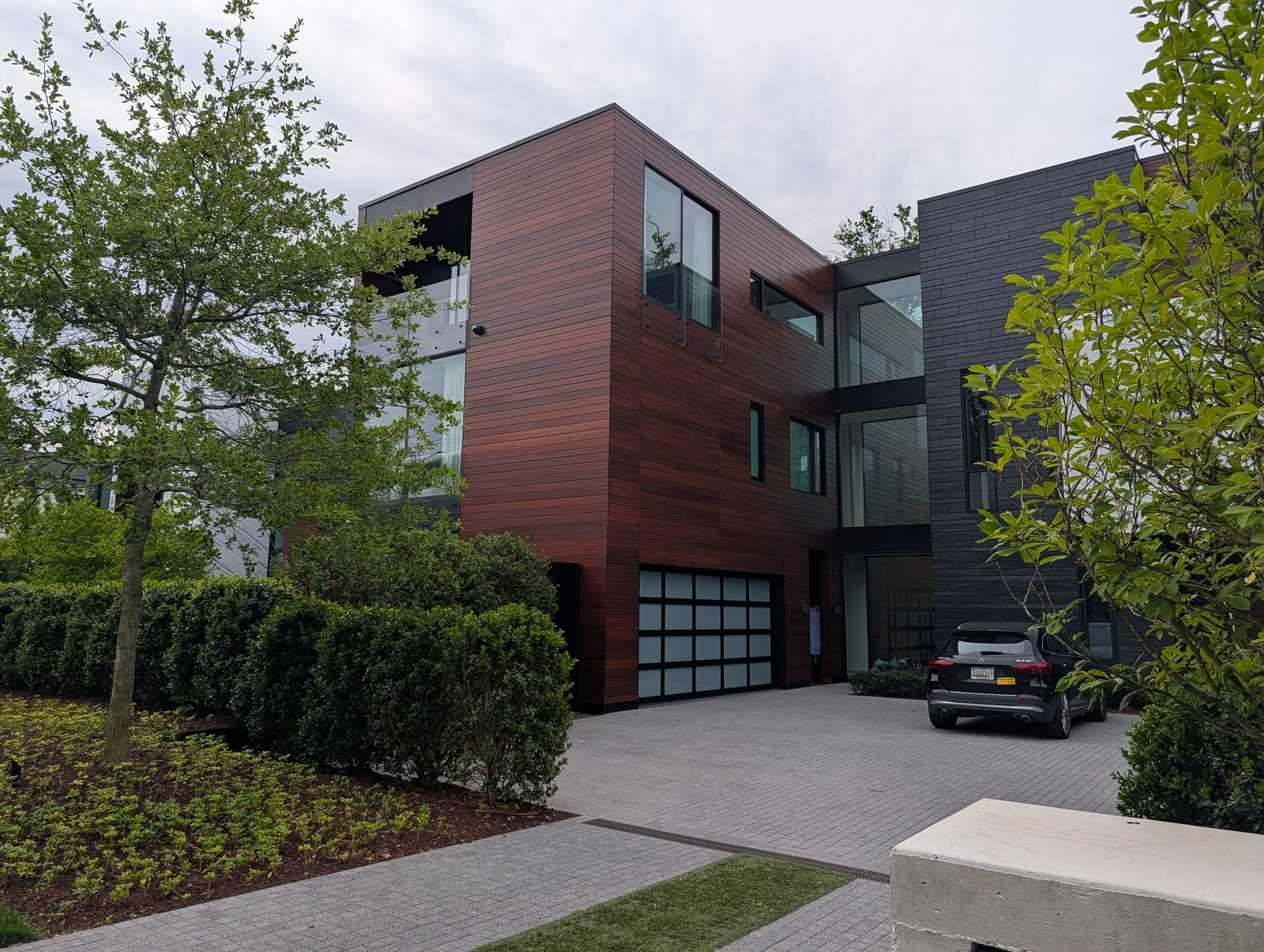
When the original species is no longer obtainable in the width, length or grade the old work used, the substitution question has to be answered before the finish question. A finish schedule built on the wrong substrate will fight the matcher for the whole job.
The millwork palette runs Sapele, Iroko, Afrormosia, Teak and Utile. Sapele mills clean, sits near 1,410 lbf on the Janka scale and holds an interlocked ribbon figure on the quarter that quartersawn Genuine Mahogany work often turns out to have been. Utile sits closer to Genuine Mahogany in pore structure and color, which makes it the quieter substitute when the original was a plain, open grained mahogany casing. Iroko and Afrormosia carry weight and color for heavier sections. Teak goes where the original had an oiled, low sheen presence and the client wants that back.
Genuine Mahogany itself sits around 800 lbf and machines beautifully, but it no longer shows up in the widths and lengths an 1890s house consumed without thinking. Where a listed species is involved, documentation and chain of custody travel with the material, and that paperwork has to be lined up before a schedule depends on the species arriving.
J. Gibson McIlvain holds over seven million board feet of exotic and domestic lumber at its Maryland yard, which is what makes lot matching possible on a renovation that will not be finished in one push. Pulling casing, stool, apron and a pair of cabinet doors from related stock beats pulling them from four separate purchases months apart. Grain and color inside a single species vary enough that a bad lot split shows up in a finished room even when the finish schedule is identical.
Sawing pattern matters as much as species. Quartersawn and rift stock moves less across its width than plainsawn, which is why it gets specified where a painted or panelized surface has to stay flat next to a hundred year old panel that has already done its moving. Interior millwork is milled to an in-service moisture content near 6 to 8 percent, and new work delivered wet will telegraph through any finish once it dries in place.
Profile Matching Never Has to Compromise
Geometry is fully reproducible even when color is not, and geometry is what a room reads from across itself. Standing at a doorway, an occupant does not resolve a two point color delta. They resolve the shadow line under a crown, the depth of a bead, the reveal at a plinth.
J. Gibson McIlvain keeps a moulding profile library holding thousands of ground knives and grinds new knives every week. A returned length of original casing goes on the floor, gets traced, and the knife is ground to it. Difficult historical restoration profiles and contemporary profiles both get the same treatment, because the grinder does not care how old the drawing is.
ICD runs the same discipline into radius trimwork and radius millwork, where an arched opening in the original part of a house has to be repeated in an addition. A straight profile wrapped around a curve is not the same part, and the springing point where the radius meets the straight run is where a sloppy job announces itself. Details on the profile side of the operation are collected at ICD trim profiles.
Getting the profile exactly right while accepting a color drift is a legitimate and frequently chosen outcome. The eye forgives a half shade. It does not forgive a crown that is three sixteenths shallower than the crown it dies into.
Where the New Work Should Stop
A mismatch stops being a defect the moment it lands on an architectural break instead of halfway down a wall. This is the cheapest correction available on any renovation and it costs nothing but drawing time.
Inside corners, door openings, a change of wall plane, a pilaster, a chair rail return, the underside of a beam. Any of these gives the eye a reason to reset. A casing that changes color at a jamb looks like two rooms. The same casing changing color in the middle of a straight run looks like a repair that went wrong.
Ceilings get their own boundary element, and box beams do that job well. ICD builds box beams with a real joinery choice behind them. Butt joints give the most minimal profile, the fastest turnaround and the easiest on-site assembly, but they leave visible seams and visible end grain and they are the weakest of the three. Dado joints are strong and still assemble easily on site, though seams and end grain still show. Lock miter joints show no visible seams and are the strongest, which is what a beam wants when it is acting as the line between an original ceiling and a new one.
"Half the finish matching problems we get called about are really layout problems. If the new work terminates at a corner instead of running past it, the color conversation gets a lot shorter."
Norm Moton, Director of Sales, J. Gibson McIlvain
Deliberate Contrast as a Specification
The most durable answer to an unmatchable finish is usually to stop matching and specify the new work as new. Preservation practice has pointed this direction for decades. The Secretary of the Interior's Standards ask that new work be compatible with the historic fabric and differentiated from it rather than passed off as original, guidance laid out across the National Park Service Preservation Briefs.
That principle travels well outside historic districts. An addition finished a shade darker, or painted where the original is clear coated, stops competing with the old work and starts framing it. A failed match is noticed every day for twenty years. An intentional difference gets read once and then disappears.
Kitchens are where this pays off hardest, since the original cabinetry is usually the least matchable object in the house and the most looked at. ICD builds kitchen cabinetry engineered around how a space is actually used rather than assembled from standard modules, which is what produces filler strips and mismatched face frames in the first place. Specialty drawers, storage worked around plumbing and mechanical obstacles, and construction tailored to the weight of the countertop material being carried all come out of the same drawing. The case work side of that is at ICD cabinets and case work.
Millwork standards give a specifier vocabulary for holding the new work to a grade even when it is deliberately different from the old, and the grade definitions published by the Architectural Woodwork Institute are the usual reference point for that language.
Paint Is the Equalizer and Priming Decides It
Paint erases a species mismatch completely, but only when the substrate and the primer are chosen for it. Painting over the problem is not a retreat. On a house where the original trim was painted anyway, it is the correct specification, and the whole color matching exercise collapses into a paint chip.
Open-grained and oily species absorb a great deal of finish, which is why a bare board and a primed board take a topcoat so differently. A primer coat evens out the eventual painted surface instead of letting the pores drink the color unevenly. Sanding or buffing after priming knocks back grain raising while keeping moulded detail crisp, and that step is the difference between a bead that stays sharp and one that goes soft under three coats.
J. Gibson McIlvain primes wood in three levels, in both oil based and water based systems, and exterior primed trim carries a fungicide additive. Trim that arrives already primed also arrives stable, which matters more on a renovation than on new construction, because the new material is being married to old material that reached equilibrium a long time ago. The service side of that work sits at J. Gibson McIlvain millwork services.
For painted exterior trim, Sapele is the better call than Genuine Mahogany. It holds paint better and comes in a wider range of sizes and longer lengths, which keeps splice count down on a long run. Sapele is not milled 1x8 for exterior use, since that width is too wide to stay stable outdoors. Cupping, when it shows up, is driven by installation and back ventilation rather than by species, a point the moisture control fundamentals at Building Science Corporation make in more detail.
Exterior Additions Play by Different Rules
Outside, the target moisture content, the coating and the species list all change, and an exterior match ages away from the specifier faster than any interior one. Exterior millwork is milled near 12 to 16 percent rather than the 6 to 8 percent an interior part gets. New exterior trim also has no chance of matching twenty year old exterior trim on day one. The realistic plan is to let the new catch up and to choose material that weathers in the same direction.
Cedar remains a legitimate default for exterior trim and shutters, and the grade distinction does the real work. CVG, clear vertical grain, gives a tight uniform face that takes coating evenly. STK, select tight knot, gives a knotted character face for work where that look is wanted. They are different products for different elevations, not better and worse.
Modified woods are the other answer. Thermory and Abodo Vulcan are both carried, along with Accoya, which runs around 1,600 lbf with acetylation giving dramatically reduced shrinkage and swelling. All of these top out around 16 ft, most sold on metric lengths just under 16 ft, because of kiln size. Thermally modified Ash is not available wider than 8 inches, so a wide exterior board in a modified product means Accoya or Abodo Vulcan. Warranties exist on modified products only. There is no warranty on solid unmodified wood, and there cannot be, since an organic material responding to its environment will keep responding.
The tropical decking species, Ipe (Tabebuia spp), Cumaru, Garapa, Jatoba and Red Balau, come up often in these conversations because a homeowner has a deck in one of them and wants new trim to match it. A millwork shop reaches for Sapele, Iroko, Afrormosia, Teak or Utile instead. Those decking species are extremely hard and carry high oil content, which makes them difficult to glue, and glued assemblies are most of what a millwork shop produces.
Sheen and Texture Carry More Than Color
A sheen mismatch stays visible from across a room at a distance where a color mismatch has already disappeared. Gloss reflects the window. Two adjacent surfaces at different gloss levels read as different materials even when an instrument says the color is identical.
Old millwork is usually rubbed down. Decades of cleaning have polished the high points of a profile and left the quirks and coves duller, which produces a gradient across a single piece that no spray gun reproduces in one pass. Matching that takes a deliberate knock back on the flats after the topcoat has cured, done by hand.
Pore texture does the same thing. A filled and level surface and an open pore surface reflect differently regardless of color, so a matcher working on Sapele against an original in a coarser pored species has to decide whether to fill the pores or let them read. Sanding grit consistency across the whole new run matters too, since a section finished at a finer grit accepts less stain and lands lighter than its neighbor.
Weighing the Ways Out Side by Side
Five fallbacks cover almost every unmatchable finish, and they differ mainly in how much of the existing work they disturb. The right one is set by how much original material is staying, how visible the junction is, and whether the house is under any historic review.
| Strategy | Best suited to | What the shop produces | Where it breaks down |
|---|---|---|---|
| Substitute species, finish new work only | Additions with a clean break at a wall plane or opening | Milled parts in a substitute species, sample panels for approval | Junctions in the middle of an open run, where the eye compares directly |
| Refinish old and new together | Single rooms where the original coating is failing anyway | Unfinished or lightly sealed parts for a site finisher to take from there | Occupied houses, and original surfaces worth preserving as they are |
| Paint the whole affected zone | Houses where the trim was painted historically | Primed trim, primed cladding, paint grade custom parts | Rooms where clear finished original work is the feature |
| Differentiate on purpose | Historic districts and additions meant to read as additions | Custom work in a chosen species and finish direction | Clients who asked for seamless and will not hear otherwise |
| Match the profile, accept color drift | Long trim runs and radius work where geometry dominates | Knife ground to the original profile, straight and curved stock | Flat panel faces with no profile to carry the eye |
Every one of these leaves work in the field. J. Gibson McIlvain supplies and mills. It does not install, so the installer owns fitting, scribing, back ventilation on exterior work and any final touch up at the junction. Knowing that split at the specification stage keeps the site finisher's scope honest instead of leaving it to be discovered at delivery.
J. Gibson McIlvain ships nationwide and delivers to California regularly, and finished millwork can be held in storage for inventory control when a renovation runs in phases rather than arriving all at once. Holding the later phases to the same specification as the first is easier when the knife, the lot and the finish schedule are all still on file.
How J. Gibson McIlvain Would Specify This
Specify the substrate and the boundary first, and let the finish schedule be the last decision rather than the first. A renovation that starts with a color chip and works backward toward material ends up asking a species to do something it was never going to do.
Send a physical piece. A length of removed casing, a cabinet door, a cut off from behind a radiator, anything carrying both the finished face and a hidden face. A photograph cannot carry sheen or pore texture, and the hidden face is what tells a finisher whether the color problem lives in the coating or in the fiber. J. Gibson McIlvain grinds a knife to that piece and returns sample panels on the actual substrate that will be used, finished under the schedule being proposed.
Name the break line on the drawing. Decide where the new work terminates before anyone argues about color, and put the addition's boundary on an inside corner, a jamb or a beam. Then pick the species from the millwork palette that gets closest on pore structure rather than closest on color, since color is adjustable and pore structure is not.
Order the whole affected zone as one release where the budget allows. J. Gibson McIlvain mills the linear trimwork and primes it in the specified level and system, ICD builds the custom cabinets, radius work, box beams, shutters and doors to the same drawing set, and both come off the same order so the lot and the schedule stay aligned. Working process detail sits at the ICD working process page.
Start the conversation with a sample in hand and a floor plan showing where old meets new. Call J. Gibson McIlvain at 800-638-9100 or reach the millwork group through mcilvain.com to get a knife ground and sample panels moving before the trim package is released.
Frequently Asked Questions
How can I tell whether the finish is unmatchable before I order any millwork?
Remove one piece and sand a small test window on its hidden face or back edge. If the wood under the coating is close to the color of fresh stock, the aged look lives in the film and a finisher can build it back on new material. If the fiber itself has darkened evenly through the surface layer, that color came from decades of light exposure and no schedule reproduces it on new wood. Do this test before the species is chosen, because the result decides whether you are matching a coating or designing a transition.
The original trim was Genuine Mahogany. What should the new work be?
Utile is the closest substitute on pore structure and color, and Sapele is the better structural and painted choice at roughly 1,410 lbf against 800 lbf for Genuine Mahogany. Genuine Mahogany no longer arrives in the widths and lengths a nineteenth century house used freely, and where a listed species is involved documentation and chain of custody travel with the material. Match pore structure first. Color is adjustable in the finish room, pore structure is not.
Can the original woodwork be refinished to match the new instead of the reverse?
Yes, and on a single room where the old coating is already failing it is often the cleanest answer. Stripping and refinishing old and new together under one schedule removes the matching problem entirely. It needs an empty or partially empty room, and it is the wrong call where the original surface has value as it stands or where a historic review board is involved. J. Gibson McIlvain can supply the new parts unfinished or lightly sealed so a site finisher takes everything from the same starting point.
Will an exterior addition ever match the existing weathered trim?
Not on the day it goes up. Exterior millwork is milled near 12 to 16 percent moisture content, and a new coating on new wood sits nowhere near a surface that has taken twenty years of sun. The workable plan is to choose material that weathers in the same direction and let the new catch up, or to paint the whole elevation so both start from the same point. Solid unmodified wood carries no warranty, and it cannot, since it keeps responding to its environment. Warranties exist only on modified products such as Accoya, Abodo Vulcan and Thermory, all of which top out around 16 ft.
What does the shop need from me to reproduce a profile when the color cannot be matched?
A physical length of the original, ideally at least 12 inches with a clean cut end so the section can be traced. A photograph with a tape measure in it is not enough for a knife grind. J. Gibson McIlvain holds a profile library of thousands of ground knives and grinds new knives every week, so a profile that is not already on file gets ground to the returned piece, including difficult historical restoration sections and contemporary shapes. Radius casings and curved work go through ICD, the architectural millwork division, on the same drawing set.
We are doing the renovation in phases. How do the later phases stay consistent with the first?
Fix the specification once and keep it on file. The knife, the species, the lot the material came from and the finish schedule all need to be recorded before the first phase ships, and later releases get pulled against that record rather than re-specified from scratch. J. Gibson McIlvain holds over seven million board feet at its Maryland yard, which makes lot matching across phases realistic, and finished millwork can be stored for inventory control between releases.
Who handles the touch up where the new work meets the old?
The installer or site finisher does. J. Gibson McIlvain supplies and mills and does not install, so fitting, scribing, back ventilation on exterior work and final blending at the junction belong to the trades on site. Putting that split in the specification early keeps the finishing scope honest, since a junction touch up nobody priced is where an otherwise good millwork package gets blamed for a site problem.
Is painting the whole room an admission of defeat?
No. On a house where the trim was painted historically it is the correct specification, and it collapses a hard color matching exercise into a paint chip. The work moves to the substrate and the primer. Open-grained and oily species absorb a great deal of finish, so J. Gibson McIlvain primes in three levels in oil based or water based systems, with a fungicide additive on exterior trim, and sanding or buffing after priming knocks back grain raising while keeping moulded detail crisp.
Sources and Standards Referenced
- Wood Handbook: Wood as an Engineering Material (FPL-GTR-190), USDA Forest Products Laboratory
- Preservation Briefs, National Park Service Technical Preservation Services
- Architectural Woodwork Institute
- Building Science Corporation
- Utile (Sipo), The Wood Database
- Accoya Modified Wood
- Thermory Thermally Modified Wood
- J. Gibson McIlvain Millwork Services