What Heat Actually Changes in the Cell Wall
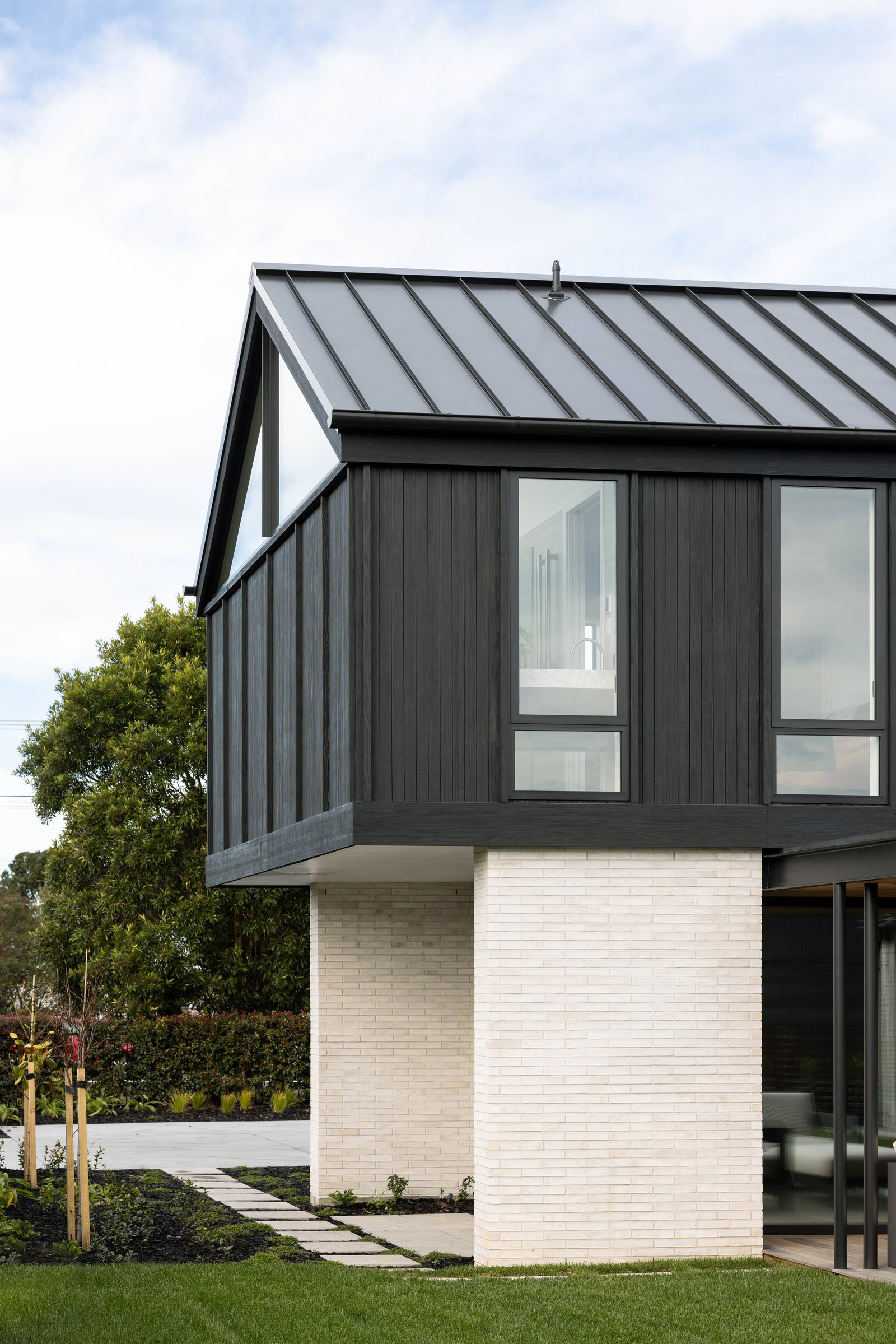
Thermal modification rewrites the chemistry of the wood cell wall using heat and the absence of oxygen, and nothing is added to the board. No preservative. No biocide. No resin, wax or pigment. The wood goes into a vessel, oxygen is held down with steam, nitrogen or a partial vacuum, and the temperature climbs into a band roughly between 160 and 215 degrees Celsius depending on the producer and the species. It holds there for hours. Then a conditioning phase brings moisture back into the board so it can be handled, machined and sold.
Three polymers do the structural work in any piece of wood. Cellulose gives tensile strength along the grain, lignin glues the assembly together and stiffens it, and hemicellulose sits between them as a branched, water loving matrix. Hemicellulose is also the least thermally stable of the three. It goes first, and almost everything a buyer likes and dislikes about thermally modified wood traces back to that single fact.
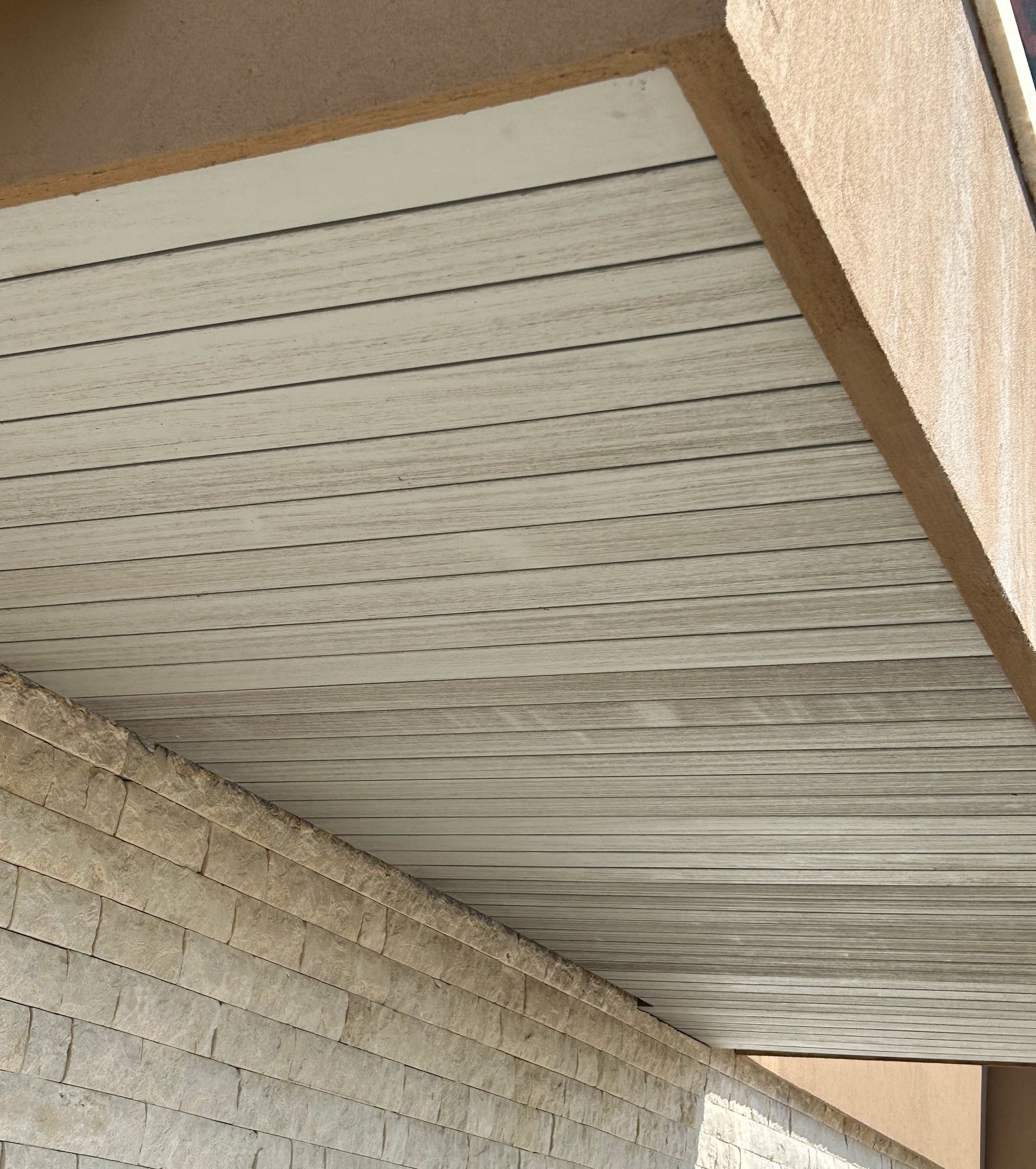
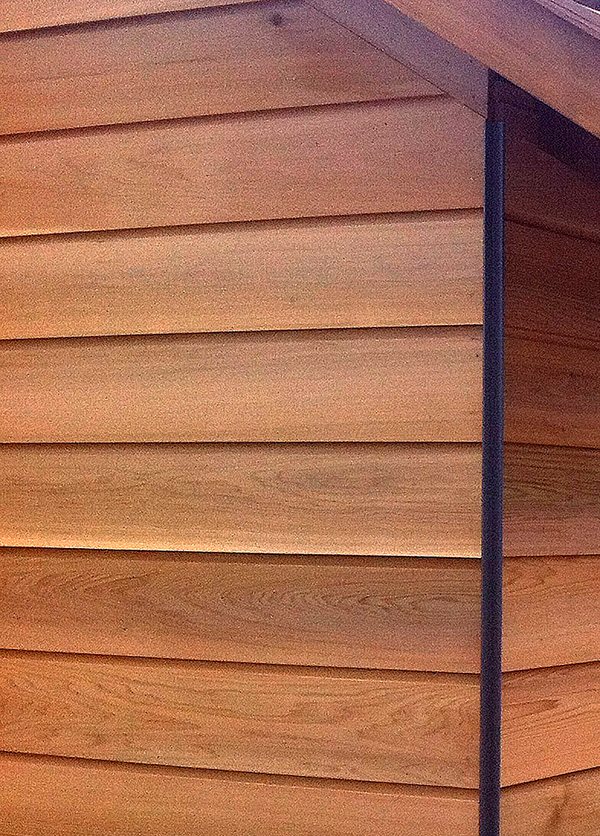
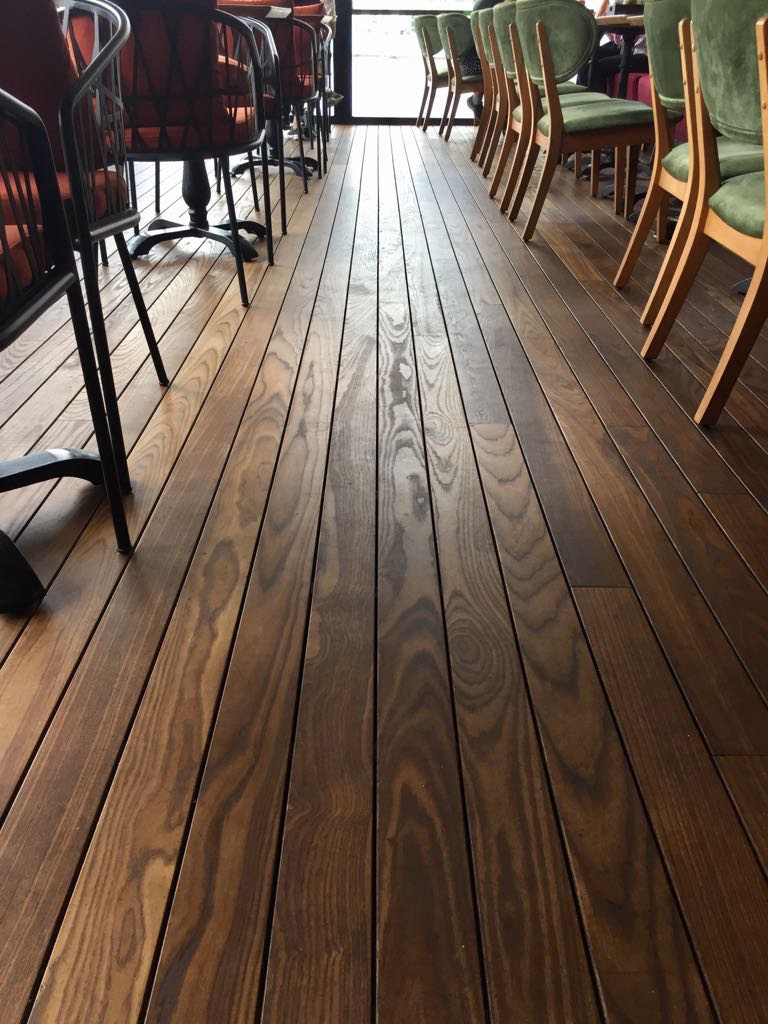
The color change tells you the reaction went all the way through. Resaw a thermally modified board and the interior matches the face, a caramel or coffee brown that came from chemistry rather than from a burned surface or a penetrating stain. That is a useful field check. It is also why a moulder can take a heavy cut into modified stock without exposing a pale core, which matters on a profile with deep coves and a wide sticking.
Hemicellulose Loss and the Moisture Equation
Hemicellulose carries a large share of the hydroxyl sites that make wood hygroscopic, so degrading it removes the places where water molecules attach. Wood does not get wet the way a sponge gets wet. Below fiber saturation, water binds chemically to the cell wall polymers, and the amount that binds sets the equilibrium moisture content. Fewer attachment sites means a lower equilibrium point in the same air.
The numbers move a long way. Unmodified exterior wood in most of the United States settles somewhere near 12 to 16 percent through the year, which is the band J. Gibson McIlvain mills exterior work to so the material arrives close to where it will live. Thermally modified stock equilibrates well below that, commonly in the 4 to 7 percent range, and it gets there more slowly because the surface resists wetting. The Forest Products Laboratory chapter on moisture relations lays out how equilibrium moisture content is measured and why it drives dimensional change.
Two side reactions matter here. Deacetylation releases acetic acid, which is why modified wood is mildly acidic and why stainless fasteners belong in the specification. At the same time the lignin network condenses and cross links, which locks the cell wall geometry in place and adds to the stability gain rather than merely subtracting water sites.
What a millworker feels is a board that stops arguing. Tangential and radial shrinkage coefficients drop substantially, seasonal reveal changes shrink with them, and a painted joint has far less work to do. The wood still moves. It still moves more across the width than across the thickness, and quartersawn or rift stock still moves less than plainsawn, so grain orientation remains a live specification item even in a modified product.
Why Decay Organisms Lose Interest
Decay resistance in thermally modified wood comes from two changes working together, a nutrient that is no longer digestible and a board that will not hold enough free water to feed fungal growth. Brown rot and white rot fungi need liquid water in the cell cavities, not just bound water in the wall. Below roughly 20 percent moisture content the colony stalls.
Hemicellulose is a primary food source for those organisms, and the compounds formed as it breaks down appear to interfere with the enzyme systems fungi use to attack the remaining cellulose. The Forest Products Laboratory chapter on biodeterioration describes the moisture thresholds and the organisms involved without reference to any brand, which makes it a good baseline when a specification writer wants a neutral source.
None of this makes the board immune. Standing water in an unsealed end grain cut still finds its way in. A trim board buried behind a shrub with no air movement still stays damp. Durability class ratings come from defined laboratory and field protocols, and results shift with the base species and how hard the treatment was pushed, so a rating on one producer's softwood cladding does not automatically transfer to another producer's hardwood decking.
What the Process Costs in Strength
Toughness is the price, and thermally modified stock is measurably more brittle than the same species untreated. Modulus of rupture drops. Work to maximum load and impact bending resistance drop harder, because those properties depend on the wood's ability to deform before it fails, and the hemicellulose matrix was doing that deforming. Modulus of elasticity is the least affected of the three, so the board can feel stiff right up to the point it snaps.
Surface hardness also comes down from the base species. White Ash rates roughly 1,320 lbf on the Janka scale unmodified, and thermal modification takes a bite out of that. The Forest Products Laboratory chapter on mechanical properties defines each of those test values, which is worth reading before comparing a producer's published figures against a domestic species table.
On site the brittleness shows up in small ways that add up. Pre-drill at fasteners, especially near ends. Do not spring a board flat over a crowned substrate. Support long pieces at more points when carrying them, because a 15 ft length that would flex in Cedar can crack in modified Ash. Miter tips stay fragile until they are fastened.
The larger constraint is that thermally modified stock does not carry published structural design values the way framing species do. There is no span table to point at. Anything that carries load belongs in the hands of the engineer of record working from the American Wood Council standards and real design values, and modified wood belongs in components that carry appearance and their own weight.
Acetylation Is a Different Reaction Entirely
Accoya is acetylated, not heat treated, and that single distinction changes nearly every number a specifier cares about. Acetic anhydride reacts with the hydroxyl groups in the cell wall and replaces them with acetyl groups. The water attachment sites are occupied rather than destroyed, and the reaction bulks the cell wall from the inside.
Nothing load bearing is degraded in the process, which is why Accoya holds strength and toughness that thermal modification gives up while delivering dramatically reduced shrinkage and swelling. It runs around 1,600 lbf on the Janka scale, harder than Sapele at roughly 1,410 lbf and harder than Hard Maple at roughly 1,450 lbf, which surprises people who expect a modified softwood to dent.
That combination decides a lot of specifications. Wide stiles and rails, a door that has to survive a slam, a shutter louver machined thin, a gate leaf that will be hung on hinges and swung for twenty years, all of that points at Accoya rather than at a thermally modified product. Acetylated stock is mildly acidic as well, so stainless hardware and stainless fasteners stay in the specification, and direct contact with bare aluminum and unprotected steel gets detailed out.
Thermory and Abodo Vulcan in the Same Yard
J. Gibson McIlvain stocks Accoya, Thermory and Abodo Vulcan at the Maryland yard, and the three are not interchangeable. Thermory runs thermally modified hardwoods and softwoods, with Ash the familiar one for decking and cladding. Thermory publishes its own account of the modification cycle, which is useful for reconciling a producer's temperature and duration claims against the general chemistry.
Abodo Vulcan is thermally modified plantation grown Radiata Pine out of New Zealand, and it fills a different slot. It is lighter, it machines gently, and it comes in widths that thermally modified Ash simply does not. Thermally modified Ash is not available wider than 8 inches. A wide board in a modified product means Accoya or Abodo Vulcan, and there is no way around that when a drawing calls for a 10 or 12 inch face.
The company holds over seven million board feet of exotic and domestic lumber at the Maryland yard, which is what makes it realistic to lay hands on a modified product in the width and length a drawing actually needs instead of redrawing the elevation around what showed up.
Comparing the Modified Options Side by Side
The honest comparison is not which product is best, it is which limitation a given detail can live with. Width, length, toughness and below grade behavior separate these products far more than durability claims do.
| Product | How it is modified | Practical width ceiling | Length ceiling | Toughness and hardness | Main limitation to design around |
|---|---|---|---|---|---|
| Accoya | Acetylation, a chemical reaction in the cell wall, no heat degradation | Wide boards available | Around 16 ft, most stock on metric lengths just under 16 ft | Strength retained, roughly 1,600 lbf Janka | Mildly acidic, so stainless fasteners and isolation from bare metals |
| Thermory, thermally modified Ash | Heat and low oxygen, hemicellulose degraded | Not available wider than 8 inches | Around 16 ft, most stock on metric lengths just under 16 ft | More brittle than untreated Ash, hardness reduced from roughly 1,320 lbf | Narrow boards only, pre-drilling required, no published structural design values |
| Abodo Vulcan | Heat and low oxygen, plantation Radiata Pine base | Wide boards available | Around 16 ft, most stock on metric lengths just under 16 ft | Light and low density, more brittle than untreated Pine | Soft surface, so traffic and impact locations need review |
| Western Red Cedar | Unmodified, natural extractive durability | Wide boards available | Long lengths available | Soft and low density, but tough and forgiving | Grade call drives performance, CVG against STK, and no warranty is possible |
Read the length column first on any project with long uninterrupted runs. Read the width column first on any project with a wide fascia, a wide frieze or a panelized wall. Those two rows kill more modified wood specifications than decay performance ever will.
Ground Contact and Where the Distinction Matters
Acetylated wood and thermally modified wood do not behave the same below grade, and blurring the two is how a project gets in trouble. Soil is a different exposure from a rain screen. Moisture is constant, there is no drying cycle, soft rot organisms and bacteria come into play, and the assumption that a dry board stays dry stops holding.
Do not assume ground contact performance for a thermally modified product. If a post, a gate stile or a bench leg is going into or onto the earth, that detail gets resolved with a standoff, a metal base, a concrete curb or a product whose own documentation covers in-ground use. Accoya's published durability and warranty terms distinguish above ground from in-ground service, and the manufacturer's documentation is where that gets confirmed for the specific detail rather than assumed from a category.
Warranties only exist on modified products. It is not possible to warranty solid unmodified wood, which is an organic material responding to its environment, and any supplier claiming otherwise is selling something they cannot back. That asymmetry is often the real reason a modified product wins on a project where a designer wants a paper guarantee behind a highly visible exterior element.
"When an architect asks me why the modified product takes more effort to specify, I tell them to look at what they are actually buying. They are buying a warranty and a board that will hold a reveal. What they are giving up is toughness, width in the Ash, and the ability to run past 16 ft. If those three things are fine on the drawing, the decision makes itself."
Norm Moton, Director of Sales, J. Gibson McIlvain
Finishing, Color Change and Coating Behavior
Modification buys decay resistance and dimensional stability, and it buys nothing at all against ultraviolet light. That rich brown will silver out like any other wood left bare. A clear film without pigment or a UV inhibitor will not stop it. Owners who fell in love with a sample board need to hear that before the material ships, not after the first summer.
Where modification helps a coating is underneath it. A dry, stable substrate moves less under the film, so a painted joint opens less and a paint film cracks less. Adhesion is good when the surface is freshly machined and the dust is removed, and the low moisture content means a primer is not fighting water trying to escape.
Open-grained and oily species absorb a great deal of finish, which is why a primer coat matters as much on modified Ash and Radiata Pine as it does on oily tropicals like Teak and Iroko. J. Gibson McIlvain primes in three levels, in both oil-based and water-based systems, and exterior primed trim carries a fungicide additive. Sanding or buffing after priming knocks back grain raising while keeping moulded detail crisp, which is the difference between a crisp bead and a soft one on a painted exterior casing.
Machining is its own conversation. The dust off modified wood is fine, dry and easily airborne, so dust collection and respiratory protection matter more than they do on wetter hardwood. Sharp tooling and a controlled feed rate keep edges from chipping, and end grain wants a backer on cross cuts.
Where Cedar Still Makes Sense
Cedar is the default cladding and trim species for most contractors, it rarely fails, and nothing about modified wood changes that. The mistake is treating the choice as Cedar against modified when the more consequential decision sits one level down, inside the Cedar grade itself.
CVG, clear vertical grain, is quartersawn, free of knots, and stays flat. It is what belongs behind a dark paint film, on a tight reveal, on a wide fascia, or anywhere a knot bleeding through a finish would be a callback. STK, select tight knot, is a sound and legitimate material with a different look and a different purpose, and it performs when the design wants visible knots and the coating system is chosen for it. Specifying STK and expecting CVG behavior is a grade error, not a species failure.
Cupping gets blamed on species more than anything else in exterior wood, and that is almost always wrong. Cupping is driven by installation and back ventilation. A board wetted on one face and sealed on the other will cup in any species, modified or not. Building Science Corporation on the ventilated gap covers why the cavity behind the cladding does the work, and that detail belongs to the installer and the design team.
Modified wood earns its place over Cedar in a narrower set of cases than the marketing suggests. A dark or saturated paint color on a sun facing elevation. A minimal reveal that cannot tolerate seasonal movement. A historic district replacement where the Secretary of the Interior's standards require a like-for-like profile that must hold its shape. A client who will not sign without a warranty.
How J. Gibson McIlvain Would Specify This
J. Gibson McIlvain specifies modified wood backward from the failure it is meant to prevent, then checks the width and the length before anything else. Paint failure on an absorbent species points one direction. Seasonal reveal movement points another. Rot at a splash zone points a third. Each of those has a different answer, and two of them are solved by a grade call in Cedar rather than by a modified product.
J. Gibson McIlvain mills Accoya, Thermory and Abodo Vulcan into linear trimwork, finished cladding and primed trim at the millwork shop on site at the lumber yard. Interior millwork is milled to an in-service moisture content near 6 to 8 percent and exterior work near 12 to 16 percent, with modified stock equilibrating below that band on its own. Profile matching runs off a library holding thousands of ground knives, and new knives are ground every week, so a historical profile that has to be reproduced in a modified species gets ground to match rather than substituted. The millwork service page covers what comes off that floor.
True custom components come from ICD, the company's architectural millwork division and a full architectural millwork house off site. ICD builds gates, shutters, box beams, custom doors, pergolas, rafter tails, benches, railings and radius millwork, and it builds them from modified stock where the exposure justifies it. The exterior millwork page shows the component range.
Box beams in modified stock make the joinery choice matter more than usual, since the material is brittle and end grain is the weak point. Butt joints give the most minimal profile, the fastest turnaround and the easiest on-site assembly, but they leave visible seams and visible end grain and they are the weakest. Dado joints are strong and still easy to assemble on site, though they still show seams and end grain. Lock miter joints show no visible seams and are the strongest, which is why they usually win on a modified beam that will be painted.
Gates deserve their own note. Pedestrian, garden and courtyard gates are craftsmanship. Large driveway swing gates require engineering rather than only craftsmanship, because size and weight drive the hinge, the post and the frame, and Accoya's retained strength is a real argument for it over a thermally modified alternative on a heavy leaf.
What the company does not do matters just as much. J. Gibson McIlvain supplies and mills. It does not install, coordinate installation or field measure. The back ventilation, the flashing, the fastening pattern and the standoff at grade belong to the installer and the design team, and those details decide whether a correctly specified modified board performs. Finished millwork can be stored for inventory control and released as a phase needs it, and J. Gibson McIlvain ships nationwide, regularly to California.
To work through a modified wood specification with people who mill the material, call J. Gibson McIlvain at 800-638-9100 with the elevation, the longest required run and the widest required face in hand. Those three pieces of information settle the product choice faster than any durability chart.
Frequently Asked Questions
What is thermally modified wood, in plain terms?
It is wood that has been heated in a vessel with oxygen held down by steam, nitrogen or a partial vacuum, typically in a band roughly between 160 and 215 degrees Celsius, then conditioned back to a workable moisture level. Nothing is added. The heat degrades hemicellulose, one of the three structural polymers in the cell wall, and that chemical change is the whole product. The darkening runs through the full board thickness, so a resaw cut shows the same color as the face.
How does the modification process improve exterior performance?
Two ways at once. Degrading hemicellulose removes a large share of the hydroxyl sites that pull water vapor into the cell wall, so the board equilibrates well below the 12 to 16 percent an unmodified exterior board settles at, and shrinkage and swelling drop with it. At the same time hemicellulose is a primary food source for brown rot and white rot fungi, and a board that will not hold free water above roughly 20 percent moisture content will not support a colony. Less movement means tighter reveals and longer paint life. Less available moisture and food means slower decay.
Is Accoya the same thing as Thermory or Abodo Vulcan?
No. Accoya is acetylated, not heat treated. Acetic anhydride converts hydroxyl groups to acetyl groups and bulks the cell wall without degrading the load bearing polymers, so Accoya keeps its strength and runs around 1,600 lbf on the Janka scale while delivering dramatically reduced shrinkage and swelling. Thermory and Abodo Vulcan are both thermally modified, and both are carried at the Maryland yard. Treating the two processes as one is the most common error on a cladding submittal.
How long and how wide can modified boards be?
Every modified product tops out around 16 ft because the modification vessel is a kiln and the kiln has a length, and most stock is sold on metric lengths that land just under 16 ft. Thermally modified Ash is not available wider than 8 inches. If a drawing needs a 10 or 12 inch face in a modified product, the answer is Accoya or Abodo Vulcan. Where a genuinely long single piece is the requirement, an unmodified species is the honest answer.
Can thermally modified wood be used in ground contact?
Do not assume it can. Soil is a constant moisture exposure with no drying cycle and a different set of organisms, and acetylated wood and thermally modified wood do not behave the same below grade. Posts, gate stiles and bench legs get resolved with a standoff, a metal base or a concrete curb. Accoya's own published durability and warranty terms distinguish above ground from in-ground service, and the manufacturer's documentation is where that is confirmed for a specific detail.
Does modified wood still need a finish?
For appearance, yes. Modification does nothing against ultraviolet light, so the brown will silver out like any bare wood unless the coating carries pigment or a UV inhibitor. On the coating side the substrate helps rather than hurts, since a dry and stable board moves less under the film. Open-grained and oily species absorb a great deal of finish, so a primer coat evens out the eventual painted surface. J. Gibson McIlvain primes in three levels in both oil-based and water-based systems, and exterior primed trim carries a fungicide additive.
Is modified wood better than Cedar for cladding?
Not as a blanket statement. Cedar is the default cladding species for most contractors and it rarely fails. The grade call usually matters more than the species call, meaning CVG, clear vertical grain, against STK, select tight knot. Modified wood earns its place where a dark paint color sits on a sun facing elevation, where a minimal reveal cannot tolerate seasonal movement, where a historic profile has to hold its shape, or where the client will not sign without a warranty. Cupping, for the record, is driven by installation and back ventilation rather than by species.
Can thermally modified wood carry structural load?
No. Thermal modification costs toughness and bending strength, the stock is more brittle than the same species untreated, and it does not carry published structural design values the way framing species do. There is no span table to point at. Anything carrying load belongs to the engineer of record working from real design values, and modified wood belongs in components that carry appearance and their own weight.
Sources and Standards Referenced
- Wood Handbook, Chapter 4: Moisture Relations and Physical Properties of Wood, USDA Forest Products Laboratory
- Wood Handbook, Chapter 5: Mechanical Properties of Wood, USDA Forest Products Laboratory
- Wood Handbook, Chapter 14: Biodeterioration of Wood, USDA Forest Products Laboratory
- Thermal Modification Explained, Thermory
- Accoya Acetylated Wood Technology
- White Ash, The Wood Database
- BSI-038: Mind the Gap, Eh, Building Science Corporation
- The Secretary of the Interior's Standards for the Treatment of Historic Properties, National Park Service
- Codes and Standards, American Wood Council