The Sheet the Grinder Works From
A profile sheet is ready for steel when it states a finished section, names the face, calls a tolerance, and carries no detail finer than the species will hold. If you are the architect who drew the millwork sheet and wrote the section that governs it, those four items are the ones a knife grinder tests your page against. The rest of the sheet is useful context. Those four decide whether a cutter can be made at all.
The document that settles the argument is the returned markup. That is your own profile sheet, sent back from the shop with queries written on it in the margins, before any steel is touched and before any stock is pulled. A good markup is short. It asks about the three or four places where the drawing could be read two ways, proposes a reading, and waits for an initial.
Most sheets that come in are close. They carry the look of the profile, the overall height, and the room it belongs to. What they tend to leave open are the things only a moulder operator thinks about, and those gaps do not surface during design review. They surface on the day the run is scheduled, which is the worst possible day to discover that a quirk was drawn narrower than any cutter can produce.
Finished Section, Not Rough Stock
A drawing dimensioned to rough stock sends the knife to the wrong place. The moulder removes material from four faces. Whatever thickness you write on the page, the blank going into the machine has to start thicker, and deciding how much thicker is the mill's work, not the drawing's.
Nominal callouts are where this goes wrong most often. A casing noted as 1x6 reads as 3/4 by 5 1/2 inches to one person and as a true 1 inch by 6 inches to another, and both readings turn up on real projects. Write the finished thickness, the finished width, and the overall height of the moulded section in clean fractions or decimals, and the ambiguity disappears.
The second place it goes wrong is a profile drawn at full scale on a sheet that was later reduced for printing. Scaled geometry is a reference, never a dimension. Any sheet that expects the shop to take sizes off the linework instead of off written numbers comes back as a returned markup with that note on it.
Which Face Is the Face
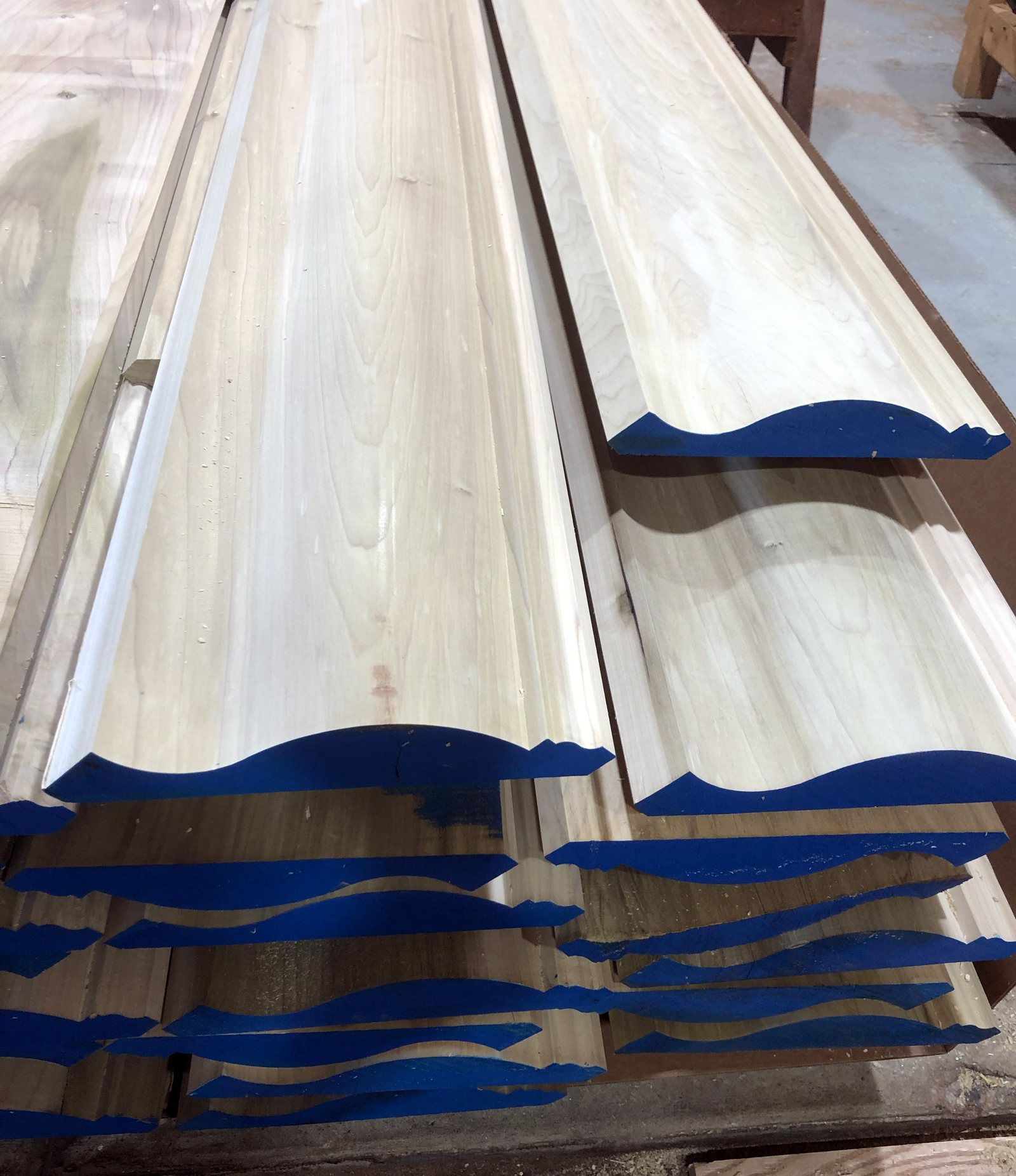
Every milled piece has one face that gets looked at, and the drawing has to say which one it is. On a casing it is obvious. On a jamb, a stool, a panel stile or a box beam component it is not, and the piece can be run either way without anyone on the floor catching the difference until it is hung.
The face call drives several decisions at once. It tells the operator which side rides the bed and which side takes the finish cut. It tells the grader which face gets the cleaner grain when a board has a good side and a fair side. On a beam component it tells whoever glues the assembly which edge will be seen at the corner and which one gets buried.
J. Gibson McIlvain marks the face on the first sample stick it runs and keeps the run oriented that way through packing, which is the only reason a crew unbanding a bundle on site can tell the two faces apart on a piece that is nearly symmetrical.
Grain Direction Where It Changes the Cut
Grain direction belongs on the drawing anywhere it changes the cut or the behavior of the finished piece. On most straight runs it does not need calling. On a few things it does, and silence hands the choice to whoever loads the machine that morning.
Sapele and Utile carry interlocked grain, which is part of why the ribbon figure looks the way it does on a quartersawn face. That same interlock tears out on a deep cove when the stock is fed against the rise, and the fix is a lighter pass or a different orientation rather than a different species. Published figures put Sapele near 1,410 lbf on the Janka scale, hard enough to hold a crisp arris on a fine profile, which is why the tearout question is worth settling before the run instead of during it.
Sawing pattern is the other call. Quartersawn and rift stock moves less across its width than plainsawn, so a painted face or a panelized surface that has to stay flat gets specified that way on purpose. Write it on the profile sheet rather than burying it in the project manual, since the profile sheet is what reaches the floor.
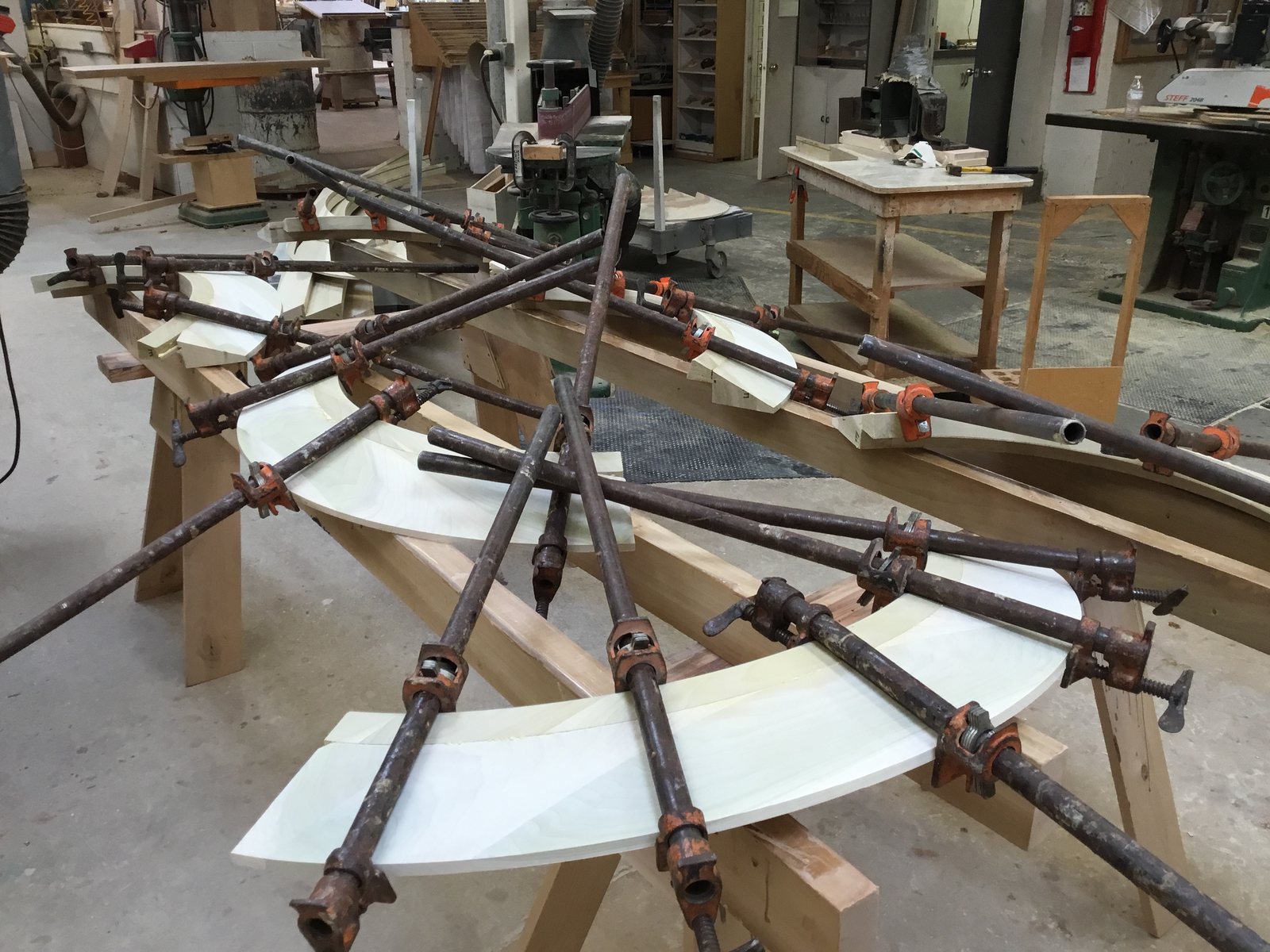
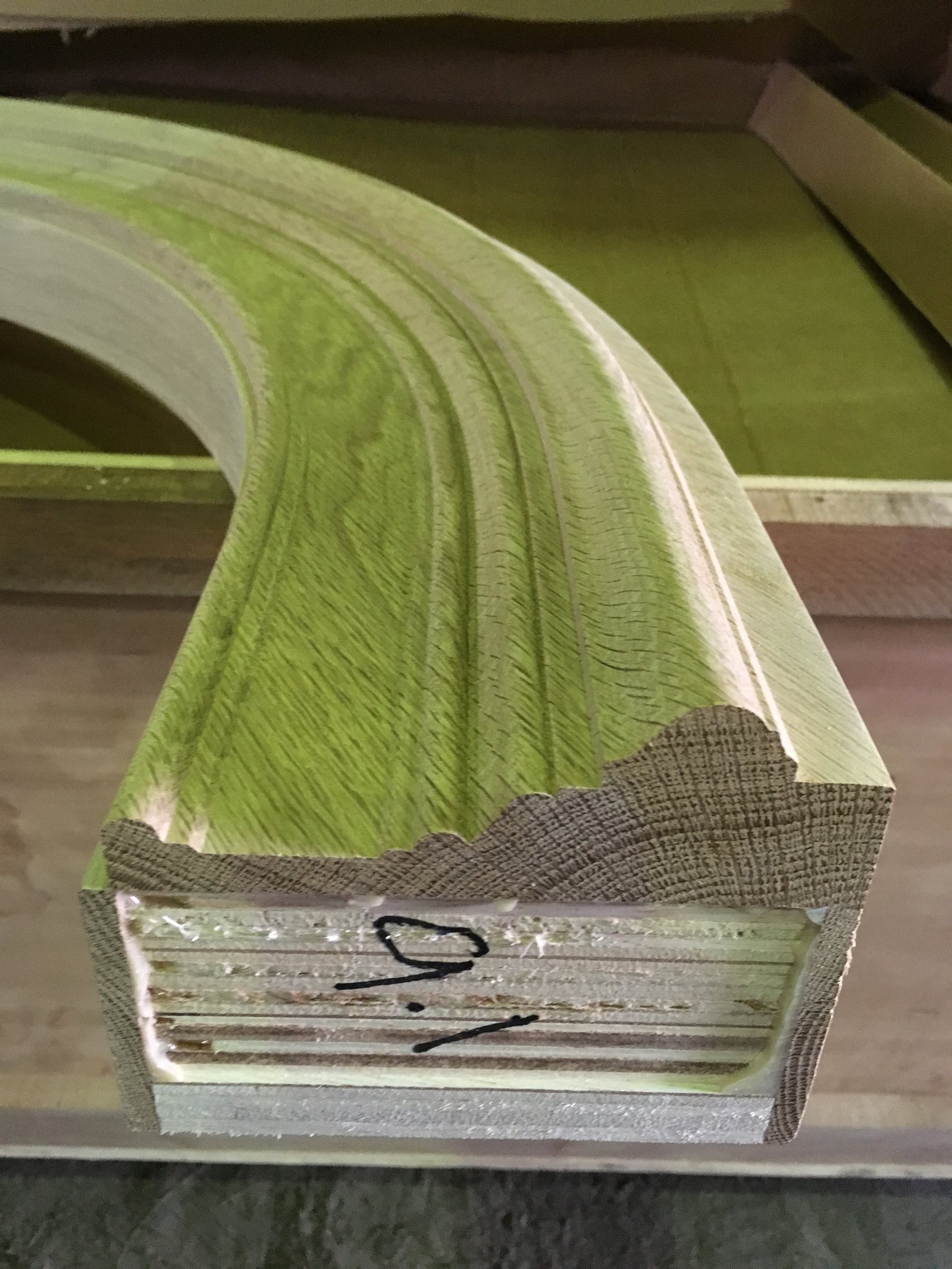
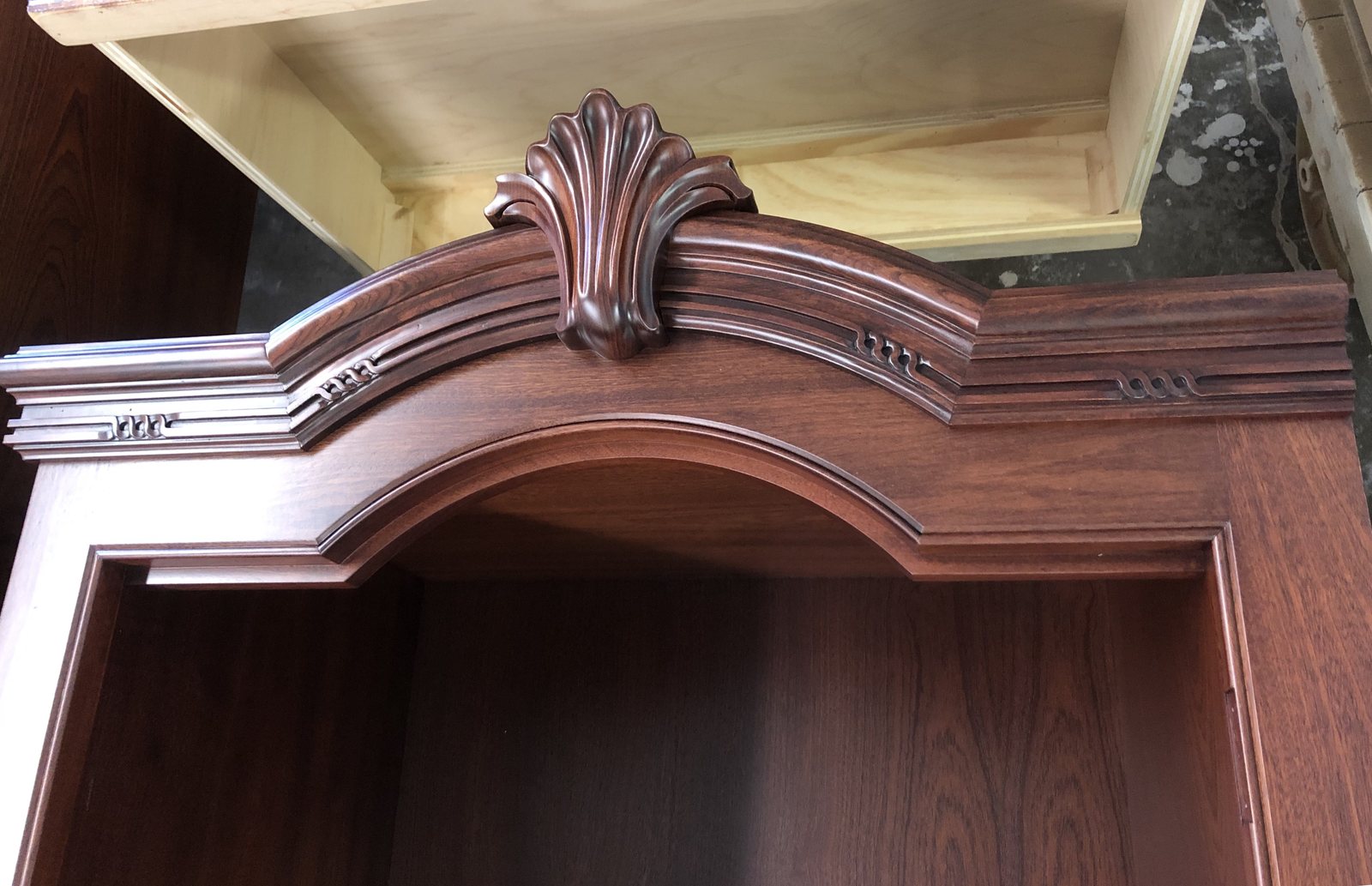
Curved work changes the question entirely. ICD, the architectural millwork division of J. Gibson McIlvain, builds radius trimwork where a profile has to travel around a curve, and that drawing has to show the radius, the rise, and which way the grain is meant to run through the finished piece. A segmented build and a laminated build read differently in the same profile.
Back Relief and the Wall Behind It
An unstated back relief is the most common blank space on an otherwise finished drawing. A relieved back lets a flat piece of trim pull tight against a wall that is not flat, and almost no wall is flat.
The relief needs a depth and bearing lands left at both edges. Too shallow and a drywall tape ridge or a plaster swell holds the trim off the wall at one point and opens a shadow line along the rest of it. Too deep and there is not enough material behind the profile for a fastener to bite, which the installer finds out at the worst moment.
On exterior casing and water table the relief does a second job, giving water that gets behind the piece a path back out instead of a flat trapped plane to sit against. Guidance on drainage planes and back ventilation from building science research is why this detail carries more weight on the outside of the wall than the inside. A returned markup with no other queries on it will still usually ask for the relief.
Fillets, Quirks and Cutter Radius
A fillet smaller than the cutter can produce does not get ground, and no supplier can change that. Knife steel has a practical minimum inside radius at the grinding wheel. A drawing calling an inside corner sharper than the wheel can reach comes off the machine with a soft break in it, and the honest answer is to redraw the detail or accept the break.
The same limit shows up at the other end of the profile. A quirk drawn to a knife edge survives neither the cut, the sanding, nor the first contractor who leans a ladder against it. Drawn at a workable width it survives all three and still reads as a crisp line from across the room.
Species sets a second ceiling the drawing has to respect. Open-grained and oily species absorb a great deal of finish, so a bead drawn fine on Sapele or Teak can wash out under the coating even when the knife cut it cleanly. The moulding pattern geometry published by the Wood Moulding and Millwork Producers Association is a useful sanity check on whether a detail sits in the range the trade actually produces.
Calling a Tolerance Wood Can Hold
A tolerance belongs on the sheet, and it has to be one wood can hold at the moisture content it will live at. Tight numbers borrowed from a metal parts drawing look rigorous and are not. They describe a condition the material leaves on its own.
J. Gibson McIlvain mills interior runs to a 6 to 8 percent in-service moisture content before the stock reaches the moulder, which is what makes a called tolerance mean anything. A piece machined at the right moisture content and then stacked in a building that has never been conditioned will move, and the tolerance you wrote moves with it. The Forest Service research on wood as a material is still the clearest public reference for how far a given species travels between seasons.
Here is the boundary worth stating plainly. No supplier warranties solid unmodified wood. It is an organic material answering to the air around it, and a shop that guarantees how a solid run will behave inside a building it does not control is promising something it cannot deliver. Hold the tolerance at the machine, record it, and specify the conditions the material is delivered into.
Returns That Cannot Run on One Setup
A return drawn in two planes may need two setups, and the drawing should say which one governs. This is the detail that quietly turns a single clean run into two, and it is almost never flagged on the sheet.
Crown is the usual case. A crown has a spring angle, and the same profile sprung at a different angle is a different cutter. Where a crown meets a cabinet, a soffit and a flat ceiling in three conditions, the sheet needs to say whether all three share a spring or whether one of them is a separate profile. Standards from the Architectural Woodwork Institute give the shop and the general contractor a common vocabulary for writing that down once.
Mitered returns are the other case. An apron, a stool or a cap that returns to the wall gets cut from the same run in the field by the installer, so the drawing should account for the extra length instead of assuming a separate part. A returned markup that reads cleanly tells you how many setups the sheet is actually asking for before anyone commits to a schedule.
Profiles Traced From a Salvaged Sample
A traced sample is evidence of a profile, not a dimension of it. A piece pulled off a wall built generations ago is narrower than the day it was milled, carries paint buildup in the coves, and has a worn arris where a century of hands and furniture found it.
A tracing captures all of that, distortion included. The better move is to send the physical sample to the shop instead of a traced outline or a photograph, since the sample can be sectioned cleanly, measured off the cut end, and read for the original tool marks under the paint. Those marks say more about the original cutter than the worn surface ever will.
Someone then has to decide what to correct and what to keep. Shrinkage usually gets corrected so the new run matches the dimension the original was milled to. Wear usually gets kept where a historic district or a preservation review expects like for like replacement, and the National Park Service preservation briefs are what those reviews tend to cite. That decision is yours, and the returned markup is where the shop hands it over, with the traced section and a corrected section drawn one on top of the other.
The limit here deserves naming. No shop can reproduce a salvaged profile exactly, because the salvaged piece is no longer the shape it was milled to. A shop can match the original dimension or match the piece in hand. The drawing has to pick one.
What the Shop Sends Back Before Grinding
Before steel is cut, the shop writes every assumption it is making onto the drawing and sends it back. Finished section confirmed. Face noted. Relief proposed with a depth. Any fillet below the grinder's minimum flagged and redrawn. Tolerance acknowledged. Grain and sawing pattern called where the piece needs it.
A sample stick follows the markup. J. Gibson McIlvain runs it in the specified species from the lot the order will be filled from, so the profile and the wood get approved in one look rather than in two separate arguments three weeks apart. Grading language on the sheet should match the National Hardwood Lumber Association rules the lot was bought under, since that is how the yard and the shop describe the same board.
"The drawings that come back to us fastest are the ones where the architect answered our markup in the margin and sent it straight back. We are not trying to redesign anybody's moulding. We are trying to make sure the knife we grind is the one they actually drew."
Norm Moton, Director of Sales, J. Gibson McIlvain
| Drawing element | What the mill reads from it | What stays ambiguous without it |
|---|---|---|
| Nominal size only | An approximate section and nothing binding | Whether 1x6 means a true 1 inch by 6 inches or a dressed 3/4 by 5 1/2 inches |
| Finished section in numbers | Exact cutter geometry and the blank size to pull | Nothing, which is the point |
| Face designation | Which side takes the finish cut and the better grain | Orientation on a near symmetrical piece, found at installation |
| Grain or sawing note | Feed direction on figured stock, flatness on painted work | Tearout risk on a deep cove and movement across a wide painted face |
| Back relief with depth | Bearing lands, fastening material, drainage on exterior work | Whether the trim pulls tight to an uneven wall |
| Fillet and quirk radii | Whether the detail sits inside the grinding wheel's reach | Whether a sharp inside corner arrives as a soft break |
| Tolerance | What is held at the machine and what gets inspected | Who owns the gap when material moves in an unconditioned space |
| Spring angle or return detail | Whether one setup covers the whole run | Whether a second cutter and a second run are hiding in the schedule |
| Traced salvage sample | The worn profile as it exists today | Whether to match the original dimension or the aged piece |
One thing belongs here that drawings rarely account for, which is what happens after the knife exists. A ground knife is an asset with a service life, and the profile it produces is the profile that was achievable at grinding rather than the one on the sheet. Those two drift apart slightly and predictably, because a grinder matching a fine detail will land close rather than exact, and the sharpening that keeps the knife cutting removes material from the profile every time.
That matters the first time somebody orders more. A run milled three years after the original has to match what was installed, not what was drawn, so the reference that settles it is a retained sample off the first run together with the knife itself. J. Gibson McIlvain keeps a moulding profile library holding thousands of profiles with the knives filed against them, which is why a matching run is a setup question rather than a new origination. Ask at the first order whether the profile is being added to that library. The answer decides whether the second order is a repeat or a redraw.
How J. Gibson McIlvain Would Specify This
Send the sheet early, answer the markup, approve the sample, and the knife gets ground once. That sequence is what the millwork service at J. Gibson McIlvain is built around, and it is why a profile question is worth raising during design rather than during procurement.
J. Gibson McIlvain keeps a library of thousands of ground knives and grinds new ones every week, so the first thing a new sheet gets checked against is whether the profile, or something close enough to adapt, already exists in steel. When it does not, a knife gets ground to match the drawing, historical restoration sections and contemporary profiles alike.
Seven generations of the same family running the same business since 1798 is the reason a knife and its drawing number stay on file long enough to matter. Phase two of a building lands years after phase one. The record of what was ground, at what section, for which room, is what keeps the second run matching the first.
For work planned around a specific space rather than pulled from a catalog, ICD handles the custom side, including custom doors, cabinetry, gates, box beams and curved trimwork. Linear trimwork and finished cladding come off the J. Gibson McIlvain side of the same order, and J. Gibson McIlvain ships the finished material nationwide.
Send a profile sheet, a photograph of a salvaged piece, or a sketch that is still rough, and call 800-638-9100. Five minutes before the drawing is issued saves a revision cycle after it is.
Frequently Asked Questions
What is the minimum a shop needs before it can grind a knife?
A finished section written in numbers, a face designation, a tolerance, and confirmation that the smallest fillets and quirks are inside what a grinding wheel can produce. Species and sawing pattern matter too, since a detail that reads cleanly in Utile can wash out in a more open-grained stock under finish. Anything missing comes back as a query on the drawing before steel is cut.
Can a profile be matched from a photograph of the existing moulding?
A photograph tells a shop what family the profile belongs to and little else. The dimension has to come from a physical sample, sectioned and measured off the cut end, or from a drawing. Send the piece itself where you can, because the original tool marks under the paint describe the first cutter better than the worn face does.
Why does the drawing have to show the back relief?
The relief is what lets trim pull tight against a wall that is not flat. Without a depth and bearing lands called on the sheet, the shop either guesses or runs the piece with a flat back, and a tape ridge or plaster swell then holds one end off the wall. On exterior work the relief also gives trapped water a route out.
What tolerance is realistic on a solid wood moulding?
One that the material can still be holding after it acclimates. Interior millwork milled at a 6 to 8 percent in-service moisture content is stable in a conditioned building and will move in an unconditioned one, so the tolerance you call should be paired with the condition the material is delivered into. No one warranties solid unmodified wood against that movement.
Do I need to call quartersawn stock on a painted profile?
Call it where flatness carries the detail. A wide painted face or a panel component gets specified on the quarter or the rift because the width direction is where seasonal change would otherwise telegraph through the finish. On a narrow stain grade casing the figure matters more than the movement, and plainsawn is often the better look.
Who cuts the mitered returns on a run?
The installer, in the field, from the same run. That is why the drawing should account for the extra length rather than treating the return as a separate part. J. Gibson McIlvain supplies and mills the material and the crew on site makes the cuts, so the sheet should make clear whether a return shares the main setup or needs a profile of its own.
The profile is on a curve. Does that change the drawing?
Yes. Radius work needs the radius, the rise, the spring where there is one, and a note on whether the piece is built up in segments or laminated, because the two show different grain in the same profile. ICD, the architectural millwork division of J. Gibson McIlvain, builds curved trimwork to those drawings.