The Right Answer Depends on Which Operation Is Eating the Day
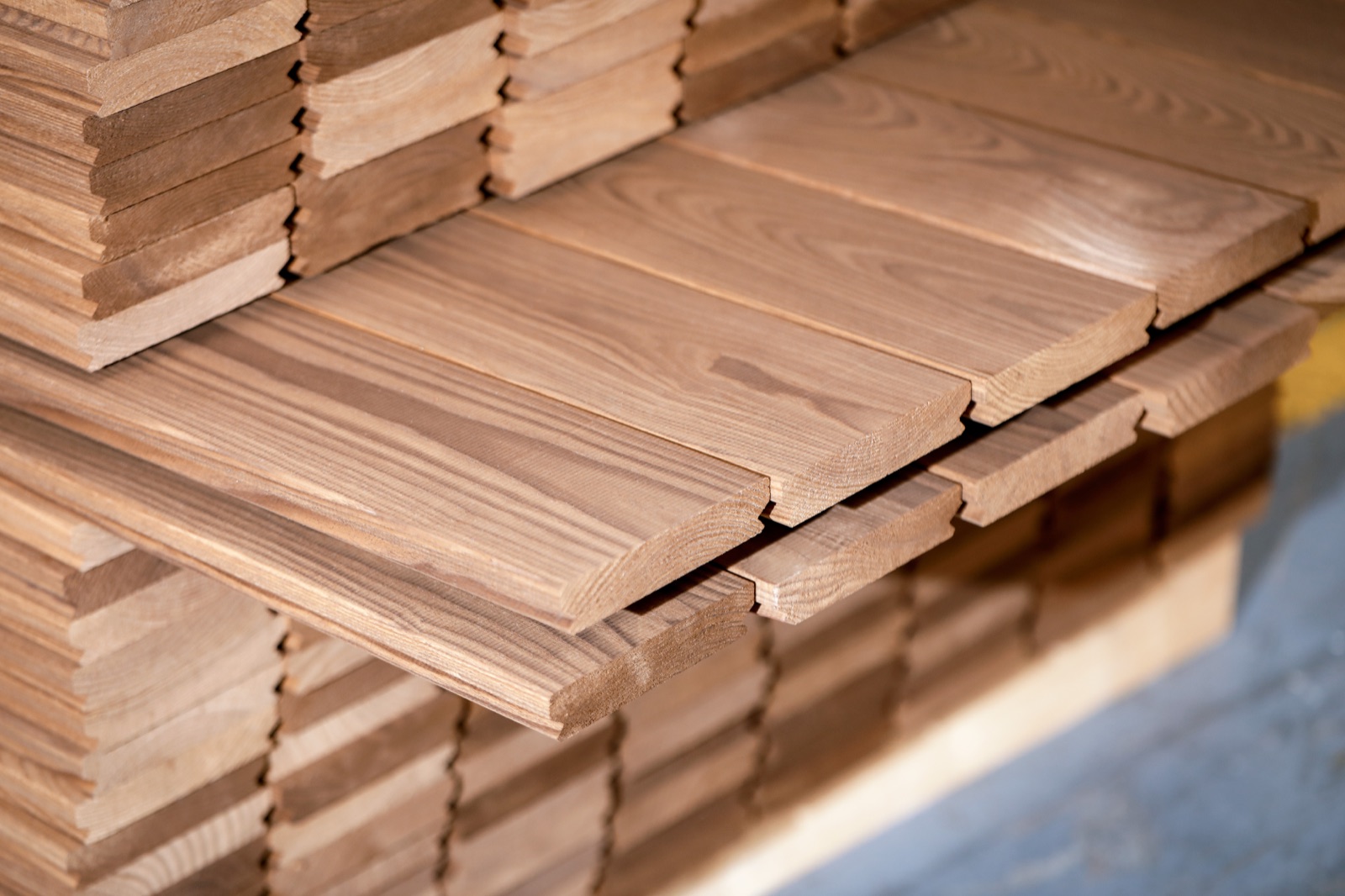
Garapa is the easiest tropical hardwood decking to cut, drill and carry, but that answer only holds on residential and light commercial work where the specifier is free to choose thickness, and it collapses the moment a job calls for 2x decking. Crews rarely lose a day to one thing. They lose it to a chain of small operations repeated a few hundred times: lifting boards off the pile, crosscutting to length, sealing the fresh end grain, drilling a pilot and countersink, driving two fasteners, then repeating. Rank species by the total hardness number and you get one answer. Rank them by the operation that is actually costing hours on your particular deck and you get a different one.
That is the framework worth using. Break the install into handling, cutting, drilling, fastening and rework, then figure out which of those five your crew is losing to. On a rooftop with a hoist and a long carry, board weight dominates. On a job with hundreds of picture-frame miters, blade life and cut quality dominate. On a boardwalk with a 2x spec, availability decides the species list before workability gets a vote.
Board Weight Is the First Labor Number, Not Janka Hardness
The single most underestimated labor variable in tropical decking is how much each board weighs in a worker's hands at the end of hour six. Hardness affects the blade and the bit. Density affects the human being. A 5/4x6 board dressed to roughly one inch by five and a half inches, cut to sixteen feet, holds about 0.61 cubic feet of wood. Run that through the densities and the spread is real.
Ipe at roughly 1,050 kg per cubic meter puts that board near forty pounds. Cumaru at about 1,070 lands slightly heavier. Garapa, closer to 830, comes in around thirty one pounds. Nine pounds sounds trivial until you multiply it across a sixty board deck and then again across every time a board gets moved: off the truck, onto the stack, to the cut station, back to the frame. The USDA Forest Products Laboratory publishes specific gravity and mechanical property data for most commercial tropical species, and those numbers translate directly into what a two person crew can carry without a second trip. Reference values are available through the Forest Products Laboratory.
Weight also decides staging. Dense hardwood decking stacked on a rooftop or a pier deck needs load path confirmation before the pallet lands. Sixteen foot 2x6 Ipe on a full unit is a serious point load. Plan the drop, not just the install.
Cutting Is a Blade Chemistry Problem, Not a Horsepower Problem
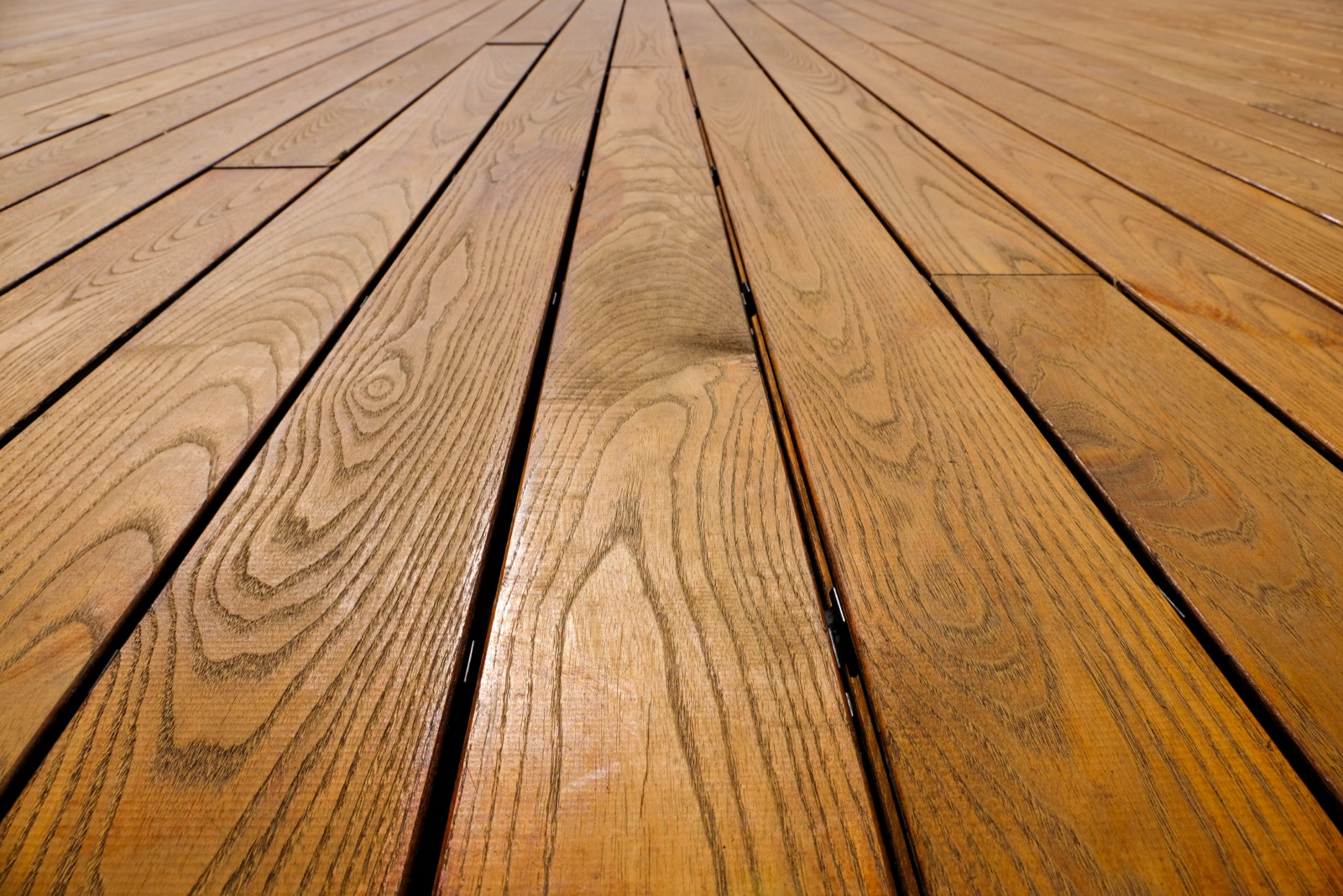
Every dense tropical species will cut cleanly with the right carbide, and every one of them will burn, chip and stall with the wrong one. A twenty four tooth framing blade is finished after a handful of Ipe crosscuts. Move to a forty to sixty tooth carbide blade with a triple chip grind and the same saw behaves like a different tool. Feed rate matters as much as tooth count. Push slow and steady. Forcing the cut generates heat, heat glazes the carbide, and a glazed blade burns the end grain that you are about to seal.
Hardness is not the whole story on blade wear. Silica content is. Red Balau and Teak sit well below Ipe on the Janka scale, around 1,700 to 2,000 lbf and roughly 1,070 lbf respectively, and both still chew through carbide faster than the raw hardness suggests. Silica inclusions act like grit in the cut. Jatoba at about 2,690 lbf cuts more predictably than its number implies because it is comparatively clean, though it is prone to tearout on interlocked grain if the blade is dull. Species by species mechanical and working notes are catalogued at the Wood Database entry for Cumaru and its companion pages.
Dust deserves a plan. The extractives that make these species rot resistant are also what irritate skin, sinuses and eyes. Cumaru dust in particular gets a reaction out of people who handle it all week. Run a cut station outdoors, downwind, with respirators rated for fine particulate and eye protection that actually seals. Sweep, do not blow.
Drilling and Fastening Is Where the Hours Actually Disappear
Cutting a dense tropical board takes seconds; drilling and fastening it takes minutes, and that is the operation that decides whether a crew finishes on schedule. None of these species accepts a screw driven cold. Pilot every hole. A self centering combination bit that cuts the pilot and the countersink in one pass is the difference between a fast deck and a frustrating one, and it keeps the countersink concentric so the fastener head seats flush instead of sitting proud and catching bare feet.
The working rules hold across Ipe, Cumaru, Jatoba, Garapa and Red Balau. Two fasteners per board at every joist crossing. Roughly three quarters of an inch of edge distance so the fastener has enough shoulder of wood to hold without splitting the edge. Full depth pilots near board ends, where splitting risk is highest and where a short pilot will find the end grain and open it. Butt joints land on doubled bearing, either a sistered joist or a properly blocked double, so each board end gets its own fastening surface instead of two boards fighting for one narrow joist face.
Stainless is the right fastener metal for most of this work and 316 stainless is the right grade anywhere within reach of salt air. Coated carbon steel screws will fail in tropical hardwood before the wood does, and the tannins in these species will stain around a corroding head. Screw selection and connection detailing for exterior wood assemblies are addressed in the design standards published by the American Wood Council.
One thing worth stating plainly: do not ask for decking delivered pre drilled or pre countersunk, and no mill should offer it. Hole layout is a function of the frame as it was actually built, not the frame as it was drawn. Field cuts, adjusted joist spacing, a picture frame border and a stair landing all move the fastener line. Drilling is installation work performed on site, against real bearing, in real sequence.
Per Operation Site Behavior, Species by Species
Compare these species on what each site operation demands rather than on durability class alone and the ordering changes in ways that matter to a foreman. The weights below assume a nominal 5/4x6 dressed board at sixteen feet and in service moisture content in the 12 to 16 percent range, which is what properly seasoned tropical decking should arrive at.
| Species | Approx. density (kg/m3) | Approx. weight, 5/4x6 at 16 ft | Carbide blade behavior | Pilot and countersink demand | 2x decking availability | Where it fits on site |
|---|---|---|---|---|---|---|
| Ipe (Tabebuia spp.) | ~1,050 | ~40 lb | Hardest on carbide; 40 to 60 tooth triple chip, slow feed | Pilot and countersink mandatory at every fastener | Yes, standard | Commercial decks, boardwalks, piers, plazas and long service residential |
| Cumaru | ~1,070 | ~41 lb | Cuts cleanly but heavy dust; extractives irritate | Pilot and countersink mandatory; watch interlocked grain | Yes, standard | Commercial and residential where Ipe color match is not required |
| Jatoba | ~910 | ~35 lb | Predictable cutting; tearout risk on dull blades | Pilot required; countersink strongly advised | Yes | Covered and semi protected commercial work, interior to exterior transitions |
| Red Balau | ~880 | ~34 lb | Silica dulls carbide faster than its hardness suggests | Pilot required at all fasteners | No, 5/4 and thinner | Residential decks and engineer approved 5/4 work |
| Garapa | ~830 | ~31 lb | Easiest cutting of the group; clean edges | Pilot still required; countersink easier to control | No, 5/4 and thinner | Residential decks, light color schemes, labor sensitive schedules |
| Massaranduba (comparison only) | ~1,150 | ~44 lb | Very hard on blades; heaviest handling | Pilot and countersink mandatory | Varies by market | Listed here only as a density reference point |
Profile Choice Changes the Fastening Method Before Species Does
Hidden fasteners are a profile decision, not a species decision, and getting that backwards is the most common reason a deck runs long. Only tongue and groove or grooved edge decking accepts a hidden fastener system. The clip needs a machined groove to bite into. Shiplap takes visible face fasteners, full stop, and any crew told to hide fasteners on shiplap is about to invent something that will fail. Square edge boards take face fasteners as well.
Hidden clips look like a labor savings and sometimes are, though they trade drilling time for alignment time. Each clip has to seat, each board has to be persuaded home, and dense hardwood does not flex into place the way a softer board will. On a straightforward rectangular deck, hidden fasteners can run faster. On a deck with angles, a picture frame and multiple penetrations, face fastening with a self centering bit is frequently the faster and more forgiving method.
Orientation carries a rule that gets violated constantly. On grooved or profiled material used over furring strips or joists, the grooves face DOWN so water drains and air moves along the underside of the board. Flipping that traps water in the channel and guarantees a maintenance call. All of this material goes on furring strips or joists with continuous bearing, never directly on a membrane or a slab without an air space.
Field Cuts, End Seal and What Checking Really Is
Every fresh crosscut exposes end grain that will move moisture ten to fifteen times faster than the face of the board, and sealing that cut within minutes is the cheapest labor a crew will spend all week. Keep a can of end sealer and a disposable brush at the cut station. Seal the cut before the board leaves the horses. Crews that batch their cuts and seal at the end of the day get end checks, and those checks are avoidable.
Surface checking on the face of the board is a different matter and it deserves an honest answer. Fine surface checks in dense tropical decking are the wood releasing tension as the surface heats and dries faster than the core. They do not weaken the board. Small surface checks are normal in these species and are frequently a sign the material was properly seasoned rather than rushed. No supplier can promise checking will not occur, and any who does is selling something other than lumber.
What does move the needle is a factory applied penetrating oil stabilizer. J. Gibson McIlvain factory coats tropical decking with Cutek before it ships, which slows the moisture exchange at the surface and reduces the degree of checking meaningfully. Site practice does the rest: take delivery at proper moisture content, keep the stack covered and off the ground with stickers for airflow, seal every field cut, and give the underside of the deck real ventilation. The building science behind moisture movement in exterior wood assemblies is covered well by Building Science Corporation.
The 2x Rule Removes the Easy Species From Commercial Work
Commercial boardwalks, piers and plaza decks are specified at 2x thickness to control deflection, and that single requirement eliminates the species a crew would otherwise pick for labor. The strength math on a 5/4 board can pencil out at sixteen inches on center. It rarely matters. No structural engineer and no municipal owner wants to be the first to accept a thinner board on a public walking surface, and the specification lands at 2x for reasons that include public safety, expected foot traffic, maintenance access loads and simple institutional caution.
Only Ipe, Cumaru and Jatoba can be sourced consistently in 2x decking thickness. That is the filter. Red Balau and Garapa, the two species that cut and carry easiest, are not 2x species, so they belong in residential decks and in engineer approved 5/4 applications. Recommending Garapa for a boardwalk because the crew will install it faster is the kind of advice that gets a submittal rejected.
The tradeoff runs the other direction too. A 2x Ipe deck is the heaviest, hardest, slowest material on the list to install, and it is also the surface that will still be there in thirty years with nothing but cleaning and periodic oil. Public agencies buy that. Accessibility requirements for walking surfaces, including the maximum openings between boards, are set out by the U.S. Access Board and should be checked against your gap detail before the first board goes down.
"Contractors call us asking which species installs fastest, and my first question back is always what thickness the drawings call for. If it says 2x, the conversation is Ipe, Cumaru or Jatoba and nothing else. If the spec is open and the deck is residential, I will point them at Garapa every time, because the crew will feel the difference by the second day. We ship both kinds of jobs out of the same yard every week, and the guys who plan the cut station and the fastener strategy before the truck arrives are the ones who finish on the original schedule." Norm Moton, Director of Sales, J. Gibson McIlvain
Substructure and Layout Decide More Labor Than Species Ever Will
A flat, square, correctly spaced frame will save a crew more hours than switching from Ipe to Garapa. Dense hardwood decking wants joists at sixteen inches on center, tighter at twelve inches if the boards run diagonally. Wider spacing shows up as bounce and as fastener movement long before it shows up as a structural problem.
Frame quality is where field labor multiplies. A joist that is crowned differently from its neighbors means every board fights the countersink depth. A frame out of square means every board in a picture frame layout needs an individual rip. Blocking that was skipped at butt joint locations means someone is crawling under the deck mid install to add it. Check the frame with a string line and a straightedge before decking starts, and shim or plane the high joists.
Ventilation is structural in the long run. Leave real air space under the deck, keep the perimeter open, and do not let landscaping or skirting seal the underside. Boards that dry from one face only will cup, and cupped dense hardwood is not something a crew corrects with more screws. Design guidance for exterior wood framing and connection detailing is available through WoodWorks and the model code requirements published by the International Code Council.
Where Modified Wood and Cedar Belong in This Comparison
If the specification is genuinely open, modified wood and Western Red Cedar both cut and fasten more easily than any tropical hardwood on this list, and both are legitimate choices with real constraints. Thermally modified decking from Thermory and Abodo Vulcan cuts like a softwood, weighs a fraction of what Ipe weighs, and carries a manufacturer warranty, which no solid unmodified wood does or should. Accoya, acetylated rather than thermally modified, behaves similarly on site and carries its own warranty. All three top out at roughly sixteen feet, with metric lengths landing just under that, because the modification kilns limit board length. Specify a sixteen foot module and the material works. Specify twenty foot boards and it does not exist.
Cedar remains a sound default and does not deserve the dismissal it sometimes gets. Clear vertical grain cedar, CVG, gives a stable, knot free surface that machines beautifully and holds a finish. Select tight knot cedar, STK, is a different product with a different look and a lower cost position, and it performs well when detailed correctly. Both cut faster than anything tropical. Neither will hold up on a heavy traffic commercial deck the way Ipe will, which is why the species conversation always comes back to service expectation.
Sourcing documentation applies across all of these. When using a CITES-listed species, documentation is required through the chain of custody, and the current appendices are maintained at CITES. For projects pursuing certified material, chain of custody requirements are defined by the Forest Stewardship Council. J. Gibson McIlvain is FSC certified and can supply documentation packages when the specification calls for them.
How J. Gibson McIlvain Would Specify This
Write the specification around thickness first, then profile, then species, and the labor question resolves itself. Start by asking whether the deck is public or private. Public, commercial, or anything an engineer is stamping goes to 2x, and the species list narrows to Ipe, Cumaru or Jatoba. Private residential with an open spec can use 5/4, and Garapa becomes the strongest labor argument on the board, with Red Balau close behind if a darker color is wanted.
Then decide the fastening method before ordering. Hidden fasteners require tongue and groove or grooved edge material, so that has to be ordered as such. Shiplap and square edge get face fasteners with 316 stainless in coastal exposure and a self centering combination bit for the pilot and countersink. Grooves face down. Boards land on furring strips or joists at sixteen inches on center, twelve inches for diagonal layouts, with doubled bearing at every butt joint.
Order material to arrive at 12 to 16 percent moisture content, factory coated with Cutek, and give it several days on site stickered and covered before install. Plan a cut station with end sealer at hand and respirators for the crew. Do not order pre drilled material and do not let anyone offer it. Layout is field work.
J. Gibson McIlvain mills and stocks Ipe decking in a vast inventory across every standard and custom dimension, including full 2x thicknesses for commercial boardwalk and pier work, alongside Cumaru, Garapa, Jatoba and Red Balau, plus modified decking from Thermory, Abodo Vulcan and Accoya. Material ships nationwide on company trucks and contract carriers, with regular deliveries to California and every point between. Specifications, dimensions and profile options for tropical decking are listed at mcilvain.com, and the sales desk will review a takeoff, a joist plan and a fastener schedule with you before anything ships. Call 800-638-9100 for a quote or to walk through a submittal package with someone who has specified this material on jobs like yours.
Frequently Asked Questions
What saw blade should a crew run for Ipe and Cumaru?
A 40 to 60 tooth carbide blade with a triple chip grind is the working standard. A 24 tooth framing blade will survive only a handful of crosscuts in Ipe before it starts burning the end grain. Feed the cut slowly and steadily rather than forcing it, since heat is what glazes carbide and shortens blade life. Carry spares. On a large deck, plan on rotating blades through the day rather than pushing one blade to failure and then fighting a dull cut for the last hundred boards.
How many fasteners per board, and how close to the edge?
Two fasteners per board at every joist crossing, with roughly three quarters of an inch of edge distance. That leaves enough shoulder of wood to resist splitting while keeping the fastener over solid bearing. Near board ends, drill full depth pilots rather than shallow ones, because a short pilot will drive the screw into unrelieved end grain and open a split. Butt joints should land on doubled bearing so each board end has its own fastening surface.
Can decking be ordered pre drilled and countersunk to save site time?
No, and no mill should offer it. Fastener layout depends on the frame as it was actually built, including field adjusted joist spacing, picture frame borders, stair landings and every field cut. A factory hole pattern would be invalidated by the first trimmed board. Drilling is installation work performed on site against real bearing. The efficient answer is a self centering combination bit that cuts the pilot and countersink in a single pass, which gets a crew most of the speed they were hoping to buy.
Why do boards develop small surface checks after installation, and can that be prevented?
Surface checking is the wood releasing tension as the exposed face heats and dries faster than the core. It does not weaken the board, and small surface checks are normal in dense tropical decking, frequently a sign of proper seasoning rather than a defect. No one can promise it will not happen. J. Gibson McIlvain factory coats tropical decking with Cutek, a penetrating oil wood stabilizer that slows surface moisture exchange and reduces checking significantly. Correct moisture content at delivery, end sealing every cut, covered and stickered storage and real underside ventilation keep checks small.
Is Garapa acceptable for a commercial boardwalk if the crew installs it faster?
No. Commercial boardwalks, piers and plaza decks are specified at 2x thickness to control deflection, and Garapa is not available in 2x decking. Only Ipe, Cumaru and Jatoba can be sourced consistently at that thickness, which effectively sets the species list for public work. Garapa and Red Balau belong in residential decks and in engineer approved 5/4 applications where the specifier controls thickness.
Do hidden fasteners work with every profile?
Only tongue and groove or grooved edge decking accepts hidden fastener clips, because the clip needs a machined groove. Shiplap and square edge decking take visible face fasteners. On profiled material installed over furring strips or joists, the grooves face down so water drains and air can move under the board. Hidden systems trade drilling time for alignment time and tend to win on simple rectangular decks, while face fastening is faster on layouts with angles, borders and penetrations.
How long should tropical decking sit on site before installation?
Give it several days, stickered for airflow, covered from direct sun and rain, and up off the ground. Material should arrive in the 12 to 16 percent moisture content range for most of the country. The goal is not to dry the wood on site but to let it settle toward local equilibrium so it stops moving before it is fastened down. Installing straight off the truck in a very different climate is what produces gap and cup complaints six weeks later.
Does J. Gibson McIlvain deliver tropical decking outside the Mid-Atlantic, and does it come coated?
Yes to both. J. Gibson McIlvain is a commercial and contractor volume supplier shipping nationwide, with regular deliveries to California and points across the country, on company trucks and contract carriers. Tropical decking ships factory coated with Cutek. The sales desk will review a takeoff, joist plan and fastener schedule before material leaves the yard. Call 800-638-9100 to get a quote started or to have a submittal package checked.
Sources and Standards Referenced
- USDA Forest Products Laboratory
- American Wood Council, Codes and Standards
- The Wood Database, Cumaru
- U.S. Access Board, ADA Accessibility Standards
- Building Science Corporation
- WoodWorks, Wood Products Council
- International Code Council
- CITES, Convention on International Trade in Endangered Species
- Forest Stewardship Council