The Short Answer for a Public Waterfront Boardwalk
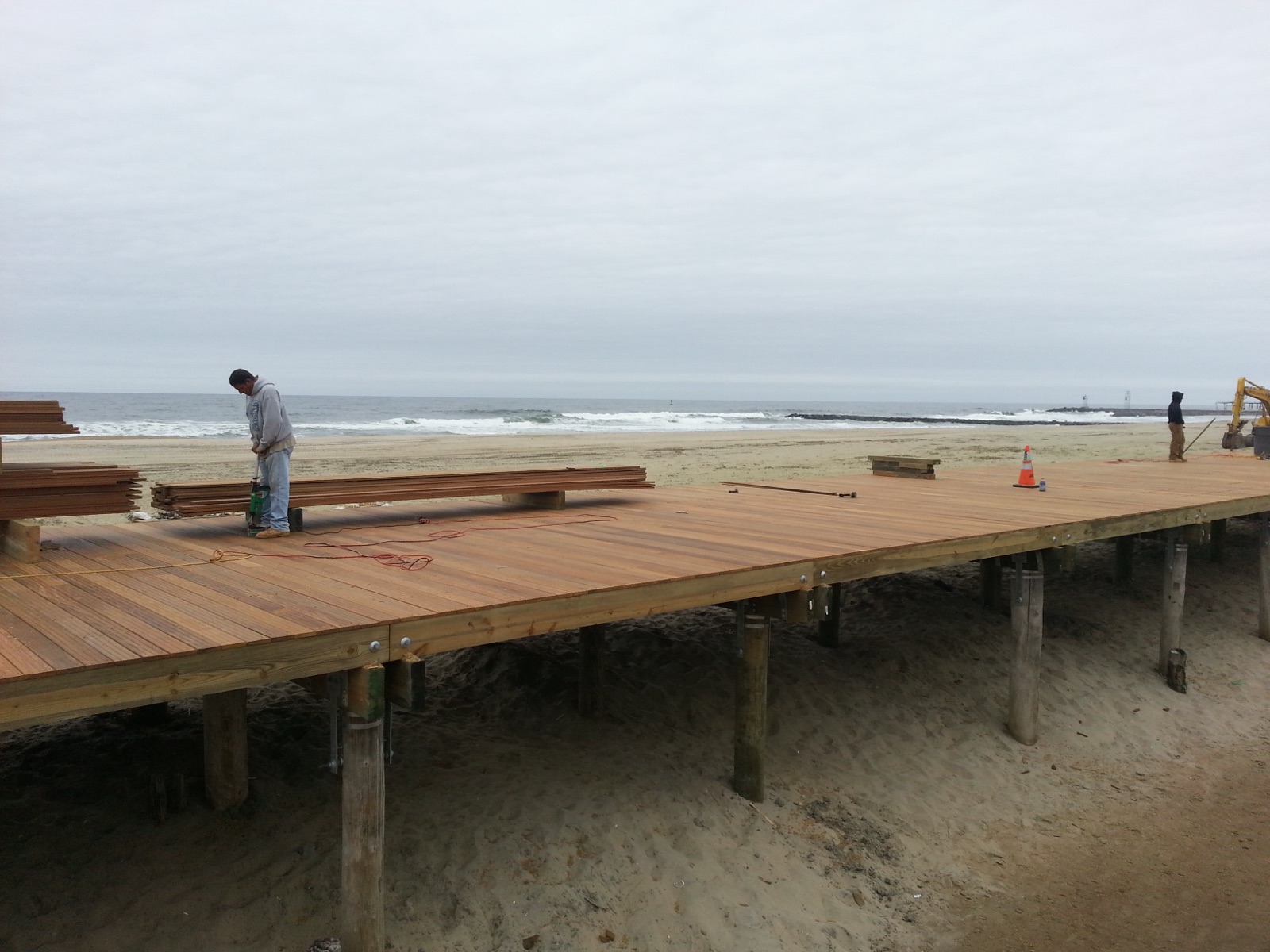
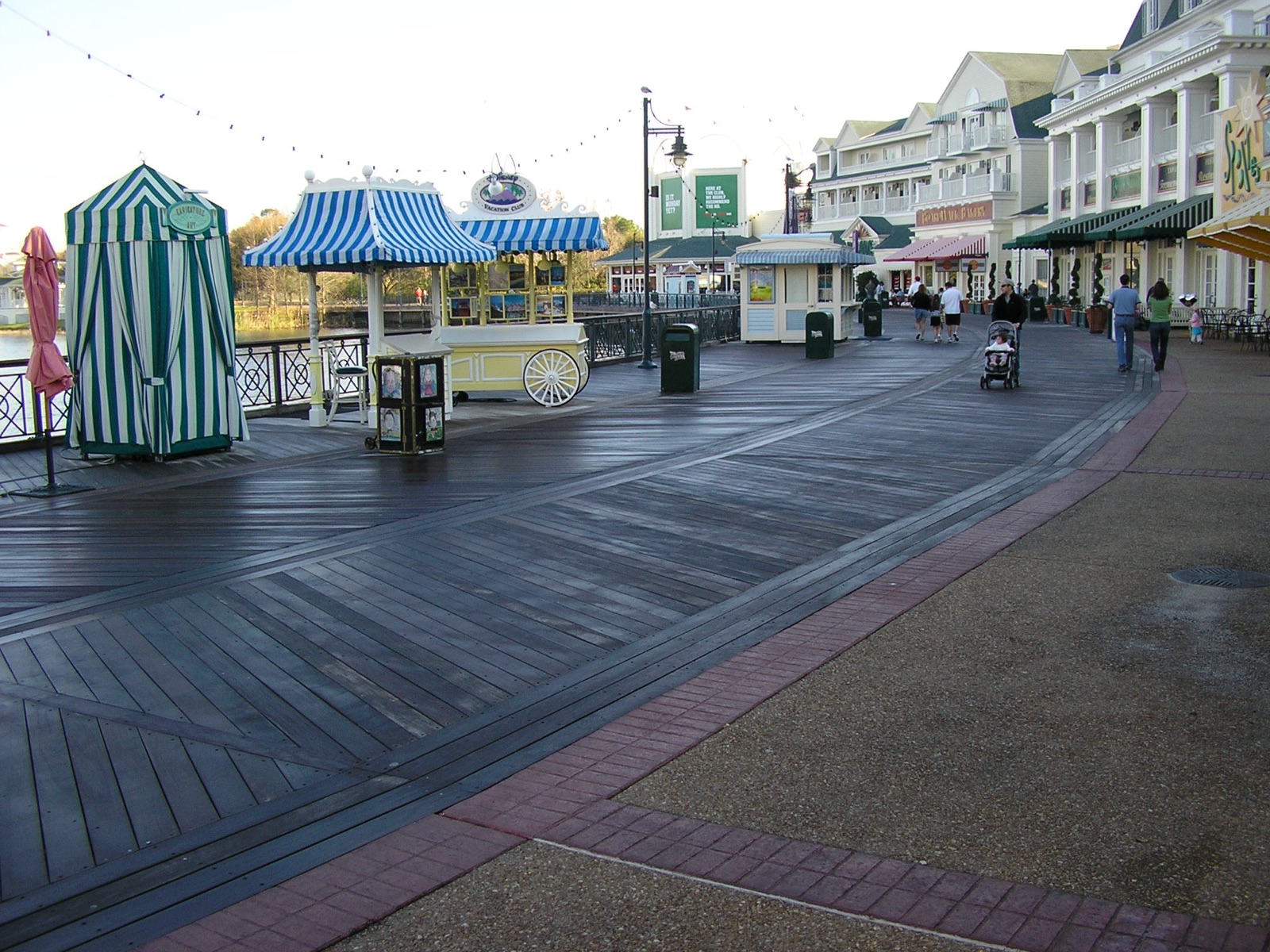
Ipe is the correct default for a municipal boardwalk deck, and the deciding factor is that it can be sourced consistently in 2x thickness, with Cumaru and Jatoba as the only other tropical species that reliably answer the same call. Public boardwalks are not big residential decks. They carry crowds, service carts, maintenance vehicles in some cases, and they carry them for decades under a maintenance budget that gets cut long before the wood gets replaced. That combination pushes designers toward a thicker board and a species that stays flat, stays hard, and does not rot when it sits over standing water.
Hardness gets the attention. Thickness decides the bid. A specifier can run the numbers on 5/4 stock over tight joist spacing and watch the math work, then still put 2x on the drawings, because the failure mode on a public walkway is not fracture. It is bounce, deflection under crowd load, and the slow loosening of fasteners that follows. Ipe, Cumaru and Jatoba are the tropical species a mill can put in front of you in true 2x decking thickness, in commercial quantity, run after run. That single sourcing fact filters the species list before durability class, color or slip resistance ever enters the conversation.
The 2x Thickness Rule Filters the List Before Anything Else
Commercial boardwalk, pier and plaza decks are specified at 2x thickness to control deflection, and no professional goes first with a thinner board on a public job. The reason is not conservatism for its own sake. A public deck sees loading patterns nobody models precisely. A fishing crowd bunched along one rail. A food truck event. A lift parked for railing repair. Deflection that a homeowner would call springy reads as a defect on a municipal asset, and it generates complaints that outlive the person who signed the submittal.
The American Wood Council publishes the design provisions that govern how these assemblies get checked, and the AWC codes and standards library is where the structural side of a boardwalk spec should start. Run the numbers honestly and you will sometimes find that 5/4 works on paper at close joist spacing. Then look at what happens after fifteen years of wet and dry cycling, after a contractor replaces four boards with whatever was on the truck, after a rail post gets rebuilt. The 2x board absorbs that history. The thinner board telegraphs it.
This is where several excellent species drop out of the conversation for public work. Red Balau and Garapa are good decking woods with real track records, and neither one shows up in commercial 2x supply with any consistency. They belong in residential decks and in engineer-approved 5/4 applications, not under a municipal boardwalk spec.
Deflection Lives in the Substructure, Not Just the Board
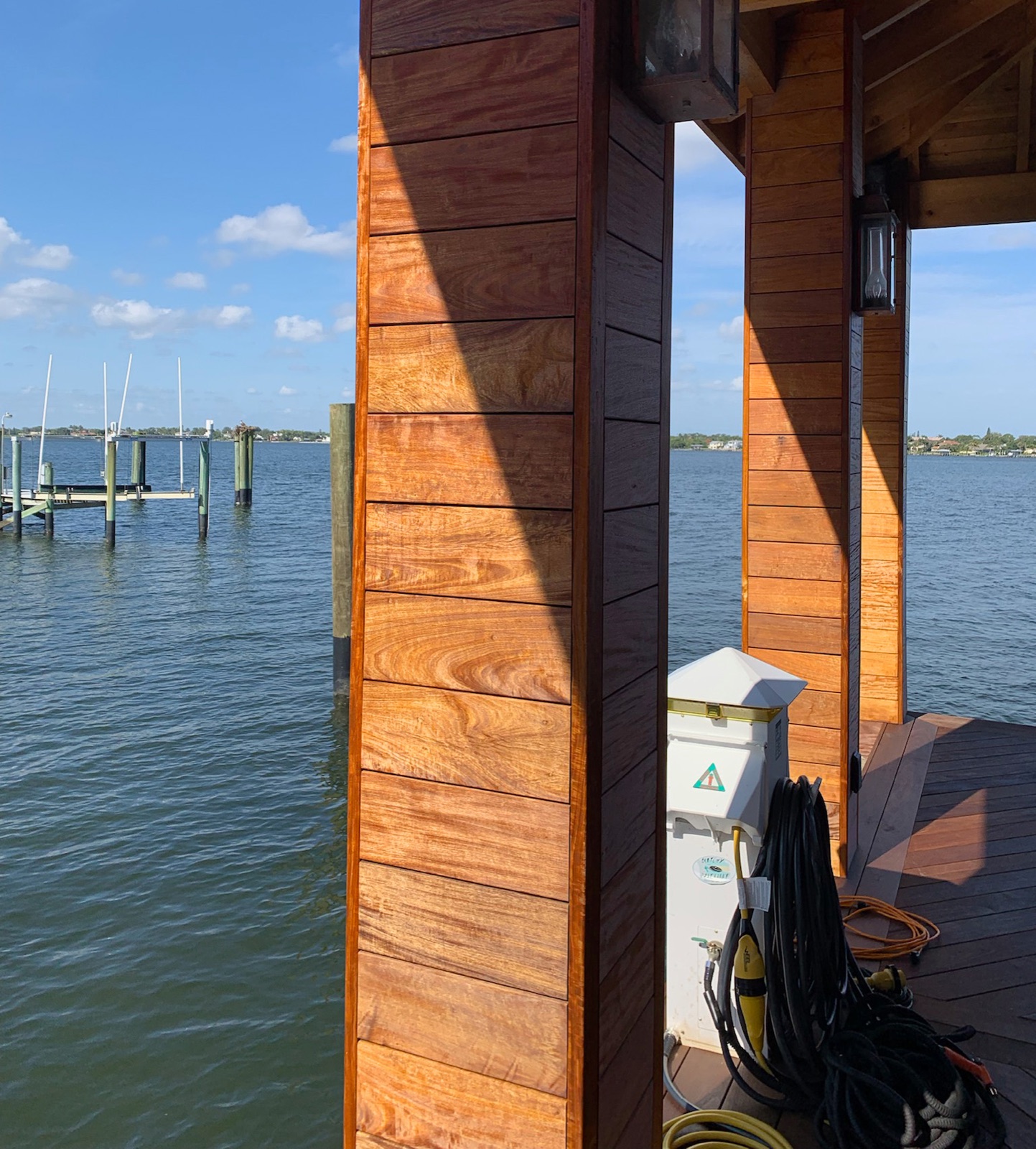
A boardwalk deck board is only as stiff as the framing under it, and dense tropical hardwood demands joists at 16 inches on center as a floor, not a target. Sixteen inches is the working standard for dense hardwood decking. Drop to 12 inches under high-traffic zones, at transitions, at ramp landings and anywhere a maintenance vehicle can reach, and the deck stops moving underfoot in a way people notice without knowing why.
Frame material deserves as much scrutiny as the wearing surface. Many waterfront boardwalks sit on treated southern pine stringers or on steel, and the deck outlives the frame if the frame details are careless. Standing water on a joist top is the single most common cause of premature framing failure. Cap the joists, slope the bearing surfaces where you can, and keep positive drainage under the walkway rather than trusting the board gaps alone. The building enclosure literature at Building Science Corporation covers the drying principles that apply just as much to an exposed horizontal deck as to a wall assembly.
Ventilation under the deck matters more than most spec writers acknowledge. A boardwalk built low over marsh grass or riprap with limited airflow will cup boards that would have stayed flat eighteen inches higher. Where the design forces a low profile, expect to compensate with tighter fastening, more attention to board orientation and a maintenance plan that includes clearing debris from under the walk.
Which Tropical Species Actually Show Up in 2x
Ipe, Cumaru and Jatoba are the tropical decking species available in commercial 2x supply, and the table below sorts the field by that axis rather than by hardness. Janka numbers are useful for wear and dent resistance. They tell you nothing about whether a mill can deliver four hundred pieces of 2x6 in matched color for phase two of a project next spring.
| Species | Commercial 2x availability | Janka (lbf) | EN 350 durability | Where it belongs |
|---|---|---|---|---|
| Ipe (Tabebuia spp.) | Yes, across standard and custom dimensions | ~3,680 | Class 1 | Municipal boardwalks, piers, plazas, heavy public traffic |
| Cumaru | Yes, consistent commercial supply | ~3,540 | Class 1 to 2 | Public decks where a warmer brown tone is wanted |
| Jatoba | Yes, though less common than Ipe or Cumaru | ~2,690 | Class 2 to 3 | Covered walkways, pavilions, sheltered public decking |
| Massaranduba | Comparison reference only | ~3,190 | Class 1 to 2 | Noted for density context, not part of this recommendation |
| Red Balau | No reliable commercial 2x supply | ~1,700 to 2,000 | Class 2 | Residential decks and engineer-approved 5/4 work |
| Garapa | No reliable commercial 2x supply | ~1,700 | Class 2 to 3 | Residential decks, light-toned 5/4 applications |
| Teak | Not a boardwalk deck material at volume | ~1,070 | Class 1 | Marine trim, seating, handrail caps and detail work |
Read that table as a procurement document rather than a beauty contest. Species data on density and mechanical properties is well documented at the USDA Forest Products Laboratory and cross-checked easily against entries such as the Wood Database record for Ipe. What those references cannot tell you is which mill can hold a run together across a multi-phase municipal schedule.
Waterfront Exposure Zones Change the Detailing, Not the Species
Salt spray, tidal wetting and UV load hit different parts of a waterfront boardwalk at very different rates, and the response is zoned detailing rather than a different wood in each zone. A single species across the whole walk keeps the appearance uniform and keeps future repairs simple. What changes zone to zone is hardware, end sealing, drainage and replacement planning.
Splash zone framing and the first few feet of decking above it take the hardest service. Specify 316 stainless fasteners for anything within reach of salt air, not 304 and not coated carbon steel. The premium disappears the first time a crew does not have to chase rust bleed across a light-colored deck. Ipe at EN 350 Class 1 durability handles the wetting itself without preservative treatment, which is exactly why it dominates pier and dock decking.
UV load is the other zone variable. South and west exposures gray faster and check more visibly than shaded runs. Municipal owners who want a uniform silver should be told plainly that the deck will reach it at different speeds in different places, and that this is the wood behaving normally. Owners who want to hold color are signing up for a recoating cycle, and that decision belongs in the maintenance manual at design time rather than in a complaint email three summers later.
Surface Checking Is Normal and It Is Managed, Not Prevented
Fine surface checks in dense tropical decking are the wood releasing tension as the face heats and dries faster than the core, and nobody can promise a checking-free deck. The board does not lose strength. Small surface checks are a normal feature of properly seasoned dense hardwood, and treating them as a defect on a public project sets up an inspection fight that has no technical basis.
The mitigation that actually moves the needle happens before the material ships. J. Gibson McIlvain factory coats tropical decking with Cutek, a penetrating oil wood stabilizer that significantly reduces checking by slowing the moisture exchange at the surface. Coating both faces and all four edges before installation is far more effective than trying to coat a deck after it is fastened down, since the underside and the board edges are where the damaging moisture swings actually start.
Site practice keeps the remaining checks small. Deliver material at an in-service moisture content of 12 to 16 percent, sticker it flat and out of direct sun, seal every field cut end the day it is made, and do not install over saturated framing. None of that eliminates checking. All of it keeps checks cosmetic instead of conspicuous. Write that expectation into the submittal so the owner's representative understands what a normal board looks like at year two.
Fastening 2x Hardwood and Drilling It On Site
Every hole in dense tropical decking gets piloted, and every hole gets drilled on site against the frame as it was actually built. No mill should ship decking pre-drilled or pre-countersunk. Layout shifts, field cuts, framing tolerance and butt joint placement invalidate any hole pattern established before the deck exists. A boardwalk crew that receives predrilled boards spends the week plugging holes that landed in the wrong place.
The on-site technique is consistent across public projects. Pilot every hole. Use two fasteners per board per joist. Hold roughly 3/4 inch edge distance so the fastener does not split the edge fiber. Drill full-depth pilots near board ends where splitting risk peaks, and land every butt joint on doubled bearing rather than on a single joist edge. A self-centering combination bit that pilots and countersinks in one pass keeps a long run consistent and saves a crew hours across thousands of fasteners.
Profile selection drives the fastening method. Shiplap decking takes visible face fasteners and nothing else. Only tongue and groove profiles accept hidden fastener systems, and grooves always face down so water drains rather than collecting in the joint. Material sits on furring strips or joists with airflow underneath. On municipal work, face-screwed 2x with stainless hardware remains the standard because it can be inspected, torqued and replaced by a maintenance crew with ordinary tools.
Grading, Volume and the Phased Municipal Schedule
A long boardwalk fails visually when it is assembled from several unrelated purchases, so the supply plan matters as much as the species selection. Municipal projects run in phases, get delayed by permits, and resume in a different fiscal year. Color, grain character and grade drift between packs bought a year apart from different sources, and that drift shows up as banding across a walkway that the public reads instantly.
J. Gibson McIlvain mills and ships Ipe decking nationwide, including regular deliveries to California waterfront projects, in a vast inventory that covers every standard and custom dimension a boardwalk spec calls for. Working from one inventory across all phases of a project is the practical way to hold appearance together, and reserving material against a construction schedule beats chasing the market mid-build. The Ipe decking program is built around commercial and contractor volume rather than counter sales.
"On a boardwalk the material list is the easy part. What the owner is really buying is that phase three looks like phase one, and that only happens if somebody is holding the inventory and staging the deliveries against your schedule instead of selling you whatever landed last week." Norm Moton, Director of Sales, J. Gibson McIlvain
Grading conversations should happen before the bid closes. Agree on what constitutes acceptable color variation, how much sapwood is allowed, and whether the deck will be laid out for color blending on site. Public projects that skip this step end up litigating it during punch list. Hardwood grading terminology and the rules behind it are published by the National Hardwood Lumber Association, which gives both sides a common vocabulary.
Documentation a Municipal Bid Package Should Require
Public procurement puts the sourcing paperwork on equal footing with the physical material, and the bid package should name exactly what it wants. Legal import documentation, chain of custody where certification is required, and species identification on the invoice all belong in the submittal requirements rather than in a hopeful conversation after delivery.
When using a CITES-listed species, documentation is required and must travel with the shipment, and the current appendices are published by the CITES Secretariat. Projects pursuing certified material should reference the applicable chain of custody standard directly through FSC, and green building credits tie back to the rating system documentation at USGBC. J. Gibson McIlvain is FSC certified, which matters on projects where the certificate has to appear in the closeout binder.
Fire and accessibility requirements ride along with the sourcing paperwork on many public jobs. Ipe carries an ASTM E84 Class A rating, meaning a flame spread index of 25 or less, which satisfies the fire performance language that appears in some municipal and park district specifications. Accessibility requirements for surface openings and changes in level come from the US Access Board, and standard test method references can be verified through ASTM International. Design guidance for larger structural assemblies is available through WoodWorks.
Where Modified Wood and Cedar Fit on a Waterfront
Modified woods and cedar have real places on a park waterfront, but the boardwalk deck itself is usually not one of them. Thermory and Abodo Vulcan both deliver dimensional stability and long service in exposed applications, and Accoya does the same with a very different chemistry. All three carry manufacturer warranties, which is a genuine advantage over any solid unmodified wood, since no solid unmodified species carries a warranty of any kind.
The limit is length. Modified products top out around 16 feet because of kiln capacity, and the metric-length products land just under 16 feet. That constraint rarely bothers a deck board, and it matters a great deal for long fascia runs, rail caps and continuous trim. The other limit is thickness. These products are not a 2x commercial decking answer, which puts them on pavilion siding, shade structures, benches, screen walls and site furniture rather than under the public walking surface.
Cedar deserves a fair hearing rather than dismissal. It performs well outdoors and remains a legitimate default for park structures. The grade distinction does need to be understood. Clear vertical grain cedar is the stable, knot-free material for exposed trim and rail components, while select tight knot cedar is a sound, economical choice for pavilion siding and secondary structures. Neither grade belongs under boardwalk foot traffic, where the density difference against Ipe is decisive.
How J. Gibson McIlvain Would Specify This
Write the spec around 2x Ipe on 16 inch centers with 316 stainless hardware, factory Cutek coating, and a delivery schedule tied to the construction phases. That is the configuration that has held up on public waterfronts for decades, and the details below are what separate a boardwalk that ages gracefully from one that generates a punch list.
Specify Ipe (Tabebuia spp.) in nominal 2x6 for the walking surface, with 2x4 or 2x6 reserved for stair treads and edge banding as the design requires. Call for material delivered at 12 to 16 percent moisture content and factory coated with Cutek on all faces and edges. Set joists at 16 inches on center as the maximum, tightening to 12 inches at ramp landings, overlooks and any zone rated for maintenance vehicle access. Require doubled bearing at every butt joint.
On hardware, specify 316 stainless throughout for coastal and brackish exposure, with two fasteners per board per joist, piloted and countersunk on site using a self-centering combination bit at roughly 3/4 inch edge distance. Reject any proposal to deliver predrilled material. If a hidden fastener look is required at a plaza or overlook, switch that area to a tongue and groove profile with grooves facing down, and keep the shiplap or square-edge face-screwed detail everywhere the maintenance crew needs board-by-board access.
Include the sourcing language. Name the species on the invoice, require legal import documentation, ask for FSC chain of custody where the project calls for it, and cite ASTM E84 Class A where the authority having jurisdiction asks for it. State in the submittal that fine surface checking is normal in dense tropical decking and is not grounds for rejection. Finally, lock the material for all phases at award rather than buying phase by phase. For a takeoff, a grading conversation or a phased delivery schedule on a park or waterfront project anywhere in the country, call J. Gibson McIlvain at 800-638-9100 or start at mcilvain.com.
Frequently Asked Questions
If the span calculation says 5/4 decking works, why do public boardwalks still get specified in 2x?
The controlling issue on a public walkway is serviceability, not ultimate strength. A 5/4 board can satisfy the load math at close joist spacing and still feel springy to a crowd, and that perceived movement is what generates owner complaints and premature fastener loosening. A 2x board also tolerates the abuse a municipal deck accumulates over time: replaced boards, rebuilt rail posts, re-fastening after maintenance work. The industry practice is settled. Commercial boardwalk, pier and plaza decks get 2x, and nobody goes first with a thinner board on a public job.
Can Garapa or Red Balau be used on a municipal boardwalk?
Not for the walking surface on a commercial or public deck. Both are legitimate decking woods, and neither is available in commercial 2x decking thickness with any consistency, which puts them outside a municipal boardwalk spec. Their home is residential decking and engineer-approved 5/4 applications where the structure has been designed around the thinner board. Substituting them into a public deck spec to hit a budget target creates a deflection and replacement problem the owner inherits.
Should we order boardwalk decking pre-drilled to save field labor?
No. Fastener holes are installation work, drilled on site against the frame as it was actually built. Framing tolerance, field cuts, layout adjustments and butt joint placement all shift after the material is ordered, so any hole pattern established at the mill lands in the wrong place. The efficient approach is a self-centering combination bit that pilots and countersinks in one pass, with two fasteners per board per joist and roughly 3/4 inch edge distance.
Are surface checks in Ipe decking a defect we can reject on a public project?
They are not a defect. Checking is the natural release of tension as the board face heats and dries faster than the core, it does not reduce the strength of the board, and small surface checks are consistent with properly seasoned dense hardwood. Nobody can promise a checking-free tropical deck. What reduces checking measurably is factory coating with Cutek, a penetrating oil wood stabilizer, combined with correct moisture content at delivery, end sealing of every field cut and good ventilation under the deck. Say all of that in the submittal so the inspection standard is set before the first board goes down.
What joist spacing does 2x tropical hardwood decking need on a boardwalk?
Sixteen inches on center is the working maximum for dense hardwood decking. Tighten to 12 inches at ramp landings, overlooks, gangway transitions and any zone that a maintenance vehicle can reach. Butt joints should always land on doubled bearing rather than sharing a single joist edge, and joist tops should be capped or detailed so water does not stand on them.
Does Jatoba hold up on an exposed waterfront boardwalk?
Jatoba is the third species available in commercial 2x decking thickness, and its durability class sits below Ipe and Cumaru. That makes it a good fit for covered walkways, pavilion decks and sheltered public areas rather than a fully exposed pier deck in a marine environment. Where the walk is open to sun, spray and standing water, Ipe or Cumaru is the stronger call.
How do we keep phase two of a boardwalk matching phase one when the phases are a year apart?
Lock the material for all phases at award and have the supplier hold it. Color, grain and grade drift between purchases made at different times from different sources, and that drift shows up as visible banding across a long run. Agreeing on grading expectations before the bid closes, then drawing all phases from one reserved inventory, is the only reliable way to hold appearance together across a multi-year municipal schedule.
Can thermally modified wood replace tropical hardwood on a boardwalk deck?
Not on the deck surface. Thermory and Abodo Vulcan are stable, well-documented products with manufacturer warranties, and they are not available as 2x commercial decking. They also cap at around 16 feet in length because of kiln size, with metric-length products landing just under 16 feet. Put them where they perform best on a park waterfront: pavilion siding, shade structures, benches, screen walls and site furniture.
Sources and Standards Referenced
- USDA Forest Products Laboratory
- American Wood Council, Codes and Standards
- US Access Board, ADA Accessibility Standards
- ASTM International
- CITES, Convention on International Trade in Endangered Species
- Forest Stewardship Council
- National Hardwood Lumber Association
- The Wood Database, Ipe
- WoodWorks, Wood Products Council
- Building Science Corporation