Order the Whole Facade as One Package
A custom home is not just wall siding. It is siding, soffit, fascia, trim, and corners, and they all have to match. Buy them piecemeal and the soffit cedar comes from a different lot than the walls, and the difference shows on a bright day.
Ordering the field and the trim together, in one grade from one source, is what keeps the whole house reading as a single material. Clear vertical grain cedar is the usual pick for a high-end custom facade because it is clean and stays put, though select tight knot cedar carries a rustic custom home just as well. For the volume side of this, see our guide on bulk tongue-and-groove cedar for a custom home, and for the underside, our wood soffit species guide.
A Real Take-Off Is Half the Job
A whole-facade cedar order needs a take-off, not a round number. Net and gross square footage, run lengths, soffit and trim quantities, and a waste factor for the profile and cut pattern all feed the order.
| Element | Matched to the field? | Note |
|---|---|---|
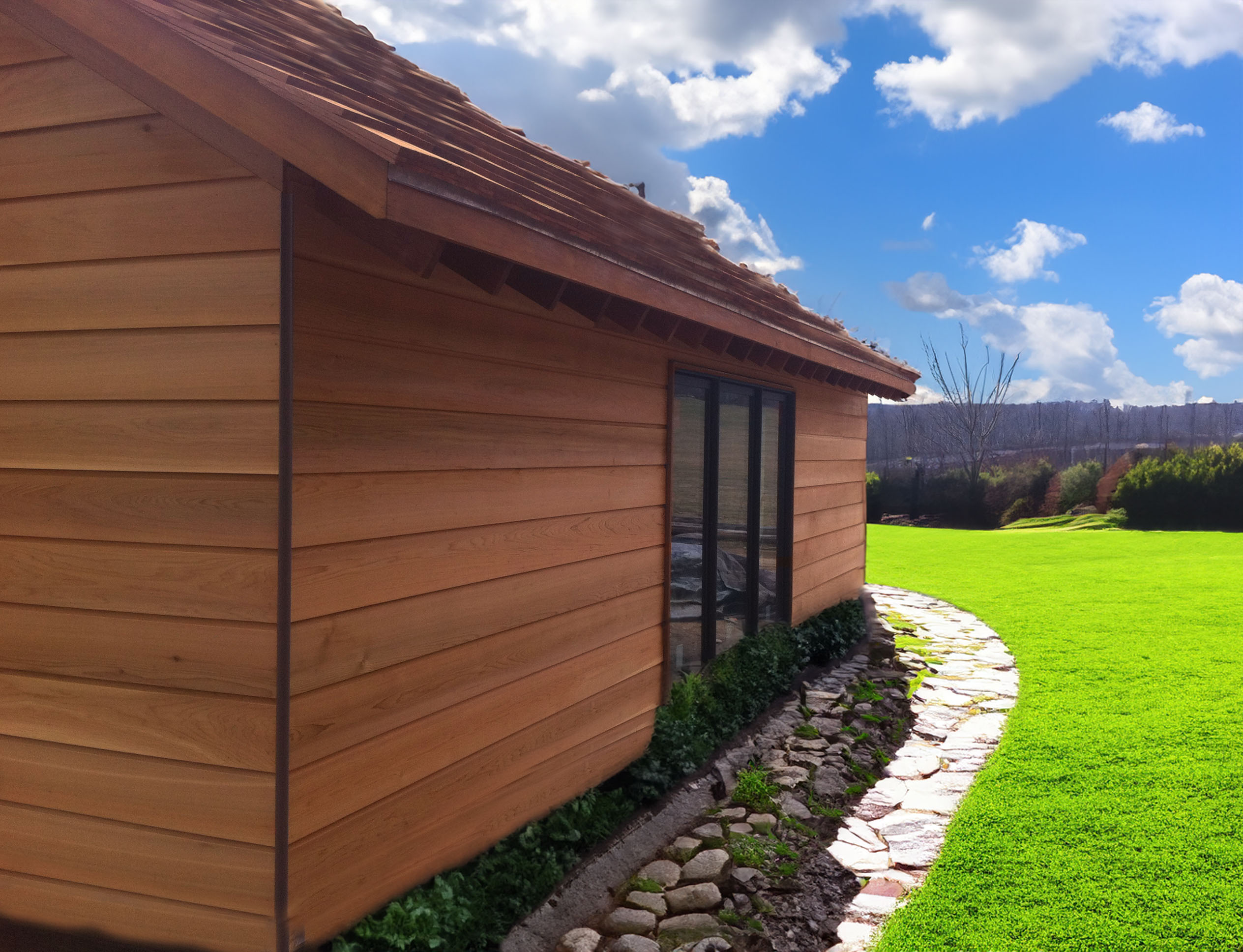
| Wall siding (T&G) | Base material | Blind-nailed through the tongue for a clean face |
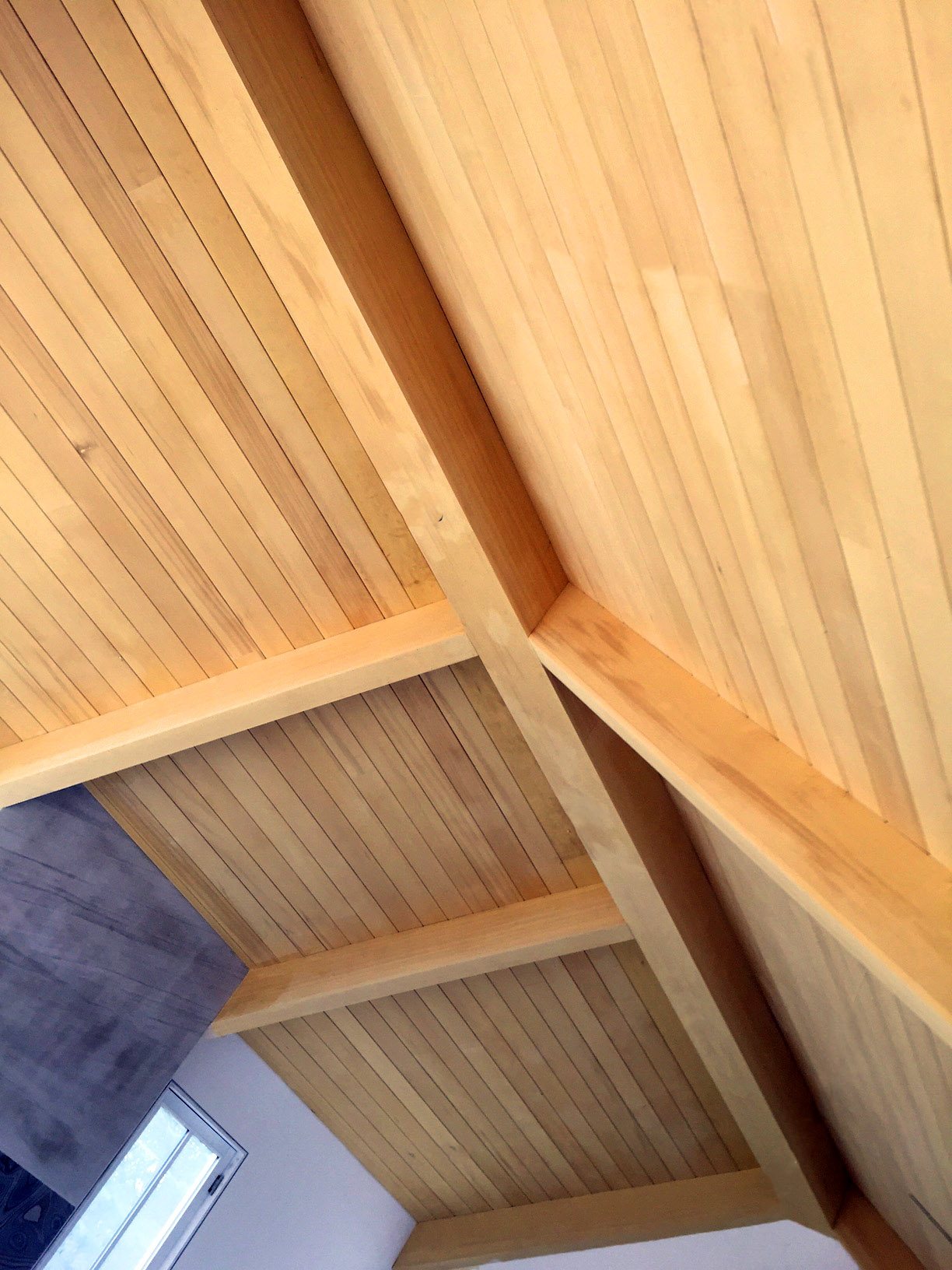
| Soffit | Yes | Same grade and color; ventilated per the design |
| Fascia and trim | Yes | Milled from the same cedar and grade |
| Corners and transitions | Yes | Detailed so the material carries around |
Tongue-and-groove is the profile of choice here because it hides its fasteners. The crew blind-nails through the tongue, so the finished face has no exposed heads. Shiplap on an exterior wall would need face fastening, which is why T&G wins on a clean custom facade. A take-off built around the T&G profile and the trim keeps the order from coming up short mid-install.
One Grade, One Color, One Tolerance
The whole point of single-sourcing a custom facade is that the material holds to one grade band and one color range. Cedar varies naturally, and a supplier that buys deep can pull an order that stays within a tight window.
Running it all to one profile tolerance means the T&G joints fit the same everywhere, and the trim meets the field cleanly. J. Gibson McIlvain mills cedar T&G and the matching trim in-house from one grade, so the field, soffit, and trim on a custom home come off the same spec and ship together nationwide. Cedar rides freeze-thaw movement well, which is part of why it has clad custom homes for generations.
Install Notes for a Cedar T&G Facade
Cedar T&G on a custom home installs over a ventilated rainscreen, at the right moisture content, with stainless fasteners through the tongue. Get the assembly right and a cedar facade lasts.
- Rainscreen: furr the wall for a minimum 3/8 inch vented cavity so the cedar drains and dries; see our furring and ventilation guide.
- Fasteners: stainless, blind-nailed through the tongue on the field; face-fasten trim as needed.
- Moisture content: acclimate and install near in-service equilibrium; see our moisture content guide.
- Orientation: run grooves down so the profile drains.
"On a custom home the mistake is ordering the wall siding first and worrying about soffit and trim later. Then the trim shows up from a different lot and it does not quite match. We order the whole house as one package, one grade, one color, and mill the trim from the same cedar as the field. It shows up together and it all matches. That is what makes a cedar facade look custom instead of assembled."
Camden Zacker, Sales Director, J. Gibson McIlvain Company
How J. Gibson McIlvain Supplies a Whole Cedar Facade
J. Gibson McIlvain builds a whole-facade cedar order from a take-off that covers the field, soffit, fascia, trim, and corners in one grade. The team mills the T&G and the matching trim in-house, holds the order to one grade band and color range, and ships it together nationwide, so a custom home arrives as a matched set rather than parts from different lots. Clear vertical grain is the usual spec for a clean high-end look, with select tight knot for a rustic home.
Where a buyer wants cedar's look with more stability on a large facade, the team can weigh it against modified woods like Accoya, Thermory, and Abodo Vulcan, or a tighter cedar grade. The recommendation always pairs the order with a vented rainscreen and the right moisture content, since a whole house installed off its equilibrium will move.
Whole-Facade Cedar Checklist
| Item | Why it matters |
|---|---|
| Take-off with trim and soffit | Order the whole house, not just the walls. |
| One grade: CVG or STK | Sets the look; hold it across the order. |
| Matching trim milled in-house | Field and trim from the same cedar and grade. |
| One color range | The house reads as a single material. |
| T&G for hidden fasteners | Blind-nailed through the tongue for a clean face. |
| Rainscreen and moisture content | Vented cavity, in-service EMC, stainless. |
Where Whole-Facade Cedar Orders Usually Fail
- Ordering siding and trim separately: the trim shows up from a different lot and does not match.
- Round-number order, no take-off: the order comes up short mid-install.
- Mixed grade on one house: CVG and STK read as two different facades.
- Shiplap where a clean face is wanted: exterior shiplap shows fasteners; use T&G.
- No rainscreen or wrong moisture content: a whole facade moves after install.
Ordering Information to Resolve Before Pricing
- Take-off: net and gross square footage, run lengths, soffit and trim quantities.
- Grade: CVG or STK, held across the order.
- Profile: T&G face width and reveal, plus matching trim profiles.
- Finish: unfinished, factory finished, or field finished.
- Logistics: single-source confirmation, delivery together, lead time.
Related J. Gibson McIlvain Guidance and Next Steps
Frequently Asked Questions
How do I order tongue-and-groove cedar for a whole custom home?
Order the field siding, soffit, fascia, trim, and corners as one package, matched in grade and color, from a single supplier. Build a take-off with net and gross square footage, run lengths, and the soffit and trim quantities, all specified to one grade. J. Gibson McIlvain mills cedar T&G and the matching trim in-house, holds the order to one grade and color, and ships the whole facade together nationwide, so the house reads as one material.
Why order the siding and trim together?
Cedar varies naturally between lots, so siding and trim ordered separately can come from different lots and not quite match, which shows on a custom home. Ordering the field and the trim together in one grade from one source keeps the whole house within a tight color and grade window. J. Gibson McIlvain mills the trim from the same cedar and grade as the field, so the soffit, fascia, and corners match the walls.
Why use tongue-and-groove for a custom cedar facade?
Tongue-and-groove hides its fasteners. The crew blind-nails through the tongue, so the finished face has no exposed heads, which is the clean look most custom homes want. Shiplap on an exterior wall would need face fastening with visible stainless. T&G is the profile that gives a custom cedar facade an uninterrupted face, and it should be run grooves-down so the profile drains.
Which cedar grade is best for a custom home?
Clear vertical grain (CVG) cedar is the usual choice for a clean, high-end custom facade, since it is tight-grained, moves little, and reads uniform. Select tight knot (STK) cedar carries a rustic custom home just as well, at a lower price and with more character. Neither is better; the grade should match the design intent, and it should be held consistent across the whole order so the house does not read as a patchwork.
How is a cedar T&G facade installed?
Cedar T&G installs over a ventilated rainscreen cavity of at least 3/8 inch so it drains and dries, blind-nailed through the tongue with stainless fasteners on the field and face-fastened at trim as needed. Acclimate and install near the in-service equilibrium moisture content so a whole facade does not move after it goes up, and run grooved profiles groove-down to drain. The assembly is what makes a cedar facade last.
Sources and Standards Referenced
- Western Wood Products Association - Western Red Cedar grades and profiles
- USDA Forest Products Laboratory - Cedar properties and moisture content
- Building Science Corporation - Rainscreen and cladding detailing
- American Wood Council - Wood construction standards
- Forest Stewardship Council - Chain of custody certification