The short answer on width overhead
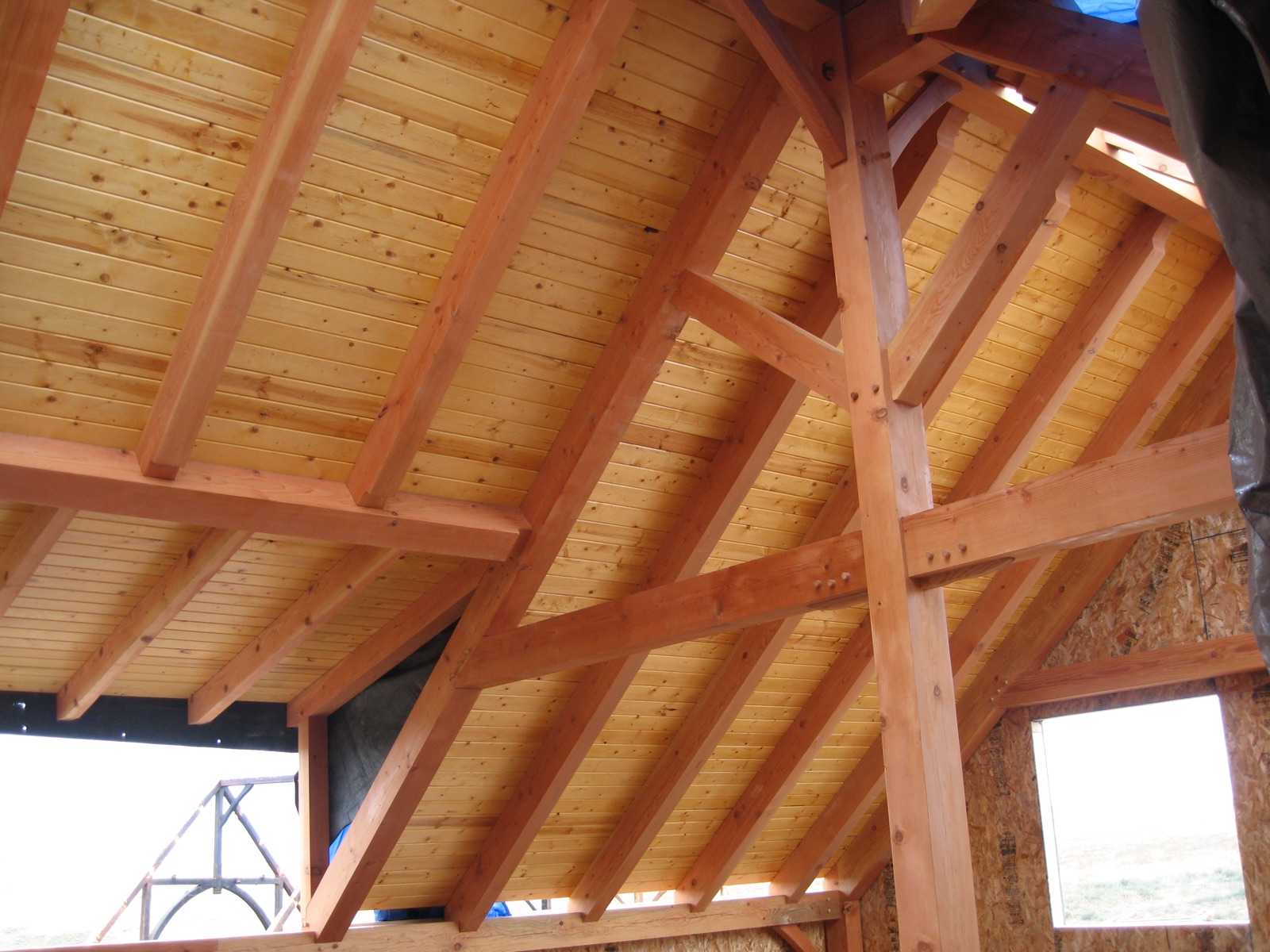
A blind-nailed tongue and groove ceiling board stops behaving reliably somewhere around a 7 inch face, which in nominal terms means 1x8 is the last width most jobs should run overhead without changing how the board is sawn or how it is fastened. Push past that and one of three things gives. The single fastener driven through the tongue can no longer hold a wide plainsawn board flat, so the edges lift and read as cupping under any light that rakes across the surface. Or the installer adds a face fastener to pin it down, which stops the board from moving and eventually splits it. Or the seasonal shrinkage across a 10 or 11 inch face opens each joint far enough to pull the tongue back and expose a raw, unfinished stripe of wood along every seam.
None of that is a collapse risk in a normal room. The real safety question on a ceiling is a code question about flame spread, not a strength question about width, and it deserves its own answer further down. What width actually governs is whether the ceiling stays flat and tight for twenty years. There is a way to run wide plank overhead and have it hold. It requires quartersawn or rift stock, a deeper tongue, a profile with a reveal that absorbs movement, moisture content milled to the building rather than to the warehouse, and finish on all four faces before anything goes up.
A ceiling is not a feature wall turned sideways
The same T and G profile behaves differently overhead because gravity works against the fastener instead of with it and because ceiling light is nearly always raking light. On a wall, a cladding fastener carries much of the board's weight in shear along the shank. Overhead, that same fastener is loaded in withdrawal, straight out along its axis, which is the weakest way to load a nail or a staple in wood. The American Wood Council publishes the withdrawal design values that engineers use for exactly this condition, and they fall off sharply in low density species and where the framing was wet when the nail was driven and seasons afterward. See the AWC codes and standards library for the National Design Specification tables that govern it.
Then there is the light. A wall gets light striking it more or less head on from a window or a fixture. A ceiling gets light traveling almost parallel to its surface from every wall sconce, every cove, every window head. A twelfth of an inch of cup that would be invisible on a wainscot throws a hard shadow line across a ceiling. That is why the same board width that looks fine on a feature wall reads as a defect twelve feet up.
Where one fastener stops being enough
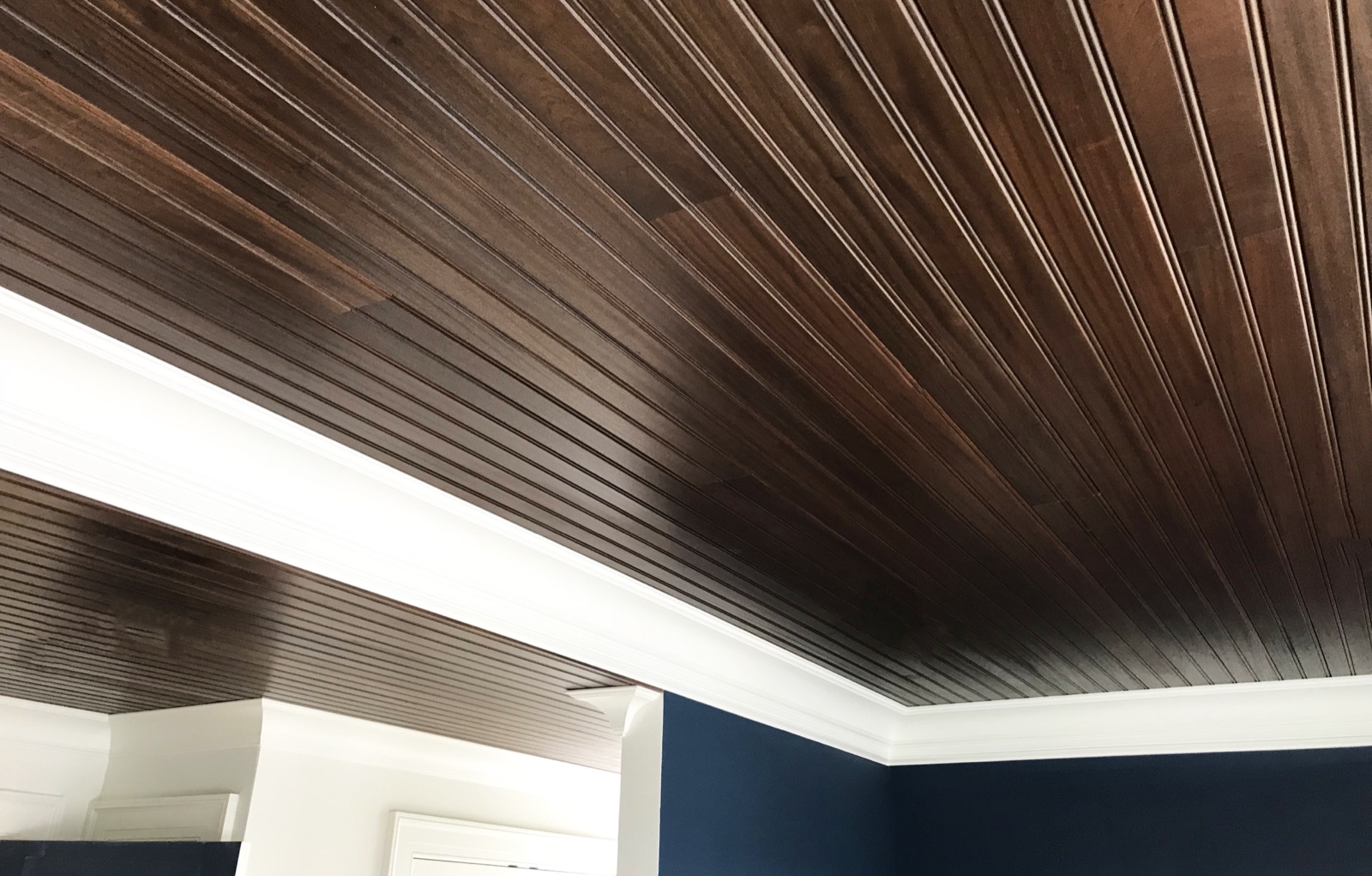
Blind nailing through the tongue holds a board flat up to roughly a 7 inch face, and past that the board needs either a second point of restraint or a sawing pattern that removes the need for one. The blind nail is the whole reason a tongue and groove ceiling works. One fastener per bearing, driven at an angle through the base of the tongue, pins one edge of the board and lets the rest of the width expand and contract sideways under the covering board. The joint hides the fastener and the wood is free to move. That freedom is the point.
A wide plainsawn board defeats it. The far edge is too far from the single restraint, so as the board dries it cups away from the framing and the groove edge rides up out of the tongue. The instinctive fix is a face nail near the open edge. That fix converts a floating board into a pinned board, and a pinned wide board in a room that swings from a humid August to a dry heating season will check or split. Careful installers who need to face fasten a wide board use one fastener line only, near one edge, and never two lines across the same board on the same bearing.
Bearing spacing matters as much as fastener count. Ceiling boards want support at 16 inches on center or tighter, which on a joist ceiling running the wrong direction means furring. The board is the finish surface, not a structural diaphragm, and the installer handles that layout. J. Gibson McIlvain supplies and mills the material and does not install it, so the shop's job is to hand the installer stock that is straight, consistently machined, and dimensionally settled before it reaches the site.
"We get the call after the ceiling is already cupping, and nine times out of ten the boards were 1x10 plainsawn and nobody told the shop what the building's humidity was going to be. If a customer wants width overhead, I want to know the sawing, the finish schedule and the target moisture content before we cut a single knife."
Norm Moton, Director of Sales, J. Gibson McIlvain
How much a wide board actually moves
Dimensional change across the width is roughly proportional to width, so a 10 inch face moves about twice as far as a 5 inch face through the same seasonal humidity swing. The mechanism is well documented. The USDA Forest Products Laboratory's Wood Handbook gives tangential and radial shrinkage coefficients for the commercial species, and for most of the hardwoods used in architectural ceilings the tangential figure works out near a quarter of one percent of width for each percentage point of moisture content change. A conditioned interior that runs from about 8 percent equilibrium moisture content in a wet summer down to about 6 percent in a dry winter is a two point swing. On a 3 inch face that is a movement you will never see. On a 10 and three quarter inch face it is closer to a sixteenth of an inch, at every single joint, all traveling the same direction across the room.
Interior millwork is milled to an in-service moisture content near 6 to 8 percent for this reason, and exterior work near 12 to 16 percent. Getting that number right is worth more than any fastening trick. A ceiling milled at 12 percent and installed in a heated building will shrink in place no matter how it was nailed. The other consequence of width is joint geometry. A standard tongue depth designed for narrow boards does not have enough reach to stay covered when a wide board shrinks, which is how ceilings end up with a pale unfinished line at every seam. Wide stock wants a deeper tongue and a groove cut to match.
Quartersawn and rift stock is what buys back the width
Quartersawn and rift boards move roughly half as much across their width as plainsawn boards of the same species, which is the single specification change that makes a 1x10 or 1x12 ceiling defensible. Growth rings running close to perpendicular to the face put most of the seasonal movement into thickness instead of width, and they largely remove the differential that makes a plainsawn board cup toward its bark face. The tradeoff is yield. Quartersawn stock comes out of a narrower slice of every log, and clear wide long boards are graded on clear cutting yield under the National Hardwood Lumber Association rules, so the wider and longer the requirement, the shorter the list of logs that can produce it. Width overhead is as much a procurement problem as a milling problem.
| Nominal size | Approximate face width | Blind nail alone | Sawing to specify | What shows if you push it |
|---|---|---|---|---|
| 1x4 | About 3 inches | Yes, plainsawn is fine | Any | Nothing. This is the safe default overhead. |
| 1x6 | About 5 inches | Yes | Plainsawn acceptable, rift better in wide grain species | Faint seam shadow in a dry heating season |
| 1x8 | About 7 inches | Yes, with a deeper tongue | Rift or quartersawn preferred | Edge lift at bearings if moisture content was wrong |
| 1x10 | About 9 inches | No, needs restraint or quartersawn stock | Quartersawn, essentially required | Visible cupping under raking light, open joints |
| 1x12 | About 11 inches | No | Quartersawn only, deep tongue, back relief | Cup, exposed tongue, split at any face fastener |
The profile does more work than the fastener
A V-groove, a nickel gap or a shiplap reveal absorbs seasonal movement optically, which is why wide plank ceilings are almost never specified with a square-edge tight joint. A tight square joint has one appearance when it is closed and a different appearance when it opens a sixteenth. A chamfered V at the joint line already reads as a shadow, so a small seasonal change simply makes an existing shadow slightly deeper. Nobody sees it. That is the entire trick, and it is a milling decision made before the knife is ground.
Back relief is the other one. Kerfing or hogging out the back face of a wide board takes tension out of the plank, lets it sit flat against imperfect furring, and gives the fastener less spring to fight. It also lightens the board, which matters when an installer is holding an eleven inch plank overhead single handed.
J. Gibson McIlvain runs moulders, custom knife grinders, straight line and gang rip saws, band resaws and trimming saws on its own floor, and the millwork service works from a profile library holding thousands of profiles with new knives ground custom every week. If a ceiling profile is not already in the library, it gets ground to match, including historical restoration profiles where a preservation review requires a like-for-like replacement. The National Park Service Technical Preservation Services standards are the usual reference on those jobs. Standard trim profile numbering follows the Wood Moulding and Millwork Producers Association WM series, which is a useful shorthand but rarely covers what an architect has actually drawn for a ceiling.
Species selection for interior ceilings and feature walls
For milled, glued and machined ceiling and wall components the working palette is Sapele, Utile, Iroko, Afrormosia and Teak, with rift White Oak, Genuine Mahogany, Hard Maple and Cherry where the design calls for them. Sapele is the workhorse. It machines to a crisp edge, holds a moulded profile, runs about 1,410 lbf on the Janka scale, and comes in a range of widths and lengths that a wide plank ceiling can actually be built from. Published property data for Sapele shows the interlocked grain that gives quartersawn stock its ribbon figure, which is a large part of why designers ask for it overhead. Utile behaves similarly and is often the better answer when the design wants a quieter, more uniform face. Iroko and Afrormosia bring more color and more density. Teak is the premium choice where a ceiling has to shrug off moisture, in a covered exterior room or a wet interior space.
White Oak at roughly 1,360 lbf takes stain predictably and is specified rift for exactly the flatness reason described above. Genuine Mahogany at roughly 800 lbf is soft enough to dent but stays flat and is easy to work. Hard Maple at roughly 1,450 lbf and Cherry at roughly 950 lbf both show up on feature walls where a specific color is the point.
What does not belong on this list is the tropical decking group. Ipe, botanically Tabebuia spp, along with Cumaru, Garapa, Jatoba and Red Balau, are extremely hard and carry high oil content, which makes them difficult to glue and hard on knives. A millwork house reaches for Sapele, Iroko, Afrormosia, Teak or Utile instead, and saves the decking species for decks. Where an imported species is CITES listed, the documentation and chain of custody travel with the material, and FSC certified stock is available on request.
Porch ceilings, soffits and exterior cladding
Exterior ceiling boards are milled to a moisture content near 12 to 16 percent, not to interior numbers, and cupping outdoors is driven by installation and back ventilation rather than by species choice. A porch ceiling that traps humid air against its back face will cup no matter what it is made of. The building science on ventilated cladding assemblies is well covered by Building Science Corporation, and the same rules apply looking up as looking sideways.
Cedar remains a legitimate default for porch ceilings and soffits. Clear vertical grain, CVG, gives a uniform tight-grained face with minimal movement and is what most architects mean when they draw a cedar soffit. Select tight knot, STK, is a different and entirely valid product where the design wants visible character. They are not interchangeable on a submittal.
Modified woods are the other exterior route. Accoya, acetylated to a Janka around 1,600 lbf with dramatically reduced shrinkage and swelling, holds paint better than almost anything and is the right call for a painted exterior ceiling. Thermory and Abodo Vulcan are both carried and both worth considering for a natural exterior look. Two hard limits apply. Modified woods top out around 16 ft because of kiln size, and most are sold on metric lengths just under 16 ft, so a long run needs a joint plan. And thermally modified Ash is not available wider than 8 inches, so a wide board in a modified product means Accoya or Abodo Vulcan. For painted exterior trim generally, Sapele beats Genuine Mahogany on paint holding and on available sizes and lengths, though Sapele is not milled 1x8 for exterior use because that width will not stay stable outdoors.
One thing worth saying plainly. There are no warranties on solid unmodified wood. It is an organic material responding to its environment, and no honest supplier can warranty it. Warranties exist only on the modified products.
What safe actually means on a commercial ceiling
In a commercial building the governing safety question about a wood ceiling is flame spread classification, not board width. The International Building Code's interior finish provisions classify wall and ceiling finishes by flame spread index and smoke developed index from the ASTM E84 tunnel test, and the required class varies by occupancy, by whether the space is sprinklered, and by whether the surface is in an exit enclosure, an exit access corridor or a general room. Ceilings and walls are treated together in that table, but corridors and vertical exits carry the tightest requirements, which is where an untreated wood ceiling gets a project into trouble. Start with the International Code Council for the adopted code text, cross check the life safety requirements at the National Fire Protection Association, and confirm the test method itself through ASTM International. For assembly level guidance on wood in commercial construction, WoodWorks publishes useful design resources.
Dead load is a smaller issue than people expect. Three quarter inch hardwood ceiling boards land in the range of three pounds per square foot, which typical ceiling framing handles without comment. It stops being trivial when the design calls for thicker stock, a heavy coffer, or hanging new material from an existing plaster ceiling. That is an engineer's call, and it should be made before the millwork is ordered rather than after.
Primed, prefinished, and ready to install
A ceiling board should arrive with finish on all four faces, because the seasonal shrinkage that exposes part of the tongue will expose raw wood if only the visible face was coated. That is the practical argument for prefinishing, and it is stronger overhead than anywhere else in a building. It is also far easier to finish a stack of boards flat in a shop than to spray a finished room's worth of ceiling with drop cloths over the floor.
J. Gibson McIlvain primes wood in three levels, in both oil-based and water-based systems. Exterior primed trim should carry a fungicide additive. Open-grained and oily species absorb a great deal of finish, so a primer coat evens out what the eventual painted surface looks like, and sanding or buffing after priming knocks back the grain raising while keeping the moulded detail crisp. That last part matters on a V-groove ceiling, where a heavy, unsanded primer coat can soften the very shadow line the profile was cut to create.
Finished millwork can be stored at the mill for inventory control, which is how long lead ceiling packages get staged without sitting in a jobsite trailer absorbing whatever the weather is doing. Material ships nationwide, regularly to California.
How J. Gibson McIlvain Would Specify This
For a wide plank tongue and groove ceiling, specify quartersawn or rift stock, hold the face width at or under 7 inches unless the sawing and the profile are both upgraded, and state the target in-service moisture content on the submittal. Here is what a complete ceiling specification looks like from a mill's side of the desk.
Name the species from the millwork palette and the sawing in the same line, as in quartersawn Sapele or rift White Oak. State the in-service moisture content, near 6 to 8 percent for conditioned interiors and near 12 to 16 percent for covered exterior ceilings and soffits, and state the building's expected humidity range if it is unusual. Give the face width, not the nominal size, so there is no argument later about what a 1x8 means. Specify the joint profile including tongue depth, and require a V-groove, nickel gap or shiplap reveal on anything wider than a 5 inch face. Ask for back relief on wide stock. Specify the finish schedule and whether it is prefinished all four faces at the mill or primed for site finishing, and for exterior work call out the fungicide additive in the primer. Give a length schedule that respects the 16 ft ceiling on modified products if a modified product is in play.
Where the ceiling includes coffers, box beams or radius trimwork, that work moves to ICD, the company's architectural millwork division, which handles true custom millwork planned to fit a specific space. Box beams come with a real joinery choice. Butt joints give the most minimal profile, the fastest turnaround and the easiest site assembly, but they leave visible seams and visible end grain and they are the weakest. Dado joints are strong and still easy to assemble on site, though seams and end grain still show. Lock miter joints show no visible seams at all and are the strongest of the three. The ICD trim profile work covers the same ground for radius and historically matched sections.
Send the ceiling drawings, the species, the width and the humidity conditions to J. Gibson McIlvain at 800-638-9100 and the shop will grind the knife, mill the tongue depth to the width, and prime or prefinish before it ships. It arrives ready for the installer to hang.
Frequently Asked Questions
What is the widest tongue and groove board I can safely run on a ceiling?
Around a 7 inch face, which is nominal 1x8, is the practical limit for a plainsawn board held with a single blind nail per bearing. Wider than that and the board needs quartersawn or rift sawing, a deeper tongue than a standard narrow board profile carries, and a reveal at the joint so seasonal movement is not visible. A 1x12 quartersawn ceiling is entirely buildable. A 1x12 plainsawn ceiling blind nailed like a 1x4 is not.
Should I face nail wide ceiling boards to stop them cupping?
Only in one line, near one edge, and only when the board width leaves no alternative. Two fastener lines across the same board on the same bearing pin the plank in both directions and force the seasonal movement to relieve itself as a check or a split. The better answer is to remove the cause rather than restrain the symptom: specify quartersawn stock, correct moisture content and back relief on the plank.
Does a V-groove or nickel gap actually do anything, or is it just a look?
It does real work. A square-edge tight joint changes appearance the moment it opens a sixteenth of an inch, so every seasonal cycle is visible. A chamfered V or a gapped reveal is already a shadow line, so a small movement just changes the depth of a shadow that was there by design. On any board wider than about a 5 inch face, specify a reveal.
What moisture content should ceiling boards be milled to?
Interior millwork is milled to an in-service moisture content near 6 to 8 percent and exterior work near 12 to 16 percent. That number should be on the submittal, along with the building's humidity range if it is unusual, such as a natatorium, a coastal house left unconditioned in summer or a gallery running tight humidity control. A ceiling milled to the wrong number will move in place regardless of how well it was fastened.
Which species work best for a wide plank interior ceiling or feature wall?
Sapele leads, at roughly 1,410 lbf Janka, machining crisply and available in the widths and lengths a wide plank ceiling needs. Utile is the quieter, more uniform alternative. Iroko and Afrormosia give more color and density, and Teak is the choice where moisture is part of the room. White Oak at roughly 1,360 lbf specified rift is the domestic answer. The tropical decking species are a poor fit for milled and glued components because their hardness and oil content make them difficult to glue.
Can I get a wide modified wood board for an exterior porch ceiling?
Yes, but the product choice is narrower than people expect. Thermally modified Ash is not available wider than 8 inches, so a wide board in a modified product means Accoya or Abodo Vulcan. Accoya runs around 1,600 lbf Janka with dramatically reduced shrinkage and swelling and holds paint exceptionally well. All modified woods top out around 16 ft because of kiln size, and most are sold on metric lengths just under 16 ft, so a long run needs a joint plan drawn before the order goes in.
Does J. Gibson McIlvain install the ceiling?
No. J. Gibson McIlvain supplies and mills. The shop grinds the knife, mills the profile and the tongue depth, primes or prefinishes the boards and ships them nationwide, regularly to California. Furring layout, blind nailing, expansion allowance at the perimeter and any field cutting are handled by the buyer's own installer or fabricator.
Is there a warranty on a solid wood ceiling?
There are no warranties on solid unmodified wood. It is an organic material that responds to the humidity around it, and no supplier can honestly warranty that behavior. Warranties exist on the modified products, where the acetylation or thermal modification process itself is what is being guaranteed.
Sources and Standards Referenced
- USDA Forest Products Laboratory, Wood Handbook: Wood as an Engineering Material
- American Wood Council, Codes and Standards (National Design Specification for Wood Construction)
- International Code Council, I-Codes and Interior Finish Provisions
- ASTM International, Standard Test Method for Surface Burning Characteristics of Building Materials
- National Hardwood Lumber Association, Rules for the Measurement and Inspection of Hardwood Lumber
- Wood Moulding and Millwork Producers Association, WM Series Profiles
- Building Science Corporation, Cladding and Ventilated Assemblies Research
- National Park Service Technical Preservation Services, Standards for Rehabilitation
- The Wood Database, Sapele Properties
- J. Gibson McIlvain Millwork Service