Why Thermally Modified Ash Stops at 8 Inches
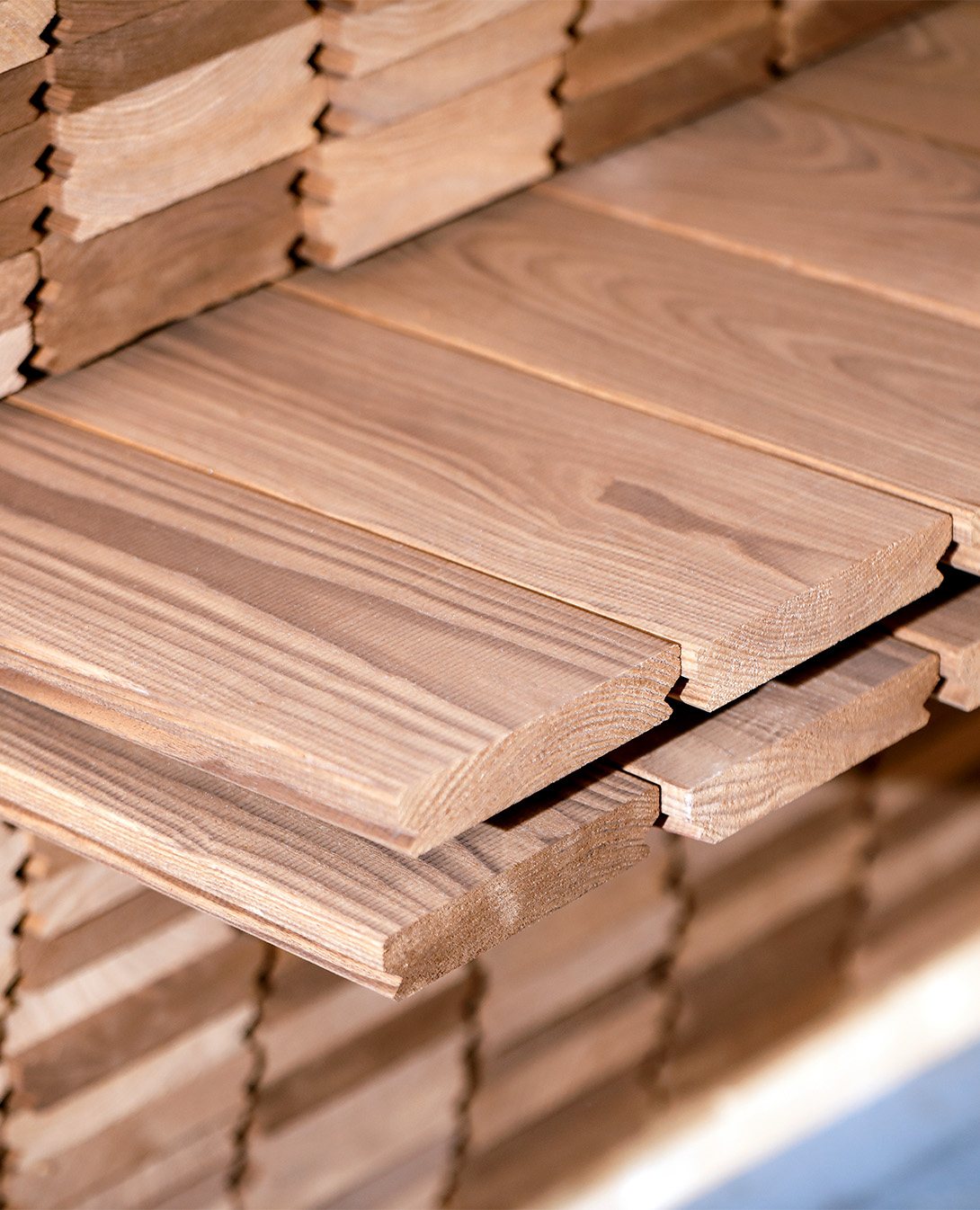
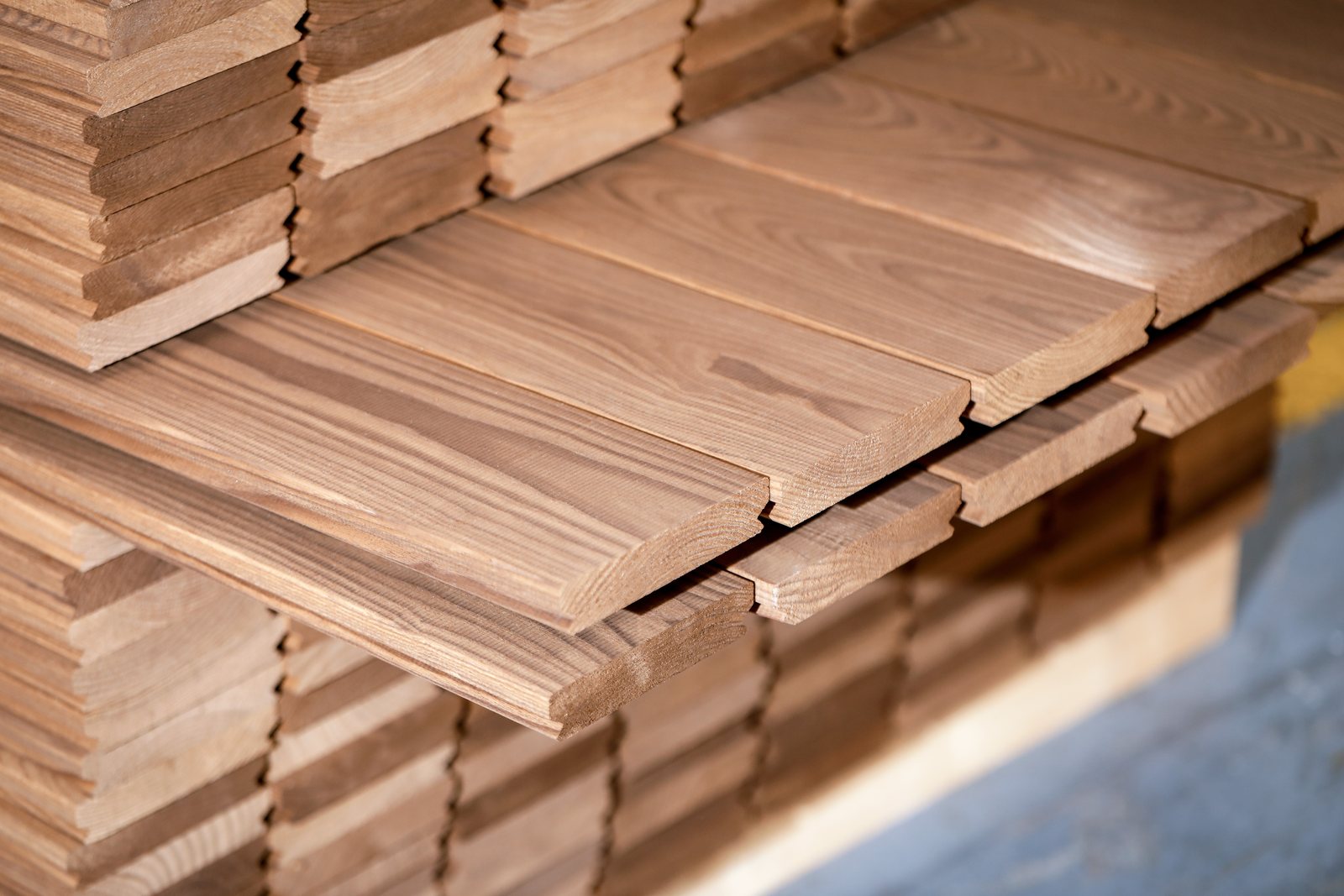
Thermally modified Ash is not available wider than 8 inches, and that ceiling belongs to the product line rather than to any one supplier's inventory. Call three yards and you will get the same number. The limit sits upstream of distribution, inside the modification kiln and inside the sizes the producers are willing to run through it. A buyer still shopping for a 10 inch thermally modified Ash board is shopping for something nobody loads.
Width is where modified stock gets punished on yield. Ash is ring porous, and a wide flatsawn face carries more movement across it while the charge comes up to temperature, so degrade concentrates exactly there as checking and end splitting. Narrow and medium widths come out of the cycle straight, sound and sellable, which is what the mills have settled on producing.
Treat 8 inches as a design input rather than a negotiation. Detail the elevation in 4, 6 and 8 inch faces and the material exists. Draw a 12 inch frieze in thermally modified Ash and either the drawing changes or the species changes, and making that call over the shop drawings costs nothing compared to making it three weeks into procurement.
What Thermal Modification Does to Ash
Thermal modification degrades hemicellulose under high heat and low oxygen, which buys decay resistance and dimensional stability and costs toughness and bending strength. Nothing is added to the wood. The stock goes into a sealed chamber, oxygen is held down so it cooks instead of burning, and temperature is driven well past anything a drying kiln sees.
Hemicellulose is the sugar fraction decay organisms reach for first. Break it down and most of that food source goes away, which is where the decay performance comes from. The same heat reduces how much moisture the cell wall can take back on, so the board sits in a narrower moisture range and moves less in service than untreated Ash of the same cut.
The trade is real and it is not optional. Thermally modified stock is more brittle than the same species untreated. Fibers that used to bend now snap, screw holding drops off, and edges chip under a dull cutter where untreated Ash would have crushed and recovered. White Ash untreated runs around 1,320 lbf on the Janka scale according to the Wood Database, and the useful way to read the modified version is not a new hardness number but a different failure mode. The USDA Forest Products Laboratory publishes the underlying work on how heat affects wood strength properties, and the direction of travel there runs one way.
Color change comes with the process. The brown runs through the full thickness instead of sitting on the surface, so a field cut or a scarf reads the same as the face. Left unfinished outdoors that brown still weathers to gray like any other wood, since modification addresses decay and movement rather than UV.
The 16 ft Length Ceiling and Metric Sizing
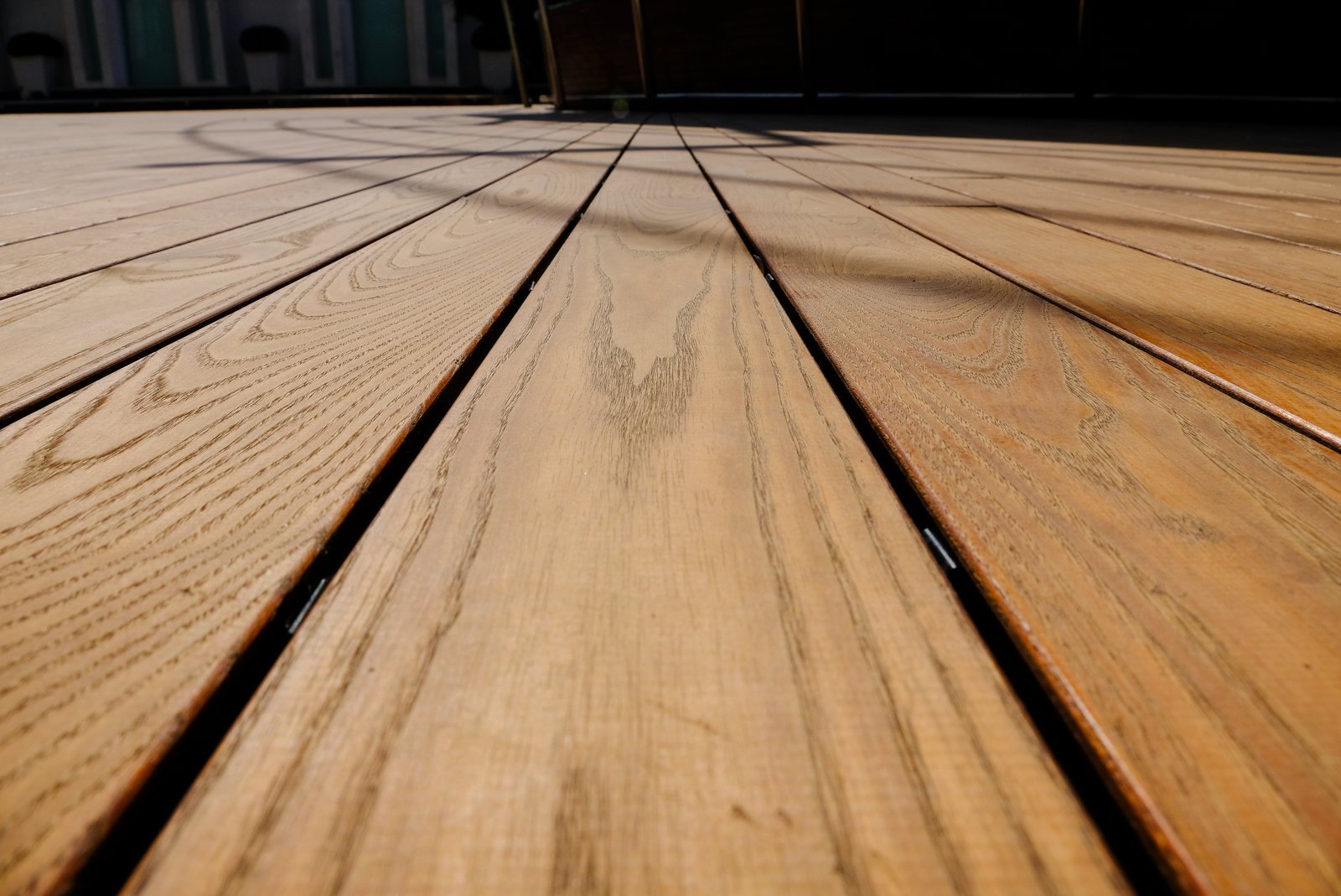
Every modified product tops out around 16 ft, and most of it sells on metric lengths just under 16 ft, because the kiln chamber sets the maximum. That holds for thermally modified Ash, for Thermory and Abodo Vulcan, and for Accoya. Nobody is holding back 20 ft material for a better customer. It does not exist.
The consequence lands on the elevation, not on the purchase order. A 24 ft fascia run in modified material will have a joint in it, so the only live question is whether the joint is drawn or discovered. Scarf it, back it with blocking behind a trim band, or land it on a column. Decide that at the drawing stage.
Metric sizing catches buyers out more than the ceiling does. A producer selling in 4.2 m and 4.8 m lengths is selling 13 ft 9 in and 15 ft 9 in, and a cut list written in clean 14 ft and 16 ft increments will eat yield fast. J. Gibson McIlvain holds the modified inventory in the lengths the producers actually ship and cuts a bill against those lengths instead of against the ones on the schedule.
Where to Buy Thermally Modified Ash in the United States
J. Gibson McIlvain stocks Accoya, Thermory and Abodo Vulcan at its Maryland yard and mills them into linear trimwork, finished cladding and primed trim. Modified wood moves through a short list of producers and a shorter list of yards that carry enough of it to cover a real elevation, which is why a search for thermally modified Ash so often ends in a special order with a long lead time attached to it.
Depth is the thing worth asking about. Over seven million board feet of exotic and domestic lumber sits at the yard, and what that means on a modified order is that the yard is not pulling the last three bundles in the country to fill a bill. Ask any supplier how many lineal feet of the width you need is on the ground today. Then ask whether a second release can come off the same lot in six weeks.
J. Gibson McIlvain ships milled modified stock nationwide, regularly to California, which matters for a material whose producers sit in Europe and New Zealand. The company's millwork service covers what comes off the mill, and the sales desk takes drawings at 800-638-9100.
Verify the product, not just the species. Thermory and Abodo Vulcan publish their own process documentation and warranty terms, and Accoya does the same for acetylated material. A board described only as thermally modified with no producer behind it is a board with no paperwork behind it either.
When the Drawing Needs a Wide Board
A wide board in a modified product means Accoya or Abodo Vulcan, not thermally modified Ash. This is the most common redirect on a modified wood order. The architect wants one material across the whole exterior package, the band detail is 10 inches, and Ash cannot get there.
Accoya is acetylated rather than heat treated, and the distinction is not academic. Acetylation reacts the hydroxyl groups through the full thickness and takes away most of the sites that bind water, which gives dramatically reduced shrinkage and swelling and leaves the board around 1,600 lbf on the Janka scale. It does not strip out the hemicellulose, so Accoya never picks up the brittleness that thermal modification brings along. For a wide painted face that has to stay flat, that combination is hard to beat.
Abodo Vulcan answers the other half of the width problem while staying inside the thermally modified family, and J. Gibson McIlvain carries both it and Thermory. Where an elevation mixes widths, the honest answer is usually two products in one package, narrow runs in thermally modified Ash and wide faces in Accoya or Abodo Vulcan, pulled to a common finish so the wall still reads as one material.
| Product | Modification | Width available | Length ceiling | Where it fits |
|---|---|---|---|---|
| Thermally modified Ash | Thermal, hemicellulose degraded under heat and low oxygen | Not available wider than 8 inches | Around 16 ft, mostly metric lengths just under | Narrow cladding, battens, soffit and trim bands within 8 inches, above grade |
| Abodo Vulcan | Thermal, hemicellulose degraded under heat and low oxygen | Wide faces available | Around 16 ft, mostly metric lengths just under | Wide cladding and rainscreen profiles above grade |
| Accoya | Acetylated, not heat treated | Wide faces available | Around 16 ft, mostly metric lengths just under | Wide painted trim and components that have to hold a joint |
| Western Red Cedar, CVG | None, naturally durable | Wide faces available | Longer lengths available | Clear painted or stained cladding and trim |
| Western Red Cedar, STK | None, naturally durable | Wide faces available | Longer lengths available | Knotty exposed cladding where the grade is the look |
What Modified Ash Covers and What It Does Not
Thermally modified wood does not carry published structural design values the way framing species do, so it belongs on a building and not in it. Cladding, battens, soffit, screen walls, trim, bench slats and a decking surface are all fair game. A header, a beam, a joist or a post is not.
Engineers work from design values published in the American Wood Council standards, and modified stock sits outside that system. There is no row to look up and no adjustment factor to apply. Wherever a load path runs through the member, that member has to be a species and grade with real numbers behind it, and the modified material becomes the surface fastened to the frame. WoodWorks is a reasonable starting point for how the structural half of a wood assembly gets documented.
Ground contact is its own line, and blurring it causes failures. Acetylated wood and thermally modified wood behave differently below grade and the two are not interchangeable there. Do not carry thermally modified Ash into a buried or soil-contact detail on the strength of its above-grade decay performance. Where a detail puts wood against earth, get the specific product's published scope in writing from the producer, and design the detail to keep the wood out of the dirt regardless.
Fastening is where brittleness shows up first. Pre-drill near the ends, hold fasteners back from edges, and use stainless, since tannins in Ash will react with the wrong metal and leave a stain nobody sands out.
Modified wood is also the only solid wood category that carries a warranty, and on a project where the owner wants a durability commitment in writing, that is the whole argument for using it. Thermory, Abodo Vulcan and Accoya each publish warranty terms against decay for defined applications. The terms differ by product and by whether the material sits above grade, in ground contact or in fresh water, so read the actual document rather than the headline number.
It is not possible to warranty solid unmodified wood. It is an organic material responding to its environment, and no supplier can promise how a given board will behave on a given wall with a given detail and a given coating schedule. So keep the producer's documentation in the submittal and detail the assembly inside the scope the warranty actually covers. Step outside that scope, below grade for instance, and the paperwork stops meaning anything.
Cedar Is Still the Default, and Grade Decides More
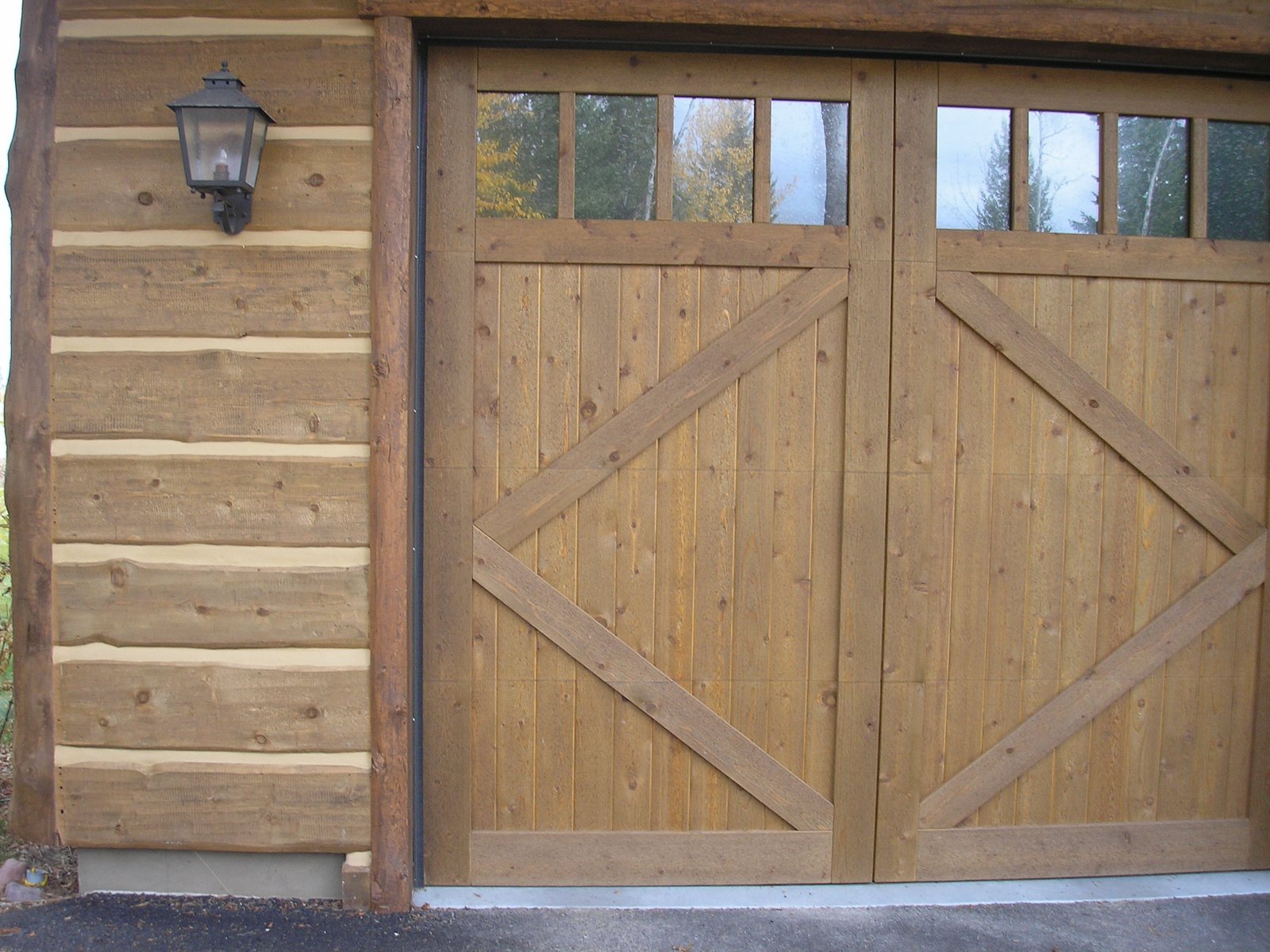
Western Red Cedar remains the default cladding species for most contractors and it rarely fails, so the live decision on a cladding job is usually a grade decision rather than a species decision. Modified wood does not replace cedar. It answers a narrower set of problems, mostly width in a painted finish under hard exposure, and a warranty requirement.
CVG, clear vertical grain, gives a knot-free quartersawn face that moves very little across its width and takes paint or a clear finish without telegraphing. STK, select tight knot, gives a sound knotty face where the knots are the architecture and the material yield is better. Both are legitimate. The job that fails is the one that budgets STK and details it for CVG performance, and it fails on grade, not on species.
Cedar also comes in lengths that run past the modified ceiling, which quietly solves this whole problem on a great many elevations. On the hardwood side, Ash is graded under the National Hardwood Lumber Association rules long before it ever sees a modification kiln, and the grade it went in as still governs what the modified board looks like coming out.
Milling and Priming Modified Ash for the Wall
J. Gibson McIlvain mills modified Ash to profile on the moulders at the yard and primes it before it ships, which is the difference between a bundle of boards and a package ready to go up. Modified stock machines cleanly behind sharp tooling and badly behind dull tooling, so cutter condition carries more weight here than it does on untreated Ash.
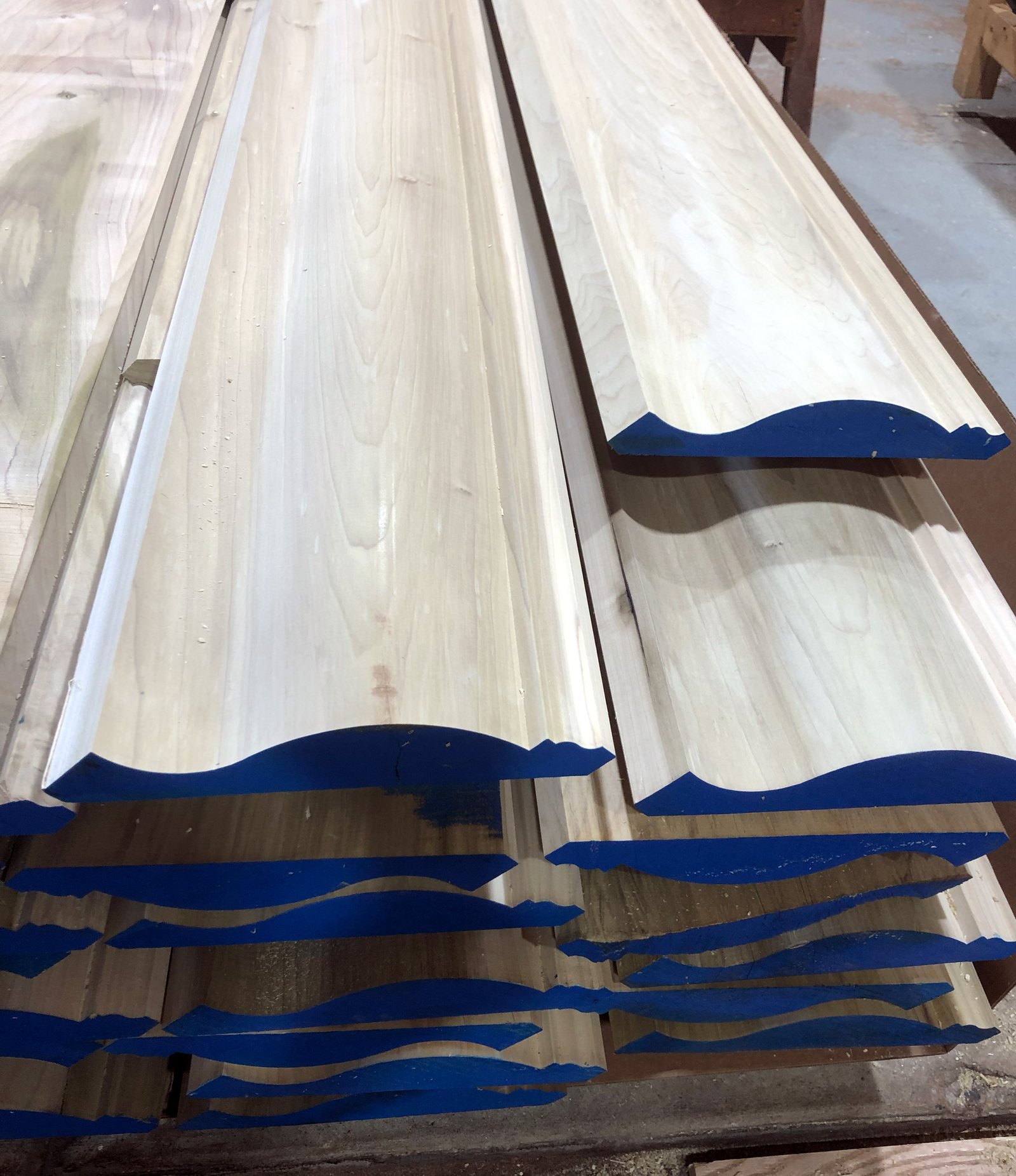
The profile library at the yard holds thousands of ground knives, with new knives ground every week, so a rainscreen profile, a nickel gap, a rabbeted bevel or a historical trim section can be run in modified Ash rather than forced into a stock catalog pattern. J. Gibson McIlvain records the knife and the lot against the job, which is how a second phase gets matched to the first a year later. Profile and tolerance conventions on the industry side are published by the Wood Moulding and Millwork Producers Association.
Priming is where absorption gets managed. Open-grained and oily species absorb a great deal of finish, so a primer coat evens out the eventual painted surface, and sanding or buffing after priming knocks back grain raising while keeping moulded detail crisp. J. Gibson McIlvain primes in three levels, in both oil-based and water-based systems, and exterior primed trim carries a fungicide additive. Priming all six faces before the material leaves is the step most crews skip and then pay for, because a raw back face takes on moisture at a different rate than a coated front face.
Moisture content targets still apply to modified material. Interior millwork gets milled to an in-service moisture content near 6 to 8 percent and exterior work near 12 to 16 percent, and modified stock equilibrates lower than untreated wood of the same species, which is a large part of why it holds a profile and a coating longer outdoors.
Cupping Comes From the Install, Not the Species
Cupping is driven by installation and back ventilation, not by species. A cupped board is almost always a board wetting on one face and drying on the other. Change the species and you change how fast it happens, not whether it happens. That is as true of thermally modified Ash as it is of Accoya, Abodo Vulcan, cedar or Sapele.
What prevents it is an assembly where both faces see similar conditions. A drained and vented cavity behind the cladding. Furring that lets air move from bottom to top. A path for bulk water to leave. Fasteners placed to allow movement rather than restrain it. Building Science Corporation has published the rain control logic behind that assembly for years, and none of it changed when the cladding became modified wood.
What a shop controls is what shows up on the truck. Consistent thickness so a fastener pattern sits flat. Moisture content matched to the service condition. Priming on all six faces where the detail calls for it. A profile that actually drains. Ventilation detailing and the fastening schedule belong to the installer and the detailer, and the shop's job is to deliver stock that gives them a fair chance.
"The width question comes up on almost every modified wood job, and the answer never changes. If the detail needs a face wider than 8 inches, we are going to Accoya or Abodo Vulcan, and we would rather have that conversation over the shop drawings than after somebody has already sold the owner on a 12 inch Ash frieze."
Norm Moton, Director of Sales, J. Gibson McIlvain
Custom Components Built From Modified Ash
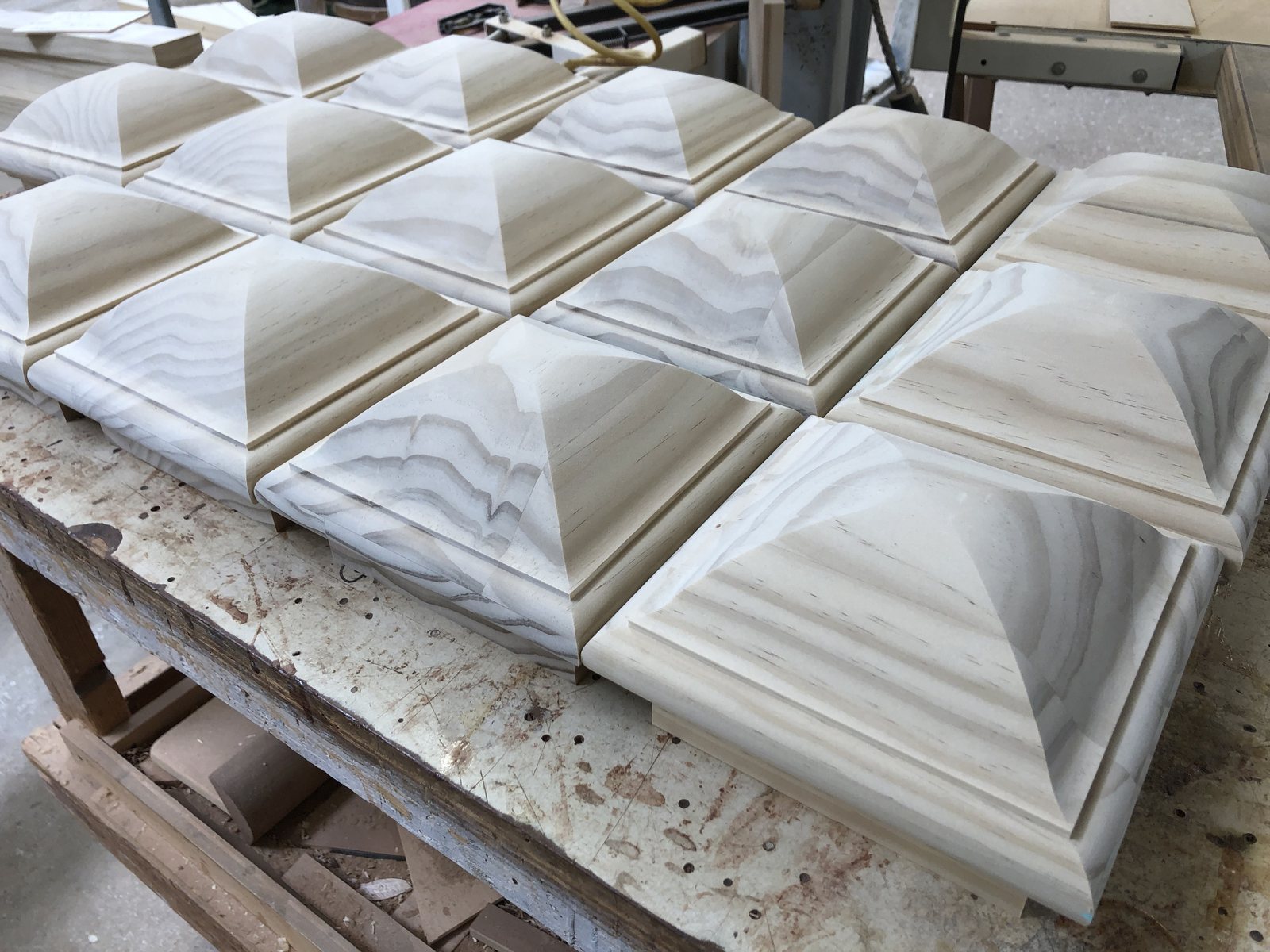
ICD, the architectural millwork division of J. Gibson McIlvain, builds custom components from modified stock where a linear profile off the moulder will not do the job. Rafter tails, gates, box beams, pergolas, shutters, benches, railings, radius trimwork and custom doors all come out of that shop.
Modified Ash changes a few build decisions. Glue lines want a freshly machined surface and attention to open time, since a modified surface takes adhesive differently than untreated stock does. Joinery wants to avoid loading a thin section in bending, which pushes a design toward wider tenons, pegged connections and generous shoulders. ICD builds exterior millwork with those constraints in the drawing rather than discovering them on the bench.
The 8 inch limit follows the material into the custom shop. A gate stile detailed at 7 inches is straightforward in thermally modified Ash. A 10 inch stile is a lamination, a different species, or a redesign. For large driveway swing gates the size and weight mean the opening needs engineering and hardware sized to it rather than craftsmanship alone, whatever the stock is. Where a historic district requires like-for-like replacement, the answer usually runs back toward matching the original species and profile, and modified Ash is rarely that answer.
How J. Gibson McIlvain Would Specify This
Write the width limit, the length ceiling and the producer into the specification, and a modified wood package stops generating surprises. Almost everything that goes wrong on these orders goes wrong because a drawing assumed a size the material does not come in.
Name the product, not just the category. Thermally modified Ash is a category. Thermally modified Ash, Thermory or Abodo Vulcan, 1x6 nominal with no face over 8 inches, lengths per producer metric sizing and not to exceed 16 ft, is a specification a yard can quote and a shop can build to. Add the priming level and the system, oil-based or water-based, and whether the material arrives primed on all six faces.
Start the product selection from the widest board on the elevation. Anything over 8 inches takes thermally modified Ash out and narrows the choice to Accoya or Abodo Vulcan, and pulling both to a common finish keeps the wall reading as one material. Draw the joints in any run longer than the ceiling. Keep the member out of the load path and out of the dirt. Get the producer's warranty scope into the submittal before the first bundle ships.
J. Gibson McIlvain quotes modified wood off actual yard inventory, mills it to the profile the elevation needs, primes it before it leaves and records the lot so a later phase matches. Send the elevation, the widest face on it and the exposure condition to the sales desk at 800-638-9100 or through the contact page, and ask exactly what width and length you can have, in what quantity, today.
Frequently Asked Questions
What widths is thermally modified Ash available in?
Thermally modified Ash is not available wider than 8 inches. The usable range runs from narrow batten and strip sizes up through 8 inch faces, and the ceiling comes from the modification process rather than from a given yard's stock position, so shopping harder does not produce a wider board. If an elevation needs a face over 8 inches in a modified product, the answer is Accoya or Abodo Vulcan, both of which come in wide faces. J. Gibson McIlvain stocks all three at its Maryland yard and will mix narrow Ash runs with wide Accoya or Abodo Vulcan faces in one package pulled to a common finish.
How long can thermally modified Ash boards be?
Around 16 ft is the ceiling, and most modified stock is sold on metric lengths that land just under it. A producer shipping 4.2 m and 4.8 m is shipping 13 ft 9 in and 15 ft 9 in. The limit is the kiln chamber, so it applies to thermally modified Ash, to Thermory and Abodo Vulcan, and to Accoya equally. Any run longer than that needs a joint, and the joint should be drawn on the elevation rather than discovered on site.
Where can I buy thermally modified Ash in the United States?
From a yard that carries modified wood in depth rather than ordering it in for each job. J. Gibson McIlvain stocks Accoya, Thermory and Abodo Vulcan at its Maryland yard and mills them into linear trimwork, finished cladding and primed trim, and ships nationwide, regularly to California. Before committing, ask any supplier how many lineal feet of the specific width is on the ground today and whether a second release can come off the same lot later in the schedule, since thermal modification produces color that varies batch to batch. The sales desk takes drawings at 800-638-9100.
Is thermally modified Ash strong enough for structural use?
No. Thermal modification degrades hemicellulose, which costs toughness and bending strength, and thermally modified stock does not carry published structural design values the way framing species do. There is no row for it in the design standards and no adjustment factor to apply. Use it for cladding, battens, soffit, screen walls, trim, bench slats and decking surfaces, and keep headers, beams, joists and posts in a species and grade that has real published numbers behind it.
Can thermally modified Ash be used in ground contact?
Do not assume it can. Acetylated wood and thermally modified wood behave differently below grade, and above-grade decay performance does not transfer to a buried or soil-contact condition. Where a detail puts wood against earth, get that specific product's published scope in writing from the producer and design the detail to keep the wood out of the dirt regardless. Guessing here is how a warranty claim gets denied.
How does thermally modified Ash compare to cedar for cladding?
Western Red Cedar remains the default cladding species for most contractors and it rarely fails, and it comes in wide faces and longer lengths than any modified product. On a cedar job the grade call usually matters more than the species call, with CVG, clear vertical grain, giving a knot-free quartersawn face for tight painted work, and STK, select tight knot, giving a sound knotty face where the knots are the look. Modified Ash earns its place where a warranty is required or where a narrow profile has to hold up under hard exposure, not as a blanket upgrade over cedar.
Does thermally modified Ash come primed, and does it hold paint?
It can come primed. Open-grained and oily species absorb a great deal of finish, so a primer coat evens out the eventual painted surface, and sanding or buffing after priming knocks back grain raising while keeping moulded detail crisp. J. Gibson McIlvain primes in three levels, in both oil-based and water-based systems, and exterior primed trim carries a fungicide additive. Specify priming on all six faces including ends, since a raw back face takes on moisture at a different rate than a coated front face and that difference is what starts a board cupping.
Can custom components be built from thermally modified Ash?
Yes, within the same limits. ICD, the architectural millwork division of J. Gibson McIlvain, builds rafter tails, gates, box beams, pergolas, shutters, benches, railings, radius trimwork and custom doors from modified stock. The 8 inch width ceiling and the roughly 16 ft length ceiling follow the material onto the bench, so a gate stile detailed at 7 inches is straightforward while a 10 inch stile becomes a lamination, a species change or a redesign. Large driveway swing gates need engineering and hardware sized to the weight whatever the stock is.
Sources and Standards Referenced
- The Wood Database, White Ash
- USDA Forest Service, Forest Products Laboratory
- Thermory, thermally modified wood products
- Accoya, acetylated wood
- American Wood Council, Codes and Standards
- National Hardwood Lumber Association
- Wood Moulding and Millwork Producers Association
- Building Science Corporation
- WoodWorks, Wood Products Council
- J. Gibson McIlvain Millwork Service