Two Fundamentally Different Materials
Western red cedar and thermally modified ash are often presented as direct competitors for exterior cladding — but they achieve durability through completely different mechanisms, and understanding this difference is key to specifying correctly.
Western red cedar (Thuja plicata) relies on water-soluble extractive compounds — primarily thujaplicins and tropolones — that inhibit fungal growth. These extractives are present naturally in the heartwood but deplete over time through leaching and UV degradation. Cedar's durability is inherently temporary and decreasingly effective without maintenance.
Thermally modified ash (Fraxinus excelsior, heated to 410-430°F for 24-48 hours) achieves durability through permanent chemical restructuring at the cellular level. The hemicellulose sugars fungi feed on are destroyed, hydroxyl groups that attract water are removed, and the resulting wood is fundamentally inhospitable to decay organisms. This change is irreversible — the durability cannot deplete or leach out.
Head-to-Head Performance Data
| Property | Thermally Modified Ash | Western Red Cedar | Winner |
|---|---|---|---|
| Durability Class (EN 350) | Class 1 — Very Durable | Class 2 — Durable | TM Ash |
| Dimensional Stability (ASE) | 50-70% less movement than untreated | ~30% less than SPF (naturally low shrinkage) | TM Ash |
| Janka Hardness | ~1,320 lbf | ~350 lbf | TM Ash (4× harder) |
| Equilibrium Moisture Content | 4-7% | 10-14% | TM Ash |
| Maintenance for Durability | None required (optional UV oil for color) | Restain/repaint every 2-3 years (Northeast) | TM Ash |
| Weight (lbs/cu. ft.) | 35 | 21 | Cedar (lighter, easier to handle) |
| Material Cost (per sq. ft.) | $7.50-$9.00 | $4.50-$7.00 | Cedar (40-50% less) |
| Manufacturer Warranty | 25 years (Thermory) | None (industry standard) | TM Ash |
| Impact Resistance | Excellent — resists hail and debris | Poor — dents from moderate impact | TM Ash |
| Color Range (natural) | Deep brown (weathers to silver-gray) | Warm red-brown (weathers to silver-gray) | Tie — both weather similarly |
| Workability | Good — cuts clean, holds fasteners well | Excellent — lightweight, easy to cut/nail | Cedar (slightly easier) |
| Environmental Credentials | Carbon-negative, compostable, no chemicals | Carbon-negative, compostable, no chemicals | Tie |
The Maintenance Reality: Year 1 Through Year 25
The most significant practical difference between these two materials is maintenance demand. This is where the 25-year cost story diverges dramatically:
Western red cedar in Northeast/Mid-Atlantic climates requires refinishing every 2-3 years to maintain its decay protection. Without finish renewal, cedar's water-soluble extractives leach out within 5-7 years, leaving unprotected sapwood-equivalent material vulnerable to decay at joints and end grain. A typical refinishing cycle on a 2,400 sq. ft. home costs $3,000-$5,000 (prep, materials, labor).
Thermally modified ash requires zero maintenance for durability. The rot resistance is structural — built into the wood at the cellular level — and cannot deplete. If the homeowner wants to maintain the original brown color, a single coat of penetrating UV oil ($300-$500 for a typical home) can be applied annually or biennially. But this is cosmetic, not protective — even without any finish, the wood remains Class 1 durable indefinitely.
"The question I ask every customer choosing between cedar and thermally modified: do you want to be restaining your house every three years for the next 25 years? That's 8 refinishing cycles at $3,000-$5,000 each — $24,000 to $40,000 in maintenance on a material that cost $18,000 to install. Thermally modified ash costs $10,000 more upfront and requires zero maintenance dollars after that. The math isn't close."
— Brett Miller, President, J. Gibson McIlvain Co.
25-Year Lifecycle Cost Analysis
| Cost Component | Thermally Modified Ash | Western Red Cedar |
|---|---|---|
| Material (siding boards) | $18,000-$21,600 | $10,800-$16,800 |
| Installation labor | $12,000-$14,400 | $9,600-$12,000 |
| Stainless fasteners + rainscreen | $4,800-$6,000 | $4,800-$6,000 |
| Refinishing (every 3 yrs × 8 cycles) | $0 | $24,000-$40,000 |
| Optional UV oil (annual) | $5,000-$7,500 | N/A (included in refinishing) |
| Board replacement (Years 15-25) | $0-$1,000 | $3,000-$6,000 |
| Total 25-Year Cost | $39,800-$50,500 | $52,200-$80,800 |
| Breakeven point | Year 8-10 (when cedar's 3rd refinishing cycle tips the balance) | |
When to Choose Cedar Instead
Despite thermally modified ash's superior performance metrics, western red cedar remains the correct specification in several scenarios:
- Budget-constrained projects: When the upfront budget simply cannot accommodate the 40-50% material premium, cedar delivers respectable 25-40 year performance with proper maintenance.
- Short holding period: For properties being sold within 5-7 years, the lifecycle cost advantage of thermally modified ash hasn't materialized yet. Cedar looks beautiful at install and the next owner inherits the maintenance.
- DIY/lightweight handling: At 21 lbs/cu. ft. vs. 35, cedar is significantly easier for one-person installation, especially on ladders and scaffolding.
- Painted applications: If the siding will be painted an opaque color (hiding the natural wood grain), cedar's superior paint adhesion and lower cost make it the practical choice — the natural beauty of thermally modified ash is wasted under paint.
- Historic renovation matching: When matching existing cedar siding on a historic structure, substituting a different species may conflict with preservation standards.
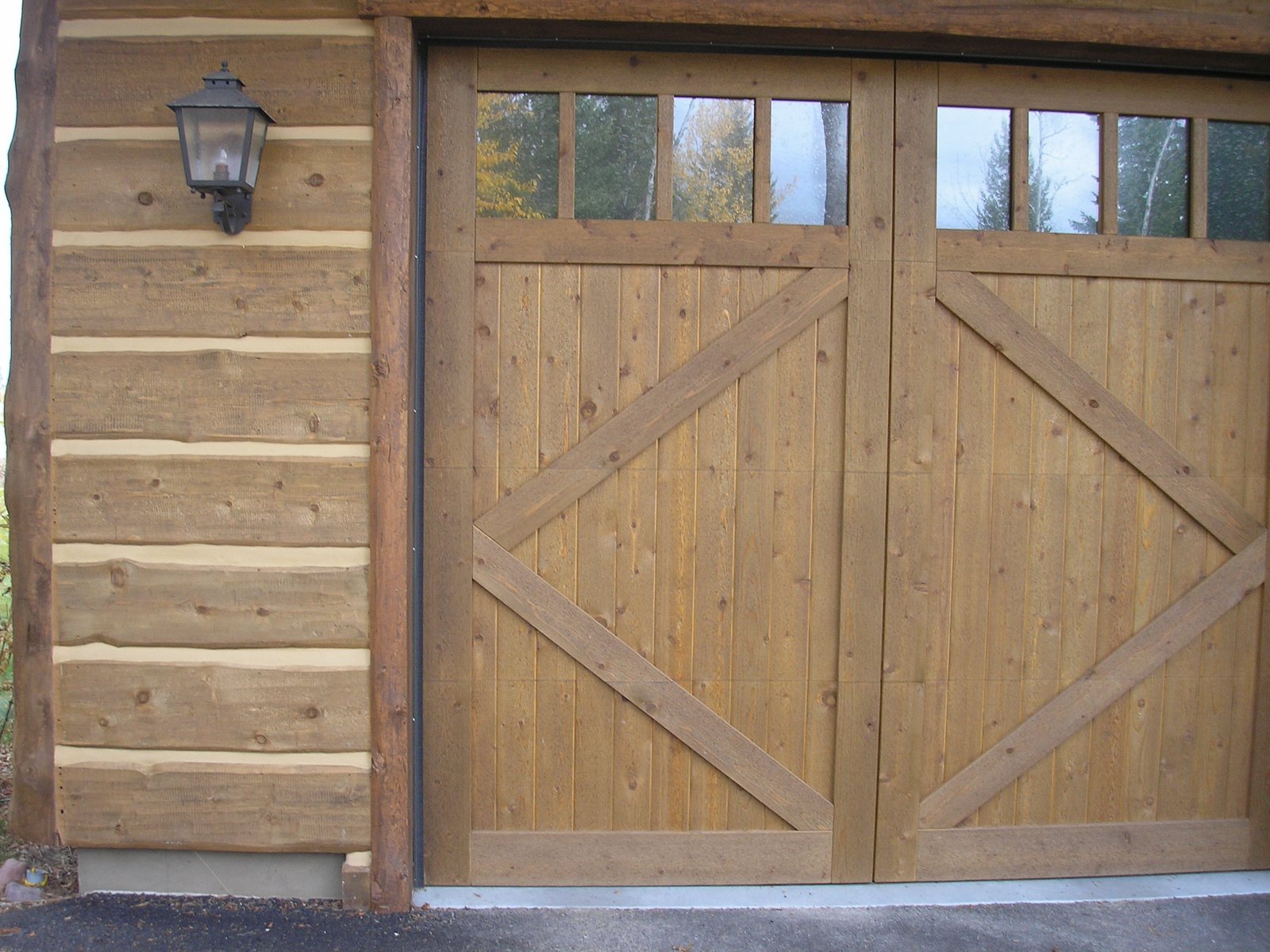
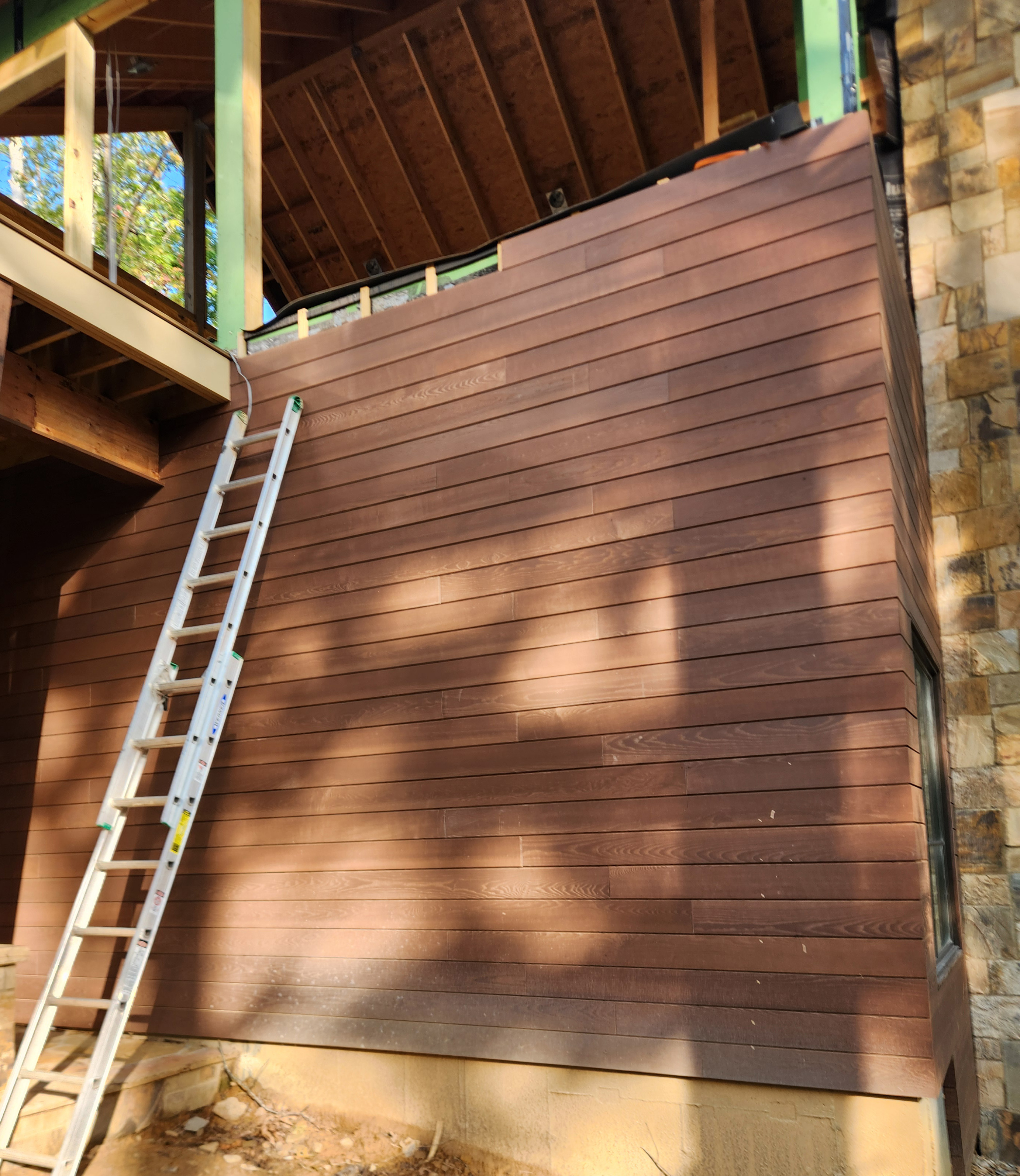
Both species are available from J. Gibson McIlvain in shiplap, channel, nickel-gap, and board-and-batten profiles, with delivery to East Coast job sites.
Frequently Asked Questions
Is thermally modified wood better than cedar for siding?
In measurable performance, yes. Thermally modified ash achieves Class 1 durability (vs. cedar's Class 2), 50-70% less dimensional movement (vs. cedar's ~30%), 4× the impact resistance (1,320 vs. 350 lbf Janka), and requires zero maintenance for rot protection (vs. cedar's 2-3 year refinishing cycle). Cedar costs 40-50% less upfront, but thermally modified ash delivers lower 25-year total cost due to eliminated maintenance — breakeven occurs around year 8-10.
How much more does thermally modified siding cost than cedar?
Material cost is approximately 40-60% higher: thermally modified ash runs $7.50-$9.00/sq. ft. vs. cedar at $4.50-$7.00/sq. ft. Installed cost difference is smaller (25-35%) because labor is similar. However, over 25 years, thermally modified ash costs $10,000-$30,000 LESS than cedar on a typical home due to eliminated refinishing cycles ($24,000-$40,000 saved) and no board replacements.
Does thermally modified wood weather like cedar?
Yes — both materials weather to a similar silver-gray patina if left unfinished. The timeline is comparable: 6-12 months to initial graying. The difference is that cedar's UV weathering also depletes its decay-resistant extractives, making the unfinished wood progressively more vulnerable. Thermally modified ash's durability is unaffected by surface weathering — the wood remains Class 1 durable regardless of UV exposure or finish condition.
What is the warranty on thermally modified siding?
Thermory thermally modified ash carries a 25-year manufacturer warranty against rot and decay in above-ground exterior applications when installed per specifications (including rainscreen ventilation and appropriate fasteners). Western red cedar has no industry-standard warranty — performance depends entirely on maintenance regime and installation quality. The 25-year warranty is a meaningful differentiator for commercial projects and spec homes.
Can I use thermally modified wood with a clip system?
Yes — thermally modified ash's high density (1,320 lbf Janka) provides excellent screw-holding capacity for hidden clip systems. In fact, it holds clips more securely than cedar (350 lbf), which can strip or pull out in softer spring growth bands. Thermory offers proprietary clip profiles optimized for their cladding boards. Standard stainless steel hidden fastener systems (e.g., Deckwise, Camo) also work with thermally modified ash.
Sources and Standards Referenced
- USDA Forest Products Laboratory — Wood Handbook: species properties, shrinkage data, extractive chemistry
- Thermory — Thermally modified ash specifications, warranty terms, and cladding profiles
- Western Red Cedar Lumber Association — Cedar grading, properties, and installation standards
- International ThermoWood Association — Thermal modification process standards and durability testing
- EN 350: Natural Durability of Solid Wood — European classification standard