What Documented Origin Means on a Teak Order
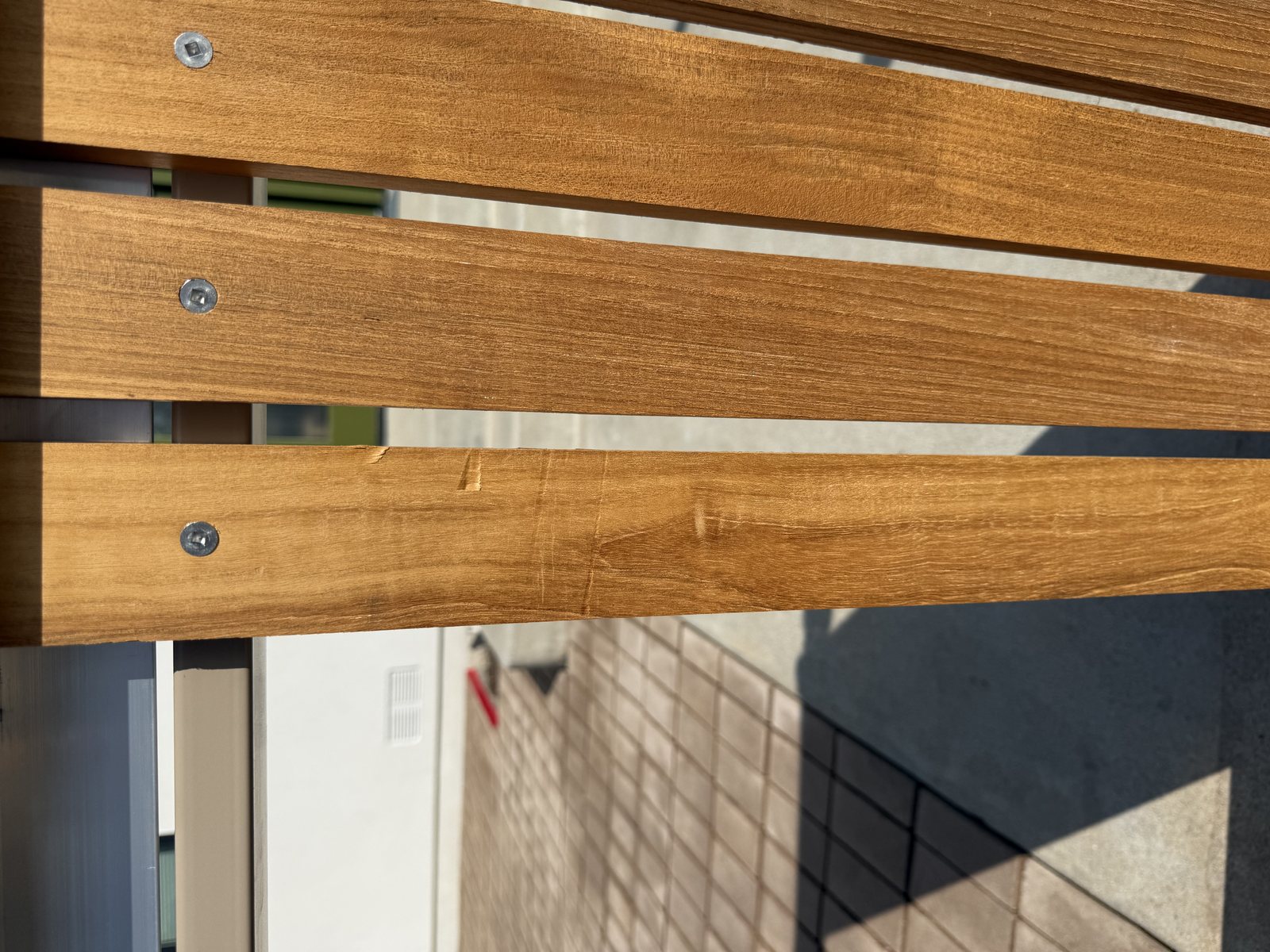
Documented origin means the shipment arrives with a traceable record of where the tree grew, which mill sawed it, who exported it and who imported it, and that the record still answers questions two years after delivery. A species name on an invoice is not origin. A verbal assurance from a broker is not origin either. The file either names the links in the chain or it does not, and the difference shows up the first time an owner, an auditor or a specification reviewer asks for proof.
Teak attracts this question more than almost any other species. The name carries a premium, the supply splits between natural forest and plantation material, and the trade route often runs through three countries before a lift lands in a US yard. Buyers who have been stung once start asking for documents before they place the order. That instinct is correct.
What follows is what a complete teak file looks like, what each document actually proves, where the gaps normally sit, and how to write a purchase order that closes them before the container ships.
Why Teak Is Harder to Document Than Domestic Hardwood
A teak origin claim is harder to verify than a domestic white oak claim for three reasons, and none of them is about honesty. The species grows almost entirely outside North America. The name gets attached to unrelated woods in casual trade talk. And part of the global supply comes from regions that cannot produce a chain of custody a reviewer will accept.
Teak is Tectona grandis. Everything else carrying the word teak in its common name is something else. Iroko and Afrormosia both pick up the nickname African teak. Cumaru gets called Brazilian teak on decking invoices. Rhodesian teak is Baikiaea plurijuga. None of those names is necessarily a scam, but a drawing that says teak and a packing list that says African teak describe two different orders, and the botanical name is the only wording that settles it. Put Tectona grandis on the purchase order.
Origin also decides whether a chain of custody can exist at all. Material from Myanmar sits behind US sanctions that reach the state enterprise controlling harvest there, so documentation tied to that origin does not survive review by a careful owner or lender. Plantation teak grown in Central America, South America, West Africa and Indonesia is the material that comes with a verifiable paper trail, and for a project with sourcing language in the specification that is the practical starting point.
Re-export muddies the water further. Lumber can be sawn in one country, dried in a second and shipped from a third, which is legal and routine. The question is whether each step is named in the file rather than collapsed into a single country of export.
The Documents a Complete Teak File Carries
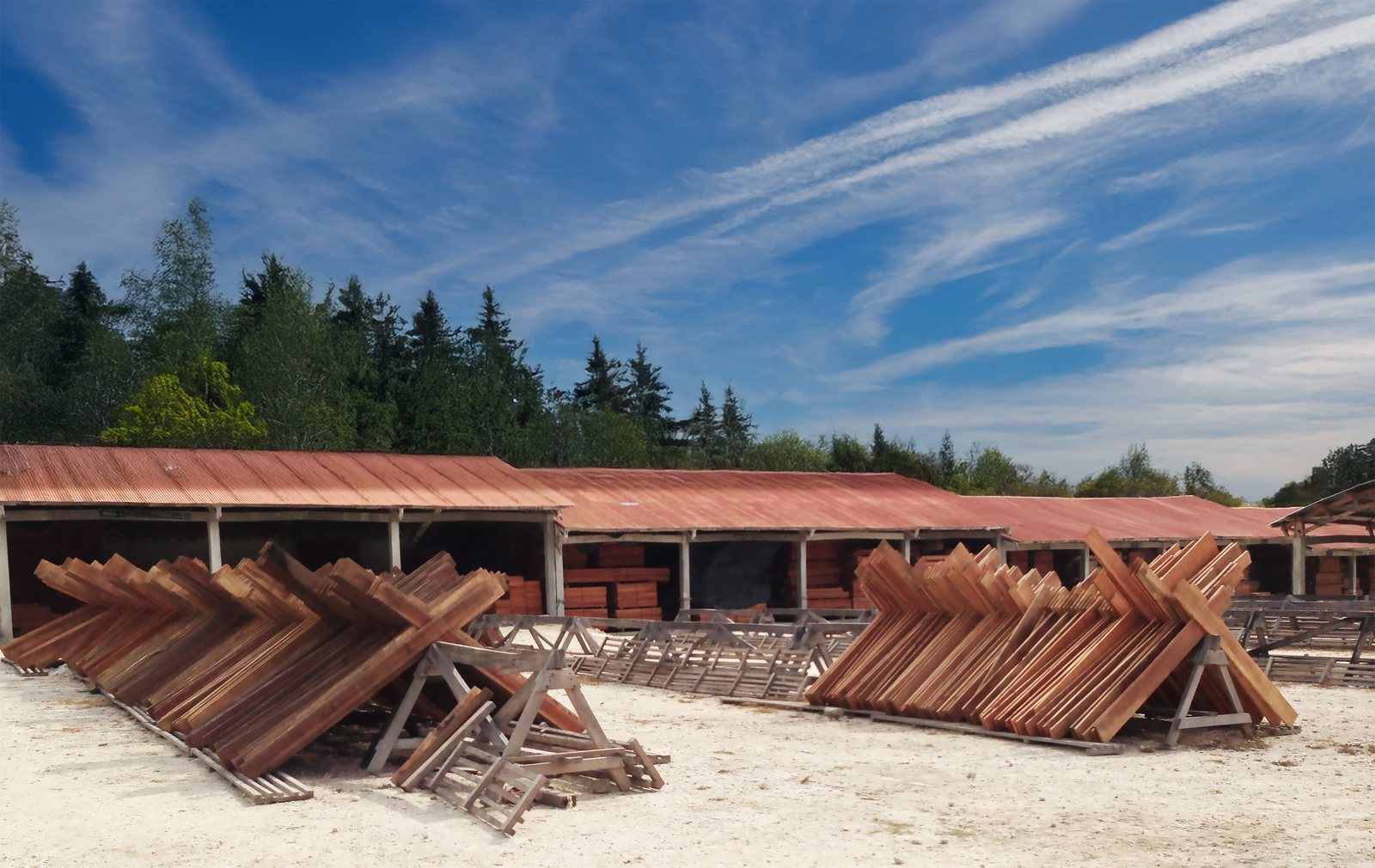
Seven documents cover a teak order, and a buyer who asks for all seven in the purchase order rarely has to chase any of them later. Each one proves a narrow thing. Taken together they describe a specific tree in a specific place turning into a specific lift of lumber on a specific truck.
| Document | What it proves | What to check on it |
|---|---|---|
| Commercial invoice | Species, grade claim, thickness, quantity and the parties to the sale | Botanical name present, grade basis stated, thickness given in quarters of rough measure |
| Packing list or tally | Piece count and footage per lift or bundle, tied to a bundle number | Bundle numbers match the tags on the material that arrives, not only the total |
| Certificate of origin | Country where the material was harvested and processed | Harvest country named, not only the port of export |
| Phytosanitary certificate | Inspection and treatment of the wood and its packaging for pests | Issuing authority, treatment method, date tied to this shipment |
| Import declaration | Species and harvest country declared to the importing government | Declared species matches the invoice and the purchase order exactly |
| Chain of custody claim | Certified sourcing, where a certified claim was ordered | Claim printed on the invoice itself with a valid certificate code |
| Kiln or drying record | Target moisture content and drying method for the charge | Average and range reported, not a single number with no spread |
J. Gibson McIlvain imports teak as the importer of record and keeps the origin documents that travel with each lift. That matters for a practical reason. A reseller buying a few lifts from a wholesaler typically holds the invoice and nothing else, since the origin paperwork stayed upstream with whoever cleared the container.
Buying from the importer gets a buyer those documents in one step instead of three, and it shortens the time it takes to answer a question from a review body. Chasing a certificate of origin backward through two intermediaries is slow work, and it tends to happen at the worst moment in a submittal cycle.
A record also only matters if somebody is still there to be asked. J. Gibson McIlvain has stayed family run through seven generations since 1798, and continuity of that kind is what makes a phase two order on a multi year project matchable to the material that shipped in phase one. J. Gibson McIlvain records the permit reference and the certificate code against the order number, so a request years later is a lookup rather than a reconstruction.
Plantation Teak and Old Growth Teak Differ
Plantation teak and old growth teak share a botanical name and little else that matters to a millworker. Growth rate drives nearly every difference between them, and documented origin is often the only way to know which one is coming.
Material from slow natural forest growth shows tight rings, a high proportion of heartwood, extractive rich wood and fairly uniform color once the surface oxidizes. Plantation material grown on a short rotation shows wider rings, a larger share of sapwood, more pronounced color variation board to board and more frequent knots in the lower grades. Neither one is defective. They cut and finish differently, and a shop that has worked one and then gets the other notices inside an hour.
Density and hardness track the same divide. Rather than assert a figure from memory, check the published numbers for Tectona grandis at wood-database.com, and expect material at the fast grown end of the range to sit toward the softer side of whatever is published there.
The sapwood share is the one that catches people out. Teak sapwood is pale, it lacks the decay resistance that makes the species worth specifying outdoors, and it does not darken to match the heartwood around it. A specification for exterior teak should state heartwood only in writing, since no grade name does that job.
What FEQ Does Not Tell You About Grade
The term FEQ is a trade expression, not a graded standard, and two mills using it can ship two different products. No governing body publishes an FEQ rule. There is no defined clear face yield behind the letters and no appeal if the material disappoints. It travels on reputation alone.
Compare that with the domestic system. Hardwood grading in North America runs on the National Hardwood Lumber Association rules, which grade a board by the yield of clear face cuttings rather than by appearance. FAS is the top grade and requires a minimum board of 6 inches wide by 8 ft long yielding 83 and 1/3 percent clear face cuttings. FAS One Face, written F1F, meets FAS on the better face. Selects meet FAS on the better face at a smaller minimum size.
The lower grades are defined just as tightly. No. 1 Common requires 66 and 2/3 percent clear face cuttings on a minimum board of 3 inches by 4 ft, and No. 2A Common requires 50 percent. Grade describes yield, not quality. A No. 1 Common board is not a damaged board, it yields smaller clear cuttings, which makes it the economical grade for short parts and the wrong grade for a run of long clear stiles.
So when teak is quoted as FEQ, the useful move is to convert the conversation into measurable terms. Ask what minimum length and width the lift holds, what percentage of the face has to be clear, whether sapwood is permitted, and whether the stock ships as it falls off the lift or sorted. Those four answers tell a buyer more than any three letter abbreviation.
Thickness, Width and Length Before Anything Gets Cut
Thickness on hardwood is quoted in quarters of an inch of rough thickness, and every surfaced dimension comes off that rough number. 4/4 is nominal 1 inch rough. 8/4 is 2 inches. 16/4 is 4 inches. A shop that needs a finished 1 and 3/4 inch door stile is buying 8/4 and losing the balance to surfacing and flattening.
Width and length expectations have to follow the origin. Plantation logs come off shorter rotations at smaller diameters, which caps how many wide boards and long lengths a given parcel can yield. A drawing calling for long clear widths in teak depends on the supplier having real depth in the species rather than a few lifts on hand.
Sawing pattern belongs on the order too. Quartersawn and rift stock moves less across its width than plainsawn, which is why it gets specified where a panelized or painted surface has to stay flat. Plainsawn teak is the normal import, so quartersawn has to be asked for by name and planned for in the schedule.
J. Gibson McIlvain mills imported teak to a cutting list at the yard on moulders, straight line and gang rip saws, band resaws and trimming saws, and the millwork shop on site at the lumber yard works from the same inventory a lumber order draws on. Where the work is true custom cabinetry or case work rather than linear footage, it goes to ICD, the company's architectural millwork division, which plans cabinets and case work around a specific space.
Moisture Content Is Part of the Specification
A teak order without a stated moisture target is an incomplete order. Kiln dried hardwood for interior use lands near 6 to 8 percent moisture content. Exterior work runs near 12 to 16 percent. Those are two different products out of two different kiln schedules, and no supplier should be guessing which one a job needs.
Air dried stock settles near the local equilibrium of wherever it was stacked, which can sit far above an interior tolerance. It is useful material for exterior work and the wrong call for interior joinery that has to live in a conditioned building. If a quote does not say kiln dried, assume it is not.
Teak carries natural oils and some silica, which slows drying and dulls tooling. Pushing a teak charge too fast invites internal checking that stays hidden until a resaw opens the board. That is why the drying record matters more here than on a domestic species, and why the average and the spread are both worth reading. The USDA Forest Service Forest Products Laboratory publishes the underlying moisture relationships for anyone sizing a tolerance, and Building Science Corporation covers the enclosure side of the same problem.
J. Gibson McIlvain mills interior teak blanks to a 6 to 8 percent in-service moisture content and holds exterior stock nearer 12 to 16 percent, with the target written on the order rather than inferred from the end use.
Chain of Custody When the Specification Requires It
A certified sourcing claim lives on the invoice, not in a brochure. If a project specification or a green building credit requires certified material, the claim has to be printed on the sales document with a valid certificate code, and every company in the chain between the forest and the job has to hold its own certification for the claim to survive.
The Forest Stewardship Council system works this way by design. A certified forest sells to a certified mill, which sells to a certified importer, and a break anywhere along that line ends the claim no matter how well managed the forest was. J. Gibson McIlvain holds FSC certification as an importer and miller, which lets a certified claim carry from the import through the milling and onto the paperwork that ships with the material. Sourcing credits under the rating systems published by the US Green Building Council are usually what drives the request on commercial work.
Legality sits alongside certification and is not the same thing. US law makes it unlawful to import plant material harvested in violation of the laws of the country of origin, and covered wood products travel with an import declaration naming species and harvest country. Where a CITES listed species is involved, documentation and chain of custody travel with the material, and the CITES appendices are the reference for which species those are. Certification answers how a forest is managed. The declaration answers whether the wood was legal to cut and ship.
"Most of the teak questions I take are really inventory questions wearing a paperwork costume. A customer wants to know the origin, but what they need to know is whether we can hold the same material through three phases and still hand them a file that matches the first delivery. If the answer to that is no, the documents were never the problem."
Norm Moton, Director of Sales, J. Gibson McIlvain
For submittals, the woodwork standards published by the Architectural Woodwork Institute are the common reference for what a millwork submittal has to include, and species and sourcing language ride along in the same package. J. Gibson McIlvain stocks certified and uncertified teak of the same grade separately, since a certified claim survives only as long as the custody chain behind it.
When Teak Is Not the Species the Job Needs
Teak is specified far more often than it is needed, and three species in the same millwork palette do the job with a shorter documentation chain. The millwork palette runs Sapele, Iroko, Afrormosia, Teak and Utile, which is sold as Sipo. Four of those five answer most of what a drawing means when it calls for teak.
For painted exterior trim, Sapele is the better call than Genuine Mahogany, since it holds paint better and comes in a wider range of sizes and longer lengths. Sapele runs roughly 1,410 lbf on the Janka scale against roughly 800 lbf for Genuine Mahogany. Sapele is not milled 1x8 for exterior use, which is a width call rather than a species call. Cupping on exterior trim is driven by installation and back ventilation, not by the species on the invoice.
Iroko and Afrormosia both machine well and take an exterior finish, and either one answers a drawing that wanted teak for color and exterior durability. Utile sits close to Sapele in working properties and comes in good lengths. Teak earns its place where the job genuinely needs the species, as in marine work, a restoration matching existing teak, or an exposed detail the owner has already decided on.
One line is worth drawing clearly. The tropical decking species, Ipe, Cumaru, Garapa, Jatoba and Red Balau, are a separate conversation. Ipe is Tabebuia spp. These woods are extremely hard and carry high oil content, which makes them difficult to glue, so a millwork shop reaches for Sapele, Iroko, Afrormosia, Teak or Utile when parts have to be glued, moulded or machined. Specify the decking species for decking, where they belong.
No supplier can warranty solid unmodified wood. It is an organic material responding to its environment, and warranties exist only on modified products. Documentation proves where a board came from and how it was dried. It does not promise how the board will behave once it is in a building.
How J. Gibson McIlvain Would Specify This
A teak order that leaves nothing to interpretation names eight things, and seven of them fit on one line each. Botanical name Tectona grandis. Heartwood only, stated in writing, for anything exterior. Rough thickness in quarters. Minimum width and minimum length driven by the longest clear part on the drawing. Sawing pattern where flatness governs. Kiln dried to 6 to 8 percent for interior work or 12 to 16 percent for exterior. A certified claim printed on the invoice where the specification calls for one. And measurable yield language in place of FEQ.
The eighth is the one buyers forget. Say how much of the total the first release covers and when the balance is needed, because a teak package for a multi year job gets harder to match the longer the gap runs between phases.
J. Gibson McIlvain imports and mills teak, grades the order against the yield language a buyer puts on the purchase order rather than a trade abbreviation, and ships nationwide, regularly to California. Lumber and milled parts come off the same inventory, which keeps a buyer from reconciling a species match across two vendors.
To scope and schedule a teak order with the documentation specified up front, call 800-638-9100 or reach J. Gibson McIlvain through the contact form, with the drawing, the longest clear part and the end use in hand.
Frequently Asked Questions
Where can I buy teak with documented origin?
Buy it from the importer rather than from a reseller two steps down the chain, because the importer is the party that holds the certificate of origin, the import declaration and the phytosanitary paperwork for the container. J. Gibson McIlvain imports teak as the importer of record, mills it to a cutting list at its Maryland yard, and keeps the origin documents that travel with each lift, so a buyer gets the lumber and the file from the same source. Ask for the document list in writing when you request the quote, not after the material arrives. Call 800-638-9100 with the drawing, the longest clear part and the end use.
What documents should a teak order arrive with?
A commercial invoice naming Tectona grandis with the grade basis and rough thickness stated, a packing list or tally tied to bundle numbers rather than only a total, a certificate of origin naming the harvest country rather than only the port of export, a phytosanitary certificate for the wood and its packaging, the import declaration showing the declared species and harvest country, a chain of custody claim printed on the invoice where a certified claim was ordered, and the kiln or drying record with both the average moisture content and the spread. Check that the bundle numbers on the paperwork match the tags on the material that comes off the truck.
What does FEQ mean when teak is quoted?
First European Quality is a trade expression, not a published grade. No governing body defines it, there is no stated clear face yield behind it and there is no appeal if the material disappoints. Two mills using the term can ship visibly different products. Replace it on the purchase order with measurable language, meaning the minimum width and length the lift has to hold, the percentage of the face that has to be clear, whether any sapwood is permitted, and whether the stock ships as it falls or sorted.
Is plantation teak as good as old growth teak?
It is different material, not lesser material, and the right answer depends on the detail. Plantation teak grown on a short rotation shows wider growth rings, a larger share of pale sapwood, more color variation board to board and more knots in the lower grades. Old growth material shows tighter rings and more uniform color once the surface oxidizes. For an exposed exterior detail, specify heartwood only in writing and expect to pay for a sort, because no grade name screens sapwood out for you. For painted or concealed work the distinction matters far less.
What moisture content should teak be kiln dried to?
Interior work lands near 6 to 8 percent moisture content and exterior work near 12 to 16 percent. Those are two different kiln schedules, so the target belongs on the order rather than being inferred from the end use. Air dried teak settles near the equilibrium of wherever it was stacked, which often sits well above an interior tolerance, and it is not a substitute for kiln dried stock where an interior tolerance governs. Teak oils and silica slow drying, so read the average and the range on the kiln record rather than a single number.
Can Sapele, Iroko or Afrormosia replace teak on a drawing?
Often yes, and the documentation chain is usually shorter. The millwork palette runs Sapele, Iroko, Afrormosia, Teak and Utile, which is sold as Sipo. Iroko and Afrormosia both machine well and hold an exterior finish, and either answers a drawing that reached for teak on color and exterior durability. For painted exterior trim Sapele beats Genuine Mahogany, since it holds paint better and comes in a wider range of sizes and longer lengths, though Sapele is not milled 1x8 for exterior use. Keep teak for marine work, a restoration match or a detail the owner has already settled on.
Can a supplier warranty solid teak?
No. Solid unmodified wood is an organic material that responds to its environment, so it cannot be warrantied, and warranties exist only on modified products. What a supplier can document is where the material came from, how it was graded, how it was dried and what moisture content it left the yard at. Cupping and movement on exterior work are driven mostly by installation detailing and back ventilation rather than by the species on the invoice.