What Color Consistency Actually Means in Teak
Color consistency in a teak package is a sorted range held across one lot, not a single color, and getting that definition into the submittal is what keeps a lobby from turning into an argument at punch walk. Teak runs from pale straw through honey tan into a mid brown carrying darker streaks. A single tree gives you several of those at once. The designer who signed off on a finish chip approved one square inch of one board, and the package coming behind it is thousands of board feet.
The workable definition has two ends. Pull a light limit board and a dark limit board, agree in writing that everything shipped falls between them, and the yard has something to sort to while the reviewer has something to check against. Approve one target shade instead and every pallet becomes a negotiation.
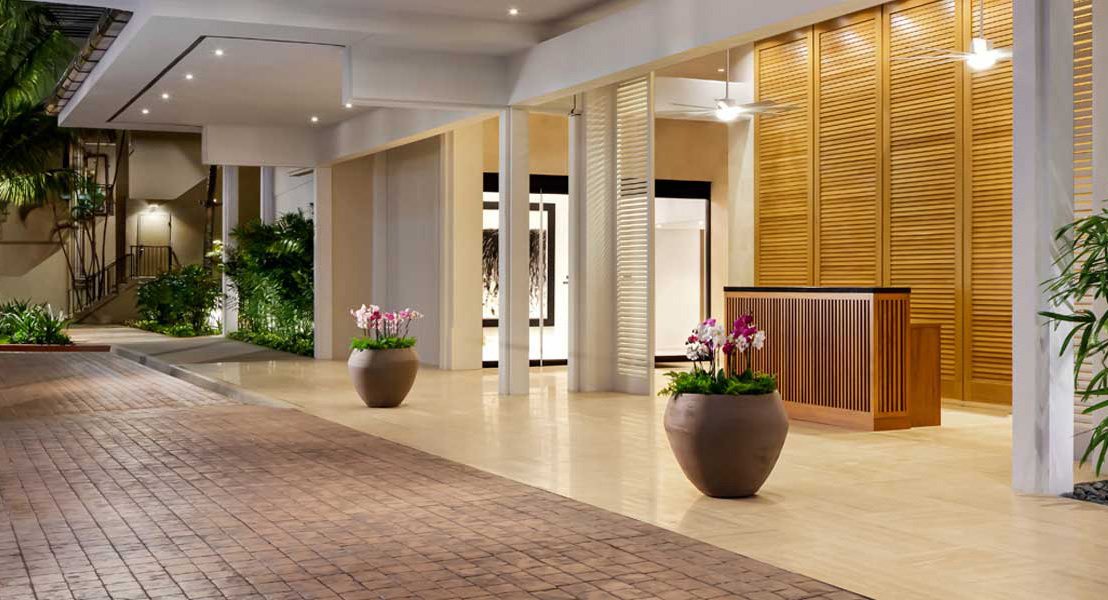
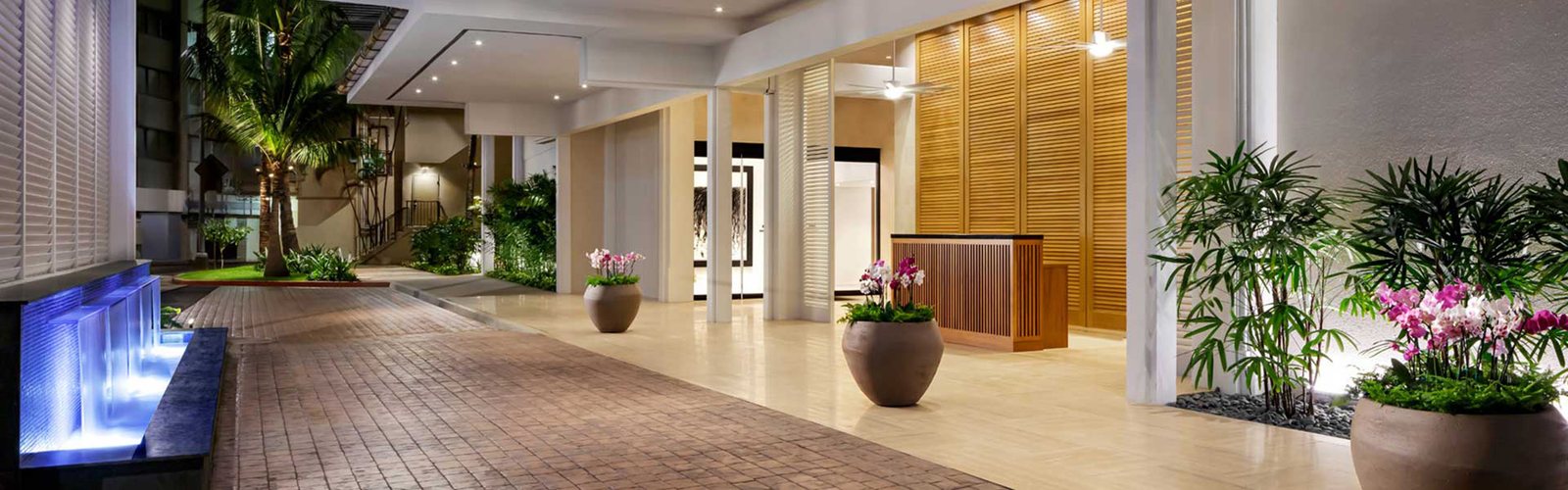
Hospitality raises the stakes past what a residential job ever sees. The same species shows at the reception desk, in guest room headboard panels, on a restaurant bar face and out on a pool deck, under four lighting conditions and two exposures. Nobody tours a property species by species. They see teak, and they expect the teak to look related. So the real question underneath "can you match it" is a question about scope, because match within a room is routine while match across interior and exterior in one sightline is a different problem with a different answer.
Why Grade Says Nothing About Color
Teak bought at the top grade can still arrive with a two shade spread, because hardwood grade rules measure the yield of clear face cuttings and never speak to color. This surprises buyers more than any other fact in lumber. A grade stamp is a yield promise, nothing more.
The National Hardwood Lumber Association rules set the framework North American hardwood trades on. FAS is the top grade and requires a minimum board of 6 inches wide by 8 ft long yielding 83 and 1/3 percent clear face cuttings. FAS One Face, written F1F, meets FAS on the better face. Selects meet FAS on the better face at a smaller minimum size. No. 1 Common requires 66 and 2/3 percent on a minimum board of 3 inches by 4 ft, and No. 2A Common requires 50 percent.
Read those numbers again and notice what is absent. Not one of them mentions hue, streak, sapwood or figure. A No. 1 Common board is not a defective board. It yields smaller clear cuttings, which makes it the economical grade for short parts and the wrong grade for a long clear run of bar rail. None of it grades teak, which comes in as an import, so a hospitality specification borrows the vocabulary and then states the color and yield it needs.
Imported teak adds a wrinkle, since tropical stock often moves on export grades rather than on the North American rulebook. A specification that says only "FAS teak" has therefore said very little about what will show up, looking at it from 6 ft away in a lobby. Name the grade basis, then name the color expectation as a separate requirement, the way the Architectural Woodwork Institute treats grain and color matching as its own class of requirement rather than a byproduct of grade.
Where Teak Color Variation Starts
Most of the color spread in a teak order was decided in the tree, years before anyone put a saw to it. Growth rate, soil, position in the log and the age of the stand all leave a signature in the board. Sorting manages that signature. It cannot erase it.
Sapwood is the first and biggest offender. Teak sapwood is pale, nearly white next to the heartwood, and it belongs out of any color critical run. Slower grown stock tends to carry tighter rings and a more even tone, while fast grown plantation material often reads lighter and more open. Teak reaching the North American market today comes largely from managed plantation sources rather than old forest stands, which shifts the baseline for what normal teak color looks like against a sample pulled twenty years ago.
Mineral streaking is the second. Dark lines and patches track what the tree pulled out of the ground, and they are not a defect under any grading rule. The USDA Forest Products Laboratory wood handbook is the right place to read how extractives drive both the color and the behavior of a species, and the Wood Database entry for teak carries the species data, hardness included, which is worth checking against your wear expectations rather than taking from memory.
One more fact changes how you judge a rack of freshly surfaced teak. It ambers. Light exposure deepens and warms the color over the first weeks and months, so a board that looks too pale on the bunk often catches up with its neighbors once it is on the wall. Experienced yard people account for that when they sort. Inexperienced reviewers reject on it.
Sawing Pattern, Grain and How Color Reads
Quartersawn and rift teak reads more uniform than plainsawn and moves less across its width, which is why color critical panels get specified that way. Grain pattern and color perception are tangled together. You cannot specify one and ignore the other.
Plainsawn teak throws cathedral figure, and cathedral figure gathers light and dark into bands. Set two plainsawn boards side by side and the eye reads the figure difference as a color difference even when the underlying tone is identical. Vertical grain gives even striping across the face, which is why a rift or quartersawn panel looks calmer at 10 ft than a plainsawn panel cut from the same log.
There is a cost, and it is paid in yield rather than in appearance. Quartersawing a log produces narrower boards, so wide panel components get glued up from more pieces and the lead time stretches. On a package with hundreds of panel faces that trade is usually worth making, and on a run of narrow trim it rarely is.
The most common mock-up failure on this kind of package is not a bad lot at all. It is mixed sawing patterns inside one assembly, a quartersawn stile against a plainsawn rail, which no amount of color sorting will rescue. Specify the pattern per component, not per order.
Lot Matching Across a Hospitality Package
The only reliable way to hold color across a large teak package is to pull the whole quantity from one lot at one time, which means committing the quantity before the first guest room is framed. Teak ordered in four releases over eight months is four different parcels of wood. No sorting skill recovers that.
J. Gibson McIlvain holds over seven million board feet of exotic and domestic lumber at its Maryland yard, and that depth is the practical reason a single lot pull on a large teak package is possible at all. A yard buying to order has to chase the quantity across parcels. A yard holding inventory can walk the packs, sort to the approved limit boards, and set the balance aside for the same job.
Build an overage into the take-off, sized to the sort rather than to a rounding habit. Sorting for color consumes yield, because the boards pulled out for sapwood and heavy streak still had to be bought. A package specified tight on color and tight on quantity at the same time is the package that comes up short in phase two.
Sourcing documentation belongs in the same conversation. J. Gibson McIlvain imports and mills under FSC certification, so chain of custody paperwork travels with the order instead of being reconstructed later when a brand standard reviewer asks for it. On hospitality work that paperwork is often a condition of the specification rather than a nice extra.
Interior and Exterior Teak in One Sightline
Interior and exterior teak in the same view are two orders with two moisture targets and two different color futures, and pretending otherwise is the most expensive mistake on a hospitality package. The lobby and the pool deck will not stay related. Plan for that at design, not at punch.
Kiln dried hardwood for interior use lands near 6 to 8 percent moisture content. Exterior work runs near 12 to 16 percent, closer to where outdoor stock will actually live. Air dried material settles near the local equilibrium and is not a substitute where an interior tolerance matters. J. Gibson McIlvain mills interior teak components to the 6 to 8 percent range and runs exterior stock to 12 to 16 percent, which is two separate drying and handling paths on one job.
Then the clocks diverge. Interior teak ambers and holds, since indoor light is filtered and mild. Exterior teak in full sun silvers, and it does so within a season or two unless somebody has budgeted the labor to maintain it. A terrace that turns gray while the adjacent interior panels deepen to brown is not a defect. It is physics, and Building Science Corporation has published extensively on how exposure and water management drive the service life of exterior wood assemblies.
Make the owner choose out loud. Either the exterior teak gets a maintenance program and stays close to its installed color, or it is allowed to weather and the design accepts gray next to brown. Both are defensible positions. Leaving it undecided is not.
Mock-Ups, Lighting and Approving a Range
Approve three boards that define the limits of an acceptable range, viewed under the lighting the property will actually use, and keep a retained control board for the life of the job. A chip on a desk under a north window has misled more hospitality packages than any lumber problem.
Build the mock-up with a light limit board, a dark limit board and a typical board, finished with the exact schedule production will use. Sign all three. Store a fourth as the retained control, because the argument in month nine is always about what was approved in month one, and memory is a poor witness.
Lighting changes the verdict. Teak under 2700K lamps reads warmer and redder than the same board under shop daylight, and a guest room corridor on dim warm light hides streak contrast that a daylit atrium will advertise. Review the mock-up where the material is going, or at minimum under matched lamps.
The finish does more to the final color than the sort does. Open-grained and oily species absorb a great deal of finish, and teak's natural oils also change how a coating sits and cures, so the first coat goes further into the wood than a finisher expects and the color lands deeper than the sample. A penetrating oil pushes teak toward a rich brown. A waterborne clear holds it noticeably lighter. The booth that sprays the topcoat, which on most hospitality jobs belongs to the fabricator, owns that part of the outcome.
What Can Be Promised and What Cannot
A supplier can promise a sorted range pulled from one lot, a stated moisture content, a specified sawing pattern and documentation that follows the material, and nobody can promise that solid teak will hold a color. That is not a dodge. It is the honest boundary of the material.
No warranty exists on solid unmodified wood, and none can. Wood is an organic material responding to its environment, and a warranty against the environment is a warranty nobody could honor. Warranties do exist on modified products. Accoya, Thermory and Abodo Vulcan are warrantied, and all of them top out around 16 ft, most sold on metric lengths just under 16 ft, because of kiln size. Where a job needs wide boards in a modified product, that means Accoya or Abodo Vulcan, since thermally modified Thermory Ash is not available wider than 8 inches.
Accoya earns a line of its own on exterior hospitality work where dimensional behavior matters more than a teak look. It comes in around 1,600 lbf on the Janka scale, and acetylation gives it dramatically reduced shrinkage and swelling. It is a different visual animal than teak, so it belongs where paint or an opaque coating is already in the specification.
When teak quantity, length or color range will not line up, the millwork palette to reach for is Sapele, Iroko, Afrormosia, Teak and Utile, which is sold as Sipo. Sapele comes in near 1,410 lbf, holds paint better than Genuine Mahogany at roughly 800 lbf, and comes in a wider range of sizes and longer lengths, which is why painted exterior trim gets specified in Sapele. Note that Sapele is not milled 1x8 for exterior use, too wide to stay stable, and remember that cupping is driven by installation and back ventilation rather than by species choice.
The tropical decking species sit outside this conversation on purpose. Ipe, which is Tabebuia spp, along with Cumaru, Garapa, Jatoba and Red Balau, are extremely hard and carry high oil content that makes them difficult to glue, so a millwork shop reaches for Sapele, Iroko, Afrormosia, Teak or Utile on anything glued, moulded or machined. Name a decking species when the subject is genuinely a deck.
| Variable | What sets it | Controllable at the yard | What the job absorbs |
|---|---|---|---|
| Sapwood | Position in the log | Yes, sorted out of a color run | Lower usable yield per board foot bought |
| Mineral streak contrast | Growth conditions in the tree | Partly, by sorting to approved limit boards | Some contrast remains in any honest range |
| Grain pattern | Sawing pattern through the log | Yes, by specifying quartersawn or rift | Narrower boards and a longer lead time |
| Lot continuity | Which parcel the stock came from | Yes, when the full quantity is pulled at once | A committed quantity up front, plus storage |
| Moisture content | Kiln schedule and service conditions | Yes, to an interior or exterior target | Seasonal movement after installation |
| Final finished color | Finish system and the spray booth | No, that sits with the fabricator | Mock-up approval before production starts |
| Ambering and UV weathering | Light exposure over time | No | A maintenance program, or accepting gray |
"I will tell an owner exactly what I can hold and exactly what I cannot. I can pull a whole teak package off one lot, sort it to the limit boards you signed, and hold the balance here while your phases open. I cannot tell you the pool deck will still look like the lobby in three years, and anyone who says otherwise is selling you something."
Norm Moton, Director of Sales, J. Gibson McIlvain
Phasing, Attic Stock and the Reorder Two Years Out
A phased hospitality package needs its color matched material bought once and released against the schedule, plus a real attic stock allowance for the repairs that start the week the property opens. Furniture carts hit casework. Bar rails get burned. Those repairs come out of attic stock or they come out of a mismatch.
J. Gibson McIlvain stores finished millwork and lumber for inventory control, which is how one sorted lot stays intact across a phased opening instead of being consumed by whichever trade shows up first. Staged release against the fabricator's shop schedule also keeps surfaced teak out of a job trailer, where humidity swings and rough handling do more damage than anything that happens in the kiln.
Settle the reorder question before it becomes urgent. Teak ordered two years after opening is a different parcel with a different growth history and a different color center, and it will read as a patch next to material that has been ambering on the wall since day one. Retained boards from the original lot are the only clean answer, so set aside more than feels necessary.
Write the lot reference into the closeout documents. J. Gibson McIlvain records the lot and the sort criteria behind an order, so a facilities manager calling years later starts from the original reference rather than from a photograph taken on a phone.
How J. Gibson McIlvain Would Specify This
Specify teak by grade basis, sawing pattern, moisture target, approved limit boards and a single lot pull, then buy the full quantity once and release it against the shop schedule. Five lines in a specification remove most of the risk this subject carries.
Start with the two moisture paths. Interior components get milled to a 6 to 8 percent in-service moisture content, exterior components to 12 to 16 percent, and the specification should say which components fall on which side rather than leaving one number to cover a whole property. Quartersawn or rift gets called out by component wherever a wide face has to stay flat and read evenly, since quartersawn and rift stock moves less across its width than plainsawn.
Then settle the color language. Three signed limit boards, a retained control, a stated viewing condition, and the sort performed before the material is cut rather than after. J. Gibson McIlvain sorts a teak order to the approved limit boards and keeps the balance of the lot committed to the job, which is the mechanical part of what people mean when they say a package was matched.
Where the work is true custom architectural millwork, a reception desk, a bar back, fitted casework planned around a specific room, that work goes to ICD, the company's architectural millwork division, which builds casework and case goods around the actual space rather than around standard module sizes. Linear runs of teak trim and the lumber itself come off the same order through the millwork service at J. Gibson McIlvain. Final sanding, topcoat and installation sit with the fabricator and installer on the job, and the specification should say so plainly so nobody is waiting on somebody else.
J. Gibson McIlvain ships nationwide, regularly to California, which matters on a resort package where the design team, the millwork shop and the property sit in three different states. Call 800-638-9100 with the take-off, the phasing schedule and the color expectation, in that order, and the conversation about what can be promised happens before the lumber is bought rather than after.
Frequently Asked Questions
Where should I source teak for a hospitality project that needs color consistency?
Buy it from a yard that holds inventory rather than one that buys to order, because holding inventory is what makes a single lot pull possible on a large quantity. Ask the supplier three questions before anything else. Can you pull the entire package from one lot, will you sort that lot to limit boards we sign, and will you hold the balance while our phases open. J. Gibson McIlvain sorts a teak order to approved limit boards and keeps the remainder of the lot committed to the job, which is the mechanical work behind the word matched. Call 800-638-9100 with the take-off, the phasing schedule and the color expectation in hand.
Does buying FAS teak guarantee the boards will match in color?
No. FAS is a yield grade. It requires a minimum board of 6 inches wide by 8 ft long yielding 83 and 1/3 percent clear face cuttings, and it says nothing about hue, sapwood, mineral streak or figure. Imported teak also frequently moves on export grades rather than on the National Hardwood Lumber Association rules, which makes the grade line even less predictive of appearance. Write the grade basis and the color requirement as two separate items in the specification.
Can anyone warranty that teak will keep the color it was installed at?
No, and a supplier who offers that is overpromising. Solid unmodified wood cannot be warrantied at all, since it is an organic material responding to its environment. Warranties exist on modified products, Accoya, Thermory and Abodo Vulcan among them, and those products top out around 16 ft, most sold on metric lengths just under 16 ft, because of kiln size. What can be committed to in writing is the lot, the sorted range, the sawing pattern, the moisture content and the documentation.
What moisture content should teak be milled to for hotel interiors versus a pool deck?
Interior components land near 6 to 8 percent moisture content. Exterior components run near 12 to 16 percent, closer to the conditions they will live in. Air dried stock settles near the local equilibrium and is not a substitute where an interior tolerance matters. On a property with teak inside and outside, say in the specification which components fall on which side rather than letting one number cover the whole job.
Is quartersawn teak really more consistent than plainsawn?
It reads more consistent, and it behaves better. Vertical grain gives even striping across the face, while plainsawn cathedral figure gathers light and dark into bands that the eye registers as a color difference even when the tone is identical. Quartersawn and rift stock also moves less across its width than plainsawn, which is why it gets specified where a wide painted or panelized surface has to stay flat. The cost is yield, since quartersawing a log produces narrower boards and wide panels take more pieces.
What should we specify if teak will not cover the sizes, lengths or quantity we need?
Move to the rest of the millwork palette, which is Sapele, Iroko, Afrormosia, Teak and Utile, sold as Sipo. For painted exterior trim, Sapele is the better call than Genuine Mahogany because it holds paint better and comes in a wider range of sizes and longer lengths, though Sapele is not milled 1x8 for exterior use. Where dimensional behavior matters more than a teak look and an opaque coating is already specified, Accoya comes in around 1,600 lbf on the Janka scale with dramatically reduced shrinkage and swelling. Tropical decking species such as Ipe, which is Tabebuia spp, Cumaru, Garapa, Jatoba and Red Balau are extremely hard and carry high oil content that makes them difficult to glue, so they are not the right call for glued or machined components.
How do we handle a teak repair two years after the property opens?
Plan for it during procurement, not after the damage. Teak bought two years later is a different parcel with a different growth history, and it will read as a patch beside material that has been ambering on the wall since opening day. Set aside retained boards from the original lot as attic stock, more than feels necessary, and record the lot reference and sort criteria in the closeout documents so the facilities team starts from the original reference rather than a phone photograph.
Who is responsible for the final color, the lumber supplier or the finisher?
The sort sets the starting range and the finish sets the final color. Open-grained and oily species absorb a great deal of finish, and teak's oils change how a coating sits and cures, so the first coat goes deeper than a finisher expects and the result lands darker than a bare sample suggests. A penetrating oil pushes teak brown while a waterborne clear holds it lighter. Approve the mock-up with the exact production finish schedule, viewed under the lamps the property will use, because 2700K light reads warmer than shop daylight.